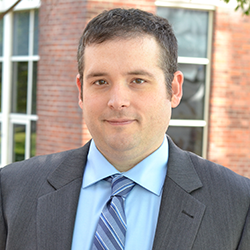
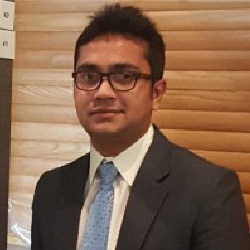
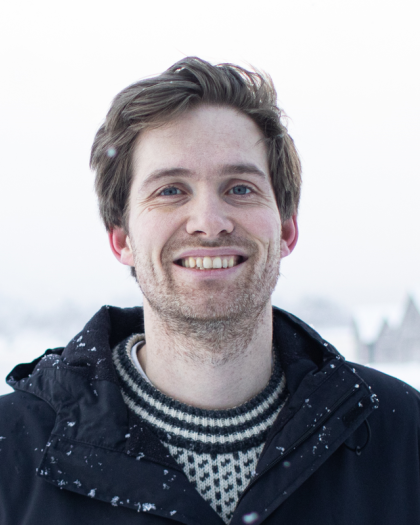
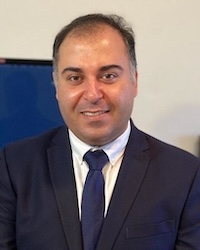
Andy Thomas is an Assistant Professor in the Department of Chemistry at Texas A&M University. He joined the faculty in 2020 and leads the Thomas Research Group, focusing on physical organic chemistry to develop novel synthetic methods and catalyst-transfer polymerization reactions. His work emphasizes understanding reactive intermediates via advanced techniques like rapid injection NMR spectroscopy. Education : B.S. (2010), University of North Carolina at Charlotte M.S. (2011), University of North Carolina at Charlotte Ph.D. (2017), University of Illinois at Urbana-Champaign NIH Postdoctoral Fellow (2017–2020), Massachusetts Institute of Technology Research Focus : The group develops new strategies to monitor fleeting chemical intermediates, particularly through rapid multiple injection NMR (RMI-NMR) systems. Key areas include: Synthesis of novel organic transformations Catalyst-transfer polymerization Functionalization of heterocycles (e.g., pyridines) Organolithium reagent design Sustainable CO₂ utilization His research bridges mechanistic insight with practical applications, advancing both fundamental understanding and synthetic toolkits for organic chemistry.
Dr. Umer Saleem is a Lecturer in the Department of Mechanical and Aerospace Engineering at the University of Strathclyde. He holds a PhD in Mechanical Engineering from Heriot-Watt University (Edinburgh, UK), with additional degrees in Mechanical Engineering. His postdoctoral research focused on computational fluid dynamics (CFD) and carbon capture and storage (CCS), contributing to the EU-funded STEMM-CCS project. He teaches Thermodynamics, Fluid Mechanics, and related subjects, and is a Fellow of the Higher Education Academy (FHEA). His research emphasizes numerical modeling of CO2 dispersion in marine sediments, CFD, and renewable energy systems like concentrated solar power and steam turbines. Key affiliations include the American Society of Mechanical Engineers (ASME) and the Institution of Mechanical Engineers (IMechE). He has published widely in journals such as Renewable and Sustainable Energy Reviews and International Journal of Greenhouse Gas Control , with notable work on CO2 leakage detection and sub-seafloor storage integrity. Awards include Chartered Engineer status from IMechE and a Registered Engineer credential from PEC.
Christian Haug Eide is a Professor of Sedimentology at the Department of Earth Science, University of Bergen. His research focuses on clastic sedimentology, sedimentary basin dynamics, and geohazard analysis. He leads projects like the ISBAR and FueBAR initiatives studying the Barents Sea's Triassic sediment routing systems. His work integrates geophysics, reservoir modeling (e.g., GEOPARD algorithm), and climate change impacts. He advises numerous graduate students and collaborates on offshore wind site surveys and CO2 storage feasibility studies. Key roles include co-leader of the offshore wind geological survey project and work package leader for reservoir modeling initiatives. Teaching includes advanced sedimentology courses and fieldwork in the Spanish Pyrenees and Utah's Book Cliffs.
Dr. Josef Vlček is affiliated with the University of Alaska Fairbanks , University of Iceland, Reykjavik , and the National Research Council of Italy . His work spans geophysics , seismology , and geothermal energy . Dr. Vlček's research includes earthquake swarm dynamics , geothermal reservoir characterization , and CO2 degassing in mofette systems . His recent publications highlight fieldwork in Iceland and the Czech Republic, focusing on seismic activity and geothermal exploration. 2024 : Real-time monitoring of tectonic graben formation in Iceland 2023 : Hydraulic injection tests in Czechia's EGS borehole 2023 : Analysis of fast-migrating sequences in earthquake swarms 2022 : Pressure perturbations affecting CO2 degassing in Hartoušov, Czech Republic Collaborations include researchers from the University of Pardubice, Seismik, and the Multidisciplinary Digital Publishing Institute. No explicit awards or student advisement details are provided.
Roman Makhnenko is an Assistant Professor at the University of Illinois Urbana-Champaign, affiliated with the Civil and Environmental Engineering Department, National Center for Supercomputing Applications (NCSA), and the Institute for Sustainability, Energy, and Environment. His research focuses on subsurface fluid dynamics, carbon dioxide sequestration, and geomechanical characterization of reservoir rocks. He received the NSF CAREER Award in 2023 for his contributions to sustainable energy solutions. Research interests include CO₂ injection technology, shale permeability analysis, and experimental methods for evaluating fluid-rock interactions. His work integrates computational modeling with laboratory experiments to address challenges in energy storage and environmental engineering. Key collaborations involve studying the Illinois Basin's geology for CO₂ storage and optimizing subsurface flow characterization. He leads interdisciplinary projects combining geophysics, material science, and computational engineering.
Ramachandrudu Arasada serves as a Postdoctoral Fellow at the Bureau of Economic Geology (BEG), part of the Jackson School of Geosciences at the University of Texas at Austin. His research spans critical energy and environmental geoscience domains including reservoir characterization, carbon sequestration, and geothermal systems. His research focuses on energy transition technologies with emphasis on CO2 storage security, hydrogen infrastructure, and unconventional resource recovery. Key projects involve developing novel carbon storage incentive frameworks, optimizing formate-alternating-gas injection methods, and analyzing seismotectonic risks in hydrocarbon basins. His work bridges fundamental geoscience with practical energy-water nexus challenges. Analysis of recent publications reveals strong trends in geological carbon management (60% of output), energy-water interdependencies (25%), and advanced reservoir characterization (15%). His research consistently integrates field data with computational modeling, particularly in CO2 sequestration optimization and induced seismicity assessment. Arasada contributes to major BEG consortia including the Gulf Coast Carbon Center (GCCC) and Center for Injection and Seismicity Research (CISR), focusing on subsurface energy systems where geoscience intersects with energy security and environmental stewardship.
Hassan Dashtian serves as a Research Assistant Professor at the Bureau of Economic Geology (BEG), a prominent research unit within The University of Texas at Austin's Jackson School of Geosciences. His work bridges energy systems, environmental science, and subsurface engineering through multiple research consortia including GeoH2, HotRock Geothermal, and the Center for Injection and Seismicity Research (CISR). His research focuses on geothermal energy systems , carbon capture and storage , and hydrogen infrastructure development , with particular emphasis on optimizing resource recovery while addressing environmental constraints. Recent work explores the energy-water nexus, reservoir characterization techniques, and seismic risk assessment in unconventional resource plays. Analysis of his 15 most recent publications reveals a strong trajectory toward climate mitigation technologies , with increasing focus on carbon sequestration security (40% of recent works), geothermal energy systems (25%), and water management challenges in energy production (20%). His methodology frequently combines field observations with computational modeling and policy analysis. Dr. Dashtian actively contributes to major energy transition initiatives through the Bureau's research consortia, particularly advancing practical implementation frameworks for carbon management and clean hydrogen systems. His work demonstrates strong industry engagement through applied research addressing real-world energy transition challenges.
Xiaoju Wang is a Research Fellow at Åbo Akademi University within the Faculty of Natural Sciences and Technology and Pharmacy department, focusing on sustainable biomaterials derived from plant biopolymers. Research Highlights: Developing bio-enabled nanomaterials using lignin, cellulose, and tannin Creating CO2 capture systems and antimicrobial packaging Expertise in chemical modifications , self-assembled networks , and 3D printing Recent Publications (2024-2025) demonstrate leadership in biomaterial design for pharmaceuticals , wound healing , and carbon capture . Active Collaborations: Leading projects like MADNESS (antimicrobial solutions) and SusCellInk (therapeutic bioinks). Contributing to UN Sustainable Development Goals (SDGs) through material sustainability and health innovations .
Martin Landrø is a Professor at the Department of Electronic Systems , Norwegian University of Science and Technology (NTNU). He specializes in geophysics, seismic monitoring, and fiber optic sensing technologies, with a focus on CO2 storage, oceanographic processes, and petroleum engineering applications. His research spans environmental monitoring, reservoir characterization, and subsurface analysis. Key projects include: DigiMon - Digital Monitoring of CO2 Storage Projects GeoEnhance Consortium - Integration of Sedimentology and Seismic for Enhanced Reservoir Characterization Research trends: Recent publications highlight his work on distributed acoustic sensing (DAS), subsurface CO2 injection monitoring, ocean surface wave dynamics, and low-frequency seismic analysis for subsea oilwell operations. His projects bridge geophysical forecasting, environmental engineering, and advanced sensor technologies. Collaborations: Active in NTNU's scientific community, he collaborates with institutions like NORCE Norwegian Research Centre AS and contributes to SPE Journal and EAGE Annual Meeting publications.
Brian Stewart is an Associate Professor in the Department of Geology & Environmental Science at the University of Pittsburgh. His research program focuses on water-rock interactions in environmental and energy-related contexts, including acid mine drainage, shale gas extraction, and critical zone processes. Research Interests : Stewart investigates the geochemical and isotopic dynamics of fluids interacting with geological materials. Key areas include pollutant migration in ground/surface waters, rare earth element sourcing in energy-related waters, and weathering processes in soil-vegetation systems using high-precision isotopic analyses. Methodologies : His work integrates fieldwork, laboratory experiments, and advanced analytical techniques like MC-ICP-MS for isotopic studies of Li, Sr, and Fe. Recent studies focus on CO2 leakage impacts, hydraulic fracturing fluid behavior, and solute sourcing in sedimentary basins.
Amir Taheri is a Senior Researcher at NORCE Norwegian Research Centre in Stavanger, Norway, operating within the Energy and Technology division and leading the Well Operations and Risk Management research group. His work addresses critical energy transition challenges through Carbon Capture, Utilization and Storage (CCUS), Hydrogen, and well integrity research. Dr. Taheri's research spans CO2 storage in saline aquifers with focus on convective mixing processes, well construction/intervention technologies, and barrier remediation systems. His experimental work includes developing granite-based geopolymers, glass-based remediation fluids, and nanosealant technologies for microannulus repair. The research directly impacts well integrity in CCUS operations and hydrogen infrastructure development, with strong emphasis on experimental validation of novel materials and measurement systems. Recent publications (2023-2025) reveal a clear trend toward field-applicable solutions for well barrier challenges. Key themes include experimental validation of geopolymer systems, glass-based annular remediation fluids, pipe viscometer advancements for real-time monitoring, and microannulus repair using nanosealants. These works bridge laboratory findings with practical field implementation, addressing industry needs for reliable well integrity solutions in energy transition contexts. The Well Operations and Risk Management group conducts cutting-edge experimental studies using specialized equipment like Hele-Shaw cells and pipe viscometers. Their work supports Norway's energy sector through NORCE's applied research model, focusing on practical solutions for CO2 storage, hydrogen deployment, and sustainable well operations. The group maintains strong industry connections through SPE conferences and collaborative projects with energy operators.
David Dempsey is an Associate Professor in the Department of Civil and Environmental Engineering at the University of Canterbury's Faculty of Engineering, where he has been affiliated since December 2020. He leads the Subsurface Engineering Group, addressing critical challenges for a low-emissions future. His research integrates geomechanics, machine learning, and fluid dynamics across four key areas: Carbon Dioxide Removal : Designing systems to combust forestry waste and sequester CO₂ in geothermal reservoirs. Underground Hydrogen Storage : Modeling hydrogen injection/recovery in depleted gas fields. Volcanic Forecasting : Developing real-time ML systems for eruption prediction using seismic data. Induced Seismicity : Quantifying earthquake risks from energy projects. His recent publications (2021-2025) show a strong focus on machine learning applications in geohazards and energy storage, with themes including seismic forecasting, CO₂-hydrogen geostorage, and wildfire prediction. Numerical modeling and data-driven approaches dominate his methodology. He actively supervises 13+ graduate students on projects such as hydrogen geostorage, volcanic forecasting, and flood prediction. His group collaborates with industry on geothermal and seismic risk projects, leveraging real-time data from networks like GeoNet.
Mukul Sharma is a Professor and holds the W.A. (Tex) Moncrief, Jr. Centennial Endowed Chair in the Department of Petroleum and Geosystems Engineering at the University of Texas at Austin, where he has been for over 27 years. He previously served as Chairman of the Department from 2001 to 2005. His research focuses on hydraulic fracturing, improved oil recovery, injection water management, formation damage, and petrophysics. Dr. Sharma's educational background includes: Ph.D. in Petroleum Engineering from the University of Southern California (1985) M.S. in Chemical Engineering from the University of Southern California (1981) B.S. in Chemical Engineering from the Indian Institute of Technology, Kanpur (1980) His research interests span across several critical areas in petroleum engineering and geosciences. Dr. Sharma has made significant contributions to understanding solid and fluid mechanics of porous materials, water and waste injection processes, surface and colloid chemistry, multi-phase fluid flow in porous media, natural gas engineering, and geothermal energy systems. His work bridges fundamental science with practical applications in the energy industry, particularly in developing innovative solutions for hydraulic fracturing design, formation damage prevention, and water management in oil and gas operations. Analysis of Dr. Sharma's recent publications (2020-2024) reveals a strong focus on advanced reservoir characterization, fracture network modeling, and geothermal energy applications. His research increasingly integrates multiple disciplines including geomechanics, fluid dynamics, and geochemistry to develop comprehensive models for complex subsurface systems. A notable trend is the application of these models to both conventional petroleum reservoirs and emerging geothermal energy systems, demonstrating the cross-cutting nature of his work. Dr. Sharma has received numerous prestigious awards throughout his career, including: Member of the National Academy of Engineering (2018) SPE Honorary Member (2018) SPE John Franklin Carll Award (2017) SPE Anthony F. Lucas Gold Medal (2009) Lester C. Uren Award from SPE (2003) SPE Formation Evaluation Award (1998) As an educator, Dr. Sharma has taught numerous courses including Hydraulic Fracturing Design & Evaluation, Advanced Fluid Flow in Porous Media, and Petrophysics and Fluid Flow Laboratory. He has also developed and taught industry short courses on hydraulic fracturing, formation damage, and oilfield water management. His research group has published over 250 journal articles and conference proceedings and holds 15 patents. Dr. Sharma has consulted for over 50 companies worldwide and co-founded both Austin Geotech Services (a consulting company) and Layline Petroleum (a private E&P company).
Dr. Boyun Guo is a Professor and Graduate Coordinator in Petroleum Engineering at the University of Louisiana at Lafayette's College of Engineering. He serves as the Director of the Center for Optimization of Petroleum Systems (COPS) at the Energy Institute of Louisiana (EIL). His educational background includes: Ph.D. in Petroleum Engineering, 1992 from New Mexico Institute of Mining and Technology M.S. in Petroleum Engineering, 1989 from Montana College of Mineral Science and Technology B.S. in Engineering, 1982 from Daqing Petroleum Institute Dr. Guo's research focuses on the development and utilization of geo-energy resources , with particular expertise in unconventional oil and gas reservoirs, gas hydrate reservoirs, and geothermal resources. His work integrates petroleum engineering principles with environmental sustainability considerations, emphasizing innovative approaches to energy resource extraction. His recent publications demonstrate a strong focus on CO 2 -CH 4 swapping processes in gas hydrates, optimization of geothermal energy extraction, and machine learning applications in reservoir characterization. His extensive publication record of over 140 peer-reviewed journal papers and 70+ conference presentations reflects his significant contributions to petroleum engineering. The research trends show increasing emphasis on sustainable energy practices, carbon management, and advanced computational techniques applied to complex reservoir systems. Dr. Guo's scientific recognition includes: Distinguished Achievement Award for Petroleum Engineering Faculty from SPE (2012) Distinguished Professor at UL Lafayette (2017) Multiple Outstanding Doctoral Student Mentor Awards (2018-2021) Teacher of the Year Award from UL Lafayette College of Engineering (2008) Researcher of the Year Award from UL Lafayette College of Engineering (2016) With 9 years of industry experience, 5 years at a U.S. research center, and over 20 years in academia, Dr. Guo has supervised 15 Ph.D. students and over 40 master's students. His research has been supported by high-level projects including those sponsored by NASA and the Department of Energy. He has authored 11 books and numerous invention patents in petroleum engineering. Dr. Guo leads the Center for Optimization of Petroleum Systems (COPS) at the Energy Institute of Louisiana, where his team conducts laboratory testing and computer simulation of CO 2 -CH 4 swapping processes in gas hydrate reservoirs for natural gas production and CO 2 storage.