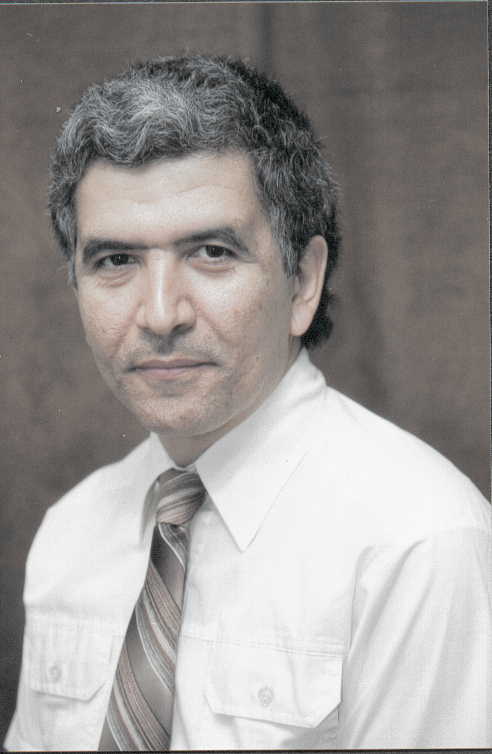
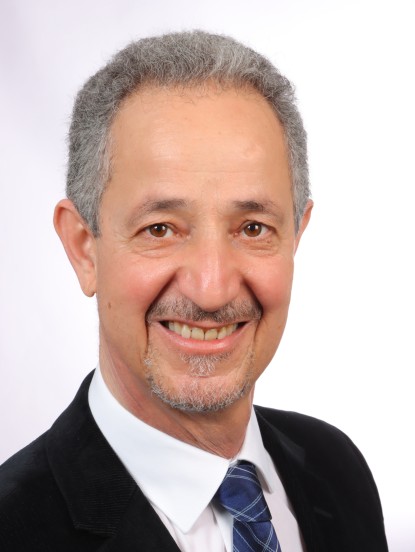
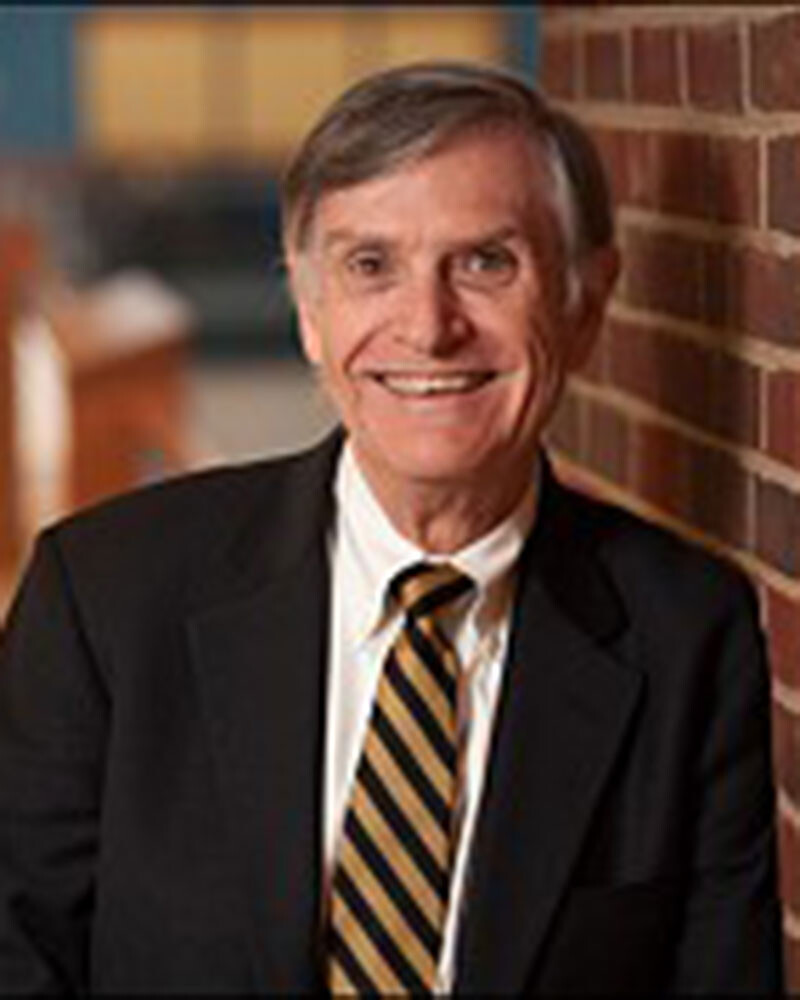
Mustapha C.E. Yagoub is a Full Professor at the School of Electrical Engineering and Computer Science, University of Ottawa, with over 500 publications in RF/microwave CAD, RFID systems, neural networks, and applied electromagnetics. He leads research in the ELEMENT Laboratory and RFM Research Group , focusing on wireless communication systems and nonlinear device modeling. PhD in Electronics (Institut National Polytechnique de Toulouse, 1994) Magister in Telecommunications (École Nationale Polytechnique d'Alger, 1987) Dipl.-Ing. in Electronics (École Nationale Polytechnique d'Alger, 1979) His research bridges Microwave Circuit Design with Artificial Intelligence , including applications in Energy Conservation and Telecommunication Systems . Key trends in his publications include hybrid modeling techniques combining Neural Networks with Computational Electromagnetics for optimizing Antenna Design and RF Components . He is a Senior Member of IEEE and licensed with the Professional Engineers of Ontario and Ordre des Ingénieurs du Québec . His lab teams focus on High-Tc Superconducting Devices and Directional Antenna Optimization for RFID networks.
Olli Setälä is a Doctoral Researcher at Aalto University's Department of Electronics and Nanoengineering. His work focuses on semiconductor physics and optoelectronic device engineering, particularly in silicon-based technologies for photodetection and particle sensing applications. He is affiliated with the Hele Savin research group and collaborates on advanced fabrication techniques including atomic layer deposition and femtosecond laser processing. Aalto University - Department of Electronics and Nanoengineering Hele Savin Group His research interests include: Semiconductor contact engineering Black silicon optoelectronics Dead-layer-free particle detectors Nanostructured antireflection surfaces Advanced CMOS sensor technologies Olli contributes to publications in journals like Applied Surface Science, Optics Letters, and ACS Photonics, with recent work focusing on charged dielectric layers for contact formation and responsivity optimization in photodiodes. He has presented at international conferences including the Image Sensor Workshop.
Prof. Dr. Andre Schöning is a Full Professor (W3) at the Physics Institute of Heidelberg University since 2009, specializing in experimental particle physics. He serves as Co-Spokesperson of the Mu3e Collaboration and leads research in detector development and high-energy physics experiments. Research Interests: Search for the decay μ→eee with the Mu3e Experiment at PSI Development of High-Voltage Monolithic Active Pixel Sensors (HV-MAPS) Track trigger systems for ATLAS and future colliders Physics analysis with ATLAS and historical H1 experiment data Wireless data transmission technologies for particle detectors His recent publications demonstrate strong focus on detector technology development, particularly for muon experiments and high-rate tracking systems, alongside significant contributions to Standard Model physics measurements at the LHC. The research spans both hardware development and sophisticated data analysis techniques. Scientific Recognition: CERN Fellowship (1997-1999) University of Hamburg dissertation award (1997) Association of the Friends and Sponsors of DESY dissertation award (1997) Prof. Schöning has secured substantial research funding from DFG and BMBF from 2009-2025, including leadership of the DFG Research Unit on Lepton Flavor Violation with Mu3e. He maintains active collaborations including WADAPT, Mu3e, ATLAS, and the long-standing H1 collaboration. His research group operates within the High-Energy Physics division of Heidelberg's Physics Institute, working on cutting-edge detector systems for current and future particle physics experiments, with particular emphasis on precision measurements requiring novel detector technologies.
Matt LeBlanc is an Assistant Professor of Physics (Research) at Brown University, affiliated with the CMS Collaboration since 2024 and previously a core member of the ATLAS Collaboration from 2010–2023. His research focuses on experimental particle physics, particularly the analysis of hadronic objects and final states at the Large Hadron Collider (LHC). He employs advanced data science techniques, including machine learning and optimal transport algorithms, to study jet physics and search for new particles beyond the Standard Model. LeBlanc has contributed to jet reconstruction, calibration, and novel analysis methods in LHC data. Education: Ph.D. in experimental particle physics from the University of Victoria (Canada). Postdoctoral appointments at the University of Arizona, CERN, and the University of Manchester (UK). Research Interests: Jet substructure, hadronic object reconstruction, dark matter searches, QCD studies, radiation-hard detector development (e.g., MALTA sensors), and applications of AI/ML in physics. His work bridges experimental particle physics with computational science, addressing challenges in data processing for the High-Luminosity LHC era. Key Contributions: Leader of physics analyses in the ATLAS Collaboration, coordinator for hadronic object reconstruction/calibration, developer of jet energy scale algorithms, and pioneer in applying optimal transport and topic modeling to particle physics data. His recent work emphasizes efficient data pipelines and simulations for future collider experiments.
Glenn Gulak is a Professor in the Department of Electrical and Computer Engineering at the University of Toronto's Faculty of Applied Science and Engineering. He holds the Canada Research Chair in Signal Processing Microsystems and the Edward S. Rogers Sr. Chair in Engineering. A Senior IEEE Member and Professional Engineer in Ontario, he received his Ph.D. from the University of Manitoba. His research spans: Digital Communication Systems: VLSI implementations of MIMO detectors, lattice reduction algorithms, and homomorphic encryption accelerators Lab-on-Chip Microsystems: CMOS biosensors for rapid pathogen detection and integrated fluorescence imaging Recent publications (2019-2025) demonstrate a dominant focus on privacy-enhancing technologies, with 73% concentrated in cryptographic hardware and homomorphic encryption. This reflects industry-aligned work on confidential computing and secure data processing. Awards & Honors: IEEE Millennium Medal (2001) Canada Research Chair in Signal Processing Systems (Tier 1, 2005-2012) Edward S. Rogers Sr. Chair (2005-2010) RBC Research Prize L. Lau Chair (1999-2004) Teaching Award (1999) He has supervised 44+ graduate students (PhD/MASc) with thesis topics spanning VLSI communication systems, CMOS biosensors, and cryptographic accelerators. Notable industry collaboration includes serving as CTO of a semiconductor startup (2001-2003). His lab develops hardware for quantum cryptography and secure medical computation.
Dr. Sergii Yakunin is a Lecturer at the Department of Chemistry and Applied Biosciences at ETH Zürich, specializing in inorganic functional materials. His research focuses on advanced materials for radiation detection, semiconductor devices, and optoelectronic applications. Key areas include perovskite nanocrystals, quantum dots, and photodetector technologies. He leads the Laboratory of Inorganic Chemistry (LAC), emphasizing material synthesis, characterization, and device integration. Research interests encompass radiation detection systems, energy materials, and nanotechnology applications. Recent work highlights advancements in X-ray/gamma detectors using perovskites, colloidal nanocrystal fabrication, and compact optical spectrometers. His contributions bridge fundamental material science with applied technologies for medical imaging, energy harvesting, and photonics. Publications emphasize detector performance optimization, nanocrystal stability, and novel material designs. Current efforts address challenges in detector sensitivity, environmental stability, and scalable manufacturing. Collaborative projects focus on integrating functional materials into wearable and compact devices for next-generation applications.
Quanxi Jia is a SUNY Distinguished Professor, Empire Innovation Professor, and National Grid Professor of Materials Research at the University at Buffalo. He holds appointments in the Department of Materials Design and Innovation within the School of Engineering and Applied Sciences and serves as Scientific Director of the New York State Center of Excellence in Materials Informatics (CMI). Education: PhD in Electrical and Computer Engineering, University at Buffalo, 1991 MS in Electronic Engineering, Jiaotong University, Xian, China, 1985 BS in Electronic Engineering, Jiaotong University, Xian, China, 1982 Research Focus: Jia's work centers on advanced electronic and energy materials, particularly epitaxial thin films and heterostructures. His research investigates processing-structure-property relationships, monolithic integration of functional materials, and superconductors for quantum/energy applications. Key methodologies include pulsed laser deposition and polymer-assisted techniques, with emphasis on oxide heterostructures , memristive devices , and multiferroic systems for next-generation electronics. Publication Trends: Recent publications (2023-2025) reveal dominant focus on neuromorphic computing via resistive switching devices (58% of sampled works), superconducting thin films for quantum applications (20%), and strain-engineered oxide heterostructures (22%). His group pioneers HfO 2 -based artificial neurons, NbN superconducting films on CMOS platforms, and multiferroic membranes, demonstrating strong industry-academia translation potential. Scientific Recognition: Fellow of Los Alamos National Laboratory Fellow of Materials Research Society (MRS) Fellow of American Physical Society (APS) Fellow of American Ceramic Society (ACerS) Fellow of AAAS Fellow of IEEE Fellow of National Academy of Inventors (NAI) Leadership & Infrastructure: As CMI Scientific Director, Jia oversees New York's flagship materials informatics initiative integrating AI with experimental materials science. His prior directorship of DOE's Center for Integrated Nanotechnologies (Los Alamos/Sandia) established expertise in national lab collaboration. The group maintains 50+ U.S. patents and 500+ publications, with current work targeting quantum device integration and sustainable neuromorphic hardware. Research Ecosystem: The CMI hub connects Jia's team with industry partners (including National Grid) and national labs, facilitating rapid prototyping of energy materials. Current thrusts include machine learning-guided ferroelectric design, CMOS-compatible superconductors, and recyclable perovskite sensors, positioning the group at the semiconductor-energy nexus.
Takashi Tanii is a Professor at Waseda University's School of Fundamental Science and Engineering within the Faculty of Science and Engineering. He holds a Doctor of Engineering degree from Waseda University and maintains an active research program as evidenced by his homepage at http://www.tanii.nano.waseda.ac.jp. His research spans multiple interdisciplinary fields at the intersection of physics, engineering, and biology. Professor Tanii's primary research interests focus on Nanobioscience , with specific expertise in Nano-electronics and Nano-biotechnology . His work demonstrates a strong integration of quantum physics principles with biological applications, particularly in the areas of quantum sensing using diamond nitrogen-vacancy centers and neural network analysis. His research also extends to cell adhesion studies, TiO 2 photocatalysis, and single ion implantation techniques for quantum device fabrication. An analysis of his 15 most recent publications reveals a consistent trend toward quantum technologies and biophysical applications . His work on diamond nitrogen-vacancy centers for quantum sensing, particularly for nuclear spin detection, represents cutting-edge research in quantum information processing. Simultaneously, his investigations into neuronal networks and cell adhesion mechanisms demonstrate a strong commitment to understanding biological systems at the nanoscale. The interdisciplinary nature of his research bridges physics, engineering, and life sciences, with potential applications in quantum computing, neural engineering, and biomedical diagnostics. Professor Tanii is an active member of several professional societies including the Japanese Neural Network Society, Architectural Institute of Japan, Japan Society of Applied Physics, and Japan Surface Science Society, reflecting the breadth of his research interests. His work has resulted in 114 publications with 1,627 citations and an h-index of 23, indicating significant impact in his fields of study. While specific grant information is not detailed in the provided text, his consistent publication record across multiple high-impact journals suggests sustained research funding. His laboratory appears to operate at the intersection of quantum physics and biophysics, with research teams likely comprising physicists, engineers, and biologists working collaboratively. The integration of techniques from quantum sensing, microfabrication, and cellular neuroscience suggests a highly interdisciplinary research environment focused on pushing the boundaries of nanoscale measurement and manipulation technologies.
Ali W. Elshaari is an Associate Professor at the Royal Institute of Technology (KTH) in Stockholm, Sweden. He holds a B.S. in Electrical Engineering from the University of Benghazi (2007) and a Ph.D. in photonics from the Rochester Institute of Technology (2011). His postdoctoral research at TU Delft’s Kavli Institute of Nanoscience focused on quantum transport. Currently, he leads the Quantum Nano Photonics Group, pioneering work in topological and quantum integrated photonics to develop high-performance circuits for communication, sensing, and metrology. His research spans hybrid quantum photonics, strain-tunable systems, and superconducting detectors, with applications in quantum communication and quantum materials characterization. Elshaari's research interests include integrating single-photon emitters into CMOS-compatible platforms, exploring quantum phenomena like entanglement and coherence, and developing advanced photonic materials (e.g., hexagonal boron nitride and Cu₂O). He has contributed to on-chip single-photon generation/filtering, strain-tunable photonic circuits, and slow-wave superconducting detectors. His work bridges experimental and theoretical approaches, leveraging imaging techniques and phase retrieval algorithms. Elshaari is an editorial board member for Nature Portfolio - Scientific Reports , Wiley Advanced Quantum Technologies , and EPJ Quantum Technology . He teaches courses in quantum technology, electromagnetism, and optical physics. His funding includes grants from the Wallenberg Foundation, Swedish Research Council, Vinnova, and the European Research Council. His lab actively recruits students for bachelor’s and master’s projects in quantum photonics and nanophotonics.
Dr. Xin Yi is a Research Fellow at Heriot-Watt University's School of Engineering & Physical Sciences, affiliated with the Institute of Photonics and Quantum Sciences. He holds a PhD in Electronic and Electrical Engineering from the University of Sheffield (2015–2020) and joined Heriot-Watt in 2020 as a Research Associate. His research focuses on developing next-generation quantum detectors, particularly avalanche photodiodes and single-photon avalanche diodes (SPADs) for short-wave infrared (SWIR) applications. Funded by the EPSRC, his work emphasizes semiconductor materials like AlAsSb, III-V compounds, and Ge-on-Si heterostructures to enhance detector performance in quantum technologies. Research interests include impact ionization mechanisms, semiconductor characterization, and device fabrication. Key achievements include designing low-noise Ge-on-Si SPADs with record sensitivity and high-gain avalanche photodiodes for SWIR detection. Yi has received the EPSRC Quantum Technology Career Development Fellowship (2022) and contributed to over 20 peer-reviewed publications. He collaborates internationally and actively presents at conferences, showcasing advancements in quantum detectors and optoelectronic materials. His work bridges theoretical modeling and experimental validation, targeting applications in quantum communication, sensing, and imaging. Grants and fellowships support his exploration of novel semiconductor materials and fabrication techniques to push the boundaries of SWIR detection beyond traditional silicon limitations.
Abdelhak M. Zoubir is a Professor of Signal Processing and Head of the Signal Processing Group at Technische Universität Darmstadt, Germany. He has held leadership roles including Head of the Department of Electrical Engineering and Information Technology (2012–2014 and 2020–2022), and President of the European Association for Signal Processing (EURASIP, 2017–2018). His research focuses on statistical signal processing with applications in radar imaging, biomedical engineering, and automotive systems. Zoubir has authored over 500 publications and is a Fellow of IEEE and EURASIP. He currently leads projects on radar communication integration, robust signal processing algorithms, and radiation-hardened sensor development. Education: Dipl.-Ing. (BSc/MSc) from Fachhochschule Niederrhein and Ruhr-Universität Bochum, followed by a Dr.-Ing. (PhD) in Electrical Engineering from Ruhr-Universität Bochum (1992). Research Interests: Bootstrap techniques, robust detection/estimation, cooperative sensor networks, radar for landmine detection, and automotive safety systems. He has pioneered methods in robust statistical signal processing, including low-rank matrix completion and sparsity-aware algorithms. Recognition: Recipient of the IEEE Meritorious Service Award (2018), IEEE Signal Processing Magazine Best Paper Award (2017), and the M. Barry Carlton Award (2014). He has been a keynote speaker at major conferences such as ICASSP and EUSIPCO, and served as Editor-in-Chief of the IEEE Signal Processing Magazine (2012–2014). Current Projects: Focus on automotive radar signal processing, radiation-hardened sensors (MALTA), and distributed learning robustness. His work bridges theoretical advancements with practical applications in defense, healthcare, and automotive industries.
Thomas Murphy is an Affiliate Professor at the University of Maryland, leading the Photonics Research Lab. His work focuses on integrated optics, nanophotonic devices, nonlinear dynamics, and terahertz photonics. Key research goals include advancing optical communication and sensor systems through novel device designs and techniques. Students under his advisement include Dr. Trisha Chakraborty (PhD 2025) and Dr. Evan Dowling (PhD 2024). His lab has produced notable contributions in graphene-based photodetectors, aluminum nitride electrooptic sensing, and terahertz antenna technology. Recent publications emphasize metal-free microwave receivers and cryogenic optical couplers. Research trends highlight interdisciplinary approaches combining plasmonics, nonlinear optics, and quantum materials. Applications span high-speed communications, remote sensing, and astronomical instrumentation. No specific awards are listed, but his work has been featured in journals like Optica . His lab collaborates on advanced photonics systems, including 3D fiber-to-chip couplers and ultra-broadband detectors. Ongoing projects involve synthetic optical spaces and entropy-driven photon counting systems.
Michael Lesser is an Astronomer at Steward Observatory, Director of the Imaging Technology Lab, and a Research Professor in the College of Optical Sciences at the University of Arizona. His educational background includes: Ph.D. from The University of Arizona (1988) Dr. Lesser's research centers on astronomical instrumentation, with expertise in optimizing scientific Charge Coupled Device (CCD) detectors and CMOS imagers. He develops advanced techniques for back illumination, packaging, backside charge, and antireflection coating, enabling global applications in both astronomical observations and industrial imaging systems. His work spans visible and ultraviolet imaging, spectroscopy, and specialized software technologies critical to modern detector performance. He directs the Imaging Technology Lab near the University of Arizona main campus, which pioneers innovations in scientific imaging hardware and methodologies for diverse research and commercial applications.
Robert A Weller is a Research Professor of Electrical Engineering at Vanderbilt University's School of Engineering, with Emeritus titles in Physics and Materials Science. His research focuses on radiation effects in semiconductors, simulation of radiation interactions, and ion-beam analytical techniques. He developed the MRED simulation tool, revolutionizing single-event effect studies. Weller holds a Ph.D. in Physics from Caltech and a B.S. in Engineering Physics from the University of Tennessee. His career spans over 40 years, including roles at Yale University and collaborations with institutions like Sandia National Laboratories. He has authored over 240 publications and pioneered advancements in radiation-hardened electronics, earning the R&D 100 Award (2001) and multiple conference accolades. His work bridges astrophysics, materials science, and engineering, addressing challenges in space electronics and semiconductor reliability. Education: Ph.D., Physics, Caltech (1978); B.S., Engineering Physics, University of Tennessee (Undergraduate) Key Contributions: Ion-induced electron emission microscope (R&D 100 Award), MRED simulation code Awards: IEEE Senior Member, APS Fellow, Outstanding Conference Paper Awards (2007, 2013) Weller's research extends to gravitational wave detection and space radiation monitoring via missions like RadFxSat-2. He actively contributes to interdisciplinary initiatives in radiation effects and reliability, emphasizing both theoretical and applied advancements.
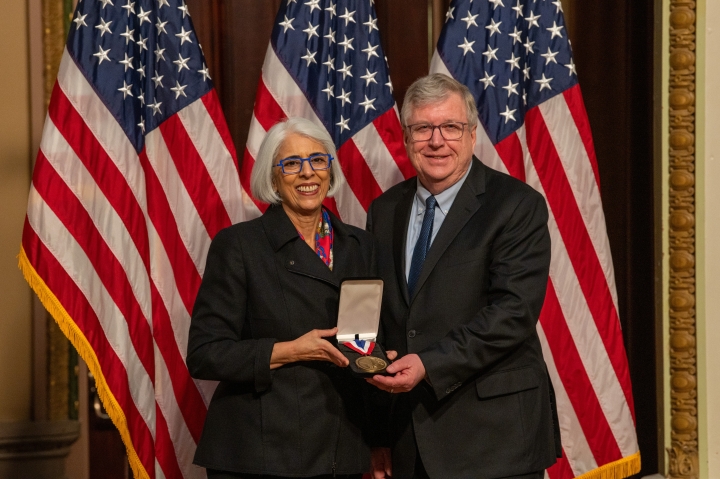
Eric R. Fossum is the John H. Krehbiel Sr. Professor for Emerging Technologies at the Thayer School of Engineering at Dartmouth College. He serves as Vice Provost for Entrepreneurship and Technology Transfer and Director of Dartmouth's PhD Innovation Program. As one of the world's leading experts in solid-state image sensors, he invented the CMOS active pixel sensor technology that revolutionized digital imaging in smartphones, medical devices, and automotive systems. His work has earned him numerous accolades, including the National Medal of Technology and Innovation (2025) and the Queen Elizabeth Prize (2017). His research interests focus on: Solid-state image sensors (CCDs, CMOS active pixel sensors, Quanta Image Sensors) Advanced imaging systems and on-chip processing New applications for image sensors in medicine, security, and space Dr. Fossum's recent publications demonstrate significant advancements in: Photon-counting sensors for low-light applications High-speed imaging for microscopy and radiography Backside-illuminated and sub-diffraction-limit pixel designs Quantum random number generation using sensor technology Infrared spectral extension of CMOS sensors His scientific awards include: National Medal of Technology and Innovation (2025) Queen Elizabeth Prize for Engineering (2017) IEEE Andrew S. Grove Award (2009) Induction into National Inventors Hall of Fame (2011) Emmy Award for Technology & Engineering (2021) Doctor of Science, Honoris Causa from Trinity College (2014) As an entrepreneurial leader, Dr. Fossum has: Co-founded Gigajot Technology with former PhD students Previously led Photobit and Siimpel Corporations Active participant in technology transfer initiatives at Dartmouth Founder and Past President of the International Image Sensor Society