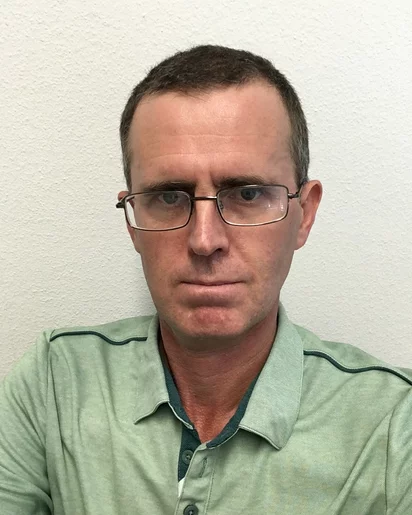
Dr. Aytaç Kubilay is a Senior Researcher at the Chair of Building Physics, Department of Mechanical and Process Engineering, ETH Zurich. His research focuses on urban microclimate modeling, particularly wind-flow analysis, thermal comfort optimization, and vegetation-based climate mitigation strategies. Institution: ETH Zurich Department: Mechanical and Process Engineering Research Scope: Urban climate, CFD modeling, heat island mitigation Research interests include computational fluid dynamics (CFD) applications for urban environments, with emphasis on heat island effects, wind-driven rain analysis, and porous media heat transfer. His work combines numerical simulations and experimental validations to assess thermal comfort and climate adaptation strategies in cities. Recent publications analyze vegetation impacts on urban microclimates, including tree cooling potential, street-level thermal comfort dynamics, and high-rise building wind mitigation. Studies employ custom solvers like urbanMicroclimateFoam and OpenFOAM for integrated flow-heat-moisture modeling. Key collaborations include researchers from ETH Zurich (Jan Carmeliet, Dominique Derome) and international institutions, focusing on sustainable urban planning and climate resilience frameworks.
Prof. Annalisa Manera is a Full Professor at ETH Zurich's Department of Mechanical and Process Engineering since July 2021, specializing in nuclear systems and multiphase flows. Previously, she held a professorship at the University of Michigan's Nuclear Engineering Department from 2011 to 2021. Her research focuses on advanced experimental techniques for single-phase and multiphase flows, high-resolution CFD validation, and computational tools for nuclear systems. She co-directs the Experimental and Computational Multiphase Flow (ECMF) Lab and the High Resolution Imaging Lab. Education: M.Sc. in Nuclear Engineering (University of Pisa, summa cum laude) and Ph.D. in Nuclear Engineering (Delft University of Technology). Awards include the ANS Bal-Raj Sehgal Memorial Award (2022) and the US DOE CASL Director’s Award (2016), alongside being an American Nuclear Society Fellow. Her work bridges nuclear safety, thermal-hydraulics, and computational modeling, with contributions to polaron physics, electron-phonon interactions, and material simulations. Courses taught include Nuclear Energy Conversion and Beyond-Design-Basis Safety.
Jan Carmeliet is a Full Professor at the Department of Mechanical and Process Engineering at ETH Zürich , holding the Chair of Building Physics since 2008. He previously held academic positions at Katholieke Universiteit Leuven and Eindhoven University of Technology . His research focuses on multiscale modeling of porous and granular materials , urban heat-air-moisture flows , and energy-efficient urban systems . His work integrates advanced computational techniques (e.g., lattice Boltzmann methods , CFD , FEM ) with experimental approaches ( X-ray tomography , wind tunnel PIV ). He leads major projects such as the RePoDH and Urban Multiscale Energy Modelling initiatives, aiming to decarbonize urban energy systems and understand local heat islands. Current projects emphasize renewable-powered district heating networks and urban climate modeling . Key collaborations include institutions like Empa , University of Illinois , and Los Alamos National Laboratory . He has secured significant grants from the Swiss National Science Foundation (SNSF) and ETH Domain , focusing on urban energy resilience and material science. His leadership roles include directing the Energy Science Center ETH Zürich and coordinating the SCCER-efficiency program.
Prof. Patrick Jenny is a Full Professor at the Department of Mechanical and Process Engineering and Head of the Institute of Fluid Dynamics at ETH Zurich. His research focuses on computational fluid dynamics (CFD), numerical methods for turbulent and multiphase flows, and reservoir simulation. He has held positions at ChevronTexaco and Cornell University, and received the National Latsis Prize 2005. PhD in CFD from ETH Zurich (1997) Postdoctoral work at Cornell University (1997–1999) Senior Researcher at ChevronTexaco (1999–2003) Research interests include: turbulent reactive flows, PDF modeling, multi-scale reservoir simulation, and data assimilation in engineering systems. He teaches courses on fluid dynamics, turbulence, and computational methods. Over 100 peer-reviewed publications span topics like fracture modeling, LES/RANS coupling, and particle-laden flows. His work bridges academia and industry, addressing challenges in energy systems, environmental engineering, and numerical algorithms. Winner: National Latsis Prize 2005 Led over 20 PhD projects and collaborates with institutions globally. His lab develops open-source tools for CFD and energy systems analysis.
Dr. Emiliano Casati is a Lecturer at the Department of Energy and Process Systems Engineering within the College of Mechanical and Process Engineering at ETH Zürich. His work focuses on sustainable energy engineering, particularly in decarbonizing high-temperature industrial processes and advancing solar thermal technologies. Research Interests: Sustainable energy engineering Decarbonization of heat Solarization of high-temperature industrial processes Thermal energy storage Conceptualization and prototyping of novel energy concepts Measurement of thermodynamic properties Publications Trends: Dr. Casati's recent research spans solar thermal systems (e.g., organic Rankine cycles, thermal trapping), computational tools for heat transfer simulation (FIVER), experimental thermodynamics, and industrial decarbonization. His work bridges historical analysis with cutting-edge technical innovation. Collaborations: He collaborates with leading experts like André Bardow (ETH Zürich) and Aldo Steinfeld (emeritus, ETH Zürich), contributing to multidisciplinary projects in renewable energy and process engineering.
Swiss Federal Institute of Technology in LausanneSwitzerland
Jean-Louis Scartezzini is an Honorary Professor at École Polytechnique Fédérale de Lausanne (EPFL), affiliated with the School of Architecture, Civil and Environmental Engineering (ENAC) and the Solar Energy and Building Physics Laboratory (LESO-PB). His research focuses on natural/artificial lighting, solar energy systems, and building technology, with a strong emphasis on energy efficiency and sustainability. Director of LESO-PB since 1994 Founded and led several institutes, including the Institute for Infrastructure, Resources, and Environment (2002–2009) Doctorat in Physics from EPFL (1986) Extensive international collaborations, including visiting roles at NUS (2009) and LBNL/UCLA (1988) Research interests include: - Daylighting and lighting control systems - Passive/active solar technologies - Urban microclimate and energy systems - Stochastic simulation and predictive control Recent work addresses climate change impacts on energy systems, urban sustainability, and machine learning applications in energy optimization. Key publications span lighting health impacts, renewable integration, and microclimate modeling Awards include the European Solar Prize (2001/2002) and Walsh-Weston Bronze Medal (1998) Mentored over 20 PhD students, many leading in academia and industry (e.g., Marilyne Andersen at EPFL, Flavio Foradini at E4Tech).
Dr. Yinghe Qi is a Professor in the Department of Experimental Fluid Dynamics at ETH Zürich, Switzerland. His research focuses on multiphase flows, turbulence, and free-surface dynamics, with applications in aerospace, marine engineering, and computational fluid dynamics. He has contributed extensively to understanding bubble dynamics, flow instabilities, and turbulence modulation through experimental and phenomenological studies. Research Interests: Dr. Qi’s work addresses complex phenomena in multiphase flow instabilities free-surface turbulence deformable bubble dynamics supersonic jet interactions vortex-induced fragmentation machine learning in fluid dynamics Recent Publications: His recent studies (2023–2025) explore multiscale bubble deformation, free-surface turbulence structure, and supersonic jet-plume interactions. Key themes include turbulent fragmentation, vortex-bubble coupling, and novel computational methodologies. Laboratory Affiliations: He collaborates with the Coletti Group, Jenny Group, and Supponen Group at ETH Zürich, advancing experimental and computational techniques in fluid dynamics.
Dr. Stefano Buoso is a Lecturer at ETH Zürich's Department of Information Technology and Electrical Engineering, specializing in biomedical imaging and computational mechanics. His research focuses on cardiovascular modeling, fluid-structure interaction, and reduced-order modeling. He holds a position in the Professur für Biomedizinische Bildgebung (Biomedical Imaging Professorship). Key research areas include computational fluid dynamics applied to cardiovascular systems, development of machine learning tools for medical imaging (e.g., MRI and echocardiography), and creation of patient-specific numerical phantoms. His work bridges engineering and medicine, with applications in clinical diagnostics and personalized medicine. Recent articles emphasize innovations like automated 3D heart modeling from 2D echocardiography, synthetic MRI data generation, and turbulence analysis in aortic flow. He has developed open-source tools like CMRsim for cardiovascular simulations. Buoso collaborates on digital twin technologies for carotid artery disease assessment and fluid dynamics modeling of biological systems. His technical contributions include methods for rapid mesh generation, stabilized reduced-order models, and MRI-guided cardiac shape modeling. Research spans from microvascular neurovascular unit studies to bio-inspired membrane wing aerodynamics, reflecting interdisciplinary expertise.
Swiss Federal Institute of Technology in LausanneSwitzerland
Professor Pascal Fua is a distinguished faculty member at EPFL (Swiss Federal Institute of Technology) in the School of Computer and Communication Science. He joined EPFL in 1996 and currently serves as Head of the Computer Vision Laboratory (CVLAB). His extensive research spans multiple cutting-edge areas in computer vision and geometric deep learning, with applications ranging from 3D reconstruction to medical imaging and aerodynamic optimization. Dr. Fua's research interests encompass Computer Vision, 3D Reconstruction, Shape Modeling, Geometric Deep Learning, Medical Image Analysis, Augmented Reality, Motion Recovery, Surface Mesh Processing, and Aerodynamic Shape Optimization. His work demonstrates a remarkable ability to bridge theoretical computer vision with practical applications across diverse domains. His research has evolved from traditional geometric computer vision techniques to incorporating deep learning approaches for 3D modeling, with recent focus on differentiable rendering, implicit surface representations, and applications in medical imaging and engineering design. His publication record shows a consistent trajectory of high-impact research, with recent work focusing on differentiable iso-surface extraction, geometric deep learning for aerodynamic shape optimization, and novel approaches to 3D reconstruction. His work spans both theoretical advances in computer vision algorithms and practical applications in medical imaging, autonomous driving, and computational fluid dynamics. IEEE Fellow Multiple ERC Grants recipient Associate Editor of IEEE Transactions for Pattern Analysis and Machine Intelligence Throughout his career, Professor Fua has mentored numerous PhD students who have gone on to make significant contributions in computer vision and related fields. His laboratory has established collaborations across multiple disciplines, including medical imaging, aerospace engineering, and neuroscience, demonstrating the broad applicability of his research. His current work continues to push the boundaries of geometric deep learning and 3D vision, with particular emphasis on making these techniques more practical and applicable to real-world engineering and medical problems.
Western Switzerland University of Applied SciencesSwitzerland
Cécile Münch-Alligné is a Professor in Hydraulic Energy at the University of Applied Sciences and Arts Western Switzerland (HES-SO) in Sion, where she serves as the Head of the Hydroelectricity Research Group and the Renewable Energy Program. She leads the Hydro Alps Lab, which conducts applied research in hydropower combining experimental and numerical approaches. Her work focuses on enhancing the flexibility of both small and large hydropower plants, with particular emphasis on adapting these systems to the evolving energy landscape and integration of renewable energy sources. Her educational background includes a BSc in Energy and Environmental Techniques, an MSc in Engineering, and a BSc in Industrial Systems, all from HES-SO Valais-Wallis. Her research spans multiple domains within hydraulic engineering and renewable energy systems, with particular expertise in CFD simulation, numerical methods, and hydraulic machine design. Münch-Alligné's research interests primarily center around improving hydropower flexibility through innovative approaches such as hydraulic short-circuit operating modes, variable speed operation, and energy recovery systems in water networks. She investigates both large-scale pumped storage power plants and micro-hydropower systems for urban water networks, with a strong focus on practical implementation and commercialization of research findings. Her work bridges theoretical modeling with experimental validation to address real-world challenges in the energy transition. Her research has been published extensively in leading journals, covering topics from Pelton turbine dynamics and Francis turbine vortex analysis to micro-turbine implementations in drinking water networks. The publications reveal a clear trend toward enhancing operational flexibility of hydropower systems to better integrate with intermittent renewable energy sources, with increasing emphasis on practical demonstration projects and commercial applications. As Principal Investigator, she has led multiple significant research projects including the SCCER 4 WP 3.2.0 2017-2020 (Supply of Electricity), Hydrolienne pour canaux artificiels Centrale de Lavey, and SOLUTION DE TRANSFERT D'ENERGIE PAR POMPAGE-TURBINAGE A PETITE ECHELLE. These projects, totaling over 2 million CHF in funding from sources including CTI, OFEN, and industrial partners, demonstrate her ability to secure substantial research funding and collaborate effectively with both academic and industry partners. Münch-Alligné leads the Hydro Alps Lab research team, which includes numerous researchers such as Steiner Amandus, Walpen Olivier, Vaccari Aldo, and others. Her collaborative approach extends to partnerships with institutions like Stahleinbau GmbH and The Ark Energy, facilitating the transfer of knowledge from research to industry application. The lab's work spans from fundamental fluid dynamics research to full-scale demonstration projects, creating a comprehensive pipeline from theory to practical implementation.
Western Switzerland University of Applied SciencesSwitzerland
Da Riva Enrico is an Associate Professor HES at the School of Engineering and Management of the Canton of Vaud , specializing in Heat pump and refrigeration systems , Heat exchanger design , Heat transfer , and Natural refrigerants . He leads applied research projects in energy systems and thermal dynamics. Education: MSc HES-SO in Engineering, BSc HES-SO in Energy and Environmental Techniques, BSc HES-SO in Mechanical Engineering His research focuses on two-phase flow modeling , condensation in microchannels , and thermal management of buildings , particularly with natural refrigerants and transcritical CO2 systems . Recent work includes experimental validation of low-charge heat exchangers and hybrid heat pump integration for energy-efficient buildings. He has secured grants from institutions like HES-SO , CSD Ingenieurs SA , and Vitogaz Switzerland . His projects often involve collaborations with Page Jessen , IGT , and HES-SO Valais . Da Riva is affiliated with the IE Institute (Energy Institute) and has contributed to Nuclear Technology , International Journal of Heat and Mass Transfer , and technical book chapters on Two-Phase Heat Transfer .
Dr. Konstantin Mikityuk is Group Leader of Advanced Nuclear Systems at Paul Scherrer Institute's Laboratory for Simulation and Modelling. He has researched fast reactor safety since 1992, focusing on neutronics and thermal-hydraulics of sodium-cooled systems. As coordinator of the Horizon-2020 ESFR-SMART project, he leads European sodium fast reactor safety research. He represents Switzerland in the Generation-IV International Forum Experts Group and co-chairs its Education Task Force. Dr. Mikityuk also serves as Swiss representative to IAEA's Technical Working Group on Fast Reactors. His research develops computational methods for reactor safety assessment, including advanced simulation tools for sodium boiling phenomena, core power distribution, and fuel performance. Recent work examines metallic fuel behavior, accident progression in loss-of-flow scenarios, and uncertainty quantification methodologies. He obtained his PhD from Russian Research Centre "Kurchatov Institute" (2002) and holds engineering degrees from Moscow Engineering Physics Institute.
University of Applied Sciences and Arts LucerneSwitzerland
Ernesto Casartelli is a Professor and Head of the Competence Center for Fluid Mechanics and Numerical Methods at the Institute of Mechanical and Energy Engineering (IME) within Lucerne University of Applied Sciences and Arts (Hochschule Luzern) - Engineering & Architecture. He leads a research group specializing in computational fluid dynamics (CFD) applications for turbomachinery and fluid systems. His academic journey began with a Mechanical Engineering degree from ETH Zurich, followed by a PhD from the same institution. Prior to his academic career, he worked at Sulzer Innotec as a research engineer and group leader in Turbomachinery CFD. Professor Casartelli's research focuses on advanced computational methods for fluid dynamics problems, particularly in turbomachinery applications. His work spans CFD solver development, turbulence modeling (including Reynolds Stress Models), cavitation modeling, real gas effects, and adjoint optimization techniques. He has made significant contributions to understanding pump-turbine behavior, centrifugal compressor design, and multiphase flow phenomena. His research group actively collaborates with industry partners to solve practical engineering challenges in energy systems and fluid machinery. His recent publications demonstrate a strong trend toward developing and validating advanced numerical methods for complex fluid flow problems, with particular emphasis on industrial applications. The research spans fundamental CFD methodology development to applied engineering solutions for turbomachinery, hydropower systems, and thermal management. His work increasingly integrates optimization techniques with high-fidelity simulations to improve design processes. Professor Casartelli leads several research projects including Carbon Capture, Utilization and Storage; medical applications for cataract surgery; wind force analysis on green facades; urban area CFD studies; and energy-efficient appliance design. His work bridges theoretical fluid dynamics with practical engineering solutions across multiple sectors. As Head of the Competence Center for Fluid Mechanics and Numerical Methods, he oversees research activities, supervises projects, and maintains strong industry connections to ensure research relevance. His leadership has established the center as a hub for CFD expertise in Switzerland, particularly in turbomachinery applications and numerical method development.
Western Switzerland University of Applied SciencesSwitzerland
Jean Decaix is a Researcher at the University of Applied Sciences and Arts Western Switzerland (HES-SO Valais-Wallis - Haute Ecole d'Ingénierie ) within the Department of Energy and Environmental Techniques . His work focuses on hydropower systems , computational fluid dynamics (CFD) , and cavitation modeling for hydraulic turbines. Decaix contributes to projects like SCCER-SoE (Supply of Electricity center) and XFlex Hydro , aiming to enhance grid stability through advanced turbine operation. Decaix's research spans Francis and Pelton turbines , with a focus on flow topology , unsteady cavitating flows , and hydraulic short-circuit modes . He develops freely distributable CFD tools for building airflow and turbine efficiency, validated through experimental measurements and numerical simulations . Notable projects : SCCER-SoE (2017-2020): Innovation roadmaps for geothermal and hydropower Solution de transfert d'énergie par pompage-turbinage à petite échelle (2015-2017): Economic model development for small-scale hydropower Decaix's 15 most recent publications (2015-2024) cover topics like cavitation suppression , vortex rope dynamics , Pelton turbine efficiency , and CFD validation for building energy systems. His work emphasizes renewable energy integration and mechanical stress reduction in hydropower plants.
Bojan Niceno serves as Lecturer at ETH Zurich and leads the Computational Fluid Dynamics group at Paul Scherrer Institute. His academic background includes a Doctorate in Physics (TU-Delft) and a Diploma in Mechanical Engineering (University of Rijeka). Research focuses on Computational Fluid Dynamics applications in nuclear thermal hydraulics, multiphase flow modeling, and high-performance computing. Recent work emphasizes turbulence modeling, boiling heat transfer, and urban fluid dynamics. Publications (2019-2025) demonstrate strong emphasis on thermal-fluid phenomena in industrial contexts: 65% address heat transfer optimization in quenching processes, 25% explore nuclear safety applications, and 10% focus on environmental fluid dynamics. Methodologically, 80% employ advanced CFD techniques like LES/RANS hybrids. Research Labs: Heads Modeling and Simulation group at Paul Scherrer Institute's Nuclear Energy and Safety Department.