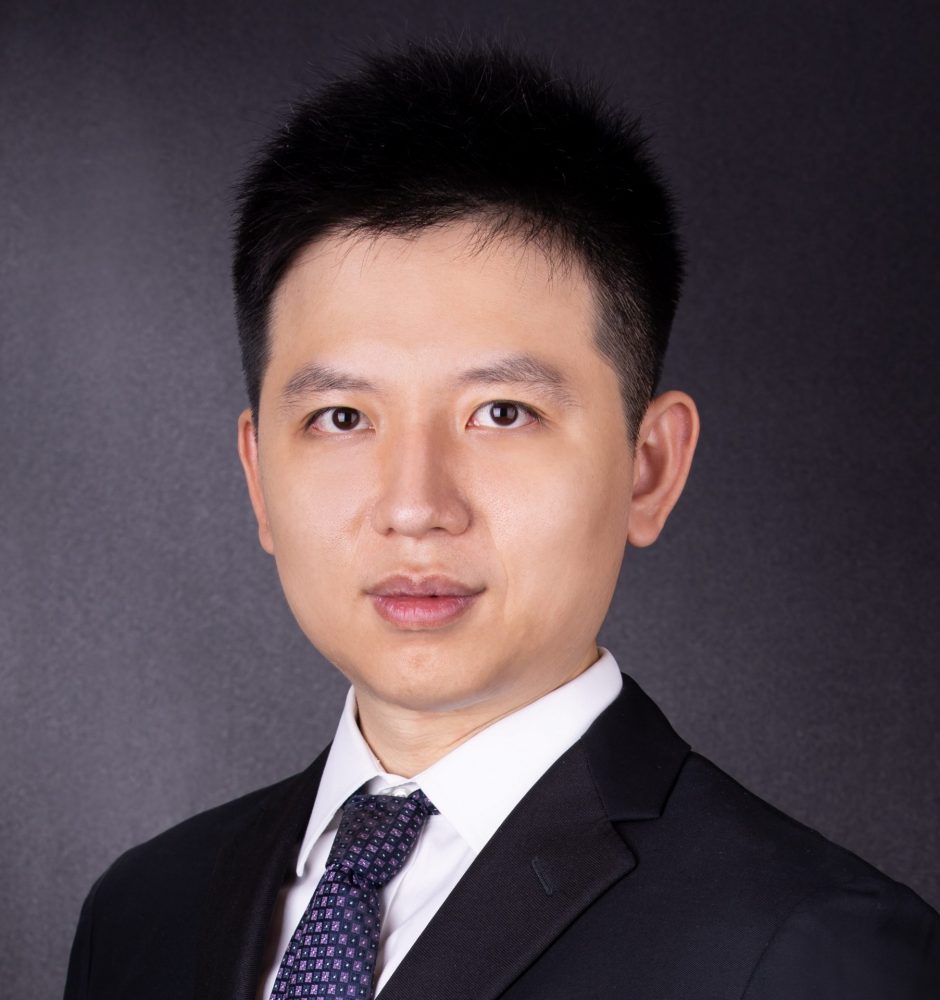
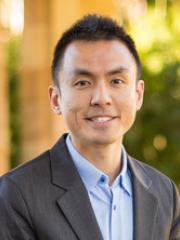
Felipe Csaszar is a Professor of Strategy and Chair of the Strategy Department at the University of Michigan's Ross School of Business. His research focuses on decision structures' impact on innovation, financial performance, and social outcomes, with particular attention to cognitive frameworks, organizational processes, and AI's role in decision-making. He holds a PhD and MA from the Wharton School, University of Pennsylvania. Education: PhD in Strategy, University of Pennsylvania (2009) MA in Strategy, University of Pennsylvania (2007) Research Interests: Strategic decision-making under AI integration Cognitive and structural drivers of innovation Organizational decision processes and design Formal modeling and empirical strategy research Editorial Roles: Senior Editor, Strategy Science and Management Science Former Editor, Organization Science Co-editor, Handbook of AI and Strategy Professional Experience: Prior role: Assistant Professor at INSEAD Previous career: CEO of an internet startup and Head of Research at an asset management firm Labs/Teams: Leading the Strategy Science division at INFORMS Co-chair of the SMS Behavioral Strategy division
Clemens Otto is a Full-time Associate Professor of Finance at the Lee Kong Chian School of Business, Singapore Management University. He holds a Ph.D. (Finance) from London Business School (2012), an M.Res. (Finance) from London Business School (2009), and a CEMS Master (International Management) and Dipl.-Kfm. (Business Administration) from the University of Cologne and HEC Paris (2006). His research focuses on Financial Contracting, Corporate Disclosure Practices, Behavioral Finance, and Strategic Investment Decisions. Key research interests include analyzing how disclosure policies impact capital markets, the behavioral drivers of corporate investment, and the effects of regulatory frameworks on firm behavior. His work integrates theoretical finance with empirical evidence from supply chains, healthcare disclosures, and debt markets. Notable awards include the Michael J. Brennan Award (2022) and the SAC Capital Ph.D. Award (2012). His publications span journals such as the Review of Financial Studies , Management Science , and The Accounting Review . Current research explores disclosure externalities in supply chains and the strategic implications of peer disclosures in clinical trials. Prof. Otto has been affiliated with SMU since 2017, advancing through roles from Assistant Professor (2017–2021) to his current position. His expertise aligns with SMU’s strategic priorities in Asia-focused finance and sustainable living through informed corporate governance frameworks.
Associate Professor Mark Humphery-Jenner is a distinguished faculty member at the University of New South Wales (UNSW) Business School, specifically within the School of Banking and Finance. With an exceptional academic pedigree including multiple PhDs from prestigious institutions worldwide, he has established himself as a leading researcher at the intersection of finance, law, and corporate governance. Dr. Humphery-Jenner's educational background demonstrates remarkable breadth and depth, featuring PhDs from UNSW, Tilburg University, and Leiden University, along with master's degrees from Columbia University and the University of Washington. His undergraduate achievements include a BCom with First Class Honours and University Medal, and an LLB with First Class Honours, both from UNSW. This multidisciplinary foundation spanning business, law, and finance informs his comprehensive research approach. His research spans corporate finance, venture capital, and law, with particular focus on how legal frameworks shape financial decision-making and corporate behavior. Humphery-Jenner has published extensively in top-tier finance journals including the Journal of Financial Economics, Journal of Financial and Quantitative Analysis, Review of Finance, and Journal of Corporate Finance, as well as leading management journals such as Strategic Management Journal and Journal of International Business Studies. His scholarly contributions address critical issues in executive compensation, securities litigation, corporate governance, and private equity markets. Analysis of his recent publications reveals a sophisticated research trajectory increasingly focused on the relationship between litigation risk and financial reporting practices, corporate governance mechanisms, and investor protection frameworks. His work demonstrates particular attention to Australian regulatory contexts while maintaining a strong international comparative perspective, especially regarding Asian capital markets and cross-border investment. With substantial industry experience including work in investment banking and consulting for hedge funds, Humphery-Jenner brings practical insights to his academic work. He has been teaching in various capacities since 2006 and has served as an assistant professor in finance since 2012, contributing significantly to business education at UNSW. His professional background enhances his ability to bridge theoretical research with real-world financial practice.
Chendi Zhang is a Professor of Finance at the University of Exeter Business School. He serves as the founding Director of the Exeter Sustainable Finance Centre and Director/Treasurer of the Global Research Alliance for Sustainable Finance and Investment. Previously, he was Associate Dean for Research & Impact (2021-2025) and Director of Research for Finance and Accounting (leading REF2021 submission). He holds affiliations with the Global Systems Institute and Environment and Sustainability Institute, contributing to UN Sustainable Development Goals including Climate Action and Responsible Consumption. Education PhD in Financial Economics from Tilburg University MRes in Finance from Tilburg University MSc in Economics from Tilburg University BSc in International Finance from Shanghai Jiao Tong University Research Focus Professor Zhang's research explores sustainable investing, corporate finance, and behavioral finance with emphasis on ESG integration, climate risk, and stakeholder governance. His work examines how environmental/social factors influence financial markets, corporate decision-making, and asset pricing through empirical and theoretical frameworks. Recent studies analyze biodiversity's financial impact, carbon pricing mechanisms, income inequality disclosures, and ESG resilience during crises (e.g., COVID-19, Ukraine conflict). His research identifies market inefficiencies related to climate sensitivity, gambling sentiment, and dividend policies while exploring corporate governance in state-owned enterprises. Funding and Recognition Research funded by UKRI Natural Environment Research Council, British Academy, BNY Mellon, Royal Bank of Canada, and World Bank. Work featured in The Economist , Wall Street Journal , and Forbes . Articles published in top journals including Management Science and Journal of Financial Economics , cited over 10,000 times. Professional Service Vice Chair of Research Committee for Chartered Association of Business Schools. External examiner for Imperial College London. Previous appointments at University of Cambridge, University of Warwick, University of Sheffield, and Tilburg University.
Ernst Maug, Ph.D. is Professor of Corporate Finance at the University of Mannheim Business School, where he has held a faculty position since February 2006. He has served in significant leadership roles including Associate Dean for Research and director of the business school's doctoral programs. Maug currently holds the position of President of the European Finance Association, reflecting his standing in the academic finance community. Professor Maug's research program focuses on corporate finance with particular emphasis on corporate governance mechanisms. His work examines the interface between financial markets and labor markets, executive compensation structures, shareholder voting behavior, and the role of institutional blockholders. His research demonstrates a consistent interest in understanding how governance structures affect firm performance and decision-making processes. The analysis of Professor Maug's recent publications reveals a strong focus on shareholder democracy, executive compensation design, and the intersection of labor markets with corporate governance. His work frequently appears in the top finance journals including the Journal of Finance, Journal of Financial Economics, and Review of Financial Studies, indicating the high quality and impact of his research contributions. Professor Maug has served in significant academic leadership positions, directing doctoral programs and contributing to research strategy as Associate Dean for Research at the University of Mannheim Business School. His service as President of the European Finance Association further demonstrates his influence in shaping the direction of finance research across Europe.
Professor Mary Ellen Carter is the Joseph L. Sweeney Chair in Accounting at Boston College's Carroll School of Management. She holds a BS from Babson College, an MBA from Boston College, and a PhD from MIT's Sloan School of Management. A CPA with prior audit experience at Coopers & Lybrand, she focuses on financial reporting, executive compensation, and corporate governance. Her research explores gender pay gaps, labor market pressures on compensation, and the role of compensation consultants. Her work has been published in top journals like Journal of Accounting and Economics and Journal of Financial Economics , and featured in Forbes , Financial Times , and New York Times . She currently serves as Editor of The Accounting Review and Associate Editor of Management Science . Notable awards include the Coughlin Distinguished Teaching Award (2019) and Ernst & Young Faculty Fellowship (2021-2022). Professor Carter teaches intermediate accounting and has held faculty positions at Columbia Business School and Wharton School. Her research trends emphasize real-world impacts of accounting policies, regulatory changes, and labor market dynamics. Recent studies address pandemic-driven compensation shifts and ESG-related governance mechanisms.
Charles A. O'Reilly is The Frank E. Buck Professor of Management in the Organizational Behavior area at Stanford Graduate School of Business, where he has been on faculty since 1993. Previously, he served as Professor at University of California, Berkeley (1980-92) and Assistant Professor at University of California, Los Angeles (1976-80). His educational background includes a PhD in Organizational Behavior from University of California Berkeley (1975), MBA from University of California, Berkeley (1971), and BS in Chemistry from University of Texas El Paso (1965). O'Reilly's research focuses on leadership, organizational culture, innovation and change, organizational demography and diversity, and executive compensation. His work has increasingly concentrated on narcissistic leadership and its organizational consequences, ambidextrous organizations that can simultaneously exploit existing capabilities while exploring new opportunities, and the relationship between organizational culture and performance. His influential papers on person-organization fit, organizational ambidexterity, and leadership have shaped contemporary organizational theory. His publications reveal a strong trend toward examining the dark side of leadership, particularly narcissism in executives, and how CEO personality shapes organizational culture. His recent work explores the connection between narcissistic leadership and organizational outcomes including unethical behavior, legal vulnerabilities, and cultural toxicity. Distinguished Scholar Award by the Academy of Management Organizational Behavior Division Lifetime Achievement Award (2010) Distinguished Teaching Award for MBA teaching at Stanford Graduate School of Business (2001) California Management Review Best Paper Award (1996, 2009, 2019, 2020) Administrative Science Quarterly Scholarly Contribution Award (1995, 1998) Hank McKinnell-Pfizer Inc. Faculty Fellow (2022-23) O'Reilly has developed and directed executive education programs including Culture as a Competitive Advantage and Leading Change and Organizational Renewal. He has consulted for numerous public and private firms globally and has taught at UC Berkeley, UCLA, Columbia, and Harvard Business School. His research has been supported by various academic and corporate funding sources that enable his extensive studies of organizational dynamics and leadership. As Co-Director of Culture as a Competitive Advantage and Leading Change and Organizational Renewal programs, O'Reilly works with executive teams to transform organizational culture and implement strategic change. His research on organizational ambidexterity has influenced how companies approach innovation within established organizations, particularly through his work with Michael Tushman on the concept of 'corporate explorers' who drive innovation from within.
Professor John Shields is a distinguished academic in Human Resource Management and Organisational Studies at the University of Sydney’s Business School. He holds a BA(Hons) from ANU and a PhD from the University of Sydney. As Academic Director International, he oversees global strategies for the Business School’s international partnerships and recruitment. His roles have included Associate Dean (Programs), Deputy Dean, and Chair of the Faculty Board, reflecting his extensive leadership within the institution. In research, Shields focuses on performance management, reward systems, corporate governance, and international education. He co-authored seminal textbooks like *Managing Employee Performance and Reward* and *Human Resource Management: Strategy and Practice*. Current projects explore performance management transformation, pay secrecy disclosure, and gaming’s psychological impacts. His teaching spans undergraduate and postgraduate courses such as Strategic HRM and Global Leadership. Shields has supervised over a dozen PhD students, with topics ranging from Saudi Arabian workplace dynamics to corporate governance in Australian firms. Recognized with the 2008 Wayne Lonergan Teaching Award, he actively contributes to professional bodies like the Australian Human Resources Institute. Publications highlight his influence in HRM theory and practice, including studies on CEO remuneration, board capital, and pandemic-era worker resilience. His interdisciplinary work bridges organizational behavior, economics, and policy, positioning him as a key figure in contemporary HRM research.
Scott Hsu serves as an Associate Professor in the Department of Finance at the Walton College of Business, University of Arkansas, with his office located in WCOB 475B. His academic role centers on empirical finance research with strong institutional linkages. Dr. Hsu's research critically examines how external institutions and managerial characteristics shape corporate behavior. His primary focus areas include corporate political connections , CEO attributes (notably physical attractiveness), private equity dynamics , and venture capital investment patterns . He investigates causal mechanisms through which bankruptcy laws, political networks, and executive experiences influence firm policies, innovation outcomes, and market competition. Analysis of his 12 publications (2010-2025) reveals consistent methodological rigor in studying institutional finance. Key trends include the supply-chain externalities of political connections, CEO appearance effects on firm valuation, and private equity's employment impacts. His work bridges corporate finance with political economy and innovation studies, frequently employing large-scale empirical datasets to uncover non-market forces in corporate decision-making. The 2025 paper on political connection externalities indicates ongoing active research.
Solntsev Sergey Andreevich is an Associate Professor at the Department of Applied Economics within the Faculty of Economic Sciences at the National Research University Higher School of Economics (HSE). He also serves as Deputy Head of the Laboratory of Labor Market Research. With over 23 years of scientific and teaching experience since joining HSE in 2004, he specializes in labor economics, corporate governance, and personnel policy. Candidate of Economic Sciences (2006), Lomonosov Moscow State University Master's degree in Economics (2003), Lomonosov Moscow State University Bachelor's degree in Economics (2001), Lomonosov Moscow State University His research focuses on labor market dynamics, particularly examining wage structures, personnel policies in Russian companies, top management labor markets, and the relationship between higher education and labor market outcomes. He has conducted extensive empirical research on how Russian firms adjust wages, recruit employees, and manage executive turnover, with a particular emphasis on corporate governance mechanisms. His work often utilizes unique Russian enterprise and household survey data to provide insights into labor market functioning in the Russian context. His publication portfolio demonstrates a consistent focus on Russian labor market issues, with particular attention to higher education outcomes, wage setting practices, and executive labor markets. His research combines rigorous empirical methodology with practical policy implications, contributing significantly to understanding labor market dynamics in Russia during periods of economic transition and crisis. Letter of thanks from the Rector of HSE (December 2022) Gratitude from the Faculty of Economic Sciences of HSE (February 2020) Academic Work Allowance (2014-2015, 2008-2009) Bonus for publication in a List B journal (2023-2025) Professor Solntsev teaches multiple courses including Labor Economics, Labor and Personnel Economics (in Russian and English), and Russian Economy at both bachelor's and master's levels. His teaching reflects his research expertise, providing students with insights into contemporary labor market issues in Russia. His research has been supported through institutional mechanisms at HSE, including participation in the Laboratory of Labor Market Research activities and various research projects. As Deputy Head of the Laboratory of Labor Market Research at HSE's Faculty of Economic Sciences, he contributes to one of Russia's leading research centers focused on labor market analysis. The laboratory conducts empirical studies on various aspects of the Russian labor market, often in collaboration with government agencies like Rostруд (Federal Labor and Employment Service). Professor Solntsev works closely with colleagues including Professor Sergey Roshchin, the laboratory head, on multiple research initiatives.
Jonathan L. Rogers is a Professor in the Accounting Department at Leeds School of Business, University of Colorado Boulder. He maintains his office in Koelbel Building, room 433, and can be contacted at jonathan.rogers@colorado.edu or by phone at 303-735-6620. Dr. Rogers received dual bachelor's degrees from the University of Texas in 1996: one in Business Administration with a focus in finance, and another in Economics with a minor in accounting. He earned his PhD in Accounting from the Wharton School of the University of Pennsylvania in 2005. He is also a certified management accountant and certified in financial management, though both certifications are currently inactive. Dr. Rogers' research focuses on voluntary disclosure, market microstructure, multinational firms, insider trading, and stock return volatility . His work has been published in all three top accounting journals (Journal of Accounting Research, Journal of Accounting and Economics, The Accounting Review) and has received significant attention from major media outlets including The Wall Street Journal, The New York Times, Financial Times, Fortune, Reuters, Bloomberg TV, and CNBC. His research has also been cited by members of Congress. His recent publications span a diverse range of topics from accounting and finance to meteorology and healthcare, reflecting interdisciplinary collaborations. Major themes in his work include financial disclosure practices, market microstructure, insider trading, and the dissemination of financial information. His research on SEC dissemination in high-frequency trading environments has been particularly influential in both academic and regulatory circles. 2015 EKS&H Faculty Fellowship 2015 RAST Conference Best Paper Award 2011 Fama-Miller Center Research Grant 2010 William Ladany Faculty Scholar 2009 Ernest R. Wish Award 2009 Initiative on Global Markets Research Grant 2003 Deloitte Foundation Doctoral Fellowship European Accounting Association's 2003 Doctoral Colloquium Fellowship 2001 Geewax, Terker & Company Prize for Investment Research Dr. Rogers serves on the editorial board of the Journal of Accounting Research and works as an ad hoc reviewer for the Journal of Finance, the Accounting Review, the Journal of Accounting and Economics, the Review of Accounting Studies, Contemporary Accounting Research, American Accounting Association Midyear, and the Annual and FARS section meetings. His research has been supported by numerous grants including those from the Fama-Miller Center, Initiative on Global Markets, and the Deloitte Foundation. While specific information about his laboratory or research team is not provided in the available text, his extensive publication record and editorial roles suggest he likely collaborates with multiple researchers and potentially supervises graduate students in accounting research.
Fangzhou LU is an Assistant Professor of Finance at the HKU Business School, The University of Hong Kong, since 2020. His research focuses on fintech, cryptocurrency, behavioral finance, and China's economic development. He received his academic training at prestigious institutions: PhD and MS in Financial Economics from Massachusetts Institute of Technology (MIT), 2020 BS in Business from New York University, Stern School of Business, 2014 Dr. Lu's research interests encompass Fintech, Cryptocurrency, Behavioral Finance, Entrepreneurial Finance, Household Finance, Emerging Markets, consumption, fiscal stimulus, bond markets, and China's economic development. His work often leverages large datasets from China to examine how technological innovations and government policies impact financial markets and firm behavior, particularly during crises like the COVID-19 pandemic. His recent publications demonstrate a strong trend toward applied research in emerging markets, with significant contributions on SPAC IPOs, government subsidy effectiveness for failing firms, and stock market informativeness in China. These works appear in top finance journals including the Journal of Financial Economics and Journal of Financial and Quantitative Analysis, highlighting his expertise at the intersection of finance, technology, and policy analysis.
Dr. Eric Tan is a Senior Lecturer in Finance at the University of Queensland's School of Business. He holds a PhD in Finance from the University of New South Wales and a Bachelor of Commerce (First Class Honours) from Monash University. Currently, he serves as the postgraduate coordinator for the finance PhD program and is a member of the Low and Negligible Risk (LNR) Ethics Review Panel. His research focuses on investments, fund management, and institutional investors like mutual funds and hedge funds. He has expanded into corporate finance, examining media coverage and political connections' roles. His work has been presented at major conferences such as the American Finance Association (AFA) and European Finance Association (EFA). He has received numerous grants from AFAANZ, industry bodies, and internal funding. Dr. Tan's articles explore topics like media influence on CEO dominance, climate transition risk in banking, and mutual fund performance. His research has won three Best Paper Awards at academic forums between 2016 and 2018. He also referees for top journals including the Review of Financial Studies and Financial Analysts Journal . Educations: PhD in Finance, University of New South Wales Bachelor of Commerce (First Class Honours), Monash University Awards: Best Paper Award, UWA Accounting and Finance Research Forum (2018) Best Paper Award, FIRN Annual Conference (2017) Best Paper Award, New Zealand Finance Colloquium (2016) Grants: AFAANZ, industry, and internal research grants. His advisory roles include overseeing the finance PhD program and ethics review. He contributes to the academic community through peer review and conference participation.
Dr Tracy Qu is a Lecturer in the School of Accountancy at Queensland University of Technology (QUT), within the Faculty of Business & Law. She holds a PhD in Accounting from Griffith University (2018) and is a CPA Australia member (since 2021). Her research focuses on executive remuneration, corporate governance, financial reporting, and environmental accounting. Tracy teaches undergraduate and postgraduate courses in accounting fundamentals, financial analysis, and business valuation. She has also served as a referee for journals like Accounting and Finance and Australian Journal of Management . Tracy’s research explores intersections between governance structures and executive compensation design, particularly in mitigating agency conflicts. Her work examines topics such as carbon emissions policy impacts on corporate behavior, labeling effects in financial disclosures, and CEO celebrity influence on investment decisions. She actively contributes to academic debates on environmental accounting and sustainability reporting. Tracy is currently accepting research students for Honours, Masters, and PhD programs, focusing on topics like executive compensation efficiency, board interlocks, and compensation consultants’ roles.
Reinier H. Kraakman is the Ezra Ripley Thayer Professor of Law at Harvard Law School, where he teaches corporate law, corporate finance, and organizational law. He previously served as a professor at Yale Law School and has held visiting positions at Georgetown University Law Center and New York University School of Law. His academic and policy work has influenced corporate governance reforms in countries such as Russia and Vietnam. Education: J.D., Yale Law School, 1979 Ph.D. in Sociology, Harvard University, 1973 B.A. in History and Science, Harvard College, 1971 Fulbright Fellowship, University of Frankfurt, 1971 His research focuses on corporate law, corporate governance, comparative corporate law, and the economic foundations of organizational law. Kraakman is renowned for identifying core agency problems in corporations—between managers and shareholders, controlling and minority shareholders, and shareholders and other stakeholders. His work emphasizes the functional and comparative analysis of legal institutions across jurisdictions. The recent publications of Professor Kraakman reflect a sustained focus on the intersection of law, economics, and institutional design. His articles and books analyze corporate governance structures, market efficiency, CEO turnover, and the historical evolution of business entities. He frequently collaborates with leading scholars such as Henry Hansmann, Lucian Bebchuk, and Ronald Gilson, producing influential interdisciplinary work that shapes both academic discourse and policy debates. Scientific Awards: Elected ECGI Research Associate (2006) Fulbright Fellowship (1971) Kraakman has advised on legal reforms and contributed to major amicus briefs before the U.S. Supreme Court, particularly in cases involving corporate political speech and shareholder rights. His work on compliance, executive compensation, and board accountability has informed regulatory thinking globally. He is a key figure in the academic network promoting empirical and theoretical rigor in corporate law. He is a co-author of the seminal treatise The Anatomy of Corporate Law , now in its third edition, and has published extensively in top law journals including the Yale Law Journal , Georgetown Law Journal , and Harvard Law Review . His scholarship continues to be central to understanding the convergence and divergence of corporate legal systems worldwide.