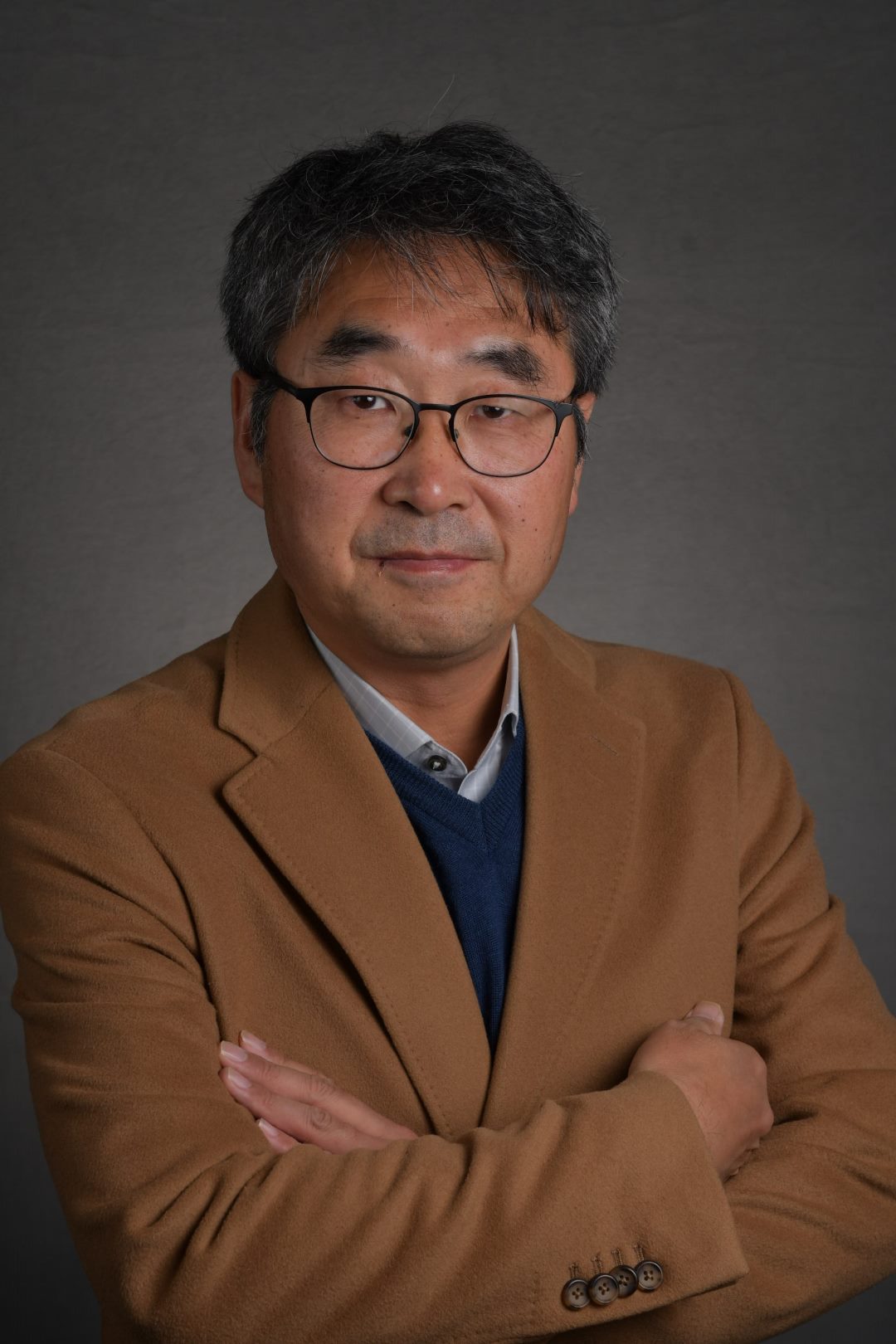
Shakuntala Banaji is a Professor of Media, Culture and Social Change at the London School of Economics and Political Science (LSE). She leads the MSc Media, Communication and Development program and lectures on topics including International Media in the Global South, film theory, and critical approaches to media and development. Her research focuses on intersections between socio-political contexts, media, identities, and participation, particularly regarding children/youth agency, disinformation, and hate speech in digital spaces. She has conducted major projects such as the EU-funded CATCHEyoU (on youth citizenship) and research on WhatsApp misinformation linked to Indian lynching cases. Her expertise includes Bollywood studies, media literacy, and the impact of social media on civic engagement. Banaji has authored influential books like Children and Media in India (2017) and Social Media and Hate (2022). Her work critiques exclusionary citizenship discourses and advocates for critical media education to combat disinformation and promote social justice. Recent research explores historical propaganda and contemporary disinformation in India, Brazil, Myanmar, and the UK, emphasizing grassroots resistance against hate speech. She collaborates internationally on projects addressing media ethics, youth activism, and the role of technology in democratic processes.
Marianne Kallaste is a Lecturer at Tallinn University of Technology (TalTech), School of Business and Governance, Department of Business Administration. She serves as Programme Director for International Business Administration (0.20 FTE) and has held various roles including Lecturer, Research Fellow, and project coordinator. Education: Master's Degree (2011) in Organizational Culture from TalTech; PhD studies (interrupted) in Entrepreneurial Ecosystems Research Focus: Entrepreneurial ecosystems, problem-based learning, university-business collaboration, SME internationalization Project Leadership: Currently leads 'Digital-Physical Hybrid Architecture of Entrepreneurial Ecosystem' (2025-2029, €116,518) Her work emphasizes transforming higher education through entrepreneurial mindsets and cross-disciplinary approaches. She has co-authored 15+ publications analyzing Estonian entrepreneurship ecosystems, university innovation capacity, and open innovation strategies in post-socialist contexts. Scientific Awards: 2024 TalTech Department of Business Administration award for academic innovation in large research project submissions As project leader for multiple EU-funded initiatives (e.g., BeComE, INNOLAB), she bridges academia and industry while serving on the Estonian Economic Association and Estonian Andragogy Association.
Nicole Brown is an Associate Professor in Education and Academic Head of Learning and Teaching at UCL's IOE - Culture, Communication & Media. Her work focuses on accessibility, creative research methods, and challenges faced by disabled academics. She holds a PhD and multiple certifications, including Senior Fellowship of the Higher Education Academy and RSA Fellowship. University: University College London (UCL) School: IOE - Faculty of Education and Society Department: Culture, Communication and Media Research Interests: Nicole explores embodied inquiry, creative data analysis, and ableism in academia. Her books include Photovoice Reimagined and Ableism in Academia . She advocates for inclusive pedagogies and participatory research methods, often using art-based approaches to highlight marginalized voices. Key Achievements: Nicole has developed frameworks like Systematic Visuo-Textual Analysis and led projects on doctoral education disclosure challenges. She is a sought-after mentor for HEA fellowships and contributes to academic ethics discussions.
Bjorn Birgisson is the Chair of the School of Environmental, Civil, Agricultural and Mechanical Engineering and holds the Georgia Power E-Mobility Distinguished Professorship at the University of Georgia. His research focuses on infrastructure resilience, pavement engineering, materials science, and novel construction technologies. He has pioneered work on asphalt mixture performance, autonomous vehicle impacts on roadways, and extraterrestrial construction materials using lunar regolith. His interdisciplinary approach integrates computational modeling, experimental testing, and environmental sustainability. Educational Background: Ph.D., P.E. credentials are highlighted but formal education details are not provided in the text. His professional appointments emphasize practical application of research to real-world infrastructure challenges. Research Interests include: Transportation infrastructure resilience to climate change Advanced material characterization for pavements Additive manufacturing for space exploration Non-destructive evaluation techniques His recent publications (2020-2025) address: Moisture variation in clayey soils Pavement crack initiation modeling Autonomous truck infrastructure impacts Lunar regolith utilization Scientific Awards: Georgia Power E-Mobility Distinguished Professorship recognizes his contributions to sustainable transportation infrastructure. Advising/Grants: While student names are not listed, his research teams focus on doctoral-level projects in geotechnical engineering and materials science. Grant activities likely include federal/state transportation initiatives and space exploration partnerships. Labs/Teams: Active in the Boyd Research and Education Center, collaborating with industry partners on pavement testing and additive manufacturing technologies.
Luc Deliens is a Professor of Palliative Care Research at VUB University and Ghent University in Belgium, and Founding Director of the End-of-Life Care Research Group since 2000. He also serves as Adjunct Professor at Queensland University of Technology (QUT), Australia. His work focuses on integrating palliative care, public health approaches to end-of-life care, and medical assistance in dying. He has supervised over 60 PhD students and published extensively (over 600 papers), receiving multiple awards including the 2023 Best Abstract Award and the 2002 Prijs van Cultureel Steunfonds VUB vzw. Key projects include the EXIST-COPD initiative (2025), advancing patient-centered care pathways for cancer patients (MyPath project), and EU-funded studies on palliative care models. His research spans euthanasia ethics, interprofessional care teams, and compassionate communities in end-of-life contexts.
Marco Giacalone is a Research Professor at the Private and Economic Law Department (PREC) of the Vrije Universiteit Brussel (VUB), where he also serves as Co-Director of the Research Group on Digitalisation and Access to Justice (DIKE). He holds adjunct professorships at VUB (2018-2019) and has been a postdoctoral researcher at the Brussels Research Institute on Development, Governance, and Empowerment. His work focuses on the intersection of digital technologies and legal processes, particularly in Private International Law, ODR, and ADR. **Education**: PhD in Law (Doctor Europaeus, 2016) from VUB and University of Naples Federico II, specializing in Dispute Resolution and emerging IT realities. **Research Interests**: Digital transformation of legal systems, blockchain applications in justice, AI-driven conflict resolution, cross-border dispute mechanisms, and equitable algorithmic systems. His projects include EU-funded initiatives like CREA3 (Equitative Algorithms) and IDEA (Access to Justice tools). **Grants & Projects**: Over 10 projects funded by the EU, including EU683 (Equitative Algorithms), EU681 (IDEA), and EU676 (Digitalising Small Claims). Active in consortiums like IPSU 2022 (Digital Ius Knowledge Empowerment) and OZR4193 (VUB-UNIPARTHENOPE PhD collaboration). **Awards**: 2019 Best Paper Award and Marie Skłodowska-Curie Fellowship (2020). Extensive speaking engagements on topics like AI in judiciary, blockchain legal frameworks, and digital justice. **Labs/Teams**: Leads the DIKE Research Group and collaborates with the Brussels Research Institute. Involved in developing tools like Prodigit (digital tax justice) and CREA’s cloud-based decision support systems.
Dana Vaux is an Associate Professor in the Department of Industrial Technology at the University of Nebraska at Kearney, within the College of Business & Technology. She specializes in Interior and Product Design, with a strong emphasis on interdisciplinary research connecting people and environments. Education: Ph.D., Interdisciplinary: Architecture, Design, Environmental History – Washington State University M.A., Interior Design – Washington State University B.A., Interior Design – Washington State University Her research focuses on the intersection of culture, history, and the built environment. Key areas include place theory , design pedagogy , and the cultural-historical meanings of interior spaces . Dr. Vaux explores how interiors shape human experience and identity, integrating environmental history and ethical considerations into design practice. The 15 most recent publications reflect a consistent trajectory in interdisciplinary design research , spanning ethics, pedagogy, sustainability, and cultural identity. Her work bridges architecture, interior design, and environmental psychology, often emphasizing qualitative and historical methodologies. Themes of human well-being , historical continuity , and educational innovation recur across her scholarship. Scientific Awards: 2022 Midwest Regional Best of Award for Scholarship of Teaching and Learning-Pedagogy (IDEC) 2021 Midwest Regional Best of Award for Scholarship of Design Research-History and Theory (IDEC) 2019 Best Paper in Family Studies/Human Development (AAFCS) 2021-2022 College of Business & Technology Outstanding Faculty Award: Scholarship Dr. Vaux is an active researcher and educator, contributing significantly to design scholarship and pedagogy. She has co-authored influential books used in classrooms and published in top journals. While specific grant details are not listed, her sustained output and recognition suggest successful funding and institutional support. She mentors future designers through curriculum development and research integration in teaching, emphasizing the importance of research for ethical and effective design. Though no formal lab or research team name is mentioned, her interdisciplinary approach suggests collaboration across departments, particularly in architecture, environmental studies, and family sciences. Her work continues to influence both academic and professional practices in interior design.
Jooho Lee is a Professor at the School of Public Administration (SPA) at the University of Nebraska at Omaha (UNO) and Co-Director of the Digital Governance and Analytics Lab. His research focuses on public management, e-government, IT management, e-participation, crowdsourcing, social media, and organizational networks. He holds a Ph.D. in Public Administration from Syracuse University and has served in leadership roles including Co-Chair of the Doctoral Program Committee at SPA and Chair of the Section on Korean Public Administration (SKPA) within the American Society for Public Administration (ASPA). He has received notable awards such as the 2014 Best Paper Award and the 2020 CPACS Inquiry Award. His work bridges theory and practice, emphasizing digital transformation, citizen engagement, and inclusive governance. Dr. Lee's academic contributions span over two decades, with a focus on leveraging technology to enhance public service delivery. His service roles include membership in UNO's Academic Planning Council and the Faculty Senate. He has co-chaired major international conferences, including the 26th Digital Government Research Conference, and is a Research Fellow at Arizona State University's Center for Organizational Research and Design (CORD). His research and teaching address contemporary challenges in public administration, such as digital divides, trust in government, and participatory budgeting. Dr. Lee's recent publications explore socio-demographic factors influencing e-government use, the role of incentives in crowdsourcing, and trust dynamics in participatory processes. His work highlights the importance of inclusive strategies to ensure equitable access to digital services, particularly for vulnerable populations. Through his lab and collaborations, he continues to advance innovative solutions for modern governance challenges.
Jennifer Ouellet, MD is an Associate Professor of Medicine in the Department of Internal Medicine at Yale School of Medicine, specializing in Geriatrics. She serves as Co-Director of Internal Medicine Resident Education in Geriatric Medicine and Director of Interprofessional Education in Geriatric Medicine, and is affiliated with the Dorothy Adler Geriatric Assessment Center and Yale Medicine. Education: MHPE, University of Michigan (2019) Geriatric Medicine Fellow, Yale University School of Medicine (2017) Resident, Yale New Haven Hospital (2016) MD, University of Rochester (2015) BSc in Neuroscience, Brown University (2007) Dr. Ouellet is a dedicated geriatrician focused on optimizing care for older adults with multiple chronic conditions. Her research and clinical work emphasize patient priorities-aligned decision-making, aiming to align medical care with individual patient goals. She is passionate about medical education, teaching core geriatric principles to trainees and studying the impact of educational interventions. Her work bridges clinical practice, education, and research to improve outcomes for aging populations. Her recent publications highlight trends in geriatric care, patient priorities decision-making, and innovations in geriatric emergency and interprofessional care. These works reflect a strong thematic focus on person-centered care models, chronic disease management, and educational strategies in geriatrics. Scientific Awards: Edwin Cadman Teacher of the Year Award for Non-Core Faculty (Yale School of Medicine, 2020) UCSF Tideswell Emerging Leaders in Aging (2019) Frederick R. Shell Award (Yale School of Medicine, 2015) Frederick L. Sachs Award (Yale School of Medicine, 2015) UCSF Bechtel Summit Award in Geriatric Medicine (2014) Dr. Ouellet is actively involved in mentoring and educational leadership. She contributes to the training of medical residents and interprofessional teams, and her research is conducted in collaboration with prominent figures such as Dr. Mary Tinetti. She has no known grants listed, but her activities include ongoing research in patient-centered care models and educational innovation in geriatrics. Labs and Teams: Dorothy Adler Geriatric Assessment Center Geriatric Medicine, Department of Internal Medicine Patient Priorities Care initiative at Yale Collaborative research team with Mary Tinetti, Alexandra Hajduk, Cameron Gettel, and others
Sarita Soares, MD, is an Associate Professor of Internal Medicine at Yale School of Medicine and a key leader in medical education. She serves as Program Director and Associate Program Director of the Yale Primary Care Residency and chairs the Clinical Competency Committee. Her primary affiliations include the Department of Internal Medicine, the Program in Addiction Medicine, and the Global Health Scholars Program. Dr. Soares earned her MD from the University of Connecticut School of Medicine and completed her residency training in the Yale Primary Care Residency program, where she also served as Chief Resident. Her educational background includes a BS in Biology and Philosophy from the University of Scranton. Her research and scholarly interests center on medical education, with a focus on innovative teaching methods. Key areas include point-of-care ultrasound instruction, musculoskeletal examination training, diabetes pharmacotherapy education using animated videos, and tools for creating educational content. She emphasizes comprehensive physical exams, particularly of the neck and spine, and the development of clinical reasoning skills. The trends in her recent publications reflect a sustained commitment to enhancing clinical teaching and resident education. Her work spans the development of OSCE-based curricula, strategies for bedside ultrasound teaching, and insights into expert clinical reasoning, all contributing to evidence-based medical education. Francis Gilman Blake Award for Outstanding Teaching of the Medical Sciences (Yale School of Medicine, 2022) Early Career Physician Teaching Award (American College of Physicians, Connecticut Chapter, 2021) Fellow, American College of Physicians (2020) Rosenkrantz Award for Pedagogical Advancement Grant (Yale Learning and Teaching Center, 2019) Core Faculty Teacher of the Year (Yale Primary Care Residency, 2018) Dr. Soares is actively involved in mentoring and educational leadership. She serves on the Yale UME-GME Educational Leadership Committee and the Yale GME Resident and Fellow Wellbeing Committee. While no specific grants are listed, her Rosenkrantz Award supports pedagogical innovation. Her leadership roles in residency training and clinical competency underscore her significant impact on medical education at Yale. She is a dedicated educator and clinician in the Department of Internal Medicine, contributing to multiple programs including the Program in Addiction Medicine and the Global Health Scholars Program. Her work bridges clinical care, particularly in addiction medicine, with robust educational scholarship.
Ivana Kockar is a Reader in the Department of Electronic and Electrical Engineering at the University of Strathclyde, within the Faculty of Engineering. She is affiliated with the Institute for Energy and Environment and leads research on the integration of Distributed Energy Resources (DERs) into power systems, focusing on optimization, market design, and policy analysis. PhD, McGill University, 2004 Her research interests include active network management, TSO-DSO coordination, agent-based modeling, Multi-Criteria Decision Analysis (MCDA), and virtual power plants. She develops tools to support the transition to low-carbon power systems and improve grid flexibility through demand participation and energy storage. The recent publications highlight a strong trend in analyzing DSO risk, flexibility markets, and human behavior in energy planning. Her work increasingly integrates socio-technical dimensions, examining how corporate and individual behaviors impact grid operations. There is also a consistent focus on business models for virtual power plants and the economic impacts of forecasting accuracy, indicating a blend of technical and market-oriented research. Outstanding Engineer Award, 2024 Best Innovation Project, December 2015 Special Issue inclusion, International Journal of Electrical Power and Energy Systems, 2008 She has supervised multiple PhD and MSc students and is Principal Investigator on several major research projects, including EPSRC-funded doctoral training and industrial knowledge exchange initiatives. Her work is supported by grants from EPSRC, Ofgem, and energy companies such as SSEN and Scottish Power. She actively collaborates with Management Science colleagues and contributes to policy development. She leads a research team at the Institute for Energy and Environment, working closely with industry partners and international research consortia such as the EU Horizon 2020 SmartNet project. Her team applies advanced computational methods, including high-performance computing and agent-based simulations, to real-world energy challenges.
Soraya de Chadarevian is a Professor in the Department of History and the Institute for Society and Genetics at the University of California Los Angeles (UCLA). With an advanced degree (Diplom) in Biology from the University of Freiburg and a PhD in Philosophy from the University of Konstanz, she bridges biological sciences and humanities. Prior to joining UCLA, she held positions as a senior research associate and affiliated lecturer at the University of Cambridge (1991–2006), where she remains an affiliated scholar. PhD in Philosophy, University of Konstanz Advanced degree (Diplom) in Biology, University of Freiburg Research Interests: De Chadarevian specializes in the history of life sciences in the 20th and 21st centuries, with a focus on molecular biology, human genetics, and material/visual practices in science. Her work examines intersections between scientific, institutional, and cultural developments, including the rise of genetic evidence in historical narratives and the role of databases. Collaborations & Current Projects: She collaborates with Lisa Onaga in the Proteins and Fibers: Scaffolding History with Molecular Signatures working group (2018–2025) and contributes to the Commoning Biology Working Group's Special Issue on Research Interviews. Recent research traces the global history of radioactive strontium as a pollutant and explores its scientific and societal implications. Scientific Awards National Science Foundation Scholar Award (2015-2021) Fellowships at Walther Rathenau Program, Max Planck Institute, La Villette, École des Hautes Études en Sciences Sociales, Hamburg Institute, Churchill College Cambridge, and University of Edinburgh Teaching: She offers courses on genetics and society , science as a way of knowing , and both introductory and advanced history of science, technology, and medicine courses at UCLA.
Catia Pesquita is an Associate Professor in Computer Science at the Faculty of Sciences of the University of Lisbon , where she is also a Senior Researcher at LASIGE and leads the Health and Biomedical Informatics Research Line . With a multidisciplinary background in Biology and Computer Science, she focuses on Artificial Intelligence and Data Science applications in life and health sciences . Her research spans Semantic Web , Biomedical Ontologies , Knowledge Graphs , and Explainable AI , with significant contributions to ontology matching and semantic similarity . Education: PhD in Computer Science - Bioinformatics (2012) MSc in Bioinformatics (2008) Degree in Cell Biology and Biotechnology (2005) Current Projects: KATY (2021-2024): AI-Empowered Personalized Medicine for cancer treatments. BRAINTEASER (2021-2024): AI for ALS and MS disease progression models. Research Outputs: Developed tools like AgreementMakerLight (AML) , KGsim-benchmark , and the Epidemiology Ontology . Over 133 publications with significant citations (32,909 reads, 3,889 citations). Teaching: Lectures advanced topics in Databases , Data Integration , Bioinformatics , and Big Data . Advocacy: Vice-president of Biodata.pt , promoting biological data valorization in Portugal. Actively involved in initiatives to promote computer science careers to young women .
Professor Asif Gill is Head of Discipline for Software Engineering at the School of Computer Science, University of Technology Sydney (UTS), where he was promoted to Professor of Computer Science in January 2024. He also serves as Director of the DigiSAS Research and Innovation Lab and is actively involved in the Global Big Data Technologies Centre at UTS. As a founder of both the DigiSAS Lab and the Future Generation Enterprise Architecture Community of Practice (FGEA CoP), he has established integrated teaching-research-engagement frameworks that translate academic research into practical applications while enhancing graduate employment opportunities. Professor Gill's research interests span Adaptive Enterprise Architecture , Agile Software Development , and Design Science Research & Innovation , with a particular focus on architecting large-scale data-intensive enterprise software systems. His work addresses challenges across academia, industry, government, and society, with significant contributions to AI systems architecture, digital identity management, and enterprise knowledge graphs. His applied research has resulted in numerous collaborations with organizations including the Reserve Bank of Australia, Revenue NSW, Capsifi, Data Zoo, and the NSW Department of Planning, Industry and Environment. His publication record includes 3 books and over 190 articles in major academic journals such as IEEE Transactions on Professional Communication, Information and Management, and Information Systems. His recent work demonstrates a consistent focus on cutting-edge topics in enterprise architecture, AI systems, and digital identity, with multiple publications appearing in 2024-2025. His research trajectory shows a clear evolution from foundational work in agile software development toward more sophisticated integration of AI, enterprise architecture, and data governance. Fellow of the Australian Computer Society (ACS) Fellow of DSE (ESCP Center for Design Science in Entrepreneurship) Senior Member IEEE Associate Editor, IEEE Transactions on Technology & Society Associate Editor, Springer Nature Discover Data journals Member, Data Sharing Committee, IFIP Technical Committee 8.1 Member, Standards Australia Software and Systems Engineering Committee IT-015 Professor Gill has successfully secured numerous research grants from 2019-2026, totaling significant funding for projects related to digital identity, enterprise architecture, and AI systems. His approach emphasizes industry-academia collaboration, with many projects involving direct partnerships with government agencies and industry organizations. He has supervised multiple PhD and Master's students through industry-sponsored scholarships and maintains active collaborations with researchers across multiple institutions. Leading the DigiSAS Research and Innovation Lab, Professor Gill has created an environment that bridges theoretical research with practical implementation. The lab focuses on developing frameworks and tools for adaptive enterprise architecture, with particular emphasis on AI-enabled systems, data governance, and digital identity solutions. His work on the Data Satellite Architecture represents a significant contribution to combating data pollution in federated digital ecosystems.
Nicola Ranger is Professor in Practice of Natural Capital, Risk and Finance at the London School of Economics and Political Science (LSE) and holds leadership roles at the Environmental Change Institute (University of Oxford). As Executive Director of Earth Capital Nexus and Director of the Resilient Planet Finance Lab, she specializes in integrating climate and nature risks into financial decision-making, stress testing, and mobilizing sustainable investment for resilience. PhD in Atmospheric Physics, Imperial College London Postdoctoral research in climate economics and policy at LSE Her research spans sustainable finance, systemic resilience, and fiscal policy, with a focus on risk analytics, disaster risk financing, and international financial systems. She has led groundbreaking work including the UK’s first nature-related stress test and co-founded global initiatives like the G20-V20 InsuResilience Global Partnership. Recent publications analyze sustainability-linked finance, climate stress testing frameworks, and adaptation taxonomies. Scientific awards include Senior Research Fellow at INET Oxford, Fellow at CEPR, and advisory roles for the World Bank, Bank of England, and European Commission. She serves on high-level advisory groups such as the UK Climate Financial Risk Forum and the Resilient Planet Data Hub, advancing climate-resilient financial systems and policy frameworks globally.