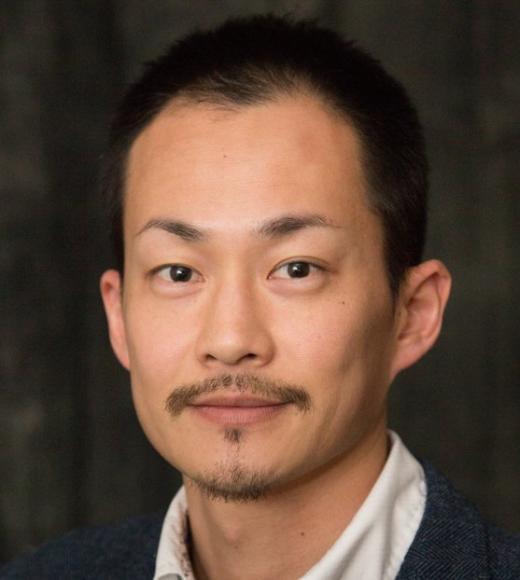
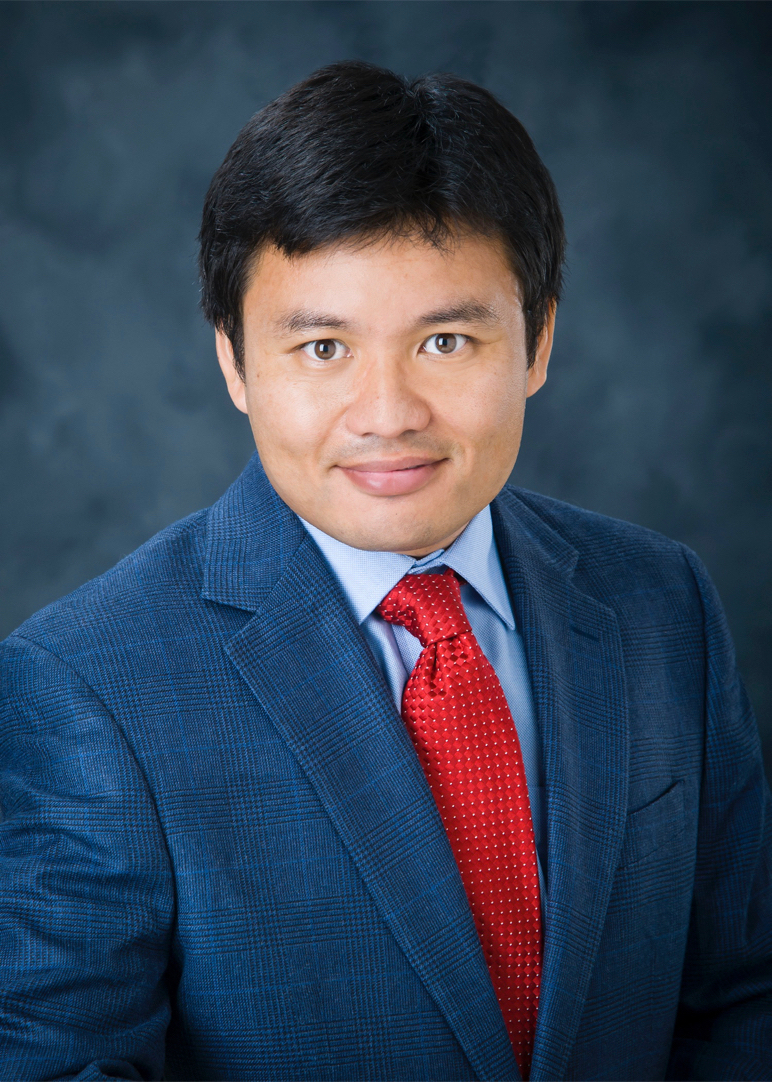
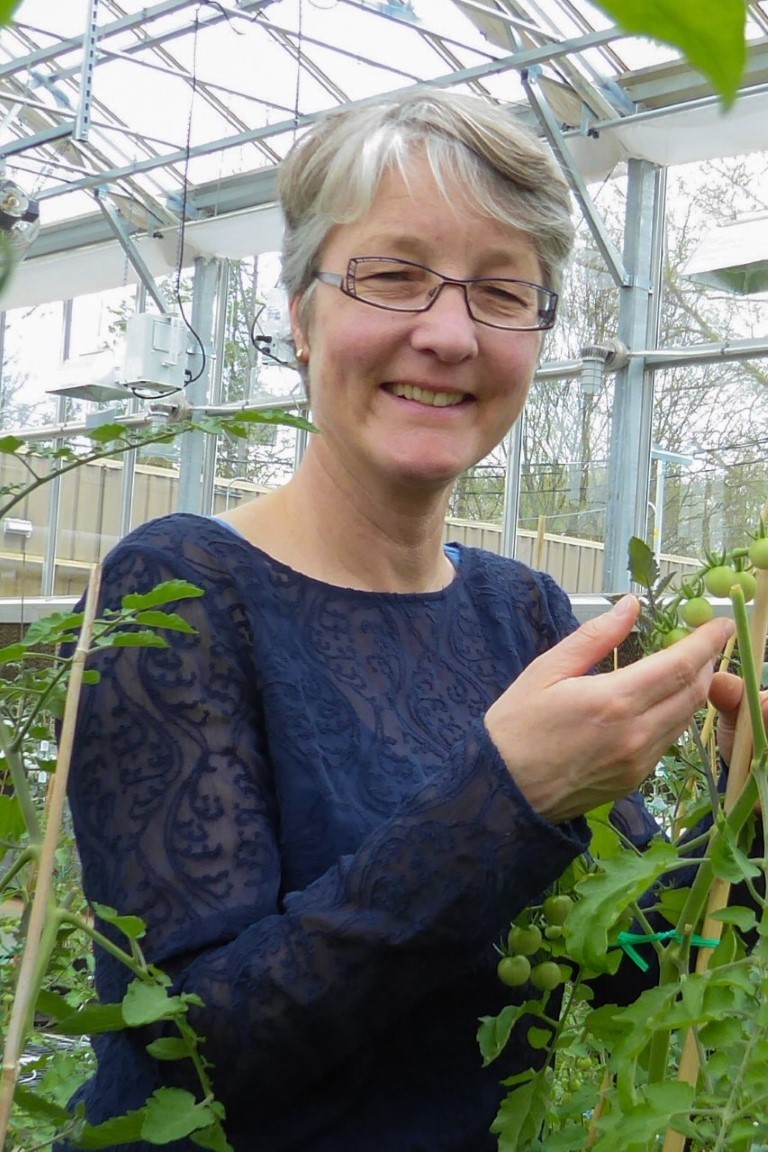
Dr Craig Lobsey is an Adjunct Research Fellow at the University of Southern Queensland (USQ), affiliated with the Centre for Sustainable Agricultural Systems (CSAS) and the Centre for Agricultural Engineering (CAE). He holds a BEng(Hons) and PhD from the University of Sydney. His research focuses on proximal sensing, spectroscopy, precision agriculture, spatial modelling, software development, and electronic engineering. He is a member of the Institute of Electrical and Electronics Engineers (IEEE) and serves as Vice-chair of the International Union of Soil Sciences' Working Group on Proximal Soil Sensing (WG-PSS). Teaching responsibilities include courses such as ENG1004 Engineering Problem Solving Principles, MEC3303 Mechanical and Mechatronic System Design, and MEC2902 Mechanical Practice 2. His supervision spans interdisciplinary areas including agriculture, aerospace engineering, avionics, and electronics. Current research affiliations emphasize sustainable agricultural systems and engineering innovations.
Dr. Antonios Antoniadis is a Lecturer in Computational Engineering Science and Director of the Computational Fluid Dynamics (CFD) Masters program at Cranfield University. He leads the VR/AR Laboratory within the Aircraft Integration Research Center and a research group focused on computational methods for fluid dynamics. His expertise spans aeronautical systems, turbulence modeling, and renewable energy technologies. Education: BEng in Automotive Engineering, University of Sussex MSc in Mechanical Engineering, University College London PhD in Aerospace CFD, Cranfield University (2013) Research Interests: Dr. Antoniadis develops cutting-edge computational frameworks for engineering challenges. His work includes high-order numerical methods on unstructured grids, data-driven turbulence models, and multi-physics simulations. Applications range from helicopter aerodynamics and wind-farm optimization to supersonic flow analysis and fluid-structure interactions in morphing UAVs. He integrates AI/ML techniques for turbulence modeling and design automation, advancing sustainable aerospace solutions. Publication Trends: Recent articles highlight advancements in rotorcraft CFD, shock absorber fluid dynamics, and high-performance solver development. Predominant themes include validation of high-order schemes for transonic flows, vortex dynamics in hovering rotors, and scalable algorithms for renewable energy systems. His work consistently bridges theoretical computational methods with industrial aerospace applications. Awards: Fellowship of the Higher Education Academy (FHEA) Labs & Teams: Dr. Antoniadis directs a VR/AR laboratory pioneering human-computer interaction for CAE applications. His research group collaborates with industry partners (e.g., BAE Systems, Airbus, Red Bull Racing) on projects involving aerodynamic prediction, multi-phase flows, and HPC parallelization.
Professor Masakazu Soshi is a faculty member in the Department of Mechanical and Aerospace Engineering at the University of California Davis, affiliated with the College of Engineering. He leads the Advanced Research for Manufacturing Systems (ARMS) Laboratory, focusing on improving machining and additive manufacturing processes for advanced CNC machine tool systems. His research integrates computational analysis, experimental validation, and hardware development to enhance manufacturing productivity and cost-effectiveness. Research interests include manufacturing systems , CNC machine tools , mechatronics design , additive manufacturing , and high-performance machining . The ARMS Lab specifically addresses challenges in Directed Energy Deposition (DED), hybrid manufacturing processes, and precision machine tool component design. Key projects involve optimizing material deposition rates, residual stress management, and real-time control systems for additive processes. Recent publications emphasize DED process control , hybrid additive-subtractive systems , and manufacturing system integration . His work bridges computational modeling (e.g., conforming mesh simulations) with practical hardware innovations (e.g., dynamic powder splitters). No notable awards or grants are explicitly listed, though his lab's website (http://arms.engr.ucdavis.edu) highlights ongoing collaborations and applied research. Professor Soshi's lab maintains a strong focus on industrial applications, such as improving machine tool guideways via CBN hard milling and developing high-torque spindle systems for aerospace materials. His research also extends to robotic-assisted surgical toolpath optimization and advanced cooling methods for hybrid CNC machines.
Dongwan Shin, Ph.D. is a Professor of Computer Science and Engineering at New Mexico Tech (NMT). He serves as Director of the Secure Computing Laboratory (SCL), NSF SFS and S-STEM Programs, and Faculty Advisor for the NMT ACM Student Chapter. His roles include leadership in cybersecurity education and research, including Center of Academic Excellence (CAE) designation for NMT. He has held the Orr Endowed Chair and served as Department Chair (2015–2018). Research Interests : Focuses on cybersecurity, usable security, software engineering, and cloud security. Key areas include access control, malware analysis, cryptography, and privacy-preserving technologies. His work addresses challenges in secure system design, blockchain, and insider threat mitigation. Grants & Projects : CyberCorps SFS Renewal (NSF, PI, 2020–2025) New Mexico SMART Grid Center (NSF, co-PI, 2018–2023) S-STEM Program (NSF, co-PI, 2018–2023) EPSCoR: Sustainable Grid Research (NSF, co-PI) Professional Activities : Program Chair for ACM Symposium on Applied Computing (2017–2020) Guest Editor for IEEE Transactions on Dependable and Secure Computing Leadership roles in TrustCol, CloudApp, and Smart Grid Track conferences Teaching : Offers courses in cybersecurity, cryptography, software engineering, and cloud computing at both undergraduate and graduate levels.
Alessandro Tasora is a Full Professor at the University of Parma in the Department of Industrial Engineering and Department of Engineering and Architecture . He directs the Digital Dynamics Lab and serves as Scientific Director of the Smart Production Lab 4.0 . His work spans theoretical mechanics, robotics, and high-performance computing. Director, Digital Dynamics Lab (2019–present) Scientific Director, Smart Production Lab 4.0 (2017–present) National Scientific Qualification for Full Professor (2016) Honorary Associate, University of Wisconsin-Madison (2009–present) Research focuses on non-smooth multibody dynamics , GPU-accelerated simulation , and industrial robotics . He developed the Chrono::Engine software for multibody physics and HyperOCTANT for NLCP problems. His work addresses granular flows in nuclear reactors, vehicle mobility on deformable terrain, and historical structural analysis. Key article trends include GPU-based HPC for large-scale simulations, cone complementarity in contact dynamics, and isogeometric beam formulations for flexible bodies. Collaborations with Argonne National Laboratory and Fraunhofer ITWM highlight his international impact. Top-SNIP Paper (2017) International CAE Conference Poster Award (2015) Best Paper, Asian Conference on Multibody Dynamics (2010) TOP4 Paper, RAAD Robotics Workshop (2011) He has supervised over 40 theses in automation, tribology, and robotics. Grants include FFABR-MIUR , US Army RIF , and CNR projects . Projects involve seismic protection, autonomous AGVs, and Industry 4.0 consulting.
Yucheng Liu is a Professor and the Jack Hatcher Chair in Engineering Entrepreneurship in the Department of Mechanical Engineering at Mississippi State University’s Bagley College of Engineering. He is a Fellow of both the American Society of Mechanical Engineers (ASME) and the Society of Automotive Engineers (SAE), reflecting his significant contributions to mechanical engineering research and education. His research spans computational modeling, crashworthiness, structural dynamics, vehicle systems, energy technology, and applied mathematics. Ph.D., Mechanical Engineering, University of Louisville, 2005 M.S., Mechanical Engineering, University of Louisville, 2003 B.S., Mechanical Engineering, Hefei University of Technology, 1997 Dr. Liu’s research interests center on computer modeling and simulation , crashworthiness analysis , structural mechanics and dynamics , vehicle system design , and ocean and marine energy technology . He has developed advanced computational models for thin-walled structures, energy absorption systems, and wave energy converters. His work integrates finite element analysis (FEA), CFD, and experimental validation to solve complex engineering problems in automotive, aerospace, and energy sectors. He has also contributed to applied mathematics by developing numerical methods for differential and integral equations. His recent publications reveal a strong focus on additive manufacturing , composite materials , tribology in precision gears , and electro-mechanical coupling in metals . These works often combine experimental and computational techniques, demonstrating a multidisciplinary approach. Trends include the use of internal state variable (ISV) models, phase-field simulations, and Taguchi-based optimization in mechanical systems. Dr. Liu has received numerous honors, including: Forest R. McFarland Award, SAE (2020) SAE Fellow (2019) ISET B. N. Gupta Award (2018) ASME Fellow (2017) Faculty Research Award, Mississippi State University (2018) Junior Faculty Researcher of the Year, UL Lafayette (2013) Marquis Who’s Who in America (since 2012) He has secured funding from NASA, NSF, Louisiana Space Consortium, and Mississippi Space Grant Consortium. His educational contributions include project-based learning frameworks , instructional courseware in thermodynamics and vibrations , and reforming senior design courses to be industry-tied and team-oriented. He has advised numerous student projects, including a Martian robot mining system and autonomous vehicle data acquisition systems. He leads the Wave Energy and Technology Lab, supporting experimental and computational research in renewable energy.
Prof. Dr.-Ing. Peter M. Flassig serves as Professor at Brandenburg University of Technology (THB) where he holds the Chair of Design Engineering and Machine Elements within the Department of Technology. His academic career is centered on engineering design, machine elements, and advanced computational methods in product development. He maintains an active research program while teaching undergraduate and graduate courses in mechanical engineering. Professor Flassig's research focuses on virtual product development with emphasis on robust process automation and integration of CAE simulation tools using both commercial off-the-shelf solutions (Isight, Heeds, OptisLang) and bespoke development (Python, MATLAB). His work spans parameterization strategies for CAD-centric design, multilevel and multidisciplinary design optimization, and the application of Industry 4.0 technologies including Big Data, AI, and machine learning techniques. His expertise extends to software development methodologies using C++/Qt, Python, and Java with agile working practices, version control, and UI/UX design. His current research portfolio includes the VIT-VI project (2024-2027) on virtual engine development using AI methods, the AutoBlisk project (2021-2024) in collaboration with Rolls-Royce, MAKU project on additive plastic printing, and several industry-focused initiatives with companies like STOOF International GmbH. Professor Flassig has supervised over 130 student projects and theses covering diverse areas from lightweight construction to medical device development, demonstrating his broad impact across engineering disciplines. As an academic advisor, Professor Flassig has guided numerous Master's and Bachelor's students through complex engineering projects, often in collaboration with industry partners including Rolls-Royce, Siemens, ZF Getriebe, and various medical technology companies. His research grants reflect strong industry partnerships focused on practical engineering solutions with immediate industrial applications.
Esther van der Knaap is a Professor at the University of Georgia within the College of Agricultural & Environmental Sciences. She is affiliated with the Horticulture department and the Institute of Plant Breeding, Genetics and Genomics (IPBGG) . Her research focuses on molecular mechanisms regulating tomato fruit shape and size, with applications in crop improvement and climate resilience. Education: Ph.D. in Genetics, Michigan State University (1998) B.S./M.S. in Plant Pathology, Wageningen University (1990) Dr. van der Knaap’s work explores fruit development genetics in Solanaceous crops. She investigates structural genomic variants , gene regulatory networks , and metabolic pathways to enhance agricultural productivity. Her studies span tomato domestication , stress adaptation , and flavor preservation . Recent publications highlight advances in CRISPR-based gene editing , cell segmentation technology , and methyl salicylate metabolism . Her team’s tomato genome analyses reveal insights into domestication history and yield optimization , funded by NSF and USDA grants. She leads the Esther van der Knaap Lab at UGA’s Center of Applied Genetic Technologies (CAGT). Collaborative efforts include the CAES Vegetables Team and The Plant Center .
Enis Muratović is an Associate Professor at the Faculty of Mechanical Engineering, University of Sarajevo, with active research in mechanical engineering and biomechanics. His work bridges theoretical analysis with practical applications in polymer systems and medical devices. His primary research interests include: Mechanical Engineering Polymer Gears and Tribology Additive Manufacturing (3D Printing) CAD/CAE Systems Development Mechanical Stability Analysis Biomechanics and Medical Device Engineering Dr. Muratović's research focuses on understanding wear mechanisms in polymer gears, particularly PVDF, and their performance under various load conditions. He investigates how manufacturing parameters like incline angles affect 3D printed element quality and develops integrated CAD systems for spring design and prototyping. His biomedical work analyzes external fixation devices' mechanical properties under axial pressure and torque loads, comparing traditional steel frames with composite alternatives. His recent publications (2023-2025) demonstrate a strong trend toward interdisciplinary research connecting mechanical engineering fundamentals with biomedical applications, with particular emphasis on failure analysis, load capacity, and wear prediction in polymer-based mechanical systems. Dr. Muratović has contributed to several institutional projects, including self-evaluation reports for mechanical engineering programs and the development of CAD systems for spring design and laboratory modernization initiatives.
Assoc. Prof. Dejan Lavbič is an Associate Professor at the University of Ljubljana, Faculty of Computer and Information Science with 15+ years of academic experience. His research focuses on intelligent agents, multi-agent systems, ontologies, and blockchain-based smart contracts , particularly in semantic web technologies, AI services ecosystems, and information quality assessment . Doctor of Philosophy in Computer Science, University of Ljubljana (2010) Bachelor of Science in Computer Systems and Informatics, University of Ljubljana (2004) His scientific contributions span semantic web frameworks, blockchain applications, and machine learning systems, with 20+ peer-reviewed publications. Recent works include: Smart contract classification with AI Cardano blockchain identity systems Information quality metrics with gamification Awards include Cambridge CAE certification and multiple industry certifications. He mentors students in decentralized applications, AI development, and smart city ecosystems , having guided 6+ diploma/master theses on topics like automated essay grading and air quality data collection.
Mengjun Xie serves as Professor and Head of the Department of Computer Science & Engineering at the University of Tennessee at Chattanooga (UTC), holding dual distinguished titles as Guerry Professor and UC Foundation Professor. He directs the UTC InfoSec Center, a hub for cybersecurity research and education, and teaches advanced courses including Algorithm Analysis, Network Security, and Software Engineering. His leadership spans departmental administration, curriculum development, and strategic initiatives in computer science education. Education: PhD in Computer Science, College of William and Mary, 2010 (Supporting Areas: Cybersecurity) Dr. Xie's research spans Cybersecurity, Cloud/Edge Computing, Mobile Computing, Social Network Analysis, Big Data Analytics, and Computer Education. His work focuses on practical security solutions for IoT systems through knowledge graph applications, remote live forensics for Android devices, and blockchain-based IoT platforms. He pioneers educational tools for hands-on cybersecurity training, emphasizing privacy technologies and cloud-based lab development. His publications demonstrate consistent innovation at the intersection of theoretical research and real-world implementation. Recent publications (2022-2024) reveal a strong trend toward knowledge graph applications in cybersecurity, particularly for IoT forensics and log anomaly detection. His research bridges cloud security challenges with educational outreach, evidenced by developments like ForensiQ for IoT forensics and hands-on lab materials for privacy education. This dual focus on cutting-edge security research and pedagogical innovation defines his scholarly impact. Dr. Xie actively mentors students through thesis and dissertation supervision and serves as Faculty Advisor for UTC MocSec Cyber Defense since 2018. His service portfolio includes: Faculty Member, UTC Quantum Initiative (2022-Present) Committee Member, UTC Faculty Senate (2020-2024) Project Supervisor, UTC Employee COVID-19 Self-Check Application (2020-2021) Committee Chair, UTC CAE-CD Re-designation Committee (2022-2023) Committee Member, CECS Outreach and Research Committee (2023-2025) As Director of the InfoSec Center , he leads a multidisciplinary team advancing cybersecurity research, education, and community engagement through the CAE-CD program, industry partnerships, and national collaborations including NSA-sponsored initiatives.
Dr. Krzysztof Iwan is an Assistant Professor at the Department of Power Electronics and Electrical Machines within the Faculty of Electrical and Control Engineering at Gdańsk University of Technology. His office is located in Building A, room EM-214, and he can be contacted via email at krzysztof.iwan@pg.edu.pl or by phone at +48 58 347 1363. His research spans several key areas in electrical engineering and biomedical applications: Power Electronics: Converter systems, semiconductor device modeling, and drive technologies Simulation & Modeling: Development and application of simulation tools like TCAD and Saber Electromagnetic Compatibility: EMI propagation, filtering, and suppression techniques Biomedical Engineering: Surgical simulation for hernia repair and medical visualization Energy Quality: Analysis of harmonic distortions in power networks His publications demonstrate a consistent focus on computational modeling approaches to solve complex engineering problems. Recent work shows an interdisciplinary trend combining power electronics with biomedical applications, particularly in surgical simulation. The majority of his publications involve simulation-based research of power electronic systems and electromagnetic compatibility issues. Dr. Iwan is an active member of the Department's research team which focuses on: Modeling, design and simulation of power electronic converters Control and diagnostics of power electronic converters Electromagnetic compatibility of converters and electrical drives Quality of electrical energy Modeling and diagnostics of electrical machines and transformers Design of piezoelectric sensors and motors CAD and CAE techniques for power electronics
Prof. Dr.-Ing. Dirk Roos is a Professor for Computersimulation und Design Optimization at the Department of Mechanical Engineering and Process Engineering, Niederrhein University of Applied Sciences, where he has served since March 2011. He is also the Head of the Institute for Modeling and High Performance Computing (IMH) since December 2016. His academic career includes previous positions as Head of Robust Design Optimization at DYNARDO Dynamic Software and Engineering GmbH (2002-2011) and Technical Solutions Specialist at CADFEM GmbH (2000-2008). Prof. Roos specializes in machine learning, robust design optimization, stochastic analysis, and probabilistic modeling for virtual product development. His research focuses on developing mathematical methods for stochastic structural and fluid simulation, robustness and reliability analysis, multidisciplinary optimization, and software development for complex system development. He has established strong collaborations with academic institutions including RWTH Aachen, Ruhr-Universität Bochum, and industrial partners like Siemens AG and Robert Bosch GmbH. His recent work explores Probabilistic Intelligence, cyber-physical systems, digital twins, and Big Data Analysis, with applications spanning power plant flexibility, renewable energy, turbomachinery, automotive, aerospace, and medical technology. Prof. Roos has successfully secured numerous third-party funded research projects totaling over 1.8 million euros, including collaborations with Siemens AG, Robert Bosch GmbH, and various universities. optiSLang Award 2012 Weimar Optimization and Stochastic Days Gutachter BMBF im Programm FH-Kooperativ since 2019 Mitglied des Scientific Committee International Probabilistic Workshop since 2017 Mitgliedschaft im Graduierteninstitut für angewandte Forschung der Fachhochschule in NRW since 2017 Prof. Roos supervises multiple doctoral students and has successfully completed several cooperative PhD projects. His current research projects include AI-driven optimization for medical care, reinforcement learning for emergency room planning, and machine learning algorithms for power plant component lifetime prediction. The Institute for Modeling and High Performance Computing (IMH) under his leadership develops mathematical methods and software competence in machine learning and CAE-based robust design optimization for virtual product development.