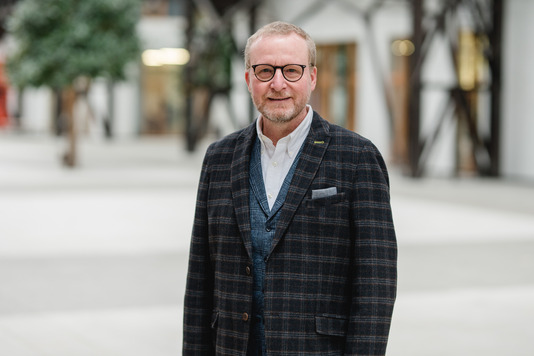
Johan Persson is an Associate Professor and Head of Unit at Linköping University's Department of Management and Engineering (IEI). He leads the Product Realisation (PROD) division, focusing on advancing Computer Aided Product Development (CAD) and optimization techniques. His research emphasizes computationally efficient surrogate models to enhance FEM/CFD analyses and streamline product development processes. Key areas of interest include design automation frameworks, additive manufacturing integration, and multidisciplinary optimization strategies. He teaches courses such as Machine Elements (TMKT39), Design Optimization (TMKT48), and Collaborative Multidisciplinary Optimization (TMKT79). His work bridges academic research and industry applications, with notable contributions to frameworks supporting Additive Manufacturing (AM) and OpenMDAO-based optimization. Research trends in his publications highlight advancements in AM applications, design automation tools, and collaborative optimization methods. Notable projects include a framework for AM design integration and studies on hydraulic pump design using additive techniques. Johan supervises PhD students including Erik Gustafsson and Javier Villena Toro. His research is supported by collaborations with colleagues like Anton Wiberg and Johan Ölvander. The Automation Lab, a key platform for his work, pioneers innovations in CAD automation and digital design processes.
Josh Pauli is a Professor of Cyber Operations at the University of Arizona, actively contributing to national cybersecurity education and research initiatives. He is a core faculty member with strong affiliations to the National Security Agency's Center of Academic Excellence (NSA CAE), where he leads key programs in education, training, and workforce development. Education: PhD in Software Engineering, North Dakota State University, 2006 MS in Information Systems, Dakota State University, 2003 BS in Information Systems, Dakota State University, 2002 His research focuses on software vulnerability discovery and secure software engineering , with an applied emphasis on strengthening cyber defenses through rigorous development practices. Dr. Pauli's work bridges academic training and operational cybersecurity needs, particularly in preparing technical talent for high-stakes cyber roles. Although no specific publications are listed, his sustained involvement in funded R&D and leadership in national programs suggests a strong trajectory in cybersecurity education and applied research. Scientific Awards: No specific awards listed in the provided text. Dr. Pauli advises and leads federally funded initiatives, particularly through the NSA CAE Cyber Operations Summer Program, contributing to faculty development and student competition frameworks. His work supports large-scale workforce development for technical cyber roles. He is part of a core faculty team advancing cyber operations education. He is associated with research and training teams under the NSA CAE community, focusing on summer programs, curriculum development, and national cyber training ecosystems.
Miodrag Hadžistević is a Full Professor at the Department of Production Engineering within the Faculty of Technical Sciences at the University of Novi Sad. His career spans over two decades, including roles as Assistant Professor (2005-2010) and Associate Professor (2010-2015) in the same department. Academic Timeline Full Professor (2015-present) Associate Professor (2010-2015) Assistant Professor (2005-2010) Administrative Roles Head of Department of Production Engineering (2012-2018) Head of Chair of Metrology, Quality, Equipment, Tools, and Ecological-Engineering Aspects (2018-2024) His research focuses on precision engineering, quality management, and manufacturing technologies. Key contributions include innovations in coordinate measuring machine accuracy, flatness error evaluation, and dental engineering applications. Publications span journals like Precision Engineering , Metalurgija , and Journal of Craniofacial Surgery . While no explicit awards are mentioned, his work demonstrates expertise in metrology, tool design, and ecological-engineering aspects. Recent articles reveal a strong emphasis on dimensional accuracy analysis, dental prosthetics fabrication, and advanced manufacturing methods. His work integrates CAD/CAE systems, Monte Carlo simulations for uncertainty evaluation, and rapid prototyping technologies. The research also explores material behavior in machining processes and corrosion protection techniques.
Dr. John F. Dannenhoffer III is an Associate Professor at Syracuse University's Department of Aerospace Engineering, affiliated with the Aerospace Computational Methods Lab (ACML). He specializes in multi-disciplinary analysis and optimization (MDAO), computational geometry, and computational fluid dynamics (CFD), with a focus on aerospace vehicle design. His work centers around the Engineering Sketch Pad (ESP), an open-source system enabling optimal design through feature-based solid modeling and sensitivity-driven optimization. Education: Sc.D., Computational Fluid Dynamics, Massachusetts Institute of Technology (1987) M.E., Aerospace Engineering, Rensselaer Polytechnic Institute (1978) B.S., Aerospace Engineering, Rensselaer Polytechnic Institute (1976) Research Contributions: ESP's unique feature of providing design sensitivities directly from CAD geometry has revolutionized gradient-based optimization. It is used by over 1,000 users across dozens of organizations. Dannenhoffer's publications span parallelization strategies for CFD-based optimization, real-time collaborative design environments, and educational tools integrating programming in mechanical design courses. Awards: 2016 Syracuse University ECS Dean’s Award for Excellence in Engineering Education 2015 and 2014 AIAA Shahyar Pirzadeh Memorial Awards for papers on design sensitivity calculations and conservative fitting in multi-disciplinary analysis Advising & Labs: Leads the ACML lab, focusing on CAD-centric design systems and multidisciplinary analysis. ESP's development highlights his commitment to open-source tools and practical engineering education.
Dr. Paolina Centonze is an Associate Professor of Computer Science and the Managing Director of the Cybersecurity Program at Iona University, New Rochelle, NY. She holds a Ph.D. in Mathematics and an M.S. in Computer Science from New York University (NYU), and a B.S. in Computer Science from St. John's University. Her academic role includes teaching courses in software security, mobile security, and cybersecurity, alongside directing program accreditation and student research. Education: Ph.D. in Mathematics, NYU (2008) M.S. in Computer Science, NYU (2005) B.S. in Computer Science, St. John's University (2003) Research Interests: Cybersecurity, mobile computing, cloud security, program analysis, malware analysis, and access control policies. Her research has led to 24 peer-reviewed publications and 14 U.S. patents in cybersecurity. Notable contributions include frameworks for big data security, dynamic encryption strategies, and mobile application vulnerability detection. She co-developed the National Centers of Academic Excellence in Cyber Operations (CAE-CO) designation for Iona's programs. Dr. Centonze has received awards including the Br. Arthur Loftus Outstanding Student Research Award (2016) and multiple IBM Invention Achievement Awards (2004-2012). She actively reviews peer work in mobile security and cybersecurity conferences, and serves on program committees for IEEE and ACM events. Grants & Advising: Directed over 8 student research projects in cybersecurity and mobile security. Recipient of Academic Innovation Grant (2015) for NSA-accredited cybersecurity programs. She has designed and taught 15+ cybersecurity courses at Iona and Fordham University, focusing on practical skills like cloud security, mobile app analysis, and ethical hacking.
Ilkyeun Ra serves as Associate Professor in the Department of Computer Science and Engineering at the University of Colorado Denver, where he has taught since 2001. His instructional responsibilities span undergraduate and graduate courses including Operating Systems, Computer Networks, and Cloud Computing. His educational background comprises: Ph.D. in Computer and Information Science, Syracuse University (2001) M.S. in Computer Science, University of Colorado Boulder B.S. and M.S. in Computer Science, Sogang University Dr. Ra's research concentrates on adaptive distributed systems and high-speed communication networks for high-performance computing. Current investigations focus on microservice autoscaling in cloud environments, multimedia streaming protocols over named data networks, and social media-driven disaster management systems. His methodology integrates reinforcement learning, blockchain, and real-time analytics to address scalability and reliability challenges in distributed architectures. Analysis of his 2018-2024 publications reveals dominant themes in cloud-native systems (46%), disaster informatics (23%), and network protocol innovation (31%). Key methodological trends include reinforcement learning applications for resource optimization (3 articles), blockchain implementations for privacy preservation (2 articles), and social media analytics for crisis response (3 articles). Scientific recognition includes: Outstanding paper award at IEEE The 26th International Conference on Advanced Communications Technologies (2024) Dr. Ra actively recruits Ph.D. students for distributed systems research. His funded projects include NIH support for the Hospital Computerized Disaster Information Management System (1G08LM009710-01, 2008-2011) and ETRI (South Korea) collaboration on parallel data processing frameworks. Current grants focus on cloud-based disaster management and edge network optimization. He directs the Distributed Computing and Networking Research Lab, which operates three specialized teams: the Cloud Microservices Group developing reinforcement learning autoscalers, the Multimedia Streaming Team designing NDN protocols, and the Disaster Informatics Unit analyzing social media for real-time crisis response.
Dejan Lukić serves as Full Professor and Vice-Dean for Investments and Cooperation with Industry at the Faculty of Technical Sciences, University of Novi Sad. He has held progressively senior academic positions since joining the institution in 2000, including Director of the Department of Production Engineering (2021-2024) and Assistant Director (2018-2021). His academic journey began with undergraduate studies in Mechanical Engineering at the same faculty, followed by master's (2007) and doctoral degrees (2012) in specialized production engineering fields. His educational background includes: Bachelor's degree in Mechanical Engineering, Faculty of Technical Sciences (1999) Master's thesis: 'Development of a system for automated design of technological processes for manufacturing plastic injection molds' (2007) Doctoral dissertation: 'Development of a general model of technological preparation of production' (2012) Professor Lukić's research focuses on process planning, production optimization, and techno-economic analysis in manufacturing systems. His work bridges theoretical frameworks with practical industrial applications, particularly in virtual design, CAPP systems integration, and optimization of manufacturing processes. He has made significant contributions to the application of digital technologies in production engineering, including STEP-NC implementation, fuzzy logic for quality control, and collaborative process planning systems. His publication record demonstrates consistent advancement in manufacturing process optimization, with recent work emphasizing multi-criteria decision making, thin-walled structure machining, and digital integration of manufacturing systems. The research trajectory shows evolution from foundational work in traditional process planning toward contemporary applications involving artificial intelligence, collaborative systems, and Industry 4.0 technologies. Professor Lukić has been actively involved in academic service, participating in numerous evaluation committees, professional competitions, and serving as representative of Serbia in the Assembly of the Institute for Materials Testing. His industrial engagement includes consulting on CE/3A product marking, technical system maintenance, and implementation of application software solutions. As an educator and mentor, he has supervised more than 45 undergraduate and master's theses, completed one doctoral dissertation supervision, and currently guides three doctoral candidates. He teaches a comprehensive curriculum spanning process planning, production optimization, logistics, and technological preparation of production across all academic levels. His leadership extends to heading the Master of Professional Studies in Production Engineering program and serving on program committees for multiple scientific conferences and journals in mechanical engineering. Professor Lukić also maintains active industry collaboration through solving professional problems related to product development, manufacturing systems maintenance, and specialized training programs.
Kaur Jaakma is a Lecturer in the Department of Energy and Mechanical Engineering at Aalto University. Her work focuses on engineering education, particularly in the domains of CAD, CAE, and PLM. She has contributed extensively to curriculum development and digital learning tools for mechanical design education. Affiliation: Aalto University Department: Energy and Mechanical Engineering Academic Rank: Lecturer Her research interests include: Product Lifecycle Management (PLM) Computer-Aided Engineering (CAE) Computer-Aided Design (CAD) Innovative Engineering Education Methods Kaur has published extensively on CAD education, including systematic course development, auto-assessment systems, and online learning platforms. Notable trends in her publications include integration of simulation tools and digital transformation of mechanical design education. Email: kaur.jaakma@aalto.fi
Ivan Milićević is a Professor at the Department of Mechanical Engineering, Faculty of Technical Sciences Čačak, University of Kragujevac. His work focuses on mechanical engineering, mechatronics, and industrial automation with a strong emphasis on CNC machining, robotics, and materials processing. He has contributed to over 80 scientific and professional papers, two university textbooks, and multiple technical solutions. Employment history includes roles at AD “Proleter” Arilje (1999-2000) and Faculty of Technical Sciences Čačak since 2000. Research spans tool design for excavators, intelligent control systems, and thermal analysis of materials. Recent publications show expertise in 3D printing optimization, robotic simulation, and industry 4.0 educational reforms. Active in projects related to mold filling control, bearing diagnostics, and collaborative robotics. His work integrates MATLAB/Simulink, CAD/CAE/CAM tools, and genetic algorithms for manufacturing optimization.
Prof. Dr. habil. Michael Ryba is a Professor at Osnabrück University of Applied Sciences, Campus Lingen, within the Faculty of Management, Culture and Technology. He serves as Dean of Studies and Head of the Institute of Management and Technology, focusing on business informatics, software engineering, and internet technologies. Specializes in collaborative systems for SME networks Expertise in CAE software development Extensive publication record in distributed systems and design methodologies His research emphasizes cross-domain integration , dynamic networked environments , and object-oriented engineering frameworks . Recent works explore semantic-based brokering, self-consulting IT systems, and competitive production networks. He has contributed to Eiffel programming language applications and EDIF standards. As an educator, he teaches mathematics for business informatics, software engineering, and distributed systems. His career spans roles at universities in Kaiserslautern and Stuttgart, with habilitation in computer science (2002) and promotion (1995).
Yves Weinand serves as Full Professor of Timber Construction at École Polytechnique Fédérale de Lausanne (EPFL), where he directs the transdisciplinary Wood Construction Laboratory (IBOIS) within the School of Architecture, Civil and Environmental Engineering. His appointment spans the Institute of Civil and Environmental Engineering (IIC) and teaching units in Architecture (SAR) and Civil Engineering (SGC), reflecting his interdisciplinary focus at the intersection of structural engineering and architectural design. His research expertise spans computational geometry processing, robotic timber construction, and experimental joinery techniques, with particular emphasis on digital fabrication workflows for complex wood structures. Weinand's work integrates augmented reality systems with traditional craftsmanship and develops novel computational methods for timber plate structures and through-tenon connections. Analysis of his recent publications reveals a strong trend toward hybrid digital-physical construction workflows, with increasing focus on AI-assisted fabrication, real-time quality control, and sustainable material utilization. His research bridges fundamental structural mechanics with practical building applications through technology transfer projects. Lignum Prize - Western Region Mention (2018) French Academy of Architecture silver medal (2017) Grand Prix d'architecture de Wallonie for Vidy theater (2019) Wood Distinction 2019 for Vaud Parliament building (2019) Medal for Research and Technique from French Academy of Architecture (2017) Weinand supervises numerous doctoral candidates while teaching ten courses across bachelor to postgraduate levels, including computational architecture and digital timber construction. His laboratory collaborates with industry partners through technology transfer contracts for projects like the Annen Vault, Rossinière Centre, and Brussels Sportstower, implementing EPFL-developed computational methods in real-world construction. The IBOIS laboratory operates as a transdisciplinary research hub connecting architectural design exploration with structural engineering innovation, maintaining active partnerships with timber industry stakeholders and architectural practices across Europe.
Prof. Dr.-Ing. Frank Ulrich Rückert is a Professor of Fluid Energy Machines at the University of Applied Sciences Saarland (HTW Saar), where he teaches Thermodynamics, Fluid Dynamics, and Computational Fluid Dynamics. He serves as Spokesperson for the Institute for Physical Process Technology, Study Director for the Master's program in Safety Management, and Deputy Study Director for the Bachelor's program in Industrial Engineering. His work spans multiple research projects including WiPaKü, ELTROSOL, and H2-Schmiede. Dr. Rückert earned his degree in Environmental Engineering and Process Engineering with a focus on Process and Plant Engineering at BTU Cottbus, followed by a doctorate at the University of Stuttgart on technical combustion. His professional experience includes significant work at Robert Bosch GmbH at various international locations, where he developed nozzle and valve systems for liquid fuels and gases, and contributed to the pre-development of micro-steam turbines for waste heat recovery for over four years. His research focuses on modeling and simulation of physical and chemical processes, with particular expertise in Computational Fluid Dynamics (CFD), Computer Aided Engineering (CAE), digital twins, and programming mathematical models. He investigates renewable energy systems, heat transport, thermodynamics, energy storage, waste heat recovery, and high performance computing applications. His work bridges theoretical knowledge with practical engineering applications across power plant technology and grate firing systems. Dr. Rückert's recent publications demonstrate a strong trend toward digital twin technology across multiple engineering domains including hydraulic, pneumatic, electric, and mechanical systems. His work increasingly integrates artificial intelligence with simulation techniques, as evidenced by publications on AI-based positioning systems and metaverse applications for education. The research spans both fundamental engineering principles and cutting-edge applications in renewable energy systems. Honorary Golden Spike Award 2002 from the High Performance Computing Center Stuttgart (HLRS) Saarland Higher Education Teaching Award 2021 Dr. Rückert has secured funding for numerous research projects including WiPaKü (development of gearless wind energy generators), ELTROSOL (electrofilters for aerosol capture), H2-Schmiede (CO2 reduction in forging processes), and RePowerFish (renewable power supply for fish farming). He serves on the Scientific Committee for the SYMKOM conference and is actively involved with the Commercial Vehicle Cluster CVC Südwest. His external engagements include membership on the Landstuhl City Council and the Saarland Energy Innovation Initiative (LIESA). As Spokesperson for the Institute for Physical Process Technology and member of the wi-institute, Dr. Rückert leads several research teams focused on simulation and measurement technology. His work with the Wind Energy Lab demonstrates practical application of theoretical knowledge, while his involvement in the eClose project shows commitment to innovative educational approaches. The Competence Center for Fluid Machinery, Simulation and Measurement Technology serves as the hub for his interdisciplinary research activities.
Francisco Garcia Rivera is a doctoral researcher at the University of Skövde , affiliated with the School of Engineering Science and the Department of Engineering . His research focuses on Virtual Reality (VR) , Digital Human Modeling (DHM) , and Human-Computer Interaction in manufacturing and collaborative design contexts. Current projects include the PLENUM initiative (2022-2025) addressing competence gaps in automotive industry electrification. Previous work involved Synergi Virtual Ergonomics (2019-2023) and VIVA – the Virtual Vehicle Assembler (2019-2022), both developing digital tools for ergonomics simulation in manufacturing. He has co-authored over 15 publications since 2020, including journal articles and conference papers at SPS, VAMR, and DHM symposia. Research trends reveal a strong emphasis on XR technologies for industrial applications, AI integration in ergonomic assessments, and exoskeletons for workplace safety. His work evaluates VR interface features for mental workload support, camera control impacts on collaboration, and immersive tools for remote design reviews using CAD/CAE systems. Francisco collaborates with researchers like Maurice Lamb , Dan Högberg , and Anna Brolin , contributing to peer-reviewed articles in journals such as Cognition, Technology & Work and Virtual Reality , as well as proceedings from the Swedish Production Symposium and DHM Symposium . His email contact is francisco.garcia.rivera@his.se .
Pi-Yueh Chuang is a Researcher in the Mathematics and Computer Science division at Argonne National Laboratory, specializing in computational methodologies for large-scale scientific applications with emphasis on robustness, trustworthiness, and sustainability in high-performance computing environments. Educational background: Ph.D. in Mechanical and Aerospace Engineering, George Washington University (2023) Prior to doctoral studies, Chuang worked as an R&D engineer developing commercial CFD software. His research spans: Computational Fluid Dynamics (CFD) for complex physical systems Computer-Aided Engineering (CAE) tool development Numerical solutions to inverse problems High-Performance Computing (HPC) optimization Scientific computing reliability frameworks Notable contributions include numerical simulation software for energy transport in nanoscale semiconductors, avian biomechanics modeling, plastic injection molding processes, petroleum flow analysis, and nuclear physics applications. No scientific awards were documented in available sources. Information regarding student mentorship, research grants, or dedicated laboratory teams was not provided in the source material.
Loris BARBIERI is an Associate Professor at the University of Calabria's Department of Mechanical, Energy and Management Engineering. His work focuses on industrial design methodologies, augmented reality (AR) applications, and underwater cultural heritage preservation. He leads the 'Design and Methods of Industrial Engineering' research group, which develops innovative tools for sustainable product design, 3D printing, and AR/VR integration in industrial processes and cultural heritage documentation. Research interests include: User-centered design for industrial products AR/VR applications in manufacturing and heritage preservation Underwater robotics for archaeological site exploration 3D reconstruction and additive manufacturing Recent work emphasizes AR-driven inspection systems for Industry 4.0, smart marine buoys, and underwater tool development. His publications highlight interdisciplinary approaches combining mechanical engineering, computer science, and environmental science. He manages the Industrial Design laboratory, focusing on research, teaching, and applied projects. Current initiatives include eco-friendly marine monitoring systems and collaborative XR platforms for industrial maintenance.