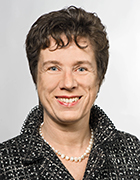
Prof. Barbara Wohlmuth is a full professor in Numerical Mathematics at the Technical University of Munich (TUM), affiliated with the TUM School of Computation, Information and Technology. She leads the International Graduate School of Science and Engineering at TUM and has held professorships at Stuttgart, Darmstadt, and Berlin universities. Her research focuses on numerical simulation of partial differential equations, multiscale solvers, and coupled multi-field problems with applications in engineering. Education: Studied mathematics at TUM and Université Joseph Fourier in Grenoble, received her doctorate from TUM in 1995, and completed habilitation in Augsburg. Visiting professorships in USA, France, and Hong Kong. Research interests include discretization techniques, predictive modeling, and interdisciplinary collaboration with engineering disciplines. Notable achievements: 2012 Gottfried Wilhelm Leibniz Prize (Germany’s highest academic honor in sciences), 2005 Sacchi-Landriani Prize. Publications emphasize advanced numerical methods in fluid dynamics, geophysics, and biomedical engineering. Active in editorial roles for international journals and scientific committees across Europe and USA. Elected member of Bavarian and European Academies of Sciences. Key contributions include: Development of robust numerical algorithms for exascale simulations Pioneering work in coupled multi-physics modeling Innovative methods for computational contact mechanics Leadership in graduate education initiatives
Sebastian Schütte, M.Eng., is a Lecturer in the Department of Mechanical Engineering at the South Westphalia University of Applied Sciences since 2014. His teaching focuses on CAD systems, including modules such as CAD 1, CAD 2, Advanced CAD/CAE, and CAx Applications, combining his passion for design with high-quality education. Graduated with distinction in both Bachelor's (Product Development & Design) and Master's (Integrated Product Development) degrees Teaches Siemens NX and PTC Creo CAD systems Provides instructional videos on YouTube and licensing support for students His expertise spans CAD/CAE software, product development methodologies, and engineering education. He maintains active student engagement through remote access to software tools and personalized support. Contact: schuette.sebastian@fh-swf.de
Prof. Dr. habil. Michael Ryba is a Professor at Osnabrück University of Applied Sciences, Campus Lingen, within the Faculty of Management, Culture and Technology. He serves as Dean of Studies and Head of the Institute of Management and Technology, focusing on business informatics, software engineering, and internet technologies. Specializes in collaborative systems for SME networks Expertise in CAE software development Extensive publication record in distributed systems and design methodologies His research emphasizes cross-domain integration , dynamic networked environments , and object-oriented engineering frameworks . Recent works explore semantic-based brokering, self-consulting IT systems, and competitive production networks. He has contributed to Eiffel programming language applications and EDIF standards. As an educator, he teaches mathematics for business informatics, software engineering, and distributed systems. His career spans roles at universities in Kaiserslautern and Stuttgart, with habilitation in computer science (2002) and promotion (1995).
Prof. Dr.-Ing. Stephan Eder holds the position of Professor of Engineering Mechanics and Design (CAD/CAE) at the Technische Hochschule Bingen, affiliated with Department 1. His expertise centers on advanced design methodologies, computational engineering tools, and mechanical systems analysis. Research interests include the integration of CAD/CAE technologies in engineering education and industry applications, with a focus on optimizing design processes through computational methods. He contributes to the Hermann Hoepke Institute's collaborative projects, advancing engineering innovation. No specific academic awards or grants are explicitly listed in the text. His involvement in curriculum development is implied through his association with programs like Mechanical Engineering B.Eng. and Green Engineering. Currently active in teaching and research, Prof. Eder's role emphasizes bridging theoretical engineering principles with practical design applications through modern software tools.
Prof. Dr.-Ing. Frank Ulrich Rückert is a Professor of Fluid Energy Machines at the University of Applied Sciences Saarland (HTW Saar), where he teaches Thermodynamics, Fluid Dynamics, and Computational Fluid Dynamics. He serves as Spokesperson for the Institute for Physical Process Technology, Study Director for the Master's program in Safety Management, and Deputy Study Director for the Bachelor's program in Industrial Engineering. His work spans multiple research projects including WiPaKü, ELTROSOL, and H2-Schmiede. Dr. Rückert earned his degree in Environmental Engineering and Process Engineering with a focus on Process and Plant Engineering at BTU Cottbus, followed by a doctorate at the University of Stuttgart on technical combustion. His professional experience includes significant work at Robert Bosch GmbH at various international locations, where he developed nozzle and valve systems for liquid fuels and gases, and contributed to the pre-development of micro-steam turbines for waste heat recovery for over four years. His research focuses on modeling and simulation of physical and chemical processes, with particular expertise in Computational Fluid Dynamics (CFD), Computer Aided Engineering (CAE), digital twins, and programming mathematical models. He investigates renewable energy systems, heat transport, thermodynamics, energy storage, waste heat recovery, and high performance computing applications. His work bridges theoretical knowledge with practical engineering applications across power plant technology and grate firing systems. Dr. Rückert's recent publications demonstrate a strong trend toward digital twin technology across multiple engineering domains including hydraulic, pneumatic, electric, and mechanical systems. His work increasingly integrates artificial intelligence with simulation techniques, as evidenced by publications on AI-based positioning systems and metaverse applications for education. The research spans both fundamental engineering principles and cutting-edge applications in renewable energy systems. Honorary Golden Spike Award 2002 from the High Performance Computing Center Stuttgart (HLRS) Saarland Higher Education Teaching Award 2021 Dr. Rückert has secured funding for numerous research projects including WiPaKü (development of gearless wind energy generators), ELTROSOL (electrofilters for aerosol capture), H2-Schmiede (CO2 reduction in forging processes), and RePowerFish (renewable power supply for fish farming). He serves on the Scientific Committee for the SYMKOM conference and is actively involved with the Commercial Vehicle Cluster CVC Südwest. His external engagements include membership on the Landstuhl City Council and the Saarland Energy Innovation Initiative (LIESA). As Spokesperson for the Institute for Physical Process Technology and member of the wi-institute, Dr. Rückert leads several research teams focused on simulation and measurement technology. His work with the Wind Energy Lab demonstrates practical application of theoretical knowledge, while his involvement in the eClose project shows commitment to innovative educational approaches. The Competence Center for Fluid Machinery, Simulation and Measurement Technology serves as the hub for his interdisciplinary research activities.
Prof. Dr. Olaf Bruch serves as a full Professor at Hochschule Bonn-Rhein-Sieg within the Department of Engineering and Communication, specifically affiliated with the Institute of Technology, Resource and Energy-efficient Engineering (TREE). His academic base is located in Sankt Augustin at Grantham-Allee 20, where he maintains office B 203 and can be reached via telephone +49 2241 865 318. His research spans critical areas in engineering mechanics with particular emphasis on finite element methods and polymer materials. Key focus areas include the integrative simulation of plastic components considering manufacturing-specific characteristics, prediction of shrinkage and warpage in extrusion blow molding using advanced viscoelastic models, development of experimental-numerical methods for material parameter identification, fluid-structure coupling for liquid-filled containers, and structural optimization of generatively manufactured automotive components. This work directly addresses industrial challenges in resource efficiency and sustainable manufacturing. Prof. Bruch leads and contributes to multiple significant research initiatives including PAExSiDur (polymer aging for service life extension), DigitalTwin-4-Multiphysics-Lab (urban and industrial digital twins), TreeOpt (simulation-based lightweight product development), ROForm (resource-optimized forming), and TRE³L (energy lab for powder metallurgy and sustainable mobility). His publication record demonstrates consistent contributions to polymer processing simulation, with recent work focusing on VMAP interface standard implementation and crystallization effects in polyethylene systems. As co-affiliated with Dr. Reinold Hagen Stiftung, he bridges academic research with industrial applications through projects like SmartBlow (intelligent blow molding machines) and Fortissimo 2 (ultra-clean containers). His leadership in the Structural Analysis and Optimization Working Group demonstrates his commitment to advancing simulation methodologies for complex engineering challenges in polymer manufacturing and structural design.
Prof. Karsten Pietsch is a Professor of Mechatronics at Berlin University of Technology's Department VII (Electrical Engineering, Mechatronics, and Optometry). He holds roles including Program Spokesperson for the Master's Mechatronics Program, Head of the Laboratory for Design and CAD Technology, and Member of the Mechatronics Industry Advisory Board. His research focuses on Energy Harvesting and Tolerance Management, with a strong emphasis on mechanical design and mechatronic systems. He teaches courses ranging from foundational Mechanical Design in the BA to advanced topics like Multibody Systems using Robotics in the MA. His work integrates practical industry collaboration, reflected in patents and competitions like the IGUS 'Manus' contest. He advises Master's theses and oversees projects in mechatronic systems development. Contact: pietsch@bht-berlin.de, based at Haus Gauß B, Room B414. Research highlights include innovations in electromagnetic micro-generators, parametric CAD methods (SAXSIM), and tolerance optimization in mechanical systems. He has contributed to industry-relevant technologies such as clutch designs, gearboxes, and lighting systems. His teaching portfolio spans Finite Element Analysis (FEMM), Multibody System Dynamics, and Computer-Aided Engineering (CAE), emphasizing hands-on learning through guided tours and lab projects.
Ilja Tuschy is a Professor at the Department of Energy and Life Science at Flensburg University of Applied Sciences. He serves as Vice Dean of the Faculty of Mechanical Engineering (FB2) and holds roles in academic advising and project leadership in renewable energy technology. His research focuses on energy storage systems, thermal engineering, and sustainable energy solutions, with a strong emphasis on open-source tools like TESPy for exergy analysis and system simulation. He has led projects on geothermal energy, compressed air energy storage (CAES), and multivalent heat supply systems. His work integrates technical innovation with practical applications, addressing challenges in renewable energy integration and grid stability. Key projects include ANGUS II, SolWW-SH, and initiatives in Schleswig-Holstein's energy transition. Research interests span renewable energy storage (hydrogen, methane, CAES), thermal systems modeling, and exergy optimization. He co-developed the TESPy framework, a Python-based tool for thermal network simulation. Recent publications highlight advancements in high-temperature heat pumps, organic Rankine cycles, and subsurface energy storage capacity assessments in the North German Basin. His contributions bridge academia and industry, driving sustainable energy solutions through collaborative research and open-source software.
Dr. Arun Prakash is a Leading Scientific Staff Member at the Institute for Mechanics and Fluid Dynamics within the Faculty of Mechanical Engineering, Process and Energy Technology at Technische Universität Bergakademie Freiberg. He previously served as a Leading Scientific Staff Member at Friedrich-Alexander-Universität Erlangen-Nürnberg from 2011-2018, where he was also a member of the executive committee for the international Master's program in Advanced Materials and Processes (MAP). His educational background includes: PhD in Computational Micromechanics of Polycrystals from Karlsruhe Institute of Technology (2009-2010) Master's degree in Computational Mechanics in Materials and Structures from University of Stuttgart (2003-2005) Bachelor's degree in Mechanical Engineering from B.M.S. College of Engineering, Bangalore University (1997-2001) Dr. Prakash's research focuses on multiscale material modeling with expertise spanning from atomistic simulations to finite element methods. His work bridges experimental observations with computational approaches, particularly in nanomechanics, small-scale plasticity, and nanomaterials. He has developed sophisticated methodologies for generating realistic microstructures and analyzing material behavior across scales, with applications in metal forming processes, nanowires, and laminated composites. His research often involves advanced computational techniques including machine learning for materials science applications. His publication record demonstrates a consistent focus on multiscale modeling approaches, with recent work emphasizing the integration of machine learning with traditional computational mechanics. His research spans fundamental studies of dislocation mechanisms in magnesium alloys, silica glass deformation, and practical applications in metal forming processes like accumulative roll bonding. The publications reveal a strong emphasis on developing computational tools that bridge the gap between atomistic simulations and continuum mechanics. Notable scientific achievements include: 2017 Best poster award at international CAE conference 'Simulation: The Soul of Industry 4.0' 2016 Teaching award for 'Exercises in Computational Nanoscience' 2010 Werkstoffmechanik-Preis der Plansee-Gruppe (2nd Place) 2009 Best paper award from 'Steel Research International' Dr. Prakash has made significant contributions to open-source scientific software development, creating tools that have become valuable resources for the materials science community. He is an active member of several professional organizations including the Institution of Engineers (India), German Materials Society (DGM), and German University Association (DHV). His laboratory work centers around advanced computational materials science, with significant contributions to open-source software development. He is the co-author of several important tools including OptiMic for generating optimized polycrystalline microstructures, nanoSCULPT for creating complex realistic structures for atomistic simulations, and FE2AT for bridging finite element and atomistic simulations. These tools have been made available to the scientific community as open-source software through GitLab repositories.
Prof. Carsten Schönfelder is a Professor at Berlin University of Technology's Department of Mechanical Engineering, specializing in energy systems, thermodynamics, and simulation technologies. His academic roles include advising the Computational Engineering and Design bachelor’s program and teaching courses such as Thermodynamics, Fluid Mechanics, and Hydraulics. He leads research in renewable energy technologies, digital twin development for energy plants, and hydrogen applications. His department operates laboratories KEE, TVT/MVT, PRT, and CAE, focusing on advanced engineering experiments. Education background: Holds a PhD from RWTH Aachen University (2007) with research on fuel cell systems for vehicle applications. His academic career includes roles at DaimlerChrysler AG and the Institut Francais du Pétrole. Research interests span energy storage, hydrogen technology, and simulation methodologies. He actively develops modular simulation environments and digital twins for energy infrastructure. Current projects include hydrogen compressor control systems and sector-coupled energy storage solutions. Publications emphasize practical applications of simulation tools in education and industry, including hydraulic systems training and digital exam methodologies. Theses supervised focus on topics like PEM electrolyzers, compressor efficiency, and eco-friendly HVAC systems. Labs and teams: Collaborates with KEE and MVT/TVT labs on advanced thermal systems and fluid dynamics experiments. Engages in interdisciplinary projects bridging mechanical engineering and environmental technology.
Prof. Dr.-Ing. Peter M. Flassig serves as Professor at Brandenburg University of Technology (THB) where he holds the Chair of Design Engineering and Machine Elements within the Department of Technology. His academic career is centered on engineering design, machine elements, and advanced computational methods in product development. He maintains an active research program while teaching undergraduate and graduate courses in mechanical engineering. Professor Flassig's research focuses on virtual product development with emphasis on robust process automation and integration of CAE simulation tools using both commercial off-the-shelf solutions (Isight, Heeds, OptisLang) and bespoke development (Python, MATLAB). His work spans parameterization strategies for CAD-centric design, multilevel and multidisciplinary design optimization, and the application of Industry 4.0 technologies including Big Data, AI, and machine learning techniques. His expertise extends to software development methodologies using C++/Qt, Python, and Java with agile working practices, version control, and UI/UX design. His current research portfolio includes the VIT-VI project (2024-2027) on virtual engine development using AI methods, the AutoBlisk project (2021-2024) in collaboration with Rolls-Royce, MAKU project on additive plastic printing, and several industry-focused initiatives with companies like STOOF International GmbH. Professor Flassig has supervised over 130 student projects and theses covering diverse areas from lightweight construction to medical device development, demonstrating his broad impact across engineering disciplines. As an academic advisor, Professor Flassig has guided numerous Master's and Bachelor's students through complex engineering projects, often in collaboration with industry partners including Rolls-Royce, Siemens, ZF Getriebe, and various medical technology companies. His research grants reflect strong industry partnerships focused on practical engineering solutions with immediate industrial applications.
Prof. Dr.-Ing. Dirk Roos is a Professor for Computersimulation und Design Optimization at the Department of Mechanical Engineering and Process Engineering, Niederrhein University of Applied Sciences, where he has served since March 2011. He is also the Head of the Institute for Modeling and High Performance Computing (IMH) since December 2016. His academic career includes previous positions as Head of Robust Design Optimization at DYNARDO Dynamic Software and Engineering GmbH (2002-2011) and Technical Solutions Specialist at CADFEM GmbH (2000-2008). Prof. Roos specializes in machine learning, robust design optimization, stochastic analysis, and probabilistic modeling for virtual product development. His research focuses on developing mathematical methods for stochastic structural and fluid simulation, robustness and reliability analysis, multidisciplinary optimization, and software development for complex system development. He has established strong collaborations with academic institutions including RWTH Aachen, Ruhr-Universität Bochum, and industrial partners like Siemens AG and Robert Bosch GmbH. His recent work explores Probabilistic Intelligence, cyber-physical systems, digital twins, and Big Data Analysis, with applications spanning power plant flexibility, renewable energy, turbomachinery, automotive, aerospace, and medical technology. Prof. Roos has successfully secured numerous third-party funded research projects totaling over 1.8 million euros, including collaborations with Siemens AG, Robert Bosch GmbH, and various universities. optiSLang Award 2012 Weimar Optimization and Stochastic Days Gutachter BMBF im Programm FH-Kooperativ since 2019 Mitglied des Scientific Committee International Probabilistic Workshop since 2017 Mitgliedschaft im Graduierteninstitut für angewandte Forschung der Fachhochschule in NRW since 2017 Prof. Roos supervises multiple doctoral students and has successfully completed several cooperative PhD projects. His current research projects include AI-driven optimization for medical care, reinforcement learning for emergency room planning, and machine learning algorithms for power plant component lifetime prediction. The Institute for Modeling and High Performance Computing (IMH) under his leadership develops mathematical methods and software competence in machine learning and CAE-based robust design optimization for virtual product development.