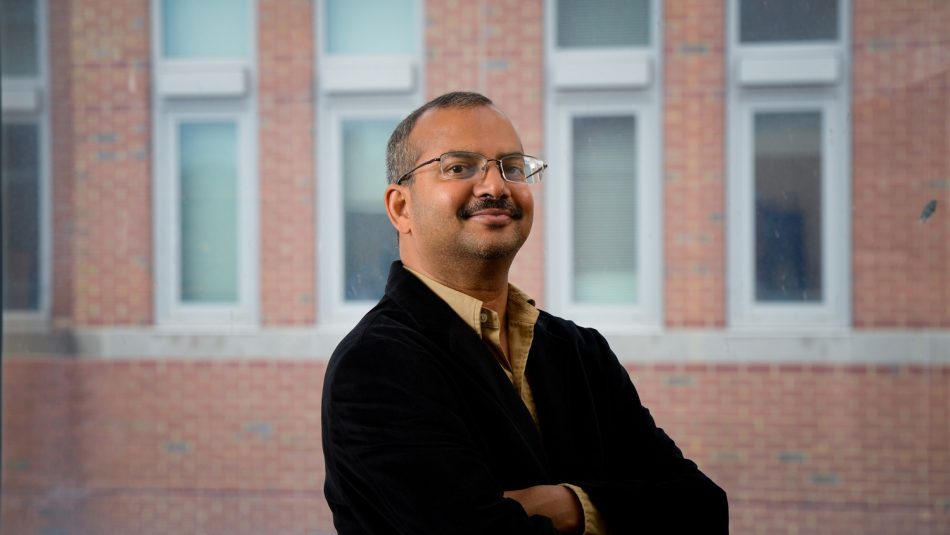
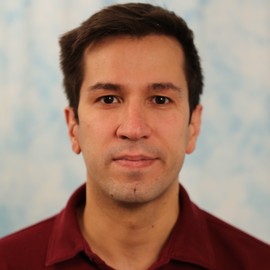
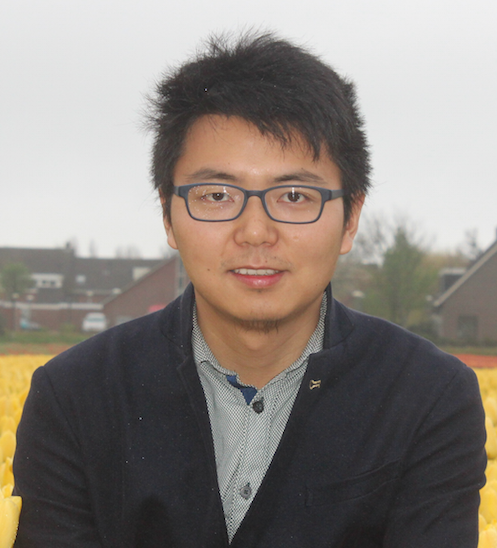
Raju Vatsavai is an Associate Professor in the Department of Computer Science at North Carolina State University, affiliated with the Center for Geospatial Analytics. He joined NC State in 2014 as part of the Chancellor’s Faculty Excellence Program cluster hire in Geospatial Analytics. Education: PhD and MS in Computer Science from University of Minnesota Prior Roles: Lead Data Scientist at Oak Ridge National Lab, roles at University of Minnesota, IBM Research, AT&T Labs, and C-DAC (India) His research in geospatial analytics spans big data management , spatiotemporal data mining , deep learning for remote sensing , and high-performance computing , with applications in national security, climate change, and crop monitoring. Recent work includes deep learning frameworks for cloud imputation , multi-sensor satellite data harmonization , and transfer learning applications in crop classification . He has been a leading investigator on grants from the National Geospatial-Intelligence Agency, Department of Energy, and Department of Homeland Security. Labs: Associate Director of the Center for Geospatial Analytics Expertise: Spatial computing, Earth observation, nuclear proliferation detection via remote sensing
C. Paul Cook is an Associate Professor in the Department of Computer Science at the University of New Brunswick's Faculty of Computer Science. He joined the faculty in 2014 after earning his PhD in Computer Science from the University of Toronto in 2010. His research focuses on lexical semantics and multiword expressions within natural language processing and computational linguistics. Dr. Cook's work explores the meanings of words and idiomatic expressions, contributing to advancements in computational linguistics. He is based in Fredericton and can be reached at paul.cook@unb.ca. No academic awards, grants, or advised students are explicitly listed in the provided information. His research and professional activities are centered on theoretical and applied aspects of language processing within computer science frameworks.
Mark Batty is a Professor in the School of Computing at the University of Kent, specializing in formal methods for concurrent systems. His work bridges hardware-software interfaces, focusing on memory models for C/C++, OpenCL, and architectures including x86, ARM, POWER, and GPUs. As a member of the Programming Languages and Systems Research Group, he develops mathematical specifications and verification tools for real-world concurrency challenges. His research centers on empirical testing of hardware/compiler behavior, formal modeling of system components, and verification of fine-grained concurrent algorithms. Key contributions address relaxed memory semantics, transactional memory, and compositional reasoning for concurrent data structures. His work combines theoretical rigor with practical tool development to ensure correctness in complex concurrent environments. Analysis of his 2015-2025 publications reveals consistent focus on memory consistency models, formal verification of weak memory concurrency, and compiler optimizations. Dominant themes include C/C++11 standards, GPU concurrency semantics, and mechanized verification techniques. His research demonstrates strong industry relevance through collaborations with hardware vendors and contributions to language standards. Mark Batty has received significant recognition: John C. Reynolds Doctoral Dissertation Award (2015) from ACM SIGPLAN CPHC and BCS Distinguished Dissertation Award (2015) Lloyds Register Foundation and Royal Academy of Engineering Research Fellowship (2016) He actively leads major research initiatives and mentors next-generation researchers: Current Funding: EPSRC Standard Grant 'Verifiably Correct transactional memory' (2018), VeTTS Grant 'Specification and verification of C++ data structure libraries' (2018), EPSRC First Grant 'Compositional, dependency-aware C++ concurrency' (2018) PhD Recruitment: Actively seeking candidates for UKRI-funded studentship in Verified Trustworthy Software Systems Batty drives community engagement through Kent Concurrency Workshop (2016) and South of England Programming Language Seminars, fostering national collaboration in programming languages research. His leadership in organizing Royal Society discussions underscores his influence in trustworthy systems verification.
Dewei Yi is a Senior Lecturer (Associate Professor) in the Department of Computing Science, School of Natural and Computing Sciences at the University of Aberdeen, UK. He holds a PhD from Loughborough University and is an active researcher in AI, computer vision, and intelligent systems. He serves as Director of the MSc AI and MSc Robotics and AI programmes. Research Interests: His research spans AI-enabled healthcare, medical image processing, intelligent vehicles, robotics, precision agriculture, remote sensing, and applied machine learning. He focuses on hybrid intelligent systems, personalised AI, federated learning, fairness, and explainability. Recent Publication Trends: His latest work includes medical image quality evaluation using contrastive learning, federated learning for diabetic retinopathy, UAV-based solar panel inspection, vascular image analysis, and emotion recognition from ECG data, reflecting a strong trend toward healthcare and intelligent systems with real-world impact. Scientific Awards: Fellow of the Higher Education Academy (FHEA) Outstanding Reviewer, Transportation Research Part C (TRC) Advising and Grants: Dr Yi supervises multiple PhD students in AI, computer vision, and machine learning. His graduated PhDs include Debinal Bakyavathi Rajan, Sami Hamid Al Sulaimani, and Adinath Abhimanyu Ghadage. He has secured significant funding as PI and Co-PI, including a £408K Smartawl 5.0 project and a £794K Cancer Research UK grant (Co-PI). Labs and Teams: He leads research in AI for healthcare and intelligent vehicles, collaborating with institutions like University of Warwick, Loughborough University, and industry partners such as AVL Powertrain Ltd. His work is supported by interdisciplinary teams focusing on embedded AI, medical applications, and sustainable technologies.
Ori Lahav is a faculty member in the School of Computer Science at Tel Aviv University. His research is generously supported by an ERC Starting Grant and an ISF Grant. He actively supervises PhD and MSc students, and seeks highly motivated candidates for postdoc, PhD, and MSc positions in programming language theory, concurrency, and formal methods. Dr. Lahav completed his PhD at Tel Aviv University under the supervision of Arnon Avron. In 2014, he was a postdoctoral researcher at Tel Aviv University hosted by Mooly Sagiv. From 2014 to September 2017, he was a postdoctoral researcher at MPI-SWS in Germany hosted by Viktor Vafeiadis and Derek Dreyer. His primary research areas focus on programming languages and verification, with specialization in concurrency and relaxed memory models. He also has significant interests in proof-theory, semantics of non-classical logics, and automated reasoning. His work bridges theoretical foundations with practical applications in programming language design and implementation. Dr. Lahav's publication record shows a consistent trajectory of high-impact research in top-tier conferences including PLDI, POPL, OOPSLA, and ESOP. His recent work (2023-2025) demonstrates continued leadership in memory models, concurrency semantics, and verification techniques. His research spans both theoretical contributions in denotational semantics and practical tools for verification. Best Paper Award DISC 2024 Best Student Paper Award DISC 2024 Distinguished Artifact Award ESOP 2022 Distinguished Paper Award OOPSLA 2021 Kleene Award for Best Student Paper LICS 2013 Dr. Lahav actively advises students including Yoav Ben Shimon, Yotam Dvir, Amir Karniel, and Roy Margalit (PhD students), Yuval Katsman Ezra (MSc student), and has alumni including Ori Saporta (MSc) and Abhishek Kr Singh (postdoc, now Assistant Professor at IIIT Hyderabad). He has organized significant events including VMCAI 2024 and Dagstuhl Seminars on persistent programming. His teaching portfolio includes courses on Shared Memory Concurrency Semantics, Programming Language Foundations, and Software Foundations in Coq.
Dr. Jessica C. Fisher is a Research Fellow at the Durrell Institute of Conservation and Ecology (DICE), University of Kent. Her work focuses on the intersection of human health, environmental change, and social inequalities, particularly exploring how biodiversity influences well-being through nature-based interventions. She holds a BSc in Zoology from Newcastle University, an MRes in Biodiversity, Evolution, and Conservation from University College London, and a PhD from DICE, where she examined human-nature interactions in urban Guyana. Her research employs mixed-methods approaches, including participatory visual methods, structural equation modeling, and data visualization. Key areas include the design of nature-based health programs, the socio-cultural dimensions of biodiversity conservation, and the impacts of environmental changes on marginalized communities. She has contributed to projects funded by the Woodland Trust and European Research Council (ERC), such as the 'RELATE' initiative analyzing biodiversity's role in human well-being across socio-economic gradients. Dr. Fisher is a Professional Associate Fellow of the Higher Education Academy and chairs the Women’s Researcher Network. Her publications span high-impact journals like Nature Ecology and Evolution and Environmental Research , with a focus on topics including robotic biodiversity monitoring, participatory video in conservation, and equitable access to nature. She actively engages in policy advocacy, emphasizing the integration of social and ecological sciences to address planetary health challenges. Education: BSc Zoology, Newcastle University MRes Biodiversity, Evolution, and Conservation, University College London PhD in Human-Nature Interactions (Urban Guyana), DICE, University of Kent Affiliations: Member, Durrell Institute of Conservation and Ecology (DICE) Co-chair, Women’s Researcher Network Member, IUCN Commission on Ecosystem Management Grants & Projects: ERC-funded 'RELATE' project (2020–present) Woodland Trust-funded 'Woodland Biodiversity for Human Health and Wellbeing' (2020)
David Naumann is Professor and Department Chair of Computer Science at Stevens Institute of Technology. His leadership in the department and active research program positions him as a key figure in programming languages and formal methods research. Naumann's research focuses on formal methods and software security, with particular emphasis on relational and hyperproperty verification , fine-grained confidentiality/integrity policies , and program analysis and verification . His work bridges theoretical foundations with practical applications in security-critical systems. He has developed novel program logics and verification techniques that enable precise reasoning about information flow and security properties. His recent publications (2022-2025) reveal a strong trend toward modular relational verification techniques with applications to pointer programs, distributed systems, and concurrent applications. The research spans theoretical foundations (algebraic structures for alignment) to practical tools (WhyRel prototype), demonstrating both depth and breadth in addressing verification challenges. Naumann has served as program committee co-chair for IEEE Computer Security Foundations Symposium (2021-2022) and has been active on committees for POPL, CCS, CSF, ECOOP, and other top venues. His editorial service includes ACM Transactions on Programming Languages and Systems, Formal Aspects of Computing, and Journal of Object Technology. He leads the Cypress research group at Stevens Institute of Technology and has secured significant funding from NSF, Microsoft Research, and Siemens. His mentoring extends to numerous PhD students who have gone on to successful careers in academia and industry.
Edgar Weippl is a Professor at the Faculty of Computer Science, University of Vienna, where he serves as Vice Dean and Head of the Research Group Security and Privacy. His work spans cybersecurity, blockchain, and machine learning, with teaching roles in information security and software security courses. Current Positions: Vice Dean (Faculty of Computer Science), Head (Security and Privacy Research Group), Deputy Head (Neuroinformatics & Knowledge Engineering Groups) Research Interests: Cybersecurity, blockchain, IoT security, code obfuscation, privacy technologies, reinforcement learning, and socio-technical systems security Selected Publications: Focus on blockchain privacy, VoWiFi security, code obfuscation, and reinforcement learning applications
Bihuan Chen is an Associate Professor at the College of Computer Science and Artificial Intelligence, Fudan University, specializing in software engineering with focus on software supply chain security and trustworthy AI systems. His research spans multiple programming languages including JavaScript, Python, Java, and C/C++ across application and AI domains. Dr. Chen earned his B.Sc. and Ph.D. in Computer Science from Fudan University in 2009 and 2014 respectively, followed by postdoctoral research at Nanyang Technological University (2014-2017). His research interests include software supply chain risk assessment, trustworthy AI systems, and program analysis. His recent publications demonstrate strong focus on malicious package detection in NPM/PyPI ecosystems, vulnerability patch porting using LLMs, and safety verification for autonomous driving systems. The work shows increasing integration of machine learning techniques with traditional program analysis approaches, particularly evident in the 2024-2025 publications that leverage LLMs for vulnerability detection and code refinement. ACM SIGSOFT Distinguished Paper Award (FSE 2016, ASE 2018, ASE 2022, FSE 2025) IEEE TCSE Distinguished Paper Award (ICSME 2020, SANER 2023) CCF Prototype Competition Awards (2nd and 3rd Prizes) Dr. Chen has advised over 50 students including current PhD candidates and notable alumni now at Huawei, ByteDance, and other leading tech firms. His fuxi platform assesses security, legal, and maintenance risks across the software engineering lifecycle. He serves on program committees for major conferences including ICSE, FSE, ASE, and ISSTA, and as Associate Editor for the Journal of Software: Evolution and Process.
Maxim Romanov heads 'The Evolution of Islamic Societies' project at University of Hamburg's Asia-Africa-Institut, funded by DFG's Emmy Noether Program. Former positions include senior research fellow at KITAB Project and University of Vienna. Research reconstructs social history of Islamic world (c.600-1600 CE) through computational analysis of Arabic chronicles and biographical collections. Research Focus: Digital humanities approaches to premodern Islamic history including OCR development for Arabic manuscripts, corpus linguistics, and geospatial modeling of historical data. Technical Contributions: Developed OpenITI corpus infrastructure, al-Ṯurayyā gazetteer system, and computational methods for large-scale historical text analysis. Recent work enhances NLP for classical Arabic with OCR accuracy exceeding 90%.
Farah Kamw is an Assistant Professor in the Department of Computer Science at Wayne State University. With a PhD in Computer Science (2019) from Kent State University, her expertise spans 18 years of software development, academic teaching, and research in information visualization and database management. Education : PhD (Kent State), MSc (University of Zakho), BSc (University of Baghdad) Her research focuses on Information Visualization and Visual Analytics of spatial-temporal data, particularly through 8 publications (2013-2021) addressing urban mobility patterns, trajectory analysis, and geospatial data integration. She has developed several open-source visual analytics tools including TrajAnalytics and SparseTrajAnalytics, applying both document and graph database techniques. Farah teaches core Computer Science courses such as Algorithm Design , Programming Languages , and Database Systems . Her technical skills include Python, C++, Java, SQL, NoSQL databases, and GIS technologies.
Ruben Martins is an Assistant Professor at Carnegie Mellon University's School of Computer Science and serves as the program director of the Master of Science in Computer Science (MSCS) . His research focuses on the intersection of constraint programming, program synthesis, analysis, and verification, with recent work aiming to make formal methods tools more accessible through automated reasoning. Ruben earned his Ph.D. with honors from the Technical University of Lisbon, Portugal (2013) , followed by postdoctoral research at the University of Oxford (2014-2015) and UT Austin (2015-2017) . Research Interests : Ruben's work bridges constraint programming and program synthesis , with applications in software verification , optimization , and automated reasoning . He has developed award-winning tools like Open-WBO , a modular MaxSAT solver that has won gold medals in international competitions. His publications span top-tier venues such as POPL , PLDI , FSE , SAT , and CP , often addressing real-world challenges from program analysis to network security. Scientific Awards include: Distinguished Paper Award at PLDI 2018 Distinguished Paper Award at FSE 2021 Distinguished Paper Award at SAT 2022 Gold medals for Open-WBO in MaxSAT competitions Teaching & Advising : Ruben mentors Ph.D., Master’s, and undergraduate students in research projects related to program synthesis, formal methods, and constraint solving. He teaches courses such as Bug Catching: Automated Program Verification and Advanced Topics in Logic: Automated Reasoning and Satisfiability , emphasizing hands-on experience with tools like Why3. His advising spans topics from AI-driven program repair to network protocol verification , fostering collaboration across disciplines.
Alastair F. Donaldson is a Professor and Director of Research in the Department of Computing at Imperial College London, where he leads the FastPL research group. His academic career spans over a decade at Imperial, progressing from Lecturer (2011-2014) to Senior Lecturer (2014-2017), Reader (2017-2020), and Professor (2020-present). He has also held significant industry positions, including Founder and Director of GraphicsFuzz Ltd. (acquired by Google in 2018), Senior Software Engineer at Google (2018-2021), and Visiting Researcher at both Google and Microsoft Research Redmond. Donaldson earned his PhD from the University of Glasgow under Alice Miller, following a BSc (hons, First Class) in Computing Science and Mathematics. His postdoctoral work included an EPSRC Postdoctoral Research Fellowship at the University of Oxford and a Research Fellowship at Wolfson College Oxford. His research focuses on formal analysis, software testing and programming languages techniques for improving software reliability, with special emphasis on high-performance systems. Donaldson's work bridges theoretical foundations with practical applications, particularly in compiler testing, GPU programming verification, and metamorphic testing. His research has significantly influenced both academia and industry, as evidenced by the acquisition of his startup GraphicsFuzz by Google. Analysis of his recent publications reveals a strong focus on fuzz testing techniques applied across diverse domains including compilers, GPUs, cryptographic protocols, and large language models. His work consistently combines formal methods with practical testing approaches, addressing challenges in compiler correctness, memory models, and API verification across multiple platforms. 2017 BCS Roger Needham Award EPSRC Early Career Fellowship Best Paper Award, EuroSys 2024 Best Paper Award, MET 2021 Best Paper Award, IWOCL 2019 Best Paper Award, IISWC 2019 Best Paper Award, ICST 2016 ACM SIGSOFT Distinguished Paper Award, ISSTA 2023 ACM SIGSOFT Distinguished Paper Award, FSE 2017 ACM SIGPLAN Most Influential OOPSLA Paper Award, 2022 (for GPUVerify) As Director of Research in the Department of Computing, Donaldson oversees research strategy and development. His FastPL research group investigates novel techniques for programming, testing and reasoning about high performance systems. He has served on numerous program committees and held leadership roles including PLDI Steering Committee Chair (2022-2025) and PACM-PL Advisory Board member. His industry engagement includes testifying as an Expert Witness in the IBM UK Ltd v LzLabs GmbH & Ors case. The FastPL research group, which Donaldson leads, focuses on formal analysis, software testing and programming languages. The group has made significant contributions to compiler testing, GPU verification, and metamorphic testing techniques, with practical impact demonstrated by the acquisition of GraphicsFuzz. Current research directions include fuzzing for zero-knowledge proof circuits, randomized testing of decompilers, and systematic testing of large language models for code generation.
Tien N. Nguyen is a Professor in the Computer Science Department at the Erik Jonsson School of Engineering and Computer Science, University of Texas at Dallas. He has been actively contributing to the software engineering research community since 2005, with significant publications and service to major conferences including ASE, ICSE, and ESEC/FSE. His extensive research portfolio spans multiple areas at the intersection of artificial intelligence and software engineering. Dr. Nguyen's research focuses on AI/ML4Code, encompassing Machine Learning, Natural Language Processing for Software Engineering and Software Security. His work specifically addresses Program Analysis, Software Evolution and Mining, Software Security, Software Maintenance, Mining Software Repositories, Version and Configuration Management, and Web Code Analysis and Security. His research has been consistently funded by multiple NSF grants including NSA NCAE-C-002-2021, CNS-2120386, CCF-1723215, CCF-1723432, CNS-1723198, and others dating back to CCLI-0737029. His recent publications demonstrate a strong trend toward leveraging large language models for various software engineering tasks including program analysis, bug detection, code completion, and automated program repair. The research spans both theoretical foundations and practical applications, with numerous papers accepted at top-tier conferences across multiple years. His scientific contributions have been recognized with several prestigious awards: ACM SIGSOFT Distinguished Paper Award at FSE 2024 IEEE Computer Society TCSE Distinguished Paper Award at SANER 2022 ACM SIGSOFT Distinguished Paper and ASE Best Paper Award at ASE 2014 ACM SIGSOFT Distinguished Paper Award at ASE 2012 ACM SIGSOFT Distinguished Paper Award at ESEC/FSE 2009 Dr. Nguyen has served in numerous leadership roles including Program Co-Chair for ICSE 2020 Demonstrations, Doctoral Symposium Co-Chair for ESEC/FSE 2021, NIER Track Chair for ASE 2020, and Tutorials Co-Chair for ASE 2024. He has received multiple NSF grants supporting his research in software analysis, mining, and security. His work with the Boa infrastructure for ultra-large-scale code mining has established significant infrastructure for the research community. His laboratory focuses on AI for software engineering, with particular emphasis on program analysis, software security, and mining software repositories. The research group develops techniques that bridge the gap between artificial intelligence and practical software engineering challenges, creating tools that are both theoretically sound and practically applicable to real-world software development.
Li Li is a Professor of Software Engineering at Beihang University , China. Previously, he served as an ARC DECRA Fellow and Senior Lecturer at Monash University , leading the SMart software Analysis and Trustworthy computing (SMAT) research lab at the Department of Software Systems and Cybersecurity. His academic journey includes a Ph.D. in Software Engineering from the University of Luxembourg (2016), supervised by IEEE Fellow Prof. Yves Le Traon and Dr. Jacques Klein. Research Interests Li's research focuses on Mobile Software Engineering (Mobile Security, Quality Assurance) and Intelligent Software Engineering (SE4AI, AI4SE). He applies static code analysis , dynamic program testing , and machine/deep learning to enhance software security and reliability. Key areas include Android API evolution, automated patch validation, and multi-language code analysis frameworks like Scalpel for Python. Scientific Recognition ARC DECRA Fellowship Rising SE Research Star Top-5 Most Impactful Early Career SE Researchers (2020, 2017) 5 Best/Distinguished Paper Awards across PLDI, WWW, ASE, MSR, and SANER Academic Contributions He has contributed to foundational Android analysis tools (e.g., AndroZoo++, DroidRA) and developed scalable systems for distributed program analysis (Seads). His work appears in top venues like ICSE, ESEC/FSE, ASE, ISSTA, POPL, and TSE.