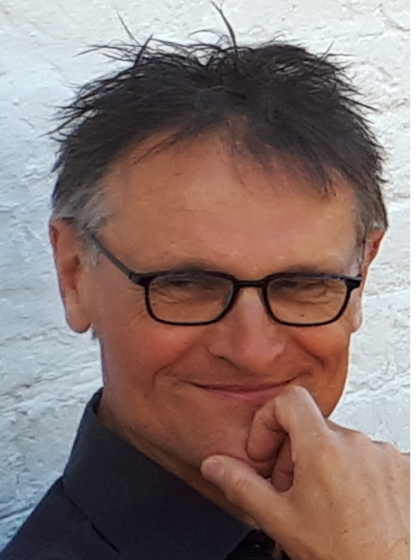
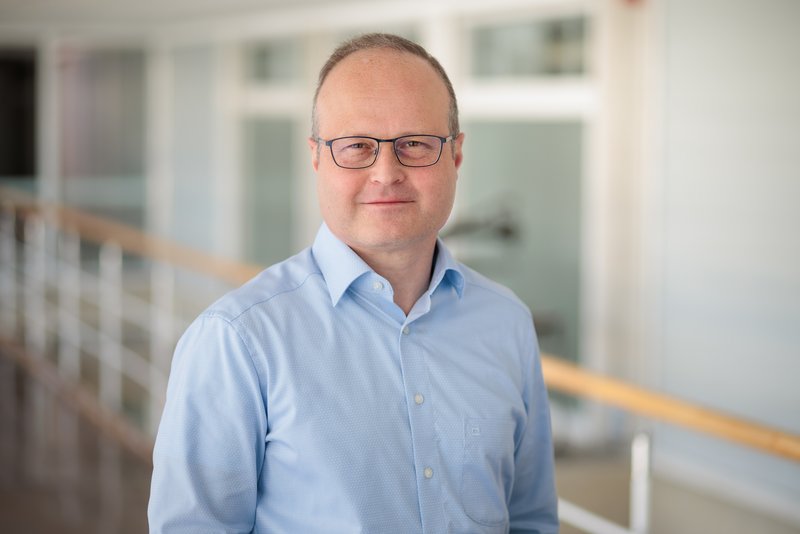
Professor Jonathan Corney holds the Chair of Digital Manufacture in the School of Engineering at the University of Edinburgh. His research focuses on advanced manufacturing technologies, including digital twin applications, smart factory optimization, sustainability engineering, and additive manufacturing. He leads projects addressing human factors in industrial environments, predictive analytics for production processes, and intellectual property challenges in modern manufacturing systems. His academic background encompasses mechanical engineering with specialization in CAD/CAM systems, hydroforming technology, and patent analysis for design innovation. Corney has pioneered methods like the Economic and Environmental Impact Assessment for Sustainability (EENIAS), and developed decision support frameworks for energy-efficient scheduling and garment reprocessing in circular economies. Key research themes include: Smart factory design through real-time worker movement analysis Cyber-physical systems for supply chain optimization Machine learning applications in manufacturing process control Human-centric automation and safety protocols His recent work emphasizes predictive modeling using spatio-temporal graph networks, digital twin integration in assembly processes, and sustainable manufacturing practices. Over 150 peer-reviewed articles demonstrate his contributions to near-net-shape manufacturing, intellectual property management, and crowdsourced design methodologies.
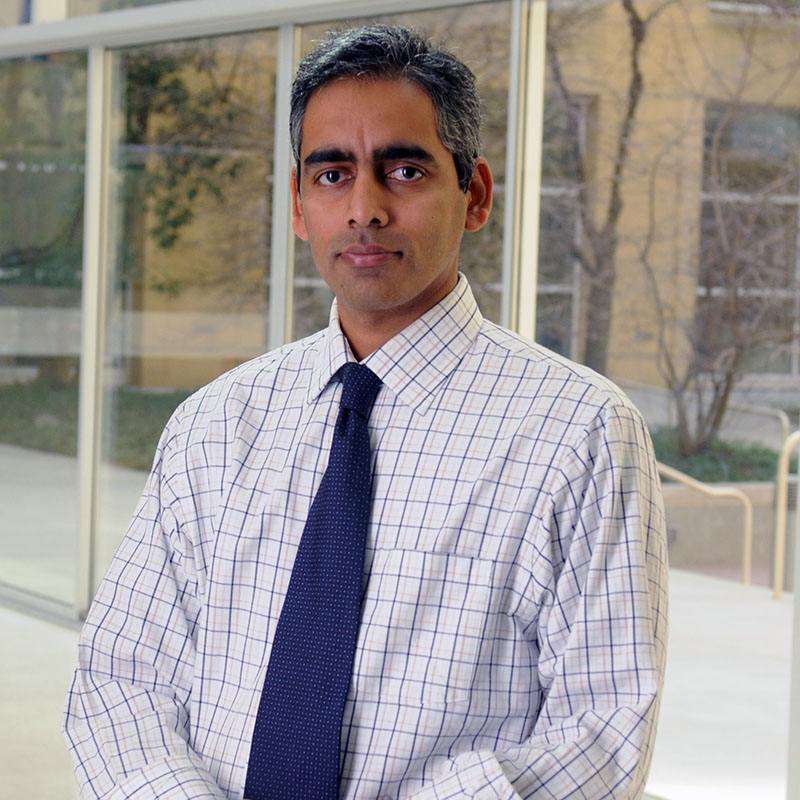
Karthik Ramachandran is the Dunn Family Professor and Area Chair of Operations Management at the Scheller College of Business, Georgia Institute of Technology. His research focuses on operational and organizational aspects of innovation in product design, technology management, and entrepreneurship. He holds editorial roles at Production and Operations Management and Decision Sciences , and teaches courses in New Product Development and Entrepreneurship. Ramachandran earned his Ph.D. from the University of Texas at Austin and a B.Tech. from the Indian Institute of Technology, Madras. Research interests span behavioral operations, sustainability, and strategic decision-making in innovation ecosystems. He investigates how firms balance operational flexibility with market demands, leveraging analytical models and empirical studies. His work has appeared in top journals like Management Science and Manufacturing & Service Operations Management . Notable contributions include studies on nonprofit service optimization, entrepreneurial advising frameworks, and innovation project delegation. Ramachandran actively mentors startups through Georgia Tech’s CREATE-X initiative, emphasizing hands-on learning and venture creation. Education: Ph.D. Operations Management, McCombs School of Business, UT Austin M.S. Operations Research, UT Austin B.Tech. Mechanical Engineering, IIT Madras Awards: 2024 Best Paper Award (MSOM Society) Grants & Advising: Overseeing research on innovation ecosystems and mentoring dozens of startups, with a focus on scaling entrepreneurial ventures.
Sukhpal Singh Gill is an Assistant Professor (Lecturer) in Cloud Computing at the School of Electronic Engineering and Computer Science, Queen Mary University of London (UK). He holds a PhD, ME, and BE in Computer Science and is a Fellow of the Higher Education Academy (FHEA). His roles include Programme Director for MSc Advanced Computer Science and MSc Business Analytics, as well as Deputy Chair of the Main Misconduct Panel. He leads the GillNet Research Lab and is the Editor-in-Chief of the International Journal of Applied Evolutionary Computation (IJAEC) , with editorial roles in IEEE IoT, Nature Scientific Reports, and other journals. Education: PhD in Computer Science ME in Computer Science BE in Engineering Research Interests: Focus on Cloud Computing, Edge AI, IoT, Energy Efficiency, and Quantum Computing. His work bridges theoretical advancements with practical applications in healthcare, smart cities, and sustainable computing. Notable projects include AI-driven frameworks for carbon-neutral cloud resource management, blockchain-empowered healthcare systems, and quantum cloud computing models. Teaching: Teaches modules such as Cloud Computing (Postgraduate), Fundamentals of Web Technology (Undergraduate), and Semi-structured Data and Advanced Data Modelling (Postgraduate/Undergraduate). He emphasizes inclusive curriculum design and innovative teaching tools like the Q-Module-Bot for AI-supported learning. Awards & Grants: Recipient of 12,500+ citations and an H-index of 54 (Google Scholar). Secured grants for projects on edge AI, federated learning, and sustainable cloud computing. Winner of awards including the IEEE IT Professional Magazine Outstanding Reviewer Award (2024) and Elsevier's Best Paper Award (2023). Labs & Teams: Leads the GillNet Research Lab , focusing on cutting-edge research in cloud-edge computing, AI, and quantum systems. Collaborates with industry partners on projects like HealthEdgeAI and AIoT-driven smart healthcare systems .
Prof. Dirk Pieter van Donk is a Professor at the University of Groningen's Faculty of Economics and Business, within the Operations — Management department. He specializes in Supply Chain Management and Resilience, focusing on integration, contextual factors, and performance. His research spans journals like the Journal of Operations Management and has earned awards such as the EurOMA Fellowship Award (2024). Education: PhD in Business Administration (1995), Master's in Econometrics and Business Administration. Research Interests: His work explores supply chain resilience, integration dynamics, and operational challenges in industries like food processing. Key themes include disruption management, critical infrastructure coordination, and sustainable practices in supply networks. Publications: Recent articles address resilience strategies, supply chain collaboration, and infrastructure challenges. His 2025 work on disruption concurrence highlights communication's role in critical infrastructure resilience. Awards: EurOMA Fellowship Award (2024) Outstanding Paper Award (1994) ISM Best Paper Runner-Up (2018) Advising & Grants: Supervisor of over 100 master's theses. Active in projects like NGInfra (2018–2022) and NWO-funded resilience initiatives. Teaches courses on strategic supply chain management and international business. Labs/Teams: Involved in interdisciplinary projects on infrastructure resilience and digital transformation in criminal justice supply chains.
Behrouz Far is a Professor at the University of Calgary’s Schulich School of Engineering, Department of Electrical and Software Engineering. He holds a PhD in Artificial Intelligence from Chiba University, Japan (1990) and degrees from the University of Teheran including a B.S. in Electrical Engineering (1983) and M.S. in Electrical Engineering (1986). His research focuses on AI applications in medical imaging, software engineering, transportation systems, and data mining. He has contributed to advancements in fundus image analysis, deep learning models for disease detection, and intelligent traffic management systems. Dr. Far has received notable awards such as the 2017 SSE Achievement Award and the AITF-AMA Tier-2 Chair in Smart Multimodal Transportation Systems (2013). His work bridges theoretical AI with practical healthcare solutions, including tools like LETTA for traffic management systems and methodologies for detecting ocular lesions using CNNs. He teaches courses on software testing, reliability engineering, and agent-based systems. His publications highlight contributions to medical diagnostics (e.g., choroidal nevi classification), transportation optimization (e.g., real-time traffic signal control), and machine learning explainability. Collaborative research includes projects on biopotentiostat biosensors for SARS-CoV-2 detection and data mining for cancer patient stratification.
David Lee Butler is the MTC Chair in Sustainable Manufacturing at the University of Birmingham's School of Engineering. He leads the Sustainable Manufacturing Group, focusing on rethinking product manufacturing and sales to address planetary resource constraints. His work spans materials extraction, lifecycle assessment, digitalisation, additive manufacturing, automation, robotics, and clean energy. Butler holds a PhD, MSc(Eng), and BEng(Hons) from the University of Birmingham. Previously, he spent 18 years in Singapore at Nanyang Technological University, co-founding the Advanced Remanufacturing & Technology Centre (ARTC), which now employs over 250 staff. He also served as Science Lead for Additive Manufacturing at the National Physical Laboratory while at the University of Strathclyde. His research emphasizes sustainable manufacturing solutions for wind turbines, aircraft decommissioning, and circular economy models. Education : PhD in Mechanical Engineering, University of Birmingham, 2000 MSc(Eng) in Integrated Quality Systems, University of Birmingham, 1992 BEng(Hons) in Manufacturing Engineering & Economics, University of Birmingham, 1992 Research Interests include sustainable manufacturing, lifecycle assessment, remanufacturing, surface engineering, and circular economy strategies. His projects include developing end-of-life strategies for wind turbines and aircraft, and establishing consortia for sustainable manufacturing solutions. He secured over £4 million in research funding at Strathclyde and holds joint appointments with the National Manufacturing Institute Scotland and the National Physical Laboratory. Grants & Funding : Over £4M secured at Strathclyde University for projects on wind turbine lifecycle, net-zero transitions, and additive manufacturing.
Henrikke Baumann is a Professor at Chalmers University of Technology , affiliated with the Environmental Systems Analysis department within the Environmental Systems Analysis school. Her research focuses on interdisciplinary environmental sustainability, particularly in Life Cycle Assessment (LCA) , Life Cycle Management (LCM) , and sustainable business models . She pioneers work on societal material flows, plastic pollution, and organizational influences on environmental performance. Research Interests: Interdisciplinary research in industrial ecology Life Cycle Assessment (LCA) methodology and applications Business model innovation for sustainability Material flows and plastic pollution mitigation Organizational practices and environmental governance Recent Trends in Articles: Explores methodological rigor in LCA for carbon capture and utilization systems Analyses the environmental effectiveness of LCA in building product development Develops frameworks for assessing business models' environmental performance via BM-LCA Addresses social dimensions of sustainability in business models Grants and Projects: Principal investigator in projects like TwinWins: Measuring Business Model Environmental Performance Contributions to Mistra REES (Resource-effective and efficient solutions) Phase 2 Labs/Teams: Active in interdisciplinary teams at Chalmers focused on industrial ecology and sustainability science.
Associate Professor Nalin Arachchilage is a leading academic in Cyber Security at RMIT University's School of Computing Technologies. He holds an honorary role at the University of Warwick and advises DEFSAFE Cyber Security Inc. His research focuses on usable security, privacy engineering, and AI-driven cybersecurity solutions. Key roles include revamping RMIT's Master of Cyber Security program and leading the Usable Security Engineering group at UNSW ADFA. Education: PhD in Cyber Security (Brunel University), Postdocs at Oxford and UBC. Research spans interdisciplinary areas including HCI, machine learning for threat modeling, and serious games for security education. He has published extensively in top venues like ACM CCS and SOUPS, contributing to global standards like OWASP. Leadership: Previously Assistant Head of School (Research) at the University of Auckland, and Director of the MProfStuds in Digital Security. Active in program committees for major conferences (ACM CCS, SOUPS). Current supervision includes 5 PhD students across RMIT and Auckland. Media Impact: Featured in Sky News Australia, ABC, and TVNZ. Collaborations with HP and Facebook. Awards include impactful contributions to security frameworks and standards. Teaching: Coordinates courses like INTE2625 (Cyber Security) and COSC2738 (Human-Centric Cyber Security). Supervises projects on topics like blockchain security and responsible AI. Non-Academic Roles: Chair of the Academic Board at Canberra Business & Technology College (2020-2021). Advisor to DEFSAFE, focusing on novel cyber-security products.
Søren Krogh Jensen is a Professor at the Department of Animal and Veterinary Sciences (ANIVET) within the Monogastric Nutrition (MONU) unit at Aarhus University. His research focuses on sustainable feed production, nutrient metabolism, and circular bioeconomy strategies in animal agriculture. He leads initiatives in biorefining green plant resources and serves on the steering committee of the Center for Circular Bioeconomy. Education & Research Expertise: Over 35 years of research on feed processing impacts on animal nutrition Specialization in vitamin/fatty acid metabolism, biohydrogenation, and excretion dynamics Expertise in analytical methods and laboratory facilities for nutritional studies Research Themes: Optimizing nutrient utilization across species (ruminants/monogastrics) Developing sustainable feed sources from agricultural byproducts Integrating circular economy principles into livestock systems Evaluating environmental impacts of protein crop expansion Current Projects (2020-2025): GrassProtein (grass-based biorefining) SeaSus-Protein (seaweed protein utilization) UVIBA (UV sterilization in livestock environments) GO-GRASS (grass-based circular business models) Labs & Collaborations: Directs the ANIVET bioeconomy initiative and collaborates with industry on biorefining technologies and feed innovation.
Prof. Wolfgang Blochinger is a Professor in the Department of Computer Science at Reutlingen University, specializing in Services Computing and IT Security. He leads teaching programs in Wirtschaftsinformatik (Business Informatics) at both Bachelor and Master levels, focusing on foundational topics such as Programming Basics, Operating Systems, IT Security, Cloud Computing, and Big Data Technologies. His research emphasizes Cloud Computing and High Performance Computing, particularly in elasticity control, parallel processing, and cloud resource optimization. His research projects include developing elastic parallel systems for HPC applications, cloud migration strategies, and automated cloud service generation. Notable contributions involve frameworks like TASKWORK for elastic task parallelism and the Elasticity Description Language for cloud applications. He has published extensively on serverless computing, cost-efficient cloud resource utilization, and container-based isolation techniques. Prof. Blochinger collaborates with industry partners through the university's labs, including the AI-Reallabor AIDA and Cloud Lab. His work bridges academia and industry, addressing real-world challenges in distributed systems and cloud infrastructure. Current research trends focus on self-tuning cloud services and adaptive parallel algorithms for scalable computing environments.
Tatyana Konkova is a Senior Lecturer in the Department of Design, Manufacturing and Engineering Management at the University of Strathclyde, Faculty of Engineering, Glasgow, UK. She is actively engaged in research, teaching, and professional leadership in the field of Materials Science and Engineering, with a focus on metallurgy and advanced manufacturing techniques. Education: Doctor of Science, Mechanisms of cryogenic plastic deformation and features of microstructure formation in technically pure copper, Institute for Metals Superplasticity Problems, Russian Academy of Sciences (awarded 2011) Master of Business Administration (MBA), Strathclyde Business School (awarded 2023) PG Certificate in Learning and Teaching in Higher Education, University of Strathclyde (awarded 2021) MSc (Hons) in Materials Science and Engineering, Ufa State Aviation Technical University (awarded 2005) BSc in Engineering, Ufa State Aviation Technical University (awarded 2004) Research Interests: Her research spans Severe Plastic Deformation (SPD), cryogenic deformation, additive manufacturing, microstructure evolution, and advanced characterization using EBSD, TEM, and SEM. She focuses on materials such as titanium alloys, copper, and nickel-based superalloys, aiming to bridge fundamental science with industrial applications. Her work emphasizes grain boundary engineering, abnormal grain growth, and deformation-induced boundaries. Publication Trends: Recent publications highlight her growing interdisciplinary work combining additive manufacturing with electric machine design, as well as continued deep microstructural investigations in aerospace and microelectronic materials. Her research integrates data-driven optimization and advanced characterization to improve material performance and manufacturing efficiency. Scientific Awards and Honors: Fellow of the Institute of Materials, Minerals and Mining (FIMMM) Chartered Engineer (CEng) by the Engineering Council Member of the Institution of Mechanical Engineers (MIMechE) Fellow of the Higher Education Academy (FHEA) PG Certificate in Learning and Teaching in Higher Education Advising and Grants: She has supervised undergraduate, postgraduate, and PhD students and serves as Principal Investigator on multiple research projects, including EPSRC-funded CDT in AI-enabled Digital High-Value Manufacturing and AFRC projects on titanium alloy forgeability. She has secured funding from national and international sources, including the Russian Foundation for Fundamental Research. Her leadership in industrial collaboration and knowledge exchange is evident through her roles in Catapult projects and industrial group supervision. Labs and Teams: She has led the Materials Characterisation Theme at AFRC and represented the center in Cross-Catapult forums on additive manufacturing. She is part of the Horizon Europe Working Group with the University of Waterloo and actively collaborates with national and international research teams.
Ivana Kockar is a Reader in the Department of Electronic and Electrical Engineering at the University of Strathclyde, within the Faculty of Engineering. She is affiliated with the Institute for Energy and Environment and leads research on the integration of Distributed Energy Resources (DERs) into power systems, focusing on optimization, market design, and policy analysis. PhD, McGill University, 2004 Her research interests include active network management, TSO-DSO coordination, agent-based modeling, Multi-Criteria Decision Analysis (MCDA), and virtual power plants. She develops tools to support the transition to low-carbon power systems and improve grid flexibility through demand participation and energy storage. The recent publications highlight a strong trend in analyzing DSO risk, flexibility markets, and human behavior in energy planning. Her work increasingly integrates socio-technical dimensions, examining how corporate and individual behaviors impact grid operations. There is also a consistent focus on business models for virtual power plants and the economic impacts of forecasting accuracy, indicating a blend of technical and market-oriented research. Outstanding Engineer Award, 2024 Best Innovation Project, December 2015 Special Issue inclusion, International Journal of Electrical Power and Energy Systems, 2008 She has supervised multiple PhD and MSc students and is Principal Investigator on several major research projects, including EPSRC-funded doctoral training and industrial knowledge exchange initiatives. Her work is supported by grants from EPSRC, Ofgem, and energy companies such as SSEN and Scottish Power. She actively collaborates with Management Science colleagues and contributes to policy development. She leads a research team at the Institute for Energy and Environment, working closely with industry partners and international research consortia such as the EU Horizon 2020 SmartNet project. Her team applies advanced computational methods, including high-performance computing and agent-based simulations, to real-world energy challenges.
Shuting Wang is an Assistant Professor in the Paul H. Chook Department of Information Systems and Statistics at Baruch College's Zicklin School of Business. With a PhD in Management Information Systems from Temple University and prior degrees in Operations Management and Logistics Management, her research focuses on social media risks, fake news detection, and digital health platforms. PhD: Temple University (Management Information Systems) MSc: Shanghai University of Finance and Economics (Operations Management) BSc: Zhongnan University of Economics and Law (Logistics Management) Her expertise spans Big Data Marketing , Social Media Analytics , Technology Strategy , and Digital Health . Current research examines: Fake news mitigation through multimedia elements Telemedicine accessibility via SMS technology Social media's impact on business reputation FinTech startup success factors Psychological impacts of digital appearance Cybersecurity effects on startup funding Key Scientific Awards : Research Cluster Interdisciplinary Incentive Grants (2025) Eugene M. Lang Fellowship (2021) Presidential Fellowship at Temple University (2014) Full Tuition Scholarship at Shanghai University of Finance and Economics (2009) Active in teaching roles including Data Mining for Business Analytics and Database Management, she has received grants from the National Science Foundation and CUNY Central Office. Her work has been featured in outlets like NPR and Campaign US.
Noah Gans is the Anheuser-Busch Professor of Management Science at the Wharton School of the University of Pennsylvania, where he serves as Professor in the Operations, Information and Decisions department. His research focuses on service operations with particular emphasis on call center management, stochastic processes, and queueing system control. Department Editor, Stochastic Models and Simulation at Management Science President of Manufacturing and Service Operations Management Society (MSOM) PhD Program Coordinator for the OID Department His academic work spans diverse domains including healthcare technology pricing, container inspection security, workforce optimization, and revenue management. He has pioneered adaptive clinical trial designs and developed novel models for customer demand sensitivity in overbooking scenarios. Key research areas include: Bayesian sequential learning for multi-arm clinical trials Value-based pricing under uncertainty Stochastic control in service systems Security policy analysis for global supply chains Risk-sharing mechanisms in healthcare Scientific honors include NSF CAREER Award (1998), INFORMS George E. Nicholson Prize (1995), and multiple teaching awards from the Wharton MBA program (2004, 2010-2011, 1997-2001). His publications bridge theoretical operations research with practical implementation across healthcare, transportation, and service industries.
Steven O. Kimbrough is a Professor of Operations, Information and Decisions at the Wharton School, University of Pennsylvania. His research spans artificial intelligence, computational rationality, and strategic optimization with applications to political science, economics, and service innovation. He teaches courses like Agents, Games, and Evolution and Thinking With Models , focusing on experimental approaches to bounded rationality and uncertainty in decision-making. Primary Email: kimbrough@wharton.upenn.edu Office: 3730 Walnut Street, 565 Jon M. Huntsman Hall, Philadelphia, PA 19104 His research interests include: Artificial intelligence and metaheuristics for constrained optimization Evolutionary computation in electoral redistricting Agent-based modeling of market dynamics Logic modeling for normative reasoning Text mining applications in event analysis Publications demonstrate expertise in computational economics, political modeling, and service analytics. Recent work focuses on: Empirical validation of electoral compactness Strategic learning in oligopolies Multi-objective matching algorithms Feasible-infeasible solution spaces Service network optimization Teaching emphasizes: Game-theoretic approaches to strategic behavior Modeling life-cycle for energy sustainability Computational experiments in social science