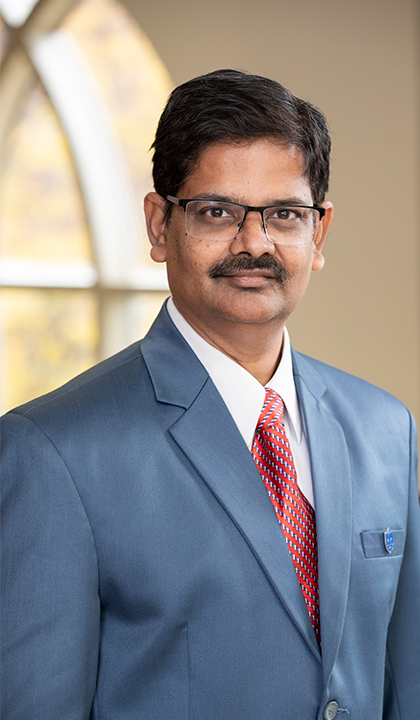
M. Tariq Iqbal is a Professor in the Department of Electrical and Computer Engineering at Memorial University of Newfoundland. He holds a B.Sc. from UET Lahore, M.Sc. from QAU Islamabad, and PhD from Imperial College London. His research develops renewable energy solutions including hybrid power systems, solar applications, and IoT-based monitoring. Projects focus on off-grid communities, industrial applications, and energy-efficient electronics. Specific interests include microgrid design, solar water pumping, and power consumption analysis. Recent publications emphasize techno-economic modeling of microgrids, IoT-enabled SCADA systems, and energy efficiency in computing. Work demonstrates increasing focus on practical implementations in remote locations. No scientific awards are documented. Iqbal advises graduate students on projects across 20+ countries. Current research includes solar-powered oil pumps, electric vehicle charging, and community microgrids. He directs multiple projects through the faculty's engineering design initiative.
Palash Bera is Professor and Chair of Operations and IT Management at Saint Louis University's Chaifetz School of Business. His research develops analytical methods for conceptual modeling, requirements engineering, and business intelligence systems. Bera employs eye-tracking technology to study how users comprehend models, revealing cognitive patterns that inform better design practices. Bera's recent work bridges conceptual modeling with agile software development, creating tools that automatically generate test cases from behavioral requirements. He has secured funding from SERDP, USDA, and other agencies for projects on supply chain analytics and resource recovery. Bera directs the Business Analytics Practicum, connecting students with industry partners like Nestlé Purina. His research has appeared in MIS Quarterly, Information Systems Research, and other leading journals.
Rentizelas Athanasios is an Associate Professor of Sustainable Supply Chains at the National Technical University of Athens (NTUA), School of Mechanical Engineering. He specializes in circular economy, reverse logistics, and digitally enabled supply chains. His research focuses on optimizing multi-tier supply chain sustainability through decision support systems and environmental performance metrics. Education: PhD (2007), National Technical University of Athens MSc in Operations Management (2002), UMIST, Manchester, UK Bachelor + MSc equivalent in Mechanical Engineering (2001), NTUA Research Interests: Dr. Rentizelas explores circular economy pathways in industries like wind energy and agriculture, emphasizing reverse supply networks, eco-intensity metrics, and biomass valorization. He develops frameworks for sustainable ship energy systems and IP management in additive manufacturing supply chains. Awards: 2017 Web of Science 'Highly Cited Paper' (top 1% in Engineering) 2015 Teaching Excellence Award (University of Strathclyde) Thomaidio Foundation Award (2007) for advancing science Professional Activities: He serves on the editorial board of the International Journal of Collaborative Engineering and chairs the EURO Working Group on Sustainable Supply Chains. Current roles include membership in NTUA's School of Mechanical Engineering General Assembly. Key Contributions: His work bridges academia and industry via optimization models for biofuel supply chains, waste management systems, and policy analysis for carbon pricing impacts on maritime energy systems.
Pekka Abrahamsson is a Professor at the Faculty of Information Technology and Communication Sciences at Tampere University , Finland. He actively contributes to research in Software Engineering , Artificial Intelligence , and AI Ethics , with recent work focusing on generative AI, multi-agent systems, and ethical software design. Published over 42 research outputs (2016–2025) Editorial roles in multiple international conferences (2016, 2019, 2022–2024) His research emphasizes practical applications of AI in software development, including tools like ChatGPT for full-stack coding, multi-agent systems for requirements engineering, and frameworks for AI ethics in software practices. He also explores challenges in continuous software engineering and quantum computing architecture. Key publication trends (2024–2025) include: Agile methodologies enhanced by AI Ethical alignment in AI systems Autonomous software development platforms AI tool adoption in programming education Quantum software architecture reviews Technical debt in embedded systems Awards and recognitions : PlumX Metrics highlight 1 scientific prize (unspecified) High readership on platforms like Mendeley (up to 211 readers) Multiple citations in Scopus (up to 53 citations for quantum computing work) Grants and collaborations include global studies on work-from-home impacts, AI tool usage in programming courses, and projects like CodePori for autonomous development. His work influences policy and industry practices, particularly in AI ethics and multi-robot systems.
Jeffrey Schatzberg serves as Professor of Accounting and Frances McClelland Chair of Accounting at the University of Arizona's Eller College of Management, concurrently holding the position of Interim President for Executive Education. A Certified Public Accountant licensed in Arizona and Iowa, he maintains active membership in the American Institute of Certified Public Accountants, American Accounting Association, and Economic Science Association. His educational foundation includes a PhD in Business Administration from the University of Iowa (1987), preceded by professional experience as an audit and tax staff accountant at Peat, Marwick, Mitchell & Co. His scholarly trajectory demonstrates consistent engagement with experimental methodologies applied to core accounting questions. Professor Schatzberg's research program centers on auditing issues , behavioral accounting , and managerial/cost accounting , characterized by rigorous experimental designs investigating ethical decision-making, opportunistic behavior, and institutional influences. His work frequently examines how moral reasoning interacts with economic incentives in audit markets, while exploring budgetary processes and IPO-related auditor selection through controlled laboratory settings. This interdisciplinary approach bridges accounting theory with experimental economics to address real-world professional challenges. Analysis of his 15 most recent publications (1998-2024) reveals persistent focus on audit communication in private debt contracts, auditor pricing strategies under varying liability regimes, and behavioral responses to organizational incentives. The research consistently employs experimental economics frameworks to dissect auditor-client dynamics, with emerging attention to healthcare financing applications through his Center for Management Innovations in Healthcare affiliation. His scholarly contributions have been recognized through significant awards: McLaughlin Prize for ethics-focused accounting research (2003) Two-time recipient of MBA Faculty of the Year Award at Eller (1998, 2002) Arizona Society of CPAs Excellence in Teaching Award (1997) Professor Schatzberg maintains active research leadership through the Economic Science Laboratory, where he designs experimental protocols investigating market behaviors, while contributing to executive education initiatives through Eller Executive Education. His professional trajectory demonstrates seamless integration of academic scholarship, professional practice, and institutional leadership within the accounting discipline. He directs research activities through the Economic Science Laboratory and contributes to healthcare management innovation via the Center for Management Innovations in Healthcare, fostering cross-disciplinary collaborations that translate experimental findings into practical organizational applications.
Dean McFarlin serves as Dean and Professor of Management at the Palumbo-Donahue School of Business, Duquesne University. He has led the School since 2013, overseeing major initiatives including the renovation of Rockwell Hall, strategic planning, alumni engagement, and fundraising. His leadership includes launching the Duquesne New Venture Challenge and establishing eight centers of excellence for applied research and education. Education: Ph.D., Social/Organizational Psychology (SUNY-Buffalo); B.A., Psychology (Marquette University). Prior roles include Chair of Management and Marketing at the University of Dayton and professorships at Marquette University. Research focuses on cross-cultural management, organizational justice, leadership, and executive influence. Over 100 publications and conference presentations highlight contributions to global leadership, entrepreneurship, and intercultural dynamics. Key works include International Organizational Behavior and International Management: Strategic Opportunities and Cultural Challenges . Leadership initiatives include the Executive-in-Residence Program and diverse faculty recruitment. His work emphasizes bridging theory and practice, with centers supporting innovation in investment strategy, professional selling, and applied research.
Professor Michael Bell is the Foundation Professor of Ports and Maritime Logistics at the University of Sydney Business School's Institute of Transport and Logistics Studies. He holds a BA from Cambridge University, MSc and PhD from Leeds University, and has held roles including Director of Imperial College London's PORTeC and academic positions at Newcastle University and Karlsruhe Technical University. His research focuses on ports, transport networks, sustainability, and intelligent transport systems. He has authored over 150 publications, including seminal works like Transportation Network Analysis . Current projects include circular economy diversification for ports and autonomous delivery systems. Awards include fellowship in multiple transport societies. Education: BA (Economics) Cambridge (1975), MSc (Transportation) Leeds (1976), PhD (Freight Distribution) Leeds (1981). Postdoctoral research at Karlsruhe Technical University (1982–1984). Research Interests: Ports logistics, transport network resilience, urban logistics, cybersecurity in supply chains, and sustainable transport policy. Publications span 40+ years, emphasizing empirical and theoretical advancements in maritime systems, network modelling, and policy analysis. Recent work explores autonomous systems integration and port diversification strategies. Grants include a 2023 iMOVE CRC project on land use trip surveys and a 2022 ARC Discovery Project on automated transport decisions. Media appearances address global trade disruptions (e.g., Suez Canal blockage), autonomous vehicles, and port sustainability. Led PORTeC (Imperial College) and co-founded the Institute of Transport and Logistics Studies at Sydney. Active in policy advisory roles for government agencies and industry bodies.
Dr. Tom Boot is an Associate Professor at the Department of Economics, Econometrics & Finance at the University of Groningen. He holds a PhD in Econometrics from Erasmus University Rotterdam (2017) and an MSc in Econometrics from the same institution (2012), along with an MSc in Physics from the University of Groningen (2010). His research focuses on econometric theory applied to macroeconomic forecasting, high-dimensional data analysis, and causal inference. He has been recognized with the Veni grant (2021–2024) for his work on forecasting methodologies. Boot’s research interests include improving forecast accuracy through methods like subspace projections, structural break modeling, and privacy-aware marketing analytics. His recent work explores privacy-utility trade-offs in data-driven marketing and unbiased estimation techniques for clustered errors. He has supervised PhD students including Jhordano Aguilar Loyo and Gilian Ponte, whose theses addressed panel data heterogeneity and differential privacy applications. Boot is also a program director for the MSc Econometrics, Operations Research, and Actuarial Studies (since 2024). His contributions to econometrics span over a dozen peer-reviewed publications, with a focus on advanced statistical techniques for economic forecasting and policy analysis. Collaborations include work with institutions like Harvard/MIT and the organization of workshops on causal inference and machine learning.
Professor Linda Newnes is a faculty member in the Department of Mechanical Engineering at the University of Bath, leading the Made Smarter Innovation: Centre for People-Led Digitalisation (£5M) and the TRansdisciplinary ENgineering Design (TREND) research group (£1.8M). Her work focuses on transdisciplinary engineering, whole life value analysis, and sustainable manufacturing. She directs The Foundry: Centre for Digital, Manufacturing & Design, emphasizing people-centric digitalization and cross-sector collaboration. Her research integrates natural/social sciences and industry stakeholders to address challenges in aerospace, defense, and energy sectors. Notable projects include models for whole life value (cradle-to-cradle) and tools for transdisciplinary working. She actively promotes Equality, Diversity & Inclusion (ED&I), leading the University’s Aurora programme and Athena SWAN submissions. Recent publications explore digital skill premiums, transdisciplinary frameworks, and AR deployment challenges. She advocates Industry 5.0 principles, emphasizing human-centric innovation and resilience in socio-technical systems. Current grants focus on net-zero transitions and cellular agriculture manufacturing. Her advising spans doctoral students in transdisciplinary engineering, Industry 5.0, and future manufacturing. She collaborates with industry partners like Airbus and Innovate UK to advance cost estimation, decision support tools, and lifecycle analysis.
Daniel Beat Müller serves as Professor at the Industrial Ecology Programme within the Department of Energy and Process Engineering at the Norwegian University of Science and Technology (NTNU), Trondheim. His office is located at Realfagbygget Gløshaugen (E4-120) with contact details daniel.mueller@ntnu.no and +4791897755. His research centers on analyzing human needs in relation to material/energy flows and environmental impacts, with two primary focus areas: (i) urban evolution and associated material flows for managing building/infrastructure stocks, and (ii) national/global metal cycles to identify supply constraint reduction strategies. His methodology integrates design, modeling, and decision-making through transdisciplinary stakeholder engagement. Müller teaches Material Flow Analysis and Systems Analysis of the Built Environment for Industrial Ecology and Civil Engineering Master's students. His research outputs demonstrate strong trends in circular cities, critical mineral management, and urban metabolism, with recent publications emphasizing building information modeling, electric vehicle battery systems, and phosphorus cycling. His work consistently addresses resource criticality within energy transition contexts. As (ad interim) chair of the International Society of Industrial Ecology’s MFA-ConAccount section, he contributes to methodological standardization. He previously served on the U.S. National Research Council’s Committee on Defense Stockpiles and remains active in Switzerland's National Research Programme 65 "New Urban Quality". Müller supervises numerous Master's and doctoral students, with thesis topics spanning lithium-ion battery recycling, building stock dynamics, and urban resource flows. His projects frequently involve industry collaboration for practical implementation of material stewardship strategies.
Stefan Haefliger is Professor of Strategic Management & Innovation at Bayes Business School, City, University of London. His research focuses on business model innovation, open strategy, and organization theory in technology-driven environments. Key research streams: Business model portfolios and corporate strategy diversification Organization theory and technology-mediated regulation Open strategy and innovation ecosystems His work examines how technology transforms organizational practices, with empirical studies on compliance systems in investment banks and digital infrastructure governance. Recent projects explore modularity in R&D teams, digital resilience, and human-AI interaction in organizations.
Professor Ricardo Alonso is a Professor of Management at the London School of Economics (LSE), Department of Management since 2014. Previously, he held academic positions at the University of Southern California and Kellogg School of Management. He holds a PhD in Managerial Economics & Strategy from Northwestern University and an MS in Electrical Engineering from the Universidad Politécnica Madrid. His research focuses on organizational economics, contract theory, and information economics, with notable contributions to Bayesian persuasion, delegation mechanisms, and political economy. Key publications include work on voter persuasion, optimal delegation, and organizational adaptation. His academic leadership roles include directing the LSE Master’s in Management Programme and the PhD Programme in Business Economics. Alonso has been recognized with the Excellence in Refereeing Award from the American Economic Review (2009) and has served as a referee for top journals like Econometrica and the Review of Economic Studies. His work bridges theoretical economics with practical applications in management strategy and policy design. Education: PhD, Managerial Economics & Strategy, Kellogg School of Management, 2007 MSc, Management Economics, University of Essex, 2001 MS, Electrical Engineering, Universidad Politécnica Madrid, 1996 Research Interests: Organizational design, strategic communication, political persuasion, and incentive structures in multi-agent systems. Professional Service: Research Fellow at CEPR (2015–present), grant reviewer for NSF and ERC, and discussant at major academic conferences. Industry Experience: Over a decade in telecommunications leadership roles at Telefónica across Europe and the Americas, including launching greenfield operators and e-commerce platforms. His research explores how organizations optimize decision-making through delegation and information design, with applications in corporate strategy and public policy. Recent work analyzes persuasion strategies in elections and investor contexts, leveraging tools from game theory and behavioral economics.
Dilshod Makhmadshoev is a Senior Lecturer at the Hunter Centre for Entrepreneurship, Strategy and Innovation within Strathclyde Business School at the University of Strathclyde, where he also earned his PhD in International Business. He holds a Master’s degree in Management from Queen's University Belfast. PhD in International Business, University of Strathclyde MSc in Management, Queen's University Belfast His research lies at the intersection of international business and entrepreneurship, with a strong focus on institutional theory, SME internationalization, global value chains, and entrepreneurship in transition and emerging economies. He explores how firms navigate institutional voids and uncertainty, particularly in Central Asia and similar contexts. His work is interdisciplinary, drawing from economics, development studies, and organizational behavior. The recent publications highlight a consistent trend in examining institutional challenges, sensemaking under uncertainty, and sustainability within global value chains. His work increasingly connects business strategies with broader sustainable development goals, particularly in environmentally vulnerable and institutionally weak regions. He actively contributes to the academic community through peer review and editorial roles, including for International Business Review and British Journal of Management . Dilshod leads and participates in funded research projects, such as examining environmental sustainability in Kyrgyzstan's garment industry within global value chains and fostering green partnerships in Tajikistan. He teaches key courses including International Business Analysis, Managing Across Cultures, and Global Business Environment at both undergraduate and postgraduate levels. He has supervised research students and contributes to academic governance through examination and review activities. His research is embedded in real-world development challenges, particularly in post-socialist and emerging economies, aiming to foster more equitable and sustainable global business systems.
Evelyn Ng is a Lecturer at the Business School of The University of Sydney , where she teaches courses such as INFS1000 Digital Business Innovation and INFS6004 Digital Business Transformation . She holds a PhD and a Master of Management from the University of Sydney, along with a Bachelor of Commerce , and is a CPA affiliate. Research Interests : Evelyn’s work focuses on Fintech , Digital platforms and ecosystems , Chinese IT management , Qualitative IS research , and IT-enabled social innovation , with recent studies exploring social media’s role in digital guanxi development, ethical challenges in real-time volunteer apps, and competitive strategies for Fintech platforms. Key Themes : Her publications since 2017 highlight trends in platform ecosystems , sharing economy dynamics , digital transformation , and social justice in technology . Recent Work (2024): Investigated the virality of IoT platforms , integrated superapp development , and BNPL platforms ’ impact on consumer behavior. Scientific Awards : Recognized for excellence in teaching and tutoring through multiple Dean’s Citations and Feedback for Teaching (FFT) Student Survey Awards at the University of Sydney Business School (2015–2021). Grants and Supervision : Supervised honours student Andrew Andrew (2023), and currently advises PhD candidates Dongdi CHEN (Ambidexterity in Digital Platforms) and Essie HONG (Digital Transformation). She is involved in the 2023 Early Career Research Scheme grant on digital transformation strategies in China.
Shelley Thompson is Pro Vice-Chancellor for Student Experience at Bournemouth University, with a distinguished career spanning journalism and academia. She previously served as Deputy Dean of the Business School and Head of the Department of Communication and Journalism within the Faculty of Media and Communication. Her academic and administrative roles reflect deep engagement with media, communication, and gender studies. Bournemouth University, Faculty of Media and Communication Department of Communication and Journalism Pro Vice-Chancellor, Student Experience Education: PhD in Journalism, Bournemouth University, 2012 MA in Journalism Studies, Cardiff University, 2009 BA (Hons) in Journalism, University of Massachusetts, Amherst, USA, 2000 PGCE in Education Practice, Bournemouth University, 2015 Fellow of the Higher Education Academy, 2015 Shelley Thompson's research centers on science journalism, with a focus on how emerging and controversial science is framed in the media. She investigates gender disparities in science reporting, particularly the underrepresentation of women’s voices in scientific discourse. Her work extends to political communication, youth political participation, and the role of journalists as gatekeepers in the digital era. She employs critical discourse analysis, framing theory, and interdisciplinary methods to explore media narratives and public engagement. Her recent publications span psychology, media studies, and political science, with recurring themes in misinformation, cultural cognition, and gendered representation. Articles such as 'Utilising online eye-tracking to discern the impacts of cultural backgrounds on fake and real news decision-making' and 'Perceptions of women as political leaders at a time of crisis' highlight her interdisciplinary approach, combining media analysis with cognitive and psychosocial research. Her work consistently addresses issues of equity, public understanding, and democratic engagement. Scientific Awards and Recognition: Investigative Reporting Awards First Amendment Award for a series on a secret government payment Shelley Thompson actively supervises PhD students and has contributed to postdoctoral mentorship in areas including science journalism, political communication, and stigma in mental health discourse. She has secured research funding through Bournemouth University’s Fusion Fund for international collaboration. Her public engagement includes speaking at the BU Festival of Learning on topics like 'Women in Science' and publishing accessible commentary in The Conversation . She is a member of MeCCSA and contributes to the Politics and Media Research Group. She leads and participates in interdisciplinary research teams focused on media, public perception, and socio-technical systems, especially through projects analyzing news framing, digital gatekeeping, and the impact of media on public understanding of science and politics.