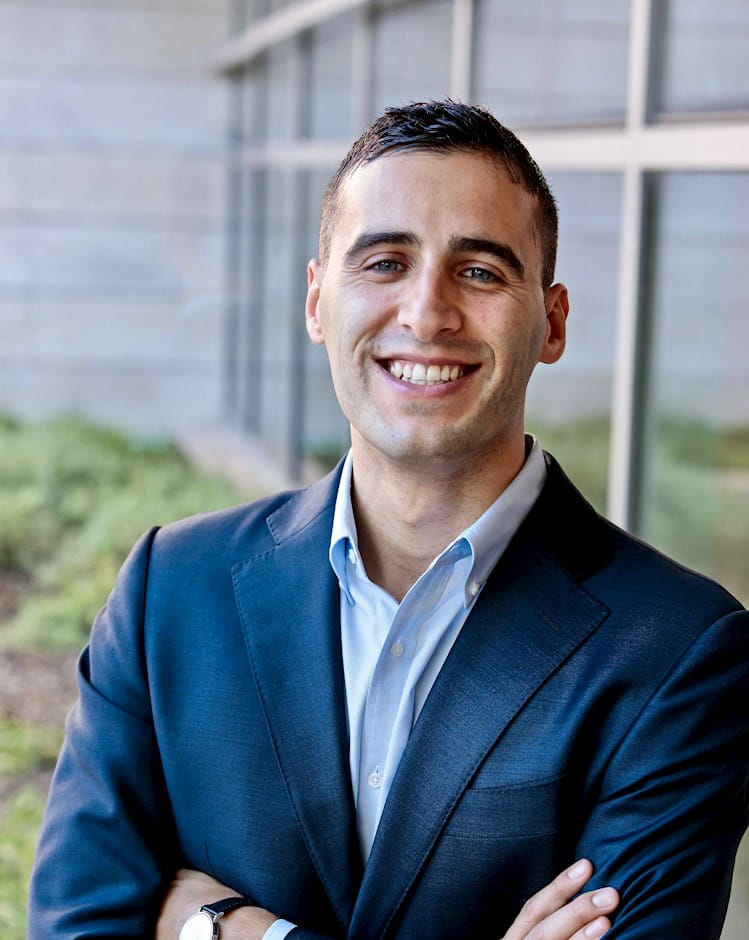
Professor Christian Bizer is a leading figure in web-based systems and data integration at the University of Mannheim , where he chairs Information Systems V: Web-based Systems . His research focuses on integrating data from multiple sources using large language models and LLM-based agents, with applications in product data extraction and DBpedia knowledge graph construction. He co-founded the DBpedia project and initiated the WebDataCommons initiative. Current research areas: Entity matching, schema matching, table annotation, information extraction, data discovery Key projects: WebMall benchmark, WInte.r integration framework, Schema.org analysis His work applies to e-commerce data integration and knowledge graph construction, with empirical studies on schema.org adoption. He supervises PhD students including Alexander Brinkmann and Ralph Peeters. Scientific Awards: Best Paper at iiWAS 2024 SWSA Ten-Year Award at ISWC 2019 Yahoo FREP Award 2015 Semantic Web Challenge winners Teaching includes courses on web data integration, web mining, large language models, and data mining for master's programs. He leads the DWS PhD colloquium and team projects on LLM agents for data integration.
Emanuele Colonnelli is the Joseph L. Gidwitz Professor of Finance and Entrepreneurship at the University of Chicago Booth School of Business. He serves as Board Member and Co-Chair of the Finance Sector at J-PAL, leads the Finance and Entrepreneurship theme at PEDL, co-directs BFI LATAM, and is a Research Associate at NBER, CEPR, and BREAD. He founded the Chicago Booth Entrepreneurship Research Lab and directs Undergraduate Studies in Entrepreneurship at the University of Chicago. Education: PhD in Economics, Stanford University (2018) MSc in Economics, Bocconi University BSc in Economics, University of Siena Visiting Scholar, Pembroke College, Oxford University Research Interests: Colonnelli's work focuses on the intersection of finance, development economics, and political economy. His primary investigations examine high-growth entrepreneurship, government-firm-investor dynamics, venture capital in emerging markets, corruption mechanisms, ESG impact, and bankruptcy systems. His methodology emphasizes large-scale field experiments across 16+ emerging economies. Publication Trends: His research consistently employs field experiments and administrative microdata to analyze institutional impacts on firms. Recent work demonstrates growing emphasis on ESG polarization, public procurement integrity, bankruptcy stigma, and political influences in labor markets – frequently set in Brazil, China, and Uganda. Awards and Honors: 2023 Carlo Alberto Medal (top Italian economist under 40) Poets & Quants 40 Under 40 Best MBA Professors Leadership and Grants: As founding director of the Chicago Booth Entrepreneurship Research Lab, he oversees investigations into global entrepreneurial ecosystems. He secured multiple grants through PEDL, BFI, and J-PAL to support field experiments in developing economies. At Booth, he developed the first MBA course on emerging markets venture capital.
Miklós Koren is a Professor of Economics at the Central European University (CEU), Vienna. He serves as Head of the MS in Business Analytics Program and a Core member of the Economics Doctoral School. His research focuses on international trade, economic development, and the role of management in economic growth. He holds a Ph.D. from Harvard University (2005), an M.A. from CEU (2000), and a B.A. from Corvinus University Budapest (1999). Education: Ph.D. in Economics, Harvard University, 2005 M.A. in Economics, Central European University, 2000 B.A. in Economics, Corvinus University Budapest, 1999 Research Interests: Dr. Koren’s work examines the impact of managerial practices on economic development, trade policies, and firm performance. He has explored topics such as the effects of international experience on managerial talent, the role of expatriate CEOs in enhancing productivity, and the long-term implications of social distancing on industries reliant on face-to-face interactions. His research integrates empirical analysis with theoretical frameworks, often using large datasets to address questions of economic volatility and diversification. Key Contributions: He leads the CEU MicroData research group and has received an ERC Starting Grant for his work on trade and development. His publications span journals like the Quarterly Journal of Economics and PLoS ONE, addressing issues ranging from managerial skills in post-communist economies to the predictive power of machine learning in geospatial flows. Awards: Recipient of the Peter Kenen Fellowship and the Nicholas Káldor Prize, recognizing his contributions to economic theory and applied research. Grants & Labs: His research has been supported by grants from the European Research Council. He contributes to the development of research tools like the Stata package 'eventbaseline' for event study analysis.
Professor Kevin J. Fox is a distinguished academic at the UNSW Business School , serving as Director of the Centre for Applied Economic Research (CAER) . He holds leadership roles in global statistical initiatives, including the UK Economic Statistics Centre of Excellence and the International Association for Research in Income & Wealth (President 2020-2022). His career spans advisory positions with the Australian Treasury , Australian Bureau of Statistics , and United Nations Statistical Commission . B.Econ (Hons), University of Canterbury M.A., University of British Columbia Ph.D., Department of Economics, University of British Columbia As a leading expert in economic measurement , Fox focuses on productivity analysis , econometrics , and environmental economics . His research addresses digital economy challenges , CPI construction , and infrastructure productivity . He pioneered scanner data applications in inflation measurement, implemented by the Australian Bureau of Statistics from 2017. Recent publications analyze productivity paradoxes , digital goods valuation , and lockdown economic impacts . His 15 most recent articles demonstrate expertise in high-frequency data , TFP measurement , and price index theory , with sub-fields spanning quasi-experimental design and global economic statistics harmonization . Fellow, Academy of the Social Sciences in Australia Elected Fellow, Society for Economic Measurement Elected Fellow, U.S. Conference on Research in Income and Wealth Collaborative Indigo Prize 2017 win for GDP measurement innovation Awarded Australian Research Council grants totaling over $3 million , including: 2015-2019: $551,400 Discovery Grant for productivity frameworks 2014-2017: $1,075,000 Linkage Grant for property market measurement 2008-2013: $947,322 Linkage Grant for R&D productivity He contributes to public policy through: Advisory roles at Australian Treasury and ABS Leadership in International Working Group on Price Indices UN/IMF/OECD working groups on digital national accounts
David Thesmar is the Franco Modigliani Professor of Financial Economics and Professor of Finance at MIT Sloan School of Management. He holds a BA in physics and economics from École Polytechnique and a PhD from the Paris School of Economics. Thesmar has served on the council of economic advisors to the French prime minister (2007-2013) and is a scientific adviser to the European Systemic Risk Board. His research examines corporate finance, financial intermediation, entrepreneurship, and behavioral economics, with recent focus on financing constraints and systemic risk in banking. He has received the Brattle Group Distinguished Paper Prize for his contributions to financial economics.
Chad Syverson is the George C. Tiao Distinguished Service Professor of Economics at the University of Chicago Booth School of Business. His research focuses on the interactions between firm structure, market structure, and productivity, with publications appearing in top economics journals. He serves as a research associate at the National Bureau of Economic Research and has contributed to National Academies committees. Dr. Syverson earned bachelor's degrees in economics and mechanical engineering from the University of North Dakota in 1996, followed by a PhD in economics from the University of Maryland in 2001. Prior to joining Chicago Booth in 2008, he worked as a mechanical engineer for Loral Defense Systems and Unisys Corporation, an experience that informed his research interest in productivity measurement and analysis. His research spans industrial organization, productivity analysis, and microeconomics, with particular attention to how firms organize production, how market structure affects productivity, and measurement issues in economic analysis. His work often combines theoretical frameworks with detailed empirical analysis of firm-level data. He has co-authored the widely used intermediate microeconomics textbook with Austan Goolsbee and Steve Levitt. Analysis of his recent publications reveals a strong focus on productivity measurement across sectors including healthcare, construction, and retail. His work increasingly examines the relationship between market power and productivity, with several papers analyzing markups, monopsony power, and competitive dynamics. He frequently employs detailed microdata to investigate how firms respond to market conditions and regulatory changes. National Science Foundation Awards Syverson serves as chair of the Chicago Census Research Data Center Board and has contributed to policy discussions through National Academies committees. His research has been funded by multiple National Science Foundation awards, reflecting the significance of his contributions to understanding productivity dynamics and market structure. He has also collaborated extensively with leading economists including Austan Goolsbee, Steve Levitt, and Martin Gaynor.
Prof. Dr. rer. pol. Bernd Frick is a full Professor of Economics at the University of Paderborn , Faculty of Business Administration and Economics, where he heads the Department of Economics – Institute Department 1: Management. Active and born in 1959, he is based in Paderborn, Germany, and his research spans Organizational Economics , Corporate Governance , Personnel Economics , Law & Economics , and Sports & Cultural Economics . Education & Academic Focus: Although specific degrees are not listed, his title "Dr. rer. pol." (Doctor of Economics and Social Sciences) indicates advanced training in economics. His work integrates microeconomic theory with empirical analysis, focusing on labor markets, firm governance, and the economics of professional sports. Research Interests: Organizational Economics & Theory of the Firm: Analyzing internal labor markets, co-determination, and governance structures. Personnel Economics & Labor Policy: Examining incentive systems, wage determination, and employment practices. Sports Economics: Extensive studies on player remuneration, coaching careers, doping, and the economic impact of regulations like the Bosman ruling. Law & Economics: Evaluating the economic effects of legal frameworks, including disability employment laws and co-determination statutes. Cultural Economics: Investigating art markets, reputation, and value creation in creative industries. Publication Trends: Over 100 peer-reviewed articles and monographs reveal a consistent focus on empirical sports economics (e.g., Bundesliga performance, marathon incentives), labor market institutions (works councils, co-determination), and governance issues. Recent work explores gender competitiveness in athletics and the longevity of coaching careers under performance pressure. Scientific Awards & Honors: While no major named awards are listed, his extensive publication record, editorship of academic volumes (e.g., Economics of Grassroots Sports ), and frequent policy-oriented commentary establish him as a leading voice in applied economics. Advising & Grants: Details on specific doctoral students or funded projects are not provided, but his role as editor, co-author with international scholars (e.g., Robert Simmons, Joachim Prinz), and policy consultant (e.g., Federal Ministry of Labour) imply active supervision and grant involvement. Labs & Teams: While no dedicated lab is mentioned, his institutional affiliation with the Institute Department 1: Management suggests collaboration within a multidisciplinary team of economists and management scholars at Paderborn.
Antonio Felix De Amores Hernández serves as Associate Professor in the Department of Economics, Quantitative Methods and Economic History at Pablo de Olavide University, Spain. His research integrates advanced quantitative methodologies with policy analysis for European economic institutions, particularly the European Commission's Joint Research Centre and EUROMOD project. Education: Doctorate from Pablo de Olavide University (2011) with thesis "Essays in efficiency and stochastic input-output analysis" supervised by Dr. Thijs ten Raa and Dr. José Manuel Rueda-Cantuche Research Interests: De Amores Hernández specializes in Input-Output Analysis and Distributional Economics , with expertise in stochastic modeling, fiscal policy evaluation, and environmental-economic linkages. His work bridges theoretical econometrics with real-world policy applications, focusing on household welfare impacts across the European Union. Publication Trends: Recent work (2022-2025) reveals concentrated focus on inflation dynamics, energy price policies, and carbon taxation distributional effects. His input-output methodology innovations support EU policy frameworks like EUROMOD, while empirical studies on VAT cuts, price comparison tools, and Romania's cost-of-living response demonstrate applied microsimulation expertise. Scientific Awards: No scientific awards documented in source materials Advising & Grants: Actively involved in Pablo de Olavide's Doctoral Program in Economic Analysis and Business Management. Source materials indicate EU-funded research collaboration through the Joint Research Centre but omit specific grant details or student supervision records. Research Infrastructure: Core member of the "Quantitative Methods in Business and Economics" research group, contributing to EU-wide databases including input-output tables and environmental accounts for policy modeling.
Prof. Martin Leroch holds the Chair of Economics and Business Ethics at Pforzheim University since 2020. Previously, he worked as an economist and consultant at Lademann & Associates GmbH (2016–2020), specializing in competition law damages litigation. He earned his Dr. rer. pol. from the University of Hamburg (2008) and conducted postdoctoral research there until 2011, followed by roles at Johannes Gutenberg University Mainz and Martin Luther University Halle-Wittenberg. His research focuses on institutions shaping economic behavior, behavioral impacts of violence, judicial independence effects on asylum policies, and expressive crimes. He explores cultural influences on workplace behavior and media market dynamics. Teaching spans global economics, microeconomics, game theory, and law & economics, with international experience in India and Ethiopia. Publications emphasize interdisciplinary approaches, combining quantitative analysis with institutional theory. He co-edited the 2023 volume Power and Responsibility and serves on the editorial board of Homo Oeconomicus .
Dr. Patrick Macnamara is a Senior Lecturer in Economics at the University of Manchester, holding a PhD from University of Rochester (2013). His research focuses on quantitative macroeconomics, firm dynamics, inequality, and heterogeneity. He serves as an adjunct professor at the University of Western Australia. Macnamara's published work examines tax policy impacts on income dynamics, financial frictions in resource allocation, and business cycle mechanisms. Recent publications analyze marginal tax rate effects using structural estimation and capital structure decisions under taxation constraints. His methodological approach combines computational modeling with econometric analysis of firm-level data. Macnamara supervises PhD students working with heterogeneous agent models and microdata analysis. He requires doctoral candidates to develop programming skills in Matlab, C++, or Fortran for solving economic models.
Krish Muralidhar is the Baldwin Chair and Professor of Marketing & Supply Chain Management at the University of Oklahoma's Price College of Business. He holds a Ph.D. from Texas A&M University, an MBA from Sam Houston State University, and a B.Sc. from the University of Madras, India. His research centers on data privacy , developing techniques for secure data analysis, sharing, and dissemination. Key areas include statistical disclosure limitation, differential privacy, database reconstruction risks, and perturbation methods. He patented the Data Shuffling technique for secure data release. Recent publications (2022–2025) focus on census data privacy, reidentification vulnerabilities, and critiques of differential privacy in machine learning. Trends highlight rigorous evaluations of privacy risks in statistical databases and policy-relevant solutions. Awards: Distinguished Doctoral Alumni Award (Texas A&M, 2006) Teaching Incentive Program Award (1994) Excellence in Research Award (1995) Best Inter-disciplinary Paper Award (2002) Best Paper Award (2005) No advising, grant, lab, or team details were provided.
Karl Harmenberg is a Swedish economist based at the Department of Economics, University of Oslo since 2022. He holds a PhD from Stockholm University's Institute for International Economic Studies (2018) and previously worked at Copenhagen Business School (2018-2021) and BI Norwegian Business School (2021-2022). As a tenure-track associate professor , he teaches Macroeconomic Theory and develops open-source Python tooling for macroeconomic modeling. Key research themes include macroeconomic dynamics with heterogeneous agents , earnings distribution mechanisms , and integrated epi-econ modeling for pandemic preparedness His methodological innovations include the permanent-income-neutral measure for heterogeneous-agent models and directed cycle graph representations of macroeconomic frameworks Current projects include WaCoMacro (wage contracts and macroeconomics) and ongoing collaborations with Timo Boppart , Per Krusell , and Erik Öberg Recent publications span: 2025 International Economic Review work on unemployment-risk amplification mechanisms 2025 Quantitative Economics article on integrated epi-econ modeling 2024 Economics Letters paper establishing Pareto distribution in top earnings 2023 AER Insights research on wage contract rigidity 2021 Journal of Economic Dynamics & Control contribution on permanent income shocks His work has been cited in policy discussions regarding: Swedish automatic stabilizer design Norwegian pandemic response strategies Scandinavian labor market reforms Nordic macroeconomic teaching curricula
Dr. J. Bradford Jensen is the McCrane/Shaker Chair of International Business at the McDonough School of Business, Georgetown University. He also serves as a nonresident senior fellow at the Peterson Institute for International Economics and a research associate at the National Bureau of Economic Research. His research focuses on international trade, globalization, and the economic impacts of services offshoring, utilizing plant-level microdata to analyze firm heterogeneity and trade disputes. Ph.D. in Economics, Stanford University B.A., Kalamazoo College Jensen's work has influenced high-level trade policy, including citations in the U.S. Trade Representative's TiSA negotiations and the Economic Report of the President . His research on services trade and firm dynamics has been supported by grants from the National Science Foundation, Alfred P. Sloan Foundation, and MacArthur Foundation. He has held academic roles at Carnegie Mellon University and Dartmouth College, as well as leadership positions at the U.S. Census Bureau and Peterson Institute.
Dr. Xiaobai (Bob) Li is a Professor in the Department of Operations and Information Systems at the Manning School of Business, University of Massachusetts Lowell. His work bridges data science, machine learning, and business analytics with specialized focus on data privacy and information economics. Ph.D. in Management Science, University of South Carolina MBA, University of New Hampshire BS in Civil Engineering, Chongqing University Research Interests span data science, machine learning, business analytics, and data privacy. His work explores Privacy-preserving analytics Healthcare data anonymization Information economics Optimization techniques Big Data applications Text analytics with particular emphasis on balancing data utility and privacy protection. Scientific Awards include: Manning Research Excellence Award (2023) Best Associate Editor Award (2021) Best Paper Awards at NEAIS, WITS, and ICIS Teaching Excellence Awards Grants from NIH and NSF supported his work on Consumer Electronic Privacy Protection and New Technology to Preserve Patient Privacy . He has served as Associate Editor for journals like Information Systems Research and Decision Support Systems .
Ragui A Assaad is a Professor at the University of Minnesota with affiliations at the Minnesota Population Center and Life Course Center. His research focuses on education, labor policy, and labor market analysis in developing countries, particularly in the Middle East and North Africa region. He has published extensively on inequality of opportunity in education, labor markets, transitions from school-to-work, employment and unemployment dynamics, family formation, informality, labor market responses to economic shocks, and international migration including forced migration effects. His educational background includes: PhD in City & Regional Planning from Cornell University (1991) BS in Physics from Stanford University (1981) MS in Mechanical Engineering (1981) Assaad's research interests span multiple interconnected domains in development studies. He investigates inequality of opportunity in education , examining how socioeconomic factors affect educational attainment in developing countries. His work on labor markets analyzes employment and unemployment dynamics, particularly focusing on transitions from school to work. He also studies family formation patterns and their relationship to economic outcomes, as well as the impacts of forced migration on labor markets. His research on informality explores the characteristics of formal and informal firms and implications for economic development policy. His recent publications demonstrate a strong focus on Middle Eastern and North African contexts, with particular attention to Egypt, Jordan, and Sudan. The research shows consistent methodological approaches using survey data and panel studies to analyze labor markets, education systems, and demographic trends. There's a clear trajectory toward examining the impacts of economic shocks, including the COVID-19 pandemic, on vulnerable populations in the region. Assaad serves as a Research Fellow of the Economic Research Forum in Cairo, Egypt, where he also serves on the board of trustees. He is additionally a Research Fellow at the Institute for the Study of Labor (IZA) in Bonn, Germany. He has served as Regional Director for West Asia and North Africa for the Population Council (2005-2008) and has consulted for major international organizations including the World Bank, International Labor Organization, Ford Foundation, UNICEF, and UNDP. His current research projects include the Integrated International Microdata Series (2024-2029) and the creation of the JLMPS questionnaire and sample design (2024-2026). His work contributes to multiple United Nations Sustainable Development Goals, particularly those related to quality education, decent work, and economic growth.