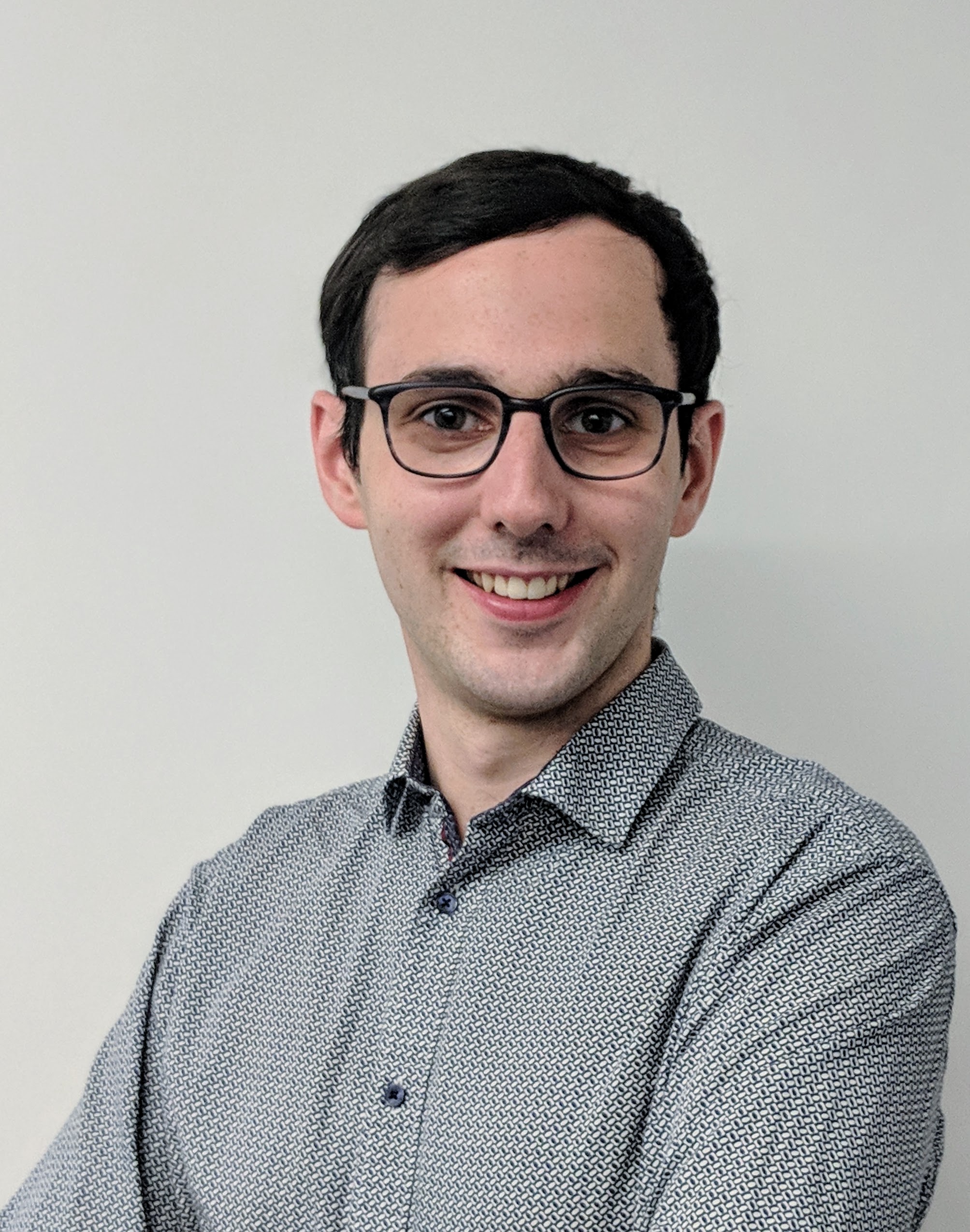
Arthur Delarue is an Assistant Professor at the University of Virginia Darden School of Business in the Data Analytics and Decision Sciences area. Previously, he served as an Assistant Professor of Industrial and Systems Engineering at Georgia Tech's Stewart School and completed a postdoctoral fellowship at Lyft Rideshare Labs. His research spans marketplace analytics and public sector operations. In marketplace analytics, he focuses on data-driven decision frameworks, experimentation methodologies, and pricing models particularly in platform businesses. In public sector operations, he collaborates with K-12 school districts to solve complex optimization problems intersecting with policy implementation. Dr. Delarue has led significant applied research projects including the redesign of school bus routing systems in Boston, optimization of public school scheduling in San Francisco, and development of course timetables at MIT. His recent presentation at MSOM 2025 in London addressed learning algorithms and pricing mechanisms in ride-hailing platforms. His educational background includes an S.B. and Ph.D. from the Massachusetts Institute of Technology, with doctoral work completed at the MIT Operations Research Center in 2021. Prior to his academic career, he gained industry experience as a research intern at Google's Operations Research team.
Dr Helen Rogers is a Lecturer in the Bangor Business School at Bangor University, specializing in taxation and accounting. She holds a BSc from Southampton University, an MB, and a PhD from the University of Warwick. Her research focuses on taxation policy, transfer pricing, and international tax systems, with particular attention to Wales' evolving tax landscape. She previously worked as a Senior Tax Manager in a Big 4 firm, specializing in corporate tax. Education: BSc, Southampton University MB, University of Warwick PhD, University of Warwick Research Interests: Dr Rogers explores tax policy design, transfer pricing dynamics, and the implications of devolved taxation in Wales. Her work bridges academic research and practical policy, addressing challenges in corporate tax strategy, international taxation, and fiscal reform. She collaborates with institutions like the Welsh Government and the Federation of Small Businesses (FSB) Wales to inform public discourse on tax systems. Grants & Projects: Leads the BU-IIA-funded project 'Understanding the Welsh Tax Base' (2023–2024), aiming to position Bangor as a key center for taxation expertise. Previously contributed to reports on Land Transaction Tax and Landfill Disposal Tax implementation in Wales. Labs/Teams: Active within the Institute of European Finance - Accounting and Governance and collaborates with the Tax and Welfare research region at Bangor Business School.
Qian Wang is an Associate Professor of Teaching and Director of Undergraduate Studies in the Department of Civil, Structural, and Environmental Engineering at the University at Buffalo (SUNY). He holds multiple leadership roles including Co-Director of the Lab Expenditure Committee and Director/Principal Investigator of the 2021 National Summer Transportation Institute. His primary affiliation is with the School of Engineering and Applied Sciences. Wang's research focuses on transportation systems engineering, with emphasis on traffic accident analysis, urban freight logistics, and data-driven decision support systems. His work integrates advanced statistical techniques like entropy maximization and machine learning with transportation infrastructure challenges. Key contributions include predictive models for traffic accidents and border crossing delays, as well as innovative approaches to assessing transportation sustainability and community livability. His publication trajectory reflects sustained contributions to transportation engineering since 2003, with recent work emphasizing real-time traffic prediction, freight carrier behavior analysis, and policy evaluation for road pricing initiatives. Over 15 peer-reviewed articles demonstrate methodological rigor and practical relevance to urban transportation challenges. Wang has actively contributed to transportation education through undergraduate program leadership and has led research initiatives funded by transportation authorities including the Port Authority of New York and New Jersey. His work bridges theoretical advancements with applied solutions for smarter, safer transportation systems.
Dr. Ama Eyo-Otung is a Senior Lecturer in Public Procurement Law and Dean of Education and Student Experience at Bangor University's College of Arts, Humanities, and Social Sciences. She teaches modules in Tort Law, Company Law, and International Procurement Law at the undergraduate level, while her postgraduate focus includes Business and Human Rights, Sustainable Public Procurement, and EU/UK procurement frameworks. Her research explores sustainable procurement, electronic procurement tools, and socio-legal aspects of procurement reform. Dr. Eyo-Otung holds a PhD from the University of Nottingham, where her research examined electronic auctions in EU procurement. She has extensive experience in public procurement reform, including leadership roles in capacity-building initiatives and efficiency-driven programs globally. Notably, she was shortlisted for the 2015 Oxford University Press Law Teacher of the Year Award. Her research collaborations span multiple countries and include roles such as External PhD Supervisor at the University of South Wales, researcher at the UK-China Public Procurement Law Centre, and member of the World Bank’s SPESSE Project Advisory Board. She has supervised numerous PhD students, including those examining human trafficking prevention, Nigerian procurement frameworks, and maritime law reforms. Dr. Eyo-Otung has secured significant grants, including the £9,579 BU-IIA-funded project on SME sustainability during the pandemic and the £325,000 EU-funded PPACT project. Her work emphasizes bridging legal frameworks with practical procurement challenges, particularly in Africa and developing nations.
Dr. Piotr Smolnicki is an Assistant Professor at the Department of Urban Design and Regional Planning, Gdańsk University of Technology. His work focuses on automated mobility, urban transportation systems, and the interplay between emerging technologies and spatial structures. He actively contributes to projects like ENACT 15mC, addressing urban transitions and sustainable development. Research Interests: Driverless vehicles and autonomous automobiles Smart mobility solutions and urban policy Impact of automated technologies on metropolitan spatial planning Key Projects: ENACT 15mC: Envisioning Neighborhoods and Co-Creating Thriving Communities Teaching Responsibilities: Urban Design Theory and Studio Urban and Road Engineering Spatial and Regional Planning Studies
Dr. Brittany Hott serves as Associate Director of the Institute for Community and Society Transformation (ICAST) and Professor in the Department of Educational Psychology and Special Education at the University of Oklahoma's Jeannine Rainbolt College of Education. She is a Board Certified Behavior Analyst with Doctoral Distinction (BCBA-D) and leads the RISE Research Group. Her work focuses on instructional methods for students with learning/behavioral disabilities, with an emphasis on rural school interventions and rigorous research design. Dr. Hott has secured over $30 million in federal grants, including major projects like PRIME (mental health), InTRO (STEM translation), and SPIDERS (rural special educator advocacy). Her research emphasizes evidence-based practices in special education, single-case research methodology, and IEP compliance in rural settings. Education: Doctorate in Special Education (not explicitly stated, inferred from BCBA-D and faculty role) Her research interests include behavioral interventions for EBD students, technology-mediated professional development for rural educators, and improving IEP quality through systematic reviews. Recent work examines school bus behavior management, contingency contracting, and digital tools for real-time behavioral tracking. Awards: 2023 Elizabeth Farrel Presidential Citation (CEC), 2021 ACRES Research Award Dr. Hott advises multiple PhD/Master's students and serves as editor of Rural Special Education Quarterly and associate editor of Intervention in School and Clinic . Her grants total over $18 million in direct funding to OU through 2028.
Professor Patrick Langdon serves as Director of the Transport Research Institute at Edinburgh Napier University's School of Computing Engineering and the Built Environment (SEBE). He holds the position of Professor of Engineering Design, Transportation, and Inclusion and leads Ethics and Integrity initiatives for both SEBE and the School of Computing. With over 20 years of experience as an Experimental Psychologist, Langdon has established himself as a leading researcher at the intersection of cognitive science, artificial intelligence, and transportation engineering. Langdon's research spans multiple interconnected domains focused on human-centered design in transportation systems. His work centers on inclusive design principles for autonomous vehicle interfaces, human-machine interaction in complex environments, and the application of cognitive science to transportation challenges. Key research themes include designing for diverse user populations, predicting driver intent using Bayesian methods, enhancing situation awareness in multitasking scenarios, and developing ethical frameworks for human participation in technology research. His multidisciplinary approach bridges engineering, psychology, and computer science to address real-world transportation challenges. Analysis of Langdon's publication record reveals a consistent focus on human factors in automated transportation systems, with increasing emphasis on sustainable and inclusive mobility solutions. His work shows progression from foundational research in inclusive design to cutting-edge applications in autonomous vehicles and hydrogen-electric aviation. The publications demonstrate strong methodological diversity, incorporating experimental studies, theoretical frameworks, and real-world implementation projects that address both technical and social dimensions of transportation technology adoption. Langdon's research activities are supported by significant funding from diverse sources including Innovate UK, Engineering and Physical Sciences Research Council, European Commission, and industry partners. His leadership extends to major collaborative projects such as the HEART (Hydrogen Electric and Automated Regional Transportation) initiative, CAVForth automated bus service expansion, and research on inclusive kerb design for urban environments. These projects demonstrate his ability to translate theoretical research into practical transportation solutions with real-world impact. As Director of the Transport Research Institute, Langdon oversees a multidisciplinary team working at the forefront of transportation innovation. His research group focuses on the integration of cognitive science, artificial intelligence, and engineering design to create transportation systems that accommodate diverse user needs while advancing sustainable mobility solutions. The institute serves as a hub for collaboration between academia, industry, and government agencies working to shape the future of transportation.
Karol Wiktor Kowalczyk is a Lecturer at the Department of Socio-Economic Geography, Faculty of Earth Sciences and Spatial Management, Maria Curie-Skłodowska University in Lublin. His research focuses on socio-economic and transport geography, particularly rail transport infrastructure, border impacts on international networks, time-space compression, and GIS applications in spatial analysis. PhD in Earth Sciences (Geography) from UMCS (2017) Specializes in railway cartography, modal split analysis, and cross-border transport dynamics Active in projects evaluating transport accessibility and TEN-T corridor development His publications analyze rail transport vulnerabilities, multimodal commuting, and historical railway mapping. He employs methodologies like MAI indicators and dynamic border traffic models to assess Poland's transport evolution. Key trends in his 2024-2015 works include: transnational railroad risks (2024), railway atlas typology (2023), EU border passenger traffic patterns (2022), and 19th-century Polish railway cartography (2020). Co-author on 2020 Asia-Europe Journal paper about Poland's Silk Road hub potential Contributor to accessibility studies with Ministerstwo Infrastruktury i Rozwoju
Soh Keng Lin is a Senior Lecturer at the Malaysia School of Business, Monash University. He holds a PhD in Supply Chain Management from Universiti Sains Malaysia (2021), specializing in circular economy, customer involvement, and sustainability. His research focuses on supply chain resilience, logistics optimization, operations management, and lean methodologies. Education: PhD in Supply Chain Management (2019-2021, Universiti Sains Malaysia), with a focus on circular economy and sustainable competitive advantage. Research Interests: Circular Economy, Sustainable Supply Chains, Logistics Innovation, Quality Management, Transportation Systems, and Information Sharing in Supply Chains. He emphasizes transdisciplinary collaboration integrating management theories with practical applications. Recent Work Trends: His publications address Transportation 4.0, pandemic-induced supply chain vulnerabilities, statistical process control (S2-EWMA charts), and behavioral models for public transport adoption. He advocates for technology-driven solutions in logistics and resilience against information leakage. Awards: School of Business Research Seed Grant 2024. Advising & Grants: Supervised/co-supervised 8 students (4 MA, 4 PhD) in topics like third-party logistics, supply chain integration, and public bus systems. Actively participates in grant initiatives and peer-review activities for journals like Sustainability and Processes . Labs/Teams: Engaged in cross-disciplinary research teams focusing on circular economy, transportation systems, and quality management. Collaborates internationally on supply chain resilience and maritime shipping frameworks.
M. Ozturker is a researcher at Delft University of Technology's Civil Engineering & Geosciences faculty, specializing in Transport, Mobility and Logistics. With a focus on automated transportation systems, their work explores user experiences and policy implications of autonomous buses in Europe. Core affiliation: TU Delft, Civil Engineering & Geosciences Research specialization: Automated public transport systems Geographic focus: European countries, particularly Netherlands Their research spans transportation engineering, urban mobility, and consumer behavior in transport. Recent work analyzes automated minibuses through test rides and choice experiments, addressing technology adoption patterns and service design preferences. Publications include comprehensive inventories of European automated bus pilots and studies on consumer acceptance metrics. Research methodologies combine empirical testing, stated preference surveys, and policy analysis to advance sustainable mobility solutions.
Grażyna Chaberek serves as an Assistant Professor in the Department of Spatial Management at the Faculty of Social Sciences, University of Gdańsk. With 16 years of academic experience and a PhD in Earth Sciences specializing in economic geography, she combines expertise as an economist and logistician to advance spatial planning research. Her work focuses on the economic dimensions of urban logistics infrastructure, particularly its role in supporting businesses and residents within sustainable mobility frameworks. Her research interests center on spatial planning, urban logistics, and sustainable mobility systems. Dr. Chaberek investigates how geospatial technologies (GIS, remote sensing) and synthetic indicators can optimize transportation networks and regional development. She examines economic geography applications in urban contexts, with particular attention to railway infrastructure feasibility, last-mile logistics solutions, and socio-economic sustainability metrics across diverse geographical settings including Poland, India, Ukraine, and Serbia. Recent publications (2019-2025) demonstrate consistent focus on sustainable urban transport, with key themes including zero-emission bus adoption, e-scooter energy demands, and railway network optimization. Her work integrates economic geography with practical spatial management challenges, employing geostatistical analysis and machine learning to address real-world urban mobility problems across international contexts. As an academic tutor since 2014, Dr. Chaberek implements Design Thinking techniques from Stanford University and Oxford/Cambridge tutoring methodologies. She mentors students in research skill development, personal branding, and goal-setting through positive psychology frameworks. Her educational approach emphasizes practical application of spatial management concepts through essay writing and developmental exercises. Dr. Chaberek collaborates with commercial entities and local government teams on market expertise development projects. Her work bridges academic research with practical spatial management applications, contributing to regional planning initiatives through interdisciplinary approaches that integrate economic, social, and environmental perspectives.
Dr Clare McTigue is a Lecturer in Public Sector Innovation at the Business School of Edinburgh Napier University and a member of the Unity Lab Team. Her work bridges transport policy, sustainable urban mobility, and emerging technologies, with a strong focus on policy implementation challenges in public transport systems. Her research interests include transport policy implementation , public sector innovation , bus policy reform , sustainable transport , stakeholder engagement , and the integration of emerging technologies such as hydrogen-electric aviation and autonomous vehicles. She employs both qualitative and quantitative methods, with recent work applying advanced statistical modeling to road safety data. Her recent publications span high-impact journals including Transport Policy , Analytic Methods in Accident Research , and Utilities Policy . The articles reflect a consistent focus on policy barriers, governance models, and technological innovation, particularly in the UK context. A notable trend is her growing emphasis on public acceptance of novel transport systems, as seen in the HEART project research. Dr McTigue has been involved in significant research projects, including the HEART (Hydrogen Electric and Automated Regional Transportation) project funded by Innovate UK, which aims to develop the world’s first hydrogen-powered, automated aircraft for sub-regional travel. This project highlights her engagement with cutting-edge, interdisciplinary transport solutions. She is also affiliated with the Unity Lab Team , which supports collaborative innovation in public services. Though no formal awards are mentioned, her work has been presented at international conferences such as the World Conference on Transport Research in Shanghai. Dr McTigue contributes to doctoral education through supervision and research collaboration. While no current advisees are listed, she completed her own PhD on barriers to bus policy implementation, demonstrating deep expertise in the field.
Sven Borén is a Researcher at Blekinge Institute of Technology (BTH), actively contributing to the SustainTrans team. He has led and participated in numerous projects focused on sustainable transport systems, including pre-studies on fossil-free shipping, cross-border public transport solutions, and electric vehicle integration. Organized the international MAGLEV 2024 conference Co-authored publications on regional sustainability, stakeholder collaboration, and transport policy Developed a distance course in sustainable transport systems His research spans scenario planning , electric bus systems , and strategic sustainable development . Key trends in his publications include cross-border mobility , life cycle analysis , and policy implementation .
Zhaocai Liu serves as a Researcher IV in Data Science at the National Renewable Energy Laboratory's (NREL) Computational Science Center within the Center for Integrated Mobility Sciences. His work focuses on leveraging high-performance computing for large-scale transportation system analysis, with expertise spanning electrified and automated transportation systems. His educational background includes a PhD in Civil and Environmental Engineering from Utah State University (2019), where he was named an Outstanding Engineering PhD Scholar, alongside a Master's and Bachelor's degree in Transportation Engineering from Southeast University in China. Liu's research specializes in transportation network modeling, sustainable systems with electric/autonomous vehicles, and optimization techniques for coupled transportation-power systems. He develops scalable algorithms for large-scale transportation planning and implements simulation-based optimization frameworks for infrastructure development. His publication portfolio shows consistent output since 2021, with recent work emphasizing electric vehicle charging demand analysis, school bus electrification, and grid integration challenges. The research demonstrates increasing focus on practical implementation of electrified transportation systems and their interaction with energy infrastructure. ITE Intermountain Section Ellis L. Mathes Scholarship (2019) Utah State University College of Engineering Outstanding PhD Scholar (2019) USUSA Graduate Enhancement Award (2019) Liu leads multiple DOE-funded initiatives including Valuing V2X for Grid Resilience, Colorado Residential Resiliency and Managed Charging, and EVs@Scale FUSE. His collaborative approach connects NREL with university researchers and industry partners to develop innovative transportation solutions. Current projects focus on electric bus energy prediction, heavy-duty truck routing optimization, and airport shuttle system analysis. His work occurs within NREL's Computational Science Center, where he utilizes high-performance computing resources to analyze massive transportation datasets and model complex system interactions for national transportation electrification efforts.
Tilia Lenz is a Senior Lecturer in Social Work and CPD Framework lead for Social Sciences at Bournemouth University (BU). She holds qualifications as a Social Pedagogue and psychotherapist from Germany, with extensive experience in Children’s Services in the UK spanning 15 years as a practitioner, manager, and Practice Educator. Her research focuses on 'Relationship Performance Management in Children's Social Care' and practitioner wellbeing, addressing resilience's impact on professional practice. Educationally, she earned an MA in Managing and Developing Services in Health and Social Care at BU, focusing on Organisational Cultures and Staff Performance. She joined BU in 2019 as a Lecturer Practitioner Consultant within the Pan-Dorset Social Work Teaching Partnership before transitioning to full-time staff in 2021. Her external roles include serving as an External Examiner at the University of Northampton since 2021. Research interests align with UN SDGs, particularly promoting Good Health, Gender Equality, Reduced Inequalities, and Peaceful Institutions. Publications explore child protection systems, frontline worker resilience, leadership in safeguarding, and pandemic impacts on social care. Teaching responsibilities include courses on Resilience, Professional Supervision, and Law and Social Policy at both undergraduate and postgraduate levels. Advising includes supervising PhD candidate Ugochi Ihemere. Engagement extends to journal reviewing (UCU research conferences) and outreach through conferences addressing topics like social work education and wellbeing. She leads BU’s Social Sciences CPD programs, bridging academic and practical dimensions of social work practice.