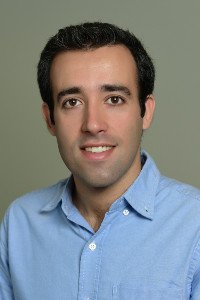
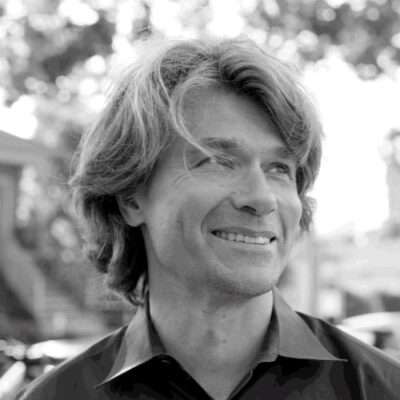
Matti Vilkko is a Professor in Control Engineering at Tampere University's Faculty of Engineering and Natural Sciences , specifically within the Automation Technology department. He serves as Head of the Automation and Mechanical Engineering Unit. Research Focus: Industrial process control, mathematical modeling, state estimation, and optimization of metallurgical and energy systems Key Projects: Future Electrified Mobile Machines (FEMMa), Circular Economy of Water (CEIWA), Social Energy Ecosystems (ProCem), Green Electrification (HYGCEL) His work combines control theory with industrial applications, particularly in copper smelting optimization, green hydrogen systems, and smart energy networks. Recent publications show expertise in: Machine learning for wind turbine cybersecurity ASM1 calibration for wastewater treatment EU regulatory impacts on hydrogen infrastructure Finite element analysis of paperboard mechanics Price-based coordination in metallurgical processes He leads interdisciplinary collaborations across Finland, integrating automation technology with energy systems, materials science, and industrial ecology.
Harry Lahrmann is an Associate Professor and Research Group Leader at the Department of Construction, Urban and Environmental Engineering within Aalborg University's Faculty of Engineering and Science. He specializes in traffic safety research with a focus on cyclist-pedestrian interactions, vehicle inspection systems, and urban mobility solutions. Key Research Areas: Bicycle traffic, road safety analysis, traffic engineering, and data-driven transportation policy Recent Work Trends: Utilizes ambulance data and self-reporting mechanisms to identify hazardous road locations; investigates impact of vehicle inspection programs and cycling safety technologies Awards: 1994 - First prize in bicycle safety at intersections Advising & Grants: Supervises PhD students and secures funding from institutions like TrygFonden for projects such as "Better Data on Traffic Accidents." Labs & Teams: Leads the Traffic Research Group, collaborating with experts in infrastructure, hydraulic engineering, and environmental technology.
Professor Yasuhiro Hayashi is a distinguished academic at Waseda University's School of Advanced Science and Engineering, where he serves as Professor in the Faculty of Science and Engineering and Director of the Smart Society Technology Integration Research Institute (ACROSS). He holds leadership positions including Vice President of the Institute of Electrical Engineers of Japan (since 2025.06) and Chair of the Utsunomiya Zero Carbon Promotion Council (since 2023.02). His educational background includes a Ph.D. from Waseda University (1993), following undergraduate and graduate studies at the same institution. Prior academic appointments include Associate Professor at University of Fukui (2000-2009) and Lecturer at Ibaraki University (1997-2000). Professor Hayashi's research focuses on energy management systems, power engineering, and renewable energy integration. His work spans critical areas including optimization of advanced electrical energy systems, cooperative operation and control of distributed generation, photovoltaic systems integration, CO2 emissions reduction, and climate change mitigation. He has made significant contributions to smart grid technology, demand-side management, and zero-carbon transition initiatives, with particular emphasis on practical implementation through smart meter data analysis and real-world demonstration projects. His publication record is extensive, with 365 papers according to Scopus (citation count: 3,423, h-index: 27) and even more according to Google Scholar (citation count: 12,332, h-index: 51, i10-index: 253). His recent work demonstrates strong focus on practical applications of smart meter data for urban carbon intensity analysis, electric transportation integration, and advanced control strategies for distributed energy resources in real distribution networks. Best Paper Award from Big Earth Data Journal (2024) Best Paper Award for 'Development of Evaluation Process for Demand-Side Resilience against Power Outage' (2023) The Commendation for Science and Technology by the Minister of Education (2019) Multiple Waseda Research Awards (2014-2019) Distinguished Paper Award from the IEE of Japan (2008) Professor Hayashi serves on numerous high-impact committees including as Special Commissioner of the Electricity and Gas Trading Surveillance Commission under METI, Chair of the Energy-Resource-Aggregation-Business-Forum at ACROSS, and leadership roles in developing Japan's smart grid standards and distributed energy resource policies. His work bridges academic research with practical policy implementation in Japan's energy transition, with recent focus on sector coupling between transportation and energy systems, advanced data analytics for grid operations, and practical implementation strategies for achieving Net Zero emissions in urban environments.
Joel Mendez is an Assistant Professor in the Urban Planning Program at the University of Kansas' School of Public Affairs and Administration (SPAA). His research focuses on equitable transportation policies, economic development, and social justice, particularly for low-income and minority communities. He holds degrees from Iowa State University, Texas A&M University, and Florida State University. Education: Ph.D. in Urban and Regional Planning, Florida State University, 2018 Master's in Community and Regional Planning, Iowa State University, 2010 Bachelor's in Urban Planning, Texas A&M University, 2014 Research emphasizes how transportation infrastructure investments impact marginalized populations, including spatial mismatch, transit-oriented development, and equitable policy design. His work analyzes streetcar systems, light rail effects, and funding mechanisms to ensure inclusive urban growth. Teaching focuses on fostering inclusive classroom environments through problem-based learning. He prioritizes student engagement and real-world application of urban planning concepts. No scientific awards listed. Advising and grants details are not provided in the source text. His research aligns with urban planning labs and teams focused on equitable infrastructure development.
Dr. Suresh Immanuel serves as the Associate Provost of Academic Partnerships and Dean of the College of Business and Engineering at the University of Evansville, while maintaining a tenured Professorship in Civil Engineering. He previously chaired the Department of Mechanical and Civil Engineering and held roles in university committees including Academic Services and General Education. A registered professional engineer, he has received notable awards such as the 2023 Eykamp Prize and multiple ASCE Reviewer accolades. His education includes a PhD in Civil Engineering from Auburn University (2007), an MS in Leadership from the University of Evansville (2020), and earlier degrees from Anna University, India. His expertise spans Pavement Design, Asphalt Technology, and Transportation Engineering. He actively contributes to ASCE committees and serves as an ABET program evaluator. Research focuses on pavement mechanics, geotechnical education, and transportation infrastructure. Recent work includes assessing teaching methodologies and student performance in engineering courses. He has authored/co-authored over 30 publications, emphasizing pedagogical innovation and infrastructure durability. Awards include the Eykamp Prize for institutional contributions, ICI Leadership Fellowship, and multiple fellowships. He has advised numerous educational initiatives and served as a university Ombudsperson, reflecting his commitment to academic governance and student welfare.
Juliana Williams is a researcher at the National Renewable Energy Laboratory (NREL), specializing in energy policy analysis within the Strategic Energy Analysis Center. She holds a Master's degree in Public Policy from the University of Maryland, College Park, and a Bachelor's degree in Geology from Whitman College. Education: Master of Public Policy, University of Maryland (2012); Bachelor of Science in Geology, Whitman College (2009) Research Interests: Williams focuses on removing market barriers for energy efficiency, advancing grid modernization, and integrating renewable energy systems into low-income programs. Her work emphasizes policy design for equitable solar adoption, electric vehicle infrastructure, and energy financing solutions. Publications: Recent research explores expanding solar energy access through federal programs like LIHEAP and WAP, with a focus on workforce development, policy implementation, and equitable energy transitions. Her work spans technical reports, presentations, and policy briefs. Scientific Contributions: Fellow, The Breakthrough Institute (2009) Over 26 research outputs since 2015 Active in energy policy networks Professional Experience: Prior roles include Senior Sustainable Energy Analyst at Washington State Housing Finance Commission (2015-2018) and Regulatory Analyst at Washington Utilities and Transportation Commission (2012-2015).
Sekhar Somenahalli is a Senior Lecturer at University of South Australia 's UniSA STEM school, affiliated with the School of Natural and Built Environments . His work spans transport planning, urban analytics, and sustainable mobility systems, with a focus on walkability, traffic modeling, and public transport optimization. Research Themes : Walkability Assessment : Developed novel metrics for measuring land-use mix and pedestrian infrastructure quality Traffic Modeling : Pioneered multi-tier frameworks like the Tactical Adelaide Model Public Transport Innovation : Investigated bus-based transit corridors and interchange efficiency Shared Mobility : Identified regulatory and infrastructural barriers to sharing economy services His recent publications analyze census-based mobility prediction, spatiotemporal traffic patterns, and socio-demographic walkability variations. Despite extensive grant funding (e.g., CRC for Low Carbon Living), no specific awards are documented in the provided materials. He supervises research students and applies GIS extensively in urban infrastructure analysis.
Alireza Khani is an Associate Professor in the Department of Civil, Environmental, and Geo-Engineering at the University of Minnesota's College of Engineering. His research focuses on modeling the impacts of emerging technologies on public transit systems and optimizing these systems for greater efficiency and reliability. Dr. Khani actively contributes to transportation research through numerous publications and substantial grant-funded projects. Dr. Khani's research interests center on transportation engineering with a particular emphasis on public transit systems. His work utilizes network modeling and optimization techniques to integrate public transit with autonomous mobility-on-demand services and electric fleets using renewable energy. His research spans urban mobility challenges, focusing on sustainable transportation solutions that address both passenger and freight transportation needs. His work increasingly incorporates machine learning techniques to analyze travel behavior and optimize transportation networks. His recent publications demonstrate a strong focus on electric bus systems, autonomous mobility-on-demand services, and optimization of transit networks. The research trends show progression from traditional transit modeling to integrating cutting-edge technologies like AI algorithms and autonomous vehicles. His work addresses critical transportation challenges including last-mile connectivity, rural transit solutions, and the transition to electric fleets, with growing emphasis on data-driven approaches to transportation planning. Dr. Khani actively mentors students and seeks undergraduate researchers for software development projects related to transportation systems. His research is supported by multiple substantial grants including projects funded by the National Science Foundation and the Minnesota Department of Transportation. Current projects include MobiliSlice: A Personalized Car-sharing System for Smart Urban Mobility , Estimating Likely Mode Shift and VMT Reduction Potential using TBI Data and AI Algorithms , and Transitioning to EV Fleets: Best Practices and A Decision Tool . Dr. Khani leads the UMN Transit research group, which focuses on developing mathematical, computational, and data analytic tools to evaluate and optimize transit systems. The group's research activities center on creating innovative solutions for modern transportation challenges, particularly those involving the integration of emerging technologies with traditional public transit infrastructure. The lab maintains strong connections with transportation agencies and actively contributes to practical solutions for real-world transit problems.
Zsombor Bódy serves as a Professor at Eötvös Loránd University (ELTE), holding dual appointments at the Institute of Sociology and the Department of Comparative Historical Sociology within the Faculty of Humanities. Recognized as a Doctor of Science (DSc) by the Hungarian Academy of Sciences, he maintains an active research profile with current institutional contact details. His scholarly work centers on historical sociology, specializing in socio-economic globalization processes within socialist East Central Europe, 20th-century Hungarian social history, and the evolution of labor/consumption systems. Bódy examines how socialist economies navigated global integration through alternative development pathways, with particular focus on Hungary's industrial transformations and international economic relations during the Cold War era. His research bridges macro-historical analysis with micro-level studies of social actors and institutional change. Analysis of his 2024-2019 publications reveals consistent thematic threads: entanglements between socialist states and global economic processes, Hungary's unique technocratic approaches to development, and the social consequences of major historical ruptures like World War I and the 1956 Revolution. His methodology combines transnational perspectives with deep archival work on Hungarian industrial cases, particularly the Ikarus Bus Factory. Scientific recognition includes: Doctor of Science (DSc) from the Hungarian Academy of Sciences Professor Bódy's extensive publication record demonstrates sustained engagement with critical questions about socialist modernization, globalization resistance, and historical memory. His work provides essential context for understanding how Eastern European societies negotiated their positions within global economic systems while maintaining distinctive developmental trajectories, contributing significantly to comparative historical sociology.
Dr. Jun Liu serves as an Associate Professor in the Department of Civil, Construction and Environmental Engineering within the College of Engineering at the University of Alabama. He directs the NextGen Transportation Lab and holds editorial positions including Managing Editor for the Journal of Intelligent Transportation Systems. His affiliations include the Center for Sustainable Infrastructure and Center for Transportation Operations, Planning and Safety. Ph.D. in Civil Engineering, University of Tennessee (2015) M.S. in Statistics, University of Tennessee (2015) M.S. in Transportation Planning & Management, Huazhong University of Science & Technology (2011) B.S. in Transportation Engineering, Huazhong University of Science & Technology (2008) Dr. Liu's research spans transportation safety, connected/automated vehicles, and sustainable mobility systems. His work integrates machine learning with geospatial analysis to address responder safety, travel behavior, and urban planning challenges. Current projects focus on generative AI applications, EV infrastructure, and rural transportation equity. His methodology combines agent-based simulation, spatial modeling, and behavioral pathway analysis to develop practical transportation solutions. Publication trends reveal strong emphasis on machine learning applications in transportation safety (32% of recent works), with significant contributions to connected vehicle systems (24%) and sustainable mobility solutions (18%). His research demonstrates consistent integration of spatial analysis techniques across 78% of publications, with increasing focus on generative AI applications since 2023. Recent work shows growing international collaboration, particularly with Chinese institutions on robotaxi deployment. Inaugural Editorial Board Member, Transportation Research Record 2018 Small Grants Program Award, University of Alabama Distinguished Scientific Paper Award, ITS World Congress Best Reviewer, Journal of Traffic and Transportation Engineering Dr. Liu has secured over $21 million in research funding since 2018, including an NIH/CDC R01 award as lead PI. His 30 projects include 17 as Principal Investigator from NSF, NIH/CDC, US DOT, and state agencies. He mentors numerous graduate students, with recent publications featuring trainees as first authors. Current initiatives include a $2 million CDC/NIOSH project on first responder safety and $16.8 million smart transportation network development in West Alabama. His NextGen Transportation Lab focuses on integrating AI with transportation systems while exploring creative applications through dance and choreography.
Helena Titheridge is a Professor of Mobility and Sustainable Transport at the Department of Civil, Environmental and Geomatic Engineering, University College London (UCL) . With appointments at UCL since 1997, she has held roles in the Bartlett School of Planning and the Transport Studies Group at the University of Westminster (2003). Her research focuses on sustainable transport systems, social exclusion, GIS-T applications, and the interplay between transport, land-use, and environmental policies. She collaborates with organizations such as Transport for London, RPS Group, and Ipsos MORI. Education : PhD (Open University, 2005), MSc (Middlesex University, 1993), BSc (University of Leeds, 1991), Postgraduate Certificate in Learning and Teaching (University of Westminster, 2006). Research Interests encompass: Sustainable transport and mobility systems Social exclusion and equity in urban transport GIS-T for policy analysis Decision support tools for local authorities Deep learning in urban ecoacoustic assessment Informal settlement modeling (e.g., predictSLUMS) Professional Activities include: Associate Editor, Journal of Transport Geography (2016–present) Editorial roles in Transportation Planning and Technology and Journal of Transport and Land Use Conference organizer (Universities Transport Studies Group, 2008–2009) External examiner and grant reviewer Teaching spans postgraduate and undergraduate levels, with directorship of the MSc Transport and Mobility Systems , EngD Urban Sustainability and Resilience , and EngD Environmental Engineering Science programs. She teaches courses on transport-environment interactions, interdisciplinary urban sustainability, and engineering impact assessment.
Eva-Lena Eriksson is a Researcher and PhD student at Linköping University's Department of Management and Engineering (IEI), within the Production Economics (PEK) division. Her research focuses on optimizing public transport systems during peak hours, including adjusting bus schedules, reducing travel demand through staggered school start times, and analyzing policy impacts on urban mobility. She is supervised by Professor Helene Lidestam. Her work intersects transportation economics, urban planning, and policy analysis, with a particular emphasis on sustainable development and cost-effective solutions for public transport operators. Recent studies have explored the financial implications of peak-hour adjustments and the role of private actors in shaping mobility trends. Eva-Lena's publications highlight innovative approaches to collective mobility scenarios and the behavioral shifts in travel patterns influenced by new mobility services. While no awards are listed, her contributions address critical challenges in urban sustainability and efficient resource allocation. Her affiliation with the Production Economics division reflects a focus on optimizing productive resources and financial decision-making in transport systems. No formal advisees are noted, but her research aligns with broader initiatives at LiU to advance sustainable industry and societal development.
Daniel G. Chatman is the Chair and Professor of City & Regional Planning at the University of California, Berkeley, holding the Perloff Family Chair in City & Regional Planning. He leads the Department of City and Regional Planning within the College of Environmental Design. His expertise spans urban planning, transportation policy, and land use, with a focus on transit-oriented development, immigration impacts, and sustainable urban systems. Education: PhD from UCLA (Urban Planning), MPP from Harvard University, and BA from UC Berkeley. His research integrates quantitative and qualitative methods, emphasizing original data collection via surveys and interviews. Research Interests: Land use policies, public transit services, travel behavior of immigrants, agglomeration economies, parking pricing strategies (e.g., SFpark study), and the interplay between transportation and urban equity. His work bridges academic theory with policy applications, addressing challenges like gentrification, mobility innovation (ride-hailing, AVs), and pandemic-driven behavioral shifts. Key Research Themes: Over 50 publications analyze transit system effectiveness, equity in transportation access, and the economic impacts of transit investments. Recent studies explore post-pandemic mobility trends and ride-hailing's role in disability accessibility. Prior Roles: Former Director of the Alan M. Voorhees Transportation Center at Rutgers University and urban planner in the Bay Area. His Peace Corps service in Botswana informs his global perspective on urban development.
Professor Daniel Graham is a Professor of Statistical Modelling at Imperial College London's Department of Civil and Environmental Engineering, within the Faculty of Engineering. He leads the Centre for Transport Engineering & Modelling and directs the Transport Strategy Centre. His research focuses on statistical and mathematical models for transportation systems, including causal inference, data-centric engineering, and transport economics. Graham holds a PhD from Imperial College London and is a Fellow of the Institute of Mathematics and its Applications and the Royal Statistical Society. He also serves as a visiting professor at Zhejiang University and South East University in China. His work explores transport infrastructure performance, urban mobility, and policy impacts, with notable contributions to understanding the effects of cycling infrastructure, airport operations, and congestion pricing. Recent studies analyze causal relationships in transport safety, air quality impacts of transport policies, and the economic implications of urban rail expansions. Graham advises UK transport policy and contributed to parliamentary committees. His research integrates advanced statistical methods and machine learning to address complex transport challenges. Awards: FIMA (Fellow of Institute of Mathematics), FRSS (Fellow of Royal Statistical Society) Roles: Head of Centre for Transport Engineering & Modelling, Director of Transport Strategy Centre Key Projects: Data Centric Engineering Program at Alan Turing Institute, Transport Strategy Centre initiatives Publications emphasize causal transport policy evaluation, urban rail performance benchmarking, and the application of Bayesian methods. His work bridges academic research with real-world policy implementation, particularly in improving safety, efficiency, and sustainability of transport systems.
Mark Baker is a Professor of Urban and Regional Planning at the University of Manchester's School of Planning, Property, and Environmental Management. He previously served as Director of Teaching and Learning from 2014 to 2017. His expertise spans regional and strategic planning frameworks, emphasizing the interplay between central and local governance. He explores the effectiveness of development plans and control procedures, particularly in light of environmental and sustainability appraisals. His work also investigates stakeholder involvement in planning processes and the future of sub-regional planning in England. Mark has contributed to studies on urban policy in China, spatial planning outcomes, and infrastructure delivery challenges. He actively engages with sustainable development goals, focusing on urban resilience and equitable growth. Mark holds a BSc, MCD, and PhD in his field. His professional background includes roles in local government (Durham County Council) and government offices (GO-NE and GO-NW). He has lectured at Newcastle and Manchester Universities, bridging academic and practical planning experiences. His research interests are rooted in sustainable development, infrastructure planning, and spatial governance. Key topics include the evolution of English regional policies, stakeholder engagement mechanisms, and the integration of environmental assessments into development plans. He has led projects funded by entities such as the ESRC, Royal Town Planning Institute, and the EU, addressing spatial planning effectiveness, housing market strategies, and eco-urbanization in China. Recent work includes evaluating transport decarbonization through neighborhood plans and analyzing policy synergies between smart cities and spatial planning. Mark collaborates extensively with institutions like the Town and Country Planning Association (TCPA), where he chaired the Regional Planning Task Team and participated in policy councils. He has engaged in international activities, including discussions on spatial planning between the UK and China, and contributed to events such as DecarboN8’s conference on climate action. His work has generated political and societal impacts, notably through policy monitoring frameworks and stakeholder involvement initiatives. He is part of the Manchester Urban Institute and the Spatial Policy and Analysis Laboratory and Research Group, which advance urban studies and sustainable spatial strategies. These platforms support interdisciplinary projects, such as the Spatial Plans in Practice (SPiP) initiative and the Euro-Chinese Urban and Regional Bi-Continental Research Scheme (ECURBS). His grants and projects reflect a commitment to bridging academic research with real-world policy applications, particularly in England and China.