Dr. Regina Enjuto Martinez is a Lecturer in International Development at King’s College London, based in the Department of International Development within the School of Global Affairs. She joined the university in 2021 and previously held positions at the London School of Economics (LSE), SOAS, and taught at Peking University. Her research focuses on welfare governance in China, particularly disability rights, HIV/AIDS policies, and migrant workers' welfare, examining state-society relations and NGO roles in welfare provision. Education: PhD in Development Studies (LSE, 2016), MSc in Sociology (National Chengchi University, Taiwan). Research Interests: Chinese politics, social welfare, civil society, migration, labor rights, project management and evaluation. Her work bridges international development theory and China’s unique policy contexts, analyzing how authoritarian governance structures influence welfare service delivery through contracting mechanisms. Collaborations with scholars like Yanchu Qu and Janet A. Howell highlight her engagement in cross-disciplinary research. She has contributed to debates on NGO autonomy, labor rights advocacy, and the convergence/divergence of China’s welfare practices with global models.
James McCann is an Associate Professor at the Carnegie Mellon Robotics Institute, where he leads the Carnegie Mellon Textiles Lab. He has been a faculty member since May 2017 after working at Disney Research Pittsburgh. McCann's academic journey includes a PhD from Carnegie Mellon advised by Nancy Pollard, followed by a postdoc at Adobe Research and a period developing video games. McCann's research focuses on building creative tools that operate in real-time and build user intuition, with particular emphasis on textiles fabrication and machine knitting. His work spans computer-aided fabrication, simulation, graphics, and creative tools development. He has pioneered systems for machine knitting design, including compilers for knitting instructions and tools for automatic conversion of 3D meshes to knitting patterns. His recent publications demonstrate a strong trend toward computational textiles, with significant contributions to knitting semantics, deployable textile structures, and applications of machine knitting in healthcare and robotics. McCann's work bridges computer science, robotics, and textile arts, creating practical systems for once-off manufacturing with industrial knitting machines. McCann actively mentors students, with current PhD candidates working on solid knitting machines, knit calibration, and assistive devices. His teaching portfolio includes courses on Real-Time Graphics, Algorithmic Textiles Design, and Game Programming. He has taught at CMU since 2017, developing innovative courses that blend computer science with physical fabrication. As director of the Textiles Lab, McCann oversees research projects spanning machine knitting, robotic painting, and real-time graphics systems. His lab develops practical tools for creators, emphasizing intuitive interfaces and real-time feedback that lower barriers to advanced fabrication techniques.
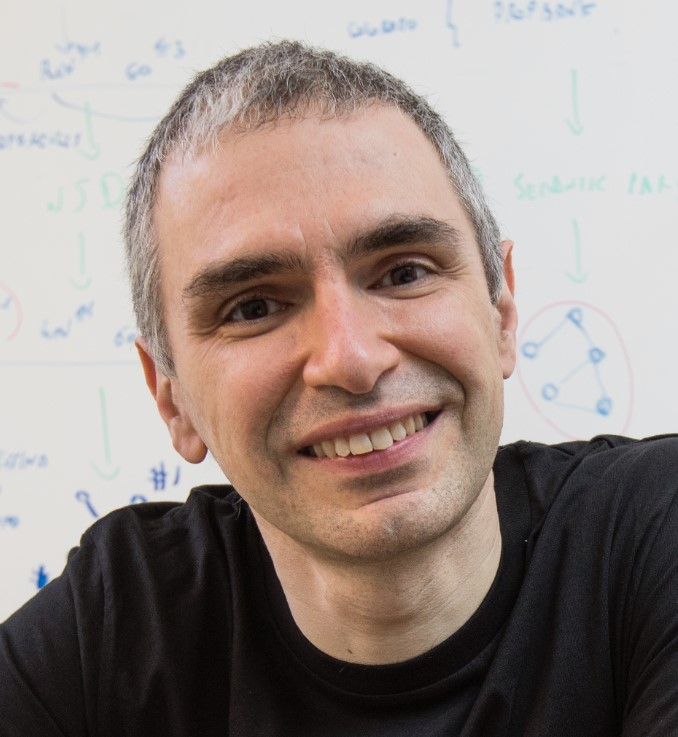
Roberto Navigli is a Full Professor in the Department of Computer, Control and Management Engineering at Sapienza University of Rome, where he leads the Sapienza NLP Group. He has held academic positions at Sapienza since 2007, progressing from Researcher to Associate Professor, and now Full Professor. Navigli is internationally recognized for his groundbreaking work in multilingual natural language processing and computational semantics. His research spans multiple areas within Natural Language Processing, with a particular focus on multilinguality , lexical semantics (Word Sense Disambiguation and induction), sentence-level semantics (Semantic Role Labeling and Semantic Parsing), and Large Language Models . As the leader of the Minerva LLM project, he pioneered the development of the first pretrained LLM in Italian. His creation of BabelNet, the largest multilingual encyclopedic computational dictionary covering 271 languages and about 14 million concepts, represents a landmark achievement in computational linguistics. Professor Navigli's recent publications demonstrate a strong focus on advancing multilingual capabilities of language models, addressing challenges in semantic understanding across languages, and developing robust evaluation frameworks. His work on Italian LLM optimization, lexical ambiguity in machine translation, and cross-lingual safety gaps reflects his commitment to building more accurate and reliable language technologies that work effectively across diverse linguistic contexts. AAAI Fellow (2025) EurAI Fellow (2024) ELLIS Fellow (2024) ACL Fellow (2023) Outstanding Paper Awards at ACL 2024, ACL 2023, and NAACL 2021 Best Resource Paper Award at ACL 2022 Prominent Paper Awards from the Artificial Intelligence Journal (2023, 2017) META Prize 2015 for BabelNet Professor Navigli has successfully secured substantial research funding, including two prestigious ERC Grants (MultiJEDI ERC Starting Grant 2010-2016 and MOUSSE ERC Consolidator Grant 2017-2023, totaling around 3 million euros), PI of PRIN 2017 and PRIN 2020 projects (overall 1.4 million euros), and a Google Focused Research Award (around 300k$). He has mentored over 30 PhD students, many of whom have gone on to successful careers in academia and industry. His leadership extends to major international conferences, serving as General Chair of ACL 2025 and Program Co-Chair of ACL-IJCNLP 2021. As the director of the Sapienza NLP Group and co-leader of the Transversal Project on Large Language/Multimodal Models in the FAIR (Future Artificial Intelligence Research) project, Professor Navigli oversees a vibrant research ecosystem focused on advancing the state-of-the-art in natural language understanding across languages. His spinoff company, Babelscape, translates academic research into practical applications for industry.
Goran Strbac is a Professor of Energy Systems at Imperial College London's Faculty of Engineering, holding the Chair in Electrical Energy Systems. He leads the Department of Electrical and Electronic Engineering and directs the joint Imperial-Tsinghua Research Centre on Intelligent Power and Energy Systems. His roles include IPCC WG 3 Leading Author, OFGEM RIIO-2 Challenging Group Member, and member of multiple EU energy platforms. Strbac's research focuses on multi-energy systems integration, energy market design, renewable integration, distributed energy resources, and grid resilience. Notable contributions include whole-energy system modeling across operation and investment scales, market mechanisms for flexibility services, and security assessments for low-carbon infrastructure. His work emphasizes resilience and decarbonization, with over 500 publications and 4 co-authored books. He advises governments and regulatory bodies on energy policy, including contributions to UK Smart System Forum and European Technology and Innovation Platforms. His recent articles explore AI-driven grid optimization, hydrogen integration, and transactive energy systems. Strbac leads major initiatives like the UK Centre for Grid Scale Energy Storage and chairs resilience-focused research clusters. His research bridges academia and industry, informing policy through rigorous systems analysis and innovative modeling frameworks.
Andy Pavlo is an Associate Professor with Indefinite Tenure in the Computer Science Department at Carnegie Mellon University's School of Computer Science. He is an active member of the CMU Database Group and the Parallel Data Laboratory, where he leads research in database management systems with a focus on self-driving architectures, transaction processing, and large-scale analytics. His work bridges academic research and industry applications through projects like NoisePage, OtterTune (which he co-founded and served as CEO before it ceased operations), and Peloton. Dr. Pavlo's research interests span database management systems with particular emphasis on autonomous database architectures that can self-tune and optimize without human intervention. His work explores transaction processing systems that can handle high-throughput workloads while maintaining consistency, and large-scale data analytics techniques that efficiently process massive datasets. He has made significant contributions to query optimization, database extensibility, and automatic database tuning using machine learning techniques. His recent work on database extensibility revealed critical issues in PostgreSQL's extension ecosystem, showing that approximately 16% of extensions are incompatible with at least one other extension due to API violations and memory errors. His research output demonstrates a consistent focus on practical database systems challenges, with recent publications examining database extensibility, user-defined function optimization, and the cyclical nature of database research. The articles show a strong trend toward making database systems more autonomous, with increasing integration of machine learning techniques for automatic tuning and optimization. His work often combines deep theoretical analysis with practical implementation in open-source systems. Dijkstra Award 2024 for contributions to database systems research Dr. Pavlo actively mentors graduate students, with current advisees including Wan Shen Lim, William Zhang, and Sam Arch (co-advised with Todd Mowry). His former students have gone on to successful careers in both industry and academia. He has secured significant research funding through CMU's affiliate program with major database companies including ClickHouse, DataStax, dbt, Firebolt, MotherDuck, RelationalAI, SingleStore, Spiral, PingCAP/TiDB, Yellowbrick, and Yugabyte. His research is supported by these industry partnerships and likely includes NSF funding given his active participation in the database research community. At CMU, Dr. Pavlo leads the Database Group and organizes several seminar series including "SQL or Death," "Database Building Blocks," and "ML⇄DB Technical Talks." These seminars bring together researchers and practitioners to discuss cutting-edge developments in database systems. He also runs a summer research internship program that has attracted students for multiple consecutive years, indicating a strong research group with ongoing projects and funding.
Animesh Garg is an Assistant Professor at the School of Interactive Computing at Georgia Tech, where he leads the People, AI, and Robotics (PAIR) research group . He holds a Senior Researcher position at Nvidia Research and has courtesy appointments at the University of Toronto and Vector Institute. Previously, he served as Chief Scientific Officer at Apptronik (2024-2025) and Senior Staff Research Scientist at Nvidia Research (2018-2024). Education : Ph.D. in Operations Research from UC Berkeley (2011-2016), MS in Computer Science and Industrial Engineering from Georgia Tech and University of Delhi. Research Focus : Building Generalizable Autonomy through Reinforcement Learning , Control Theory , and 3D Vision , with applications in Surgical Robotics , Self-Driving Labs , and Manufacturing . Key Article Themes : His recent work emphasizes Foundation Models for robotics, Differentiable Simulation , Language-Guided Autonomy , and Structured Inductive Biases in sequential decision-making. Scientific Awards : Stephen Fleming Early Career Professorship at Georgia Tech. Teaching : Courses on AI, Deep Reinforcement Learning, and Algorithmic Intelligence in Robotics at Georgia Tech. Labs & Collaborations : Affiliated with Institute for Robotics and Intelligent Machines (IRIM) and ML@GT at Georgia Tech; collaborates intensively with Nvidia Robotics.
Colin Jones is an Associate Professor at the École Polytechnique Fédérale de Lausanne (EPFL) in the Automatic Control Laboratory, School of Engineering. He earned his BASc and MASc in Electrical Engineering and Mathematics from the University of British Columbia (1994-2002) and a PhD in Control Theory from the University of Cambridge (2002-2005). Prior to EPFL, he was an assistant professor there and a senior researcher at ETH Zürich. Current role: Director of the Robotics, Control, and Intelligent Systems Doctoral Program at EPFL Research focus: Optimization-based and model predictive control (MPC) for renewable energy systems, green energy management, and data-driven control methods His recent work (2023-2025) spans high-speed predictive control , smart grid optimization , and physically consistent neural networks , with applications to buildings, hovercrafts, and power systems. He has secured an ERC Starting Grant for his research on optimal control of building networks. Publications include over 200 papers in journals like Automatica , IEEE Transactions , and Energy and Buildings . Notable article trends include distributed optimization , data privacy in energy systems , and nonlinear MPC for autonomous vehicles . Scientific Awards : ERC Starting Grant for optimal control of building networks Advising : Supervises 10 current PhD students and has advised 19 past PhD students, including Alessandretti Andrea and Diwale Sanket Sanjay. Grants and projects emphasize smart energy systems , predictive demand response , and nonlinear control .
Zhuoyue Zhao is an Assistant Professor in the Department of Computer Science and Engineering at the University at Buffalo, School of Engineering and Applied Sciences. His office is located at 338I Davis Hall, Buffalo, NY 14260, and he can be reached at zzhao35@buffalo.edu or by phone at (716) 645-4735. Dr. Zhao received his PhD in Computer Science from the University of Utah in 2021, where he was advised by Prof. Feifei Li and Prof. Jeff Phillips. Prior to that, he earned his BS in Computer Science from Shanghai Jiao Tong University in 2016, where he was part of the prestigious ACM Class. During his undergraduate studies, he conducted research under Prof. Kenny Zhu and spent Fall 2015 as a research assistant at Hong Kong Polytechnic University supervised by Prof. Eric Lo. Dr. Zhao's research focuses on database management systems, with specific emphasis on traditional and approximate query processing, query optimization, database systems on modern hardware, transaction processing, indexing, and storage. His work bridges theoretical foundations with practical implementations, often resulting in systems that address real-world database challenges. He has made significant contributions to probabilistic query processing, transaction scheduling, and learned indexing techniques. His recent publications demonstrate a clear trajectory toward optimizing database performance in hybrid transactional/analytical processing environments. His research increasingly integrates systems techniques with machine learning approaches, particularly in the area of learned indexes. There's also a strong focus on making database operations more efficient through innovative scheduling mechanisms and query processing techniques that can handle concurrent updates. Google PhD Fellowship (2019-2021) Best Paper Award at SIGMOD 2016 for "Wander Join: Online Aggregation via Random Walks" Best Paper Award at SIGMOD 2025 for "Low-Latency Transaction Scheduling via Userspace Interrupts" Dr. Zhao currently advises several PhD students including Yunnan Yu, Congying Wang, Gaoxiang Liu (co-advised with Prof. Ziming Zhao), and Zhuoran Li. He has successfully guided MS student Nithin Sastry Tellapuri to graduation (Fall 2023), who is now employed at AirPay. His research is supported by significant funding including an NSF CAREER award (#2339596) totaling $599,977 for research on "Speedy and Reliable Approximate Queries in Hybrid Transactional/Analytical Systems" (2024-2029) and an unrestricted Google gift of $30,000 (2021). Dr. Zhao leads the ADBLab research group at UB, where students work on cutting-edge database systems research. His lab focuses on building practical database systems that address real-world challenges in query processing, transaction management, and indexing. The lab maintains strong connections with industry partners and regularly contributes to open-source database projects.
Michael Baldea is an Associate Professor in the Department of Chemical Engineering at the University of Texas at Austin . He holds a Ph.D. in Chemical Engineering from the University of Minnesota (2006), with prior degrees from 'Babeş-Bolyai' University in Romania (M.Sc. 2001, Diploma 2000). His research group develops theoretical and computational methods for Process and Energy Systems Engineering , focusing on integrated decision-making, performance optimization, and process intensification with industrial validation. Education: Ph.D., Chemical Engineering, University of Minnesota (2006) M.Sc., Interface Process Engineering, 'Babeş-Bolyai' University (2001) Diploma, Chemical Engineering, 'Babeş-Bolyai' University (2000) Research Thrusts: Integrated decision-making in chemical/energy supply chains Process performance monitoring and optimization Process integration and intensification Key applications include grid-responsive chemical plants, intensified distillation/column designs, and renewable energy integration for building systems. Scientific Awards: Frank A. Liddell, Jr. Fellowship NSF CAREER Award (2015-2020) Moncrief Grand Challenges Faculty Award (2014) AIChE Outstanding Young Researcher Award (2017) Implementation : His group has translated research into commercial tools through partnerships with industrial test beds and is working to integrate methods into commercial simulators. They explore predictive approaches for building energy management and strategic capital investment analysis in next-generation energy systems.
William Hurst is the Chong Hua Professor of Chinese Development in the Department of Politics and International Studies (POLIS) at the University of Cambridge . He is a Governing Body Fellow at Wolfson College and is affiliated with the Centre for Development Studies and the Centre for Geopolitics . Hurst has been a faculty member at the University of Cambridge since 2013. Prior to this, he held positions as a postdoctoral fellow at the University of Oxford and as an assistant professor at the Universities of Texas and Toronto. His research spans four major themes: labor politics , contentious politics , political economy , and the politics of law and legal institutions , with a regional focus on China and Indonesia . He is currently completing a book manuscript on the comparative politics of law and legal institutions in China and Indonesia since 1949, based on over a year of fieldwork in each country since 2006. Hurst’s publications reflect a deep engagement with the evolution of Chinese and Indonesian governance, labor rights, urban development, and legal reform. His work critically examines how authoritarian regimes manage legal institutions, labor unrest, and urban transformation, offering comparative insights into state-society relations in East and Southeast Asia. While no specific students or awards are listed in the provided text, Hurst’s academic trajectory and publication record indicate a strong commitment to both research and pedagogy in development studies and comparative politics.
Magda Posani is an Assistant Professor in the Department of Civil Engineering at Aalto University, focusing on building physics, hygrothermal behavior of materials, and environmental sustainability. Her research explores the use of bio-based insulation, thermally massive stone and earth walls, and additive manufacturing techniques to enhance indoor comfort and address climate change challenges in Nordic regions. Integrated Master's Degree in 'Building Engineering and Architecture' from the University of Bologna (Italy) Ph.D. in Civil Engineering from the National Laboratory for Civil Engineering (LNEC) and the University of Porto (FEUP, Portugal) Postdoctoral Research at ETH Zürich (Switzerland) Her research integrates vernacular solutions with modern technology, such as combining additive manufacturing with super-hygroscopic materials to develop components for passive humidity regulation. She addresses critical issues like occupant comfort, health risks from improper humidity, and climate change impacts on traditional constructions. The articles highlight her work on low-carbon materials, 3D-printed building components, and strategies for enhancing hygrothermal performance in both modern and historic structures. Key themes include moisture buffering, thermal insulation compatibility, and climate-resilient renovation.
Professor Shoon Murray is a distinguished faculty member at American University's School of International Service, specializing in American foreign policy and civil-military relations. Holding a PhD in political science from Yale University, she teaches foundational courses including Analysis of US Foreign Policy (SISU-230) and Foreign Policy: Theory and Decision Making (SIS-689). Education: PhD in Political Science, Yale University Research Focus: Dr. Murray's scholarship critically examines war powers, decision-making theory, and the interplay between public opinion, media, and foreign policy formation. Her work analyzes how political leaders navigate security crises, congressional-authority tensions in military actions, and institutional shifts in diplomatic practices amid global power diffusion. She investigates enduring phenomena like the “rally ‘round the flag’” effect while documenting the post-9/11 militarization of U.S. strategic approaches. Publication Trends: Recent research centers on the evolution of the 2001 AUMF, combatant commanders' diplomatic roles, and State Department-DoD institutional competition. Her scholarship reveals how military actors increasingly shape foreign policy narratives while traditional diplomatic channels erode, with implications for democratic accountability and strategic coherence in counterterrorism operations.
Steven Rogak is a Professor in the Department of Mechanical Engineering at the University of British Columbia's Faculty of Applied Science. He holds a P.Eng. license and degrees including a B.A.Sc. in Mechanical Engineering from UBC, and M.Sc. and Ph.D. from Caltech. P.Eng., University of British Columbia B.A.Sc., University of British Columbia M.Sc., Ph.D., California Institute of Technology His research focuses on aerosol science, particularly solid nanoparticles from combustion processes, their climate and health impacts, and mitigation strategies. Key areas include: Soot morphology and transport properties Engine emission reduction via fuel injectors Indoor air filtration systems Membrane-based energy exchangers Atmospheric particulate analysis The 15 most recent articles span experimental and theoretical studies on soot characterization, membrane technologies, and aerosol dynamics, with applications in climate modeling, healthcare ventilation, and sustainable materials. Collaborations include Westport Innovations and interdisciplinary teams. Rogak leads the Aerosol Laboratory at UBC, where he applies fluid mechanics and heat transfer fundamentals to address environmental and health challenges. He emphasizes experimental rigor and welcomes graduate students with expertise in these areas.
Daniel Adelman is the Charles I. Clough, Jr. Professor of Operations Management at the University of Chicago Booth School of Business. He joined the faculty in 1997 after completing his PhD in industrial engineering and operations research at Georgia Tech. Adelman is a leading expert in Business Analytics and Management Analytics, helping companies deploy data and decision analysis to build world-class strategic and tactical management capabilities. Adelman received his PhD in industrial engineering and operations research in 1997, along with a bachelor's degree in industrial engineering and a master's degree in operations research, all from the School of Industrial and Systems Engineering at the Georgia Institute of Technology. Daniel Adelman's research focuses on applying analytical models to solve complex business problems across multiple industries. He has worked with firms from diverse sectors including internet services, chemical distribution, airlines, third party logistics, fiber-optics manufacturing, semiconductor manufacturing, oil, and healthcare. His research integrates real-world data with analytical models to bring structure and discipline to decision and control processes, enabling firms to achieve higher profits with lower risk. Adelman's recent work has concentrated heavily on healthcare analytics, where he leads the Healthcare Analytics Laboratory at Chicago Booth. This lab works with teams of doctoral and MBA students on projects with major healthcare institutions to optimize clinical, operational, and financial outcomes. His research spans foundational operations research including approximate dynamic programming, inventory theory/supply chain management, and revenue management/pricing optimization, as well as examining the linkage between operational performance metrics and financial performance of firms. Adelman's publications show a clear trend toward increasing focus on healthcare applications while maintaining strong theoretical foundations in operations research. His earlier work focused more on general operations management problems like inventory control and supply chain optimization, while his recent publications demonstrate a strategic shift toward healthcare analytics, particularly examining surgical team dynamics, hospital performance metrics, and resource allocation during public health emergencies like the COVID-19 pandemic. George B. Dantzig Prize (1998) for the best dissertation in operations research and management sciences that is innovative and relevant to practice Adelman regularly advises doctoral and MBA students through the Healthcare Analytics Laboratory at Chicago Booth. He has served as Associate Editor for Management Science, currently serves as Associate Editor for Manufacturing and Service Operations Management, and is the Area Editor for Operations and Supply Chain at Operations Research. His industry collaborations include significant projects with Akamai on internet pricing, with GE Global Research Labs on the electricity smart grid, with BP on gasoline supply contract portfolio optimization, and with Symantec on software release planning. Adelman leads the Healthcare Analytics Laboratory at Chicago Booth, which brings together interdisciplinary teams of doctoral and MBA students to work on a portfolio of projects with major healthcare institutions. The lab focuses on optimizing clinical, operational, and financial outcomes through advanced analytics and decision modeling.
Mr. Richardo Khonasty is a Senior Research Engineer at the School of Mechanical and Mechatronic Engineering, part of the Faculty of Engineering and Information Technology at the University of Technology Sydney (UTS). He has held appointments at UTS since 2019, including roles at the Centre for Autonomous Systems and Robotics Institute. He also serves as a Tutor since 2016. PhD in Robotics (2020), UTS B.Eng. in Mechanical and Mechatronic Engineering (2014), UTS Khonasty's research focuses on robotics and human-robot collaboration, with applications in surgical robotics (total hip replacement), industrial automation (abrasive blasting), and green wall inspection systems. His work emphasizes kinematic accuracy, adaptive control schemes, and cost-effective robotic solutions. His recent publications explore robotic-assisted burring for orthopedic surgery, damping strategies for singularity management, and exoskeleton design frameworks. Khonasty is currently involved in funded research related to hydraulic tooling safety under the BTP - Stage 2 - IntelliForce Tooling grant.