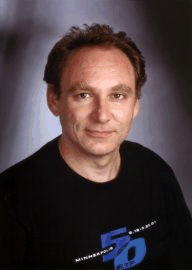
Thierry Badard is an Associate Professor at the Department of Geomatics Sciences , Université Laval, where he also serves as Director of the Center for Research in Geospatial Data and Intelligence (CRDIG) . With over 28 years of experience in geospatial science, he leads research initiatives at the intersection of GeoAI , LiDAR processing , and smart city technologies . Director, CRDIG (2016-2022) Steering Committee Member, Big Data Research Centre (CRDM) Researcher, Institute for Intelligence and Data (IID) Research Expertise spans geospatial big data, GeoNLP, and IoT applications for digital twins. His work addresses flood risk modeling , 3D urban analytics , and environmental monitoring through AI-driven solutions. Recent publications focus on contrastive learning for LiDAR segmentation and geospatial ontologies for early warning systems. Grant Leadership includes collaborative projects on smart insurance analytics (2018-2025), Arctic bioaerosol research (2019-2025), and Quebec-Morocco digital twin partnerships (2022-2023). He has advised 15+ graduate students in geomatics and related fields.
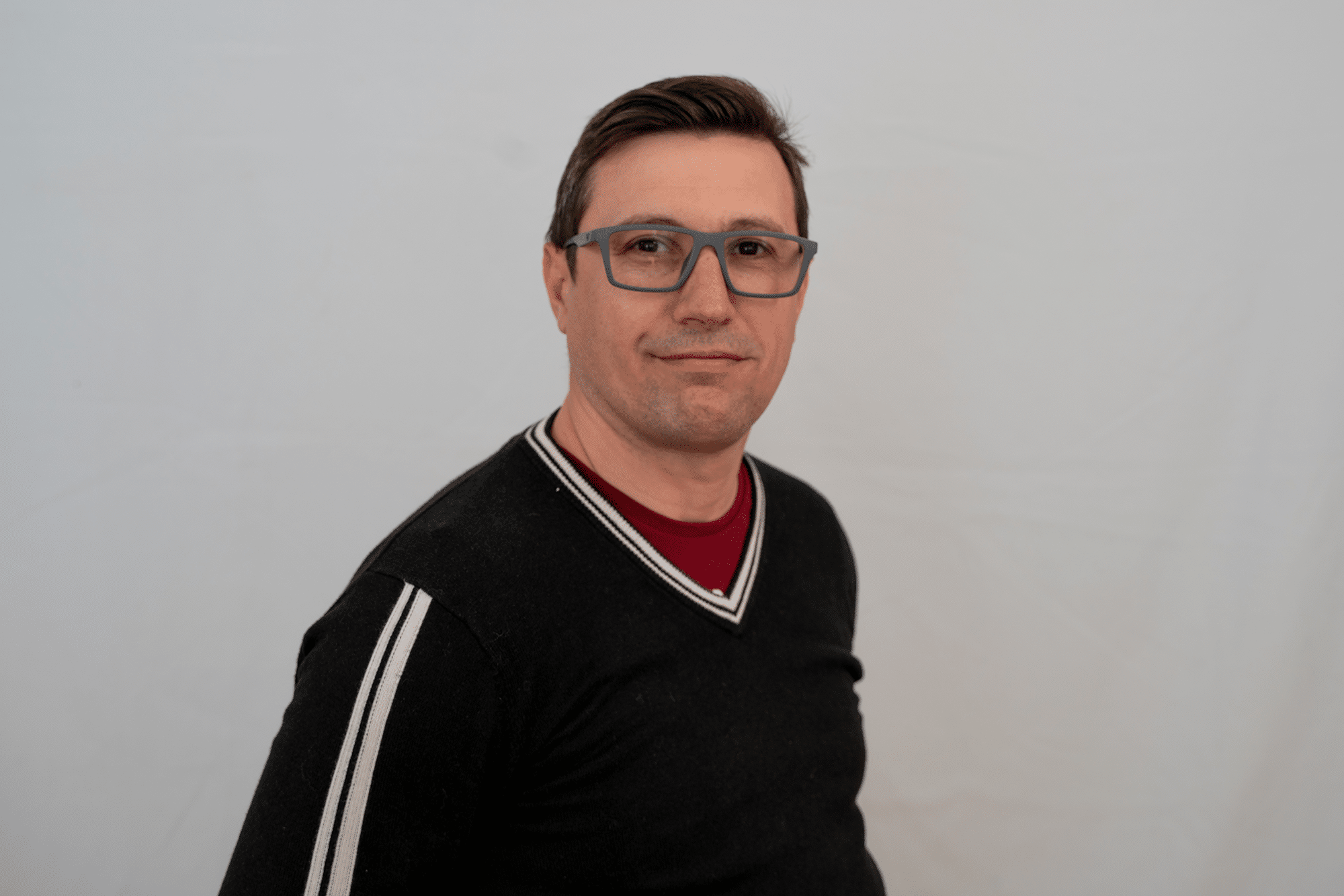
Nicolas Riviere is a Professor at INSA Lyon in the Department of Mechanical Engineering, working within the Laboratory of Fluid Mechanics and Acoustics (LMFA - UMR 5509). He is part of the "Fluides complexes et transferts" (Complex Fluids and Transfers) group and the Environment team. His teaching activities primarily focus on fluid mechanics at the Mechanical Engineering Department of INSA Lyon, covering: General balances (mass, momentum, energy) Aerodynamics Compressible flows Numerical simulation of flows Free surface hydraulics Prof. Riviere's research centers on free surface hydrodynamics, with applications to natural and industrial risks. His work takes an experimental approach, utilizing the laboratory's channel facilities, particularly the channel intersection installation. His research spans river floods with compound beds, urban flooding, sanitation networks, torrential flows, and flow-obstacle interactions. He has developed a strong interdisciplinary focus, co-leading the "Baignades en Rivières Urbaines" studio with Oldrich Navratil from University Lyon 2 and the EVS Laboratory. His publication record demonstrates consistent contributions to the fields of fluid mechanics and environmental hydraulics, with recent work focusing on open-channel flows, urban flooding phenomena, vegetation-flow interactions, and experimental techniques for studying complex hydraulic phenomena. His research often bridges theoretical fluid mechanics with practical environmental applications. Prof. Riviere has received recognition for his work in environmental fluid mechanics, with numerous publications in high-impact journals in hydraulic engineering and fluid mechanics. He has supervised multiple PhD students and research projects related to environmental fluid mechanics and has collaborated with various institutions on interdisciplinary research projects addressing water-related challenges. The laboratory where he works, LMFA, provides extensive experimental facilities including wind tunnels, hydrodynamic channels, and advanced measurement techniques such as PIV (Particle Image Velocimetry), LDV (Laser Doppler Velocimetry), and other state-of-the-art instrumentation for fluid flow analysis.
Jon Crowcroft is the Marconi Professor of Communications Systems in the Department of Computer Science and Technology at the University of Cambridge, and serves as the Chair of the Programme Committee at the Alan Turing Institute. He is also a Fellow of Wolfson College, Cambridge, and a visiting professor at the Department of Computing at Imperial College London. With a career spanning over three decades in computer networking research, Professor Crowcroft has made seminal contributions to the development of the Internet and continues to be highly active in cutting-edge research areas. His educational background includes: BA in Physics from Trinity College, University of Cambridge (1979) MSc in Computing from University College London (1981) PhD from University College London (1993) Professor Crowcroft's research spans multiple domains in computer networking and distributed systems. He has worked in Internet support for multimedia communications for over 30 years, with three main focus areas: scalable multicast routing, practical approaches to traffic management, and the design of deployable end-to-end protocols. His current research focuses on opportunistic communications, social networks, and techniques to scale infrastructure-free mobile systems. He is particularly known for his 'build and learn' paradigm for research and has recently been exploring decentralized digital identification systems, smart cities, and edge computing. His work often bridges theoretical foundations with practical implementations, emphasizing privacy-preserving approaches and sustainable network architectures. Professor Crowcroft has received numerous prestigious awards recognizing his contributions to the field, including: Election as Fellow of the Royal Society (2013) ACM SIGCOMM Award (2009) ACM Fellow (2002) Fellow of the Royal Academy of Engineering IEEE Fellow (2004) Chartered Fellow of the British Computer Society Throughout his career, Professor Crowcroft has advised numerous PhD students, including Mark Handley and Pan Hui, who have themselves become influential researchers in the networking community. He has authored several influential books that have been adopted internationally in academic courses, such as 'TCP/IP & Linux Protocol Implementation,' 'Internetworking Multimedia,' and 'Open Distributed Systems.' His research has been supported by various grants and collaborations with both academic institutions and industry partners, contributing to successful startup projects and influencing Internet standards. Professor Crowcroft is actively involved in several research initiatives, including serving on the Scientific Council of IMDEA Networks Institute since 2007 and the advisory board of the Max Planck Institute for Software Systems. He is also a director of the Matrix Foundation, which develops open network protocols. His current research group focuses on privacy-preserving analytics, decentralized systems, and the future of Internet architecture.
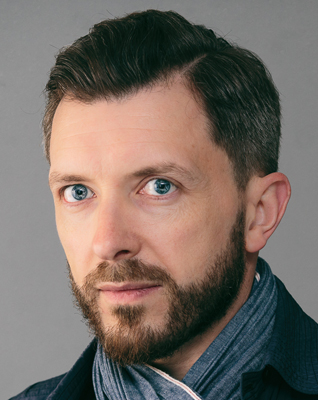
Olivier FARGES is a Senior Lecturer and HDR (Habilitation à Diriger des Recherches) holder at the University of Lorraine, affiliated with ENSGSI (École Nationale Supérieure de Géologie et Sciences Industrielles) within the Groupe INP. He serves as Director of Industrial Partnerships at ENSGSI and is part of the LEMTA Laboratory (CNRS-University of Lorraine), focusing on multiphysics and multiscale modeling of heat transfer in complex environments. His academic roles include teaching courses such as Heat and Mass Transfer, Fluid Mechanics, Scientific Computing Modeling, and Renewable Energy. Dr. FARGES holds a Ph.D. in Energy and New R&D (2014) and an Engineering degree in Energy Engineering (2010), both from the École de Mines Albi. His research emphasizes coupled conductive-radiative heat transfer in porous media, thermal property characterization of heterogeneous materials, and Monte Carlo-based computational methods for energy systems. He has contributed to advancements in photovoltaic system modeling, solar thermal power optimization, and urban climate studies. His work bridges theoretical and applied thermal engineering, with applications in sustainable energy systems, material science, and industrial partnerships. Key research themes include radiative transfer modeling, multiphysics simulation frameworks, and the development of innovative tools for thermal property measurement and energy performance assessment.
Guillaume DELATOUR is an Associate Professor in Risk and Crisis Management at Université de Technologie de Troyes (UTT), specializing in organizational resilience and security dynamics. He leads UTT's InSyTE laboratory's crisis/resilience/security research axis and coordinates the PRESAGES crisis simulation platform. His academic roles include directing the IMSGA Master's program in Global Security Engineering and co-developing executive certificates like DSRT (Ministry of Interior collaboration) and AMCSS (ENSP partnership). Research focuses on crisis cell coordination, community resilience post-disasters (e.g., Storm Alex studies), and temporal dynamics in crisis management. He has coordinated major projects including ANR-funded INPLIC (2018-2021) and regional initiatives on rural crisis preparedness. His educational contributions span crisis simulation pedagogy and integrating citizen participation in disaster response strategies. Published extensively in crisis management, his 2023 work on Storm Alex solidarity mechanisms and 2024 papers on crisis cell coordination exemplify his focus on real-world operational challenges. Advises PhD students Gaëtan Chevalier and Aymée Nakasato, exploring crisis simulation frameworks and collective risk behaviors. Education: PhD (2011-2015) on decision-making in high-risk environments, Research Engineer at UTT (2015-2017), UN research stint (2010). Grants: ANR, IHEMI/FIESP, regional funding for RPM project (2015-2016). Labs/Teams: InSyTE Lab, Chaire Gestion des Crises, Chaire Sécurité Globale.
Steven LE CORRE is a University Professor at the Department of Thermal Energy Mechanics within the Nantes Thermal and Energy Laboratory (UMR_C 6607) at the University of Nantes . His work focuses on mechanical modeling and simulation, with applications spanning composites, complex fluids, and biomedical engineering. Current PhD Students: Sana Koubaa (Thermoplastic pultrusion), Violette Brulliard (Intervertebral disc modeling) Defended Theses: Arthur Levy (Ultrasonic welding of composites), Céline Dubois (X-FEM in automobile crashes), Jelmer Jongsma (Polymer adhesive structures), Guillaume Rückert (A-TIG welding fluxes), Yosra Guétari (Cutting simulation via X-FEM) Research interests include fibrous media modeling , multiphysical simulation , and applications to composite manufacturing processes , short-fiber-reinforced fluids , and hydrogel/tissue engineering . His work integrates computational mechanics with industrial and biomedical challenges. Professor LE CORRE is based at POLYTECH NANTES campus ( La Chantrerie, rue Christian Pauc ), with office R126 in the Isitem Building. His research is conducted in collaboration with the Nantes Thermal and Energy Laboratory, a CNRS-affiliated research unit.
Lea Stadtler serves as Associate Professor of Strategy at Grenoble Ecole de Management, specializing in cross-sector collaborations and coopetition within the Department of Management and Technology. Her research examines organizational tensions through paradox and organizational theories, with focus on partnerships addressing societal grand challenges. Her research centers on cross-sector partnerships, coopetition, and organizational paradoxes, investigating dynamics in global health, sustainable development, and humanitarian contexts. Key themes include partnership sustainability, dark side effects, colonial legacies in business-NGO relationships, and place-based collaboration strategies. She employs critical perspectives to analyze power structures and unintended consequences in partnership ecosystems. Analysis of her 2022-2025 publications reveals escalating focus on partnership complexity in high-reliability contexts like global health, with growing attention to South-South cooperation, political embeddedness of innovation networks, and systemic approaches to Sustainable Development Goals implementation. Dr. Stadtler has received four international awards for her scholarly contributions and case studies. She currently serves as Associate Editor for Business and Society , contributing to academic discourse on cross-sector collaboration ethics and effectiveness. No information was provided regarding student advising, research grants, laboratory affiliations, or team leadership roles in the source materials.
Overview ASSILA Ahlem is a Researcher-Lecturer at CESI, specializing in Human-Machine Interaction (HMI), Augmented Reality (AR), and Virtual Reality (VR). She holds a PhD in Computer Science from Université de Valenciennes (2016) and a postdoctoral position at Institut Image ARTS ET METIERS PARISTECH (2017). Her research focuses on usability evaluation, digital twin technology, and BIM-integrated XR systems. She has supervised multiple engineering and master’s projects, including AR application development for network management. Research Contributions Developed frameworks for integrating subjective/objective usability metrics using ISO standards Proposed maturity models for BIM-based AR/VR systems Explored digital twin applications in manufacturing and construction industries Education & Responsibilities Teaches computer science at all engineering levels (L1-M2) at CESI Reims, including algorithmics, HMI design, and project-based learning. Served as pilot for engineering program cycles (2017–2020). Active in organizing international conferences (e.g., HCI 2020, Flexible Automation 2018) and peer review for journals like IJISE and IEEE VR. Awards & Recognition No specific awards listed, but recognized for contributions to HCI and industry-relevant research. Advising & Grants Supervised over 10 student projects including PFEs and internships. Actively participates in jury panels for engineering thesis defenses and academic promotions across multiple institutions. Labs & Collaborations Member of the CESI Chair for Industry and Services of Tomorrow, focusing on technology integration in construction and manufacturing sectors.
Jean-François Semblat is a Professor at ENSTA Paris and holds leadership roles as Head of the Department of Mechanics and Energetics (IP-Paris) and Deputy Head of the Mechanical Engineering Department (UME/ENSTA). He is a researcher at the Institute of Mechanical Sciences and Industrial Applications (UMR IMSIA). His work spans seismology, computational mechanics, and soil-structure interaction. Research Interests: Seismology and seismic wave propagation Computational mechanics (FEM/BEM) Soil dynamics and dynamic soil-structure interaction Structural dynamics and earthquake engineering Wave propagation in complex media Recent Publications highlight advancements in seismic wave modeling, soil reinforcement, and numerical methods (FEM/BEM) applied to urban infrastructure and nuclear safety. His work addresses liquefaction, fault mechanics, and seismic safety of critical systems. Scientific Awards: Shamsher Prakash Research Award in Geotechnical Engineering (2009) Award from the European Association of Geoscientists & Engineers (2005) Award from the International Association for Computer Methods & Advances in Geomechanics (2005) Special award from the French Association for Earthquake Engineering (1999) He contributes to editorial boards of journals like Soil Dynamics and Earthquake Engineering and International Journal of Geomechanics , and participates in international committees (TC203, AFPS).
Zeina ELRAWASHDEH is a Researcher Lecturer at the Institut Catholique d'Arts et Métiers (ICAM), based at the Grand Paris Sud campus. Her research focuses on Measurements and Controls, with a particular emphasis on fiber-optic sensors, multi-agent systems, and IoT integration for smart infrastructure. She collaborates with prestigious research laboratories globally to develop innovative solutions in energy optimization, smart cities, and precision engineering. Her expertise spans applied research in fiber-optic displacement sensors, algorithm optimization for sensor performance, and user-centric building automation systems. Zeina’s work bridges theoretical advancements with practical applications in manufacturing, energy, and urban systems. She actively contributes to international academic discourse through peer-reviewed publications and participates in ICAM’s strong industry partnerships for applied research outcomes. Zeina’s research portfolio demonstrates a trajectory toward integrating AI and IoT with traditional engineering challenges, addressing technical gaps in sensor networks, multi-agent coordination, and precision machining. Her recent work highlights advancements in smart city infrastructure and energy-efficient building systems. While no awards are explicitly mentioned, her involvement in ICAM’s research initiatives underscores her commitment to impactful, industry-relevant science. Collaborations with global companies and academic institutions position her at the forefront of applied engineering research.
Valentina KRACHMALNICOFF is a CNRS Research Scientist at Institut Langevin, affiliated with ESPCI Paris and PSL University. She joined the institute in 2012 after completing her postdoctoral fellowship there in 2010. Her research focuses on experimental nanophotonics, particularly studying near-field interactions between fluorescent nano-emitters and nanostructured plasmonic or dielectric materials. Dr. KRACHMALNICOFF obtained her PhD from University Paris-Sud in 2009 with a thesis on quantum atom optics experiments supervised by Alain Aspect and Charles Westbrook. Her research interests span experimental nanophotonics with plasmonic and dielectric media, near-field optical microscopy with fluorescent nanoprobes, quantum optics applications, and the study of electromagnetic local density of states. She has developed expertise in fluorescence intensity and decay rate measurements of nano-objects grafted on scanning probe microscope tips, as well as nano-manipulation techniques. Her work bridges fundamental physics with potential applications in quantum technologies, biosensing, and thermal management at the nanoscale. She frequently employs super-resolution imaging techniques to overcome diffraction limits in optical measurements. Analysis of Dr. KRACHMALNICOFF's recent publications reveals a strong methodological evolution toward increasingly sophisticated combinations of experimental techniques with theoretical modeling. Her work consistently focuses on probing light-matter interactions at the nanoscale, with growing integration of biophysical approaches. The publications demonstrate expertise in thermal radiation at nanoscale distances, plasmonic and dielectric nanostructures, and super-resolution fluorescence lifetime imaging. Her research shows a trajectory from fundamental near-field optics toward applications in quantum information and biosensing. Dr. KRACHMALNICOFF has received notable scientific recognition: 2017: CNRS Bronze Medal for her pioneering work in nanophotonics 2007: L'Oréal France - UNESCO "For Women in Science" Prize Dr. KRACHMALNICOFF actively mentors doctoral students and postdoctoral researchers. Current advisees include Guillaume Blanquer and Dorian Bouchet (PhD candidates) and Vivien Loo (postdoctoral researcher). Former students include Da Cao and Etienne Castanié. Her research is supported by CNRS funding and collaborative grants with other institutions, evident from her extensive co-authorship network spanning theoretical physicists, materials scientists, and optical engineers. Dr. KRACHMALNICOFF leads an experimental research team at Institut Langevin specializing in nanophotonics. Her laboratory features advanced near-field optical microscopy capabilities, fluorescence lifetime imaging systems, and nano-manipulation setups. The team collaborates closely with other researchers at Institut Langevin, including Yannick De Wilde (CNRS Research Director) and Ignacio Izeddin (Associate Professor at ESPCI), forming a cohesive research group focused on light-matter interactions at the nanoscale.
Jérémie DEQUIDT is a Researcher at Inria affiliated with Polytech Lille, University of Lille, serving as Thematic Group Facilitator for CO2 (Control and Scientific Computing) and Member of the Scientific Council. His offices are located at Inria Building A (Haute Borne) and Polytech Lille's Scientific City. His research spans soft robotics, simulation, control systems, and medical robotics. He develops modeling and simulation techniques for sensorimotor perception in soft robots and medical applications like prostate biopsy/brachytherapy using bio-inspired phantoms. His work integrates computer graphics, haptics, and deformable object robotics to advance medical interventions and robotic control systems. He supervises PhD students including Thomas Moupfouma (Sensorimotor perception in soft robotics through modeling and simulation) and Sizhe Tian (Simulation of needle insertion in bio-inspired active prostate phantom). As a core member of the DEFROST research team within CRIStAL laboratory (University of Lille/CNRS/Centrale Lille joint unit), he contributes to foundational research on deformable objects and robotics, with leadership roles in scientific governance and thematic coordination.
Hardy Mylene is a Lecturer at the National Institute of Oriental Languages and Civilizations (INALCO) in France. Her academic work focuses on intercultural and international communication within the PLIDAM research team. Academic Rank: Lecturer Institution: National Institute of Oriental Languages and Civilizations Department: Intercultural and international communication Research Areas: Epistemology of communication, Chinese communication, organizational communication, economic intelligence Teaching: Contemporary concepts in communication, socio-cognitive psychology, public/cultural diplomacy, "nation branding" Research Themes: Communication competence, theories of organization, economic intelligence, Chinese communication, complexity theories Her research explores communication strategies in Chinese society, cultural diplomacy, and organizational communication frameworks. She has contributed to studies on cognitive warfare, public diplomacy implementation, and pandemic communication strategies. Hardy's work bridges French and Chinese communication practices through digital and organizational lenses. She works with the PLIDAM research team and has directed the Com2I sector (formerly CFI). Her publications cover topics like: Japans cognitive warfare concepts and postures Organizationality in French cultural diplomacy Chinese pandemic strategies Maoist communication structures Louvre museums communication in China Guanxi networks in China-Africa relations While specific awards and student advisement details aren't provided, her work consistently examines communication systems across cultural, political, and organizational boundaries in Asian contexts.
Mouad JEBLI is an Associate Professor at CESI Engineering School in Aix-en-Provence, France, where he serves as a Teacher-researcher within the Engineering and Digital Tools research team. His academic focus centers on the chemomechanical behavior and durability of concrete materials, with particular expertise in interfacial transition zone (ITZ) characterization and degradation mechanisms. His educational background includes a Doctorate in Mechanics and Civil Engineering (2013-2016) from University of Montpellier/IMT Mines Alès, with research on local-scale mechanical properties of cement paste-aggregate interfaces, and a Specialized Master in Engineering and Project Management of Building and Public Works (2011-2012) from University of Montpellier 2 and Cadi Ayyad University, Morocco. Dr. JEBLI's research spans Concrete Technology, Durability of Materials, and Mechanical Behavior of Materials, emphasizing experimental characterization of chemomechanical degradation processes including leaching, internal sulfate attack, and interface mechanics. His work integrates multi-scale approaches from nanoindentation to structural testing, with significant contributions to cohesive zone modeling and composite repair techniques for concrete structures. Analysis of his 15 most recent publications (2018-2024) reveals consistent focus on experimental methodologies for concrete durability assessment, with strong emphasis on interface mechanics, degradation modeling, and sustainable repair solutions. Key thematic trends include the evolution of ITZ properties under chemical attack, development of predictive models for material interfaces, and application of natural fiber composites for structural rehabilitation. His scientific recognition includes: Best Poster Award at 36èmes Rencontres de l’AUGC (2018) Dr. JEBLI actively supervises graduate research, currently guiding PhD candidate MA TAZI (defending 2026) on composite patch repairs, and previously supervised PhD graduates S. NESRINE (2021) and A. Girboveanu (2020), along with multiple Master's students including Fabrice GBEWADE (2019) and Kim Quyen Nguyen (2016). His research is conducted through the Engineering and Digital Tools team, which develops advanced engineering methodologies for construction materials and structural systems.
Lionel Soulhac is a Professor at INSA Lyon and serves as the Deputy Director of the Laboratoire de Mécanique des Fluides et d’Acoustique (LMFA) . He leads the AIR team (Atmospheric and Industrial Research) and is affiliated with the École Centrale de Lyon . His academic focus lies in the Department of Fluid Mechanics, Acoustics, and Energy (MFAE). Dr. Soulhac’s research emphasizes urban atmospheric dispersion , turbulent flows in complex environments , and numerical modeling of pollutant transport . He has contributed to developing operational models like SIRANE and BUILD , which address air quality and emergency response scenarios in urban and industrial settings. Teaching responsibilities include courses on fluid mechanics, environmental engineering, and pollution dynamics at École Centrale de Lyon and the University of Lyon. Research highlights include studies on concentration fluctuations , vegetation effects in urban canopies , and inverse modeling for source characterization . His work integrates experimental wind tunnel studies and computational fluid dynamics (CFD) to assess dispersion patterns and urban microclimates. Recent projects, such as the DIPLOS initiative, focus on pollutant dispersion in street networks and risk assessment methodologies. His contributions bridge academic research with practical applications in environmental safety and urban planning.