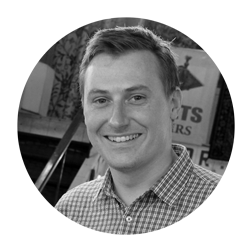
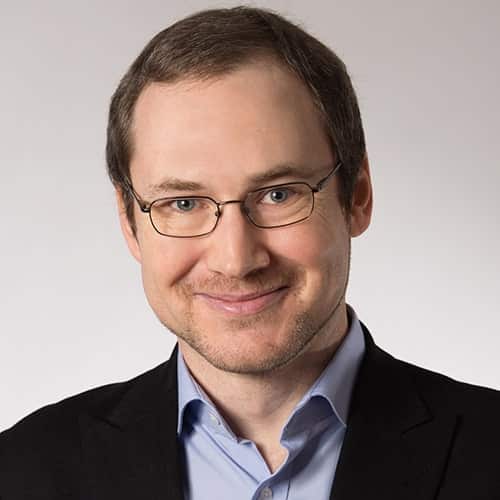
Jiri Srba is a Professor at Aalborg University's Department of Computer Science, part of the Technical Faculty of IT and Design. He leads research in the Distributed, Embedded and Intelligent Systems group and contributes to projects like "ControLing wAter In an uRban Environment" and "Collective Adaptive System SynThesIs using Non-zero-sum Games". His office is located at Selma Lagerløfs Vej 300, 9220 Aalborg Øst, Denmark. Contact him at +4599409851 or srba@cs.aau.dk. His core research focuses on formal methods and applied computer science: Model checking and verification of concurrent systems Petri nets and their applications Network protocol verification and synthesis Distributed system correctness Automated reasoning for industrial systems His publication record shows strong emphasis on network verification, model checking optimization, and applying formal methods to environmental systems. Recent work integrates computer science with sustainable engineering, particularly in water management systems and energy control.
Navid Bayati is an Associate Professor at the University of Southern Denmark, affiliated with the Institute of Mechanical and Electrical Engineering and the Centre for Industrial Electronics. He leads the Control and Protection of Smart Grids (CAP-SG) group and focuses on renewable/hybrid power systems, microgrid protection, and grid code compliance. Education: Ph.D. in Power Systems & Microgrid Protection (2020, Aalborg University); M.Sc. in Power Systems (2017, Amirkabir University of Technology) His research spans renewable energy integration , transient analysis , grid interconnection , and digital twin applications . Recent work includes machine learning for carbon emission prediction, fault localization in DC microgrids, and supercapacitor resilience in hybrid systems. Collaborations include projects like IEA Wind Task 50 and RePoSys , addressing grid renovation, life cycle assessment, and digital twin resilience. His teaching portfolio covers power electronics , energy management , and microgrid control .
Henrik Myhre Jensen is a Professor at the College of Engineering , Aarhus University, specializing in Mechanics of Materials , Solid Mechanics , and Mechanical Engineering . His research focuses on fracture mechanics, composite materials, and computational modeling of structural behaviors. Research Focus Fracture mechanics in composites and layered materials Computational modeling of kink band propagation Surface wear and coating technologies Ultrasound imaging applications in mechanical systems Notable Contributions Henrik has contributed to understanding crack propagation in cantilever beams, developed numerical methods for simulating delamination in composites, and explored buckling instabilities in solids. His recent work connects machine learning (holomorphic neural networks) to traditional fracture mechanics problems. Key Projects MAGFLY (2017-2021): Magnets for Flywheel Energy Storage InnoVacc (2009): Pressure Testing of Vacuum Chambers Simulation of composite structures (2011-2020): Micro-mechanical modeling
Jes Frellsen is an Associate Professor at the Department of Applied Mathematics and Computer Science (DTU) since 2016. Previously, he held academic positions at the IT University of Copenhagen (2016-2019), postdoctoral roles at University of Cambridge (2013-2016) and University of Copenhagen (2011-2013). Education: PhD in Bioinformatics (2011), University of Copenhagen MSc in Bioinformatics (2007), University of Copenhagen BSc in Mathematics and Computer Science (2005), University of Copenhagen EAP Exchange at University of California, Santa Cruz (2004-2005) Research Focus Jes Frellsen specializes in statistical machine learning , particularly generative AI and deep generative models with applications in bioinformatics . His work integrates Bayesian inference , directional statistics , and Markov chain Monte Carlo methods to address challenges in macromolecular structure prediction and missing data imputation . Recent efforts explore uncertainty quantification in image segmentation and generative modeling for materials science. Advising & Collaborations He actively supervises PhD students and postdoctoral researchers in projects spanning news recommendation systems , medical imaging , and 3D structure generation . Collaborations include work with Zoubin Ghahramani (Cambridge) and Thomas Hamelryck (Copenhagen), with contributions to protein structure prediction and statistical methods in structural bioinformatics .
Allan Hanbury is a Full Professor for Data Intelligence at the Faculty of Informatics, TU Wien, and a faculty member at the Complexity Science Hub Vienna. He leads the Data Science Research Unit and serves as the Faculty Representative for financial affairs and internationalization. He holds a PhD in Applied Mathematics from Mines ParisTech and a Habilitation in Practical Informatics from TU Wien. PhD in Applied Mathematics, Mines ParisTech, 2002 Habilitation in Practical Informatics, TU Wien, 2008 Bachelor’s and Master’s in Physics and Applied Mathematics, University of Cape Town His research focuses on information retrieval, data mining, natural language processing, and information extraction, with applications in healthcare, legal, and patent domains. He has coordinated major EU projects including Khresmoi, VISCERAL, KConnect, and DoSSIER, the latter training 15 PhD students. He is co-founder of contextflow, a spin-off commercializing radiology search technology. His recent publications (2024–2022) highlight a strong trend in systematic literature review automation, neural re-ranking, large language models, and domain-specific information extraction. Key themes include improving citation screening, patient-trial matching, evaluation metrics, and dataset creation for offensive language and legal text. His work combines technical innovation with real-world impact in medical, legal, and scientific communication contexts. Allan Hanbury has received no explicitly mentioned scientific awards in the provided text. He actively supervises numerous PhD and master’s students and leads large research projects such as DoSSIER, Transparent Automated Content Moderation, and PLFDoc, funded by FWF, WWTF, and EU. His group develops tools for evidence synthesis, clinical data extraction, and legal document analysis. He also contributes to AI and data strategy in Austria and Europe. He leads the Data Science Research Unit at TU Wien and is involved in multiple interdisciplinary projects including BRISE (building regulation analysis), CDL-RecSys, and TACo, focusing on legal and scientific document processing. His work bridges academia and industry through spin-offs like contextflow and collaborations with Deutsche Telekom, Siemens, and FMA.
Rasmus Waagepetersen is a Professor in the Department of Mathematical Sciences at Aalborg University, affiliated with The Faculty of Engineering and Science. His research focuses on spatial statistics, quantitative genetics, and statistical methodology for spatial point processes. He leads and participates in interdisciplinary projects such as urbanLab (spatial data analysis for urban planning) and studies on microbiome interactions in agricultural systems. Key research areas include spatial point processes, Markov chain Monte Carlo methods, and statistical inference for complex ecological and biomedical data. His work frequently involves collaborations with environmental and biological scientists, as seen in projects analyzing root microbiota assemblies in legumes and climate data for building simulations. Waagepetersen has contributed to methodological advancements in spatial statistics, including goodness-of-fit tests, likelihood-based inference for log Gaussian Cox processes, and quasi-likelihood approaches for case-control point pattern data. His research has been supported by grants from institutions like the Villum Foundation. Key Projects: urbanLab, Klimadata til fugtsimuleringer, Nod factor signaling in plant microbiota. Grants: Multiple projects funded by the Villum Foundation and Danish research councils. His recent publications address topics such as space-time point processes, microbiome data analysis, and statistical modeling in education. Waagepetersen maintains an active research group and collaborates internationally on both theoretical and applied statistical problems.
Gerald Englmair is an Associate Professor in the Section of Energy and Services within the Department of Civil and Mechanical Engineering at the Technical University of Denmark (DTU). He leads research and teaching initiatives in thermal energy storage, flexible heating and cooling systems, and solar energy integration at DTU campuses in Lyngby and Sisimiut. He actively contributes to international energy research collaborations, including EU-funded projects and IEA tasks. His research focuses on the experimental development, testing, and demonstration of thermal energy storage technologies, particularly those based on phase change materials (PCM) and supercooled sodium acetate trihydrate. His work enables compact, decentralized, and efficient energy storage solutions that support energy flexibility and sustainability. The recent publications highlight a strong trend in advancing the stability, performance, and real-world integration of thermal storage systems. Key areas include discharging dynamics, material degradation, and application in buildings and data centers. His research bridges engineering science with practical implementation in energy systems. Kalundborg Refinery Prize (2024) PhD Paper of the Year 2018 Innovation Award by FH Upper Austria (2015) Gerald Englmair has led multiple research projects, including EU-CETP “La-Flex”, EU "TREASURE", and IEA SHC Task 67/ES Task 40, where he serves as subtask lead and national coordinator for Denmark. He is also vice chair of the thermal energy storage working group at DaCES. His advisory roles include consultancy for public sector and international projects like STES4D in Spain. He mentors students and collaborates widely across Europe and China. He is actively involved in research networks, public outreach, and educational initiatives, including guest lectures, media appearances, and scientific advisory roles. His laboratory work focuses on experimental validation of thermal storage units and their integration into real-world energy systems.
Prof. Menghao Qin is a leading expert in Building Physics and Materials at ESPCI Paris, France. His research focuses on advanced building physics, innovative energy materials, and indoor environmental quality. He holds the Saint-Gobain Chair and leads projects on smart materials like metal-organic frameworks (MOFs) for moisture regulation and energy efficiency. His work emphasizes hygrothermal control, green building design, and zero-energy building systems such as the P+ Demonstration Building. Prof. Qin has led international initiatives like IEA Annex 68 and 92, addressing energy-efficient IAQ management and smart materials for residential buildings. His group develops novel materials and models to enhance building performance while reducing energy consumption. Research highlights include MOF-based humidity control materials, moisture buffering theory, and predictive hygrothermal models. He collaborates globally on projects such as the Wujin Green Building Industry Cluster in China and has authored over 180 peer-reviewed papers and three books. His work bridges material science, environmental engineering, and sustainable architecture to address climate challenges in built environments.
Julie Borup Jensen is a Professor at the Department of Culture and Learning, Faculty of Humanities and Social Sciences, Aalborg University, Denmark. She holds a PhD and a diploma in violin, reflecting her interdisciplinary background in education, aesthetics, and the arts. Her research and teaching are centered on organizational learning, creativity, and aesthetic dimensions in educational processes. Her research interests include organizational and professional learning, creativity and aesthetic knowledge, the role of materiality and physical environments in learning, and action research methodologies. She emphasizes playful and artistic approaches as tools for co-creative and reflective practices in educational and organizational settings. Her recent publications (2022–2026) reveal a consistent focus on playful learning, aesthetic education, practice-based knowledge, and innovative pedagogical methods. These works span journals and books, addressing topics such as multimodal knowledge, arts-based research, and participatory methods in early childhood and higher education. External PhD co-supervision in targeted efforts for children and youth in vulnerable situations (2025–2028). Active contributor to master’s programs in Learning and Change Processes, with specializations in innovation, leadership, and pedagogical leadership. She leads significant research projects such as 'Playful Learning' and 'PÆL: Pedagogy, Aesthetic Learning Processes and Management,' and has been involved in organizing academic conferences and serving on editorial boards. Her work contributes to UN Sustainable Development Goals related to education and sustainable development.
Mathias Clasen is an Associate Professor at the Aarhus University , School of Communication and Culture, English. He specializes in horror fiction and recreational fear, focusing on the psychological mechanisms behind human fascination with fear. He co-directs the Recreational Fear Lab , which conducts interdisciplinary research on fear’s positive mental and physical effects, supported by the Independent Research Fund Denmark, Innovation Fund Denmark, and the Carlsberg Foundation. Research areas: Biocultural analysis of horror, threat simulation theory, affective computing in horror contexts, and supernatural beliefs in secular societies. Projects: Integrating fear research into immersive horror escape rooms, affective player experience of horror, voice as expression of character, environmental humanities, and Stephen King studies. Recent publications (2023–2025) span horror’s psychological benefits, evolutionary perspectives on fiction, fear’s intersection with humor, and fear’s role in pandemic resilience. His work appears in journals like Journal of Media Psychology , Orbis Litterarum , and Proceedings of the ACM on Human-Computer Interaction , with keywords such as evolutionary psychology, media studies, cognitive science, and horror theory. Scientific awards are not explicitly mentioned. Clasen’s lab investigates fear’s role in building resilience and coping with stress, using empirical methods like haunted house experiments and surveys. He also explores horror’s pedagogical uses and dark personality engagement with fictional villainy.
Silvia Tolu is an Associate Professor at the Technical University of Denmark's Department of Electrical and Photonics Engineering, specializing in Neurorobotics. She leads the NeuroRobotics Technology Lab (NRT-LAB), focusing on bio-mimetic control architectures for compliant robotic systems. Her research integrates neuroscience, computer science, and biology to develop solutions for assistive robotics and neurodegenerative disease diagnosis. Her research interests span: Neuro-robotics and neuromorphic engineering Bio-inspired control systems and adaptive motor control Machine learning for robotic applications Human-robot compliant interaction Cerebellar control models Publications primarily focus on neurorobotics, bio-inspired control, and human-robot interaction, with recent advances in learning-based control systems for soft robots and aerial manipulation. Awards include the AEG Elektrofonden Research Grant and funding for human-robot interaction safety research. Current projects include LOCOPD (Lundbeck Foundation), AEROTRAIN (EU Marie Curie ITN), and compliant human-robot interaction systems. She supervises multiple PhD students in neurorobotics and maintains international collaborations across Europe and Asia. Laboratory resources include advanced robotic platforms for musculoskeletal and soft robot control.
Henrik Madsen is a Professor at the Department of Applied Mathematics and Computer Science, Technical University of Denmark (DTU). His work focuses on energy systems, stochastic processes, and mathematical modeling. He leads research in areas such as demand response in district heating, probabilistic forecasting, and integration of renewable energy sources. Madsen has supervised multiple PhD students and contributes to projects like the IEA DHC Annex TS9 and SEEDS initiative. His expertise includes statistical analysis, time series modeling, and data-driven approaches for energy systems. He actively engages in collaborative research on smart grids, thermal energy storage, and sustainable energy solutions. Education: Academic qualifications from DTU, though specific details are not provided in the text. Research Interests: Mathematical modeling of energy systems Probabilistic forecasting methodologies Integration of wind and solar power Dynamic modeling for district heating Data assimilation in hydrological systems Optimization of energy flexibility Publications & Trends: Recent works emphasize demand response strategies, district heating optimization, and machine learning tools like the nabqr Python package and evalprob4cast R package. His research bridges theoretical stochastic methods with practical applications in energy infrastructure. Grants & Projects: IEA DHC Annex TS9: Digitalization of district heating SEEDS: RES-integrated electrified heating systems Data-Driven Methods for Demand-Side Flexibility Labs/Teams: Collaborates with DTU's Dynamical Systems group and participates in interdisciplinary initiatives like the Frigg 2.0 energy system analysis framework.
Brian Nielsen is an Associate Professor at Aalborg University's Department of Computer Science, under The Technical Faculty of IT and Design. His research focuses on Distributed Systems, Embedded Systems, Real-Time Systems, Model Checking, IoT Networks, and Autonomous Vehicles. He has been actively involved in projects such as domOS (operating system for smart buildings), FED (Flexible Energy Denmark), and compositional verification of multicore avionics systems. His work emphasizes model-based validation, formal methods, and industrial applications, particularly in safety-critical systems. Recent research highlights include energy-efficient motion planning for autonomous vehicles, comparative analysis of network simulators, and sigfox-based IoT modeling. He has received awards including the Application Coordinator Pool and START funds (both in 2007). Key Projects: domOS, FED, compositional verification of multicore systems Grants: Multiple EU-funded projects (e.g., Horizon Europe) and industry collaborations Awards: Application Coordinator Pool (2007), START funds (2007) His publications span over 80 articles, with a focus on real-time systems, IoT interoperability, and model-driven development. He has advised two PhD students and has been actively involved in organizing international conferences and workshops.
Vilhjálmur Nielsen is a Researcher in the Department of Civil and Mechanical Engineering Energy and Services at the Technical University of Denmark (DTU). His work focuses on sustainable building technologies, energy systems, and renewable energy applications, with particular expertise in building physics and heat transfer systems for extreme environments including Arctic regions. Nielsen holds a Ph.D. in Engineering from DTU (1994-1998) and an MSc in Engineering from DTU (1988-1994). His multilingual capabilities in Faroese, Danish, English, and Norwegian/Swedish support his international research collaborations, particularly in Nordic and Arctic contexts. His research spans building physics, energy systems, district heating, sustainable building design, heat exchangers, renewable energy, Arctic building construction, and energy efficiency. Nielsen's work addresses practical engineering challenges in sustainable building technologies, with special attention to water-energy nexus solutions like rainwater harvesting for cooling systems and geothermal applications through borehole heat exchangers. Analysis of Nielsen's publications reveals a consistent focus on practical applications of sustainable energy technologies in buildings across different climates. His work bridges fundamental heat transfer research with applied projects addressing specific building challenges, showing particular expertise in adapting energy systems to extreme environments like the Arctic and the Faroe Islands. Arctic Building and Construction project (2018-2026) - researching sustainable architecture in Greenland and Arctic conditions Mapping of energy consumption in Faroese building types (2021-2024) - as Project Manager Heat 4.0 Digitally supported District Heating (2019-2022) - contributing to energy systems research SCA: Smart Cities Accelerator (2017-2020) - participating in smart city initiatives Nielsen's research directly contributes to UN Sustainable Development Goals related to sustainable cities and communities (SDG 11), affordable and clean energy (SDG 7), and climate action (SDG 13), with practical applications for reducing carbon emissions in building sectors across challenging environments.
Reuel Dsouza is a PhD Fellow at the Niels Bohr Institute , University of Copenhagen, specializing in Condensed Matter Physics and X-ray/Neutron Science. He is based at Universitetsparken 5, Building D, Copenhagen Ø. Email: reuel.dsouza@nbi.ku.dk Phone: +4535332261