Pietro Bareschino is an Associate Professor in the Department of Engineering at University of Sannio. His research spans chemical looping combustion (CLC), CO2 capture and utilization, methanation, and fluidized bed reactor technology. He has contributed extensively to studies on sustainable energy systems, including bioenergy with carbon capture, solar PV lifecycle analysis, and coal fragmentation dynamics. His recent work includes a 2024 publication on bioenergy with carbon capture, where he analyzed integrated torrefaction–CLC–methanation using solar-dried biomasses. In 2023, he developed reduced-order models for methane reactors and evaluated solar PV systems in Pakistan, focusing on energy payback periods and environmental impacts. Earlier, he studied chemical looping combustion configurations (2020), tobacco stem biofuels (2020), and desiccant wheel performance (2013). His collaborations include researchers like Erasmo Mancusi, Francesco Pepe, and Claudio Tregambi. While no specific awards are mentioned, his work appears in journals like Applied Energy and Powder Technology , with conference contributions to Engineering Conferences International and AIDIC . He has explored innovative reactor designs, such as dual fluidized beds with internal/external solids circulation (2017), and techno-economic analyses of supercritical coal-fired power systems (2024).
Prof Tariq Muneer is a faculty member at Edinburgh Napier University , affiliated with the School of Computing Engineering and the Built Environment . His research focuses on renewable energy systems , particularly solar PV and wind turbines , with applications in climate change mitigation , energy economics , and sustainable transport . He has supervised numerous postgraduate students and led projects funded by organizations such as the Scottish Government and EPSRC . Research Interests Tariq's work spans renewable energy generation , energy storage , and data-driven performance assessment of wind and solar systems. Key areas include bifacial photovoltaics , urban heat island effects , and electric vehicle infrastructure , emphasizing technical and economic feasibility in real-world contexts like Scottish agriculture and island communities. Recent Publications His 2023 article on solar-wind hybrid systems in Scotland highlights cost-competitiveness with fossil fuels. Earlier works (2020-2022) cover diffuse radiation models , view-factor algorithms , and EV thermal management , reflecting a trend toward hybrid renewable systems and urban sustainability . Articles from 2019 and earlier explore island energy solutions and cement industry emissions . Projects He led projects such as the EPSRC-funded Enerwater (2014-2018) on energy recovery in food processing and the Scottish Government’s LED lighting feasibility study (2012). Other initiatives include renewable integration in Sark Island and decentralized energy solutions for South Asia and sub-Saharan Africa.
Miguel de Simón Martín is an Associate Professor in the Department of Electrical Engineering, Systems and Automation at the University of León, Spain, within the School of Industrial, Informatics and Aerospace Engineering. His research focuses on Renewable Energy, Electrical Power Systems, and Electrical Energy Management, with particular emphasis on solar energy, photovoltaic systems, and energy communities. His educational background includes: Doctorate from the University of Burgos (2015) with thesis on "Characterisation of solar diffuse irradiance on vertical surfaces" Industrial Engineering from the University of León (2009-2011) Mechanical Engineering from the University of Burgos (2006-2009) Professor de Simón Martín's research centers on sustainable energy systems, particularly renewable energy integration, microgrid management, and energy communities. His work spans from fundamental solar resource characterization to practical energy management systems for buildings and communities. He has made significant contributions to the understanding of solar energy potential on building facades, photovoltaic system performance, and the economic feasibility of renewable energy projects. His recent work increasingly focuses on the integration of energy storage, electric vehicles, and hydrogen technologies into sustainable energy systems, addressing both technical and economic aspects of the energy transition. His publication record shows a clear evolution from fundamental solar energy research toward integrated energy systems and energy communities. The most recent publications demonstrate a strong focus on practical applications of renewable energy technologies, with particular attention to economic viability, system resilience, and the integration of multiple energy vectors. His work often combines technical analysis with economic assessment, reflecting a holistic approach to sustainable energy systems. His notable scientific achievements include: 2022 Award for the Transfer of Research Results to Society, Consejo Social de la Universidad de León 2021 and 2019 1st Prizes in Open Data Competitions, Junta de Castilla y León 2016 Doctorate Extraordinary Award from the University of Burgos 2015 Award T-CUE Doctorate from the University of Burgos and Knowledge Transfer Office Professor de Simón Martín has supervised numerous theses and final projects in electrical engineering, with a focus on renewable energy applications. His teaching has been recognized with "Very Favorable" ratings in the University of León's Teaching Activity Evaluation Process. His research has been supported by multiple funding sources, including participation in collaborative projects focused on smart grids, energy communities, and renewable energy integration. He has been actively involved in the GISIGE research group (Sistemas Inteligentes de Gestión de la Energía) and has collaborated with international research teams on energy systems analysis. His laboratory work centers around the analysis and simulation of Smart Microgrids, with a flexible test-bed pilot facility for research purposes. He has been involved in the development of tools for high precision PV degradation monitoring and supervision, as well as software applications for optimizing solar tracking systems. His team's work bridges theoretical research with practical implementation, often collaborating with industry partners to ensure real-world applicability of their findings.
Xinyi Hu is a Doctoral Researcher at Aalto University's Department of Electrical Engineering and Automation, School of Electrical Engineering, specializing in Power Systems and High Voltage Engineering. Their work contributes to UN Sustainable Development Goals, particularly in energy systems and sustainable building technologies. Education: Master's degree in Architecture from Southeast University, Nanjing. Research interests include energy-efficient building systems, renewable energy integration, HVAC optimization, and low-carbon renovation strategies for rural housing in extreme climates. Key areas involve heat pump systems, waste heat recovery, ventilation technologies, and agent-based modeling for multifunctional buildings. Recent publications highlight cost-effective solutions for cold-climate rural houses, hybrid heat pump systems leveraging hydrogen waste heat, ice slurry storage for high-rise buildings, and ventilation system optimization. Collaborative work spans energy, environmental, and economic (3E) analyses across diverse architectural contexts. Xinyi Hu frequently presents at international conferences, including the International Conference on Sustainable Development in the Building and Environment and Indoor Air Quality and Climate events. Their research emphasizes lifecycle cost metrics, thermal comfort, and climate adaptation technologies.
Wim Casteels is a Lecturer and researcher at AP University College, specializing in AI and data science. He transitioned from quantum physics research at the University of Antwerp and Paris to roles in data science at Argenta's Data Analytics Office and imec's IDLab research group. His work focuses on applying AI to education, transportation, and environmental monitoring. He leads projects like AI4UX (user pattern detection), LAP! (learning analytics dashboards), and AI4Care (AI for youth care support). Education: PhD in Physics (University of Antwerp), followed by postdoctoral research on quantum systems in Antwerp and Paris. Transitioned to data science roles in industry and academia. Research Interests: Machine Learning, Deep Learning, Learning Analytics, and AI applications in education and transportation. Projects include developing AI-driven road weather models using vehicle sensor data, predictive student success models, and energy-efficient building control systems. His work emphasizes ethical AI implementation and data-driven decision-making. Key Projects: AI4UX (2023–2025), AHUMAIN (2023–2025), LAP! (2019–2023), and AI4Care (2024–2026). His research is supported by grants like the Industrial Research Fund. Labs/Teams: Part of AP University College's Media, Design and IT Knowledge Center, previously affiliated with imec's IDLab group and Argenta's Data Analytics Office.
John B. Robinson is a Professor at the University of Toronto's Munk School of Global Affairs & Public Policy and School of the Environment, serving concurrently as Presidential Advisor on the Environment, Climate Change, and Sustainability. He holds adjunct roles at the University of British Columbia (Honorary Professor, Institute for Resources, Environment & Sustainability) and Copenhagen Business School. His work bridges academia with real-world sustainability challenges, focusing on climate adaptation, participatory futures studies, and urban sustainability. Robinson's research emphasizes the intersection of societal change, technology, and sustainability. Notable contributions include developing participatory tools like MetroQuest for urban simulation and co-founding the Centre for Interactive Research on Sustainability (CIRS) at UBC. His career spans leadership roles such as Executive Director of UBC’s Sustainability Initiative and Associate Provost for Sustainability. Key research areas include scenario analysis, sustainable buildings, and university-led sustainability initiatives. He advocates for deep interdisciplinary collaboration, emphasizing the need for universities to act as 'living labs' for societal transformation. His recent work explores wellbeing in built environments and reconciling academic/operational cultures toward sustainability governance. Robinson’s academic publications span sustainability science, climate policy, and educational frameworks. He teaches courses like PPG1004H (Quantitative Methods for Policy Analysis) and collaborates globally on projects addressing urban resilience and climate action. His work bridges theory and practice, aiming to redefine sustainability as a transformative, contested concept requiring systemic societal shifts.
Prof. Chiara Bedon is an Associate Professor at the Department of Engineering and Architecture , University of Trieste , specializing in structural engineering, glass design, and seismic analysis. Her research focuses on advanced materials, experimental methods, and computational modeling for resilient structures. Research Areas: Structural Design, Glass Engineering, Seismic Performance, Fire Resilience Publications: Over 256 contributions to journals and book chapters, emphasizing interdisciplinary approaches to sustainable structural systems. Collaborations: Actively engages with global researchers, including institutions like Invertis University and contributions to civil engineering advancements.
Azadeh Omidfar Sawyer is an Assistant Professor at the Carnegie Mellon University School of Architecture. Her work bridges architectural design with advanced technologies to enhance building performance and sustainability. Ph.D. in Architecture Building Technology from the University of Michigan (2019) M.S. in Architecture from the University of Michigan Master of Design Studies in Sustainable Design from Harvard University Graduate School of Design B.Arch from California College of the Arts (2008), awarded with distinction Azadeh’s research explores the intersection of building facades, daylighting, energy performance, and immersive virtual reality. She integrates AI and climate resilience into her studies on grid-interactive, high-performance, and electrified buildings, focusing on simulation-based evaluation methods. Scientific Awards Harvard Daniel L. Schodek Award for Technology and Sustainability (2011) California College of the Arts Technology Book Award (2008) Azadeh is a LEED Accredited Professional since 2008 and contributes to advancing sustainable architectural practices through her interdisciplinary research.
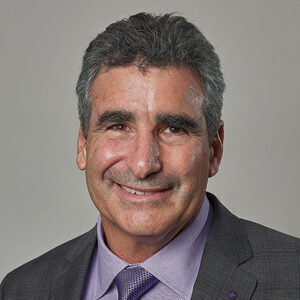
Thomas Christos Katsouleas (known as "TomKat" by students) is an American physicist, engineer, and academic administrator who serves as the 16th president of the University of Connecticut, a position he assumed in August 2019. He holds a professorship in the Electrical and Computer Engineering Department within the School of Engineering at UConn. Prior to his presidency, Katsouleas had a distinguished career in academia and research, with significant contributions to plasma physics and particle accelerator technology. Bachelor's degree from University of California, Los Angeles (1979) Ph.D. in Physics from UCLA (1984) Katsouleas's research primarily focuses on plasma-based particle accelerators, exploring how plasmas can be used to accelerate particles to high energies with potential to lower costs of future high-energy colliders. His work spans both laser-driven and beam-driven plasma accelerators, building on his undergraduate research in this field. He has made significant contributions to high-power light sources development, holding a 1998 patent for a device generating adjustable, high-power radiation pulses with applications in communications, advanced radar, medicine, and research. As a global advocate, Katsouleas has substantially impacted optics and photonics research, education, outreach, and entrepreneurship. Analysis of Katsouleas's recent publications reveals a clear trajectory toward extreme-field physics and nanoscale acceleration techniques. His work has evolved from traditional plasma wakefield acceleration to exploring plasmonic approaches capable of achieving Petavolts per meter gradients using structured semiconductors and nanomaterials. This represents a paradigm shift from gaseous plasmas to solid-state systems, opening new frontiers in particle acceleration. His research group has made significant contributions to understanding nonlinear plasma wakefield dynamics, beam loading effects, and stability issues in plasma accelerators, with recent focus on nanoplasmonic acceleration techniques that could revolutionize compact particle accelerator design. Katsouleas founded the NAE Grand Challenges Summit in Durham in 2009 and initiated Duke's Katsouleas NAE Grand Challenge Scholars Program in 2010, which challenges students to apply their knowledge to solve National Academy of Engineering-identified global challenges. His leadership extends to major collaborative research initiatives including the COMPASS (COMmunity Petascale project for Accelerator Science and Simulation) project, which represents a broad computational accelerator physics initiative. As UConn's president, he continues to champion innovation in both academic administration and scientific research, bridging the gap between fundamental physics and practical engineering applications.
Prof. Beatrice Belletti is a Full Professor of Structural Engineering at the Department of Civil Engineering and Environmental Engineering and Architecture (DICATeA), Faculty of Engineering, University of Parma, Italy. She has been a permanent academic staff member since 2003, progressing from Assistant to Associate and then Full Professor. Her work is deeply integrated with national and international research initiatives, including collaborations with TU Delft and EPFL, and contributions to Dutch safety guidelines for concrete structures. Education: PhD in Structural Engineering, Technical University of Turin (2001) Graduate School in Concrete Structures, Technical University of Milan (1997) Master’s in Civil Engineering, University of Parma (1995) Her research focuses on nonlinear finite element modeling of reinforced and prestressed concrete structures, particularly using her developed PARC and PARC_CL constitutive models. Key areas include shear and punching resistance, seismic performance of precast and historical buildings, structural robustness, and safety assessment of nuclear power plant structures. She has led the PRIN 2015 national project on failure mechanisms in existing RC structures. Her recent publications show a strong trend in analyzing complex structural behaviors under extreme loading, especially using advanced simulation techniques. Themes include biaxial shear, catenary action, compressive membrane effects, and dynamic soil-structure interaction, primarily applied to slabs, walls, and precast systems. Scientific Contributions: Principal Investigator of PRIN 2015 national research project Contributor to Dutch Guidelines for NLFEA of Concrete Structures Member of fib Commission 3 (Existing Concrete Structures) and Working Group on Shear Reviewer for top journals including Journal of Structural Engineering and Engineering Structures She has supervised over 50 master’s theses and several PhD students. She has also led numerous industry-funded research contracts with companies like Area Prefabbricati S.P.A. and public authorities. Her teaching includes advanced courses in seismic design, dynamic analysis, and structural modeling at both undergraduate and graduate levels. Laboratories and Research Groups: Her work is associated with the structural engineering research group at the University of Parma, involved in experimental testing and numerical simulation of concrete and masonry structures. She has collaborated with the Joint Research Centre (JRC) and NCREE on nuclear containment vessel studies.
Pamela Vocale is a fixed-term Researcher in the Department of Engineering and Architecture at the University of Parma, actively engaged in teaching and research related to applied physics and energy efficiency in architectural and urban contexts. She teaches courses such as Applied Physics for Architecture, Energy Efficiency for Sustainable Design, and Systems for Sustainable Building across multiple degree programs including Architecture Regeneration Sustainability and Sustainable Design for Food Systems. Research Interests: Her work centers on thermal engineering, particularly in microchannel heat transfer, building thermophysics, and sustainable energy systems. She investigates slip flow, viscous dissipation, and rarefied gas dynamics in microchannels, as well as solar-assisted air-conditioning and building energy retrofitting. These topics are crucial for advancing energy-efficient and environmentally responsive architectural design. The recent publications highlight a strong focus on microscale thermal systems and sustainable building technologies, with a trend toward numerical modeling and performance optimization under non-ideal boundary conditions. Her research bridges mechanical engineering principles with architectural applications, emphasizing sustainability and efficiency. Scientific Awards: No awards listed in the provided text. Advising and Grants: There is no information available regarding student advising or research grants. However, her collaborative publications suggest active research engagement with colleagues such as Morini G. L. and others in thermal and environmental engineering. Labs and Teams: While specific lab affiliations are not mentioned, her research on microchannels and building energy systems likely involves computational and experimental work within the Department of Engineering and Architecture at the University of Parma, possibly linked to thermal sciences or sustainable design research groups.
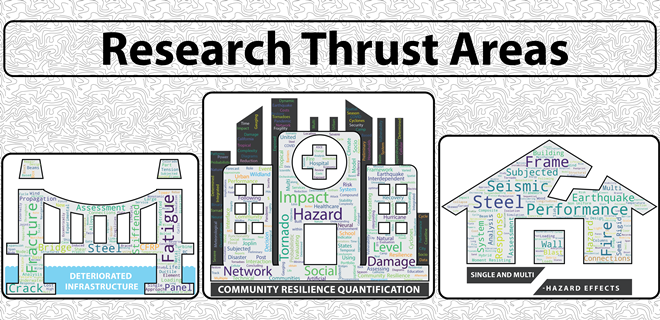
Hussam N. Mahmoud is the George T. Abell Professor in Infrastructure and Director of the Structural Laboratory at Colorado State University's Department of Civil and Environmental Engineering. He leads the SoPHIE Research Group , focusing on Sustainable and Resilient Infrastructure and Communities across three major research thrusts: community resilience quantification, multi-hazard structural performance, and deteriorated infrastructure lifecycle assessment. Key research areas include climate change adaptation , multi-hazard design , and life-cycle cost analysis for infrastructure subjected to earthquakes, wildfires, hurricanes, and climate-related deterioration. His work integrates machine learning (e.g., neural networks for wind damage prediction), hybrid simulation , and multi-resolution modeling of structural systems. Recent publications highlight interdependent recovery of healthcare/school networks , coastal community resilience to cyclones, and fatigue repair methodologies using fiber composites. Scientific Recognition Keynote speaker at international conferences (STESSA 2015, NEES Annual Meeting 2013) Invited to prestigious events: G7 One Health Summit , NASEM New Voices program Recipient of the George T. Abell Professorship, a distinguished academic honor Professional Leadership Chaired NASEM workshop on Natural Infrastructure Active in global collaborative frameworks through the InterAcademy Partnership Organizing committee member for triennial international academic conferences
Scott Frazier is an Associate Professor in the Department of Biosystems and Agricultural Engineering at Oklahoma State University (OSU), where he also serves as an Extension Specialist for Energy Management with OSU Extension. His work integrates teaching, applied research, and extension outreach focused on energy and resource management in agricultural and industrial sectors. PhD, Oklahoma State University MS, Oklahoma State University BS, Oklahoma State University Dr. Frazier's research spans energy management, renewable energy systems, life cycle assessment (LCA), irrigation efficiency, and decision science. His applied work emphasizes sustainability in agricultural processes, including biofuel technologies, water use efficiency, and energy conservation in farming operations. He has led numerous projects evaluating the performance of irrigation systems, particularly center pivots in western Oklahoma, and assessing the environmental and economic impacts of energy technologies. His recent scholarly output shows a strong focus on sustainability analysis, including LCA studies comparing landfilling and gasification for municipal solid waste, and evaluating biochar versus metal catalysts in syngas cleaning. He also explores synthetic data generation for agricultural loads using TimeGANs and conducts economic analyses of household solar and wind energy systems. These works reflect a consistent theme of using engineering and systems analysis to promote sustainable resource use. Professional Engineer (PE), National Society of Professional Engineers Certified Energy Manager (CEM), Association of Energy Engineers Dr. Frazier is actively involved in teaching courses such as Energy and Power in Biosystems Engineering, Experimental Methods, and doctoral research. He advises graduate students and teaches specialized topics including life cycle assessment and off-grid energy systems. His funded research includes projects on the Oklahoma Master Irrigator Program, hazardous materials transportation risk modeling (OK-EFRA), and irrigation pump diagnostics, supported by agencies such as the Oklahoma Department of Emergency Management, USDA, and USGS. He also leads extension efforts in residential and commercial energy use, biofuels, and sustainability.
Czesław Bywalski, PhD, is a researcher in the Department of Building Structures at the Faculty of Civil Engineering, Wrocław University of Science and Technology. His work focuses on structural performance, material behavior, and numerical modeling of concrete systems. Research Interests: His research spans experimental and theoretical studies on reinforced concrete, steel fibre reinforced concrete, prestressed tanks for granular materials and liquids, and numerical modeling of concrete structures. He investigates structural durability, shear behavior, creep effects, and reinforcement optimization in aging and industrial structures. Publication Trends: His recent publications (2017–2024) emphasize structural strengthening, nonlinear analysis, and advanced concrete materials. Key themes include the use of fiber-reinforced polymers (FRP/GFRP), steel fiber modification, and performance assessment of aging industrial structures. His work combines experimental testing with numerical simulations to improve design and safety standards. Scientific Contributions: While no formal awards are listed, his consistent publication record in journals like Przegląd Budowlany , Materials , and Engineering Structures reflects sustained scholarly activity. He frequently collaborates with researchers such as Mieczysław Kamiński, Maciej Kaźmierowski, and Michał Drzazga. Advising and Grants: There is no explicit information about students supervised or research grants obtained. However, his active research output suggests involvement in academic mentoring and potential grant-funded projects. Laboratories and Teams: As a member of the Department of Building Structures, he likely collaborates with structural engineering teams and laboratories focused on concrete testing, numerical simulation, and industrial infrastructure assessment at Wrocław University of Science and Technology.
Dr. Natalie Theeuwes is a Visiting Research Fellow in the Department of Meteorology at the University of Reading's Faculty of Science. Her research focuses on urban meteorology, particularly examining the complex interactions between urban environments and atmospheric processes. She actively contributes to advancing our understanding of urban climate systems through high-resolution modeling and observational studies. Her primary research interests include urban heat island effects, boundary layer meteorology in urban environments, urban climate modeling, and the interactions between urban structures and atmospheric processes. Dr. Theeuwes has made significant contributions to understanding how urban morphology influences local climate patterns, particularly regarding temperature distribution, cloud formation, and boundary layer dynamics in cities. Dr. Theeuwes' publication record demonstrates a consistent focus on urban meteorological phenomena, with recent work examining hectometric-scale weather modeling, nocturnal boundary layer interactions in London, and persistent cloud cover over mega-cities. Her research often involves collaborative international projects and contributes to practical applications in urban planning and climate adaptation strategies. She is actively involved in major urban climate initiatives including WUDAPT (World Urban Database and Access Portal Tools) and UMEP (Urban Multi-scale Environmental Predictor), which provide critical tools for urban climate research and applications.