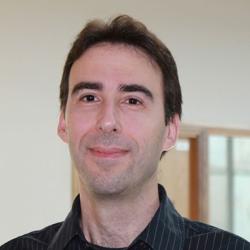
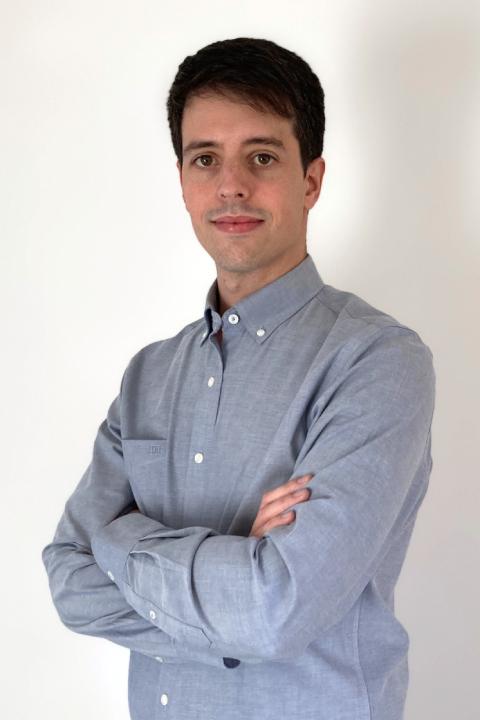
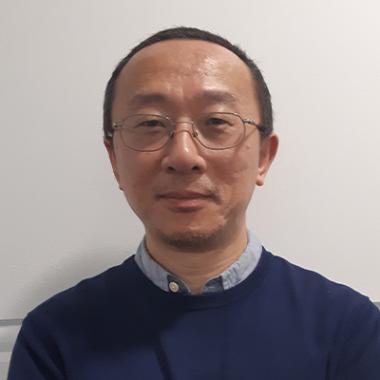
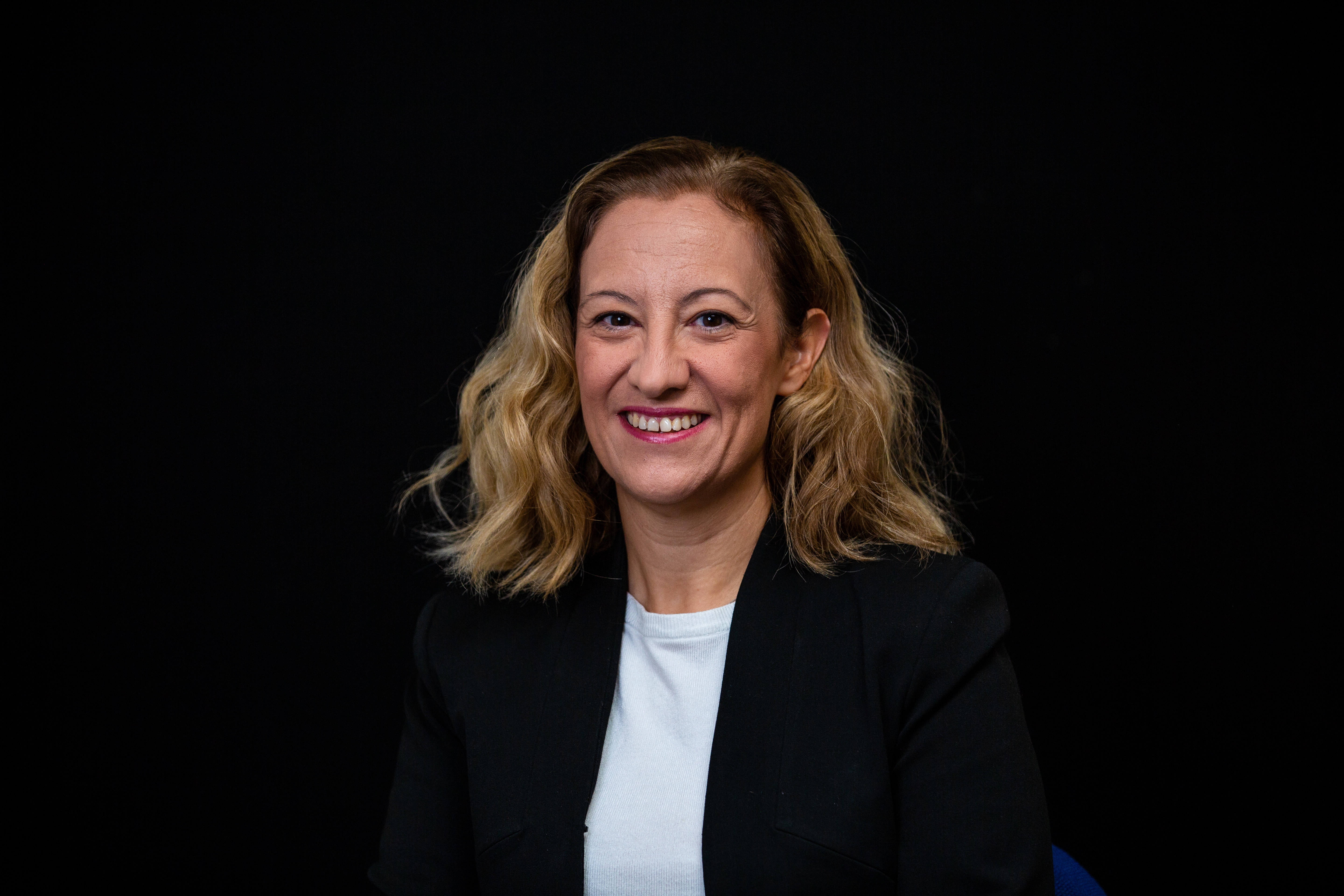
Dr. Jurgen Becque is an Associate Professor in Structural Engineering at the University of Cambridge's Department of Engineering. He specializes in cold-formed steel structures, stainless steel structural behavior, and stability analysis, with a focus on local-overall buckling interaction and innovative design methodologies. His work bridges experimental investigations with computational modeling and machine learning applications. Research Interests: Cold-formed steel structural systems Stainless steel column stability Local and overall buckling interaction Mechanics-based design optimization Machine learning for structural behavior prediction Recent publications demonstrate expertise in cross-sectional stability, connection mechanics, and composite systems like UHPC-confined stainless steel columns. His work addresses both monotonic and cyclic loading scenarios, contributing to Eurocode 3 design standards.
Susan Bradley is a Research Fellow at the Centre for Maternal and Child Health Research at City St George's, University of London . Her work focuses on equitable access to maternity care in low-income contexts, particularly sub-Saharan Africa, using interdisciplinary approaches integrating postcolonial theory and organizational studies. Education: PhD in Health Services Research (2018), City, University of London MSc in Global Health (2007), Trinity College Dublin PGCE in Secondary Science (University of Reading) BSc (Hons) in Biology (University of Sussex) Professional Experience: Research Fellow at City St George's (2018–present) Researcher at Trinity College Dublin (2007–2014) Researcher/writer at Columbia University Mailman School of Public Health (2010) Her research examines power dynamics, organizational culture, and community-based care models in maternal health. She has extensive fieldwork experience in Malawi, Tanzania, and Mozambique, specializing in qualitative data analysis and capacity-building initiatives. Recent publications focus on group antenatal care, respectful maternity practices, and health workforce dynamics in low-resource settings. Key findings from her work include: Community-making in group care enhances health literacy and belonging Socio-spatial dynamics influencing maternal care access Structural barriers affecting midwives' ability to provide quality care
Tim Ibell is a Professor in the Department of Architecture & Civil Engineering at the University of Bath, affiliated with the Centre for Climate Adaptation & Environment Research (CAER). He has held leadership roles including Head of Department, Associate Dean (Graduate Studies), and Associate Dean (Research). His career includes a Fulbright Distinguished Scholar Award (2002) and a stint as Sir Kirby Laing Professor of Civil Engineering at the University of Cambridge. He is a Fellow of the Royal Academy of Engineering and has received six best journal-paper awards. Education: Postdoctoral research at the University of Cambridge following industry experience. Joined Bath in 1997. Research focuses on sustainable construction materials, FRP reinforcement, and embodied carbon reduction in concrete structures. His work aligns with UN SDGs on climate action and sustainable cities. Key innovations include fabric-formed concrete structures and low-carbon pile foundations. Recent projects include EPSRC-funded studies on pile optimization, creative design teaching, and resource efficiency in industrial strategy. Collaborations span UK and international institutions. Awards include the Institution of Structural Engineers' recognition and Royal Academy of Engineering Fellowship. Advising and grants: Supervises PhD students in sustainable construction. Leads multi-million-pound research projects addressing embodied carbon and material efficiency. Labs/Teams: Directs CAER and collaborates with interdisciplinary teams on projects like ACORN (Automating Concrete Construction) and MEICON (Minimising Energy in Construction).
Dr Daniel Fosas de Pando serves as Chancellor's Fellow in Net Zero Buildings at the University of Edinburgh's School of Engineering, within the Department of Civil and Environmental Engineering and the Research Institute for Infrastructure and Environment. His work bridges building science, climate resilience, and humanitarian engineering with a focus on practical decarbonization strategies. Research interests center on net zero building retrofits at scale , indoor air quality optimization , and climate-adaptive design , particularly in vulnerable contexts like refugee shelters. His methodology combines computational modeling with field monitoring to address energy-carbon trade-offs under climate change constraints, emphasizing actionable decision-making tools for designers and policymakers. Publication trends reveal strong focus on building decarbonization pathways (38% of recent work), shelter environments for displaced populations (29%), and climate risk communication (16%). Key themes include scaling retrofit interventions, occupant behavior impacts, and simplified modeling for resource-constrained settings. Major recognitions include: Dufton Silver Medal (2022) for pioneering Active Buildings framework Best Paper Award Theme Energy (2022) Best Paper Award (2017) for building simulation research He leads the £36m InBuilt project decarbonizing non-domestic building portfolios, supervises PhD candidate M. Yildrim, and collaborates with international teams across Japan, Ethiopia, and the UK. His grant portfolio emphasizes scalable solutions for building stock management and climate resilience. Research is conducted through the Infrastructure and Environment Institute with strong ties to humanitarian engineering networks, producing open datasets on shelter thermals and building decarbonization pathways.
Professor Ruchi Choudhary is a Professor in Architectural Engineering at the University of Cambridge, Department of Engineering, within the School of Technology. She leads the Energy Efficient Cities initiative (EECi), a cross-disciplinary research project focused on strengthening the UK's capacity to address energy demand reduction and environmental impact in cities through research in building and transport technologies, district power systems, and urban planning. Her research interests span urban energy systems, building energy modeling, sustainable cities, geothermal energy systems, and data-driven energy modeling . She has pioneered work in digital twins for energy systems, urban subsurface thermal modeling, and building-integrated agriculture. Her research group develops numerical tools to improve energy efficiency of cities, with particular focus on modeling energy consumption of large building sets at multiple time and spatial resolutions. Analysis of her recent publications reveals a strong trend toward integrating machine learning with physics-based modeling for energy systems, with increasing emphasis on uncertainty quantification, digital twins, and value of information analysis for decision-making. Her work bridges the gap between theoretical modeling and practical urban implementation, with significant focus on city-scale geothermal potential, underground climate change impacts, and energy equity considerations. Professor Choudhary has supervised numerous PhD students who have gone on to prominent positions at institutions including UCL, University of Cambridge, BEIS, Arup, and various international universities. Her research group includes faculty members, research associates, graduate students, and international collaborators from institutions worldwide. Her current research focuses on two parallel investigations: one on using multi-scale multidisciplinary models to address energy use questions in the built environment, and second, on quantifying uncertainties in model outcomes. Current projects include integration of food production in urban environments, analysis of underground transport systems as energy sources, large-scale integration of ground source heat pumps, and distributed energy networks.
Andrew Rice is a Professor of Computer Science at the University of Cambridge's Department of Computer Science and Technology, and holds the Hassabis Fellowship in Computer Science. He is also the Director of Studies in Computer Science at Queens' College. His research focuses on programming languages, software engineering, and machine learning applications in software development. He leads projects like Isaac Computer Science and ALTA (Automated Language Teaching and Assessment), advancing adaptive learning technologies. His work includes static analysis tools such as Error Prone at Google, energy efficiency studies in computing infrastructure, and contributions to the Computing for the Future of the Planet initiative. His teaching emphasizes practical skill development through flipped classrooms and video lectures, earning him the 2014 Pilkington Prize for teaching excellence. He has held visiting roles at Google and collaborated on energy consumption research for mobile devices and data centers. His research spans systems, networking, and natural language processing, with a strong focus on applying computational methods to real-world challenges. Key Projects: Isaac Physics/Computer Science, ALTA, Error Prone Static Analysis Research Themes: Programming Languages, Machine Learning, Energy Efficiency Awards: Pilkington Prize (2014)
Anil Madhavapeddy serves as Professor of Planetary Computing at the University of Cambridge's Department of Computer Science and Technology and directs the Cambridge Centre for Carbon Credits (4C). A Fellow of Pembroke College, he integrates systems research with environmental conservation through the Computer Laboratory's Environment and Energy Group. His career spans industry leadership (NetApp, Citrix, Intel), academic appointments (Cambridge, Imperial, UCLA), and entrepreneurial ventures (XenSource, Unikernel Systems, Docker). Madhavapeddy earned his PhD at Cambridge's Computer Laboratory in 2006. His research bridges computational systems and planetary-scale environmental challenges, with deep expertise in open-source development (OCaml, Xen, Docker, OpenBSD) and technology strategy advising for organizations including Zededa, Tezos Foundation, and Tarides. His work centers on environmental computing and climate informatics, leveraging distributed systems and functional programming to develop sensing infrastructure for conservation. Recent projects focus on carbon credit systems, AI-driven biodiversity monitoring, and sustainable computing architectures that minimize ecological footprints while maximizing analytical capability. Analysis of his 2025 publications reveals a concentrated effort on AI-integrated conservation tools, privacy-preserving carbon accounting, and energy-efficient computing. Key themes include spatial networking for ecological data, LLM-enhanced evidence retrieval in conservation science, and novel metrics for extinction risk assessment—demonstrating computational innovation applied to urgent planetary boundaries. No scientific awards were documented in the source material. Madhavapeddy advises multiple technology firms on strategic development while leading the Cambridge Centre for Carbon Credits, though specific grant funding details remain unreported. He actively contributes to the Environment and Energy Group at Cambridge's Computer Laboratory and directs the interdisciplinary Cambridge Centre for Carbon Credits (4C). His open-source leadership spans critical infrastructure projects including OCaml, Xen, and Docker, fostering collaborative development communities that underpin modern cloud and container technologies.
Dr. Hongye Zhang serves as a Lecturer in Superconducting and Cryogenic Electric Machines at the School of Engineering, University of Edinburgh, while maintaining a Visiting Research Fellow position at the University of Manchester. He actively contributes to the European Society for Applied Superconductivity (ESAS) as a Board Member and chairs the international HTS 2026 workshop. His educational foundation includes: BSc and MSc in Electrical Engineering from Xi’an Jiaotong University (2015, 2018) Diplôme d’ingénieur (MEng) from École Centrale de Lyon (2018) PhD in Applied Superconductivity from the University of Edinburgh (2021) Dr. Zhang’s research centers on decarbonizing transport through superconducting/cryogenic electric machines for hydrogen-powered aircraft, integrating artificial intelligence with superconductor technology and cryogenic techniques. His work targets net zero emissions by developing high-power-density propulsion systems that leverage hydrogen energy and advanced numerical modeling of superconductors. Analysis of his 2022-2025 publications reveals dominant themes in superconducting machine design for wind energy and electric aviation, with significant contributions to loss mitigation, flux pump technology, and trapped field magnet applications. His research bridges fundamental superconductor characterization with practical system integration for renewable energy. Recognized with the 2021 IEEE Council on Superconductivity Graduate Study Fellowship, his professional engagements include: Early Career Editorial Board Member for Elsevier’s Superconductivity journal Technical Editor for IEEE Transactions on Applied Superconductivity Program Committee Member for SMT 2023 He leads critical research within the £54-million H2GEAR project developing hydrogen-electric aircraft propulsion, while teaching Power Engineering 2 and Electrical Machines courses. His advisory roles span doctoral supervision and industry collaboration through Energy Systems research institute. Based at the University of Edinburgh’s Faraday Building, Dr. Zhang directs a research group focused on hydrogen energy applications and superconducting machine testing, with strong ties to the H2GEAR consortium and ESAS working groups.
Ian Ewart is an Associate Professor at the University of Reading's School of the Built Environment, serving as Head of Construction and Engineering Management and Research Group Lead for Organisation, People and Technology. He chairs the Research Ethics Committee since 2016 and supervises undergraduate/postgraduate dissertations. His academic journey spans engineering and anthropology: DPhil Social and Cultural Anthropology, University of Oxford, St Hugh's College (2007-2012) MSc Material Anthropology and Museum Ethnography, University of Oxford, St Hugh's College (2006-2007) BA (Hons) Archaeology and Anthropology, University of Oxford, Harris Manchester College (2003-2006) Diploma in Management Studies, University of the West of England (1990-1994) BEng (Hons) Mechanical Engineering, Staffordshire University (1983-1987) Ewart's research integrates ethnographic methods with digital technology studies, examining human-technology interactions in construction and domestic settings. His work bridges engineering practice and social anthropology, focusing on skill transmission, sustainable design, and multisensory experiences in virtual environments. Publications from 2025-2013 reveal a dominant trajectory in digital twins for socio-ecological sustainability, VR-based occupant behavior prediction, and HBIM for heritage conservation. The corpus demonstrates consistent cross-disciplinary innovation, merging archaeological reconstructions with healthcare applications while maintaining anthropological rigor. Key recognition: ESRC Future Research Leader fellowship (2013) for Designing Healthy Homes project He supervises PhD candidates like Afolabi Dania (Nigerian sustainable construction) and Joanna Hull (Heritage BIM), leveraging ESRC funding for ethnography-VR health studies. His grants emphasize participatory design and real-world impact assessment in built environments. Leaders the Organisation, People and Technology research group, developing multisensory Roman town reconstructions with sound/smell integration to advance archaeological and architectural experience modeling.
Professor Omer Rana serves as Professor of Performance Engineering and International Dean for the Middle East at Cardiff University's School of Computer Science and Informatics. He also holds the prestigious position of Cross-Council Research Director for the UK National Edge AI Hub, demonstrating his leadership in national research initiatives. Previously, he led the Complex Systems research group and served as Dean of International for the Physical Sciences and Engineering College at Cardiff University. Professor Rana is a Fellow of both the Learned Society of Wales and the Higher Education Academy, and serves on the Advisory Board of the Welsh Ethnic Minority Professors Initiative (WEMPI). His research expertise centers on the intersection of intelligent systems and high performance distributed computing, with particular focus on applying intelligent techniques to resource management in distributed systems. His scholarly contributions span edge computing, cloud computing, Internet of Things (IoT), artificial intelligence, cybersecurity, federated learning, privacy-preserving systems, and sustainable computing. Professor Rana has published extensively in top-tier journals and conferences, with recent work emphasizing practical applications in industrial automation, smart buildings, and sustainable computing solutions. Professor Rana's publication record demonstrates consistent leadership in edge computing and distributed systems research, with a growing emphasis on practical implementations across diverse application domains. His work bridges theoretical computer science with real-world technological challenges, particularly in industrial automation, smart environments, and sustainable infrastructure. Fellow of the Learned Society of Wales Fellow of the Higher Education Academy Professor Rana actively supervises postgraduate students and has secured significant research funding for projects related to edge computing, IoT, and distributed systems. His international collaborations span Europe, Asia, and the Middle East, reflecting his global influence in the field. He serves as a sought-after keynote speaker, workshop chair, and panel moderator at major international conferences including IEEE/ACM Utility and Cloud Computing (UCC) and IEEE Edge Computing. He leads multiple research initiatives, most notably as Cross-Council Research Director for the UK National Edge AI Hub, where he shapes national research directions in edge computing and AI. His work has practical applications across industrial automation, smart building management, electric vehicle infrastructure, and sustainable computing solutions.
Cangbai Wang is a Professor of Migration, Heritage and Language at the University of Westminster and co-founder of HOMELandS (Hub On Migration, Exile, Languages and Spaces). He holds a PhD in Asian Studies from the University of Hong Kong (2003) and previously worked as a Post-doctoral Fellow/Honorary Assistant Professor at the University of Hong Kong and Visiting Lecturer at City University of Hong Kong. Academic focus: Transnational migration, Chinese diasporas, cultural heritage Co-Director of HOMELandS since 2014 (elevated to Research Centre in 2023) External Examiner for 20 institutions including University of Birmingham (2024), University of Cambridge (2020), and Nanyang Technological University (2024) His research explores the intersection of migration and material culture , emphasizing how diasporic communities negotiate identity through heritage practices. Recent work examines museum representations of Chinese diasporas and language dynamics in multicultural London. He has led the AHRC-funded Global Diasporic Chinese Museums Network Initiative (2023-2025) and contributed to policy discussions on diaspora engagement with Chinese municipal governments. Key publication: Museum Representations of Chinese Diasporas (Routledge 2021) and Negotiating Identities, Language and Migration in Global London (Multilingual Matters 2024). Supervised PhDs include Denise Kwan’s The talking of objects: migratory experiences and Chinese women in UK (2020) and Xiao Ma’s ongoing London Chinatown: heritage making and diasporic identities . Active in academic leadership: Co-editor: Routledge Research on Museums and Heritage in Asia Editorial board: Social Transformations in Chinese Societies (since 2024) International editorial board: Chinese Overseas Review (since 2020) UKRI FLF Peer Review College member
Jo Wood is Professor of Visual Analytics in the Department of Computer Science at City, University of London, where she has been employed since January 14, 2000. Her work bridges computer science, geographic information science, and human-computer interaction, focusing on innovative methods for visualizing complex spatial and behavioral data. Her research interests center on visual analytics , information visualization , and geovisualization , with applications in transportation, public health, crisis response, and citizen science. She investigates how interactive visual interfaces can support exploratory data analysis, decision-making, and storytelling, particularly through small multiples, faceted views, and sketch-based rendering techniques. The trends in her recent publications reflect a consistent focus on user-centered design , spatial data abstraction , and interactive exploration of multivariate datasets. Her work often integrates real-world behavioral data such as GPS tracks, cycling patterns, and crowd-sourced information to build meaningful visual narratives and support analytical reasoning. Throughout her career, Jo Wood has contributed significantly to the advancement of visual analytics through high-impact publications in top-tier venues such as IEEE Transactions on Visualization and Computer Graphics and Computer Graphics Forum. Her collaborations with researchers like Jason Dykes and Aidan Slingsby highlight her role in a vibrant research community. She has supervised numerous research projects and mentored students in visualization and geospatial analytics, though specific names are not listed in the provided text. Her work has been supported by various research grants, particularly in domains involving urban mobility, energy modeling, and crisis informatics, though grant details are not specified here. Jo Wood has also contributed to the design of visual analytics systems for applications including disease spread modeling, bicycle-hire scheme monitoring, and persuasive technology for health and leisure, demonstrating a strong commitment to impactful, interdisciplinary research.
Professor Irem Dikmen is a leading academic in Construction Engineering and Management at the University of Reading, where she serves as School Director of Internationalisation in the Chancellor's Building. Her research integrates engineering, management, and information sciences to advance construction project risk management, particularly focusing on climate resilience, digital technologies, and social value in infrastructure systems. PhD, MSc, and BSc in Civil Engineering from Middle East Technical University Her work leverages systems thinking, artificial intelligence, and digital tools to develop decision-support frameworks for megaprojects and climate adaptation. Recent publications highlight innovations in NLP contract analysis, energy performance ontologies, and risk visualization techniques. She supervises students on topics spanning IoT lifecycle management, ESG risks, and NLP defect detection. Key collaborations include the Climate and Finance Research Cluster and Walker Institute , with contributions to digital construction technologies and sustainability risk assessment. Teaching modules include Construction Risk Management, Economics, and Business Organisation.
Professor John L Provis is a leading expert in cement materials science at the University of Sheffield 's School of Chemical, Materials and Biological Engineering. He also holds a Visiting Professor position at Luleå University of Technology's Building Materials division. PhD in Chemical Engineering (University of Melbourne) 2013 RILEM Robert L'Hermite Medal 2015 Honorary Doctorate from Hasselt University Editor-in-Chief of Materials and Structures His research focuses on alkali-activated materials and geopolymer binders for sustainable construction, with key themes in chemical speciation , waste immobilization , and novel cement systems for nuclear applications. Recent publications highlight 15 representative articles spanning topics: Radiation-resistant cementitious matrices Geopolymer synthesis for heavy metal containment Thermodynamic modeling of binder systems Corrosion mechanisms in alkali-activated concretes Low-carbon cement alternatives Microstructural analysis via advanced spectroscopy Scientific Recognition : RILEM Robert L'Hermite Medal recipient Hasselt University Honorary Doctorate Editorial leadership roles in major journals Contact: j.provis@sheffield.ac.uk | Sir Robert Hadfield Building, University of Sheffield
Dr Shu-Ling Lu is an Associate Professor at the University of Reading , serving as Director of the MSc Project Management Programme and a Member of Senate . Her research spans Innovation Management , Quality Control , and Net Zero Transitions in construction, alongside Heritage Building Integration and Gender Dynamics in built environment sectors. Her academic journey includes a PhD , MSc in Construction Engineering , and a Diploma in Architectural Engineering , all from institutions in Taiwan and the UK, complemented by a Postgraduate Certificate in Higher Education Practice from the University of Salford. Research Interests : Innovation in construction, quality management, heritage conservation, net-zero transitions, gender equity, and system dynamics applications. Article Trends : Focus on defects analysis , heritage integration , gender dynamics , system dynamics , and net-zero strategies across 15 recent publications. Scientific Awards : Fellow of the Chartered Institute of Building (FCIOB) Fellow of Higher Education Academy (FHEA) Full member, Association for Project Management (MAPM) BSI Committee Participation (Quality Management Standards) Supervision & Grants : Mentored 7 PhD students and led/co-led projects funded by Natural Environment Research Council (NERC) , EPSRC , and COST , with total grants exceeding £500,000.