Dr. Mehdi Amirkhani is a Senior Lecturer at the University of South Australia's UniSA Online, specializing in building environmental technologies, net-zero energy solutions, and sustainable design. With a PhD in architecture, he has over 120 professional projects and expertise as an accredited Home Energy Efficiency Assessor. His teaching focuses on energy estimation, acoustics, and computational simulation, bridging theory and practice. Research interests include indoor environmental quality, building retrofitting, and zero-energy design. He co-leads the Zero Energy Mass Custom Home (ZEMCH) Network Australia and is a Full Member of Design Matters National. Awards include an Associate Fellowship from the UK Higher Education Academy. Notable achievements include second prize in a national design competition (2021) and organizing international events like the 'Shaping Sustainable Futures' webinar (2024). He has authored/co-authored multiple peer-reviewed articles and edited books on sustainable building technologies.
Professor Elaine Murtagh is a faculty member at the Department of Physical Education & Sport Sciences at the University of Limerick. She serves as Course Director of the BSc Physical Education program and contributes to research centers PEPAYS Ireland and Physical Activity for Health. Her work aligns with UN Sustainable Development Goals 3 (Good Health) and 4 (Quality Education). PhD from Ulster University Postgraduate Certificate in Physical Education from Ulster University Specialist Diploma in Teaching, Learning and Scholarship from University of Limerick Her research focuses on: Physical Activity Promotion for children and adults; Gender-Responsive Pedagogy in teacher education; 24-Hour Movement Behaviors and metabolic health; Social Justice in Education ; and Program Evaluation for health initiatives. She has co-authored over 70 peer-reviewed articles. Recent publications emphasize: Global BMI Trends (2024), Play-Based Learning in Palestine (2025), Teacher Socialization (2025), and Physical Literacy Frameworks (2024). Her work spans 2002–2025 with 83 total outputs. Scientific Recognition : Led Athena SWAN Bronze Institutional Award at Mary Immaculate College She leads projects including: SOLE MATES (family exercise), Learning in Motion (teacher pedagogy), and SRASI (social justice education). Her research network includes collaborations across Europe, the Middle East, and global health consortia.
Rasmus Lund Jensen is an Associate Professor and Head of the Study Board of Civil Engineering at Aalborg University's Department of the Built Environment, within The Faculty of Engineering and Science. His primary research focuses on building systems, energy efficiency, indoor environmental quality, and sustainable design. He leads the Energy and Buildings Research Group and actively contributes to projects like HEATWISE and ReMaBrick, addressing thermal management and recycled materials in construction. Research interests include HVAC systems optimization, fault detection in building automation, and holistic assessment tools for indoor environmental quality. He has authored over 335 publications and secured multiple grants, including leadership roles in EU-funded initiatives. Notable awards include the Best Paper Award at CISBAT 2021 and the 2020 RM4L2020 award. His work emphasizes bridging academic research with practical industry applications, particularly in energy-efficient and climate-resilient building design. Recent projects involve improving energy pile foundations, optimizing diffuse ceiling ventilation, and developing datasets for occupancy and energy consumption analysis. Collaborations span academia and industry, fostering innovations in smart building technologies and sustainable materials.
Dr. Luo Zhiwen is a Professor in the Department of Construction Management and Engineering within the School of the Built Environment at the University of Reading. With an extensive publication record spanning two decades, his research focuses on the critical intersection of urban climate science, building physics, and environmental engineering. His work has significantly advanced our understanding of urban heat island effects, building energy performance under climate change, and ventilation systems for improved indoor air quality. Dr. Luo's research interests encompass urban climate science, building energy efficiency, indoor air quality, computational fluid dynamics modeling, urban heat island mitigation, ventilation systems design, sustainable building practices, and atmospheric boundary layer dynamics. His work frequently addresses pressing global challenges including climate change adaptation in urban environments, pandemic-related airborne disease transmission, and sustainable energy solutions for the built environment. Analysis of Dr. Luo's recent publications reveals a strong focus on urban climate dynamics and building performance under changing environmental conditions. His work spans multiple disciplines including building engineering, environmental health, atmospheric science, and sustainable energy. Key research themes include urban heat island mitigation strategies, ventilation systems for infection control (particularly during the pandemic), and the impacts of climate change on urban energy systems. His research employs sophisticated computational modeling techniques alongside empirical field studies to address complex urban environmental challenges. Dr. Luo has secured significant research funding for projects related to urban climate, building energy performance, and air quality. His work has influenced building design standards and urban planning practices, particularly regarding ventilation requirements and urban heat mitigation strategies. He has collaborated extensively with international research teams on major projects examining urban climate dynamics across different geographical contexts. Dr. Luo leads a research group focused on urban environmental modeling and building performance analysis. His team utilizes advanced computational fluid dynamics (CFD) techniques, field measurement campaigns, and building energy modeling to investigate complex interactions between the built environment and atmospheric processes. Current research directions include climate-adaptive building design, urban metabolism analysis, and the development of next-generation urban climate models that incorporate detailed building energy dynamics.
Henrik N. Knudsen is an Emeritus Associate Professor at Aalborg University, affiliated with the Department of the Built Environment within the Faculty of Engineering and Science. His research focuses on indoor environmental quality, energy efficiency in buildings, and occupant behavior in residential and commercial settings. He has led or participated in over a dozen research projects, including international collaborations like IEA EBC Annexes. Key contributions include developing tools like the IEQ-Compass for holistic indoor climate evaluation and studies on occupant behavior's role in energy performance gaps. Knudsen has published extensively, with over 138 articles and datasets, and has been recognized with awards such as the ISIAQ Academy of Fellows membership and a Best Poster Award. His work integrates engineering, environmental science, and social research to address challenges in sustainable building design, energy retrofitting, and occupant well-being. Projects include analyzing ventilation systems, low-energy housing performance, and user engagement in energy management. Knudsen also contributes to policy through initiatives like the Danish Building Class 2020 evaluation and media outreach on indoor climate issues. Notable activities include coordinating international research networks, advising on building certification schemes, and delivering public lectures on ventilation and indoor climate. His research emphasizes practical solutions for improving building performance while enhancing occupant comfort and sustainability.
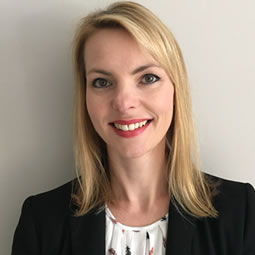
Madeline Carter is a Senior Lecturer at Northumbria University since 2018, specializing in Occupational and Organisational Psychology. Her research focuses on workplace bullying in healthcare, medical education quality, and professional training interventions. She holds a BA (Hons), MA, and PhD from the University of Cambridge and Rice University respectively. Previously, she served as Associate Director at Durham University’s Centre for Medical Education Research, Senior Research Associate at Newcastle University’s School of Medical Education, and Research Associate at the Northern Deanery. Her work is funded by organizations like the NHS, National Institute for Health Research, and General Medical Council. Her research employs organizational psychology approaches to address healthcare workplace challenges, particularly bullying interventions and feedback systems in surgical training. Recent articles explore employee silence in healthcare leadership and cross-cultural analysis of workplace dynamics across 33 countries. Madeline supervises PhD student Nicole Williams (2024). She has contributed to policy development through collaborative leadership frameworks and bullying reduction strategies in healthcare systems.
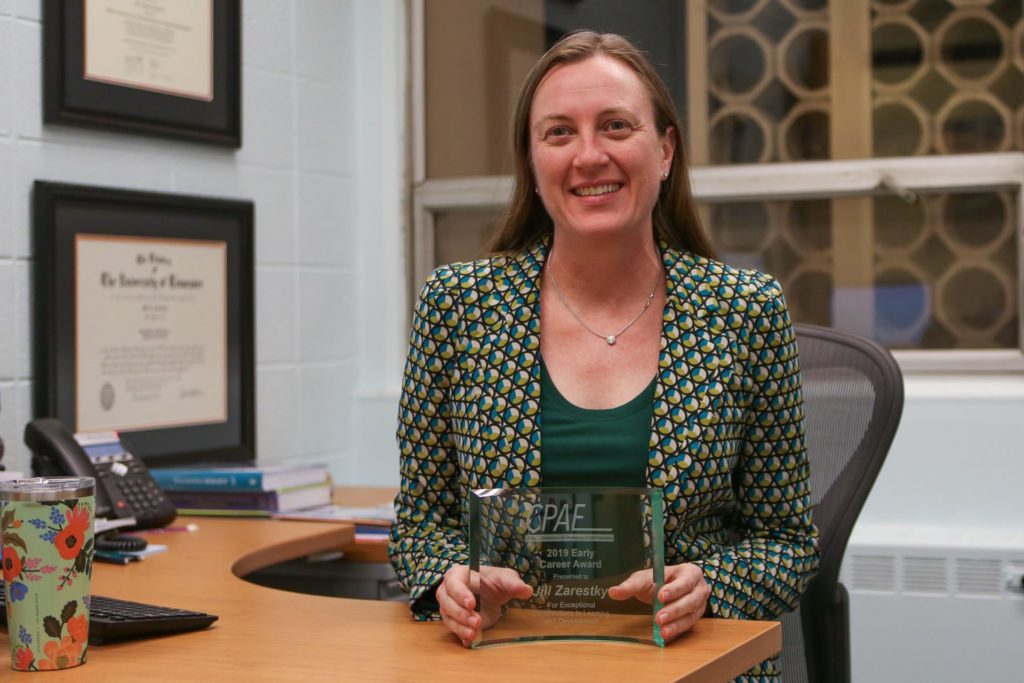
Dr. Jill Zarestky is an Associate Professor in the Adult Education and Training program at Colorado State University's School of Education, with an affiliate appointment in the Department of Mathematics, School of Global Environmental Sustainability. She holds a Ph.D. in educational human resource development from Texas A&M University and a master’s in computational and applied mathematics from the University of Texas at Austin. Her research focuses on STEM education for adult learners, conservation, sustainability, and nonformal learning through organizations like NGOs and biological field stations. She has secured grants from NSF, USDA, and philanthropic entities, leading projects such as the NSF-funded study on STEM learning at field stations and a bee monitoring initiative with CSU’s College of Health and Human Sciences. Dr. Zarestky’s service contributions include roles as Secretary of the American Association of Adult and Continuing Education (2014–2018), editor for New Horizons in Adult Education and Human Resource Development , and leadership in redesigning AAACE’s governance structure. Her awards include the 2019 Early Career Award from CPAE and the 2020 Richard A. Swanson Research Excellence Award. She emphasizes bridging education and real-world challenges, such as climate literacy and equitable access to STEM resources. Current priorities include expanding community science projects, such as native bee tracking, and advancing HRD’s role in global sustainability goals. Her work integrates pedagogical innovation with social justice, addressing barriers for marginalized learners and promoting inclusive workforce development.
Marja-Kristiina Lerkkanen is a Professor and Vice Head of Department at the Department of Teacher Education , part of the Faculty of Education and Psychology at the University of Jyväskylä. Her research focuses on early childhood education, particularly on factors influencing children's academic learning, motivation, and teacher-student interactions. She leads interdisciplinary projects like the Right to Belong and EduRESCUE , addressing loneliness, resilience, and crisis preparedness in education. She is also involved in the EDUCA flagship and EarlyMath initiatives, exploring mathematical development and educational interventions. Her research spans developmental trajectories of literacy and numeracy skills, teacher well-being, and the impact of educational policies such as the two-year pre-primary education trial in Finland. She employs mixed-methods approaches, including longitudinal studies and mobile eye-tracking to analyze classroom dynamics. Key contributions include studies on bilingual education, pandemic-related challenges in education, and predictive models for academic outcomes. Lerkkanen collaborates with international teams and has authored/co-authored over 100 publications since 2022, focusing on teacher resilience, student engagement, and systemic educational reforms. Her work emphasizes practical solutions to enhance educational equity, classroom environments, and crisis resilience in schools.
Yusuf Arayici is a Professor in the Department of Architecture and Built Environment at Northumbria University, serving as Deputy Head of Department and Head of Apprenticeship Programmes. His research focuses on Building Information Modelling (BIM), sustainability, AI-driven heritage conservation, and healthcare facility management. He has led £10M+ research projects and supervised 16 PhD students. Education: PhD in Computer Aided Engineering (2004) MSc in Computer Aided Engineering (2001) BEng in Engineering (1999) Chartered Construction Manager (MCIOB, 2015) Teaching and Learning PGCert (2008) Research Interests: BIM implementation in construction and heritage projects AI applications in facility management Lean construction processes Energy-efficient building design 3D printing and smart technologies in construction Key Articles: Recent work includes AI-driven cost estimation systems, BIM-based healthcare analytics, and point cloud segmentation for heritage buildings. His research bridges digital transformation with practical industry needs. Grants & Students: Supervised 16 PhD students, including Tugçe Baçnak (Cognitive Digital Twins in Healthcare) and Aleksander Gil (AI for Cultural Heritage Modelling). Led major grants totaling £10 million in BIM and sustainability research. Labs/Teams: Involved in interdisciplinary teams focusing on smart cities, sustainable communities, and AI integration in construction workflows.
Dr. Jovana Kovacevic: Academic and Professional Profile Dr. Jovana Kovacevic is an Associate Professor and Food Safety Extension Specialist at Oregon State University’s Food Innovation Center (FIC), affiliated with the Department of Food Science and Technology. Her primary roles include leading food safety research, extension programs, and training initiatives focused on Listeria monocytogenes, foodborne pathogens, and compliance with the Food Safety Modernization Act (FSMA). Affiliations Principal Investigator, Kovacevic Food Safety Outreach & Research Program (FSORP) Director, Western Regional Center to Enhance Food Safety Director, FIC Food Safety Program Member, International Association for Food Protection (IAFP), American Society for Microbiology (ASM), and more. Education B.Sc. in Food Science and Technology, University of Alberta (2005) M.Sc. in Food Microbiology, University of Alberta (2007) Ph.D. in Food Science, University of British Columbia (2014) Research Focus Dr. Kovacevic’s research bridges molecular microbiology and food safety, emphasizing: Pathogen survival mechanisms (e.g., Listeria monocytogenes) Antimicrobial resistance in food processing environments Sanitizer efficacy and cross-resistance FSMA compliance training for the food industry Key Achievements Her work has led to: Development of the Listeria HELPR initiative for pathogen prevention Enhanced FSMA training curricula with interactive learning modules International collaborations, including USAID-funded projects in Serbia targeting small-scale dairy processors Over 50 peer-reviewed publications on food safety and microbiology Awards & Recognition Notable awards include: OSUEA Newer Faculty Award (2021) OSU Promising Scholar Award (2020) IAFP Developing Scientist Award (2015) Teaching & Mentorship She mentors graduate students and advises apprentices through programs like the Saturday Academy. Current students include: Zoe Andersen (M.S. candidate, Food Science) Taylor Johnson (M.S. candidate, Food Science) Outreach & Service Her service contributions span: Editorial roles for journals like Comprehensive Reviews in Food Science Committee work for IAFP and the Alliance for Listeriosis Prevention Leadership in the Oregon Farm Food Safety Team Labs & Teams She leads the Kovacevic Lab at the FIC, focusing on translational research and industry partnerships to address food safety challenges in produce and dairy sectors.
Dr. Natalia Sokół is an Assistant Professor at the Department of Urban Design and Regional Planning under the Faculty of Architecture at Gdańsk University of Technology. She holds a Master’s in Light and Lighting from UCL Bartlett and MAs in Interior Architecture and Art Education from Poznań Academy of Fine Arts. Her research focuses on architectural daylighting, including daylight metrics, human-centric lighting design, and urban lighting strategies. Key projects include the NLITED educational initiative (EU-funded) and the DAY.KE cross-European daylight knowledge survey. She has led studies on window view assessments, home office lighting conditions, and VR applications in lighting design. Dr. Sokół teaches courses on daylight analysis, interior design, and urban planning, with a focus on integrating sustainable design principles. She coordinates collaborative projects like the RiConnect urban infrastructure workshop and manages the Lampa research infrastructure across multiple faculties.
Michael Renzler is currently a Lecturer at MCI – Die unternehmerische Hochschule, specializing in Smart Building Technologies. Previously, he held roles such as Senior Scientist (2020–2023), PostDoc (2016–2020), and Research Assistant (2013–2016) at the University of Innsbruck's Institutes for Mechatronics and Ionenphysik. His research focuses on antenna design, structural health monitoring, wireless sensor systems, and nanotechnology. He earned his PhD in Physics (2016), MSc (2013), and BSc (2010) from the University of Innsbruck, following an Electronics diploma (2006). Key research areas include evolutionary optimization of antennas, IoT integration, and material characterization using helium nanodroplets. His work spans disciplines like electrical engineering, computational chemistry, and sensor technology. Notable contributions include developing a portable sensor system for crime prevention and a smart bed insert for elderly care monitoring. He has been awarded the Eduard-Wallnöfer-Preis für Technik und Wissenschaft (2023) and has undergone extensive training in third-party funding management and teaching excellence. Renzler has contributed over 30 peer-reviewed articles, with recent publications emphasizing pixelated antenna design, structural health monitoring, and ultra-low-temperature chemical reactions. His teaching spans physics fundamentals, digital technology, and electromagnetic compatibility at the University of Innsbruck (2016–2024). He also served as a student representative (2011–2013) and actively participates in academic associations.
Dr. Ahmed Zoha is a Senior Lecturer at the University of Glasgow specializing in Autonomous Systems & Connectivity. He holds a PhD (2014) and MSc (Communication Engineering) from the University of Surrey and Chalmers University. His research focuses on AI-driven wireless systems, 5G/6G networks, healthcare analytics, and energy monitoring. He has led projects like the $1.45M QSON initiative and contributed to high-impact projects including the NHS UK-funded TIHM. Dr. Zoha has authored over 40 peer-reviewed publications and received UK Exceptional Talent recognition. He serves on IEEE technical committees and organizes conferences. Education: PhD in Electrical & Electronics Engineering, University of Surrey (2014) MSc in Communication Engineering, Chalmers University (Sweden) Awards: Two IEEE Best Paper Awards UK Exceptional Talent Endorsement (Royal Academy of Engineering) HSJ 2018 Award (NHS TIHM Project) Research Interests: AI in 5G/6G networks Healthcare analytics & wearable sensors Federated learning & privacy Smart energy systems Radar signal processing Recent work emphasizes federated learning applications in smart grids, mmWave networks, and healthcare. His research bridges machine learning with real-world wireless systems to address societal challenges in energy, healthcare, and connectivity.
Susilawati Connie is a Professor of Property and Built Environment at Queensland University of Technology (QUT), specializing in sustainable housing, public asset management, and climate change adaptation. Her research focuses on urban development, disaster resilience, and policy analysis, particularly in Southeast Asia. She has collaborated globally on projects addressing affordable housing, risk management, and environmental sustainability. PhD in Property (2009), QUT Leading over 129 publications spanning 20 years Her work integrates interdisciplinary approaches to address challenges in housing policy, infrastructure resilience, and community-driven solutions for natural disasters. Recent articles emphasize data-driven strategies for natural hazard warnings and urban megaproject valuation. She has contributed to policy frameworks for asset optimization in Indonesia and Jakarta’s capital relocation.
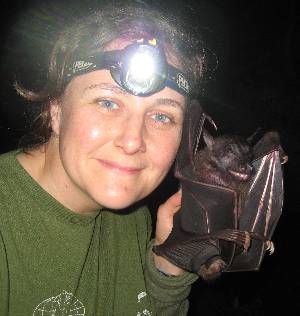
Tigga Kingston is a Professor in the Department of Biological Sciences at Texas Tech University, within the College of Arts and Sciences. She leads the Kingston Lab , a research group dedicated to bat ecology, conservation, and One Health, with a geographic focus on Southeast Asia and Africa. She is actively involved in international collaborations, including the IUCN SSC Bat Specialist Group and GBatNet. PhD in Ecology, Behavior and Evolution, Boston University (2001) MA in Ecology, Behavior and Evolution, Boston University (1999) BSc(Hons) in Zoology, Royal Holloway University of London (1993) Her research focuses on bat diversity, speciation, community ecology, and conservation biology , particularly in tropical and fragmented ecosystems. She integrates molecular, acoustic, and ecological data to understand how habitat degradation, climate change, and human activities impact bat populations. Her work emphasizes One Health , examining pathogen spillover, antimicrobial resistance, and human-wildlife conflict. Recent publications (2024) highlight her leadership in field hygiene guidelines , online bat trade , rabies vaccination for researchers , and emotional responses to bats during the pandemic . Her research spans from molecular dietary analysis to global conservation policy. Ecological countermeasures to prevent zoonotic spillover Conservation of cave-roosting bats Impacts of land-use change on bat assemblages Integrative microbiome assembly in forest bats Human dimensions of bat conservation She has received awards including the Vernon Bailey Award , the Luis F. Bacardi Bat Conservation Award , and the second-best presenter award at an international bat conference. She has mentored numerous students and postdocs, many of whom have gone on to lead impactful research. Dr. Kingston is actively involved in grant-funded research (e.g., NSF), educational outreach (e.g., K-5 bat education programs), and capacity building for early-career researchers in Africa and Southeast Asia. She leads field workshops, develops conservation strategies, and promotes international collaboration in bat research. Her lab, the Kingston Lab , includes researchers working on projects in Malaysia, Puerto Rico, Nigeria, and Myanmar. She collaborates with disease ecologists, geneticists, and policy experts to address pressing conservation challenges through multidisciplinary science.