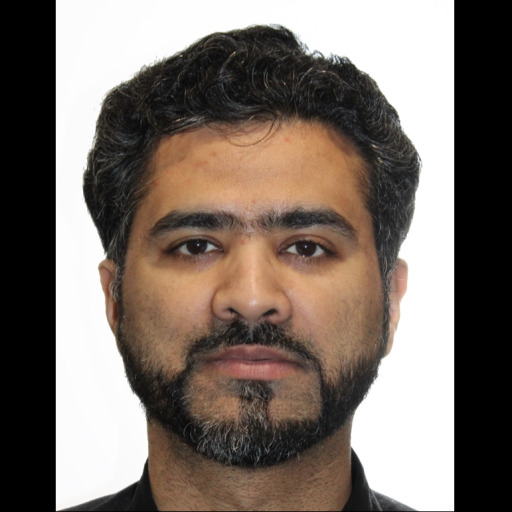
Maria Papathoma-Köhle is an Associate Professor at the Institute of Alpine Natural Hazards , University of Natural Resources and Life Sciences, Vienna. She holds a PhD in Tsunami Vulnerability Assessment from Coventry University (UK) and has held roles as Academic Coordinator of the MSc 'Risk Prevention and Disaster Management' at University of Vienna. Her research focuses on natural hazard vulnerability , particularly wildfire and flood risks in alpine regions, with methodological expertise in indicator-based vulnerability assessment and physical vulnerability indices . Education: PhD in Natural Hazards (Coventry University, UK) MSc in Environmental Management (University of Durham, UK) Geology Degree (University of Athens, Greece) Research: Specializes in wildfire vulnerability indices, flood risk modeling, and climate change adaptation frameworks. Developed the Physical Vulnerability Index (PVI) for buildings and contributed to EU-funded projects like FLOODLABEL and EXTEND. Awards: Elise Richter Scholarship (2016) Back to Research Grant (2012) Young European Scientist Award (2002) Projects: Led FWF-funded research on physical vulnerability indicators and collaborated on EU programs for wildfire preparedness. Current work includes climate change adaptation tools for Austrian infrastructure. Advising: Supervised 6 Master's/PhD students on wildfire and flood vulnerability topics. Publications: Over 106 peer-reviewed works; recent articles focus on wildfire indices, IPCC risk diagrams, and dynamic flooding assessment.
Riccardo Tommasini is an Associate Professor at INSA Lyon , a leading engineering institution in France. He leads the Stream Processing and Knowledge Graphs research within the DB Team at LIRIS laboratory under Professor Angela Bonifati. His academic journey began with a PhD in Computer Science from Politecnico di Milano under Emanuele Della Valle, with a dissertation titled Velocity on the Web to be published as a Springer book. Research Interests : Advancing stream processing for real-time data systems Extending knowledge graphs with dynamic data Designing graph databases for big data applications Creating query languages for heterogeneous data environments Building data engineering pipelines with Apache Airflow Enabling big graph processing in distributed settings Key Contributions : Developed Zodiac framework for Datalog reasoning under rule amendments (ICDE 2025) Co-authored foundational Streaming Linked Data book with Springer (2023) Created RSP4J API for RDF stream processing (ESWC 2021) Designed challenge-based learning curriculum for Data Engineering courses Scientific Recognition : Received ANR JCJC grant for POLYFLOW project (2024) Awarded Best Resource at ESWC 2021 Managed industrial collaborations with Neo4j, InfluxData, and Confluent Advising & Teaching : Supervises Mohamed Ragab (PhD candidate at University of Tartu) Course Leadership : Foundational Data Engineering course at INSA Lyon and University of Tartu Structured around Apache Airflow , Docker, and graph databases
Alberto Macii is a Full Professor in the Department of Control and Computer Science (DAUIN) at Polytechnic University of Turin. He is also a member of the Interdepartmental Center IAM@PoliTo - Integrated Additive Manufacturing and serves on two colleges: College of Computer, Film and Mechatronics Engineering and College of Mechanical, Aerospace and Automotive Engineering. His research interests include: Digital circuits and systems Electronic systems, modeling, and simulation Energy-efficient circuits and systems Energy management and battery systems Embedded systems and cyber-physical systems Low energy building technologies His work aligns with several Sustainable Development Goals including affordable and clean energy (Goal 7), industry innovation and infrastructure (Goal 9), and sustainable cities and communities (Goal 11). His publication record shows a consistent focus on energy efficiency in electronic systems spanning over two decades, with particular emphasis on battery modeling and power management. Recent work has expanded into environmental applications with transformer neural networks for flood forecasting, demonstrating the evolution of his research into new application domains while maintaining core expertise in energy optimization. His scientific awards include: Best paper award ACM/IEEE Great Lakes Symposium on VLSI (2008) IEEE Fellow (2007-) Senior Member IEEE He has served as Editor-in-Chief for the Journal of Embedded Computing (2005) and as Program Chair for EUC2005: Embedded & Ubiquitous Computing. Professor Macii has advised PhD students including Alberto Bocca (2019-2023) whose thesis focused on compact modeling techniques for energy analysis and optimization of complex systems. He has led numerous research projects including CANP (2018-2020), R3-PowerUP (2017-2021), SERENA (2017-2020), AMable (2017-2021), and STAMP (2016-2019), demonstrating sustained research leadership across multiple funding mechanisms. He is active in the EDA - Electronic Design Automation research group and LAB 4 research laboratory at DAUIN, with research spanning VLSI-CAD, Smart City technologies, and Industry 4.0 applications. His work bridges theoretical computer engineering with practical applications in energy conservation across multiple domains.
György Málovics serves as a Professor at the Institute of Ecological Economics within the Faculty of Economics at the University of Szeged, Hungary. His academic foundation includes a Graduate Economist degree (2002), PhD in Economics (2010), and Habilitation in Economics (2015), all from Hungarian institutions. His educational credentials: Graduate Economist, University of Szeged (2002) PhD in Economics, University of Pécs (2010) Habilitation in Economics, University of Szeged (2015) Professor Málovics specializes in participatory action research with emphases on social justice and sustainability transformations . His work centers on collaborative methodologies that empower marginalized communities through practical interventions in urban desegregation, local economic development, and ecological economics. He bridges academic theory with real-world social impact through community-engaged scholarship. His 13 publications from 2015-2020 reveal consistent focus on Hungarian urban contexts, particularly Roma community integration and socio-environmental justice. Key trends include transformative approaches to responsible research and innovation, place-based sustainability solutions, and critical examinations of policy implementation through participatory frameworks that challenge systemic inequalities. As an active grant recipient, Professor Málovics has led major international projects: SASMob (2018-2021): Senior researcher/task leader for sustainable mobility alliance FoTRRIS (2015-2018): Coordinated Hungarian participatory action researchers in EU innovation systems project PERARES (2010-2014): Research task leader for public engagement in science OTKA K-109425 (2013-2017): Senior researcher on capability approach for local development He maintains active roles in the European Society for Ecological Economics (since 2008), Living Knowledge Network (since 2013), and Hungarian Academy of Sciences' Regional Science Committee (since 2008), fostering international research collaborations on sustainability transformations.
Daniel C. Miller is Associate Professor of Environmental Policy in the Keough School of Global Affairs at the University of Notre Dame. He serves as Coordinator of the Forests and Livelihoods: Assessment, Research and Engagement (FLARE) network and is a Core Affiliate Faculty Member of the Pulte Institute for Global Development. Miller is also a faculty fellow of the Pulte Institute for Global Development and a faculty affiliate of the Environmental Change Initiative at the University of Notre Dame. He previously served as Senior Forestry Specialist at the World Bank's Program on Forests and as Program Associate for Conservation and Sustainable Development at the John D. and Catherine T. MacArthur Foundation. Miller's research focuses on international environmental politics and policy, with special emphasis on understanding the socioeconomic and ecological impacts of conservation funding in tropical countries and the political factors shaping those impacts. His work also explores how forests and trees contribute to human well-being in rural areas globally. He has conducted fieldwork in more than ten countries, particularly in Africa, examining national parks and protected areas. His research spans conservation finance flows and impacts, long-term effects of forest conservation, socioeconomic contributions of forests and trees on farms, and conservation-human well-being linkages. Miller's publication record demonstrates a clear trend toward increasingly interdisciplinary research that bridges environmental science, political economy, and development studies. His recent work shows growing emphasis on capacity development in conservation, qualitative evaluation methods, and the integration of social science perspectives into biodiversity conservation. The publications reveal a strong focus on translating research into policy-relevant insights, particularly through systematic reviews and global assessments that synthesize evidence for decision-makers. Kellogg Institute faculty fellow (since 2022) Faculty fellow of the Pulte Institute for Global Development Faculty affiliate of the Environmental Change Initiative Chair of the Global Expert Panel on Forests and Poverty for IUFRO Serves on Editorial Boards for Conservation Letters and PLOS Sustainability and Transformation Miller actively mentors graduate and undergraduate students, with current advisees including MGA students, PhD candidates, and postdoctoral researchers. His research group has secured significant funding from diverse sources including the Ford Foundation, 3ie – International Initiative for Impact Evaluation, International Union of Forest Research Organizations (IUFRO), Program on Forests (PROFOR), United States Department of Agriculture (USDA), John D. and Catherine T. MacArthur Foundation, and AidData. The Miller Research Group examines the links between environmental conservation and human development with a focus on political factors shaping policy implementation and impacts, particularly in forest landscapes across Africa, Asia, and Latin America.
Lucila de Almeida is an Associate Professor at NOVA School of Law, Universidade NOVA de Lisboa, holding the prestigious Abreu Chair in ESG Impact, Climate and Energy Law. She concurrently serves as coordinator of the NOVA Green Lab and the Master's in International and European Law, while maintaining a part-time Full Professor position at the European University Institute's Florence School of Regulation. Her academic leadership spans energy regulation, climate policy, and European legal frameworks. Her educational foundation includes: PhD in European Law from the European University Institute LL.M. in Comparative, European and International Law from the European University Institute Master's in Law and Development from FGV São Paulo Law Degree from the Federal University of Rio Grande do Norte Professor de Almeida's research confronts urgent energy-climate intersections through critical analysis of regulatory frameworks. She pioneers studies on peer-to-peer energy trading, consumer protection in digitalized markets, and the legal architecture of sustainable consumption. Her work dissects the European Green Deal's implementation challenges, examining how securitization narratives impact energy, food, and climate policies while advocating for equitable regulatory solutions in energy democratization. Her publication trajectory reveals deepening engagement with energy market transformation, shifting from foundational contract law analyses toward systemic examinations of digitalization, community energy models, and Green Deal stress-testing. Recent works increasingly integrate consumer protection with energy democratization frameworks, highlighting regulatory gaps in peer-to-peer platforms and sustainability reporting. Her scholarly recognition includes: Abreu Chair in ESG Impact, Climate and Energy Law Edmond J. Safra Research Fellowship at Tel Aviv University Finnish Distinguished Professorship by the Academy of Finland As principal investigator for major EU-funded initiatives including Horizon Europe's U2Demo project and International Energy Agency's UserTCP Observatory, she directs cutting-edge research on P2P energy sharing and consumer rights. Her editorial leadership spans Competition and Regulation in Network Industries (Sage) and Energy Research & Social Science (Elsevier), shaping discourse on regulatory innovation. Through the NOVA Green Lab, she cultivates interdisciplinary collaboration on climate law implementation and energy justice, developing practical ESG training frameworks for Portuguese SMEs while advancing theoretical foundations of regulatory private law.
Thomas W. Malone is the Patrick J. McGovern Professor of Management at the MIT Sloan School of Management. He holds joint appointments as Professor of Information Technology and Professor of Work and Organizational Studies. As founding director of the MIT Center for Collective Intelligence, he leads pioneering research on how people and computers can connect intelligently. Previously, he founded the MIT Center for Coordination Science and co-directed the MIT Initiative on 'Inventing the Organizations of the 21st Century'. His teaching focuses on organizational design, IT, and leadership. His research examines how new organizations leverage information technology, with groundbreaking predictions about electronic business in 1987. Major works include the influential books The Future of Work (2004) and Superminds (2018). Research areas span: Collective Intelligence: Designing systems combining human and machine intelligence Organizational Structure: Decentralization, coordination, and future work models Climate Solutions: Crowdsourcing through Climate CoLab AI Implications: Human-AI collaboration in business strategy His publications demonstrate consistent focus on collective problem-solving, with recent emphasis on AI-workforce integration, remote team intelligence, and computational group metrics. Key research projects include the Collective Intelligence Design Lab, Minglr, Climate CoLab, and Measuring Collective Intelligence. Honors include an honorary doctorate from the University of Zurich . He co-founded four software companies and holds 11 patents in collaboration systems and organizational modeling. He directs the MIT Center for Collective Intelligence, leading interdisciplinary teams on global challenges. Current initiatives explore AI-enhanced prediction markets, collective intelligence genomes, and hybrid human-machine systems for organizational design.
Dr. Elaine Chen serves as Senior Lecturer in Business Analytics and Course Leader for the MSc Business Analytics and Artificial Intelligence at Nottingham Business School, Nottingham Trent University. Her teaching emphasizes practical applications of data and AI technologies for business decision-making, with dedicated focus on accessibility for diverse student backgrounds across technical and strategic domains. Her academic credentials include: PhD in Computing Science MSc in Business Information Technology Postgraduate Certificate in Academic Practice BTech (Hons) in Business Information Systems Chen's research bridges educational and business contexts through data-AI integration: Generative AI adoption in higher education, particularly for neurodivergent/disabled students Human-AI collaboration frameworks in organizational settings SME applications for AI-driven efficiency and competitiveness Workforce analytics and talent management systems Her work consistently connects technical AI capabilities with real-world implementation challenges. Publication analysis (2023-2025) reveals accelerating focus on generative AI's educational impact and business strategy integration, evolving from her foundational work in social recommender systems (2014-2020) which established methodologies now applied to contemporary AI challenges in business contexts. Her professional recognition includes: Senior Fellow of the Higher Education Academy (HEA) Chen actively supervises PhD candidates in AI education, human-AI collaboration, and workforce analytics domains. Her pedagogy leadership includes designing accredited business analytics curricula and securing teaching innovation projects with documented outcomes in student engagement metrics. Prior industry experience as an automation engineer at Intel informs her practical approach to AI implementation. Current initiatives focus on generative AI ethics frameworks and longitudinal SME adoption studies, extending her established research trajectory into emerging business technology challenges.
Armin Kirchknopf serves as a Junior Researcher at the Media Computing Research Group within the Institute of Creative Media/Technologies, Department of Media and Digital Technologies at the University of Applied Sciences St. Pölten. His interdisciplinary work bridges artificial intelligence, computer vision, and social media analysis, with significant contributions to misinformation detection and disaster response systems. Based at Campus-Platz 1 in St. Pölten, Austria, he actively collaborates on EU-funded projects and publishes in top-tier AI venues. His educational journey spans humanities and technology: a Bachelor of Arts in Egyptology and Master of Arts in Classical Archaeology from the University of Vienna (including fieldwork at excavation sites across Austria, Germany, and Egypt), followed by a Bachelor of Science in Media Technology from FH St. Pölten. This unique background informs his human-centered AI research approach. Kirchknopf's research centers on explainable multimodal AI systems for real-world challenges. His recent work demonstrates expertise in transformer-based architectures for cross-lingual fake news detection, sexism identification, and flood monitoring through social media imagery. He pioneers techniques like Grad-CAM for object detection explainability and develops visualization tools for complex data interpretation, emphasizing transparency and social impact in AI deployment. Analysis of his 13 publications (2017-2022) reveals a strategic shift toward applied AI in societal contexts , particularly using social media data for disaster management and combating online toxicity. His projects consistently integrate computer vision with natural language processing, showing increasing sophistication in multilingual capabilities and model interpretability frameworks. His scientific recognition includes: Creative Business Award for co-developing the Tenjin learning quiz application No documented student advisement or grant leadership appears in current records, though he actively mentors through project-based collaborations. His work with the Media Computing Research Group drives innovation in educational technology and public safety applications. Kirchknopf contributes to the Media Computing Research Group's portfolio including Fake News Detection, SAiEX (Safe AI with explainable integrity), InfraBase (building footprint segmentation), and Ressel Center music therapy projects. His cross-disciplinary collaborations span computer scientists, archaeologists, and social scientists, reflecting the group's commitment to human-centric technological solutions .
Matias Thuen Jørgensen is an Associate Professor and head of the Center for Tourism Research at Roskilde University, Denmark, within the Department of Social Sciences and Business. His interdisciplinary research bridges business studies, sociology, and human geography to examine tourism's societal impacts, with empirical focus on Chinese tourism markets and Nordic destinations. He holds a PhD in Tourism Management from The Hong Kong Polytechnic University (2017), awarded through the competitive Hong Kong PhD Fellowship Scheme. His educational foundation combines rigorous academic training with field expertise in tourism phenomena. The PhD research at Hong Kong Polytechnic University established his methodological approach to analyzing tourism distribution systems through Activity Theory and Actor-Network Theory frameworks. Jørgensen's research critically examines tourism's role in sustainable community development, emphasizing how mundane everyday experiences create destination value in Nordic contexts. His work explores social value creation through tourist-resident interactions, regenerative tourism models like CopenPay, and the socio-economic implications of tourism transitions in peri-urban areas. Key themes include the ethical dimensions of tourism development, community mobilization through social entrepreneurship, and the complex interplay between tourism policy and local realities. Analysis of his 15 most recent publications reveals dominant trends in regenerative tourism frameworks, micro-level host-guest interactions, and policy responses to overtourism challenges. His scholarship increasingly focuses on climate-responsive tourism models, ethical pricing mechanisms in aviation, and regulatory approaches to short-term rentals, demonstrating consistent evolution toward solution-oriented sustainability research. Notable recognitions include: Hong Kong PhD Fellowship Scheme (2014) Nomination for Danish National University Teaching Award (2023) Peter Keller Award (2022) Roskilde University Teaching Prize (2022) Teacher of the Year Award, Roskilde University (2022) As principal investigator on seven research projects totaling over 3 million DKK in funding, Jørgensen has secured grants from diverse sources including industry partnerships and public research councils. Current projects include the SeNSE initiative on sustainable nature-based tourism entrepreneurship and the Tourism Business Model Tool development. He actively supervises doctoral research on social value creation in urban tourism encounters while contributing to policy formulation through UNWTO engagements and frequent media commentary. Leading the Center for Tourism Research (CFTR), he fosters cross-disciplinary collaboration between academics, industry stakeholders, and policymakers. His recent activities include organizing the 2025 Academy of Management symposium on tourism transitions and establishing the 'Tourism and Everyday Life in Cities' research network, positioning CFTR at the forefront of contemporary tourism scholarship.
Dr. Hassan Saeed Khan is a Lecturer (Assistant Professor) at Central Queensland University and an Adjunct Lecturer at the University of New South Wales . He holds a Ph.D. in Built Environment from UNSW (2018-2022), a Master of Science in Architectural Engineering from Politecnico di Milano (2010-2012), and a Bachelor of Science in Building and Architectural Engineering from UET Lahore (2003-2008). His research focuses on zero-energy buildings , radiative cooling materials , and urban heat mitigation . Ph.D. in Built Environment, UNSW Australia (2018-2022) MSc in Architectural Engineering, Politecnico di Milano (2010-2012) BSc in Building and Architectural Engineering, UET Lahore (2003-2008) Dr. Khan specializes in urban climatology , energy-efficient building systems , and climate-responsive urban design . His work includes fluorescent radiative coolers for urban surfaces, seasonal performance modulation of cooling materials, and microclimate evaluation in coastal regions. His research spans thermal performance of buildings, extreme heat event analysis , and renewable energy integration . His recent publications highlight scalable radiative cooling solutions, synoptic weather interactions with urban heat, and green infrastructure benefits in subtropical environments. Key projects include ARC Discovery grants on fluorescent materials and consultancy with BlueScope and Dulux for material performance optimization. HDR Completion Scholarship (UNSW, 2022) Data61 CSIRO Ph.D. Top-up (2019-2022) ADA HDR Research Output Awards (2021, 2022) UniverLecco Gold Merit Scholarship (Politecnico di Milano, 2010-2012) Award of Distinction (KFUPM, 2016-2017) Dr. Khan has supervised research in 4011 Environmental Engineering , 3302 Building , and 3304 Urban Planning . His interdisciplinary approach bridges building science , materials engineering , and climate adaptation . He employs tools like ENVI-met for microclimate analysis and DesignBuilder for energy modeling.
Dawn Laux serves as Assistant Dean of Academic Programs and Professor of Practice in the School of Applied and Creative Computing at Purdue Polytechnic Institute, Purdue University. She concurrently holds the position of Division Head for Military Science and Technology and chairs the Purdue University Teaching Academy. With over 15 years of service since 2007, Dr. Laux teaches undergraduate information governance courses and has earned recognition including the Charles B. Murphy Award for Outstanding Undergraduate Teaching (2019) and induction into Purdue's Book of Great Teachers (2023). Her educational background includes: PhD in Human Computer Interaction, Iowa State University (2014) MS in Management Information Systems, Iowa State University (2007) BS in Business Education and Office Administration, Ball State University (1994) Dr. Laux's research centers on data governance, computer-supported collaborative learning, and student persistence in technology education. She investigates technology acceptance, recruitment of women and minorities into IT, database management, and information governance frameworks. Her work bridges educational theory with practical applications to enhance student engagement and diversity in computing fields. Analysis of her publications (2011-2016) reveals consistent focus on educational technology interventions, particularly examining virtual communities for student persistence, diversity initiatives in computing, and classroom technology adoption. Her research demonstrates interdisciplinary integration of information systems, educational psychology, and social computing principles with practical applications in higher education settings. Her distinguished recognition includes: Book of Great Teachers, Purdue University (2023) Academic Leadership Program Fellow, Big Ten Academic Alliance (2022-2023) Teaching Academy Member, Purdue University (2019) Charles B. Murphy Award for Outstanding Undergraduate Teaching (2019) College of Technology Exceptional Early Career Teaching Award (2014-2015) Teaching for Tomorrow Fellowship Award (2013-2014) Bringing 10 years of pre-academic industry experience from Purdue Employees Federal Credit Union and Insight Communications, Dr. Laux integrates practical IT expertise into her teaching and leadership. Her administrative roles encompass academic program oversight and military technology education initiatives, supported by her active participation in the National Center for Women and Information Technology Academic Alliance since 2011. As Division Head of Military Science and Technology, Dr. Laux leads specialized technology education programs while chairing the university-wide Teaching Academy to advance pedagogical excellence across Purdue's academic units.
Christophe Danjou is an Associate Professor in the Department of Mathematical and Industrial Engineering at Polytechnique Montréal . He joined as a professor in January 2018 and serves as Scientific Director of the Poly-Industries 4.0 Laboratory since June 2021. His expertise spans Industrial Engineering , Industry 4.0/5.0 , Manufacturing Systems , and Blockchain . His research focuses on solving interoperability challenges in digital transformation through ontological approaches (OntoSTEP-NC) and blockchain technology. Key themes include strategic positioning frameworks for Industry 4.0/5.0, knowledge management , and smart manufacturing . Recent work explores digital twins for system-of-systems resilience , data integrity in IoT , and AI-driven food processing optimization . He teaches courses like Industry 4.0 and Manufacturing Processes . Under his supervision, 7 PhD and 6 Master’s students are advancing research in areas such as blockchain-based smart maintenance , distributed manufacturing , and carbon emission traceability . He is affiliated with institutions including IVADO (Member), CIRRELT (Member), and Data Intelligence Lab (Member). His publications highlight contributions to digital transformation across construction, agri-food, and SMEs, with 83 total publications (15+ recent articles shown).
Assoc. Prof. PhD Daniela Lyubomirova Yordanova is an Associate Professor in the Department of Economic Management at the Faculty of Economics, St. Cyril and St. Methodius University of Veliko Turnovo. With numerous publications spanning over a decade, she has established herself as a prominent researcher in public sector management and risk management within Bulgarian academic circles. Her research interests primarily focus on public sector management, risk management, organizational crisis management, and public administration. She has extensively examined the dynamics of organizational resilience, ethical governance in public administration, and the integration of risk management frameworks in both public and private sector organizations. Her work particularly emphasizes the Bulgarian context while incorporating international best practices and theoretical frameworks. Analysis of her recent publications reveals a consistent thematic focus on organizational resilience during crises, ethical dimensions of public administration, and innovative approaches to risk management. Her research demonstrates an evolution from foundational studies on risk management toward more integrated approaches that combine governance, risk, and compliance frameworks. The publications also show increasing attention to practical implementation of theoretical concepts in the Bulgarian public sector context. Daniela Yordanova actively participates in research projects aimed at building partnerships and encouraging research activity among students and young scientists in the field of Administration and Management. She has contributed to projects focused on science communication in digital environments and strengthening the capacity of academic journals. Her scholarly contributions include numerous conference papers, journal articles, and textbooks that have significantly enriched the academic discourse on management practices in Bulgaria. She maintains an active research agenda with publications appearing consistently through 2025, demonstrating her ongoing scholarly engagement and contribution to her field.
Lucy Arendt serves as Professor of Business Administration – Management and Co-Director of the Center for Exceptional Leadership at St. Norbert College's Schneider Business School, where she teaches organizational behavior, leadership, and strategic management at undergraduate and graduate levels. Her global teaching initiatives include leading student cohorts to Europe for leadership studies and Mexico for international business immersion since joining the institution in 2016 after 26 years at UW-Green Bay. Her educational credentials include a B.S. and M.S. from the University of Wisconsin-Green Bay and a Ph.D. from the University of Wisconsin-Milwaukee. B.S., University of Wisconsin-Green Bay M.S., University of Wisconsin-Green Bay Ph.D., University of Wisconsin-Milwaukee Dr. Arendt's research centers on decision-making dynamics within disaster contexts, spanning mitigation through recovery phases. Her fieldwork across 15+ disaster zones—from New Orleans post-Katrina to Nepal's earthquake aftermath—examines how formal and informal leaders drive organizational and community resilience. This interdisciplinary work bridges business strategy with emergency management, emphasizing leadership's role in crisis navigation and long-term recovery. Her publication trajectory reveals evolving focus from early humor studies in organizational behavior toward comprehensive disaster resilience frameworks. Recent works analyze transformational leadership failures (2024), tornado recovery systems (2023), and engineered resilience metrics like the PEOPLES framework (2016), demonstrating consistent integration of organizational theory with real-world disaster response challenges across healthcare, infrastructure, and community systems. Notable recognition includes the UW-Green Bay Founders Association Award for Excellence in Teaching (2008-09) and a University Award for Collaborative Achievement (2013-14) for innovative international education programming. UW-Green Bay Founders Association Award for Excellence in Teaching (2008-09) UW-Green Bay Teaching Award for Experienced Teacher (2010) University Award for Excellence in Collaborative Achievement (2013-14) Her advisory impact extends through FEMA and NIST consultations, federal earthquake hazards committee leadership, and the Housner Fellows Leadership Development Program. She has directed disaster-reconnaissance teams for EERI across four continents, translating field insights into policy recommendations for governmental and nonprofit entities including Procter & Gamble and the U.S. Chamber of Commerce. As EERI board secretary/treasurer and federal Advisory Committee chair, she drives cross-sector collaboration on seismic safety standards. Her Center for Exceptional Leadership initiatives foster student development through experiential learning, while ongoing research partnerships with international agencies advance community resilience metrics for global disaster-prone regions.