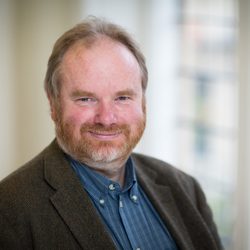
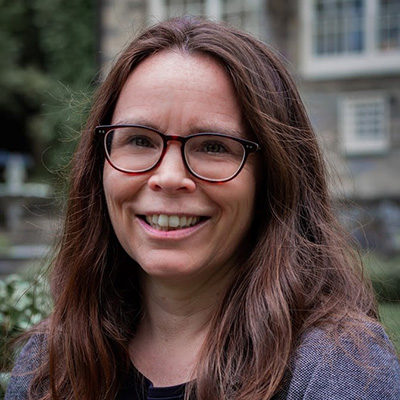
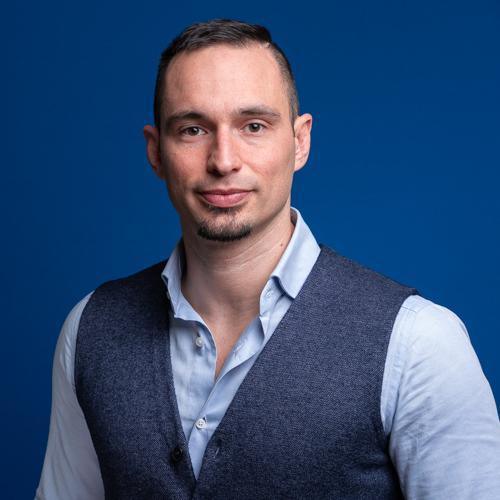
Gilbert Fridgen is Full Professor in Digital Financial Services and holder of the PayPal-FNR PEARL Chair at the University of Luxembourg's Interdisciplinary Centre for Security, Reliability and Trust (SnT). He leads the FINATRAX research group focusing on blockchain, digital identity, and sustainable digital solutions. His research explores decentralized technologies in finance, energy systems, and public administration. Current projects investigate blockchain applications in industrial demand response, NFT markets, EU digital identity wallets, and DeFi institutional adoption. Prof. Fridgen examines the intersection of technology with regulatory frameworks and user behavior in energy and financial systems. He collaborates extensively with industry partners including PayPal and Spuerkeess. Prof. Fridgen actively contributes to EU digital policy discussions, particularly regarding the European Digital Identity Wallet framework and decentralized finance governance.
Ram Rajagopal is an Associate Professor of Civil and Environmental Engineering and Electrical Engineering at Stanford University, and a Senior Fellow at the Precourt Institute for Energy. He leads the Stanford Sustainable Systems Lab (S3L), focusing on large-scale monitoring, data analytics, and stochastic control for infrastructure networks, particularly power systems. His research emphasizes renewable energy integration, smart distribution systems, and demand-side data analytics. Education: PhD in Electrical Engineering and Computer Sciences & MA in Statistics (UC Berkeley), MS in Electrical and Computer Engineering (UT Austin), and BEng in Electrical Engineering (Federal University of Rio de Janeiro). Research interests include power grid optimization, renewable energy systems, and data-driven approaches to infrastructure challenges. He has pioneered work in grid flexibility, distributed energy resources, and machine learning applications for energy systems. His lab develops technologies like Smart Dim Fuses and the EV-EcoSim platform for EV charging infrastructure optimization. Received NSF CAREER Award, Powell Foundation Fellowship, and Berkeley Regents Fellowship Over 30 patents and best paper awards Advises/founded companies in sensor networks, power systems, and data analytics Labs/Teams: Stanford Sustainable Systems Lab (S3L), Powernet Project. His work spans grid resilience, energy equity, and scalable energy solutions.
Dr. K. Max Zhang is a Professor in the Sibley School of Mechanical and Aerospace Engineering at Cornell University. He is the director of the Energy and the Environment Research Laboratory (EERL) and a fellow at the Atkinson Center for a Sustainable Future. His research is deeply interdisciplinary, focusing on sustainable energy systems, air quality, and environmental justice, with significant impacts on policy and community development in New York and beyond. Ph.D., Mechanical Engineering, University of California-Davis, 2004 B.S., Thermal Engineering, Tianjin University, 1998 B.A., English Language, Tianjin University, 1998 Dr. Zhang’s research centers on the integration of energy and environmental systems. He investigates air pollution dynamics using advanced numerical models like CTAG, with applications in near-source pollution, indoor air quality, and environmental justice. His work on renewable energy systems includes designing sustainable solar farms and managing distributed energy resources such as heat pumps to enhance grid flexibility. He also leads a pioneering initiative to create the first statewide public IoT network in the U.S., enabling hyperlocal weather forecasting and microclimate monitoring. His recent publications reflect a strong trend toward agrivoltaics, peer-to-peer energy markets, and IoT-based environmental monitoring. These works demonstrate a consistent focus on data-driven modeling, community-scale energy solutions, and the integration of social considerations into technical systems. The keywords across his articles highlight expertise in sustainability, machine learning, air quality, and energy transition. Cornell Town-Gown Achievement Award (2022) Engaged Scholar Prize, Cornell University (2017) People's Choice Sign of Sustainability Award, Sustainable Tompkins (2016) Scientific and Technological Achievement Award, Environmental Protection Agency (2015) Fellow of the American Society of Mechanical Engineers Dr. Zhang is actively involved in mentoring students and securing research grants from agencies such as the National Science Foundation (NSF) and the New York State Energy Research and Development Authority (NYSERDA). His projects often involve interdisciplinary collaboration across eight Cornell colleges and 16 academic departments. He has led initiatives such as the Cornell Atkinson Academic Venture Fund projects and the development of a county-level energy roadmap for Tompkins County. He also teaches courses in engineering thermodynamics, future energy systems, and air quality, emphasizing experiential and community-based learning. Dr. Zhang leads the Energy and the Environment Research Laboratory (EERL) and collaborates with the Atkinson Center for a Sustainable Future. His lab functions as a hub for innovation in sustainable communities, combining advanced modeling with real-world applications. Through partnerships with community organizations, government agencies, and industry, his team develops science-driven solutions to urban and rural sustainability challenges.
Malcolm McCulloch serves as Professor of Energy Systems and Group Leader of the Energy and Power Group within the Department of Engineering Science at the University of Oxford. He also holds the position of Co-Director for the Oxford Martin Programme on Integrating Renewable Energy and maintains affiliation with Christ Church college. His research spans four primary domains: domestic energy systems, electric vehicle technology, renewable generation, and energy solutions for developing regions. McCulloch's research focuses on practical energy transition challenges. His domestic energy work develops user-centric demand side management technologies and behavior change interventions, leading to the spin-out Intelligent Sustainable Energy (now Navetas Energy Management). In transportation, he pioneered the Morgan LifeCar hydrogen sports car project, resulting in high-efficiency motors and the Oxford Yasa Motors spin-out. His renewable generation research includes lightweight tidal turbines through Kepler Energy, while his Energy for Development work creates nano/micro grid solutions for distributed electrification. Analysis of his recent publications reveals a strong emphasis on integrating variable renewables through innovative market mechanisms, grid flexibility solutions, and electric vehicle integration. His work consistently addresses the technical and economic barriers to decarbonization, with increasing focus on peer-to-peer energy trading, thermal storage, and climate-resilient cooling solutions since 2020. McCulloch previously served as Co-Director of the Institute for Carbon and Energy Reduction in Transport (2008-2013) under the Oxford Martin School. His leadership extends to creating the Integrated Transport Network for Oxford and developing practical applications through multiple successful spin-out companies that bridge academic research and commercial implementation.
Jennifer Wilcox is the Presidential Distinguished Professor of Chemical Engineering and Energy Policy at the University of Pennsylvania's School of Engineering and Applied Science. She holds the James H. Manning Chair and directs the Clean Energy Conversions Lab, which focuses on carbon management strategies to mitigate climate change. Wilcox also served as Principal Deputy Assistant Secretary of Fossil Energy and Carbon Management at the U.S. Department of Energy from January 2021. Her research spans carbon capture, utilization, and storage (CCUS), direct air capture (DAC), mineral carbonization, life cycle assessment, and techno-economic analysis of carbon management technologies. Wilcox's work examines both mitigation and adaptation strategies to minimize negative climate impacts associated with society's dependence on fossil fuels. She takes a multi-perspective approach that includes experimental work, materials characterization, geo-spatial analyses, systems modeling, and techno-economic analysis while considering environmental and social contexts. Wilcox's research has been featured in major publications including the first textbook on Carbon Capture and Storage, the California Getting to Neutral report, the CDR primer, Greenhouse Gas Removal Technologies, the State of CDR Volume 2, and the Roads to Removal report. Her work has received recognition including the DOE Secretary's Achievement Award for contributions to the Getting to Neutral report. Secretary's Achievement Award for work on the Getting to Neutral Report Principal Deputy Assistant Secretary of Fossil Energy and Carbon Management (2021) Author of the first textbook on Carbon Capture and Storage Lead contributor to the California Getting to Neutral report Co-author of the CDR primer with nearly 40 subject matter experts Wilcox mentors several PhD candidates and research associates including Maxwell Pisciotta, Shelvey Swett, Hélène Pilorgé, Shrey Patel, Aline Uwase, Katherine Vaz Gomes, and Abby Lunstrum. Her lab examines various carbon management strategies from technology development to deployment optimization, with a focus on maximizing climate change mitigation while minimizing adverse social and environmental impacts. The Clean Energy Conversions Lab tracks public funding for carbon management projects across the United States and analyzes lessons from recent legislation like the Bipartisan Infrastructure Law and Inflation Reduction Act to identify opportunities for carbon management.
Goran Strbac is a Professor of Energy Systems at Imperial College London's Faculty of Engineering, holding the Chair in Electrical Energy Systems. He leads the Department of Electrical and Electronic Engineering and directs the joint Imperial-Tsinghua Research Centre on Intelligent Power and Energy Systems. His roles include IPCC WG 3 Leading Author, OFGEM RIIO-2 Challenging Group Member, and member of multiple EU energy platforms. Strbac's research focuses on multi-energy systems integration, energy market design, renewable integration, distributed energy resources, and grid resilience. Notable contributions include whole-energy system modeling across operation and investment scales, market mechanisms for flexibility services, and security assessments for low-carbon infrastructure. His work emphasizes resilience and decarbonization, with over 500 publications and 4 co-authored books. He advises governments and regulatory bodies on energy policy, including contributions to UK Smart System Forum and European Technology and Innovation Platforms. His recent articles explore AI-driven grid optimization, hydrogen integration, and transactive energy systems. Strbac leads major initiatives like the UK Centre for Grid Scale Energy Storage and chairs resilience-focused research clusters. His research bridges academia and industry, informing policy through rigorous systems analysis and innovative modeling frameworks.
Michael Baldea is an Associate Professor in the Department of Chemical Engineering at the University of Texas at Austin . He holds a Ph.D. in Chemical Engineering from the University of Minnesota (2006), with prior degrees from 'Babeş-Bolyai' University in Romania (M.Sc. 2001, Diploma 2000). His research group develops theoretical and computational methods for Process and Energy Systems Engineering , focusing on integrated decision-making, performance optimization, and process intensification with industrial validation. Education: Ph.D., Chemical Engineering, University of Minnesota (2006) M.Sc., Interface Process Engineering, 'Babeş-Bolyai' University (2001) Diploma, Chemical Engineering, 'Babeş-Bolyai' University (2000) Research Thrusts: Integrated decision-making in chemical/energy supply chains Process performance monitoring and optimization Process integration and intensification Key applications include grid-responsive chemical plants, intensified distillation/column designs, and renewable energy integration for building systems. Scientific Awards: Frank A. Liddell, Jr. Fellowship NSF CAREER Award (2015-2020) Moncrief Grand Challenges Faculty Award (2014) AIChE Outstanding Young Researcher Award (2017) Implementation : His group has translated research into commercial tools through partnerships with industrial test beds and is working to integrate methods into commercial simulators. They explore predictive approaches for building energy management and strategic capital investment analysis in next-generation energy systems.
Armelle Choplin is an Associate Professor at the University of Geneva's Department of Geography and Environment within the Geneva School of Social Sciences, and affiliated with the Global Studies Institute since 2019. She serves as Director of the Institute of Environmental Governance and Territorial Development (IGEDT), leading research on urban transformations in the Global South. Research Focus Her research examines urban policies, social transformations, and development challenges in African cities and the Global South. Core interests include: urban planning dynamics, governance frameworks, construction industry impacts, poverty alleviation, sustainable development pathways, globalization effects, digital innovation in urban contexts, and postcolonial urban studies. Her geographical specialization focuses on West Africa and MENA regions. Publication Analysis Recent publications (2017-2024) demonstrate consistent focus on material urbanism, governance innovations, and spatial justice in African cities. Key thematic clusters include: urban material flows (concrete, energy), participatory planning methods, transnational urban corridors, and postcolonial urban theory. Methodologically, her work combines spatial analysis with political economy and ethnographic approaches. Research Leadership She directs multiple international projects including: Global Urb: Global Urbanism from the South MatéRhône: Construction materials in Rhone Valley West African Coastal Corridor study (Accra-Lagos axis) URBACOT: West African Coastal Urban Dynamics Observatory Map&Jerry: Participatory mapping in Cotonou Student Advising Currently supervising eight doctoral candidates researching urban development topics across Africa. Her teaching portfolio includes courses on urban globalization, metropolitan governance, spatial justice, and regional project development at both bachelor's and master's levels.
Andrea Bonfiglio is an Associate Professor at the Department of Naval, Electrical, Electronic and Telecommunication Engineering (DITEN) within the School of Engineering at the University of Genoa. His work focuses on power systems, smart grids, and renewable energy integration with a particular emphasis on innovative control strategies and energy storage solutions. Teaching areas: Electrical Systems, Industrial Measurements, Energy Security Key research themes: Smart distribution networks, synthetic inertia, microgrid control, vehicle-to-grid technologies, battery energy storage Recent work explores virtual energy partitioning, load flow optimization, and inertia allocation in transmission networks Contact: a.bonfiglio@unige.it His publications highlight advanced control methodologies using machine learning and sliding mode control for both transmission and distribution networks, with applications to renewable integration and grid stability challenges.
Greg Keoleian is the Peter M. Wege Endowed Professor of Sustainable Systems at the University of Michigan. He co-founded and directs the Center for Sustainable Systems and co-leads the MI Hydrogen initiative. His research focuses on advancing life cycle assessment (LCA) methodologies to evaluate the sustainability of technologies, products, and systems. Key areas include renewable energy systems (e.g., wind, solar, bioenergy), transportation decarbonization, circular economy frameworks, and food/agricultural systems. He teaches interdisciplinary graduate courses on Sustainable Energy Systems and Industrial Ecology, and co-directs the Engineering Sustainable Systems Dual Degree Program and the Rackham Graduate Certificate Program in Industry Ecology. Research interests emphasize integrating environmental, economic, and social metrics into sustainability assessments. Notable contributions include pioneering LCA models for hydrogen energy systems, vehicle lifecycle optimization, and circular economy pathways for automotive materials. His work spans global and regional scales, addressing challenges such as reducing greenhouse gas emissions, optimizing resource efficiency, and promoting sustainable urban infrastructure. Keoleian’s recent work highlights synergies between emerging technologies (e.g., wireless charging, autonomous vehicles) and sustainability goals. He collaborates with policymakers and industry leaders to translate research into actionable strategies for deep decarbonization and circular economy adoption. Initiatives like the State of Michigan Hydrogen Roadmap exemplify his focus on bridging academic research with practical implementation. His interdisciplinary approach ensures comprehensive analysis of energy systems, industrial processes, and consumer behaviors. Keoleian’s teaching and mentorship emphasize systems thinking and cross-sector collaboration. He has shaped curricula that prepare students for leadership roles in sustainable systems design, policy development, and corporate sustainability management. Ongoing projects include optimizing reusable packaging systems, evaluating food waste impacts, and modeling urban energy justice in electric vehicle deployment.
Claudia R. Binder is Full Professor at EPFL's School of Architecture, Civil and Environmental Engineering, leading the Laboratory for Human-Environment Relations in Urban Systems (HERUS) since 2016. Previously, she held professorships at the University of Munich (2011-2016), University of Graz (2009-2011), and University of Zurich (2006-2009). She served as Dean of EPFL's ENAC School from 2020-2023 and holds advisory roles with Swiss federal institutions including the Mercator Foundation since 2024. Her academic foundation includes a Biochemistry degree and PhD in Environmental Sciences from ETH Zurich, followed by postdoctoral research at the University of Maryland. This interdisciplinary background underpins her research approach spanning natural and social sciences. Professor Binder's work centers on urban sustainability transitions, examining urban metabolism dynamics through systems science frameworks. She investigates energy-food-transport interdependencies in cities using transdisciplinary methods that integrate material flow analysis, spatial modeling, and socio-technical assessments. Her research particularly emphasizes regulatory mechanisms and transformation drivers in human-environment systems, with case studies across Swiss and global urban contexts. Recent publications reveal evolving focus from foundational urban metabolism studies toward actionable transition strategies. Her 2024-2025 work increasingly addresses social tipping dynamics, circular decarbonization, and spatially explicit waste management, demonstrating methodological innovation through geo-referenced material flow analysis and participatory backcasting frameworks. Key thematic clusters include energy innovation diffusion, plastic waste governance, and demand-side flexibility in residential systems. She actively mentors 7 current PhD candidates while supervising 11 graduates since 2018, with research spanning urban metabolism modeling, sustainability assessment, and transition governance. Her leadership extends to Swiss National Science Foundation committees and National Research Program 71 on energy consumption management. At EPFL, she directs the HERUS laboratory which develops the Sustainability Solution Space methodology for urban assessment. The lab operates at the intersection of data science, environmental engineering, and social theory, maintaining strong field connections in Switzerland, Indonesia, and Germany for empirical validation of transition models.
Di Shi is an Associate Professor at the Klipsch School of Electrical and Computer Engineering , New Mexico State University (NMSU), holding the Paul W. and Valerie Klipsch Distinguished Professorship. He previously founded the AI energy startup AInergy, LLC and held leadership roles at GEIRI North America, NEC Laboratories America, and Arizona State University. Education: PhD in Electrical Engineering, Arizona State University (2012) MS in Electrical Engineering, Arizona State University (2009) BS in Electrical Engineering, Xi'an Jiaotong University (2007) His research focuses on power system data analytics , energy storage , artificial intelligence , and IoT applications for grid stability and renewable integration. His work bridges theoretical innovation with real-world deployment, including software adopted by 15 utility companies. Recent publications highlight his leadership in deep reinforcement learning for grid control, blockchain frameworks for energy management, and tensor decomposition for efficient load modeling. He has secured a $6M NSF grant for AI-driven digital twinning to address climate-aware energy resilience. Awards & Recognition: 2025 Paul W. and Valerie Klipsch Distinguished Professorship 2024 University Research Council Mid-Career Award 2024 IET Fellow Multiple IEEE Best Paper Awards (2019–2022) 2019 L2RPN AI Competition Championship He serves as an editor for IEEE Transactions on Power Systems , IET Generation, Transmission & Distribution , and other journals, and leads the IEEE Task Force on IoT for Power Systems . His team’s patents cover AI-driven load modeling , energy storage scheduling , and state estimation , with 42 granted or pending.
Prof. Dr. Stefanie Hellweg serves as a Full Professor for Ecological Systems Design at the ETH Zürich , Department of Civil, Environmental and Geomatic Engineering. She is Deputy Head of the Institute of Environmental Engineering and leads groundbreaking research at the intersection of industrial ecology, life cycle assessment, and circular economy systems. PhD in Environmental Engineering (ETH Zürich, 2000) Industrial Engineering Degree (Karlsruhe University, 1996) Her research develops advanced methodologies for environmental impact assessment of products and technologies, focusing on: Life Cycle Assessment (LCA) with correlated uncertainty modeling Circular economy implementation in chemical and energy sectors Industrial symbiosis optimization for heat and nutrient flows Urban wastewater systems redesign for resource recovery Chemical pollution analysis in plastic materials Key publication trends reveal expertise in: Hybrid wastewater treatment systems Energy-efficient greenhouse cultivation Exergy analysis for sustainability metrics Machine learning applications in environmental modeling Policy-relevant industrial ecology studies She actively participates in global sustainability initiatives as: President of the International Society of Industrial Ecology (ISIE) Member of UN Environment's International Resource Panel Editorial board member for leading environmental journals
Geert Deconinck is a full professor at KU Leuven , leading the Electrical Energy Systems and Applications (ELECTA) research group within the Department of Electrical Engineering (ESAT). He also serves as scientific leader of the EnergyVille research center's algorithms domain, focusing on smart electrical networks and thermal systems. M.Sc. and Ph.D. from KU Leuven Head of ELECTA since 2012 (10 professors, 8 postdocs, 70+ PhDs) Over 8 million EUR research budget in last 5 years 44 completed PhDs and 10 current advisees IEEE Transactions editorial board member His research spans smart grid architectures , distributed control , and cyber-physical security , with recent focus on EV-grid integration , renewable energy democratization , and multi-carrier energy systems . Current projects include: Smart Charging - E-Mobility meets Renewable Energy Early Detection and Defense Systems for Smart Grids Open-source P2P energy sharing platforms Microgrid control strategies for PV-battery systems Awarded IET Fellow and IEEE Senior Member status, his work combines machine learning with power systems engineering through both theoretical modeling and experimental validation . He has contributed over 575 publications with 9800+ Google Scholar citations.
Dr Nima Izadyar serves as a Senior Lecturer and Course Chair of the Bachelor of Building Surveying (NBBS) at Victoria University's School of Built Environment and Engineering within the College of Sport, Health and Engineering. He leads curriculum innovation, applied research, and student-industry engagement in building regulation and performance. His educational background includes a PhD from Queensland University of Technology (QUT), Australia (2020), with academic and research experience spanning Australia, Southeast Asia, and the Middle East. Dr Izadyar's research focuses on developing practical, data-driven solutions for sustainable built environments. His work connects engineering principles with building science to improve indoor environmental quality, enhance ventilation performance, and integrate renewable energy systems. He has secured competitive funding for projects targeting sustainable housing design, digital transformation in construction, and energy efficiency through nature-based and AI-enabled solutions. His research output appears in high-impact journals in building, energy, and sustainability fields. His scholarly contributions have been recognized with prestigious awards including the Signato Medal and the AIRAH Higher Education and Research Award. Signato Medal AIRAH Higher Education and Research Award As an academic supervisor, Dr Izadyar mentors HDR students on critical topics including greening private outdoor spaces for improved indoor environmental quality, regulatory frameworks in Class 2 buildings, ventilation system optimization, occupant-centric window design, and BIM integration in construction education. His supervision approach emphasizes applied systems thinking, interdisciplinary collaboration, and alignment with national sustainability goals. He has secured competitive funding for projects targeting sustainable housing design, digital transformation in construction, and energy efficiency solutions. Dr Izadyar actively contributes to industry engagement through international collaborations that generate tangible outcomes in the built environment, serving as a reviewer, editor, and guest editor for scholarly publications while maintaining strong connections with industry partners to bridge research and practice.