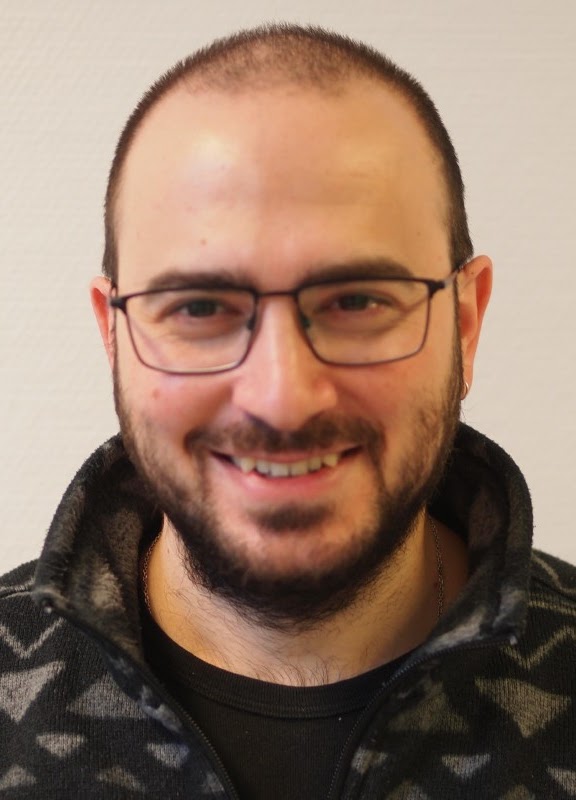
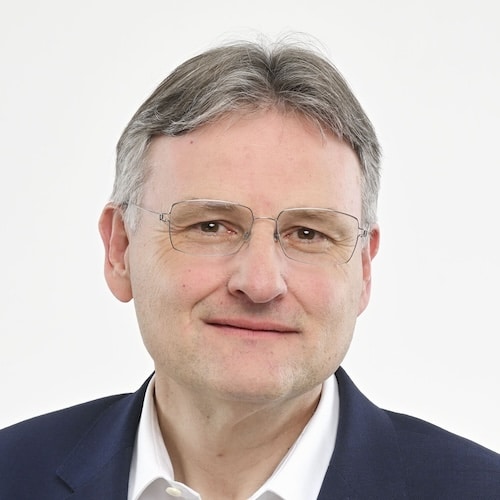
Desmond Elliott is an Associate Professor in the Natural Language Processing section at the Department of Computer Science, University of Copenhagen (UCPH). His research focuses on multimodal and multilingual models with specific emphasis on vision-language integration and tokenization-free NLP approaches. He teaches Bachelor and Master's level courses including Advanced Topics in Natural Language Processing (since 2019), Grundlæggende Data Science (since 2023), and previously Data Science (2021-2023). His research interests center on building and understanding multimodal and multilingual models , particularly exploring vision and language interactions through billion-parameter systems. Current work investigates cultural representation disparities in vision-language models, parameter-efficient captioning, and multimodal distributional semantics across diverse domains including food culture and medical imaging. His methodology emphasizes real-world applicability in non-English contexts and ethical considerations in multimodal systems. Elliott's recent publications (2025) demonstrate leadership in multimodal NLP, with significant contributions to vision-language pretraining, multilingual evaluation frameworks, and clinical NLP applications. His work spans theoretical advancements in model architectures and practical implementations addressing challenges in low-resource languages and domain adaptation. Best Long Paper Award at EMNLP 2021 Best Poster Award at COLING 2019 As an active educator, Elliott contributes to courses on Fair and Transparent Machine Learning and previously taught Information Retrieval. His research collaborations span international institutions with particular focus on European and non-English language contexts, reflecting UCPH's recognition as Europe's #1 institution for HCI research over the past decade.
Abayomi Baiyere serves as an Associate Professor in the Department of Digitalization at Copenhagen Business School (CBS), where he conducts cutting-edge research at the intersection of digital technologies and organizational transformation. His work significantly contributes to UN Sustainable Development Goals through digitally-enabled societal impact initiatives and has yielded 69 research outputs including high-impact publications in premier journals like Information Systems Journal and Information Systems Research . His research program focuses on: Digital transformation frameworks (notably the MIND framework for capability assessment) Platform design and governance mechanisms Smart service systems development Workplace transformation through digital subtraction logic Digital strategy implementation challenges Analysis of his 15 most recent publications (2024-2025) reveals a strong theoretical grounding in institutional and practice-based perspectives, with increasing emphasis on ethical dimensions of digital transformation, AI implementation constraints, and methodological innovations in computational research. His work consistently bridges conceptual rigor with practical applicability for organizational leaders. Dr. Baiyere actively shapes academic discourse through editorial roles including co-editing The Routledge Companion to Management Information Systems (2025) and organizing key events like the African IS Paper Development Workshop (2020). His public engagement includes 6 media contributions discussing digital workplace transformation and strategic implementation challenges, demonstrating commitment to translating research into practical insights for broader audiences. Within CBS, he has supervised 8 academic works while contributing to the department's international recognition in digitalization research. His activities reflect deep engagement with both theoretical advancement in information systems and practical solutions for organizational digital maturity.
Ciprian Cimpan is an Associate Professor at the Department of Green Technology (IGT), University of Southern Denmark, and a key member of the SDU Climate Cluster and SDU Life Cycle Engineering. His research focuses on Circular Economy , Industrial Ecology , Waste and Resources Management , and Life Cycle Assessment , with a strong emphasis on sustainable growth and resource efficiency. Postdoctoral Fellow, Norwegian University of Science and Technology (2019–2021) His recent publications highlight applications of LCA in evaluating additive manufacturing , plastic packaging , and critical material recycling within green transition contexts. He also investigates systemic challenges in textile waste , ICT product obsolescence , and rebound effects in reuse practices . Scientific awards include the DANROAD Prize (2025) for innovative drug recycling. He supervises PhD student Bubinek R. and teaches courses on Eco-efficient Engineering , Waste Management , and Solid Waste Processing .
Pernille Bjørn is a Professor in Computer Supported Cooperative Work (CSCW) at the Department of Computer Science , University of Copenhagen (DIKU), where she has been since May 2015. Her research investigates collaborative work practices to design cooperative technologies, focusing on domains like healthcare, global software development, startup companies, and digital fabrication. Faculty of Science, University of Copenhagen Human-Centred Computing Section Research Interests : Bjørn’s work spans CSCW , Human-Computer Interaction , and Digital Fabrication , with applications in healthcare systems, cross-cultural software development, and inclusive technology design. She explores collaborative virtual reality training, FemTech, and crisis computing. ACM Distinguished Member (2024) Publications : Published in top venues like ACM Transactions on Computer-Human Interaction , CSCW , and CHI , her recent work examines hybrid work asymmetry, neurodiverse accessibility, and art-driven collaborative research.
Anne Simone Dederichs is an Associate Professor in the Department of Civil and Mechanical Engineering at the Technical University of Denmark (DTU), specializing in Structures and Safety. She is actively engaged in research and teaching in fire safety engineering, combustion dynamics, and evacuation modeling. Her work spans academic, industrial, and policy-relevant domains, with strong collaborations across Scandinavia. Doctoral Degree, Dept. of Fire Safety Engineering, Lund University (1998–2004) Master of Science, Niels Bohr Institute, University of Copenhagen (1991–1997) Bachelor of Science, Niels Bohr Institute and Department of Mathematical Sciences, University of Copenhagen (1991–1996, 1991–1995) Her research focuses on fire safety engineering , evacuation dynamics , universal design in safety systems , and sustainable construction materials . She has led seminars and EU meetings on computational fluid dynamics in combustion and turbulent combustion, and she teaches in fire chemistry, fire dynamics, and risk management. Her work contributes to UN Sustainable Development Goals related to sustainable cities and inclusive design. Recent publications show a trend toward integrating digital tools like Building Information Modeling (BIM) into fire safety, analyzing evacuation inclusivity (e.g., on ships), and evaluating fire risks of new sustainable materials. Her research bridges experimental analysis, modeling, and real-world application in buildings and industrial settings. She has held external positions as a Senior Research Scientist at RISE (Research Institutes of Sweden) and as a Researcher at Lund University. She has supervised PhD projects on composite material aging and fire safety compliance through BIM. Anne is actively involved in project leadership and collaboration, particularly in Nordic research networks. She has organized post-graduate courses and authored teaching materials in fire safety and chemical kinetics.
Endrit Hoxha is an Associate Professor at the Department of the Built Environment within the Faculty of Engineering and Science at Aalborg University. His research focuses on sustainability in construction, particularly life cycle assessment (LCA), environmental impact analysis, and circular economy strategies. He leads and co-supervises multiple PhD projects, including studies on LCA tools for carbon-optimized fire safety in biobased buildings and climate impact analysis of EU building materials. His work integrates environmental product declarations (EPDs), BIM technologies, and policy frameworks to address climate mitigation and sustainable practices in the built environment. Projects include Nordic harmonization of LCA methodologies and analysis of greenhouse gas emissions in construction. Key research areas: Sustainable construction, LCA, circularity, and policy-driven environmental mitigation. Consultancy involvement in environmental impact assessments of construction practices. Dr. Hoxha's recent publications emphasize circular building stock modeling, fire protection system environmental impacts, and light source sustainability. He has received recognition, such as the Sweco Transform Award for innovative master thesis projects. His work bridges academic research with practical applications, influencing both industry standards and policy development. Advisees include Kanafani, Dormohamadi, and Tozan, focusing on LCA methodologies and mitigation strategies. Labs/teams: Collaborates with interdisciplinary groups on building lifecycle analysis and sustainability metrics.
Christian Koch is a Professor and Head of Section at the University of Southern Denmark (SDU) Civil and Architectural Engineering, Department of Technology and Innovation, where he leads research on construction industry dynamics, climate change mitigation, and digital transformation. His work bridges institutional theory with practical challenges in sustainable development and organizational innovation. SDU Climate Cluster EU SAND Project Participant Creative Construction Conference Chair Research interests include circular economy implementation, blockchain in construction logistics, lean construction methodologies, and AI applications for safety analysis. His studies focus on institutional entrepreneurship, interorganizational networks, and policy impacts on construction practices, particularly in Denmark and Sweden. Recent article trends analyze machine learning for accident report analysis, blockchain-enabled resource marketization, and climate-resilient infrastructure. Notable awards include the Taylor and Francis Best Theoretical Paper (2025), SCC Fast Track Award (2024), and CME Best Paper on Societal Challenges (2022). Scientific awards include: Taylor and Francis Best Theoretical Paper (2025) SCC Fast Track November 2024 CME Best Paper Transformative Impact (2022) Best Paper Creative Construction Conference (2025) He actively participates in public discourse through media engagements on construction safety, climate adaptation, and sustainable sand extraction for green transitions.
Georgios Arvanitidis is an Associate Professor at the Technical University of Denmark (DTU) in the Department of Applied Mathematics and Computer Science, specifically within the Section for Cognitive Systems (CogSys). He has established himself as a leading researcher in geometric machine learning, focusing on the application of differential geometry principles to enhance machine learning models. His work bridges theoretical mathematics with practical applications in artificial intelligence, with particular emphasis on understanding the geometric structure of data manifolds and latent spaces. Dr. Arvanitidis completed his educational journey with a Bachelor's degree from the Department of Informatics at the Aristotle University of Thessaloniki, followed by a Master's degree in Computer Science from Saarland University supported by the Max Planck Institute for Informatics. He earned his PhD at DTU's Cognitive Systems section under the supervision of Søren Hauberg, with additional research experience at Philipp Hennig's Probabilistic Numerics group. Prior to his current position as associate professor, he was a PostDoc at the Max Planck Institute for Intelligent Systems working with Bernhard Schölkopf. Dr. Arvanitidis's research primarily focuses on differential geometry in machine learning , where he explores how geometric structures can enhance representation learning and statistical modeling. His work in generative models investigates how learning the geometry of data manifolds can improve deep learning architectures. In the domain of deep learning theory , he examines why deep learning models generalize effectively on unseen data, with particular attention to the curvature properties of loss landscapes. His research in approximate Bayesian inference applies geometric principles to improve uncertainty quantification in neural networks. Through his innovative approaches, Dr. Arvanitidis has established himself as a leading researcher in geometric machine learning, contributing to both theoretical foundations and practical applications across various domains including robotics and life sciences. The publication trends of Dr. Arvanitidis reveal a consistent and evolving focus on geometric approaches to machine learning problems. His recent work (2023-2025) demonstrates increasing sophistication in applying Riemannian geometry to deep learning architectures, with particular emphasis on latent space geometry, optimization on manifolds, and geometric interpretations of neural network behavior. A notable pattern is the progression from foundational work on geometric representations to more applied research in areas like robotics and causal inference. His publications span top-tier conferences including NeurIPS, ICML, ICLR, and AISTATS, reflecting the high impact of his research. The interdisciplinary nature of his work is evident in collaborations across mathematics, computer science, and robotics domains, with recent papers addressing challenges in multimodal sampling, safety guarantees for dynamical systems, and counterfactual explanations. Dr. Arvanitidis has received several notable scientific awards and recognitions: Sapere Aude starting grant from the Independent Research Fund Denmark (DFF) GADL funding i-Rase, Pathfinder, and EIC (European Innovation Council) funding Best reviewer award for NeurIPS 2019 Best reviewer award for NeurIPS 2018 Best student paper award at Robotics: Science and Systems (R:SS) 2021 Dr. Arvanitidis actively mentors PhD students and researchers, currently supervising Alejandro Valverde, Johanna Gegenfurtner, and Albert Kjøller Jacobsen. He has previously co-supervised Alison Pouplin's PhD and worked with research assistant Georgios Pantis. His group receives substantial funding through multiple prestigious grants including the Sapere Aude starting grant from the Independent Research Fund Denmark, as well as European Innovation Council funding. He has been instrumental in creating opportunities for students interested in geometric machine learning, offering BSc and MSc thesis projects focused on generative models, deep learning theory, and optimization techniques. Dr. Arvanitidis also contributes significantly to the academic community as a reviewer for top conferences including ICLR and TMLR, and as an area chair for NeurIPS, ICML, AISTATS, and UAI. He co-organized the Machine Learning Summer School 2020 in Tübingen, further demonstrating his commitment to education and community building. Dr. Arvanitidis leads a vibrant research group focused on geometric machine learning within the Cognitive Systems section at DTU. His team includes multiple PhD students working on cutting-edge research at the intersection of differential geometry and artificial intelligence. The group has developed notable software tools, including the "geometric_ml" GitHub repository with over 70 stars, which contains implementations for applying Riemannian geometry in machine learning. His research has practical applications in robotics, where geometric approaches enable more robust motion planning, as evidenced by his work on "Reactive Motion Generation on Learned Riemannian Manifolds" which received a best student paper award. Additionally, his methodologies have found applications in life sciences, as mentioned in his 2022 AISTATS paper. The collaborative nature of his work is evident through extensive partnerships with researchers at institutions including the Max Planck Institute for Intelligent Systems, University of Cambridge, and various European universities. His recent news items indicate active engagement with the academic community through talks, conference presentations, and ongoing supervision of new PhD students joining his group.
Jes Frellsen is an Associate Professor at the Department of Applied Mathematics and Computer Science (DTU) since 2016. Previously, he held academic positions at the IT University of Copenhagen (2016-2019), postdoctoral roles at University of Cambridge (2013-2016) and University of Copenhagen (2011-2013). Education: PhD in Bioinformatics (2011), University of Copenhagen MSc in Bioinformatics (2007), University of Copenhagen BSc in Mathematics and Computer Science (2005), University of Copenhagen EAP Exchange at University of California, Santa Cruz (2004-2005) Research Focus Jes Frellsen specializes in statistical machine learning , particularly generative AI and deep generative models with applications in bioinformatics . His work integrates Bayesian inference , directional statistics , and Markov chain Monte Carlo methods to address challenges in macromolecular structure prediction and missing data imputation . Recent efforts explore uncertainty quantification in image segmentation and generative modeling for materials science. Advising & Collaborations He actively supervises PhD students and postdoctoral researchers in projects spanning news recommendation systems , medical imaging , and 3D structure generation . Collaborations include work with Zoubin Ghahramani (Cambridge) and Thomas Hamelryck (Copenhagen), with contributions to protein structure prediction and statistical methods in structural bioinformatics .
Anders Haug serves as Associate Professor at the Department of Business and Sustainability (DBS) within the University of Southern Denmark's Kolding campus. Having joined the university in 2008 as Assistant Professor in the Department of Entrepreneurship and Relationship Management before transitioning to his current role in 2010, his academic career spans over 15 years of research and teaching in operations, supply chain, and digital transformation contexts. His work bridges theoretical rigor with practical industry applications, particularly in engineer-to-order manufacturing and logistics sectors. Education: PhD in communication, representation and automation of design knowledge (2005-2007) Haug's research centers on information and knowledge management systems, with deep expertise in data quality frameworks, knowledge-based configuration, and digitalization of business processes. His fingerprint reveals distinctive contributions to product configuration systems, digital twin applications, and supply chain resilience—particularly examining how configurators transform warehouse services, manufacturing processes, and product-service ecosystems. Recent work increasingly addresses sustainability through green dynamic capabilities frameworks and life cycle assessment tools, maintaining strong empirical grounding via case studies in Danish manufacturing. Analysis of his 2024-2025 publications shows converging trends: digital technologies (configurators, digital twins) are examined through operational performance lenses while addressing sustainability imperatives. These works span operations management, information systems, and strategic management disciplines but consistently prioritize practical implementation frameworks for manufacturing SMEs. The research demonstrates methodological diversity—from conceptual modeling to empirical case studies—with strong industry relevance in logistics, engineering-to-order contexts, and manufacturing digitization. Scientific Awards: Top read paper in Business 2017/18 (Wiley) (2019) Haug has supervised 34 teaching courses between 2018-2024 covering business information systems, digitalization projects, and supply chain management. His academic service includes extensive peer reviewing for conferences like NOFOMA and DRS, plus organizational roles in Nordic business research networks. While specific grant details aren't provided, his 175+ research outputs and industry collaborations (evidenced by consultant work since 2006) indicate substantial research funding engagement. Media contributions on 3D printing and business process efficiency demonstrate effective knowledge transfer to practitioners. Though no dedicated research lab is specified, Haug's extensive co-authorship network—including collaborations on projects like digital twin implementation and configurator development—reveals embeddedness in multiple research collectives. His industry-facing approach manifests through case studies with logistics providers, manufacturer partnerships, and practical frameworks for warehouse service design and supply chain resilience.
Per Lynggaard is a Professor of Electronics at the Technical University of Denmark (DTU) , leading the B.Eng. program in Electronics. Previously, he held an Associate Professor role at Aalborg University, combining academic excellence with a robust industrial career in technical-scientific research and development. Education: M.Sc. in Electrical Engineering and Information Technology (EE and IT) Ph.D. in Electronics from Aalborg University Research Interests: Focus on Integrated Circuit Design, Wireless Sensor Networks (WSN), Machine Learning, IoT, and Smart City Technologies . His work emphasizes energy-efficient systems, cybersecurity in IoT, AI-driven interference mitigation, and sustainable energy harvesting solutions. He has contributed to UN Sustainable Development Goals through projects addressing smart infrastructure and environmental monitoring. Projects & Collaborations: Leads and participates in EU-funded initiatives such as InnoTech (2023–2025) for green transition solutions and TransportTech (2023–2026) for Industry 4.0 logistics. Active in cybersecurity research via projects like Jamming Against Critical Wireless Communication , aiming to protect critical infrastructure. Awards: Recognized with multiple honors and rewards during his industrial career, though specific names are not listed. His work has been cited widely, with notable impact in IoT security and energy-efficient systems. Advising & Grants: Supervises Turnip T.N. in a PhD project on 6G security protocols. Engaged in securing funding for projects like F2D2: The Community for Dynamic Data (2021–2030), focusing on dynamic data systems and cybersecurity. Labs & Teams: Collaborates in interdisciplinary teams such as the InnoTech TaskForce and F2D2 Community , advancing IoT and AI integration. His research bridges academia and industry, with outputs spanning smart cities, healthcare IoT, and sustainable energy systems.
Andreas Kugi is the Scientific Director at the AIT Austrian Institute of Technology and a full professor of Complex Dynamical Systems at TU Wien (Vienna University of Technology) in the Faculty of Electrical Engineering and Information Technology, Institute of Automation and Control. He has held significant academic and leadership roles across Europe, including professorships at Saarland University and offers from TU Dresden and KIT. His research focuses on the modeling, control, and optimization of complex dynamical systems , with strong applications in mechatronics, robotics, and industrial automation . He has led major research centers such as the Christian Doppler Laboratory for Model-Based Process Control in the Steel Industry and the Center for Vision, Automation & Control at AIT. His work bridges theoretical control design and real-world industrial implementation. The recent publications reflect a consistent focus on nonlinear, hybrid, and distributed parameter systems , with applications in robotics, manufacturing, energy, and process industries. His research integrates advanced control theory with practical engineering challenges, emphasizing real-time optimization, robustness, and system efficiency. Scientific Awards: Mechatronic Systems Outstanding Investigator Award (IFAC, 2022) Goldene Stefan-Ehrenmedaille (OVE, 2023) 16 best paper awards Andreas Kugi has supervised over 50 completed PhD dissertations and has been deeply involved in research leadership, including serving as Editor-in-Chief of Control Engineering Practice (2010–2017) and Vice President of the OVE Austrian Electrotechnical Association (2017–2023). He has secured and led numerous research grants, particularly through industrial collaborations in automation and process control. He leads and contributes to major research initiatives, including the Center for Vision, Automation & Control at AIT and the Christian Doppler Laboratory , fostering interdisciplinary teams focused on industrial digitalization and smart systems.
Stefan Oehmcke is an Assistant Professor at the Machine Learning Section of the Department of Computer Science , University of Copenhagen. His research focuses on applying machine learning techniques to environmental and geospatial analysis, particularly in forest ecology, tree monitoring, and climate impact studies. Research Trends: His recent publications emphasize deep learning for LiDAR data processing, multi-modal geospatial representation, and sustainable AI practices. Key Collaborations: Frequently collaborates with researchers in environmental science, remote sensing, and climate change (e.g., Martin Brandt, Christian Igel). Applications: Develops tools for forest biomass estimation, tree mortality mapping, and urban safety analysis using satellite imagery. While no specific educational background or scientific awards are mentioned in the provided texts, Oehmcke's work demonstrates technical innovation in AI explainability and environmental monitoring, with significant contributions to journals like Remote Sensing of Environment and Nature Communications .
Ilias Chalkidis is an Assistant Professor specializing in Natural Language Processing at the Department of Computer Science, University of Copenhagen. He is actively affiliated with the Natural Language Processing research section, contributing to both theoretical and applied advancements in the field. His research spans multiple high-impact domains with particular emphasis on: Legal natural language processing and multilingual legal reasoning Large language model applications in political and social contexts Fairness-explainability trade-offs in AI systems Innovative representation learning techniques for textual data Analysis of his recent publications reveals a strong focus on bridging legal informatics with cutting-edge NLP methodologies. His work on multilingual legal corpora (including the 689GB MultiLegalPile dataset) and legal decision influence prediction demonstrates practical applications for judicial systems. Simultaneously, his investigations into LLMs as voting assistants and European political spectrum analysis showcase innovative intersections between computational social science and language technology. His technical contributions to contrastive learning and hyperbolic embeddings provide foundational advances for document representation. Chalkidis actively participates in the research community through workshop organization (Natural Legal Language Processing Workshop 2023-2024) and conference presentations. His research has been published in top-tier venues including ACL, EMNLP, and ECAI, with significant citations reflecting community impact. While specific advising relationships aren't documented in the provided materials, his collaborative work patterns suggest active mentorship within the NLP research ecosystem.
Sang Pil Jin is an Assistant Professor (Tenure Track) at the Department of Cross-Cultural and Regional Studies (ToRS) within the Faculty of Humanities at the University of Copenhagen. His research focuses on Korean Studies with an emphasis on historical diplomacy, geopolitical strategy, and imperial rivalries in East Asia. He examines how Korea navigated complex international relations during periods of imperial competition, particularly in the 19th and early 20th centuries. Key research areas include the interplay between Korea and global powers, analyzing strategies for neutrality and survival amid colonial pressures, and the role of communication infrastructure in shaping diplomatic relations. His work bridges historical analysis with contemporary geopolitical issues, such as US-Korea relations and North Korea denuclearization challenges. Prof. Jin's publications highlight themes like the 'Great Game' dynamics in East Asia, the impact of railroads and telegraph systems on colonial power dynamics, and Korea's engagement with major empires during periods of crisis. His research underscores the importance of understanding historical precedents to inform modern strategic decision-making in international relations. He is affiliated with HUM:Global, a strategic initiative under the Faculty of Humanities promoting interdisciplinary global studies. His work contributes to broader discussions on sovereignty, neutralization strategies, and the legacies of imperial competition in contemporary geopolitical landscapes.