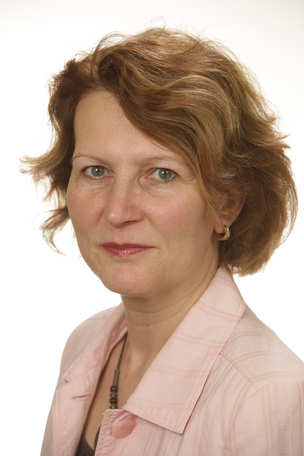
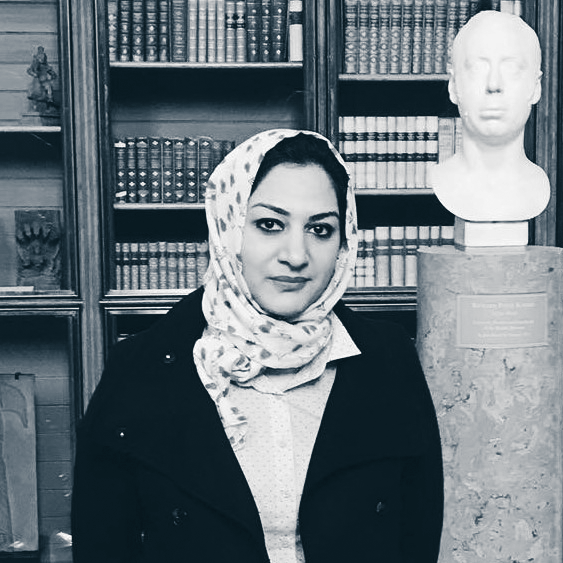
Dr. Ihab Hijazi is a researcher at the Chair of Geoinformatics , Technical University of Munich, specializing in 3D geospatial modeling and BIM-GIS integration . He teaches courses such as CAFM - Facility Management and GIS and contributes to advancing CityGML standards and urban digital twins . Research Focus : Hijazi’s work bridges Building Information Modeling (BIM) and Geographic Information Systems (GIS) , emphasizing interoperability , semantic transformation , and smart city infrastructures . His projects include the Smart Sustainable Districts (SSD) and Smart District Data Infrastructure , focusing on urban energy systems and data harmonization. Publications highlight his contributions to CityGML utility networks , urban growth simulations , and semantic modeling frameworks. He actively develops 3DCityDB and participates in standardization initiatives like the DIN Spec 91607 Digital Twin for Cities .
Markus König is a Professor of Informatics in Civil Engineering at Ruhr University Bochum, where he has been researching and teaching since October 2009. His work focuses on Building Information Modeling (BIM), digital construction technologies, and civil engineering informatics, with significant contributions to the development and implementation of digital methods in German construction industry. Dr. König earned his degree in civil engineering with a focus on applied computer science at Leibniz University Hannover, where he also completed his doctorate on cooperative building planning at the Institute for Building Informatics. He subsequently held a junior professorship for Theoretical Methods of Project Management at Bauhaus University Weimar before joining Ruhr University Bochum. His research spans multiple cutting-edge areas including Building Information Modeling (BIM), construction process simulation, tunneling informatics, infrastructure asset management, and the application of artificial intelligence and computer vision in civil engineering. As chair of the Building Informatics Working Group from 2012-2016, he played a key role in developing the first national BIM curriculum for German universities and serves as editor of the book 'Building Information Modeling: Technological Foundations and Industrial Practice.' Analysis of his recent publications reveals a strong trend toward semantic technologies, digital twins, automated compliance checking, and the integration of AI in construction processes. His work increasingly focuses on information containers, ontology development, and the application of large language models to infrastructure data, reflecting the evolving landscape of digital construction. Dr. König's significant contributions to digital construction have been recognized with prestigious awards: Lower Saxony-Bremen Construction Industry Award (2017) for 'services in the development and introduction of digital construction in Germany' Konrad Zuse Medal (2020) While specific details about his advising and grant activities aren't explicitly mentioned in the provided text, his extensive publication record with numerous co-authors suggests active supervision of doctoral students and research staff. His involvement in multiple collaborative research projects is evident from his publication history. At Ruhr University Bochum, Professor König leads a research group focused on civil engineering informatics, with particular emphasis on BIM, digital construction technologies, and their application across the building lifecycle. His team appears to work at the intersection of computer science and civil engineering, developing innovative solutions for construction process optimization, infrastructure management, and digital transformation of the AEC industry.
Prof. Dr. Jakob Beetz serves as a University Professor at RWTH Aachen University's Faculty of Architecture, leading the Design Computation (DC) research group. His work addresses critical challenges in sustainable built environments through digital innovation, focusing on integrating knowledge, information, and data across disciplines to reduce the sector's energy and material consumption—which accounts for over one-third of global totals—while advancing climate goals under the European Green Deal. His research spans Building Information Modeling (BIM), digital twins, and artificial intelligence, with emphasis on graph-based data federation, semantic web technologies, and large language models in construction. Key interests include evidence-based planning, parametric design optimization, building physics simulation, and networked knowledge modeling. Recent projects explore federated digital twin ecosystems for infrastructure management, intelligent damage assessment systems, and AI-driven solutions for wood structure preservation, directly contributing to sustainable development targets. Analysis of his 2024-2025 publications reveals a cohesive trajectory toward decentralized data environments and AI integration in Architecture, Engineering, and Construction (AEC). His work bridges theoretical foundations in knowledge representation with practical applications in bridge maintenance, road infrastructure, and timber construction, demonstrating consistent innovation in spatial data querying, federated issue management, and ontology-based process modeling. Prof. Beetz actively supervises PhD candidates, as evidenced by DC.Promotions 2024, and drives international collaboration through events like the Forum Construction Informatics 2025 and CIB W78 conferences. His research group engages with industry standards including Industry Foundation Classes (IFC) and Common Data Environments (CDEs), emphasizing open data principles and interoperability to transform construction workflows.
Prof. Daniel Mondino holds the Suhr Endowed Professorship for Digital Integrated Process Management - Planning (Building Information Modeling - BIM) at HafenCity University Hamburg since February 1, 2018. He is a key figure in advancing Building Information Modeling research and implementation in Germany, focusing on digital processes in architecture and construction. Dr. Mondino studied architecture at ETH Zurich and has worked as a freelance architect in Hamburg since 1996. He was appointed to the Association of German Architects (BDA) in 2006. In addition to his academic position, he serves as a managing partner at CORE Digital Engineering GmbH, an architecture and general planning firm specializing in BIM processes and certified according to DIN EN ISO 9001:2015 for BIM processes and management. Prof. Mondino's research focuses on the further development of model-based concepts for sustainability analyses ("Digitalization and Sustainability") and inter- and transdisciplinary information management in the built environment ("Digital Process Chain"). His work emphasizes the systemic understanding required for digital processes across the entire building lifecycle. He actively contributes to national initiatives, having been a member of the core authoring group for the Digital Planning and Construction Phased Plan of the Federal Ministry for Digital Affairs and Transport in 2015, and since 2021 leading the "Implementation Strategy and BIM Manual" sub-measure for the Federal Ministry of Construction. Prof. Mondino serves as a member of the Digitalization Steering Group of the Federal Chamber of Architects and deputy spokesperson of the board of the BIM Hub Hamburg, an interdisciplinary knowledge pool on BIM for the Hamburg metropolitan region. He participates in various national and international working groups, expert groups, and standardization bodies focused on BIM implementation. His teaching imparts fundamental methodological understanding for BIM application and supervises numerous bachelor's and master's theses related to BIM. Current research projects include the "CO₂-neutral World Heritage Speicherstadt Hamburg" (2021-2024) and "BIM cost planning" (2021-2023), addressing critical challenges in sustainable construction and digital process optimization. He also oversees the BIMLab@HCU, which serves as a research and teaching facility focused on advancing BIM methodologies and applications.
Judith Fauth is a researcher at the Technical University of Munich's Chair of Computing in Civil and Building Engineering, where she pioneers digital transformation in building permit processes through Building Information Modeling (BIM) and digital twin technologies. Her work bridges civil engineering, computer science, and public policy to streamline regulatory compliance across international contexts. Her research expertise spans Building Permit Processes , Digital Building Permits , Ontology Engineering , and Process Modeling , with emphasis on developing standardized frameworks for global permit system benchmarking. She investigates how semantic technologies and digital twins can automate regulatory compliance while accommodating regional variations in construction law and administrative practices. Analysis of her 2023-2025 publications reveals three dominant trends: (1) integration of digital building permits with digital building logbooks for lifecycle data management, (2) development of ontologies like OBPA for automated permit reviews, and (3) creation of taxonomies and process models (e.g., PACE-BP framework) enabling cross-national comparisons of permit systems. This work increasingly incorporates sustainability metrics and stakeholder-specific KPIs. Within TUM's research infrastructure, Dr. Fauth contributes to the BIM Lab and Digital Twinning research groups, collaborating on projects involving Gaia-X-based data frameworks and semantic modeling of the built environment. She teaches practical software development skills through the SoftwareLab course, preparing engineering students for digital construction workflows.
Dr. Sven Mackenbach serves as a Postdoctoral Researcher and Senior Engineer at RWTH Aachen University's Institute of Construction Management, Digital Engineering and Robotics in Construction (ICoM) since January 2023. Holding a doctorate in circular construction from the same institution, he leads the development of the "Circular Construction" research area, oversees multidisciplinary projects, and teaches Sustainable Construction Management to engineering students. His academic credentials include: PhD in Circular Construction, RWTH Aachen University (2023) Mackenbach's research integrates circular economy principles with digital construction technologies, focusing on strategic management frameworks for sustainable building practices. His expertise spans modular construction methods, BIM-based sustainability assessment, and digital twinning applications for infrastructure management. He bridges theoretical research with practical implementation through sustainability consulting for construction stakeholders, addressing real-world challenges in resource efficiency and regulatory compliance. His publication portfolio reveals a decisive shift toward data-driven circular construction solutions, with increasing emphasis on BIM-ontology integration for deconstruction planning, public participation systems, and sewer infrastructure management. Recent works demonstrate sophisticated methodological approaches to quantify ecological, economic, and social sustainability metrics without specialized expertise. As a scientific supervisor, Mackenbach mentors research assistants in project execution while contributing to curriculum development through his specialized course instruction. His leadership in research project coordination indicates substantial grant management experience, though specific funding sources aren't detailed in available materials. Within ICoM's collaborative environment, he contributes to cross-disciplinary teams advancing digital engineering and robotics applications in construction, particularly through the KaSyTwin sewer management project and BIPV facade digitalization initiatives.
Daniel Hernández is a Postdoctoral Researcher at the Institute for Artificial Intelligence (KI) under the Cluster of Excellence IntCDC at the University of Stuttgart. He is part of the Analytic Computing group within the Institute for Parallel and Distributed Systems (IPVS). His work focuses on Semantic Web technologies , particularly SPARQL , RDF , and knowledge graph applications in interdisciplinary design workflows . Research Trends : His publications (2015–2025) emphasize semantic query processing , provenance computation , and interoperability between architectural data and knowledge graphs . Key innovations include the eSPARQL language for epistemic queries, NPCS for native provenance in SPARQL, and BHoM to bhOWL for integrating building data with ontologies. Teaching & Collaborations : He has held teaching roles at the University of Stuttgart ( Human-Computer Interaction with Knowledge Graphs ), University of Aalborg ( Group Supervisor ), and University of Chile ( Lecturer for The Web of Data ). Collaborations span institutions like Buro Happold , TU Wien , and INRIA , with publications in journals like Proceedings of the VLDB Endowment and conferences such as WWW and ISWC .
Prof. Thomas H. Kolbe serves as Chair of Geoinformatics at the Technical University of Munich (TUM), where he leads research in spatial, temporal, and semantic modeling of urban environments. His work focuses on developing foundational frameworks for 3D/4D city models, digital twins, and smart city applications through international standardization efforts including CityGML and IndoorGML. His research spans virtual city modeling, urban system simulation, and GIS integration with emerging technologies. Current projects emphasize AI-driven urban scenario generation, semantic streetspace modeling, and IoT integration in digital twin ecosystems. Recent publications demonstrate strong interdisciplinary connections between computer vision, urban planning, and geospatial data science, with particular emphasis on practical implementations of 3D city models for sustainability challenges. Prof. Kolbe actively contributes to professional organizations including the Round Table GIS eV (as Chairman since 2013) and the Munich Data Science Institute (as core member since 2021). His leadership extends to the Leonhard Obermeyer Center for digital methods in the built environment and the Hans Eisenmann Forum for agricultural sciences. His work bridges theoretical geoinformatics with practical urban applications through numerous collaborative projects with municipal governments and industry partners.
Dr. Yelda Turkan is an Associate Professor in the School of Civil and Construction Engineering at Oregon State University and a Hans Fischer Fellow at the Technical University of Munich (TUM-IAS). Her research focuses on leveraging computer vision, machine learning, and digital twins to enhance sustainability and resilience in the built environment. She holds a Ph.D. in Civil Engineering from the University of Waterloo, Canada, and dual B.Sc. degrees in Civil Engineering and Geomatics Engineering from Istanbul Technical University, alongside an M.Sc. in Remote Sensing. Her work integrates advanced technologies like LiDAR and BIM to improve construction monitoring, structural safety, and fire protection. She has authored over 80 peer-reviewed publications and secured $4.5M in grants from agencies like the NSF. Dr. Turkan serves as Vice President of the International Association for Automation and Robotics in Construction and chairs the ASCE Computing Division Executive Committee. Her research spans digital twins for infrastructure performance, fire safety simulations, and automated progress tracking. Key contributions include frameworks for bridge construction monitoring, fire safety management in timber structures, and BIM-based energy fault detection. Awards include the Robert C. Wilson Faculty Scholar (2023–2025) and ASCE ExCEEd Teaching Fellow (2015).
Luca Bettermann, M.Sc. , is a researcher at the Chair of Computing in Civil and Building Engineering at the Technical University of Munich (TUM). He contributes to interdisciplinary research in artificial intelligence applied to construction, focusing on additive manufacturing, digital twinning, and simulation technologies.
Dr. Darius Popovas is a researcher at the Institute for Applied Photogrammetry and Geoinformatics (IAPG), Jade University of Applied Sciences, Oldenburg, Germany. He is a member of the Laboratory for Optical 3D Metrology, contributing to advancements in photogrammetry and 3D scanning technologies since 2020. His research focuses on photogrammetry , 3D metrology , and virtual simulation , with specific interests in developing laser scanner simulators for digital twin environments, educational applications, and robotic missions. His work integrates computer vision, geomatics, and educational technology to create innovative simulation tools that bridge theoretical research with practical industrial and academic implementations. Between 2020 and 2024, Popovas co-authored six publications demonstrating a progression from foundational simulator development to applications in dynamic scanning and geodetic network planning for robots. This trajectory highlights increasing complexity in virtual scanning technologies, with recent work emphasizing real-time processing, sensor simulation, and integration into digital twin frameworks for industrial and educational contexts. He is a key contributor to the DAAD-funded project "Virtual laser scanner simulator for digitizing the teaching environment" (2019-2024), which develops software for generating simulated 3D point cloud data to enhance teaching methodologies in photogrammetry and geoinformatics through virtual laboratories and digital training resources. Within the IAPG, Popovas collaborates in the Laboratory for Optical 3D Metrology under Prof. Dr. Thomas Luhmann, working alongside a multidisciplinary team including Dr. Maria Chizhova and Dr. Denys Gorkovchuk. The laboratory actively organizes the Oldenburg 3D Days conference series, serving as a platform for disseminating research in optical metrology and fostering industry-academia partnerships.
Michael Raupach is a Professor at RWTH Aachen University holding the Chair of Building Materials Science - Building Conservation. His work focuses on concrete durability, reinforcement corrosion, and sustainable construction materials, with particular expertise in alkali-activated binders, carbon textile reinforcement, and electrochemical monitoring systems. Research Interests: Concrete durability, corrosion protection, sustainable materials, structural maintenance, BIM applications, and non-destructive testing. Recent Work: Investigates electrically heated carbon textile reinforced concrete systems, develops hybrid alkali-activated materials for realkalization, and explores chloride diffusion mechanisms in low-carbon binders. Publications: Active in journals covering concrete technology, corrosion engineering, and sustainable construction methods.
Beuth University of Applied Sciences BerlinGermany
Prof. Petra Sauer is a Professor of Computer Science and currently serves as Dean of the Department of Computer Science and Media at BHT Berlin. She leads research in database systems, geospatial technologies, and educational data analytics. Her work bridges academic research with practical applications in facility management, urban logistics, and e-learning platforms. Key projects include DiSEA (education analytics), ExCELL (mobility data integration), and BIM-FM (building lifecycle management). Research interests focus on: Database design & schema evolution Semantic web applications Geodatabase implementations Learning analytics in MOODLE environments Notable awards include the Tiburtius Prize (Gold 2008 for Marc-Florian Wendland's thesis, Bronze 2009 for Marco Blankenburg's thesis). Active supervision spans over 15 advisees across data science, database security, and semantic integration topics. Current courses include 'Database Systems' for Media Informatics students. Key projects: DiSEA: Moodle-based learning analytics framework ExCELL: Real-time traffic forecasting platform mVIZ: Open data visualization guidelines BIM-FM: Semantic integration of building models
Prof. Dr.-Ing. Jürgen Melzner is a Professor at the Faculty of Civil and Environmental Engineering at Bauhaus-Universität Weimar. His research focuses on construction operations, occupational health and safety, and BIM integration. He leads projects in lean construction management, noise pollution modeling, and safety planning using BIM. His work emphasizes digital transformation in construction processes and legal aspects of building permits. Education includes a Dr.-Ing. (Doctor of Engineering) with extensive career contributions to construction safety and process optimization. His teaching and research involve BIM applications, IoT integration, and interdisciplinary methods in construction education. Research interests span BIM-based safety systems, predictive noise simulation, ontology networks for construction data, and lean principles in project management. Recent articles address stakeholder management in permits, machine learning for site monitoring, and metaverse applications in urban planning. Notable advising includes guidance of master's students like Mahshid Birkholz and Nasim Babazadeh. His work bridges academic research with practical implementation through projects like BIMwissT and DROHNIS. Labs/teams: Active in the Chair for Construction Management and BIM, focusing on digital tools and safety innovation.
GIGA German Institute of Global and Area StudiesGermany
Dr. Ula Merie is an Associate at the GIGA Institute for Middle East Studies, part of the German Institute for Global and Area Studies (GIGA). Her work focuses on architectural humanities, post-war urban development, spatial justice, and the intersection of politics and ethics in urban environments. She holds a PhD in Architectural Theory from the University of Sheffield and an MSc in Urban Design from the University of Baghdad. Dr. Merie is actively involved in initiatives such as the Epidemic Urbanism Initiative and the Nahrein Network. Her research emphasizes Iraq and the broader Middle East, addressing topics like urban heritage preservation, socio-cultural transformations in cities, and youth engagement in safeguarding cultural heritage. She has been recognized with the IAICS Pioneer Awards in 2022. Her current roles include serving on the management committee of the Nahrein Network and contributing to the Academic Research Institute in Iraq (TARII) as a Research Fellow (2022-2023). Dr. Merie has presented at conferences such as Heritage in Danger and IAICS Inline, discussing issues like heritage reconstruction and urban equity. Her work bridges architectural theory with practical urban challenges, particularly in conflict-affected regions.