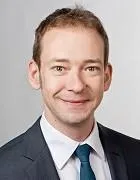
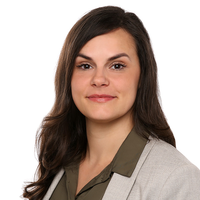
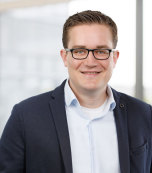
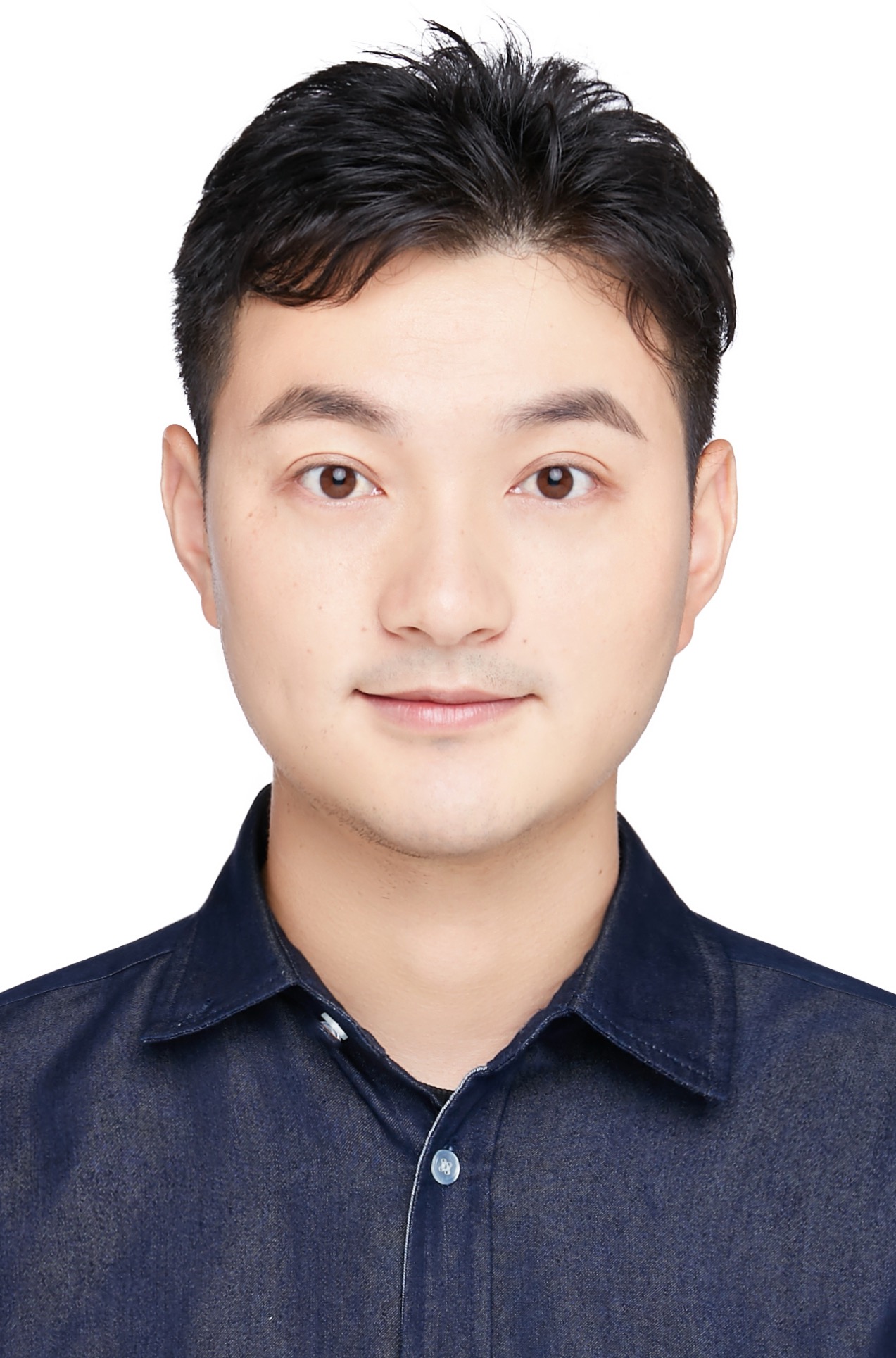
Prof. Dr. Martin Gartmeier is a full-time Professor at the TUM School of Social Sciences and Technology at the Technical University of Munich. His expertise focuses on medical didactics, teaching development, and educational research with an emphasis on clinical communication skills and teaching innovation. He leads research on simulation-based learning, bedside teaching methodologies, and medical trainee development. Research interests include: - Digital transformation in medical education - Competency assessment via video-based methods - Error learning in healthcare contexts - Professional identity formation in medical students - Flipped classroom models in clinical education Recent work explores the impact of formative experiences with death on medical trainees, the effectiveness of video-based e-learning for communication skills, and the structural analysis of bedside teaching through videographic studies. His research consistently addresses bridging theoretical knowledge with practical clinical communication competencies. Key contributions include development of the VA-MeCo video assessment framework for medical communication competence and validation studies on flipped classroom approaches. His work emphasizes translating educational research into actionable improvements for medical training programs.
Prof. Dr.-Ing. André Borrmann is an academic leader at the Technical University of Munich (TUM) , where he has headed the Chair of Computing in Civil and Building Engineering since 2011 (formerly Computational Modeling and Simulation). He serves as Director of the TUM Georg Nemetschek Institute - AI for the Built World since 2025 and Spokesperson for the Leonhard Obermeyer Center since 2013. Research Interests Artificial Intelligence in Civil Engineering Digital Twinning Building Information Modeling (BIM) Pedestrian Dynamics Knowledge Representation Construction Simulation His work focuses on AI application across the built environment lifecycle - from generative design to maintenance prediction - with significant contributions to BIM standardization and buildingSMART International IFC extensions. He co-authored the German Ministry of Transport BIM Roadmap and led the BIM4INFRA2020 project. Awards include the 2024 Konrad Zuse Medal and multiple best paper awards at international conferences.
Silvia de Lima Vasconcelos is a part-time Lecturer at HTW Berlin’s College of Engineering , specializing in digitalization within building planning and sustainable construction. Her research focuses on Building Information Modeling (BIM) , smart building technologies, and innovative planning processes. Role: Women's and Equal Opportunities Officer Department: Energy and Information Technology Location: Wilhelminenhof Campus, Building C Her work bridges digital tools like Revit with sustainable architectural practices, emphasizing energy-efficient systems and modern building materials.
Dr. Len Ole Schäfer is a Postdoctoral Researcher at the CATALPA research cluster, FernUniversität in Hagen, leading the project 'Organizational Resilience and Creativity: Exploring the Future of Educational Technology in Higher Education' (ORC) in collaboration with the Alexander von Humboldt Institute for Internet and Society (HIIG). His work investigates the interplay between organizational resilience, creativity frameworks, and educational technology implementation within higher education institutions, emphasizing trust-based leadership and strategic adaptation. Schäfer holds a PhD in Sociology (2018) from the University of Bamberg examining the UK's Research Excellence Framework impact on academic practice, and a Diploma in Sociology (2012) focused on ranking construction in science. His academic trajectory includes research positions at Zeppelin University (2018), University College London's Centre for Global Higher Education (2016), and the University of Bamberg (2012-2018). His research centers on higher education organizational dynamics, particularly how universities navigate digital transformation through resilience-building and creativity cultivation. Key interests include sociological theory applications, organizational sociology frameworks, and the role of digitalization strategies in enabling innovation. His work consistently analyzes resistance to digital change, strategic ambiguities in institutional policies, and trust mechanisms that foster EdTech adoption across diverse academic contexts. Recent publications reveal a cohesive trajectory examining organizational responses to digital disruption, with emphasis on faculty perspectives, leadership approaches, and structural adaptations. His studies—primarily qualitative and mixed-methods—highlight tensions between centralized strategies and decentralized implementation, resistance triggers, and the paradoxical role of ambiguity in enabling innovation during rapid technological change. As an active community contributor, Schäfer serves on the advisory board of FernUniversität's #NewLearning Blog and reviews for 'Higher Education - The International Journal of Higher Education Research'. His project leadership in ORC (2023–present) and OrA (until 2023) demonstrates sustained engagement with German higher education's adaptability challenges, while international collaborations with HIIG and conference presentations at EGOS and Swiss Sociological Association forums extend his scholarly impact.
Yan Xia is a Senior Researcher at the Computer Vision Group of the Technical University of Munich (TUM) and a Research Scientist at the Munich Center for Machine Learning. She collaborates with Prof. Daniel Cremers and previously completed her PhD at TUM under supervision of Prof. Uwe Stilla and Prof. Daniel Cremers, with a visiting period at the Visual Geometry Group of the University of Oxford under Dr. João Henriques.
Stephan Kessler is a researcher at the Technical University of Munich , affiliated with the Department of Mechanical Engineering and the Chair of Conveying Technology, Material Handling, and Logistics . His work focuses on construction logistics, digital twins, and IoT integration in building processes. Contact: stephan.kessler@tum.de Key research areas: Digital Twin, BIM, DEM simulations, IoT in construction Collaborates with Prof. Johannes Fottner on construction automation projects His research emphasizes digitalization of construction processes through technologies like RFID, machine learning, and simulation tools. Recent publications address tower crane planning, co-robot integration, and bulk material handling standards. Article trends show consistent focus on construction automation (IoT, digital twins, BIM), material flow optimization (DEM simulations, screw conveyor standards), and equipment lifecycle management (telematics, RFID identification). Kessler contributes to industry-university collaborations through projects like BauFlott (fleet management systems) and TEP (Tower Crane Deployment Planner). His work bridges theoretical research with practical implementations in construction site logistics.
Anne Fischer, M.Sc., is a researcher at the Chair of Material Handling, Material Flow, and Logistics at the Technical University of Munich (TUM). Her work focuses on digital twins, construction automation, and resource scheduling in heavy civil engineering. She is based in Garching near Munich and collaborates with institutions like UC Berkeley and Stanford University. Research Interests: Digital Twin frameworks, simulation-based optimization, BIM integration, activity recognition in construction, and sustainable logistics systems. Collaboration: Serves as a contact person for international exchanges with U.S. institutions. Publication Trends: Her recent articles (2024–2021) address construction automation, digital twin applications, and variability management in civil engineering projects. Key Projects: Engaged in initiatives like Bauen 4.0 , MiProcess2Twin , and SiteRoute , which focus on digitalization and automation in construction. Location: Boltzmannstraße 15, Garching bei München (Room: 5505.EG.501).
Dr. Hendrik Morgenstern serves as a Postdoc and Senior Engineer at RWTH Aachen University's Chair and Institute of Construction Management, Digital Engineering and Robotics in Construction (ICoM), where he advances digital solutions for building maintenance and construction robotics. His work focuses on integrating Building Information Modeling (BIM) with diagnostic data to optimize infrastructure lifecycle management. Morgenstern earned his B.Sc. and M.Sc. in Civil Engineering with specialization in Functional and Structural Engineering from Karlsruhe Institute of Technology (KIT), complemented by studies in Sustainable Development. He completed his Dr.-Ing. doctorate at RWTH Aachen in 2023 with research on automated maintenance planning using BIM-enriched diagnostic data. His research program centers on digitized building maintenance, BIM applications for existing structures, and robotics automation in construction. Key contributions include predictive maintenance frameworks using Bayesian inference, geopolymer material development for structural repair, and point cloud integration for as-built modeling. He emphasizes resource efficiency and data-driven decision-making across all projects. Analysis of his 15 publications (2021-2025) reveals three dominant trends: (1) Convergence of BIM with non-destructive diagnostics for predictive maintenance, (2) Development of smart materials like temperature-stable geopolymers for crack injection, and (3) Integration of robotics and AI for automated facility management. His work consistently bridges civil engineering fundamentals with computer science innovations. Morgenstern actively contributes to major research initiatives including the RoboTUNN project (awarded bauma Innovation Award 2025 for tunneling robotics) and the BIM4People consortium focused on digital transformation in construction. His work demonstrates strong industry collaboration through projects with German construction firms and participation in standards development.
Srishti Yadav is a Research Fellow at the University of Copenhagen and University of Amsterdam , affiliated with the Pioneer Centre for AI and ILLC respectively. She is advised by Dr. Serge Belongie and Dr. Ekaterina Shutova . Education: M.Sc. (Research-Track) in Computing Science, Simon Fraser University , Canada Research Interests: AI and Society Cross-Cultural Competency in Multimodal Models AI Safety and Evaluation Frameworks Model Interpretability and Dataset Creation Scientific Awards: ELLIS PhD Fellowship Advising & Community: Board Member, Women in Computer Vision (WiCV) Advisor for WiCV@ICCV2023 and WiCV@CVPR 2021 Chaired workshops at CVPR 2024, CVPR 2023, CVPR 2020 Labs & Teams: Belongie Lab (University of Copenhagen) Shutova Lab (University of Amsterdam) Collaborator at MILA Biodiversity Monitoring Project
Prof. Michael Beer is the Executive Director of the Institute for Risk and Reliability at Leibniz University Hannover. He holds a professorship in the Faculty of Civil Engineering and Geodetic Science and serves on the Faculty Council. His research focuses on structural reliability, uncertainty quantification, and risk analysis with applications in civil engineering systems. He leads the Collaborative Research Centres (CRC) 871 and 1463, addressing regeneration of complex capital goods and offshore megastructure design, respectively. His work integrates machine learning, Bayesian methods, and stochastic modeling to address challenges in seismic vulnerability, geotechnical systems, and reliability-based design optimization. Beer is also a member of the Leibniz Research Centre Energy 2050, emphasizing interdisciplinary energy systems research. Beer's research interests span probabilistic modeling of dynamic systems, uncertainty propagation in engineering systems, and data-driven methods for reliability assessment. His recent publications emphasize computational methods for reliability, machine learning applications, and seismic risk analysis. He actively contributes to academic leadership roles, including editorial boards and research center management.
Christin Schulze serves as Senior Research Scientist at the Max Planck Institute for Human Development and Adjunct Associate Professor at The Arctic University of Norway since 2019. Her work bridges cognitive psychology and decision science, focusing on how humans develop and execute choices under uncertainty across individual and social contexts. Education Ph.D. Psychology, University of New South Wales (2015) M.Sc. Psychology (Dipl. Psych.), Friedrich-Schiller University Jena (2011) Research Focus : Schulze leads the “Development of Decision Making” research area within the Adaptive Rationality group. Her investigations span experience-based decisions under uncertainty , childhood development of decision strategies , cognitive modeling of judgment , and social/group decision dynamics . She employs experimental paradigms and computational models to dissect how environmental structure, cognitive constraints, and social interactions shape choices from infancy through adulthood. Publication Trends : Her 2015-2021 corpus reveals consistent exploration of probability matching phenomena, social sampling mechanisms, and description-experience gaps. Key contributions demonstrate how group contexts eliminate individual decision biases (Schulze & Newell, 2016) and how bounded rationality governs social information acquisition (Schulze et al., 2021), bridging cognitive, developmental, and social psychology. Scientific Awards Advising & Grants : While specific students and funding sources aren’t detailed in available materials, her leadership of a Max Planck research area implies significant mentorship responsibilities and grant management for decision-science projects. Research Infrastructure : Schulze heads the “Development of Decision Making” unit within the Adaptive Rationality department at Max Planck, directing a team investigating cognitive architectures of choice through behavioral experiments and mathematical modeling.
Michel Besserve is a Senior Research Scientist in the Empirical Inference department at the Max Planck Institute for Intelligent Systems in Tübingen, Germany. His research bridges machine learning theory with applications in neuroscience and complex systems analysis. He leads a research group focused on developing causal machine learning tools to uncover the internal structure and transformations of complex artificial, physical, and socioeconomic systems. Dr. Besserve's primary research interests center on causal machine learning and its applications to understanding complex systems. His work investigates how causality can provide principled ways to study and improve AI algorithms, particularly focusing on the identifiability of causal models and the principle of Independence of Causal Mechanisms (ICM). He develops theoretical frameworks and practical tools for causal inference in complex equilibrium systems, neural circuits, and socioeconomic contexts. His research has significant implications for building trustworthy and interpretable AI systems that can reliably handle real-world complexity. Analysis of Dr. Besserve's recent publications reveals a strong focus on causal representation learning, with significant contributions to independent mechanism analysis and the identifiability of nonlinear generative models. His work spans both theoretical foundations and practical applications, connecting machine learning with neuroscience to understand brain function through causal inference. The interdisciplinary nature of his research is evident in publications spanning top machine learning conferences (NeurIPS, ICML, ICLR) and leading neuroscience journals (Nature, PLOS Biology). Dr. Besserve has established productive collaborations across multiple institutions, particularly with researchers at the Max Planck Institute and ETH Zurich. His work demonstrates how integrating causal principles with machine learning can address fundamental challenges in AI robustness and interpretability, with applications ranging from brain network analysis to economic modeling. His research group focuses on developing the Causal Computational Model (CCM) framework, which aims to create digital representations of real-world systems that integrate data, domain knowledge, and interpretable causal structure. This work has potential applications in climate modeling, industrial digital twins, and economic simulation.
Dr. Sven Burger is a leading Researcher at the Zuse Institute Berlin (ZIB) within the Modeling and Simulation of Complex Processes department. His work focuses on Nanophotonics , Quantum Technologies , and Optical Resonance Computation , particularly in photonic crystals, plasmonic systems, and quantum light sources. Key projects: NanoLab GRIPS 2024 , MATH+ TES QT , MATH+ PaA-1 (perovskite solar cells), Colour Impression of Solar Cells Collaborations: MATH+ , BIFOLD , Research Campus MODAL His research spans Bayesian optimization for quantum systems, quasinormal mode expansions , chiral plasmonics , and terawatt-scale photovoltaics . Recent work emphasizes RPExpand software for resonance analysis and AAA algorithm applications in photonic design. He contributes to quantum key distribution via plug&play single-photon sources, hot carrier dynamics in plasmonic nanocrystals, and high-efficiency light extraction for deep-UV LEDs. His computational methods address non-Hermitian systems , exceptional points , and self-interference nanoparticle tracking .
André Siegel is a Lecturer for special tasks at the Electronic Media Technology Group, Department of Electrical Engineering and Information Technology, Technical University of Ilmenau. He is actively involved in research and teaching related to audio engineering and acoustics, with a focus on spatial sound reproduction and simulation. His research interests span Audio Engineering , Room Acoustics , Binaural Sound Reproduction , Spatial Audio , Acoustic Simulation , and Audio Signal Processing . His work emphasizes practical implementations in real environments, including crosstalk cancellation, head-related transfer function measurement, and sound field analysis. The publications reflect a consistent research trajectory from 2005 to 2013, with a concentration on spatial audio technologies, room simulation methods, and perceptual aspects of sound reproduction. Key themes include the optimization of stereo and binaural systems, low-frequency acoustic behavior, and advanced measurement techniques using vector sensors and spherical arrays. André Siegel has not been awarded any scientific prizes or fellowships mentioned in the available data. He collaborates with researchers such as Hans-Peter Schade, Stephan Werner, and Julius T. Fricke. His work contributes to both academic knowledge and practical applications in room acoustical consultancy and immersive audio systems. He is based in Helmholtz Building, Room H 3529, and can be contacted at andre.siegel@tu-ilmenau.de.
Dieter A. Fensel is a Full Professor at the Institute of Computer Science, Faculty of Computer Science, University of Innsbruck, Austria . He has held academic positions at the University of Karlsruhe, Vrije Universiteit Amsterdam, and the University of Amsterdam. He founded the Digital Enterprise Research Institute (DERI) in Galway and Innsbruck and co-founded the Semantic Technology Institute International (STI2). His work spans semantic technologies, knowledge engineering, and intelligent systems. PhD in Political Science, University of Karlsruhe (1993) Habilitation in Applied Computer Science, University of Karlsruhe (1998) Masters in Computer Science (TU Berlin) and Social Science (FU Berlin) His research interests focus on the Semantic Web, ontologies, knowledge representation, web services, and intelligent systems. He investigates how semantics can enhance data interoperability, service composition, and knowledge sharing in distributed environments. His work bridges formal methods with practical applications in e-commerce, tourism, and digital enterprises. He emphasizes the role of semantics in enabling machine-understandable content and automated reasoning across domains. The research trends in his publications and projects reveal a consistent focus on semantic technologies, from foundational work on knowledge representation (e.g., KARL language) to large-scale EU projects on data ecosystems (PlanetData, BYTE), travel (EuTravel), and energy (ENTROPY). His work evolved from theoretical AI and knowledge engineering to applied semantic web services, linked data, and digital innovation in societal domains. His scientific awards include: Carl-Adam-Petri-Award of the Faculty of Economic Sciences, University of Karlsruhe (2000) As an academic advisor, Dieter Fensel has supervised over 25 PhD students and served on numerous Master’s and PhD committees. He has led more than 100 national and international research projects with total funding in the hundreds of millions of euros, including major grants from the EU’s 7th Framework Program, Horizon 2020, and Science Foundation Ireland. These projects span domains such as big data, ambient assisted living, transportation, and digital services. He co-founded and led several research labs and teams , including: Digital Enterprise Research Institute (DERI), Galway and Innsbruck Semantic Technology Institute (STI) Innsbruck Semantic Technology Institute International (STI2) Co-founder of the European Semantic Web Conference (ESWC) and International Semantic Web Conference (ISWC) These organizations foster global collaboration in semantic technologies and have become central hubs for research, innovation, and community building in the field.