Changyu Du is a researcher at the Chair of Computing in Civil and Building Engineering at the Technical University of Munich. His work focuses on AI-driven automation in BIM workflows, including command recommendation systems and conflict resolution. Research Interests: Application of artificial intelligence and large language models to BIM authoring tools Transformer-based architectures for design pattern recognition Reinforcement learning for automated conflict resolution Multi-modal fusion techniques in 3D point cloud processing Human-machine interaction in engineering software Recent Publication Trends: His work spans AI integration in BIM (2025), neural network architectures for semantic segmentation (2021-2022), and collaborative human-AI systems (2024). Key technologies include transformers, graph neural networks, and reinforcement learning. Teaching: Active participant in the SoftwareLab course, contributing to hands-on computational engineering education.
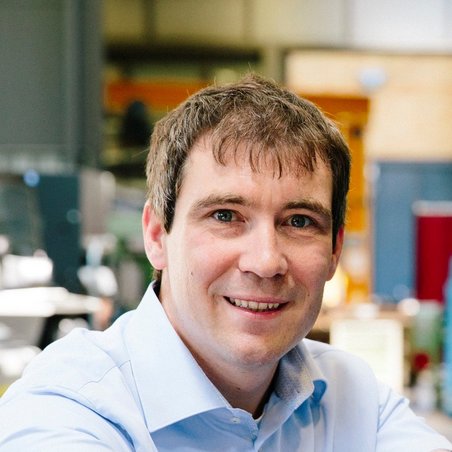
Prof. Dr.-Ing. Sebastian Esser serves as Group Lead for Information Management at the Chair of Computing in Civil and Building Engineering at Technical University of Munich. His research focuses on advancing Building Information Modeling (BIM) methodologies, particularly in infrastructure and railway applications. He contributes significantly to international standardization efforts including IFC-Road and IFC-Rail projects, and leads research initiatives such as RIMcomb and BauPuls360. Dr. Esser's research spans several critical areas in digital construction: Graph-based version control systems for BIM collaboration Digital twin development for infrastructure management Semantic modeling of built environments BIM-based regulation checking for railway infrastructure Interdisciplinary model coordination techniques Knowledge representation in civil engineering His work bridges theoretical computer science with practical civil engineering applications, focusing on improving data interoperability and workflow efficiency in construction projects. Analysis of his recent publications reveals a strong emphasis on graph-based approaches to BIM challenges. His research has evolved from foundational work on BIM programming interfaces to sophisticated implementations involving knowledge graphs, semantic reasoning, and digital twin architectures. Key trends include increasing integration of semantic web technologies with BIM standards, development of specialized query interfaces like GraphQL for construction data, and application of formal methods to infrastructure modeling problems. Dr. Esser actively supervises numerous bachelor's and master's theses annually, with recent topics covering graph-based entity alignment, BIM-GIS integration for flood assessment, incremental model updates, and digital twin implementations. His teaching portfolio includes courses such as Bau- und Umweltinformatik, BIM.fundamentals, BIM.infra, and Semantic Modeling of the Built World, demonstrating his commitment to educating the next generation of digital construction professionals. He is involved in multiple research initiatives including DFG FOR 5672 (The information backbone of robotized construction), SPP 2187 (Adaptive modularized constructions), and AM2PM (Additive to Predictive Manufacturing). His laboratory work spans the BIM-Lab and related computational infrastructure supporting his research in digital construction technologies.
Benedict Harder is a Researcher at the Chair of Computing in Civil and Building Engineering, Technical University of Munich, specializing in Building Information Modeling and Model-Based Systems Engineering. He contributes to the DFG SPP 2187 project on modular concrete bridges and maintains active roles in research and teaching. His educational foundation includes a 2024 Master's thesis on algorithmic design of modular precast structures and a 2021 Bachelor's thesis exploring train station design via parametric modeling. These works established his trajectory in computational civil engineering. Harder's research integrates semantic web technologies with infrastructure design, focusing on SysML-OWL interoperability, graph-based modular construction, and formal methods for BIM. His work bridges computer science formalisms with practical civil engineering challenges, particularly in bridge systems and precast structures. Publication trends reveal consistent advancement in formalizing design processes: early work centered on parametric regulation compliance (2021), evolving to SysML-based bridge representation (2024) and semantic reasoning frameworks (2025). Key themes include graph rewriting for modular design, incremental BIM updates, and MBSE applications in structural monitoring. He supervises graduate research including a 2025 Master's thesis on MBSE for bridge monitoring and teaches courses like Computer-Aided Modeling of Products and Processes. His academic activities align with TUM's BIM-Lab and research groups in Digital Twinning and Knowledge Representation.
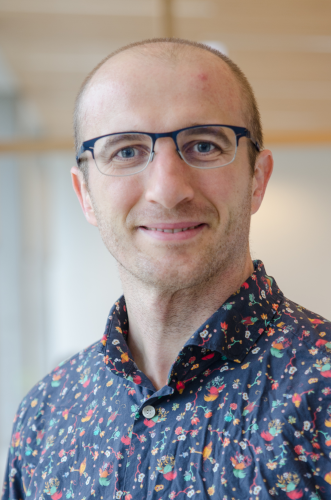
Mansour Mehranfar is a Researcher at the Chair of Computing in Civil and Building Engineering, Technical University of Munich (TUM). He contributes to advancing AI applications in digital twinning of the built environment through the AI4Twinning research initiative, focusing on automated generation of semantic building models from point cloud data and imagery. His research centers on Digital Twinning, Building Information Modeling (BIM), and Computer Vision, with specific expertise in point cloud processing, semantic segmentation, and 3D reconstruction. He develops AI-driven frameworks that integrate deep learning with geometric modeling to convert raw sensor data into semantically enriched digital representations of buildings and infrastructure components. Recent publications reveal a strong emphasis on staircase modeling, indoor space documentation, and domain adaptation techniques. Key innovations include hybrid top-down/bottom-up approaches for Manhattan-world structures, parametric prototype model fitting, and multi-task learning frameworks that simultaneously handle scene parsing and 3D reconstruction from single images. Dr. Mehranfar actively supervises Master's theses, guiding students in topics such as load-bearing wall detection, staircase modeling automation, and BIM change management. He teaches Engineering Databases at TUM and collaborates within the university's BIM-Lab ecosystem, leveraging facilities for robotic fabrication and mobile machinery research.
Florian Noichl is a Group Lead in Spatial Computing at the Chair of Computing in Civil and Building Engineering at the Technical University of Munich . His work focuses on methods for creating digital twins of industrial environments, particularly car manufacturing plants, and includes collaborative projects with Siemens . He was a Visiting Researcher at the Department of Geomatics Engineering at the University of Calgary, Canada (May–August 2023). Research interests include Spatial computing Digital twinning Point cloud processing Artificial intelligence in construction Scan planning optimization GeoAI for retrofitting Recent publications emphasize automation in point cloud segmentation, material passport creation for steel structures, semantic facade analysis, and energy efficiency estimation using vision-language models. His work often integrates BIM with laser scanning and AI . Teaching includes Bau- und Umweltinformatik 1 (WS22/23, WS23/24) and Softwarelab . He supervises theses on topics like UAV mission planning Point cloud enrichment Image-based localization CAD model matching BIM design reviews Review activities cover journals such as Automation in Construction , IEEE Sensors Journal , and Remote Sensing . He is listed on OrcID : 0000-0001-6553-9806 Google Scholar ResearchGate Labs associated with include the BIM-Lab and Robotic Fabrication Lab . His work intersects digital construction with industrial AI applications.
Isabella Deininger, M.Sc., is a Researcher at the Department of Construction Process Management at the Technical University of Munich. Her work focuses on planning time prediction in construction projects, digital modeling for decarbonization, and integrating technologies like BIM and Digital Twins in industrial settings. Academic Education: Master's and Bachelor's in Civil Engineering from TU Munich, with an international semester at Newcastle University (UK) Research interests include: Construction process optimization and planning time prediction Digital Twin and BIM integration Sustainable construction practices Machine learning applications in construction The 2023 publication connects building, production, and energy models to address industrial site decarbonization, reflecting broader interests in Civil Engineering, Sustainability, and Energy Modeling. Subfields span Decarbonization, Integrated Project Delivery, and Digital Twin applications.
Maximilian Schüle serves as Assistant Professor in the Department of Data Engineering at the University of Bamberg's Faculty of Information Systems and Applied Computer Sciences since October 2022. Previously, he held research positions at Technical University of Munich (2017-2022). His research bridges database systems and machine learning through compiler-based approaches. His research focuses on in-database machine learning , GPU-accelerated query processing , and recursive SQL extensions . Key contributions include: Developing MLIR-based compilers for automatic differentiation in SQL (DuoLingo-AutoDiff) Creating GPU code generators for database kernels using NVRTC Designing higher-order lambda functions for expressive query languages Implementing end-to-end neural network training within database engines His recent publications (2023-2025) demonstrate consistent output in top venues including ICDE, VLDB workshops, and BTW conferences, with growing emphasis on hardware-aware optimization and compiler techniques for analytical workloads. He currently leads a DFG-funded project on elastic memory hierarchies for memory-intensive applications (2025-2028), supporting multiple PhD researchers. His supervision emphasizes open-source contributions to database systems like Umbra and practical implementation skills alongside theoretical foundations. As an active member of the database community, he serves as workshop chair for BTW 2025 and regularly reviews for ACM TODS, VLDB Journal, and Information Systems. His work on public transport analytics demonstrates real-world impact through collaborations with urban mobility initiatives in Bamberg.
Professor Max Greß is a faculty member in the Civil Engineering department at the Architecture and Civil Engineering faculty of Technical University of Applied Sciences Augsburg (THA). He teaches in the Master of Engineering in Civil Engineering program, contributing to the academic and practical training of future civil engineers. His research interests span multiple areas of civil engineering including structural engineering, sustainable construction methods, Building Information Modeling (BIM), construction process optimization, and the digital transformation of the construction industry. Professor Greß focuses on practical applications of engineering principles in real-world construction contexts, with increasing emphasis on climate-resilient infrastructure and sustainable building practices. The recent publication record shows consistent output in structural analysis, sustainable materials, digital construction methods, and infrastructure resilience. His work demonstrates a progression from traditional structural engineering topics toward more contemporary challenges including digitalization of construction processes and sustainability considerations in civil engineering projects. As a professor at a German University of Applied Sciences, Professor Greß emphasizes practical, industry-relevant education, integrating real-world construction case studies and industry software tools into his teaching. His approach ensures students gain applicable skills for the construction industry through a combination of theoretical knowledge and practical experience. Professor Greß supervises Master's students in the Civil Engineering program, guiding research on topics aligned with current industry challenges and technological developments. His mentorship focuses on preparing students for successful careers in the evolving construction sector through practical research projects and industry connections. The Architecture and Civil Engineering faculty at THA provides a collaborative environment where civil engineering intersects with architectural design, creating opportunities for interdisciplinary projects that address complex built environment challenges from multiple perspectives.
Professor Jürgen Wilhelm Böse is a Professor of Logistics at the Faculty of Commerce and Social Work, Ostfalia University of Applied Sciences, Suderburg Campus. He has held this position since 2018 and is responsible for teaching and research in logistics, particularly focusing on port terminal planning and operations. His office is located in Building C, Room 106.2, Suderburg. Professor Böse's academic journey began with studies in Industrial Engineering at the Technical University of Braunschweig (1991-1997), followed by research assistant work at the same institution (1997-2002). He then gained industry experience as Branch Manager at LOGIS.NET (2003-2005) and Senior Consultant at HPC Hamburg Port Consulting (2005-2010), before returning to academia as Senior Engineer at the Institute for Maritime Logistics, Hamburg University of Technology (2010-2018). His research focuses on planning complex logistics systems, particularly seaport container terminals. His work encompasses developing initial system solutions based on business experience and spreadsheet calculations, using discrete event-oriented simulation for validation and optimization, and coupling simulation tools with Artificial Intelligence for automated system optimization. This approach typically yields qualitatively better results at significantly lower costs compared to manual expert use of these tools. His research interests include: Planning of complex logistics systems, especially seaport container terminals Discrete event-oriented simulation for logistics optimization Integration of production and logistics systems in value creation networks Artificial Intelligence applications in logistics and port operations Truck arrival forecasting and resource planning at logistics nodes Sustainable port operations and green terminal planning Professor Böse has made significant contributions to the field through his publications, most notably as editor of the 'Handbook of Terminal Planning' (Springer, 2nd edition 2020). His work spans numerous journal articles, conference papers, and research project reports focused on port logistics, terminal planning, and simulation applications. He has received research funding for projects including: Lkw-Wartezeitprognose für logistische Knoten (Truck Wait Time Forecasting for Logistics Nodes) IMOTRIS (Intermodal Transport Routing Information System) ISETEC II (Location Systems in Port Handling) NETRALOG (Bio-analog algorithms for horizontal transport control) As an educator, Professor Böse teaches regular courses in Project Management, Supply Chain Management, Transport Management, and Warehousing. He also offers specialized courses on logistics simulation and quantitative methods. In addition to his teaching duties, he serves in several administrative roles including as Research Commissioner and Internationalization Commissioner for Faculty H.
Prof. Dr.-Ing. Udo Triltsch serves as Dean of the Faculty of Mechanical Engineering at Ostfalia University of Applied Sciences, where he leads the Institute IPT (Institute for Production Technology and Management). His academic profile combines administrative leadership with active teaching in Manufacturing Metrology, Digital Production, and Project Management across bachelor's and master's programs in Mechanical Engineering disciplines. Contact details include Building H, Room 115b, telephone +49 5331 939-45620, and email u.triltsch@ostfalia.de, with office hours arranged via Stud.IP. Research focuses on the digital transformation of manufacturing through Manufacturing Metrology and Information Technology in Production. Key investigations include Digital Twin implementation using physics-based simulations, Process Mining for shopfloor optimization, and Smart Factory applications demonstrated through practical case studies like commercial coffee machine monitoring. His work bridges theoretical frameworks with industrial implementation, particularly addressing challenges faced by small and medium enterprises in adopting Industry 4.0 technologies. Analysis of publications from 2017-2024 reveals evolving research trajectories: early work established foundational Industry 4.0 concepts (robotics, sensor integration), while recent output emphasizes educational frameworks for digital competencies (DiKom Project) and practical implementation strategies. The consistent focus on real-world case studies demonstrates a commitment to applicable research that solves tangible production challenges. Scientific awards are not documented in available sources. However, his active grant-funded projects like DiKom and continuous publication record indicate significant professional recognition within production engineering circles. As an academic supervisor, Prof. Triltsch maintains teaching responsibilities across multiple programs while leading research initiatives. His involvement in the DiKom Project suggests active grant management focused on digital transformation for SMEs. Prospective students would engage with practical Industry 4.0 applications through Institute IPT's industry-connected projects, though specific advising capacity isn't detailed. The Institute IPT serves as his primary research ecosystem, driving work in production technology and management. Current activities center on digital twin development, process mining integration, and competency frameworks for industrial digitalization, with strong emphasis on translating research into implementable solutions for manufacturing partners.
Prof. Dr. Klaus R. Pawelzik is a Professor at the University of Bremen's Institute for Theoretical Physics, where he leads the Theoretical Bio- and Neurophysics research group. His research bridges theoretical physics and neuroscience, with laboratories located in the Cognium building on the university campus. His primary research interests include: Computational models of neural dynamics and information processing Neurophysics and mechanisms of cortical computation Brain-computer interfaces and neuroprosthetic systems Dynamical systems approaches to causality and network analysis Biologically plausible learning algorithms for spiking neural networks Attention mechanisms and sensory processing in primate brains Recent publications (2015-2020) demonstrate strong focus on attention mechanisms in visual processing, causal inference methods for dynamical systems, hardware implementations for neuroprosthetics, and biologically inspired learning algorithms. The work consistently integrates mathematical rigor with experimental neuroscience, featuring collaborations with neurophysiology labs and engineering groups. Prof. Pawelzik leads an active research team developing both theoretical frameworks and experimental platforms for neuroscience research. The lab specializes in open-source neurotechnology solutions, including wireless implantable devices for electrocorticography and FPGA-based processing systems for real-time neural signal analysis.
Professor Florian Johannsen is a faculty member at Schmalkalden University of Applied Sciences in the Faculty of Business and Economics, where he leads research and teaching in Business Application Systems. His office is located in Building B, Room 0213, and he holds regular office hours on Thursdays from 2:00-3:00 PM, with appointments available during semester breaks. Professor Johannsen's research spans business application systems, method engineering, chatbots for internal business use, quality management for Smart Services & Industry 4.0, and social media analysis. His work often bridges theoretical frameworks with practical applications, particularly in developing modeling tools for business process improvement. He has led the WiWiNow Campus App project in collaboration with the University of Bremen, which received the Comenius EduMedia Seal in 2021 for its innovative approach to integrating technology into university teaching contexts. His recent publications (2021-2024) demonstrate consistent productivity with a focus on digital transformation in business processes, mobile learning applications, and the integration of sustainability principles into quality management systems. These works appear in top-tier information systems journals and conferences, showing his strong standing in the academic community. Best Associate Editor Award at WI 2022 Best Paper Award at DESRIST 2021 Comenius EduMedia Seal 2021 Best Associate Editor at ECIS 2019 Teaching Award from University of Regensburg (2017) Hilti Best Paper Award BDVB Award 2007 Professor Johannsen teaches advanced courses in business application systems, including specialized topics on ERP systems, service management, and social media analysis. His teaching reflects his research expertise, with courses designed to prepare students for the digital transformation challenges in modern business environments. His recent work on mobile learning applications demonstrates his commitment to innovative educational approaches that support student success, particularly in the transition to higher education.
Klim Zaporojets is a Marie Skłodowska-Curie Postdoctoral Fellow in the Department of Computer Science at Aarhus University, where he conducts research within the Data-Intensive Systems Group. His work bridges theoretical advancements and practical applications in natural language understanding. His research focuses on information extraction systems that connect textual content with structured knowledge bases. His methodology emphasizes leveraging external knowledge sources to enhance information extraction performance, particularly in document-level contexts where entities evolve over time. His work spans temporal relation extraction, entity linking, and biomedical text mining applications. The publication record reveals a strong focus on document-level information extraction with increasing emphasis on temporal aspects and knowledge integration. Recent work explores large language model applications for graph learning and calibration challenges in LLMs, showing evolution from traditional NLP tasks to cutting-edge foundation model research. His publications appear in top-tier venues including ACL, EMNLP, CIKM, and NeurIPS. His scientific recognition includes the prestigious Marie Skłodowska-Curie Postdoctoral Fellowship, supporting his research at Aarhus University. His work has produced several influential datasets including DWIE, TempEL, and BioDEX that have become benchmarks in document-level information extraction. Zaporojets maintains active collaborations with researchers at Ghent University (evidenced by his ugent.be email address) and has contributed to multiple interdisciplinary projects spanning computational linguistics, healthcare informatics, and knowledge representation. His technical contributions include open-source implementations of his research, demonstrating commitment to reproducible science.
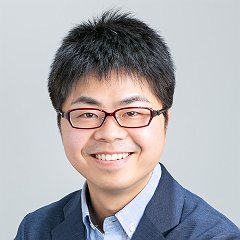
Yasutaka Kamei is a Full Professor at Kyushu University's Graduate School and Faculty of Information Science and Electrical Engineering, where he leads the POSL Lab (Process-Oriented Software Laboratory). He was promoted from Associate Professor to Full Professor in January 2024 after serving as Associate Professor from March 2015 to December 2023. He is also an InaRIS Fellow (2023-2033), receiving 10 million yen annually for his research on 'New paradigm for software development styles based on machine-human interaction.' Dr. Kamei's research focuses on Empirical Software Engineering (ESE) and Open Source Software Engineering (OSSE), with particular expertise in software reliability, testing, defect prediction, code review analysis, and mining software repositories. His work bridges empirical methods with practical software engineering challenges, emphasizing how data-driven approaches can improve software quality assurance processes. His recent publications demonstrate a strong trend toward understanding human factors in software development processes, analyzing modern code review practices, investigating technical debt, and exploring the application of large language models in software engineering tasks. His research spans both traditional software engineering challenges and emerging AI-driven approaches to software development. IPSJ/ACM Award for Early Career Contribution to Global Research (2019) Best industry paper award at ESEM 2018 Distinguished Paper Award at MSR 2014 InaRIS Fellow (2023-2033) Dr. Kamei actively serves the software engineering community as Tutorials Chair for ASE 2025 and has been a program committee member for numerous top-tier conferences including ICSE, FSE, ASE, ESEC/FSE, SANER, and MSR. He has secured multiple competitive grants from MEXT (Ministry of Education, Culture, Sports, Science and Technology) to support his research on test case generation, automated software testing for deep learning systems, technical debt engineering, and mining software repositories. His POSL Lab at Kyushu University serves as a hub for empirical software engineering research, focusing on data-driven approaches to improve software development processes and outcomes through rigorous analysis of software repositories and developer activities.
H. Steven Wiley serves as a Lead Scientist in Systems Biology at Pacific Northwest National Laboratory (PNNL), where he is affiliated with the Environmental Molecular Sciences Division and the Environmental Molecular Sciences Laboratory (EMSL) user program. With over 200 scientific publications including more than 130 peer-reviewed journal articles, Dr. Wiley has established himself as a leading figure in systems biology research. Dr. Wiley's research focuses on understanding the systems-level design principles underlying regulatory networks in both prokaryotic and eukaryotic cells, with particular emphasis on how these networks become dysfunctional in diseases like cancer. His recent work leverages CRISPR-based technologies combined with proteomics, gene expression, and biochemical assays to build improved mechanistic models of signaling and metabolic networks. This research requires developing scalable computational infrastructure for integrating multidimensional datasets and advancing analytical technologies. His publication record shows a consistent focus on cellular signaling pathways, particularly the EGFR-MAPK pathway, with recent work expanding into single-cell analysis, cancer heterogeneity, and drug resistance mechanisms. The evolution of his research demonstrates a trajectory from fundamental signaling mechanisms toward increasingly complex systems-level questions with translational implications. Award for Distinguished Technical Communication (2011) Faculty of 1000 Member for Cell Biology (2011) Elected AAAS Fellow (2005) R&D 100 Award for designing single-chain antibody library in a yeast-display system (2004) Laboratory Fellow, Pacific Northwest National Laboratory (2000) National Institutes of Health Research Career Development Award (1988–1993) Dr. Wiley has served as an associate editor of Frontiers in Genetics and sits on the editorial boards of The Scientist and BMC Biology. He has reviewed for more than 30 scientific journals, demonstrating his significant contributions to scientific discourse. His work at PNNL's EMSL facility positions him at the intersection of cutting-edge experimental technologies and computational modeling approaches.