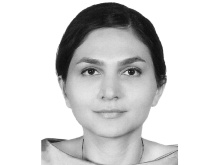
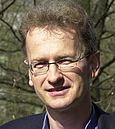
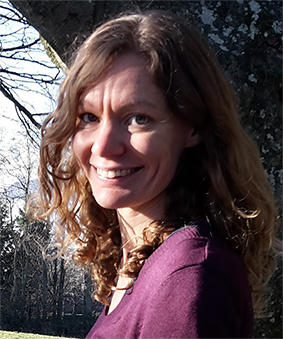
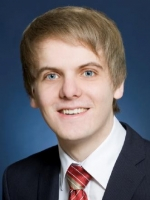
Sahar Abolhasani is a doctoral researcher at the Institute of Engineering Geodesy within the Faculty of Aerospace Engineering and Geodesy at the University of Stuttgart . Her work focuses on integrating computational design and robotics for advanced construction processes, particularly in the context of biomimetic structures and timber building automation. Role: Research Associate Cluster: Cluster of Excellence IntCDC Location: Geschwister-Scholl-Str. 24D, Stuttgart, Germany Contact: +49 711 685 4065 Her research explores the application of AI and sensor technologies (e.g., SLAM, point cloud analysis) to optimize real-time geodetic measurements and improve automation in construction workflows. Projects include the development of robotic systems for assembling high-payload timber components and integrating BIM models with feedback control mechanisms. Recent publications highlight advancements in point cloud datasets for biomimetic shell construction, SLAM-based geodetic measurement optimization, and semi-automated timber assembly processes. These works emphasize error compensation strategies, BIM-robotics integration, and the potential of mobile manipulators in construction.
Sebastian Hügle is a Doctoral Researcher at the Institute of Aircraft Design (IFB) within the University of Stuttgart , focusing on integrative computational design and robotic construction . He contributes to the Cluster of Excellence IntCDC with expertise in process simulation , robotic path planning , and coreless filament winding technology . Research Interests: Computational design for fiber-polymer composites AI-driven data management in prefabrication Robotic automation for architectural systems Simulation of realistic fiber bundle architectures Teaching: Conducts seminars on Composite Design and Manufacturing Publication Trends: His recent work spans 2022–2024 , emphasizing robotic fabrication , data models , and AI integration in composite manufacturing. Key themes include offline programming , structural analysis , and adaptive construction systems.
Prof. Dr. Rolf Pelster is a faculty member in the Department of Physics at the University of Saarland, within the Faculty of Natural Sciences and Technology. He leads a research group dedicated to condensed matter physics, focusing on molecular dynamics and charge transport in heterogeneous and anisotropic systems such as nanocomposites, polymers, and glass formers. His experimental techniques include microwave spectroscopy and dielectric measurements. His research interests lie at the intersection of experimental physics and soft matter systems. The Pelster group investigates dynamic processes in disordered materials, contributing to the understanding of fundamental physical behaviors in complex media. A significant aspect of his work involves the development of demonstration experiments and explanatory models aimed at enhancing physics education at both school and university levels. The research output appears to center on the physical properties of amorphous and composite materials, with a methodological emphasis on electromagnetic probing techniques. These studies fall broadly within condensed matter and materials physics, particularly in non-crystalline systems. There are no scientific awards mentioned in the available text. Prof. Pelster advises students in physics, particularly in experimental condensed matter research, though specific advisees are not listed. There is no information available about research grants or funding sources. He maintains an active research group and is supported by a secretary, Isabella Reckerth, indicating ongoing academic operations. The research is conducted within the Condensed Matter Physics group at the University of Saarland, located in Building E2.6, Room 2.17. The group operates under the Department of Physics and collaborates in an environment focused on experimental physics and materials research.
Milena Rabovsky is a tenured Professor at the University of Potsdam , leading the Cognitive Neuroscience Lab within the Department of Psychology (Humanities Faculty). Her research bridges psycholinguistics , cognitive neuroscience , and computational modeling . PhD from Berlin School of Mind and Brain Researcher at University of Western Ontario, Stanford University, and Freie Universität Berlin Her work investigates the N400 and P600 ERP components, focusing on semantic prediction errors , probabilistic meaning representation , and neural dynamics during language comprehension. She employs EEG , computational modeling , and pupillometry to decode how the brain processes linguistic meaning, attention, and memory encoding. Recent publications highlight her 2024 studies on alpha frequency and predictive processing and 2023 work on multi-modal cognition . Her lab supervises PhD students like Friederike Contier and Siddharth Gupta, exploring topics like ERP components , deep learning language models , and semantic awareness . Contact details include her office at Campus Golm, building 14, room 4.37.
Philipp Cimiano is a Professor at the Faculty of Engineering, Bielefeld University, and leads the Semantic Databases Group. He holds additional roles as Coordinator of the Cognitive Interaction Technology Center (CITEC) and Director of the Joint Artificial Intelligence Institute (JAII). His research focuses on the intersection of language, semantics, and knowledge representation, with applications in Explainable AI , Knowledge Graphs , and AI in Medicine . Education: University of Stuttgart, University of South Australia, Karlsruhe Institute of Technology (KIT) Key Research Areas: Knowledge Representation, Ontologies, Explainable AI, Clinical Decision Support His recent work emphasizes dialogue-based XAI , federated learning , and semantic data integration . He has secured funding from the German Research Foundation (DFG) and the European Union for projects like TRR 318 "Constructing Explainability" and Pret-a-LLOD. Scientific Awards Carl Adam Petrie Prize, KIT Faculty of Business and Economics Editorial Roles Co-editor, Journal of Applied Ontology Area Editor, Semantic Web Journal Editorial Board, Journal of Web Semantics Notable Projects TRR 318 (Subprojects B01, C05, INF) 3B: Bots Building Bridges for online deliberation LLM4KMU: Open Source LLMs for SMEs
Ralf Plattfaut is Professor for Information Systems and Transformation Management at the University of Duisburg-Essen since 2023, where he leads the business process innovation and automation lab. Previously, he served as Professor for Business Informatics at South Westphalia University of Applied Sciences (2019-2023) and as Associate Partner at McKinsey & Company (2013-2019). His academic journey includes research positions at the European Research Center for Information Systems at University of Münster and visiting fellowships at Queensland University of Technology and University of Liechtenstein. His educational background includes: Master of Science in Information Systems (MScIS) from WWU Münster (2009), thesis on 'Lean Enterprise Content Management' Bachelor of Science in Information Systems (BScIS) from Hochschule Liechtenstein (2008), thesis on 'IT-Controlling - Investitionsrechnung und Simulation auf Basis des ARIS-Toolset' Studies in Information Systems at WWU Münster (2004-2009) with core subjects in Business Administration, Information Systems, and Finance PhD studies in Information Systems at University of Münster (2009-2013) Plattfaut's research focuses on business process management, digital transformation, and process automation. His work bridges academic theory with practical business applications, particularly examining how organizations implement and govern process innovations. He has made significant contributions to understanding Robotic Process Automation adoption, process mining applications, and the challenges of digital transformation in various sectors including healthcare, utilities, and public administration. His publication portfolio shows a clear trajectory from foundational work on process modeling and IT controlling through to contemporary research on AI-supported process automation and the societal implications of digital transformation. Recent work increasingly addresses the intersection of process management with emerging technologies while maintaining focus on practical implementation challenges faced by organizations. His scientific recognition includes multiple best paper nominations and awards at premier conferences including ICIS, HICSS, and BPM. Notably, he won the MINTchallenge for innovative teaching and received awards for research on public sector process management and RPA implementation challenges. As an active academic leader, Plattfaut serves on editorial boards for Information Systems and e-Business Management and Intelligent Systems in Accounting, Finance and Management journals. He has chaired tracks at major conferences including Wirtschaftsinformatik and Business Process Management conferences. His funded research projects demonstrate strong connections between academic inquiry and practical business needs, with recent grants from DFG, BMBF, and state ministries supporting research on process automation, process mining in utilities, and lightweight IT governance. Plattfaut maintains an active consulting practice supporting organizations on digital transformation journeys, particularly focusing on business process innovation. He also serves on the Advisory Board 'Digitale Region menschlich gestalten' for the Regional Development Programme 'Regionale 2025'.
Herwig Baier is Director of the Department for Genes - Circuits - Behavior at the Max Planck Institute for Biological Intelligence (formerly Max Planck Institute of Neurobiology), where he leads a prominent research group investigating the neural basis of behavior using zebrafish as a model organism. His laboratory combines genetic, imaging, and behavioral approaches to understand how neural circuits generate behavior. Dr. Baier received his biology education at the University of Konstanz, completed his doctorate in 1995 under Friedrich Bonhoeffer at the MPI for Developmental Biology in Tübingen, and conducted postdoctoral research at the University of California, San Diego (1995-1998). He served as Professor at the University of California, San Francisco (1998-2012) before becoming Director at the Max Planck Institute in 2011. His research focuses on understanding how genes, neural circuits, and behavior are interconnected, with particular emphasis on visual processing, decision making, and social behavior in zebrafish. His laboratory has pioneered techniques for whole-brain imaging, optogenetic manipulation, and connectomic analysis in larval zebrafish, making significant contributions to mapping the neural circuits underlying prey capture, escape responses, and social recognition. The lab's work spans molecular, cellular, circuit, and behavioral levels of analysis, creating a comprehensive understanding of brain function. Analysis of Dr. Baier's recent publications (2021-2025) reveals a strong focus on neural circuit mapping at increasingly higher resolution, from cellular to synaptic levels, while connecting these structural findings to behavioral outputs. His work demonstrates how specific neural populations process visual information, make decisions, and generate appropriate motor responses, with significant contributions to understanding topographic organization in the brain and how genetic programs shape neural circuitry. Dr. Baier leads a large, collaborative research team with numerous postdocs, technicians, and students working on various aspects of zebrafish neuroscience. His laboratory has developed critical transgenic tools and methodological approaches that have been widely adopted by the neuroscience community, including optogenetic tools, calcium indicators, and brain atlases that facilitate circuit-level analysis in zebrafish.
Dr. Mikhail Cherkasskii serves as an Assistant Professor at RWTH Aachen University, leading the Theoretical Solid State Physics research group ( Lehr- und Forschungsgebiet Theoretische Festkörperphysik ). His institutional contact includes office 26C 403 in building 4261 at Otto-Blumenthal-Str. 52074 Aachen and the professional email mikhail.cherkasskii@rwth-aachen.de. His research centers on condensed matter physics with concentrated expertise in magnetism , spin dynamics , and inertial effects in ultrafast magnetic phenomena . He develops theoretical frameworks for spin waves, nutation resonance, chiral phonons, and terahertz-frequency spintronic devices, frequently addressing quantum anomalous Hall effects and spin-orbit torque mechanisms in magnetic heterostructures. Analysis of his 15 most recent publications (2021-2025) reveals a cohesive research trajectory focused on inertial spin dynamics , demonstrating consistent exploration of nutation phenomena, antiferromagnetic resonance, and terahertz magnetization processes. His work spans fundamental quantum material behaviors to applied spintronic device physics, with recurring emphasis on nonlinear dynamics in ferromagnetic systems and hybrid resonator structures. No scientific awards or honors are documented in the available source materials. Information regarding student supervision, grant funding, or collaborative projects remains unspecified in the provided documentation. He directs the Theoretical Solid State Physics research group at RWTH Aachen, which specializes in computational and analytical modeling of magnetic materials, with particular focus on ultrafast terahertz phenomena and topological spin textures in nanostructured systems.
Daniel Ackermann is a Professor of Production of Interactive Media at Harz University of Applied Sciences, where he teaches in the Department of Media Informatics within the Department of Applied Computer Science. He has been shaping the field of interactive media design through his academic work and practical projects since his appointment in 2012. His current roles include program coordination of the Media and Game Design (MA) program since March 2015 and membership in various university committees including the ICT Commission and Department Council of the Department of Automation and Computer Science. Ackermann's educational background includes a Diploma in Multimedia|VR-Design from Kunsthochschule Burg Giebichenstein in 2004, following studies in Industrial Design beginning in 1997. His academic journey began with practical experience, working as an assistant at Burg Giebichenstein Art Academy in Halle and as a lecturer at Martin Luther University before securing his professorship. Professor Ackermann's research focuses on the intersection of design and computer science, particularly in human-computer interaction and virtual 3D space. His work emphasizes concentrating on the subject matter to create enduring products in an era of information overload. His technical expertise spans renderings, responsive design, HCI, HTML, CSS, JavaScript, 3ds Max, Maya, Unity3D, and various multimedia technologies. He approaches design from both theoretical and practical perspectives, maintaining connections to entrepreneurial ventures while prioritizing his academic responsibilities. His publication record shows a consistent focus on practical applications of interactive media, with recent works examining social networks for cultural institutions and repository-based information systems. The trends in his publications demonstrate a progression from technical implementation toward more user-centered and socially relevant applications of interactive media. Ackermann has received several notable awards for his work: 3rd place Website Award Saxony-Anhalt (2010) Creative Award Saxony-Anhalt (2008) IQ Innovation Prize Central Germany (2006) Main Prize 'Starting Successfully with Multimedia' Federal Ministry of Economics and Technology (2005) Throughout his career, Ackermann has supervised numerous student projects, particularly in the realm of interactive media and 3D visualization. His work with students has resulted in significant projects such as the 3D visualization and interactive installation of Ilsenburg Monastery and the development of the Gleim-net social network for the Gleimhaus in Halberstadt. He has also been involved in substantial research collaborations, including the KAT project 'e-Recruiting' since April 2014 and communication projects on climate change with the Federal Institute Johann Heinrich von Thünen. Ackermann maintains active involvement in various professional communities and initiatives. He serves on the jury for the Lionel Design Prize, participates in cross-university cooperation through the round table of media center staff, and has been instrumental in organizing events such as the summer school of Harz University of Applied Sciences and Webmontag Halle. His entrepreneurial spirit is evident through his founding of aromicon GmbH in 2008 and his ongoing engagement with 'marketingrelevante darstellungen' (marketing-relevant presentations).
Dr. Pauline Riousset is a Scientific Associate at the Institute for Technology Assessment and Systems Analysis (ITAS) and the Office for Technology Assessment at the German Bundestag (TAB) . She focuses on technology assessment, sustainability policy, digitalization, and resilience in critical infrastructure systems. PhD in Transdisciplinary Scientific Policy Advice (Free University of Berlin, 2011-2016) MA in Environmental Policy (SciencesPo Paris) and M.Sc. in Environmental Sciences (Université Pierre et Marie Curie) BA/B.Sc. in Social and Natural Sciences (SciencesPo Paris, Université Pierre et Marie Curie) Her research explores digitalization’s impact on municipal infrastructure , cybersecurity in food supply chains , and strategies for circular plastics economy . She contributes to the Resilience Radar project and analyzes AI’s role in policy assessment. Recent projects include technological solutions for ocean plastic waste reduction and decentralized power systems . She co-edits the open-access journal TATuP and participates in conferences like the European Technology Assessment Conference . Dr. Riousset collaborates with institutions such as the Institute for Ecological Economy Research (IÖW) and Mercator Research Institute on Global Commons . Her work bridges academia and policy, emphasizing actionable insights for the German Bundestag and international stakeholders.
Prof. Dr.-Ing. Sven Buchholz serves as a Professor in the Department of Computer Science and Media at Brandenburg University of Technology in Brandenburg an der Havel, Germany. His office is located in Building C, Room C.2.18 at Magdeburger Straße 50, with contact information including telephone +49 3381 355-482 and email sven.buchholz@th-brandenburg.de. Specializing in Applied Computer Science , Prof. Buchholz focuses on data management and data mining with a distinctive research trajectory in geometric algebra applications. His scholarly work demonstrates expertise across multiple domains including neural network architectures using Clifford algebra, solving complex partial differential equations, protein structure prediction, and computer vision systems. The evolution of his research shows progression from foundational theoretical work on Clifford neurons in the early 2000s to increasingly interdisciplinary applications in recent years. Analysis of his publication history reveals a significant research focus spanning over 15 years, with a notable resurgence of activity in 2024. His recent work demonstrates sophisticated applications of geometric algebra to solve challenging problems across physics (Maxwell's equations, Navier-Stokes equations), molecular biology (protein structure prediction), and robotics (camera pose estimation). This interdisciplinary approach connects mathematical theory with practical implementations in scientific computing and artificial intelligence. Prof. Buchholz maintains an active research profile with multiple high-impact publications in 2024, indicating ongoing contributions to the advancement of geometric algebra applications in computational science. His work bridges theoretical mathematics with practical machine learning implementations, contributing to both academic knowledge and potential real-world applications in scientific computing and data analysis.
Prof. Dr. Olga Levina serves as Professor of Business Informatics at Brandenburg University of Technology (BTU), Department of Economics, where she bridges technical systems design with ethical governance in digital transformation. Her institutional leadership includes contributions to DIN working groups on Responsible AI and UNESCO's "Artificial Intelligence for more gender equality and against discrimination" guideline. Her educational background includes: Industrial Engineering with technical specialization in Information and Communication Systems (Technical University of Berlin and LUISS Rome) Doctorate in Network Analysis (TU Berlin) Levina's research critically examines ethical digitalization , business process management , and low-code development through participatory frameworks. She investigates how socially-aware information systems can mitigate digital inequality while advancing sustainability. Current projects analyze dark patterns in consent interfaces and AI's impact on journalistic values, emphasizing transparency and stakeholder inclusion as foundational principles. Her 15 most recent publications (2021-2025) reveal three dominant trajectories: (1) operationalizing ethics in software design through assessment tools and pipelines, (2) analyzing low-code platforms' organizational impact, and (3) exposing biases in algorithmic systems via empirical studies of dark patterns and recommender systems. This work consistently connects technical implementation with societal consequences. Levina actively supervises Master's theses through structured processes requiring English proficiency and research proposals. Her Ethical and Legal Aspects of Digitalization course generates publishable student research on topics like cookie consent dark patterns and AI sentiment analysis. She leads the InnoWest project on sustainable IT development while maintaining roles as journal/conference reviewer and DIN working group contributor. Her research group produces empirical studies through student projects examining digital ethics in real-world contexts, including cross-national analyses of cookie banners and values in messenger apps. Current work explores "naming as framing" in sustainability discourse and machine learning system auditing.
Prof. Bernd Markert serves as Professor and Head of the Institute of General Mechanics at RWTH Aachen University's Faculty of Mechanical Engineering. He concurrently holds critical university-wide roles including Rector's Representative for Alumni and Rectorate Mandate for Mexico Cooperation, based in Aachen's Faculty of Mechanical Engineering building. His research spans computational mechanics with emphasis on phase-field modeling, molecular dynamics, and machine learning integration. Key focus areas include biodegradable magnesium alloys for biomedical implants, multiscale composite material behavior, and AI-enhanced structural failure prediction. Recent work bridges physics-based simulations with neural networks for constitutive modeling and corrosion prediction. Analysis of his 2022-2025 publications reveals accelerating convergence of mechanics and artificial intelligence, particularly in physics-informed neural networks for crystal plasticity and phase-field frameworks. His team demonstrates consistent innovation in modeling porous media, network materials, and biomechanical systems while maintaining strong industry-relevant applications in additive manufacturing and biomedical engineering. As Institute Head, Markert leads the Chair and Institute of General Mechanics (IAM), directing research on fundamental mechanics principles applied to advanced materials and structural systems through computational and experimental methodologies.
Prof. Dr. Matthias Drossel has been Professor of Applied Health-Care at Hof University of Applied Sciences , Faculty of Interdisciplinary and Innovative Sciences, since September 2022. He leads the Chair of Applied Health-Care, teaches across nursing and health-care education programmes, and previously served as programme director for Innovative Health-Care , the Bachelor and Master Nursing programmes, and part-time Health-Care Education. Education & Career Path Trained as a registered nurse with intensive-care experience. Bachelor’s degree in Medical Education (part-time while working). Master of Science in Nursing Science & Education. Doctor of Philosophy (Dr. phil.) in Gerontology & Demography, 2018 – dissertation on strengthening informal care for older adults in rural Upper Franconia. 2010–2022: Lecturer, later Professor of Medical Education, SRH University of Health; Academic Director (from 2020) at Bamberg Academies for Health & Nursing Professions. Research Focus Prof. Drossel’s scholarship centres on applied health-care delivery, nursing education, gerontology, and organisational development . He develops and evaluates models for evidence-based nursing , designs health-promotion interventions in vocational schools, and investigates informal caregiving in structurally weak rural regions. His RefID-Model (Reflection-Identification-Model) fosters continuous school development and has been implemented in nursing schools and companies. Recent Publication Trends Between 2017 and 2022, Prof. Drossel’s articles increasingly addressed informal caregiver support, rural health-care challenges, simulation-based education, and innovative curricular models . A noticeable cluster of works explores the Skill-&-Grade-Mix Center as a best-practice facility for competency-oriented training, while another stream deepens understanding of salutogenic approaches to student and staff well-being. Scientific & Professional Service Co-founder & Director, SURefId-Institut (School & Corporate Development via Reflection & Identification). Project Leader, Didactics & Research Transfer (third-party funded, 2020–2022). Editor-in-Chief, peer-reviewed open-access journal „Lehren und Lernen im Gesundheitswesen“ (Facultas). Vice-President, Bavarian Association of Nurses (registered association). Board member, AWO Bamberg City & District; Head of Department for School Development & Management, Federal Association of Teachers in Health-Care Professions. Laboratories & Collaborative Teams Prof. Drossel initiated Germany’s first Skill-&-Grade-Mix Center® at Bamberg Academies, equipped for high-fidelity simulation and interprofessional training. Via the SURefId-Institut he continues to advise schools, hospitals, and long-term care facilities on implementing reflective development processes and blended-learning environments.
Dr. Jason Raphael Rambach is a Senior Researcher and Deputy Director at the German Research Center for Artificial Intelligence (DFKI) in Kaiserslautern, leading the team "Spatial Sensing and Machine Perception." His work focuses on Scene Perception and Reasoning using Machine Learning, with affiliations spanning Computer Vision, Augmented Reality, and Robotics. Education Diploma in Computer Engineering, University of Patras, Greece (2012) M.Sc. in Information and Communication Engineering, Technical University of Darmstadt, Germany (2014) PhD in Computer Science, University of Kaiserslautern (2020) Dr. Rambach's research bridges Object Pose Estimation , Semantic Scene Understanding , Hybrid AI , and Robotic Vision . His publications (50+ in top conferences) and projects like EU Horizon HumanTech highlight AI applications in construction and recycling. Recent articles analyze symmetry ambiguity resolution, spherical image segmentation, and radar-camera fusion. Scientific Awards CVPR 2025 Outstanding Reviewer Best Paper Award, ISMAR 2017 Five BOP Challenge Awards (ECCV 2022, ICCV 2023) Best Industrial Paper, ICPRAM 2024 Scan2BIM Third Place (CVPR2023, CVPR2024) As a coordinator of EU Horizon HumanTech and contributor to projects like COPPER, BERTHA, KIMBA, and TWIN4TRUCKS, Dr. Rambach integrates AI into industrial workflows. He reviews for CVPR, T-PAMI, ECCV, ICCV, and organizes workshops on AI in Construction Robotics.