Daniel Hernández is a Postdoctoral Researcher at the Institute for Artificial Intelligence (KI) under the Cluster of Excellence IntCDC at the University of Stuttgart. He is part of the Analytic Computing group within the Institute for Parallel and Distributed Systems (IPVS). His work focuses on Semantic Web technologies , particularly SPARQL , RDF , and knowledge graph applications in interdisciplinary design workflows . Research Trends : His publications (2015–2025) emphasize semantic query processing , provenance computation , and interoperability between architectural data and knowledge graphs . Key innovations include the eSPARQL language for epistemic queries, NPCS for native provenance in SPARQL, and BHoM to bhOWL for integrating building data with ontologies. Teaching & Collaborations : He has held teaching roles at the University of Stuttgart ( Human-Computer Interaction with Knowledge Graphs ), University of Aalborg ( Group Supervisor ), and University of Chile ( Lecturer for The Web of Data ). Collaborations span institutions like Buro Happold , TU Wien , and INRIA , with publications in journals like Proceedings of the VLDB Endowment and conferences such as WWW and ISWC .
Jörg Büechl serves as Professor of Strategy and International Management at ESB Business School, Reutlingen University, where he holds dual appointments as Study Dean for the M.Sc. Business Psychology & Business Transformation program (Graduate School Ostwürttemberg) and for B.A./M.A. Business Studies targeting Small and Medium-sized Enterprises. His academic leadership extends from prior roles including Adjunct Professor of International Business at Tübingen University and Professor of Human Resource Management at Aalen University, alongside industry experience at Daimler Mobility and Robert Bosch. Research centers on cross-cultural organizational dynamics , particularly China-Germany business relations, with seminal work on intercultural trust development between Chinese subordinates and German supervisors. Key thematic pillars include agile transformation in SMEs (examining digitization barriers during crises like COVID-19), family business leadership (analyzing succession through family dynamics), and remote work impacts through Eastern-Western cultural lenses. His methodology emphasizes empirical validation of theoretical models in real-world multinational settings. Publication trends (2021-2025) reveal escalating focus on AI integration in HR processes (2025), China-Africa business ecosystems (2024), and pandemic-driven organizational agility (2022-2024). Over 70% of recent work connects digital transformation with human factors—employee satisfaction, trust mechanisms, and leadership adaptation—demonstrating consistent interdisciplinary bridging of technical and behavioral domains. As Study Dean, Büechl directs academic programming for business transformation curricula while leveraging his China Centrum Tübingen affiliation (where he headed the Competence Cluster for Chinese Business Culture) to infuse global perspectives into German business education. His industry background in post-merger integration and Asian market consulting directly informs applied research on SME competitiveness during disruptive change.
Lung-Pan Cheng is an Associate Professor in the Department of Computer Science and Information Engineering at National Taiwan University. His research focuses on creating innovative interfaces that bridge physical and virtual realities, with particular emphasis on virtual reality systems, haptic feedback mechanisms, and perceptual illusions. Dr. Cheng's work explores how to create more immersive and believable virtual experiences through: Novel haptic feedback systems that simulate physical interactions in virtual environments Real walking techniques that overcome physical space limitations in VR Perceptual illusions that enhance the sense of presence in virtual worlds Human actuation approaches that leverage people as part of the VR infrastructure Optical illusions applied to digital media and gaming experiences Advanced fabrication techniques for interactive physical objects His recent publications (2022-2024) demonstrate a continued trajectory of innovation in VR interaction techniques, with work focusing on directional force feedback, infinite vertical navigation, and the integration of optical illusions into virtual experiences. Dr. Cheng's research consistently combines hardware innovation with perceptual psychology to create compelling user experiences that push the boundaries of virtual environments. Dr. Cheng has received notable recognition for his work: Best Paper Award at CHI 2022 for 'AirRacket: Perceptual Design of Ungrounded, Directional Force Feedback to Improve Virtual Racket Sports Experiences' SIC People's Choice Award at UIST 2022 for 'Garnish into Thin Air' His research has been featured in media outlets including MIT News and New Scientist, indicating broader impact beyond academic circles. Dr. Cheng maintains active collaborations with researchers worldwide, as evidenced by his international co-authorship patterns across multiple disciplines including computer science, psychology, and engineering.
Prof. Thomas H. Kolbe serves as Chair of Geoinformatics at the Technical University of Munich (TUM), where he leads research in spatial, temporal, and semantic modeling of urban environments. His work focuses on developing foundational frameworks for 3D/4D city models, digital twins, and smart city applications through international standardization efforts including CityGML and IndoorGML. His research spans virtual city modeling, urban system simulation, and GIS integration with emerging technologies. Current projects emphasize AI-driven urban scenario generation, semantic streetspace modeling, and IoT integration in digital twin ecosystems. Recent publications demonstrate strong interdisciplinary connections between computer vision, urban planning, and geospatial data science, with particular emphasis on practical implementations of 3D city models for sustainability challenges. Prof. Kolbe actively contributes to professional organizations including the Round Table GIS eV (as Chairman since 2013) and the Munich Data Science Institute (as core member since 2021). His leadership extends to the Leonhard Obermeyer Center for digital methods in the built environment and the Hans Eisenmann Forum for agricultural sciences. His work bridges theoretical geoinformatics with practical urban applications through numerous collaborative projects with municipal governments and industry partners.
Jan-Henrik Haunert is a Professor at the University of Bonn, affiliated with the Institute of Cartography and Geoinformatics within the Faculty of Civil Engineering and Geodetic Science. His research focuses on map generalization, geographic information systems (GIS), and optimization techniques in cartography. He has contributed to projects funded by the German Research Foundation (DFG), particularly in deriving scale-dependent representations of geographic data. His work emphasizes logical consistency, semantic accuracy, and quality assessment in geospatial data processing. Key research areas include land cover map generalization, spatial data integration (e.g., volunteered geographic information), and rule-based incremental generalization. He has developed methodologies leveraging mixed-integer programming and straight skeleton algorithms for cartographic automation. His publications span peer-reviewed journals like GeoInformatica and Photogrammetrie - Fernerkundung - Geoinformation , as well as conference proceedings such as AGILE and ACM-GIS. Haunert’s contributions address challenges in geospatial data quality, including polygon simplification and river dataset matching. He has also explored applications in vehicle localization and virtual reality systems like the GeoScope for urban planning. His work bridges theoretical GIScience with practical applications in cartography and geoinformatics.
Prof. Dr.-Ing. Katharina Schmitz serves as Institute Director and Vice Dean at the Institute for Fluid Power Drives and Systems, RWTH Aachen University. Her leadership within the Production Technology Cluster and extensive contributions to fluid power engineering establish her as a leading authority in mechanical engineering research and education. Her research spans fluid power systems, hydraulic component design, tribology, and physics-informed machine learning applications. She pioneers sustainable propulsion solutions through bio-hybrid fuels research while addressing fundamental challenges in polymer material behavior under hydraulic stresses. Current work focuses on carbon-neutral heavy-duty transportation, physics-based neural networks for lubrication modeling, and advanced control systems for electro-hydraulic actuators. Analysis of her 15 most recent publications reveals a dominant trend toward integrating physics-based modeling with deep learning to solve complex engineering problems. Her team consistently develops novel frameworks for cavitation prediction, flow rate determination, and material compatibility assessment - significantly advancing fluid power system reliability, efficiency, and digitalization. Scientific recognition includes: GfT Förderpreis 2023 for experimental and simulative investigation of partially hydrostatic relieved contacts in variable speed axial piston machines As head of the Institute for Fluid Power Drives and Systems, she leads cutting-edge research in sustainable fluid power technologies. The institute maintains strong industry partnerships while driving innovation in hydraulic component design, digital twins for condition monitoring, and next-generation propulsion systems through its position within RWTH Aachen's Production Technology Cluster.
Marc David Ludwig serves as a Lecturer at Alice Salomon University of Applied Sciences Berlin (ASH Berlin), teaching across multiple modules in the Bachelor's program in Social Work. His primary teaching responsibilities include Theories and Methods of Social Work (with focus on Action Methods), Propaedeutics, History and Theory of Social Work , and specialized courses on open child and youth work. He has held teaching assignments continuously from 2022 through 2025 across various semesters. Ludwig's research interests center on community work, youth participation, and socio-spatial contextualization of social services. His work emphasizes participatory approaches to social research, with particular attention to qualitative methods including grounded theory, ethnography, and mixed methods. He investigates social change impacts on young people and families, organization of citizen-led processes in marginalized communities, and cross-departmental integrated action in district development. His recent publications reflect these interests, with articles on crisis discourse, research-practice connections, and civic engagement. An upcoming anthology volume titled Social Work as a Place of Political Education (2025) demonstrates his ongoing scholarly contributions. Ludwig actively supervises numerous Bachelor's and Master's theses on topics ranging from youth participation to social inclusion challenges. Ludwig maintains significant professional engagement through memberships in multiple organizations including the German Professional Association for Social Work (DBSH), where he served on the Executive Board (2021-2024) and held editorial responsibility for FORUM sozial . He also serves on the Board of BAG Social Urban Development and Community Work and participates in working groups focused on doctoral funding and youth engagement.
Daye Nam is an Assistant Professor in the Department of Informatics at the University of California, Irvine, where they design, build, and evaluate AI tools for developers using natural language processing techniques. Their work sits at the intersection of software engineering, artificial intelligence, and human-computer interaction, with a strong focus on creating useful and usable tools that make software development more accessible, efficient, and enjoyable. Education PhD in Software Engineering, Carnegie Mellon University (2018-2024) MS in Computer Science, University of Southern California (2016-2018) BS in Computer Science, Yonsei University (2012-2016) Research Interests Dr. Nam's research focuses on designing, building, and evaluating AI tools for programmers at all levels, with an emphasis on making these tools both useful and usable. Their work spans several key areas including machine learning for software engineering (ML4SE), developer experience, and human-AI interaction. They employ a user-centered approach that involves conducting empirical studies to understand programmers' needs, building and training machine learning models based on those insights, creating tools for programmers, and evaluating them using human-computer interaction methods. Their research has particular relevance to AI-powered developer tools, API documentation and discovery, and educational applications of AI for programming students. Publications and Research Trends Dr. Nam's recent publications demonstrate a clear trajectory toward understanding and improving how developers interact with AI systems. Their work increasingly focuses on empirical studies of developer-AI interaction, particularly with large language models for code generation and understanding. There's a strong emphasis on understanding trust in AI systems among developers, measuring the actual impact of AI on development speed, and designing tools that balance automation with user control. Their research methodology often combines log analysis, user studies, and the development of novel AI-powered tools that address specific developer pain points. Scientific Awards and Honors Best Tool Paper Award at ASE ACM Student Research Competition 2nd Place SIGSOFT CAPS Student Travel Award for FSE ACM SIGSOFT NSF Travel Award NSF Travel Award for ICSE SIGSOFT Best Research Award from University of Southern California Teaching and Service Dr. Nam teaches SWE 233: Intelligent User Interfaces at UC Irvine, guiding students through the design and evaluation of AI-powered interfaces for software development. They have previously served as a Teaching Assistant and Co-Instructor for Foundations of Software Engineering at Carnegie Mellon University. In terms of service, they've been on program committees for major software engineering conferences including ICSE, ASE, and FSE, and have reviewed papers for journals like TOSEM and Empirical Software Engineering. They've also been active in student support programs, organizing and mentoring for graduate applicant support initiatives.
Dr. Darius Popovas is a researcher at the Institute for Applied Photogrammetry and Geoinformatics (IAPG), Jade University of Applied Sciences, Oldenburg, Germany. He is a member of the Laboratory for Optical 3D Metrology, contributing to advancements in photogrammetry and 3D scanning technologies since 2020. His research focuses on photogrammetry , 3D metrology , and virtual simulation , with specific interests in developing laser scanner simulators for digital twin environments, educational applications, and robotic missions. His work integrates computer vision, geomatics, and educational technology to create innovative simulation tools that bridge theoretical research with practical industrial and academic implementations. Between 2020 and 2024, Popovas co-authored six publications demonstrating a progression from foundational simulator development to applications in dynamic scanning and geodetic network planning for robots. This trajectory highlights increasing complexity in virtual scanning technologies, with recent work emphasizing real-time processing, sensor simulation, and integration into digital twin frameworks for industrial and educational contexts. He is a key contributor to the DAAD-funded project "Virtual laser scanner simulator for digitizing the teaching environment" (2019-2024), which develops software for generating simulated 3D point cloud data to enhance teaching methodologies in photogrammetry and geoinformatics through virtual laboratories and digital training resources. Within the IAPG, Popovas collaborates in the Laboratory for Optical 3D Metrology under Prof. Dr. Thomas Luhmann, working alongside a multidisciplinary team including Dr. Maria Chizhova and Dr. Denys Gorkovchuk. The laboratory actively organizes the Oldenburg 3D Days conference series, serving as a platform for disseminating research in optical metrology and fostering industry-academia partnerships.
Michael Raupach is a Professor at RWTH Aachen University holding the Chair of Building Materials Science - Building Conservation. His work focuses on concrete durability, reinforcement corrosion, and sustainable construction materials, with particular expertise in alkali-activated binders, carbon textile reinforcement, and electrochemical monitoring systems. Research Interests: Concrete durability, corrosion protection, sustainable materials, structural maintenance, BIM applications, and non-destructive testing. Recent Work: Investigates electrically heated carbon textile reinforced concrete systems, develops hybrid alkali-activated materials for realkalization, and explores chloride diffusion mechanisms in low-carbon binders. Publications: Active in journals covering concrete technology, corrosion engineering, and sustainable construction methods.
Prof. Dr.-Ing. Jürgen Melzner is a Professor at the Faculty of Civil and Environmental Engineering at Bauhaus-Universität Weimar. His research focuses on construction operations, occupational health and safety, and BIM integration. He leads projects in lean construction management, noise pollution modeling, and safety planning using BIM. His work emphasizes digital transformation in construction processes and legal aspects of building permits. Education includes a Dr.-Ing. (Doctor of Engineering) with extensive career contributions to construction safety and process optimization. His teaching and research involve BIM applications, IoT integration, and interdisciplinary methods in construction education. Research interests span BIM-based safety systems, predictive noise simulation, ontology networks for construction data, and lean principles in project management. Recent articles address stakeholder management in permits, machine learning for site monitoring, and metaverse applications in urban planning. Notable advising includes guidance of master's students like Mahshid Birkholz and Nasim Babazadeh. His work bridges academic research with practical implementation through projects like BIMwissT and DROHNIS. Labs/teams: Active in the Chair for Construction Management and BIM, focusing on digital tools and safety innovation.
Haitham Abu-Rub is a Professor at Texas A&M University at Qatar specializing in power systems, renewable energy integration, and power electronics. His research focuses on developing innovative solutions for grid stability, EV charging infrastructure, and intelligent control systems. He has published extensively in IEEE journals and conferences, addressing challenges in smart grids and sustainable energy systems. His work spans power converter design, fault diagnosis, and AI applications in energy management. Recent projects include decentralized PV trading systems, resilient inverter networks, and physics-informed neural networks for insulation diagnostics. Dr. Abu-Rub collaborates internationally on projects involving grid-interactive buildings, digital twins for power converters, and adaptive control techniques for electric vehicle charging.
Andreas Quednau is a full-time university professor of urban design at Leibniz University Hannover (since 2015), affiliated with the Institute for Design and Urban Planning under the Faculty of Architecture and Landscape. His academic career includes previous roles as full professor at the State Academy of Fine Arts Stuttgart (2009–2015) and research associate at TU Berlin (2005–2009/2008–2009). He co-founded SMAQ (Sabine Müller & Andreas Quednau), an architecture and urban design practice based in Berlin since 2005. Education: Diploma in Architecture (TU Berlin), Master's with Distinction in Advanced Architectural Design (Columbia University) Professional Experience: SMAQ (2001–present), Diller Scofidio + Renfro (NYC), KCAP (Rotterdam), Arata Isozaki (Berlin) Research focuses on molecular urbanism, climate-responsive design, sustainable infrastructure, and narrative-driven urban strategies. Notable projects include the Xeritown masterplan in Dubai and the Charter of Dubai manifesto. His work explores intersections between ecology, technology, and cultural narratives in urban systems. Key awards include the Holcim Award for Sustainable Construction and Architectural Review Award for Emerging Architects. His theoretical contributions are showcased in books like Charter of Dubai (2012) and Giraffes, Telegraphes, and Hero of Alexandria (2016). Teaching and research emphasize: Integration of design, ecology, and technology Critical urban transformation in global contexts Climate-adaptive urban systems Labs/Teams: SMAQ practice integrates academic research with professional projects, focusing on urban design innovations that balance ecological imperatives with cultural narratives.
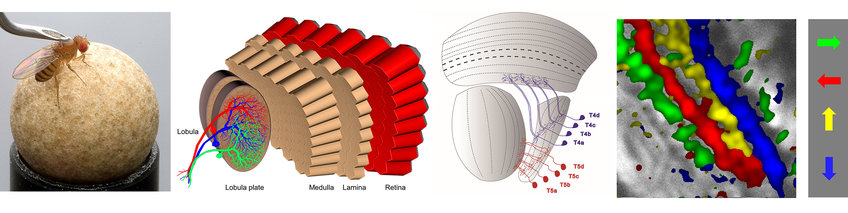
Prof. Dr. Alexander Borst is Director of the Department "Circuits - Information - Models" at the Max Planck Institute for Biological Intelligence in Martinsried, Germany. His research focuses on understanding neural computation in the visual system of Drosophila, particularly how direction-selective motion detection circuits process visual information to guide behavior. Education: Diploma in Biology, University of Würzburg (1981) Doctoral thesis with Martin Heisenberg, University of Würzburg (1984) Habilitation and private lecturer, University of Tübingen (1989) Prof. Borst's research employs a multidisciplinary approach to investigate neural information processing at the level of individual neurons and small circuits. His department uses the fruit fly Drosophila as a model system due to its computationally tractable visual system, with circuits containing fewer than 100 neurons that can be genetically manipulated and observed. The research integrates anatomical reconstructions, physiological characterization, behavioral analysis, and computational modeling to build a comprehensive understanding of visual processing. Analysis of Prof. Borst's recent publications reveals a consistent focus on motion vision mechanisms in Drosophila, with particular emphasis on directional selectivity, neural circuit organization, and the molecular basis of visual processing. His work demonstrates how specific subpopulations of T4 and T5 cells are directionally tuned to cardinal directions and how ON and OFF pathways segregate motion processing. The publications highlight the integration of experimental techniques like 2-photon calcium imaging with computational modeling to understand circuit function. Scientific Awards: Valentino Braitenberg Award in Computational Neurobiology (2014) FENS Award (2014) Member of the HHMI Scientific Advisory Board (2018) Member of the Bavarian Academy of Sciences (2012) EMBO Member (2011) Member of the German Academy of Sciences Leopoldina (2011) Human Frontier Science Program (HFSP) Prize (2006) Prof. Borst has led his department since 2001, first at the Max Planck Institute of Neurobiology and now at the Max Planck Institute for Biological Intelligence. His research has been supported by numerous grants from German and international funding agencies. He has mentored many students and postdoctoral researchers who have established successful careers in neuroscience. His department includes multiple research groups focusing on different aspects of neural computation in the Drosophila visual system. His laboratory comprises several specialized teams working on neurogenetics, molecular characterization, electrophysiology, 2-photon functional imaging, tethered and free behavior analysis, and computational modeling. These teams collaborate closely to investigate how visual information is processed from photoreceptors to behavioral output, with particular focus on motion detection circuits and their developmental and molecular underpinnings.
Núria Agell Jané is a Full Professor in the Department of Operations, Innovation and Data Science at ESADE Business School. She also serves as a researcher at the ESADE D3 - Institute for Data-Driven Decisions. With a PhD in Applied Mathematics from UPC (Universitat Politècnica de Catalunya), her academic career spans several decades with significant contributions to artificial intelligence and decision science. Her research focuses on developing Artificial Intelligence techniques for decision making under uncertainty. Specifically, she works on systems with automatic learning, qualitative and fuzzy reasoning, multi-criteria decision making, group decision systems, recommendation systems, and consensus modeling. Her methodological approach combines theoretical foundations with practical applications in business contexts, particularly in marketing and strategic decision making. Her recent publications demonstrate a strong trend toward applying hesitant fuzzy linguistic approaches to complex decision problems across diverse domains including media analysis, food waste reduction, healthcare fraud detection, and sustainable energy planning. These works consistently integrate AI methodologies with real-world business challenges, showing her commitment to bridging theoretical research with practical applications. Professor Agell has directed or co-directed 11 doctoral theses and maintains active research collaborations with institutions including The University of Edinburgh Business School. She coordinates the Research Group Judgements and Decisions in the Market Place (JUICE), which focuses on applying AI to business decision contexts. Her research has been supported by multiple projects related to AI applications in marketing and business strategy.