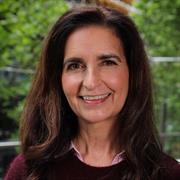
Stavroulakis Georgios is a Professor at the School of Production Engineering and Management, Technical University of Crete. His research focuses on smart structures, vibration control, finite element methods, and advanced materials. He leads interdisciplinary projects in structural mechanics, acoustics, and computational mechanics with applications in engineering systems and heritage preservation. Key areas include: (1) Development of robust control systems for smart structures, (2) Numerical modeling of masonry and composite materials, (3) Applications of artificial intelligence in structural analysis and material science. Office: Δ5.109, DPEM Building. Research activities emphasize: Active vibration suppression using piezoelectric systems and auxetic materials Advanced finite element analysis for biomedical and historical structures Data-driven computational methods for material characterization Acoustic comfort optimization in urban environments Structural health monitoring through physics-informed neural networks His work bridges traditional engineering disciplines with modern AI tools, addressing challenges in infrastructure resilience and sustainable design. Publications span smart materials innovation, nonlinear mechanics, and heritage building restoration.
Anders Tranberg is a Professor of Theoretical Physics at the University of Stavanger, affiliated with the Faculty of Science and Technology and the Department of Mathematics and Physics. His research focuses on classical and quantum field phenomena in particle physics and cosmology, including baryogenesis, inflation, preheating, topological defects, and out-of-equilibrium field theory methods. He employs high-performance computing alongside analytical techniques and model-building. Education and Career: Master of Science, University of Copenhagen (Niels Bohr Institute), 2000. Ph.D. in Theoretical Physics, University of Amsterdam, 2000–2004. Postdoctoral Fellowships at University of Sussex, Cambridge, Oulu, and Helsinki (2004–2010). Assistant Professor, University of Copenhagen (2010–2012). Full Professor, University of Stavanger (2013–present). Research Interests: Tranberg’s work emphasizes real-time quantum field theory methods (e.g., Lefschetz thimbles, 2PI formalisms) and quantum effects in the early universe. Collaborations include projects on inflationary dynamics with NTNU and phase transition simulations with the University of Nottingham. His research also explores gravitational wave signatures from cosmological phase transitions and topological defects. Key Contributions: His publications span topics like quantum-corrected Q-ball dynamics, bubble nucleation simulations, and stochastic inflation models. He actively participates in conferences and public lectures, including presentations on dark matter, gravitational waves, and quantum mechanics at the Wonderful World Festival.
Dr. Mark Gorgolewski is a Professor in the Department of Architectural Science at Toronto Metropolitan University. His research focuses on sustainable building design, circular economy approaches, low-carbon construction, and urban agriculture integration. He holds degrees from Oxford Brookes University (PhD, 1995), Cranfield University (MASc, 1993), and University College London (BSc/DipArch, 1983/1985). Key areas of expertise include energy-efficient buildings, building material reuse, and circular systems in architecture. He has pioneered projects like the DAS Haus and Harvest Home, emphasizing resource efficiency. Awards include the Canada Green Building Council Inspired Educator Award (2018) and the H.A. Krentz Award (2012). Gorgolewski is affiliated with the Carrot City initiative and the Centre for Urban Energy. He actively contributes to professional organizations, including the Journal of Green Building editorial board and the International Initiative for a Sustainable Built Environment (IISBE) Canada team.
John Ross is an Assistant Professor at Mississippi State University's School of Architecture, where he teaches courses and conducts research in architectural design, digital fabrication, and building performance modeling. He has taught at institutions including the University of Texas at Arlington, University of Minnesota, and Lund University, Sweden. With over 20 years of professional experience in multinational architecture firms, he has led research and development in digital workflows and emerging technologies. Ross holds a Master of Architecture from Harvard University (2004). Education: Master of Architecture, Harvard University, 2004 Research Interests: Building Performance Modeling Digital Fabrication Instructional Technology in Architecture Education His work bridges academic and professional realms, focusing on sustainable design, immersive technologies in design review, and community-engaged projects like the Emmett Till Memorial. Recent research emphasizes net-zero energy solutions and collaborative digital tools. Grants & Advising: No specific grants or advising roles are listed, but his professional experience highlights leadership in technical development and seminar organization. Labs/Teams: Fred Carl, Jr. Small Town Center Gulf Coast Community Design Studio
David A. Martinez serves as a full-time Associate Professor at the University of San Francisco, specializing in community health psychology with a focus on underserved Latino populations. His academic foundation includes doctoral training in Clinical Psychology with Health Psychology emphasis from the University of Missouri-Kansas City. His educational background demonstrates progressive specialization: PhD in Clinical Psychology, University of Missouri-Kansas City MA in Psychology, University of Missouri-Kansas City BA in Psychology, San Diego State University Dr. Martinez's research centers on developing culturally appropriate HIV prevention interventions within faith communities, particularly Latino churches. He investigates critical intersections of substance use, coping mechanisms, stigma, and medication adherence among HIV-positive individuals, with fluency in Spanish enabling direct community engagement. His work consistently employs community-based participatory research (CBPR) methodologies to ensure cultural relevance. Analysis of his 15 most recent publications reveals expanding interdisciplinary reach while maintaining core public health focus. Early work concentrated on HIV testing barriers in religious settings (2015-2016), evolving toward pandemic response strategies (2020) and technical applications in sensor networks (2022), though community health remains the unifying thread across all publications. His scientific contributions have been recognized through competitive awards: Excellence in Educational Research, Sigma Theta Tau (2016) NIMH pre-doctoral fellowship for HIV testing research in Latino churches Multiple UMKC Chancellor's and McNair Fellowships (2008-2012) 1st Place Winner, Social and Behavioral Sciences Division (2012) Dr. Martinez maintains active research mentorship, supervising student projects presented at national conferences including Society of Behavioral Medicine meetings. His grant portfolio features significant NIMH funding and collaborative projects like MOTIV8 for ART adherence. Current work leverages mutual aid networks developed during COVID-19 while continuing church-based HIV screening initiatives with African American and Latino congregations. He co-leads community research teams implementing faith-based health interventions, with recent projects examining telephone aftercare for Hispanic youth and cultural awareness training through gaming platforms for health professionals.
Habtamu Bayera Madessa is an Associate Professor at the Department of Built Environment, Faculty of Technology, Art and Design at Oslo Metropolitan University. His research focuses on energy efficiency, thermal comfort, building physics, and sustainable building technologies. He is a core member of the Sustainable Built Environment (SustainaBuilt) research group. Habtamu has contributed to over 34 scientific publications, 1 textbook, and multiple research reports. His work addresses topics such as net-zero energy buildings, district heating optimization, renewable energy integration, and building automation. Key areas include tropical climate adaptation for energy systems, energy monitoring in Norway, and BIM-based sustainable design practices. His research combines experimental studies (e.g., viscosity analysis of scale inhibitors, PCM-enhanced materials) with numerical modeling (CFD for ventilation systems) and systems integration (smart buildings, ground-source heat pumps). He has collaborated on projects ranging from micro-hydropower systems to lifecycle analysis of building retrofits. Notable publications include a 2025 review on net-zero-energy buildings in tropical climates and a 2024 study on district heating return temperature reduction strategies. His textbook Fornybar Energi (2024) provides foundational knowledge on renewable energy systems.
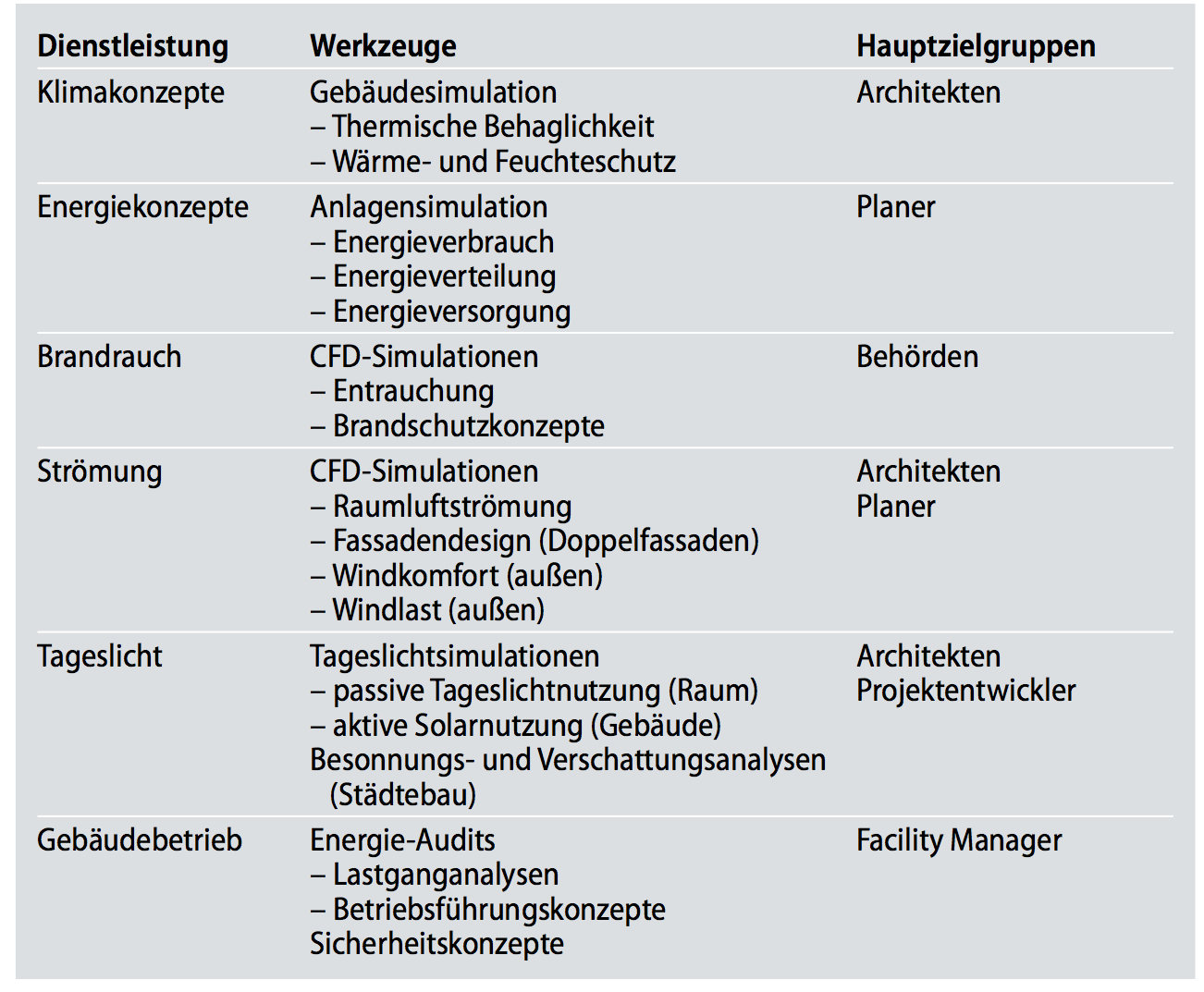
Axel Seerig is Professor of Building Climate and Building Technology at the Department of Technology and Architecture of Lucerne University of Applied Sciences and Arts (HSLU). He works at the Institute of Building Technology and Energy (IGE) and the Center for Integrated Building Technology, where he leads research and teaching in sustainable building concepts. With over 25 years of experience in building simulation and sustainable energy concepts for buildings, areas, and regions, he has established himself as a leading expert in climate-responsive building design. Seerig completed his studies in Process Engineering and earned his PhD in Thermodynamics at the Technical University of Berlin. His academic journey includes leadership roles as program director for Building Technology at the Austrian University of Applied Sciences Burgenland and senior researcher positions at AIT (Austrian Institute of Technology) and AEE-intec. His research focuses on the development of sustainable energy concepts using computer simulations for building climate control. He applies scientific principles of thermodynamics, heat transfer, and fluid mechanics through dynamic simulations in the disciplines of building climatic engineering and building simulation. His work emphasizes maximizing natural resources and user exposure to the outdoors through natural air conditioning, ventilation, and lighting, with human well-being as the central focus of planning. Current research includes energy efficiency in engineering systems for Central Asia, climate change adaptation in building design, and advanced data analysis for building performance assessment. His publication record shows a consistent focus on building energy efficiency, climate-responsive design, and simulation methods. Recent work emphasizes the integration of data analysis techniques like Monte-Carlo methods and artificial neural networks with traditional building simulation approaches. His research addresses critical challenges including climate change impacts on building performance, uncertainty in occupancy patterns, and the development of robust building concepts that maintain performance throughout their lifecycle. Seerig serves as an advisor in the Master of Science program MSE in Building Technologies and for doctoral studies at Middlesex University in London. He has received research funding through projects like SCCER FEEB&D (Swiss Competence Center for Energy Research) and has consulted internationally for the German Society for International Cooperation (GIZ) in Central Asia and Africa. He is an active member of the building science community, serving on the board of the International Building Performance Simulation Association (IBPSA), as a reviewer for the Austrian Research Promotion Agency (FFG), and as a member of professional organizations SIA and VDI. His work connects academic research with practical building projects, including notable collaborations with firms like Gruner AG on buildings such as the Roche OPAL office building, Siemens Headquarters Austria, and the Vienna Central Station.
Markus Koschenz is a Professor at the Lucerne School of Engineering and Architecture, specializing in building technology and energy efficiency. His research develops sustainable construction solutions for climate change adaptation. Current projects include passive cooling strategies, energy modeling for future climate scenarios, and building material innovations. He leads initiatives like ResCool investigating efficient cooling concepts for residential buildings.
Filipe Alves serves as a Researcher at Polytechnic Institute of Bragança and pursues a PhD in Industrial and Systems Engineering at University of Minho, with continuous research activity since 2017. His work bridges theoretical optimization frameworks and practical industrial applications through DTx - Digital Transformation CoLAB, a national R&D consortium focused on digital innovation. His academic foundation includes: Bachelor's in Biomedical Engineering (Polytechnic Institute of Bragança) Master's in Biomedical Technology (Polytechnic Institute of Bragança) Specializing in scheduling systems and metaheuristic algorithms , his research creates decision support tools for industrial automation and healthcare logistics . Key contributions address nurse scheduling, home healthcare routing, and virtual power plant optimization using MILP solvers and multi-agent architectures. His methodology integrates mathematical modeling with real-world constraints like time windows, resource capacities, and dynamic environments. Publication analysis reveals three dominant trajectories: (1) Healthcare logistics optimization (40% of recent work), featuring nurse/home care scheduling solutions; (2) Energy systems management (30%), particularly virtual power plant coordination; (3) Public health applications (20%), including pandemic impact studies and waste management. This evolution demonstrates increasing interdisciplinary reach while maintaining core optimization expertise. As an active DTx CoLAB member, he collaborates on digital transformation projects connecting academic research with industrial implementation. His current PhD research extends these efforts into industrial systems engineering frameworks for complex scheduling challenges.
Dr. Sittimont Kanjanabootra is a Senior Lecturer in Construction Management (Building) at the School of Architecture and Built Environment, University of Newcastle, Australia. With a background as a practicing Design Mechanical and Construction Engineer, he brings practical industry experience to his academic role, having worked on diverse projects including high-rise apartment complexes, warehouses, shopping centers, and hotel renovations. His research focuses on addressing persistent challenges in the construction industry through innovative technological solutions. Dr. Kanjanabootra holds a Doctor of Philosophy from Royal Melbourne Institute of Technology, where his thesis on engineering knowledge management systems was nominated for the Australian Professors Award for most outstanding thesis. His educational background also includes a Bachelor of Science (Technical Education - Mechanical Engineering) and a Master of Science (Technical Education - Mechanical Technology), both from King Mongkut's Institute of Technology in Thailand. His research interests span Ontologies of Construction Knowledge, Effectiveness of Information and Knowledge Sharing in Construction Projects, Improved Design and Domain Knowledge Sharing in Construction, Construction Management in Asia, Off-Site Manufacturing in Construction, and Construction Knowledge Management Systems. He applies methodologies such as big data applications, ontological analysis, and knowledge management best practices to solve industry problems like design errors, time delays, and cost overruns. His work bridges the gap between academic research and practical industry application, with a focus on creating tangible improvements in construction processes. Analysis of Dr. Kanjanabootra's recent publications reveals a strong focus on applying digital technologies to construction challenges, particularly big data analytics and knowledge management systems. His work increasingly addresses sustainability concerns in construction, including building component reuse, energy efficiency in educational buildings, and urban village development. The research demonstrates a clear progression from theoretical knowledge management frameworks to practical applications in real-world construction settings, with growing international collaboration evident in recent publications. Thesis nominated for the Australian Professors Award for most outstanding thesis Recipient of multiple research grants totaling $1,426,859 across 16 projects Lead researcher on Department of Foreign Affairs and Trade funded projects including Disaster Resilience Education Capacity Building in Latin America Dr. Kanjanabootra has successfully supervised 8 PhD students to completion and currently mentors 4 additional doctoral candidates. His research has attracted significant funding, including a $620,000 grant from Hansen Yuncken Pty Ltd for studying safety behavior in construction professionals and a $364,096 Department of Foreign Affairs and Trade grant for Resilient Water Solutions for Coastal Communities. His collaborative approach is evident in projects spanning multiple countries and disciplines, particularly in disaster resilience and sustainable construction practices. Dr. Kanjanabootra leads and participates in interdisciplinary research teams focused on construction innovation, including collaborations with international partners from Latin America, Asia, and Europe. His work with the Applied Informatics Research Group demonstrates his commitment to developing practical technological solutions for industry challenges, particularly in knowledge management and process optimization within construction environments.
Dr. Nicola Willand is an Associate Professor at RMIT University’s School of Property, Construction and Project Management, specializing in sustainable built environments with a focus on housing, energy, health, and equity. As an architect by background, her research emphasizes holistic sustainability, addressing social, environmental, and economic dimensions. She explores energy vulnerability, retrofit justice, and strategies to mitigate inequities in housing and energy access. Her work includes projects on climate resilience, energy poverty, and interdisciplinary initiatives to improve housing conditions globally. Dr. Willand holds a British Academy Visiting Fellowship and contributes to the Fuel Poverty Research Network. She teaches postgraduate courses on Building Modelling and Simulation and Housing & Health, and supervises student theses. Her research groups include the Sustainable Building Innovation Laboratory (SBi Lab) and the Centre for Urban Research (CUR). Key projects include studies on household energy practices, heat event preparedness, and sufficiency in housing. Her advocacy extends to public engagement and policy advising on energy equity and climate resilience. Education: Background in Architecture, PhD in Housing and Energy Sustainability Research Focus: Energy justice, housing resilience, climate adaptation, interdisciplinary solutions Affiliations: RMIT’s SBi Lab and CUR, Fuel Poverty Research Network
Didier Dragna is a researcher at the Laboratory of Fluid Mechanics and Acoustics (LMFA), affiliated with École Centrale de Lyon in Lyon, France. He specializes in acoustics, with a focus on sound propagation in complex environments, aeroacoustics, and noise control. His work involves computational modeling and experimental studies of acoustic phenomena in areas such as wind turbine noise, sonic booms, and duct acoustics. Dragna contributes to both academic research and applied projects, collaborating with industries and institutions on noise reduction solutions and environmental impact assessments. Research Interests Dragna's research explores the interplay between fluid dynamics and acoustics, particularly in challenging outdoor and industrial settings. Key themes include: Propagation of sound in inhomogeneous and moving media Aeroacoustic noise from wind turbines and aircraft Impact of topography and meteorology on sound distribution Development of advanced numerical methods for acoustic modeling Publications Trends His recent work emphasizes practical applications of acoustic theories, such as mitigating noise from renewable energy systems and addressing urban noise challenges. Key methodologies include parabolic equation models, time-domain simulations, and boundary condition innovations for duct liners. Awards and Grants No scientific awards or grants are explicitly listed in the provided materials, though his contributions are evident through collaborative projects and experimental setups. Labs and Teams Dragna is part of the Acoustics team (AC) at LMFA, leveraging the lab's facilities like wind tunnels and advanced measurement techniques (PIV, LDV). He collaborates with interdisciplinary groups on fluid mechanics and environmental acoustics.
Dr. Hassam Nasarullah Chaudhry is an Associate Professor and Director of Studies (Dubai) for Architectural Engineering at Heriot-Watt University's School of Energy, Geoscience, Infrastructure and Society. He holds a PhD from the University of Leeds (2013) and is a Chartered Engineer (CEng) and Fellow of the Higher Education Academy. His research focuses on sustainable engineering systems, heat transfer, natural ventilation, and passive cooling, with a particular emphasis on wind-driven energy and building aerodynamics. He has led projects such as the 'Urban Heat Island (UHI) effect in Dubai' funded by RCUK, and holds a UK patent for a 'Passive Cooling System for Wind Tower' (2015). His expertise includes computational fluid dynamics (CFD), thermal modeling, and low-speed wind tunnel design. He serves as Associate Editor for the International Journal of Ventilation and reviews for journals like Applied Energy and Energy and Buildings . His work contributes to UN Sustainable Development Goals related to sustainable cities and climate action. Education: PhD in Building Services Engineering (University of Leeds, 2013) Patents: PCT/GB2014/052263 (Passive Cooling System) Awards: Excellence in Engineering (2009/2010), Feedback Award (2017) Research Trends: Recent articles emphasize carbon-energy nexus in construction, photovoltaic cooling solutions, and occupant-centric building systems. His work bridges traditional and modern passive cooling techniques, with applications in hot climates like the UAE. Advising & Grants: Actively supervises PhD students and has secured grants for UHI research. Collaborates on wind tunnel facilities for teaching/research and serves on editorial boards for energy journals. Labs/Teams: Leads research in low-speed closed-loop wind tunnel facilities and sustainable built environment design teams.
Kamaljit Singh is an Associate Professor at the Institute for GeoEnergy Engineering (IGE) within the School of Energy, Geoscience, Infrastructure and Society at Heriot-Watt University in Edinburgh, UK. He has held this position since 2021, after serving as an Assistant Professor at the same institution from 2019 to 2021. Prior to joining Heriot-Watt, he held research positions at Imperial College London, the European Synchrotron Radiation Facility in France, and the Max-Planck Institute in Germany. His research employs advanced imaging techniques to study fluid dynamics in porous media with applications to energy storage and environmental challenges. Dr. Singh's educational background includes: PhD in Civil Engineering from the University of New South Wales at Australian Defence Force Academy, Australia (2004-2009) M.E. in Environmental Engineering from Punjab Engineering College/Panjab University, India (2000-2002) B.E. in Civil Engineering from GNE/Punjab Technical University, India (1996-2000) His primary research focuses on 3D imaging of fluid flow in permeable media using both in-house and synchrotron X-ray micro-CT. His current projects investigate H 2 and CO 2 storage in subsurface rocks, pore-to-core scale fluid displacement dynamics, wettability effects on multiphase flow, multi-scale rock characterization, and thermoregulation in termite nests for bio-inspired building design. Dr. Singh's work directly contributes to UN Sustainable Development Goals related to clean energy and climate action, with his research group ( https://digiporflow.site.hw.ac.uk ) advancing digital imaging techniques for porous flow systems. Analysis of Dr. Singh's recent publications (2024-2025) reveals a strong emphasis on hydrogen storage mechanics in geological formations, particularly examining permeability evolution and deformation in sandstones under cyclic loading. His work also maintains significant focus on CO 2 sequestration in carbonate reservoirs and has produced notable interdisciplinary research on termite nest ventilation as a model for sustainable building design. His methodological approach consistently integrates advanced imaging techniques with computational modeling to address energy transition challenges. Dr. Singh serves as Global Course Leader for Reservoir Engineering (MSc) and teaches Introduction to Petroleum Engineering (undergraduate). His research has received considerable media attention, including coverage in The New York Times, The Straits Times, and Süddeutsche Zeitung for his work on bio-inspired ventilation systems. With 41 research publications, 4 datasets, and 7 invited talks, he maintains an active research program focused on solving critical challenges in subsurface energy storage and sustainable engineering.
Mijndert Van der Spek is an Associate Professor at the School of Engineering & Physical Sciences, Heriot-Watt University, within the Institute of Mechanical, Process & Energy Engineering. He holds a PhD from the Copernicus Institute of Sustainable Development and has postdoctoral experience at ETH Zürich's Separation Processes Laboratory. He teaches Process Design B and supervises MEng research projects. His research focuses on techno-economic and environmental analysis of carbon capture and storage (CCS), CO2 utilization (CCU), and direct air capture (DAC). Key areas include process modeling, net-zero systems, and uncertainty quantification. He advocates for improved assessment methods to guide policy and industry decisions. Publications span 2014–2025, emphasizing CO2 capture technologies, lifecycle assessments, and decarbonization pathways for industries like steel and cement. His work addresses challenges in solvent degradation, system integration, and cost reduction strategies. Collaborations involve global institutions, contributing to UN SDGs like Climate Action and Affordable Clean Energy. He emphasizes capacity-building in CDR through academic partnerships and policy engagement.