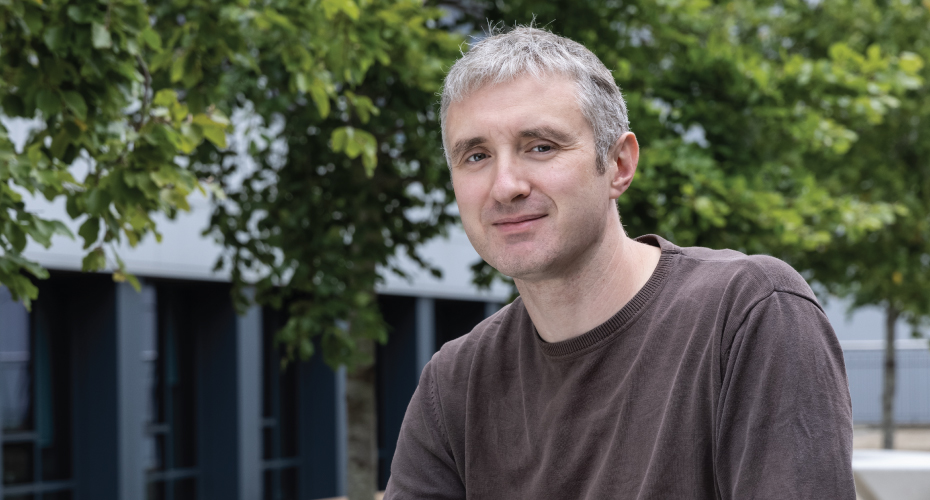
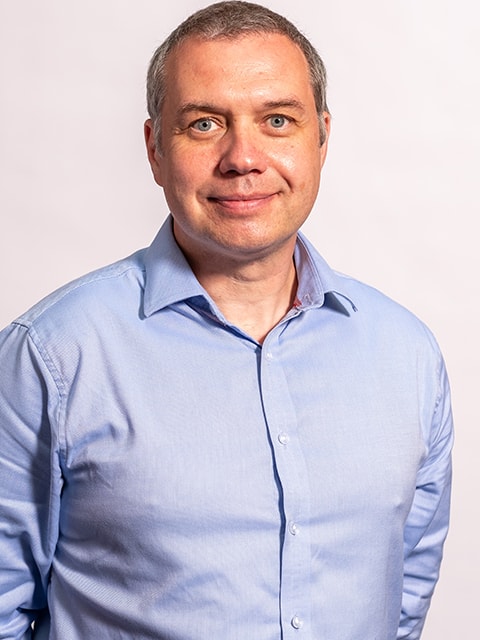
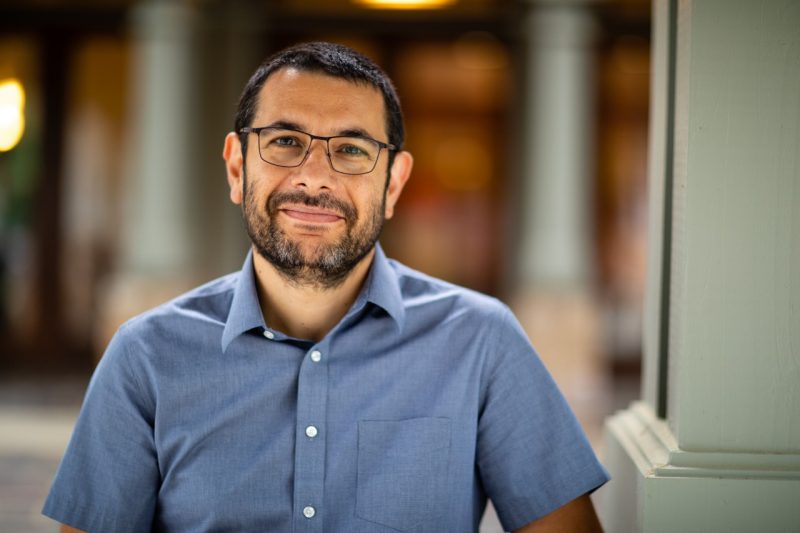
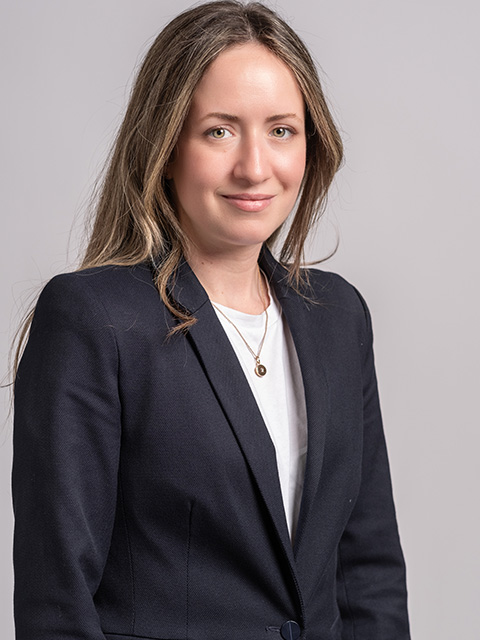
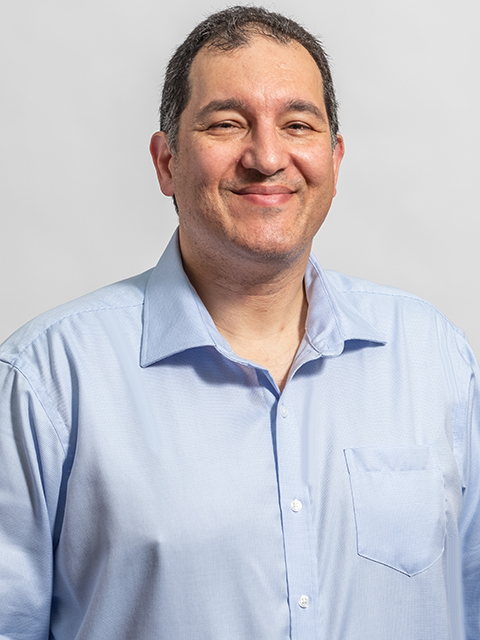
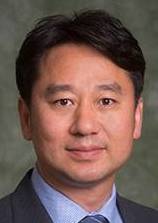
Dr Kevin Nolan is a Researcher at the UCD School of Mechanical and Materials Engineering , University College Dublin, specializing in fluid dynamics , aerosol transmission , and medical engineering . His work spans surgical safety , renewable energy systems , and microfluidic technologies , with a focus on real-world applications like infection control and wind turbine aerodynamics . Recent research includes modeling surgical smoke leakage , developing standards for face coverings , and analyzing wind turbine blade erosion using advanced fluid dynamic techniques. Collaborations with Mater Hospital , Cisco Systems , and NUI Galway highlight the interdisciplinary impact of his work. Key contributions: Schlieren optical technique for visualizing airflow, European standard development for community face coverings Current projects involve IoT-based air quality monitoring , 3D facial mapping for mask design , and reducing dead spots in air purification Publications address gas leaks in laparoscopy , reusable cloth mask efficacy , and flow friction dynamics , with a strong emphasis on computational fluid dynamics (CFD) and practical mitigation strategies across medical and engineering domains.
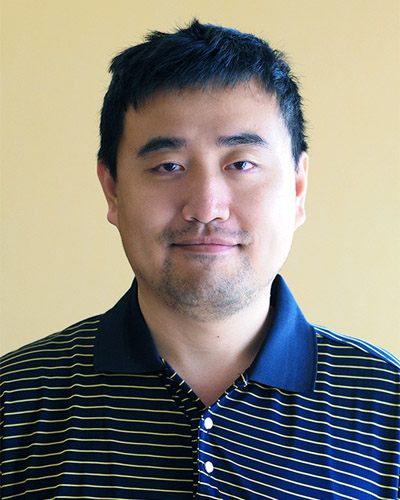
Professor Zhixiong Guo is a distinguished faculty member in the Department of Mechanical and Aerospace Engineering at Rutgers, The State University of New Jersey. He serves as Editor-in-Chief for the Journal of Enhanced Heat Transfer and Heat Transfer Research, and has made significant contributions to thermal sciences and engineering. His research spans multiple domains including radiative heat transfer, ultrafast laser-tissue interactions, and nanoscale thermal phenomena. Professor Guo received his educational foundation at Tsinghua University in Beijing, China, where he earned a B.S., M.S., and Dr. Eng. in Engineering Physics. His academic excellence was evident as he graduated first in his class (1/28) for his B.S. and completed his M.S. one year ahead of schedule. He then pursued and completed his Ph.D. in Mechanical Engineering from Polytechnic University (now Polytechnic School of Engineering, New York University) in just two years. Professor Guo's research interests center on advanced heat transfer phenomena, with particular expertise in radiative transfer in participating media, ultrafast laser-tissue interactions, and nanoscale thermal transport. His work bridges theoretical modeling with practical applications in energy systems, biomedical engineering, and materials science. He has pioneered computational methods for solving complex radiation transfer problems and developed innovative optical sensing techniques using whispering-gallery mode resonators. Analysis of Professor Guo's recent publications reveals a strong focus on emerging thermal technologies, including machine learning applications in heat transfer prediction, nanofluid thermal properties, and advanced materials for thermal management. His work demonstrates a clear trajectory from fundamental radiative transfer research toward practical applications in energy efficiency, biomedical diagnostics, and advanced manufacturing. Professor Guo has received numerous prestigious honors including: Fellow of the American Society of Mechanical Engineers (ASME), 2011 Fellow of the American Society of Thermal and Fluids Engineers (ASTFE), 2021 Rutgers, The Board of Trustees Award for Excellence in Research, 2018 As Editor-in-Chief of two leading journals in the field, Professor Guo has significantly shaped the direction of thermal sciences research. His laboratory at Rutgers focuses on cutting-edge research in optical thermal sensing, ultrafast radiation phenomena, and advanced computational methods for heat transfer analysis. Current research directions include machine learning applications in thermal systems and novel approaches to energy conversion and storage.
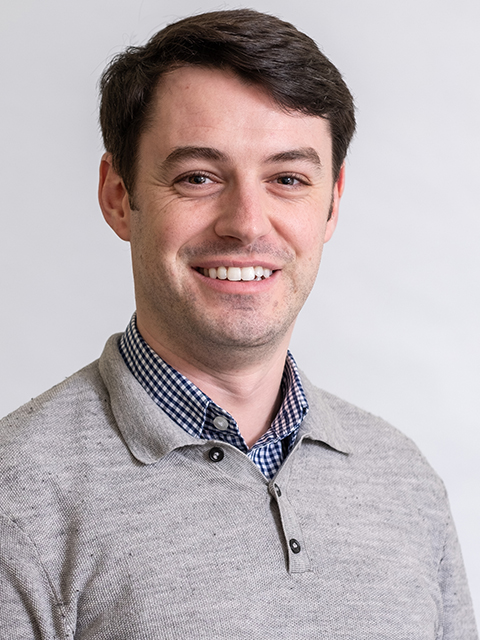
Graham D. Kribs is a Professor of Physics at the University of Oregon within the College of Arts and Sciences, where he has been a faculty member since 2005. During 2019-2025, he served as the first Director of the Institute for Fundamental Science. His academic journey began with a Ph.D. from the University of Michigan in 1998. Kribs' research focuses on Theoretical High Energy Physics, specializing in Physics Beyond the Standard Model. His work spans multiple frontiers including dark matter phenomenology, supersymmetry, extra dimensions, grand unification, and early universe cosmology. He has made significant contributions to stealth dark matter models, dark photon research, and effective field theory approaches to new physics. His publication record demonstrates a consistent trajectory from foundational work on supersymmetry and little Higgs models to cutting-edge research on long-lived particles and dark sector phenomena. Recent work shows increasing emphasis on experimental signatures that could be detected at the LHC and future colliders, with particular attention to unconventional dark matter candidates and their detection strategies. Fellow of the American Physical Society (2015) Kribs has organized numerous conferences and workshops worldwide at prestigious institutions including the Aspen Center for Physics, the Mainz Institute for Theoretical Physics, and the Institute for Nuclear Theory. His research has been supported by various grants, though specific funding details aren't provided in the source material. He has held significant research positions including a Ben Lee Fellowship at Fermilab (2010-11) and a Membership at the Institute for Advanced Study in Princeton (2013). His work bridges theoretical development with experimental testability, particularly through collaborations with experimental groups designing searches for new physics at major facilities like the LHC.
Xiaoyin Wang is an Associate Professor in the Department of Computer Science at the University of Texas at San Antonio, with affiliations to the College of AI, Cyber and Computing. She previously held a PostDoc position at UC Berkeley's Department of Electrical Engineering and Computer Science. Ph.D. in Computer Science, Peking University (2012) B.Eng. in Computer Science, Harbin Institute of Technology Her research focuses on Natural Language Processing , Program Analysis , Software Engineering , and Software Security . Key sub-areas include: Software migration and compatibility Build system automation Testing and debugging methodologies Privacy policy enforcement in mobile apps Deep learning for software analysis Augmented/Virtual Reality testing Recent publications (2022-2024) emphasize automated oracle prediction for AR/VR testing, data-sensitive analysis, and DevOps toolchain optimization. Trends include: Adaptation of program analysis to immersive environments Privacy-preserving software engineering Empirical studies on testing frameworks Academic accolades include: NSF CAREER Award (2019) President's Research Achievement Award (UTSA, 2019) Multiple best paper awards at ICSE, TOSEM She has advised 7 graduate students, including: Current: Rodney Rodriguez, Xueling Zhang, Sunzhou Huang Graduated: Xue Qin (Villanova), Foyzul Hassan (UM-Dearborn), Shaikh Mostafa (Amazon/Microsoft) Laboratory work involves tools like: TranStrL: Software internationalization Hima: API mapping for framework evolution NetworkProfiler: Android app fingerprinting DOVAR: AR/VR visualization for education Uniloc: CI failure diagnosis
Dr Andrew Timmis is a Lecturer in Transport and Director of Undergraduate Studies at the School of Architecture, Building and Civil Engineering at Loughborough University. His research focuses on sustainable transportation systems, airport operations, and stakeholder engagement in infrastructure projects. He leads the Transport Studies Group and has expertise in life cycle assessment (LCA), mobility hub implementation, and aviation policy. His academic interests include exploring environmental practices in aviation, urban development around airports, and the application of AI in traffic safety. Notable research areas include public acceptance of EV infrastructure, disruptive passenger behavior analysis, and post-COVID airport operations. Dr Timmis has published extensively on topics such as air cargo loyalty schemes, mobility hub integration, and predictive modeling for traffic conflicts. His work bridges theoretical research with practical applications, emphasizing interdisciplinary approaches to transportation challenges. He advises on aviation regulatory frameworks and collaborates with industry partners to advance sustainable transport solutions. His research has contributed to policy recommendations for airport urban development and green logistics strategies.
Professor David Allinson leads the Building Energy Research Group (BERG) at Loughborough University, focusing on transforming building performance for a zero-carbon future. He holds a BEng (Hons), MSc (Eng), PhD, and PGCAP, and is a Fellow of the Higher Education Academy (FHEA). His work integrates measurement and modeling to evaluate energy efficiency, thermal performance, and moisture management in buildings. Key projects include developing the Standard Assessment Procedure (SAP) 11 and evaluating technologies like SMETER through large-scale field trials. Research emphasizes test houses with synthetic occupants, the Loughborough Hygrothermal Test Facility, and post-occupancy evaluations. Completed doctoral researchers include studies on zonal heating controls, energy flexibility in buildings, and community energy schemes. His expertise spans ventilation optimization, hygrothermal simulation, and policy-driven energy feedback systems. Notable projects include the EPSRC-funded Active Buildings Centre and SCENe (Sustainable Community Energy Networks), alongside Innovate UK initiatives. He collaborates internationally through IEA EBC Annex71 and advises on retrofitting strategies for solid wall dwellings. His work bridges academic research with practical solutions for decarbonizing the built environment.
Dimitrios Nikolopoulos is the John W. Hancock Professor of Engineering at Virginia Tech's College of Engineering, within the Department of Computer Science. His research focuses on high-performance computing, systems runtime systems, memory management, and edge computing. He holds a Chartered Engineer (CEng) certification. Education: M.Eng., University of Patras, Greece (1996) M.Sc., University of Patras, Greece (1997) Ph.D., University of Patras, Greece (2000) Research Interests: His work spans transprecision computing, parallel programming paradigms, efficient inference frameworks for large language models (LLMs), and energy-efficient server ecosystems. Recent efforts emphasize optimizing edge computing systems, GPU resource sharing, and adaptive memory management in cloud-edge environments. Recent Trends in Publications: Recent studies highlight advancements in edge-serving frameworks (e.g., SLED), multi-agent systems for HPC code optimization (MARCO), and novel approaches to GPU and memory resource utilization in constrained settings. Themes include reducing latency, improving scalability, and integrating AI-driven techniques into HPC workflows. Grants & Advising: Details on current grants and advisees are not explicitly listed in the provided materials. Labs/Teams: His research is conducted through collaborative groups within Virginia Tech's Department of Computer Science, focusing on systems, parallel computing, and AI/ML infrastructure.
Dr. Vanda Dimitriou is a Senior Lecturer specializing in Digital Engineering and Building Performance at an unspecified university. She serves as Ethics Lead and Deputy Lead for Architectural Engineering programs. Her research focuses on building performance modelling, digital technologies in construction, and sustainable design strategies, particularly integrating Building Information Modelling (BIM), energy simulation, and computational methods. She leads projects on thermal model calibration, BIM interoperability, and digital twins for sustainable built environments, collaborating closely with industry and government bodies. Her research interests include dynamic thermal modelling using real-world data, BIM energy modelling at building and district scales, and retrofit solutions for residential and commercial buildings. She has supervised multiple PhD students in areas like HVAC digital twins, grey-box modelling, and net-zero retrofitting. Her recent projects include the Design4Energy FP7 EU project and the EPSRC-funded REFIT initiative, demonstrating expertise in interdisciplinary energy research. Dr. Dimitriou’s work emphasizes data-driven approaches to building energy systems, including smart metering and sensor integration. She has pioneered decision support tools for retrofitting and authored numerous publications on energy efficiency and thermal modelling techniques.
Ashraf El-Hamalawi is an Associate Professor and Group Leader of the Geotechnical and Geomatics Group, specialising in engineering modelling and geotechnical systems. He holds a PhD from the University of Cambridge and is a Fellow of the Higher Education Academy (FHEA). His research focuses on numerical methods (FEM, BEM, DDA) for geotechnical challenges, soil-structure interaction, and infrastructure sustainability. Key areas include weather-driven deterioration of clay embankments, adaptive mesh refinement, and SCADA systems for construction monitoring. Education: BEng (Hons) in Engineering, PhD (Cambridge) Professional Affiliations: MASCE, MCGS, PE Research interests span geotechnical engineering, computational mechanics, and infrastructure asset management. He develops predictive models for slope stability, clay embankment degradation, and wear analysis in offshore structures. His work integrates advanced sensing technologies for non-destructive testing and environmental monitoring, including ammonia detection and landmine identification. Publications emphasize long-term infrastructure deterioration, numerical modelling frameworks, and sustainable retrofitting. His contributions to converged network systems and mobile collaboration tools in construction enhance industry practices.
Dr. Seungbae Park is a SUNY Distinguished Professor in the Department of Mechanical Engineering at Binghamton University's Watson College of Engineering and Applied Science. He serves as Director of the Integrated Electronics Engineering Center (IEEC) and leads the Opto-Mechanics and Physical Reliability Laboratory. With over two decades of experience since joining Binghamton in 2002, Dr. Park has established himself as a leading expert in electronics packaging reliability. Dr. Park's educational background includes: BS and MS from Seoul National University PhD from Purdue University Dr. Park's research focuses on electronics packaging reliability, with particular expertise in micro/nanomechanics, optomechanics, and digital image correlation techniques. His work addresses critical challenges in electronic device reliability including thermal cycling, mechanical shock, moisture effects, and electromigration. He has pioneered methods for in-situ warpage measurement and deformation analysis of electronic packages using advanced optical techniques. Dr. Park's recent publications demonstrate a strong focus on emerging packaging technologies including 2.5D/3D integration, through-glass vias, and advanced thermal management solutions. His work increasingly incorporates machine learning approaches for process optimization and reliability prediction, reflecting the evolving nature of electronics packaging research. Dr. Park has received numerous prestigious honors: Elevated to SUNY Distinguished Professor Named IEEE Fellow for electronics packaging research Named ASME Fellow for three decades of electronics packaging innovations Outstanding poster award from ASME InterPACK 2013 Dr. Park has successfully advised over 30 PhD students and numerous Master's students, many of whom now work at leading technology companies including Apple, Intel, Samsung, and Google. His research has been supported by significant funding from industry partners such as IBM, Samsung, Intel, Analog Devices, and Corning, as well as government agencies including NASA and the Department of Energy. Dr. Park directs the Opto-Mechanics and Physical Reliability Laboratory, which features state-of-the-art equipment including a 3D printer, Digital Image Correlation system, high-speed camera, Wyko surface profiler, Bose tester, and nano-characterization system. The lab collaborates with the Integrated Electronics Engineering Center (IEEC) and the Center for Advanced Microelectronics Manufacturing (CAMM).
Kristis Alexandrou is a Researcher at the Science and Technology in Archaeology and Culture Research Center (STARC) of The Cyprus Institute. He holds a Master’s degree in Architecture (MA) and a Ph.D. in Architectural Engineering from the University of Cyprus, focusing on hybrid bending-active structural systems. His research emphasizes Structural Design, Computational Methods, and BIM applications in heritage conservation. He contributes to projects like ENI-CBC-MED BEEP, RIF-UrbanPeriscope, and Horizon Infra, advancing BIM interoperability for cultural heritage data management. His professional experience includes architectural design and heritage retrofitting in Cyprus. At STARC’s Virtual Environments Lab (VElab), he develops BIM-based workflows to address data interoperability challenges in arts and humanities. Key projects include 'BIM to BPS interoperability' leadership in the BEEP Project and semantic data integration for Mediterranean heritage sites. His work bridges computational innovation with sustainable heritage preservation.
Olivia Guerra-Santin is an Assistant Professor in the Department of the Built Environment at Eindhoven University of Technology (TU/e). Her research focuses on designing energy-efficient and healthy built environments, emphasizing user-centered and data-driven approaches. She specializes in building monitoring, occupant behavior analysis, and Living Lab methodologies for socio-technical systems. Guerra-Santin holds a PhD from TU Delft and has extensive experience in academic roles across institutions like Cardiff University and The Hague University of Applied Sciences, alongside consulting for EU H2020 smart cities projects. Her academic background includes a MSc in Urban Environmental Management from Wageningen University and an Architecture degree from the UAEMex. Current projects include the MAI-HOME initiative (AI-driven solutions for energy poverty) and B4B (Bringing Brains to Buildings for energy systems optimization). She teaches courses such as Smart Building Methodology & Technology and Master Projects in Architecture. Research interests span building management systems, occupant behavior modeling, and ethical use of building data. Key contributions include studies on zero-energy renovations, dementia care environments, and thermal comfort modeling. She actively engages in interdisciplinary initiatives bridging social sciences and engineering to address energy performance challenges.
Cemalettin Dönmez is a Professor in the Department of Civil Engineering at Izmir Institute of Technology (IYTE). He holds a B.S. and M.S. in Civil Engineering from Middle East Technical University (Orta Doğu Teknik Üniversitesi) and a Ph.D. from Purdue University. His research focuses on earthquake engineering, structural analysis, and seismic design of reinforced concrete structures. Key areas include seismic performance evaluation of RC buildings, infill wall dynamics, and post-earthquake structural assessment. Notable studies analyze damage patterns from the 2023 Southeast Turkey and Samos Island earthquakes, contributing to regional seismic risk mitigation strategies. He has advised multiple graduate students and collaborates on interdisciplinary projects involving structural dynamics and material behavior. Research interests extend to bridge modal analysis, composite sandwich structures, and biaxial seismic response modeling. Over 20 peer-reviewed articles reflect his expertise in both theoretical and experimental structural engineering. Current projects emphasize improving seismic codes through data-driven analysis of real-world earthquake impacts. Awards and grants reflect sustained contributions to civil infrastructure resilience against seismic hazards.
Dr. Lin Zheng is a Research Fellow at University College London's Bartlett School of Environment, Energy & Resources, affiliated with the Energy Institute and Smart Energy Research Group (SERL). Her work focuses on applying data science and machine learning to address energy and sustainability challenges in buildings. She holds expertise in smart meter data analysis, life cycle assessment, and energy poverty research. Research interests include: Data-driven approaches for building energy conservation Thermal performance of renewable energy systems Phase change materials in energy storage solutions Machine learning applications in carbon footprint prediction Her recent work highlights trends in: Quantitative analysis of building lifecycle emissions Regional variations in energy consumption patterns Integration of renewable energy systems with smart materials Dr. Zheng is available for consultancy and journal reviewing, and communicates in English and Mandarin. Current affiliations include: Smart Energy Research Group (SERL) University College London Energy Institute
Duncan Grassie is a Doctoral Researcher at the UCL Energy Institute , specializing in energy demand research and building simulation modeling. He is affiliated with the LoLo CDT (London-Loughborough Centre for Doctoral Training in Energy Demand), with a focus on coupling human behavior with technological and environmental challenges. His research explores: Indoor air quality and overheating risks in UK schools Climate risk assessment for educational buildings Multi-criteria decision analysis for energy efficiency schemes Integration of socio-technical data with building modeling Recent publications highlight his work in: Scoping reviews on environmental impacts in educational buildings Modeling energy retrofit effects on childhood asthma risk Hybrid weather file validation for simultaneous heating/overheating analysis Automated frameworks for school thermal simulation models His professional background includes 10 years as a petroleum engineering consultant, with field experience in the UK, Romania, UAE, China, Denmark, Norway, and Indonesia. He holds academic qualifications from Edinburgh University (MSc in Chemical Physics) and Heriot-Watt University (MSc in Petroleum Engineering).