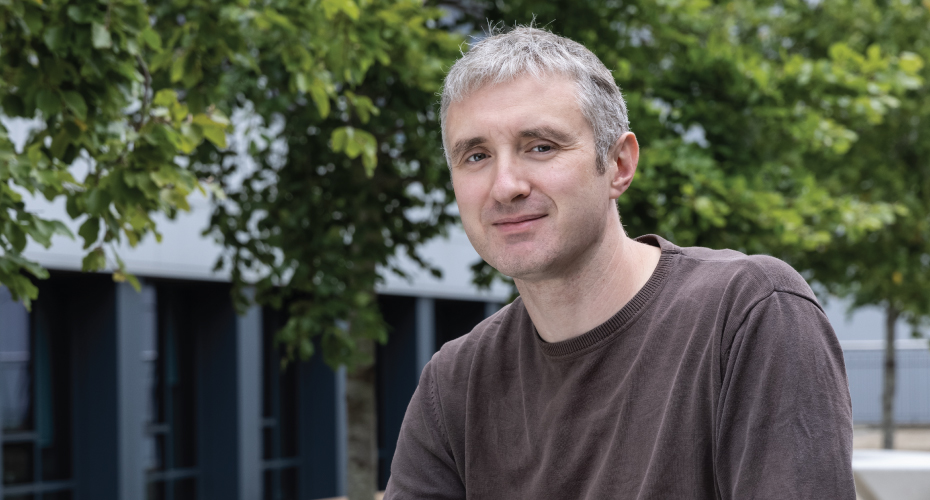
Yan Delaure is Associate Professor of Fluid Mechanics at Dublin City University's School of Mechanical and Manufacturing Engineering and Deputy Director of the DCU Water Institute. His research focuses on multiphase flows, environmental hydraulics, and computational fluid dynamics applications in wastewater treatment and marine systems. Research includes microbubble dynamics for aeration, fluid-structure interactions in deformable systems, and biomimetic antifouling solutions. Recent publications explore advanced simulation methods for turbulent flows and additive manufacturing process optimization.
Usman Ali is an Assistant Professor and Adjunct Lecturer at the School of Mechanical and Materials Engineering, University College Dublin. He holds a Ph.D. in 'A data-driven GIS-based approach for multi-scale residential building energy modeling' (2020) from UCD and an M.Sc. in Computer Science from Lahore University of Management Science (2013). His research focuses on machine learning, GIS modeling, urban building energy systems, and energy performance certification. He has contributed to projects like the U.S.-Ireland R&D initiative on building stock classification and energy prediction, and collaborated with the Sustainable Energy Authority of Ireland (SEAI) on energy policy research. His work emphasizes data-driven solutions for energy efficiency, urban sustainability, and policy decision-making. Education: Ph.D., University College Dublin (2020) M.Sc., Lahore University of Management Science (2013) B.Sc., International Islamic University Islamabad (2008) Research emphasizes machine learning applications in energy modeling, GIS integration for urban planning, and energy policy frameworks. His recent work includes synthetic building datasets, occupancy-based energy analysis, and uncertainty quantification in energy systems.
James O'Donnell is an Associate Professor in the School of Mechanical and Materials Engineering at University College Dublin (UCD). He joined UCD in 2013 after working at Lawrence Berkeley National Laboratory. His research focuses on multi-scale energy modeling, interoperable BIM solutions, and sustainable building design. He contributes to buildingSMART’s Energy Modelling Expert Panel and teaches modules on building physics and energy analysis. Education: B.E. Civil and Environmental Engineering, University College Cork Ph.D. in Holistic Building Performance Analysis, University College Cork Professional Diploma in University Teaching & Learning, University College Dublin Research Interests: James specializes in energy informatics, building energy simulation, and semantic web technologies for the built environment. His work bridges BIM integration with energy modeling to optimize urban-scale performance. Grants & Funding: PROBONO (2022–2026): Integrator-centric approach for energy-efficient buildings NexSys (2022–2026): Next-Generation Energy Systems ALIVE (2020–2024): Indoor Environmental Quality in Energy-Efficient Buildings Teaching & Editorial Roles: James coordinates courses like Energy Systems in Buildings and serves as an Associate Editor for Journal of Building Engineering and editorial board member of Advanced Engineering Informatics . Professional Affiliations: Member of Engineers Ireland, International Building Performance Simulation Association (IBPSA), and European Council on Computing in Construction.
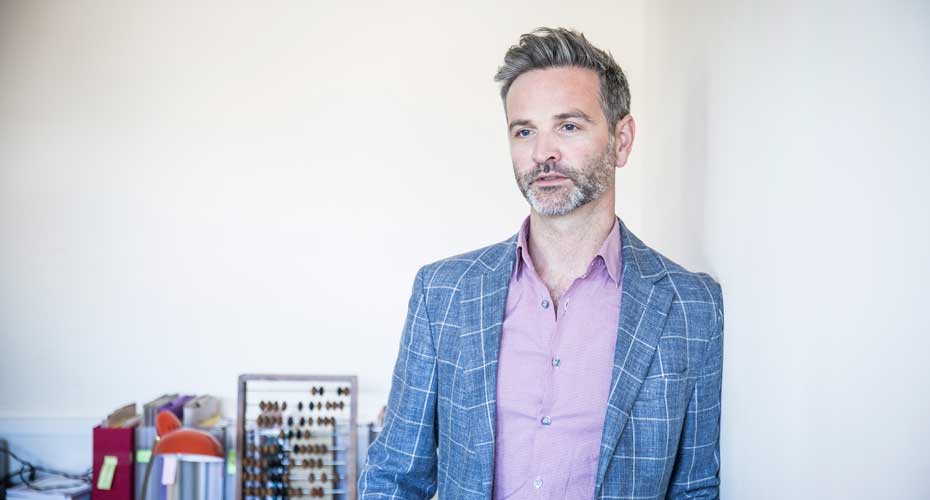
Dr. Muhammad Sajid is an Assistant Professor in Automotive Engineering (Fluid Mechanics) at the School of Mechanical and Materials Engineering, University College Dublin. He holds a B.Eng. from NUST (Pakistan), a Master's from ENSAM ParisTech (France), a PhD from University of Cergy Pontoise (France), and completed postdoctoral research at Texas A&M University Qatar and NUST. His research focuses on integrating AI/ML with mechanical engineering challenges, particularly in fluid dynamics, renewable energy systems, and smart building technologies. He coordinates courses like Computational Fluid Mechanics and Mechanics of Fluids. His work spans experimental and numerical studies in energy harvesting, HVAC optimization, and sustainable urban infrastructure. As PI of the AIMS laboratory, he leads projects on AI-driven mechanical systems. He actively participates in international conferences and has authored over 50 peer-reviewed publications. Education: Bachelor of Engineering (B.Eng.), National University of Sciences and Technology Master’s Degree, École Nationale Supérieure d’Arts et Métiers (ENSAM) Paris Tech PhD, University of Cergy Pontoise Postdoctoral Research: Texas A&M University at Qatar and NUST Research interests include cloud-based high performance computing for fluid dynamics simulations, solar/wind energy forecasting using machine learning, IoT sensor analytics for HVAC systems, and aerodynamic design optimization. His recent work emphasizes achieving net-zero energy buildings through smart environmental control systems.
Dr Kevin Nolan is a Researcher at the UCD School of Mechanical and Materials Engineering , University College Dublin, specializing in fluid dynamics , aerosol transmission , and medical engineering . His work spans surgical safety , renewable energy systems , and microfluidic technologies , with a focus on real-world applications like infection control and wind turbine aerodynamics . Recent research includes modeling surgical smoke leakage , developing standards for face coverings , and analyzing wind turbine blade erosion using advanced fluid dynamic techniques. Collaborations with Mater Hospital , Cisco Systems , and NUI Galway highlight the interdisciplinary impact of his work. Key contributions: Schlieren optical technique for visualizing airflow, European standard development for community face coverings Current projects involve IoT-based air quality monitoring , 3D facial mapping for mask design , and reducing dead spots in air purification Publications address gas leaks in laparoscopy , reusable cloth mask efficacy , and flow friction dynamics , with a strong emphasis on computational fluid dynamics (CFD) and practical mitigation strategies across medical and engineering domains.
Francesco Pilla is a Full Professor at University College Dublin's School of Architecture, Planning and Environmental Policy, specializing in Smart and Sustainable Cities. His work bridges urban technology, geospatial modeling, and citizen science initiatives. Coordinates EU Horizon projects: iSCAPE (air pollution control), OPERANDUM (flood risk reduction), WeCount (mobility systems), Connecting Nature (nature-based solutions) Leads SFI Investigator Grant on scalable mobility analytics Co-Director of Spatial Dynamics Lab Research focuses on: Geospatial big data & AI integration Participatory sensing with low-cost sensors Climate action through educational co-design Urban microclimate optimization Policy-driven AI consensus models Key articles demonstrate expertise in air quality monitoring, traffic safety analysis, and energy-efficient urban design. Awards include: Haagen-Smit Prize for atmospheric research Electric Vehicle Awards 2024 for eMobility innovation Academic Research Award from Financial Times Teaching responsibilities include: Advanced GIS (2018-2025) Smart Cities module (2019-2024) Research Methods coordination (2019-2024) Labs & Teams: Co-Director of Spatial Dynamics Lab, member of Science Foundation Ireland Energy Institute, and collaborator with MIT & IBM research labs.
Dr. Edward Corry is a Lecturer in the Department of STEM Education at Mary Immaculate College (MIC), Ireland. His academic background includes a PhD from the National University of Galway (NUIG) alongside degrees in Engineering, Arts, Systems Analysis, and Education. He specializes in STEM Education with a focus on technology integration, teacher professional development, and curriculum innovation. Dr. Corry holds affiliations with MIC's Faculty of Education and collaborates with institutions like Clare Education Centre and Erasmus+ programs. His research explores integrated STEM pedagogy, teacher efficacy, and STEAM (Science, Technology, Engineering, Arts, Mathematics) initiatives. He has led projects such as the STEAMing Erasmus+ program and the STEM Café initiative, emphasizing cross-disciplinary approaches. His recent work examines primary school STEM implementation challenges, professional development models for educators, and the role of technology in enhancing learning outcomes. He contributes to policy development through reports like the State of the Art Report of STEM Education in Ireland and collaborates on EU-funded projects promoting international best practices. Dr. Corry's research spans 20 peer-reviewed articles, focusing on themes like teacher collaboration, curriculum design, and innovative teaching strategies. He actively engages in educational workshops and conferences, advocating for evidence-based practices in STEM education.
Eleni Mangina is a Full Professor at the School of Computer Science, University College Dublin (UCD), and Vice Principal (International) for the College of Science. Her research focuses on applied artificial intelligence (AI), robotics, unmanned aerial vehicles (UAVs), and extended reality (XR) technologies with interdisciplinary applications in energy systems and education. She holds a PhD from the University of Strathclyde (UK), an MSc in Artificial Intelligence from the University of Edinburgh, and an MSc in Agricultural Science from the Agricultural University of Athens. Education : PhD, University of Strathclyde (UK), 2001 MSc in Artificial Intelligence, University of Edinburgh (UK) MSc in Agricultural Science, Agricultural University of Athens (Greece) HDip in University Teaching & Learning, UCD Research Interests : AI-driven optimization for energy and materials Xr applications in healthcare and education Citizen science and open data practices Robotics in early childhood education Smart city technologies Awards & Honors : 2022 CEN/CENELEC Standards Innovation Award 2021 Athena SWAN Bronze Award (School of Computer Science) 2020 UCD President's Teaching Award 2022 StandICT.eu Fellowship Grants & Projects : Coordinator of EU H2020 projects: ARETE, AHA, and FANTASIA Principal Investigator in SFI Energy Systems Integration Programme Lead on multiple XR and energy-related grants (2017-2025) Labs & Teams : Her lab develops XR solutions for education and energy, collaborating with EU and international partners. Current focuses include ethical XR standards and AI integration with metaverse platforms.
Dr. Anh Vu Vo is an Assistant Professor at University College Dublin's School of Computer Science, specializing in high-scalability algorithms for LiDAR and urban spatial datasets. He holds a PhD from UCD, a Master's from the University of Melbourne, and a Bachelor's from HCMC University of Architecture. Roles : Lecturer/Assistant Professor since 2024, Postdoctoral Research Fellow (2019–2022), Research Scientist at NYU (2018–2019). Research Interests : LiDAR, Urban Science, Spatial Data Management, Distributed Computing, and Big Data. Key projects include CAMEO (Earth Observation platform), UrbanARK (flood risk assessment), and AIMVIE (mangrove mapping). He has authored over 30 peer-reviewed publications and secured grants such as the SFI Future Innovator Prize. Awards : 2022 EODisrupt Winner, 2015 IEEE GRSS Data Fusion Contest First Prize, Australian Endeavour Award. Teaching : Spatial Information Systems, Urban Sensing, and graduate-level courses. His work focuses on integrating LiDAR data with advanced computing frameworks to address urban challenges like flood risk and infrastructure planning.
Dr. Xuehui Wang is an Assistant Professor of Mechanical Engineering (Thermodynamics) at University College Dublin (UCD), School of Mechanical and Materials Engineering. He holds a PhD from Zhejiang University (2017) and has prior research experience at the University of Nottingham and Imperial College London. His research focuses on thermodynamics, heat transfer, thermal management, and renewable energy systems. He has contributed to projects funded by NSFC, Innovate UK, and EPSRC. Education: PhD in Mechanical Engineering from Zhejiang University (2017). Editorial Roles: Editor for journals like Applied Sciences , Energies , Machines , and Frontiers in Thermal Engineering . Teaching: Coordinates modules on Automotive Engines, Thermodynamics I, and Thermodynamics II. Professional Activities: Session chair at UKHTC 2019 and MIT Applied Energy Symposium. Research Interests: Solar cooling systems, thermoelectric generators, organic Rankine cycles, heat exchanger design, and thermal management for electric vehicles. His work emphasizes energy efficiency, low-GWP refrigerants, and waste heat recovery. Grants & Projects: Involved in NSFC, Innovate UK, and EPSRC-funded initiatives on thermal systems and renewable energy applications.
Reihaneh Aghamolaei is an Assistant Professor in the School of Mechanical & Manufacturing Engineering at Dublin City University. Her research integrates building energy performance, techno-economic energy optimization, and thermal comfort modelling with a focus on digitization and computational techniques. She holds degrees in Building Engineering and Sustainable Planning, and her PhD addressed urban microclimate impacts. Prior to DCU, she lectured at UCD and worked in Ireland's AEC industry on sustainable building design.
Dr. Breiffni Fitzgerald is an Associate Professor in the Department of Civil, Structural and Environmental Engineering at Trinity College Dublin (TCD), where he also serves as a Fellow. He holds the senior role of Director of Postgraduate Teaching and Learning for TCD's School of Engineering, overseeing doctoral education strategy and postgraduate policy development. His research focuses on structural dynamics, wind energy systems, and machine learning applications to enhance wind turbine performance and resilience. He has authored over 50 peer-reviewed publications and serves as an editor for Wind Energy . Dr. Fitzgerald's engineering credentials include Chartered Engineer status from both the Institution of Engineers of Ireland and ASCE. He has received awards such as the 2023 TCD Teaching Excellence Award and the 2024 IStructE Research into Practice Award. His projects emphasize advanced control systems for wind farms, structural health monitoring, and offshore wind energy innovation. His recent work includes developing TMDI (Tuned Mass Damper Inerter) systems for vibration control, machine learning models for blade deformation prediction, and analyzing wind-wave misalignment impacts in Irish coastal zones. Collaborative initiatives like the MeLodiC project aim to optimize wind farm performance using AI-driven control algorithms. Key Projects: Machine Learning for Wind Farm Aerodynamics and Control (MeLodiC) - funded by SFI Data-Driven Digital Twin of Wind Farms (TwinFarm) - SEAI-funded REMOTE-WIND: Drone-Based Monitoring - SEAI-funded Dr. Fitzgerald's research bridges theoretical advancements with practical industry applications, addressing challenges in offshore wind energy reliability and operational efficiency.
Dr. Samar Raffoul is a Research Fellow at the School of Architecture, Planning and Environmental Policy at University College Dublin (UCD), where she holds a prestigious Marie Skłodowska-Curie Postdoctoral Fellowship. She is actively involved in the Modern Methods of Construction Research Group (MMCRG) and the Centre for Critical Infrastructure Research (CCIR), focusing on innovative and sustainable structural solutions. Her educational background includes a BSc in Civil Engineering from the University of Balamand (2011), an MSc in Structural Engineering from the University of Manchester (2012), and a PhD from the University of Sheffield (2018), where her research explored the use of waste tyre components in FRP-confined concrete. Dr. Raffoul's research interests span modern methods of construction, structural robustness, composite design, constitutive modelling, and sustainable material development. She is particularly passionate about reducing environmental impact through the reuse of recycled materials such as rubber from end-of-life tyres, and optimizing structural systems for greater sustainability and resilience. Her recent publications reveal a strong focus on material behavior under extreme conditions, including fire and accidental loading, as well as computational modeling for industrial processes. Key themes include embodied carbon in construction, cyclic behavior of rubberized concrete, post-fire performance of metal structures, and composite cold-formed steel-timber systems. She employs both experimental and numerical methods to advance structural design practices. Her scientific recognition includes the Marie Skłodowska-Curie Fellowship. Funded projects include the Horizon 2020 'Concatenation' project on modular construction robustness, the FP7 'Anagennisi' project on tyre reuse in concrete, and a UK KTP project on cold-formed steel systems. Dr. Raffoul has advised on industrial design solutions through roles at Fusion Building Systems and Evolusion Innovation. She is a member of the Associate Fellowship of the Higher Education Academy, reflecting her engagement in academic development. While no formal students are listed, her work supports knowledge transfer to industry and broader engineering communities. She is affiliated with key research groups: the Modern Methods of Construction Research Group (MMCRG) and the Centre for Critical Infrastructure Research (CCIR) at UCD, contributing to interdisciplinary efforts in resilient and sustainable infrastructure.
Aamir Akbar serves as an Assistant Professor in the Department of Computer Science & Information Systems at Abdul Wali Khan University Mardan (AWKUM), where he also co-directs both the AWKUM AI Lab and AWKUM Robotics initiatives while coordinating final year projects. His academic journey culminated in a PhD from Aston University, Birmingham, UK, with research focused on energy-efficient methods for hybrid mobile cloud computing. His educational background includes a PhD in Computer Science from Aston University (2015-2019, awarded February 2020), where his dissertation explored energy-efficient approaches for hybrid mobile cloud computing systems. Dr. Akbar's research spans multiple cutting-edge domains in computer science, with particular emphasis on Artificial Intelligence , Cloud and Fog Computing , Internet of Things , and Software Defined Networks . His multidisciplinary approach combines evolutionary computation, multi-objective optimization, and machine learning to develop resource-efficient intelligent systems. His work frequently addresses challenges in Cyber-Physical Systems, Mobile-Cloud Computing, and IoT/IoV applications, demonstrating strong practical relevance to real-world problems. Analysis of his recent publications (2021-2024) reveals a clear research trajectory toward increasingly sophisticated AI applications in networking and distributed systems. His work shows strong focus on reliability, energy efficiency, and security across multiple domains including medical IoT, smart cities, and industrial automation. The growing citation impact (612 total citations, h-index: 14) demonstrates increasing recognition of his contributions to these fields. Dr. Akbar maintains active presence in the research community with 19 total publications showing accelerating output in recent years (6 in 2021, 2 in 2022, 5 in 2023, and 2 in 2024). His Google Scholar profile reflects substantial impact with an h-index of 14 and i10-index of 16. As an educator and researcher, Dr. Akbar brings both academic rigor and industry experience to his role. His technical expertise spans the full stack of modern computing systems, from frontend development (HTML, CSS, Angular, React) through backend frameworks (Flask, Django, Node.js) to database systems (MySQL, PostgreSQL, MongoDB) and cloud infrastructure (AWS, Kubernetes, Docker). This comprehensive skill set enables him to bridge theoretical research with practical implementation. He leads research initiatives through the AWKUM AI Lab and AWKUM Robotics, providing students with opportunities to engage in cutting-edge projects that combine theoretical foundations with real-world applications. His GitHub activity shows ongoing engagement with AI and systems development projects, including repositories focused on neural networks, Python programming, and network simulation.
Dr. Oliver Kinnane is a Researcher at University College Dublin's School of Architecture, Planning & Environmental Policy within the College of Engineering and Architecture. His research focuses on developing high-performance building materials, particularly innovative concrete technologies for energy-efficient building skins. As a principal investigator on the European Horizon 2020 IMPRESS project, he collaborates with industry partners including Firebird and Techrete to create sustainable solutions for both new construction and building retrofit applications. Dr. Kinnane's research interests center on sustainable building materials, energy efficiency in construction, and reducing the carbon footprint of the built environment. His work addresses critical challenges in building physics, particularly the hygrothermal properties of traditional and innovative materials. He specializes in developing thin, ultra-high-strength concrete skins that improve thermal performance while reducing material usage. His research spans from fundamental material science to practical applications in social housing and commercial buildings, with particular emphasis on Ireland's building stock and climate conditions. Analysis of Dr. Kinnane's recent publications reveals a strong focus on the hygrothermal properties of traditional building materials, particularly Irish stone and brick construction. His work bridges historic building conservation with modern energy efficiency requirements, investigating how traditional materials perform under contemporary climate conditions. A significant portion of his research examines retrofit strategies for existing buildings, with emphasis on accurate material characterization for reliable performance prediction. His publications consistently address the environmental impact of construction, particularly embodied carbon analysis and life cycle assessment of building materials and systems. Dr. Kinnane has secured significant research funding including from the Sustainable Energy Authority of Ireland (SEAI) for the nZEB_101 project monitoring near zero energy buildings in social housing. As principal investigator on the Horizon 2020 IMPRESS project, he leads a 16-partner European collaboration developing innovative prefabricated building panels. His industry partnerships with companies like Firebird and Techrete demonstrate the applied nature of his research, translating academic findings into practical building solutions. Dr. Kinnane's laboratory work focuses on developing and testing novel concrete technologies incorporating phase change materials, cement replacements, and alternative reinforcement systems. His research group collaborates with architects, construction companies, and local authorities to implement sustainable building practices in Ireland. The IMPRESS project demonstration units represent a key aspect of his team's work, validating new prefabricated technologies under real-world conditions.