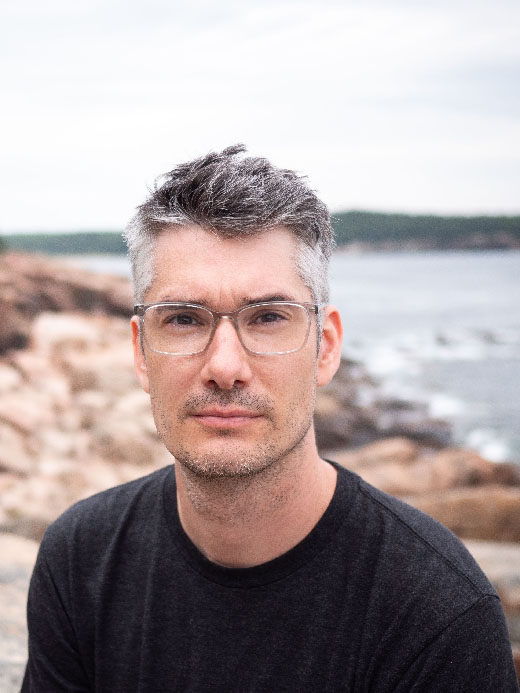
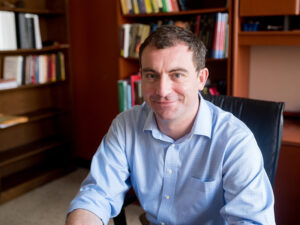
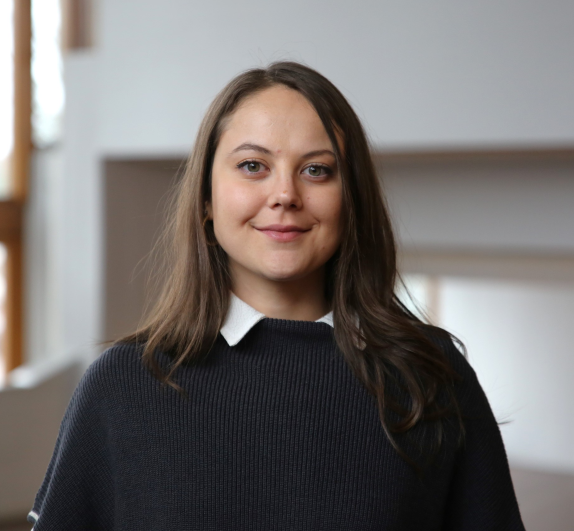
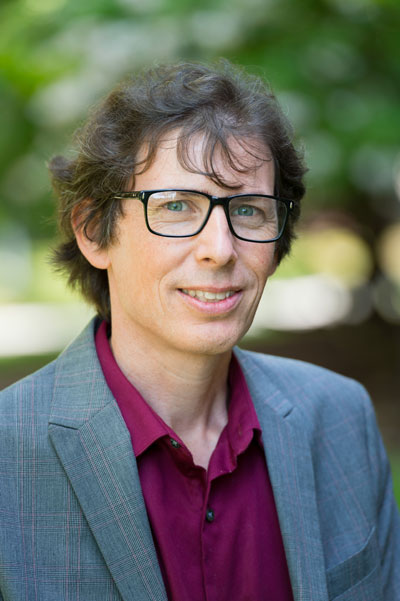
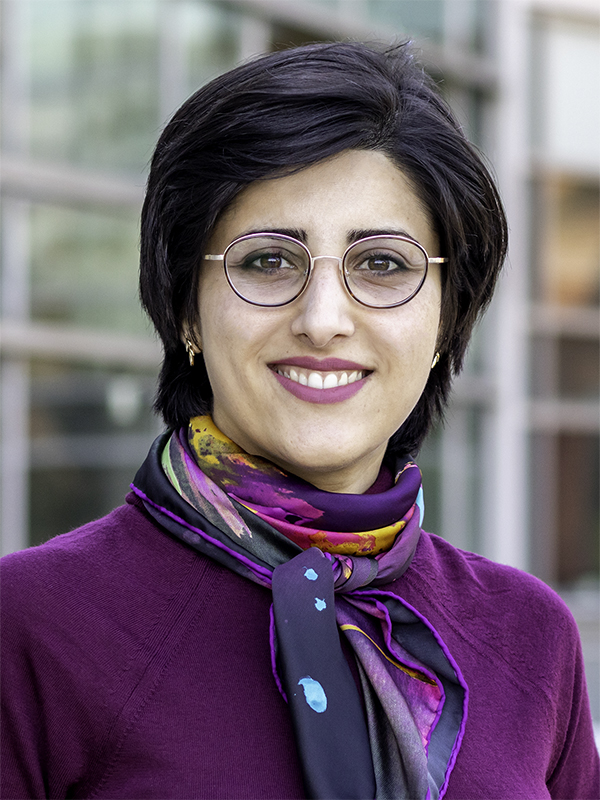
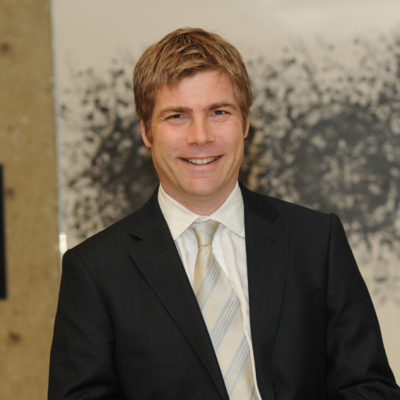
Matthew Louis Mauriello is an Assistant Professor in the Department of Computer and Information Sciences at the University of Delaware , where he directs the Sensify Lab . He holds a PhD in Computer Science from the University of Maryland (2018) and completed postdoctoral work at Stanford University (School of Medicine, 2020; School of Public Policy & Environmental Engineering Department, 2019). Research interests span Human-Computer Interaction (HCI), Ubiquitous Computing, and User-Centered Design with applications in: Sustainability Human-Building Interaction Wearable Technology Personal Informatics Educational Game Design Mental Health Interventions Recent publications highlight trends in stress monitoring (skin-like biosensors, workplace wellbeing), energy auditing (thermography systems), and educational technology (block-based programming tools for teachers). His work appears in ACM CHI, ACM Human-Computer Interaction, and Building and Environment. Scientific awards include: Best Paper Honorable Mention, CHI 2016 Best Paper Honorable Mention, CHI 2015 Best of WebSci'18 Teaching at University of Delaware encompasses courses like Educational Game Design Operating Systems Advanced Web Technologies Computing for Social Good with a focus on project-based learning and systems thinking.
Anthony Rowe is the Siewiorek and Walker Family Professor of Electrical and Computer Engineering at Carnegie Mellon University (CMU) and a Chief Scientist at Bosch Research. His primary affiliation is with the CyLab and the Wireless, Sensing and Embedded Systems (WiSE Lab) at CMU. He specializes in networked embedded systems, sensor networks, and extended reality (XR) technologies. His research emphasizes energy-efficient sensing, real-time localization, and XR integration with physical systems. Research Focus: His work spans XR systems (e.g., AR/VR edge networking in ARENA), mmWave radar for sensing (e.g., tire wear monitoring via Osprey), distributed edge computing (Silverline), and low-power wide-area networking (OpenChirp). Recent efforts include AI-integrated XR platforms (XaiR) and radar tomography (DART). Grants & Projects: Leads the CONIX Research Center ($27.5M NSF/DARPA grant), Bosch-funded edge computing projects, and DOE initiatives on microgrids. Notable projects include ARENA (XR edge architecture), GridBallast (smart grid control), and rural microgrid deployments in Haiti. Awards: Best Student Paper (ISMAR 2024), Best Paper (IPSN 2020), and the Steven J. Fenves Research Award (2015). Recognized for innovations in localization (MobiCom 2021), radar (ICRA 2023), and energy systems (BuildSys 2010). Teaching: Teaches courses on embedded systems (18-349/18-449), real-time systems, and mixed reality (18-453). Courses emphasize hands-on design and real-world applications. Labs & Teams: Directs the WiSE Lab, collaborating with Bosch Research and industry partners. The lab develops open-source frameworks like ARENA and OpenChirp, and contributes to standards for edge computing and sensing.
Ram Rajagopal is an Associate Professor of Civil and Environmental Engineering and Electrical Engineering at Stanford University, and a Senior Fellow at the Precourt Institute for Energy. He leads the Stanford Sustainable Systems Lab (S3L), focusing on large-scale monitoring, data analytics, and stochastic control for infrastructure networks, particularly power systems. His research emphasizes renewable energy integration, smart distribution systems, and demand-side data analytics. Education: PhD in Electrical Engineering and Computer Sciences & MA in Statistics (UC Berkeley), MS in Electrical and Computer Engineering (UT Austin), and BEng in Electrical Engineering (Federal University of Rio de Janeiro). Research interests include power grid optimization, renewable energy systems, and data-driven approaches to infrastructure challenges. He has pioneered work in grid flexibility, distributed energy resources, and machine learning applications for energy systems. His lab develops technologies like Smart Dim Fuses and the EV-EcoSim platform for EV charging infrastructure optimization. Received NSF CAREER Award, Powell Foundation Fellowship, and Berkeley Regents Fellowship Over 30 patents and best paper awards Advises/founded companies in sensor networks, power systems, and data analytics Labs/Teams: Stanford Sustainable Systems Lab (S3L), Powernet Project. His work spans grid resilience, energy equity, and scalable energy solutions.
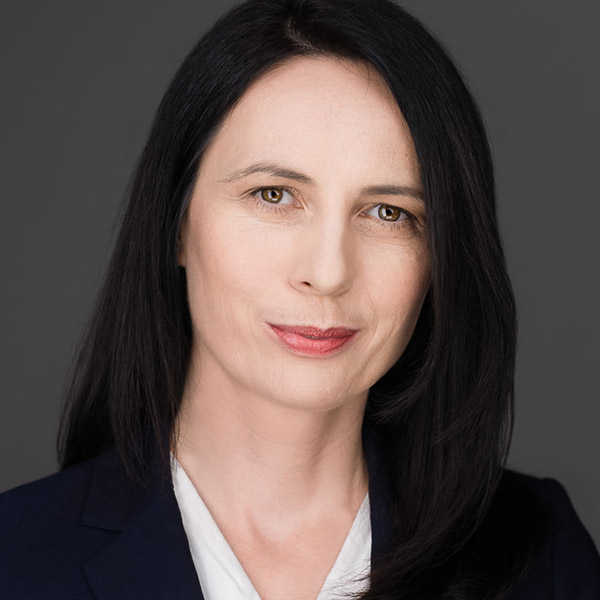
Vesna Terzic is a Professor in the Department of Civil Engineering and Construction Engineering Management at California State University Long Beach's College of Engineering. Her research specializes in seismic performance assessment, infrastructure resilience, and probabilistic risk analysis of structures. Education includes a PhD in Structural Engineering from UC Berkeley, MS in Earthquake Engineering from Ss. Cyril and Methodius University, and BS in Structural Engineering from University of Belgrade. Research focuses on developing advanced computational frameworks for evaluating post-earthquake functionality of buildings and bridges. Her work integrates performance-based engineering with resilience quantification, emphasizing practical applications for seismic design and retrofitting. Recent publications demonstrate consistent focus on functional recovery modeling, structural health monitoring, and optimization of protective systems. Research trends show progression from component-level analysis to regional recovery simulation frameworks. Major awards: ACI Chester Paul Siess Award for Excellence in Structural Research (2017) Popert Fellowship, UC Berkeley (2009) Professional service includes membership on FEMA P-58 project committees and contributions to OpenSees development. Current projects investigate soil-structure interaction effects on tall buildings and recovery-based design methodologies.
Dr. K. Max Zhang is a Professor in the Sibley School of Mechanical and Aerospace Engineering at Cornell University. He is the director of the Energy and the Environment Research Laboratory (EERL) and a fellow at the Atkinson Center for a Sustainable Future. His research is deeply interdisciplinary, focusing on sustainable energy systems, air quality, and environmental justice, with significant impacts on policy and community development in New York and beyond. Ph.D., Mechanical Engineering, University of California-Davis, 2004 B.S., Thermal Engineering, Tianjin University, 1998 B.A., English Language, Tianjin University, 1998 Dr. Zhang’s research centers on the integration of energy and environmental systems. He investigates air pollution dynamics using advanced numerical models like CTAG, with applications in near-source pollution, indoor air quality, and environmental justice. His work on renewable energy systems includes designing sustainable solar farms and managing distributed energy resources such as heat pumps to enhance grid flexibility. He also leads a pioneering initiative to create the first statewide public IoT network in the U.S., enabling hyperlocal weather forecasting and microclimate monitoring. His recent publications reflect a strong trend toward agrivoltaics, peer-to-peer energy markets, and IoT-based environmental monitoring. These works demonstrate a consistent focus on data-driven modeling, community-scale energy solutions, and the integration of social considerations into technical systems. The keywords across his articles highlight expertise in sustainability, machine learning, air quality, and energy transition. Cornell Town-Gown Achievement Award (2022) Engaged Scholar Prize, Cornell University (2017) People's Choice Sign of Sustainability Award, Sustainable Tompkins (2016) Scientific and Technological Achievement Award, Environmental Protection Agency (2015) Fellow of the American Society of Mechanical Engineers Dr. Zhang is actively involved in mentoring students and securing research grants from agencies such as the National Science Foundation (NSF) and the New York State Energy Research and Development Authority (NYSERDA). His projects often involve interdisciplinary collaboration across eight Cornell colleges and 16 academic departments. He has led initiatives such as the Cornell Atkinson Academic Venture Fund projects and the development of a county-level energy roadmap for Tompkins County. He also teaches courses in engineering thermodynamics, future energy systems, and air quality, emphasizing experiential and community-based learning. Dr. Zhang leads the Energy and the Environment Research Laboratory (EERL) and collaborates with the Atkinson Center for a Sustainable Future. His lab functions as a hub for innovation in sustainable communities, combining advanced modeling with real-world applications. Through partnerships with community organizations, government agencies, and industry, his team develops science-driven solutions to urban and rural sustainability challenges.
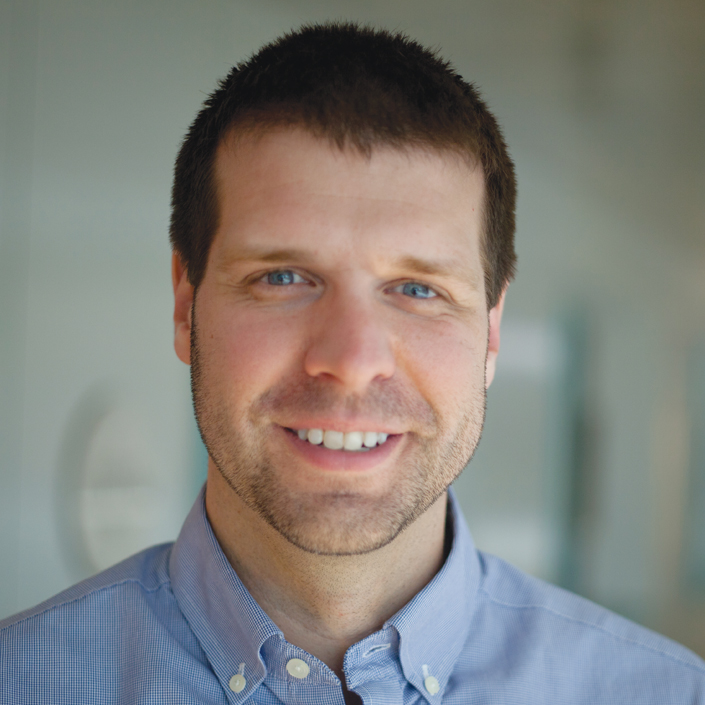
Mario Berges is an Associate Professor in the Department of Civil and Environmental Engineering at Carnegie Mellon University (CMU), with a courtesy appointment in Electrical and Computer Engineering. He holds leadership roles as Co-Director of the IBM Smart Infrastructure Analytics Lab and Director of the Intelligent Infrastructure Research Lab (INFERLab). His work focuses on applying information/communication technologies to enhance the operational efficiency and resilience of built environments amid evolving resource constraints and climate changes. Education: PhD in Civil & Environmental Engineering from CMU (2010). Research Interests: Berges' research integrates smart infrastructure systems, energy efficiency, and machine learning. Key areas include non-intrusive load monitoring (NILM), structural health monitoring of pipelines, building automation systems, and urban heat risk modeling. He develops data-driven frameworks for energy disaggregation, sensor placement optimization, and real-time infrastructure diagnostics. Awards: Recognized with the 2010 FIATECH Outstanding Early Career Researcher Award and 2015 Dean’s Early Career Fellowship from CMU. Grants & Labs: Leads INFERLab, collaborating with IBM on smart infrastructure projects. His work spans academic-industry partnerships focused on building analytics, smart grid technologies, and sensor networks. Future Directions: Expanding research into AI-driven energy systems, resilient urban infrastructure, and cross-disciplinary solutions for climate adaptation.
David Wentzloff is a Professor of Electrical Engineering and Computer Science at the University of Michigan, where he has been on faculty since 2007. He directs the Wireless Integrated Circuits and Systems (WICS) group and serves as Director of the Michigan Integrated Circuits Laboratory (MICL). Wentzloff received his B.S.E. from the University of Michigan in 1999 and his S.M. and Ph.D. from MIT in 2002 and 2007. Wentzloff's research focuses on low-power integrated circuits for wireless communication in energy-constrained and volume-constrained applications. His work spans three primary areas: Synthesizable all-digital radios and radio building blocks Wireless body sensor networks (channel modeling, radios, and antennas) Radios and interfaces for millimeter-scale computing devices His innovations have significantly reduced power consumption in wireless communication for IoT devices, impacting standards including Bluetooth, WiFi, and 5G/6G. Analysis of his publication record reveals a consistent focus on ultra-low power wireless communication, with recent work emphasizing back-channel communication techniques that achieve 500x power reduction compared to conventional approaches. His research bridges theoretical circuit design with practical applications in healthcare, industrial monitoring, and consumer electronics. Wentzloff's scientific recognition includes: 2024 University of Michigan Faculty Recognition Award NSF CAREER Award (2012) DARPA Young Faculty Award (2009) Multiple best paper awards Two-time recipient of the Eta Kappa Nu Professor of the Year Award As an educator and mentor, Wentzloff has graduated 21 doctoral students and mentored dozens of master's and undergraduate researchers. He has taught courses ranging from introductory circuits to advanced graduate topics in analog and RF design. His entrepreneurial impact includes co-founding three successful companies: Everactive (formerly PsiKick), Movellus, and CubeWorks, which commercialize technologies developed in his research lab. Wentzloff leads the WICS research group, which operates within the Michigan Integrated Circuits Laboratory. His team develops cutting-edge technologies for batteryless sensing systems, millimeter-scale computing platforms, and ultra-low power wireless communication solutions that enable the next generation of Internet of Things applications.
Michael Baldea is an Associate Professor in the Department of Chemical Engineering at the University of Texas at Austin . He holds a Ph.D. in Chemical Engineering from the University of Minnesota (2006), with prior degrees from 'Babeş-Bolyai' University in Romania (M.Sc. 2001, Diploma 2000). His research group develops theoretical and computational methods for Process and Energy Systems Engineering , focusing on integrated decision-making, performance optimization, and process intensification with industrial validation. Education: Ph.D., Chemical Engineering, University of Minnesota (2006) M.Sc., Interface Process Engineering, 'Babeş-Bolyai' University (2001) Diploma, Chemical Engineering, 'Babeş-Bolyai' University (2000) Research Thrusts: Integrated decision-making in chemical/energy supply chains Process performance monitoring and optimization Process integration and intensification Key applications include grid-responsive chemical plants, intensified distillation/column designs, and renewable energy integration for building systems. Scientific Awards: Frank A. Liddell, Jr. Fellowship NSF CAREER Award (2015-2020) Moncrief Grand Challenges Faculty Award (2014) AIChE Outstanding Young Researcher Award (2017) Implementation : His group has translated research into commercial tools through partnerships with industrial test beds and is working to integrate methods into commercial simulators. They explore predictive approaches for building energy management and strategic capital investment analysis in next-generation energy systems.
Mushtaq Khan is a Professor in the Department of Economics at SOAS University of London . His research focuses on governance, corruption, industrial policy, and structural transformation in developing countries, with particular emphasis on Bangladesh, Nepal, and Nigeria. Research Interests : Corruption and Anti-Corruption Strategies Political Settlements and Governance Industrial Policy Design Climate Adaptation and Public Health Systems Policy Contributions : His work addresses challenges such as collusive contracting in energy sectors, doctor absenteeism in rural healthcare, and dual-use climate projects as anti-corruption tools. Advising : He has supervised theses on industrial policy in Nigeria, economic transformation in Rwanda, and federalism in Nepal.
Professor Haijiang Li is a Chair in BIM for Smart Engineering at Cardiff University's School of Engineering. His roles include leading the Computational Mechanics and Engineering AI Research Group, directing the BIM for Smart Engineering Centre, and overseeing the BIM MSc programme. He holds editorial roles for journals like Construction Innovation and Automation in Construction , and chairs the European Group of Intelligent Computing in Engineering (EG-ICE). Research focuses on smart computational engineering platforms integrating BIM, AI, and big data for sustainable infrastructure. Key areas include digital twins, disaster management, and resilient urban systems. He has secured £40M in research funding, including £9M as PI, and led over 70 research staff and students. Prof. Li is a Standards Committee Technical Executive at buildingSMART, driving international BIM standards. His work includes co-authoring a book on BIM standards across China, the US, and the UK. Awards include Fellowships from the British Computer Society (FBCS) and the Higher Education Academy (FHEA). His research outputs span over 250 publications, covering topics like AI-driven bridge maintenance, ontology-based decision-making, and energy-efficient urban systems. Collaborations with industry and global partners emphasize practical applications of BIM and smart technologies.
Magda Posani is an Assistant Professor in the Department of Civil Engineering at Aalto University, focusing on building physics, hygrothermal behavior of materials, and environmental sustainability. Her research explores the use of bio-based insulation, thermally massive stone and earth walls, and additive manufacturing techniques to enhance indoor comfort and address climate change challenges in Nordic regions. Integrated Master's Degree in 'Building Engineering and Architecture' from the University of Bologna (Italy) Ph.D. in Civil Engineering from the National Laboratory for Civil Engineering (LNEC) and the University of Porto (FEUP, Portugal) Postdoctoral Research at ETH Zürich (Switzerland) Her research integrates vernacular solutions with modern technology, such as combining additive manufacturing with super-hygroscopic materials to develop components for passive humidity regulation. She addresses critical issues like occupant comfort, health risks from improper humidity, and climate change impacts on traditional constructions. The articles highlight her work on low-carbon materials, 3D-printed building components, and strategies for enhancing hygrothermal performance in both modern and historic structures. Key themes include moisture buffering, thermal insulation compatibility, and climate-resilient renovation.
Steven Rogak is a Professor in the Department of Mechanical Engineering at the University of British Columbia's Faculty of Applied Science. He holds a P.Eng. license and degrees including a B.A.Sc. in Mechanical Engineering from UBC, and M.Sc. and Ph.D. from Caltech. P.Eng., University of British Columbia B.A.Sc., University of British Columbia M.Sc., Ph.D., California Institute of Technology His research focuses on aerosol science, particularly solid nanoparticles from combustion processes, their climate and health impacts, and mitigation strategies. Key areas include: Soot morphology and transport properties Engine emission reduction via fuel injectors Indoor air filtration systems Membrane-based energy exchangers Atmospheric particulate analysis The 15 most recent articles span experimental and theoretical studies on soot characterization, membrane technologies, and aerosol dynamics, with applications in climate modeling, healthcare ventilation, and sustainable materials. Collaborations include Westport Innovations and interdisciplinary teams. Rogak leads the Aerosol Laboratory at UBC, where he applies fluid mechanics and heat transfer fundamentals to address environmental and health challenges. He emphasizes experimental rigor and welcomes graduate students with expertise in these areas.
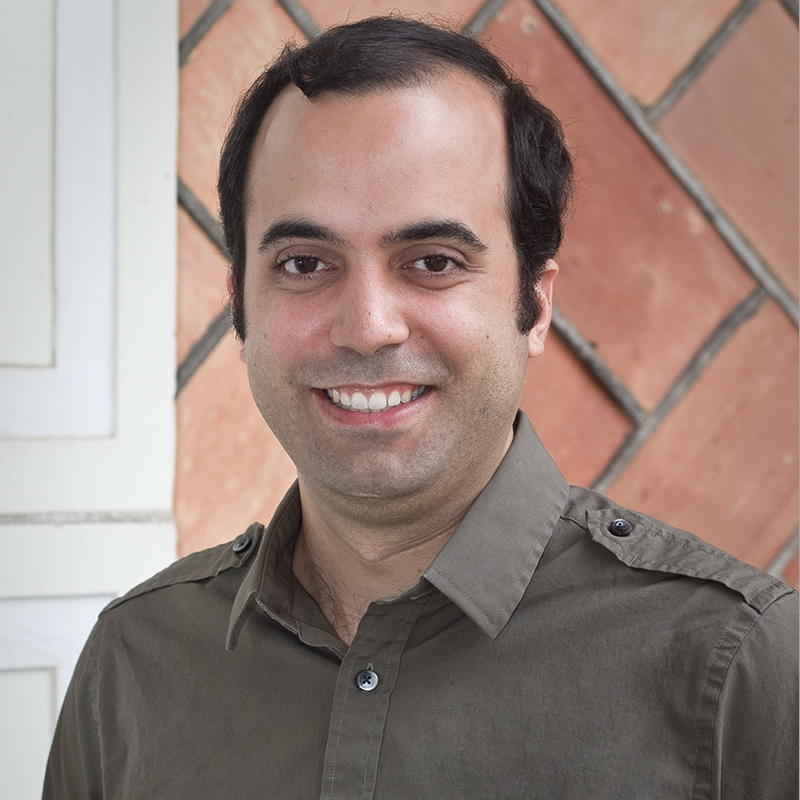
Elahe Soltanaghai is an Assistant Professor in the Department of Computer Science and a Faculty Affiliate in Electrical and Computer Engineering at the University of Illinois Urbana-Champaign. She is also a 2022 NCSA Fellow and received her PhD in Computer Science from the University of Virginia (2019), MS in Computer Engineering from Sharif University of Technology (2014), and dual BS degrees in Computer and Information Technology Engineering from Amirkabir University of Technology (2011, 2013). PhD: University of Virginia, Computer Science, 2019 MS: Sharif University of Technology, Computer Engineering, 2014 BS (Computer Engineering): Amirkabir University of Technology, 2011 BS (Information Technology Engineering): Amirkabir University of Technology, 2013 Her research spans wireless sensing and communication, focusing on Millimeter-wave Radar Sensing (for automotive, mixed reality, structural monitoring), Machine Learning for Wireless Systems (adaptive sensing/communication), Forest IoT (through-canopy biomass and soil sensing), Metaverse Technologies (gaze-based VR/AR), and Low-Power Backscatter Communication (WiFi/power-line tags). She directs the Wireless, Sensing & Embedded Networked Systems (iSENS) Lab and co-directs the Illinois Center for IoT. Her work bridges wireless networking with cyber-physical sensing , emphasizing environmental monitoring (e.g., wildfire fuel detection via radar tags) and human-computer interaction (e.g., gaze-tracking in VR). Recent articles include innovations in passive radar profiling , through-canopy biomass characterization , and integrated communication-sensing protocols . Scientific Awards: Google Research Scholar Award (2022) N2Women Rising Star (2021) ACM SIGMOBILE Dissertation Award (2020) EECS Rising Stars (2019) NCSA Faculty Fellowship (2023) Best Demo Runner-up, IPSN (2023) Teaching Excellence Award (2023) Grants: NASA FireTech Program Grant (2025) NSF Grant for Radar-based Perception (2024) Insper-Illinois Grant for VR Research (2024) Keysight Research Gifts (2022, 2023) T-Mobile Research Gift (2022)
Professor Hong Hao is a John Curtin Distinguished Professor at Curtin University, affiliated with the School of Civil and Mechanical Engineering and the Curtin Research Centre for Infrastructural Monitoring & Protection. His expertise spans Structural Dynamics, Earthquake Engineering, Blast and Impact Engineering, and Structural Health Monitoring. He holds prestigious roles like Fellow of ATSE, ISEAM, and ASCE, and has led organizations such as the International Association of Protective Structures and the Australian Earthquake Engineering Society. Education: BE (Tianjin University, 1982), MSc (UC Berkeley, 1985), PhD (UC Berkeley, 1989). Awards include the Tan Chin Tuan Fellowship and multiple Ko Medals. He has authored over 200 journal articles, with recent work focusing on blast-resistant materials, seismic fragility, and AI-driven structural health monitoring. His research emphasizes resilient infrastructure, including metaconcrete structures, corrosion-resistant materials, and sensor-based damage detection. Ongoing projects involve smart tunnel safety under BLEVE explosions and modular building systems.
Michael Wara is a Senior Research Scholar at the Stanford Woods Institute for the Environment and Director of the Climate and Energy Policy Program. He holds a JD from Stanford Law School, a PhD in Ocean Sciences from UC Santa Cruz, and a BA from Columbia University. His work bridges legal, scientific, and policy domains to address climate and energy challenges through bipartisan technical assistance and research collaboration with economists, engineers, and scientists. His research focuses on carbon pricing mechanisms, energy innovation, and regulatory solutions for climate policy. He advises policymakers on designing effective laws and regulations, with particular expertise in international environmental treaties like the ozone and climate regimes. Wara also teaches courses on energy law, wildfire policy, and carbon taxation at Stanford Law School. Key contributions include analyzing the economic impacts of EPA regulations, evaluating California’s carbon market mechanisms, and advancing strategies to decarbonize building electrification. His interdisciplinary approach emphasizes practical solutions to global environmental challenges, leveraging Stanford’s expertise in energy systems and policy. Wara’s policy practicum courses engage students in real-world projects such as evaluating carbon pollution standards and wildfire management policies. His work frequently appears in peer-reviewed journals and media outlets like The Atlantic and New York Times , addressing topics like the Supreme Court’s EPA rulings and wildfire insurance issues.