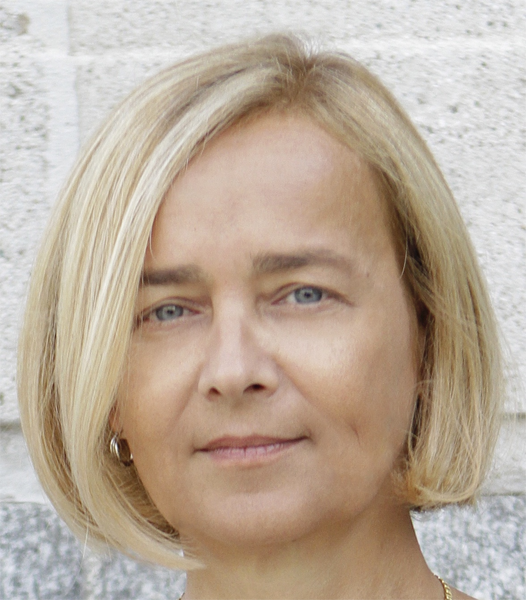
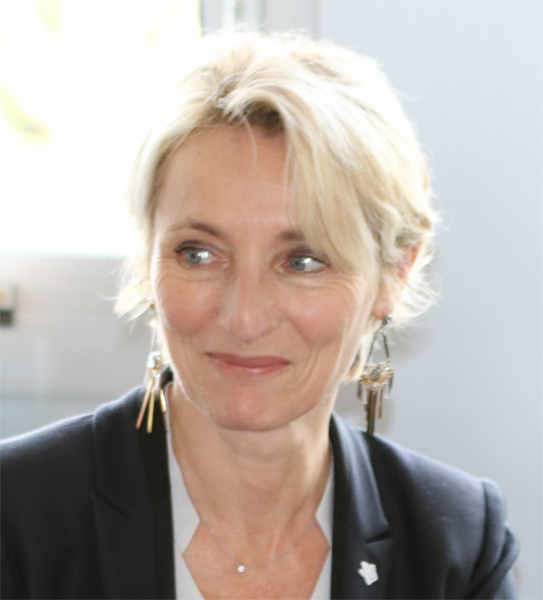
Tina Comes is a Full Professor in Decision-Making & Digitalisation at the University of Maastricht, Netherlands. She holds a part-time position (0.2 FTE) and has previously held academic roles at TU Delft (Associate Professor in Decision-Making for Resilience, 2017), University of Agder (Full Professor in ICT, 2015-2017), and Visiting Professor at Lamsade, Université Dauphine, Paris (2014). Her research focuses on Crisis Informatics , Decision Theory , Disaster Management , Humanitarian Logistics , and Resilience . Her work spans building simulation , ventilation systems , and energy-efficient design , with grants totaling €9.6 million since 2012. Key projects include Resilient Systems (NL Ministry of Defense, 2020-2026), H2020 HERoS (2020-2023), and Climate Resilient Urban Infrastructure (Amsterdam, 2020-2022). She has supervised 6 PhD students at TU Delft (2017-2022), 3 Postdocs/PhDs at University of Agder (2013-2020), and 1 PhD at Université Toulouse (2014-2018). Her scientific awards include: 2020 José Maria Sarriegi Award by the Spanish Red Cross 2019 Emerald Literati Award 2016 Delft Technology Fellowship (acceptance rate 2012 Best Paper Award at ISCRAM Conference
Tamara Artacker is a Researcher at the Institute of Social Ecology within the Department of Economics and Social Sciences at the University of Natural Resources and Life Sciences, Vienna (BOKU). Based in Vienna at Schottenfeldgasse 29, she has been actively contributing to the field since 2019, following the completion of her MA in International Development Studies from the University of Vienna in 2017. Her work bridges academic research with practical policy implications, particularly focused on Latin America and global environmental challenges. Artacker's educational background in International Development Studies has shaped her interdisciplinary approach to examining the complex relationships between society, environment, and economic systems. Her research spans multiple interconnected domains that address critical contemporary challenges facing communities worldwide. Her research interests center on political ecology, food sovereignty, ecofeminism, and sustainable agricultural systems. Artacker critically examines the structural inequalities embedded in global food systems, the impacts of climate change on agricultural communities, and the tensions between economic development models and ecological sustainability. Her work consistently highlights how extractive agricultural practices intersect with social injustices, particularly affecting vulnerable populations. She explores alternative models that prioritize community resilience, ecological balance, and social equity, with particular attention to the Global South and Latin American contexts. Artacker's extensive publication record reveals a strong focus on the intersections between environmental policy, agricultural practices, and social justice. Her research demonstrates consistent engagement with contemporary crises including the pandemic's impact on food systems, geopolitical conflicts affecting global food security, and the complex challenges of transitioning toward sustainable agricultural models. She has developed particular expertise in analyzing Ecuadorian agricultural policies and their implications for food sovereignty, while also examining broader regional and global patterns. As an active academic, Artacker regularly presents her research at international conferences and engages with diverse audiences through invited keynote speeches. Her work demonstrates a commitment to knowledge transfer beyond academic circles, with presentations addressing policymakers, practitioners, and community organizations working on food sovereignty and environmental justice issues.
Albert Treytl is a Senior Researcher at the Danube University Krems , serving as Head of the Center for Distributed Systems and Sensor Networks and Deputy Head of the Department for Integrated Sensor Systems. He holds a Master’s degree in Electrical Engineering from the Vienna University of Technology (2001) and has over two decades of experience in communication technologies and security. Current roles: Head of Center, Deputy Head of Department Research focus: Security for embedded systems, IoT, digital twins, AI in energy optimization Involvement: IEEE, CEN TC 247 WG4, IEEE1588 standardization His work addresses distributed data management, smart grid security, and model predictive control strategies for energy efficiency in buildings and traffic systems. He leads multiple national and international projects funded by FFG and EU programs. Recent research projects include KI4HVACS (AI-driven HVAC optimization), Factories4Renewables (industrial renewable energy integration), and Dataskop (sensor-based data economy). He has authored over 100 peer-reviewed publications and serves as co-lecturer at the Vienna University of Technology.
Paola Ayala is a Professor at the Faculty of Physics of the University of Vienna, specializing in the Electronic Properties of Materials . Her research focuses on nanomaterials, particularly carbon nanotubes, graphene, and carbyne, exploring their electronic, magnetic, and optical properties. She leads the Doctoral College Advanced Functional Materials (DCAFM) (2020–2025), fostering interdisciplinary training in nanotechnology. Key research areas include nitrogen doping of carbon nanotubes, magnetic coupling in nanoclusters, and sensor applications of nanocomposites. She has pioneered studies on confined carbyne synthesis and the environmental stability of 1D nanocarbons. Ayala’s work bridges theoretical modeling (e.g., DFT simulations) and experimental techniques like Raman spectroscopy and XPS analysis. Her 2017 Matilde Hidalgo Prize recognizes contributions to nanomaterials science. She actively promotes STEM equity, co-authoring reports on women in physics in Austria and Ecuador. Ayala has supervised over 97 publications since 2007, with recent emphasis on functional nanomaterials for energy, sensing, and biomedical applications. Notable projects include developing flexible formaldehyde sensors and investigating magnetic properties of iron nanoclusters. She collaborates globally, presenting at conferences like the 2024 UNIVIE NanoteC Symposium and the 2023 International Nanotechnology Congress.
Thomas Ertl is a Professor at the University of Natural Resources and Life Sciences, Vienna (BOKU), leading the Institute of Sanitary Engineering and Water Pollution Control. His research focuses on urban water systems, emphasizing sustainable drainage, climate change adaptation, and nature-based solutions. He has coordinated 55 projects, including international initiatives in Albania and Austria, addressing stormwater management, wastewater heat recovery, and sewer infrastructure resilience. Key Projects : Analysing re-activated watercourses for urban resilience (2024–2028) Resilient rainwater management in Austria (2024–2028) Assessing pollutant emissions in Albania (2024–2027) Research Themes : Building Information Modeling (BIM) in wastewater systems Uncertainty analysis under climate change Stormwater pollution and heat island mitigation Awards : 2018: Goldene Ehrennadel des ÖWAV 1993: Best student award at AGIT 93 His recent publications highlight multidisciplinary approaches to wastewater energy recovery, spatial compatibility of nature-based solutions, and prioritization of stormwater management sites. He has supervised numerous theses and contributed to media discussions on urban climate resilience, including articles in Austrian outlets like futurezone.at and Der Kurier.
Sonja Wogrin is a University Professor (Univ.-Prof.) at Graz University of Technology (TU Graz), where she has been heading the Institute for Electricity Economics and Energy Innovation since August 2021. She holds a Dipl.-Ing. in Technical Mathematics from TU Graz (2008), a Master of Science in Computation for Design and Optimization from MIT (2008), and a doctorate in Electricity Systems from Universidad Pontificia Comillas (2013). Her educational background includes: Doctorate in Electricity Systems, Universidad Pontificia de Comillas (June 2013) Dipl.-Ing. in Technical Mathematics, Graz University of Technology (October 2008) Master of Science in Computation for Design and Optimization, MIT (June 2008) Professor Wogrin's research focuses on decision support systems in the energy sector, optimization methodologies, and particularly the problem of generation capacity expansion. Her work spans several key areas including bilevel programming, capacity expansion planning, energy storage systems, and time series aggregation for energy system optimization. She has made significant contributions to understanding how to integrate renewable energy sources into power systems while maintaining economic efficiency and grid stability. Her research often addresses the challenges of decarbonizing electricity systems through advanced mathematical modeling and optimization techniques. Her recent publications demonstrate a strong focus on improving the computational efficiency of energy system models while maintaining accuracy, with particular attention to the integration of renewable energy sources, energy storage systems, and the development of resilient energy communities. She has pioneered work on time series aggregation methods that balance computational tractability with model accuracy, which is crucial for long-term energy planning under uncertainty. Professor Wogrin has received several prestigious awards and fellowships including: 4th EASE Student Award for "Co-Optimisation of energy storage technologies in tactical and strategic planning models" (2019) Beca de movilidad para investigadores "NILS Ciencia y Sostenibilidad" (2015) Beca Erasmus "Personal Docente/Investigador" de formación (2016) Beca Iberdrola de ayuda a la investigación en energía y medio ambiente (2020) She leads multiple significant research projects including EU - NetZero-Opt, RINGs, iKlimET, V2G-QUESTS, and CIDEAL, which focus on optimizing energy systems for net-zero emissions, resilient energy networks, climate and energy system modeling, vehicle-to-grid integration, and industrial decarbonization. Her work has substantial practical implications for energy policy and grid operations in Austria and beyond. Professor Wogrin collaborates extensively with industry partners including Austrian Power Grid AG, KELAG, and Netz Niederösterreich, ensuring her research addresses real-world energy challenges. Professor Wogrin leads the research group at the Institute for Electricity Economics and Energy Innovation, which develops advanced optimization models for energy systems. Her team has created the LEGO (Low-carbon Expansion Generation Optimization) model, an open-source tool for energy system optimization that has gained international recognition. The group's work spans from fundamental optimization methods to practical applications in energy system planning and operation, with a strong emphasis on computational efficiency and model accuracy.
Péter Szalay is a Full Professor at the Department of Physical Chemistry, ELTE Eötvös Loránd University (since 2004). He served as Director of the Institute of Chemistry (2005–2008) and Vice Rector for Research at ELTE (2015–2019). Currently, he is President of the Hungarian Chemical Society (since 2023). His research focuses on quantum chemical methods, electronic structure theory, and molecular spectroscopy, with notable contributions to coupled-cluster methods and excited-state calculations. He holds leadership roles in international scientific organizations, including membership in the Academia Europaea and European Academy of Sciences and Arts. Educations: Ph.D. in Chemistry (1989), University of Vienna C.Sc. (Candidate of Sciences, 1991) and D.Sc. (Doctor of Sciences, 1999) from Hungarian Academy of Sciences Habilitated Doctor (2001), Eötvös University Research Interests: Development of quantum chemical methods, excited-state dynamics, electron correlation effects, and computational thermochemistry. His work bridges theoretical and applied aspects, with applications in molecular spectroscopy and biomolecular systems. His awards include the prestigious Széchenyi Prize (2017) and Polányi Prize (2015). He has held visiting positions at the University of Florida (2010–2011, 1991–1993) and University of Texas at Austin (2003–2004). His publications span high-impact areas like the CFOUR program package and HEAT thermochemistry framework. Labs/Teams: Leads the Laboratory of Theoretical Chemistry at ELTE, focusing on cutting-edge computational methods and their applications in chemistry and materials science.
Univ.-Prof. Katja Corcoran serves as Professor of Psychology and Vice Dean for Research at the University of Graz's Faculty of Natural Sciences, leading the Institute of Psychology. She directs the university's 'Smart Regulation' profile area and participates in the 'Brain and behavior' research network, with leadership roles including former Head of Psychology Institute (2017-2019) and Deputy Head of Doctoral School of Psychology (2021-2023). Her research centers on social psychological mechanisms in sustainability transitions, particularly: Energy citizenship frameworks and prosumer behavior Goal contagion dynamics in social networks Intergroup contact interventions in educational settings Regulatory psychology for sustainable systems Recent publications (2023-2025) demonstrate interdisciplinary integration of psychological, legal, and economic perspectives, featuring field experiments across Austria and multi-lab European collaborations examining energy citizenship scales, behavioral nudges for appliance usage, and prejudice reduction in schools. Honors include: Feodor Lynen Research Fellowship (Alexander von Humboldt Foundation, 2004) She currently directs major funded initiatives: EU: 'Energy Citizenship and Energy Communities for Clean-Energy Transition' (2021-2024) FFG: 'FIWARE Driven Energy Communities for the Future' (2023-2026) International: 'Active User Participation for Smart Energy Services' (2020-2023) Corcoran serves on editorial boards of Social Psychology (since 2016) and Social Cognition (since 2013), and her work operates within the 'Brain and behavior' network fostering neuroscience-psychology-economics collaborations for complex decision-making research.
Fajar Juang Ekaputra is a Tenure Track Assistant Professor at the Institute of Data, Process, and Knowledge Management (DPKM), WU Vienna and a part-time Postdoctoral Researcher at the Data Science research unit, TU Wien . With a focus on Semantic Web , Knowledge Graphs , and their integration with Machine Learning in Neurosymbolic AI systems, his work spans domains like Cyber-Physical Systems and Materials Engineering . Education: Dr.techn. (2018), TU Wien M.T. (2010) and S.T. (2008), Institute Teknologi Bandung (ITB) Research Interests center on hybrid AI systems combining Semantic Web and Machine Learning , with applications in Cyber-Physical Systems (e.g., smart grids, smart buildings), data privacy in smart cities, and materials engineering . His 102+ publications include frameworks like SWeMLS-KG and SHACL4Protege . Recent Articles (2024) address explainable AI in cyber-physical systems, privacy trust in data infrastructures, and neurosymbolic frameworks . Earlier works (2023–2022) explore ontology-based data management , auditable AI , and hybrid system architectures . Scientific Awards: Best Paper Awards (ICoDSE 2023, ICoDSE 2016) Best Poster Nomination (SEMANTiCS 2019) PhD Scholarship (Austria’s Agency for Education and Internationalisation, 2012) Advising includes supervising PhD students (e.g., Majlinda Llugiqi, Katrin Schreiberhuber) and master’s theses on topics like knowledge graph characteristics and data quality assessment . He leads projects such as FAIR-AI (FFG-funded, 2024–2026) and SENSE (Horizon Europe, 2023–2025).
Richard English is currently Professor of Politics at Queen’s University Belfast (QUB) and serves as Director of the Senator George Mitchell Institute. He held leadership roles including Pro Vice-Chancellor for Internationalisation and Engagement (2016–2021) and Wardlaw Professor of Politics at the University of St Andrews (2011–2016). His research focuses on radicalism, political violence, nationalism, and Irish/British politics. A Fellow of the British Academy and recipient of the Royal Irish Academy Gold Medal (2019), he has authored influential works such as Armed Struggle: The History of the IRA and Irish Freedom: The History of Nationalism in Ireland . Research Trends: His recent publications (2022–2025) address energy systems, building simulations, and sustainable urban infrastructure, with keywords spanning Building Simulation , Sustainable Energy , and Smart Grids . Subfields include District Heating , Thermal Modeling , and Machine Learning in Energy Management . Honors: CBE (2018) Gold Medal, Royal Irish Academy (2019) Fellow, British Academy (2009) Ewart-Biggs Memorial Prize (2007)
Bernhard Pucher is a Senior Scientist at the Institute of Sanitary Engineering, Industrial Water Management and Water Pollution Control (SIG), within the Department of Landscape, Water and Infrastructure at the University of Natural Resources and Life Sciences, Vienna (BOKU). He holds a doctorate in technical natural sciences and is actively leading and participating in multiple research projects focused on urban water management and nature-based solutions. His research interests lie at the intersection of urban sustainability and environmental engineering, with a strong focus on urban water management , circular economy , nature-based solutions , treatment wetlands , vertical greening systems , and greywater treatment . His work emphasizes process-based modeling of water and solute transport, particularly using the HYDRUS software, to optimize the design and performance of decentralized water treatment systems. The recent articles highlight a consistent trend in developing and evaluating nature-based technologies for sustainable urban water cycles. Key themes include the performance assessment of vertical and horizontal flow wetlands, numerical modeling for design optimization, the multifunctionality of green walls for cooling and water reuse, and the integration of blue-green infrastructure into circular city frameworks. His research bridges technical modeling with practical implementation, aiming to quantify resource recovery and improve urban resilience. Board member of the IWA national committee Austria (2023) Member of the Management Committee, IWA Specialist Group on 'Wetland Systems for Water Pollution Control' (2019) Active reviewer for journals including Chemical Engineering Journal , Science of the Total Environment , and Water Science and Technology Served on scientific advisory boards for major conferences like WETPOL and IWA ecoSTP He has supervised numerous master’s theses on topics such as greywater use for vertical greening, treatment performance of living walls, and modeling of rainwater use. His projects are funded by diverse sources including the European Commission (Horizon), FFG, national companies, and private foundations, demonstrating strong grant acquisition capability. He is also involved in knowledge transfer through public reports, media contributions, and participation in policy-relevant seminars. Bernhard Pucher is a key member of a research team that includes collaborators like Günter Langergraber, Ulrike Pitha, and Isabella Zluwa. His work is often conducted within interdisciplinary projects such as 'resilientRAIN', 'UrBan hEat islands REsilience', and the EU COST Action 'Circular City Re.Solution', reflecting a collaborative approach to addressing complex urban environmental challenges.
Klaus Richter is an Associate Professor at the Faculty of Chemistry, University of Vienna, affiliated with the Department of Functional Materials and Catalysis. His research spans materials science, catalysis, and thermodynamics. Academic Rank: Associate Professor (ao. Univ.-Prof.) Research Focus: Phase diagrams, intermetallic compounds, vapour-solid synthesis, and catalytic applications for hydrogen production Projects: Notable work on Al-Cu-X (X=Si, Zn) phase diagrams and intermetallic nanoparticle synthesis Richter’s publications emphasize sustainable energy solutions through intermetallic catalysts, with recent studies on Ni-Te and Pt-Zn nanoparticles for green hydrogen production. His work integrates computational modeling (CALPHAD) with experimental phase analysis. Key scientific awards include the APDIC Best Paper Award (2014) and JPED Editors Choice Award (2018). He actively contributes to conferences and collaborative research in intermetallic systems.
Donatella Sciuto is a Full Professor of Computer Science and Engineering at Politecnico di Milano, serving as Executive Vice Rector overseeing research strategies. She holds a PhD from the University of Colorado, Boulder and an MBA from Bocconi University. Her research focuses on embedded systems design, low-power electronics, and cyber-physical systems, with contributions to smart cities and ICT infrastructure. Education: Bachelor's in Electronic Engineering, Politecnico di Milano (1984) PhD in Electrical and Computer Engineering, University of Colorado, Boulder MBA, SDA Bocconi School of Management Research Interests: Embedded systems, multiprocessor architectures, hardware/software co-design, power-efficient computing, and building automation via IoT technologies. She leads the Embedded Systems Design research group at Politecnico di Milano and coordinates EU-funded projects in smart cities and reconfigurable systems. Awards: IBM Women Leaders in AI (2021) IEEE Fellow (2011) EDAA Fellow (2010) Outstanding Contribution Award, IEEE Computer Society (2009) Professional Roles: Board Member: Bank of Italy, Istituto Italiano di Tecnologia, STM, Avio Former President, IEEE Council of Electronic Design Automation (2011-2013) Executive Committee Member, Design Automation and Test in Europe (DATE) conference Labs/Teams: Leads the Embedded Systems Design and Design Methodologies group at Politecnico di Milano, collaborating with CEFRIEL on executive education programs in embedded systems and IoT.
Dragi Kimovski is a Habilitated Assistant Professor in Distributed Systems at Klagenfurt University, Austria, focusing on Edge Computing and AI. He previously held roles at the University of Innsbruck and the University of Information Science and Technology in Macedonia. His research spans Edge/Fog/Cloud computing, multi-objective optimization, and high-performance computing. He has coordinated major projects like 6GContinuum and KärtnerFog, and led initiatives such as DataCloud and ASPIDE. His teaching includes courses on Distributed Computing, Cloud Computing, and IoT. He is the co-creator of the Carinthian Computing Continuum and maintains a blog on Edge AI World. His work emphasizes sustainable and efficient computing solutions for emerging technologies. Education: Not explicitly listed in the provided text. Research Interests: Edge Computing, Fog Computing, Cloud Computing, Multi-objective Optimization, High-Performance Computing, AI in Distributed Systems. His work addresses challenges in resource management, latency reduction, and scalability across heterogeneous environments, with applications in healthcare, IoT, and 6G networks. Projects: 6GContinuum (Coordinator): Focuses on AI services over 6G networks. KärtnerFog (Scientific Coordinator): Develops adaptive Fog infrastructures over 5G. DataCloud (WP5 Leader): Manages Big Data pipelines on the Computing Continuum. ASPIDE (Scientific Coordinator): Advances exascale programming models for data processing. Teaching: Klagenfurt University: Courses include Distributed Computing, IoT, Cloud Computing, and Advanced Programming. University of Innsbruck: Taught Advanced Parallel and Distributed Systems. University of Information Science and Technology: Courses in High-Performance Computing and Network Architectures. Labs/Teams: Co-created the Carinthian Computing Continuum, an automated SDN testbed for Edge computing research. Active in interdisciplinary teams addressing extreme data processing and sustainable computing.
Sylvie Lorente is a Professor at Villanova University (College of Engineering, Department of Mechanical Engineering). She holds concurrent positions as Professor (Exceptional Class) at INSA Toulouse (France), Extraordinary Professor at the University of Pretoria (South Africa), and Adjunct Professor at Duke University (USA). Her academic career includes past roles at Hong Kong Polytechnic University, Shandong Academy of Sciences, and Pontificia Universidad Catolica (Chile). Research Interests: Her work centers on thermal engineering, heat transfer, and the Constructal Law, which governs the design of flow systems in nature and technology. She explores evolutionary design, sustainability, and energy-efficient systems for buildings and urban environments, mass transfer, and applications of dendritic flow networks to thermochemical energy storage, battery thermal management, and bio-based materials. Key Trends in Publications: Recent articles focus on optimizing battery thermal management using constructal canopy-to-canopy designs, phase change materials (PCM) for cooling and energy storage, hierarchical capillary networks for evaporative cooling, and fluid flow architectures in porous media. Her work bridges thermodynamics, materials science, and sustainable design. Scientific Awards: Order 'Chevalier de l’Ordre National du Mérite' (2015, French Government) PROSE Award for 'Design with Constructal Theory' (2009, American Association of Publishers) Order 'Les Palmes Académiques' (2008, France) James P. Hartnett Memorial Award (2007, American Society of Mechanical Engineers) Intelligent Optimal Design Prize (2006, CADLM) Bergles-Rohsenow Young Investigator in Heat Transfer Award (2005, ASME) Edward F. Obert Award (2004, ASME)