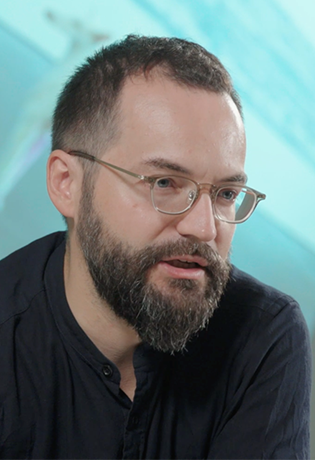
Dr James Helal is the Assistant Dean for Sustainability and a Lecturer in Construction Management at the Melbourne School of Design (MSD), University of Melbourne. His research focuses on integrating life cycle assessment and computational tools into the structural design of tall buildings, emphasizing embodied carbon reduction. He is recognized for developing software frameworks that automate environmental impact analysis in early-stage structural design. Dr Helal teaches materials, structures, and life cycle assessment in construction management. His pedagogical excellence has earned prestigious awards, including the Edward Brown Award for Teaching Excellence. He coordinates the construction major in the Bachelor of Design program. His research addresses structural optimization, tall building sustainability, and environmental flows. Key contributions include frameworks for reducing carbon emissions in tall building design and critiques of decorative architectural elements' environmental impact. Awards: Structures Best Research into Practice Prize (Institution of Structural Engineers) Open Award for Excellence in Teaching (Faculty of Architecture, Building and Planning) Edward Brown Award for Teaching Excellence (University of Melbourne) Advising & Grants: Coordinates construction curriculum but no explicit student advisee list is provided in texts. His work aligns with sustainability-focused research grants. Labs/Teams: Engaged with MSD’s Future Cities Practice and Construction Innovation initiatives.
Sarah Billington is the UPS Foundation Professor of Civil and Environmental Engineering at Stanford University and a Senior Fellow at the Woods Institute for the Environment. Her research program focuses on sustainable building design, human wellbeing, and ethical supply chain practices. Education: PhD, University of Texas at Austin, Structural Engineering (1997) MSE, University of Texas at Austin, Structural Engineering (1994) BSE, Princeton University, Civil Engineering & Operations Research (1990) Her lab employs interdisciplinary methods to study how built environments impact human physical, psychological, and social wellbeing. Current projects include developing tools to quantify nature exposure in buildings, exploring affordable housing's role in wellbeing, and using AI to assess forced labor risks in material supply chains. While no longer active in this area, her group previously pioneered research on sustainable construction materials like bio-based composites and ductile cement-based composites. Her recent publications address topics such as nature integration in architecture, workplace design optimization, and health impacts of building materials. The Billington Lab at Stanford fosters collaborative team science, welcoming partnerships to advance occupant-centric engineering solutions.
Karl Gustafsson is a Professor at Stockholm University within the Department of Economic History and International Relations. His work bridges security studies , collective memory , and digital research methods in international relations. Current Role: Professor of International Relations, Stockholm University Previous Positions: Post-Doc at Lund University, Researcher at Swedish Institute of International Affairs Visiting Appointments: University of Tokyo, Osaka University, Keio University, Academia Sinica, Nordic Institute of Asian Studies Research Focus: Karl specializes in memory politics , ontological security , and anxiety-driven international dynamics , particularly in Sino-Japanese relations and digital platforms . His studies explore how historical narratives and online memory construction influence state identity and policy. Awards & Grants: Recipient of the Wang Gungwu Prize (2014) and Stockholm University Association’s award (2011). Holds Swedish Research Council and Marianne & Marcus Wallenberg Foundation grants for projects on apologies in international politics and digital memory in East Asia . Publications: His work appears in journals such as International Studies Quarterly , European Journal of International Relations , and Memory Studies , addressing topics like narrative power in East Asia, anxiety’s role in policy change , and digital humanities applications in IR.
Christopher Potts is Professor and Chair of Linguistics at Stanford University, with a courtesy appointment as Professor of Computer Science. He serves as Director Emeritus of the Stanford Center for the Study of Language and Information (CSLI) and leads the Pragmatic Enrichment & Contextual Interface Lab. His work bridges theoretical linguistics and computational approaches to language understanding. Education: B.A. in Linguistics from New York University (1999) Ph.D. in Linguistics from University of California, Santa Cruz (2003) Potts' research focuses on how computational methods can illuminate linguistic phenomena, particularly in the areas of semantics, pragmatics, and sentiment analysis. His work explores how emotion is expressed in language and how linguistic production and interpretation are influenced by context. He has made significant contributions to understanding conventional implicatures, sentiment analysis frameworks, and the application of neural networks to linguistic problems. His recent work has increasingly focused on the interpretability of large language models and the development of frameworks like DSPy for building reliable AI systems. An analysis of Potts' recent publications reveals a strong trend toward the intersection of linguistic theory and practical AI applications. His work spans theoretical linguistics (e.g., compositionality, preposing constructions), neural network interpretability, and practical NLP systems (e.g., ColBERT, DSPy). The research demonstrates consistent focus on making language models more transparent, controllable, and linguistically informed, with particular attention to how context shapes meaning. Scientific Awards: Best Paper Award at 2024 ACL for 'Mission: Impossible Language Models' Outstanding Paper Award at 2024 ACL for 'CausalGym' ACL Test of Time Award 2023 Dean's Award for Distinguished Teaching (2015-2016) Best New Data Set or Resource Award at 2015 EMNLP Potts has secured numerous research grants as PI or Co-PI from major organizations including Google, Amazon, NSF, Office of Naval Research, and Stanford's HAI institute. His current projects focus on evaluation of retrieval-augmented generation systems, LLM-mediated communication in organizations, interpretability techniques for language models, and frameworks like DSPy for building next-generation AI systems. He has mentored numerous researchers who have gone on to make significant contributions in NLP and computational linguistics. As Director of CSLI (2013-2020) and current Chair of Linguistics at Stanford, Potts has played a key leadership role in shaping interdisciplinary research at the intersection of language, computation, and cognition. His Pragmatic Enrichment & Contextual Interface Lab continues to be a hub for innovative research combining formal linguistic theory with cutting-edge computational methods.
Dr. K. Max Zhang is a Professor in the Sibley School of Mechanical and Aerospace Engineering at Cornell University. He is the director of the Energy and the Environment Research Laboratory (EERL) and a fellow at the Atkinson Center for a Sustainable Future. His research is deeply interdisciplinary, focusing on sustainable energy systems, air quality, and environmental justice, with significant impacts on policy and community development in New York and beyond. Ph.D., Mechanical Engineering, University of California-Davis, 2004 B.S., Thermal Engineering, Tianjin University, 1998 B.A., English Language, Tianjin University, 1998 Dr. Zhang’s research centers on the integration of energy and environmental systems. He investigates air pollution dynamics using advanced numerical models like CTAG, with applications in near-source pollution, indoor air quality, and environmental justice. His work on renewable energy systems includes designing sustainable solar farms and managing distributed energy resources such as heat pumps to enhance grid flexibility. He also leads a pioneering initiative to create the first statewide public IoT network in the U.S., enabling hyperlocal weather forecasting and microclimate monitoring. His recent publications reflect a strong trend toward agrivoltaics, peer-to-peer energy markets, and IoT-based environmental monitoring. These works demonstrate a consistent focus on data-driven modeling, community-scale energy solutions, and the integration of social considerations into technical systems. The keywords across his articles highlight expertise in sustainability, machine learning, air quality, and energy transition. Cornell Town-Gown Achievement Award (2022) Engaged Scholar Prize, Cornell University (2017) People's Choice Sign of Sustainability Award, Sustainable Tompkins (2016) Scientific and Technological Achievement Award, Environmental Protection Agency (2015) Fellow of the American Society of Mechanical Engineers Dr. Zhang is actively involved in mentoring students and securing research grants from agencies such as the National Science Foundation (NSF) and the New York State Energy Research and Development Authority (NYSERDA). His projects often involve interdisciplinary collaboration across eight Cornell colleges and 16 academic departments. He has led initiatives such as the Cornell Atkinson Academic Venture Fund projects and the development of a county-level energy roadmap for Tompkins County. He also teaches courses in engineering thermodynamics, future energy systems, and air quality, emphasizing experiential and community-based learning. Dr. Zhang leads the Energy and the Environment Research Laboratory (EERL) and collaborates with the Atkinson Center for a Sustainable Future. His lab functions as a hub for innovation in sustainable communities, combining advanced modeling with real-world applications. Through partnerships with community organizations, government agencies, and industry, his team develops science-driven solutions to urban and rural sustainability challenges.
California State University, Long BeachUnited States
Vesna Terzic is a Professor in the Department of Civil Engineering and Construction Engineering Management at California State University Long Beach's College of Engineering. Her research specializes in seismic performance assessment, infrastructure resilience, and probabilistic risk analysis of structures. Education includes a PhD in Structural Engineering from UC Berkeley, MS in Earthquake Engineering from Ss. Cyril and Methodius University, and BS in Structural Engineering from University of Belgrade. Research focuses on developing advanced computational frameworks for evaluating post-earthquake functionality of buildings and bridges. Her work integrates performance-based engineering with resilience quantification, emphasizing practical applications for seismic design and retrofitting. Recent publications demonstrate consistent focus on functional recovery modeling, structural health monitoring, and optimization of protective systems. Research trends show progression from component-level analysis to regional recovery simulation frameworks. Major awards: ACI Chester Paul Siess Award for Excellence in Structural Research (2017) Popert Fellowship, UC Berkeley (2009) Professional service includes membership on FEMA P-58 project committees and contributions to OpenSees development. Current projects investigate soil-structure interaction effects on tall buildings and recovery-based design methodologies.
Eduardo Miranda is a Professor of Civil and Environmental Engineering at Stanford University. He specializes in structural engineering, with a focus on performance-based earthquake engineering. His work involves analyzing ground motion impacts on structures and society, and developing methods to improve seismic design and construction. He holds a PhD from the University of California, Berkeley (1991), an MSc from UC Berkeley (1988), and a Civil Engineering degree from UNAM (1986). Education: PhD in Structural Engineering, UC Berkeley (1991) MSc in Structural Engineering, UC Berkeley (1988) Civil Engineer, National Autonomous University of Mexico (UNAM) (1986) Research Interests: His primary research areas include seismic risk assessment, ground motion analysis, and the development of computational tools for structural analysis. He investigates the directional effects of earthquakes on building responses and has contributed to methodologies for regional seismic risk evaluation. His work also focuses on improving seismic isolation techniques and nonstructural component design. Recent Research Trends: Miranda’s recent publications emphasize directional ground motion effects, particularly in earthquakes like those in Türkiye and Taiwan. He explores novel friction models for seismic isolation bearings and evaluates the seismic performance of structures on soft soils. His work bridges theoretical analysis and practical application, aiming to enhance building resilience. Advising & Grants: No specific grants or advisees are listed, but his research is funded through collaborations with institutions like EERI and StEER for field assessments and computational studies. Labs/Teams: Collaborates with the Stanford Earthquake Engineering Research (StEER) Group, contributing to post-earthquake reconnaissance reports and regional risk assessments.
Nate Foster is a Professor of Computer Science at Cornell University and currently serves as the Associate Dean for Research in the Ann S. Bowers College of Computing and Information Science. He is also a Visiting Researcher at Jane Street and served as a Visiting Professor at École Polytechnique Fédérale de Lausanne during the 2023-24 academic year. His research uses ideas from programming languages to solve problems in networking, databases, and security. BA in Computer Science, Williams College (2001) MPhil in History and Philosophy of Science, University of Cambridge (2008, all work completed in 2003) PhD in Computer and Information Science, University of Pennsylvania (2009) Foster's research focuses on developing languages and tools that make it easy for programmers to build secure and reliable systems. His current work centers on the design and implementation of languages and tools for programmable networks, particularly using the P4 language. His past work includes bidirectional languages (also known as 'lenses'), database query languages, data provenance, type systems, mechanized proof, and formal semantics. His research group at Cornell has made significant contributions to network verification, software-defined networking, and formal foundations for programmable data planes. Analysis of Foster's recent publications reveals a strong focus on network verification and programming language foundations for networking. His work consistently applies formal methods to practical networking problems, with a particular emphasis on the NetKAT and P4 languages. Over the past five years, his research has evolved toward more complex network verification techniques, including infinite state verification, active learning of network models, and dependently-typed approaches to network programming. His work bridges theoretical computer science with practical networking systems, making formal methods accessible to network engineers. ACM Fellow (2025) ACM SIGPLAN Robin Milner Award (2023) ACM SIGCOMM Rising Star Award (2018) NSF CAREER Award (2013) Alfred P. Sloan Fellowship (2012) Multiple distinguished paper awards across top conferences including POPL, PLDI, and SIGCOMM Foster has advised numerous PhD and Master's students who have gone on to prominent positions in both industry and academia, with many continuing work in programming languages and networking. He has led multiple significant research grants including an NSF CAREER Award and has been involved in the P4 Language Consortium, serving as Chair of the P4 Language Governing Board. His work has been supported by various organizations including NSF, DARPA, and industry partners like Intel and Jane Street. Foster is also active in the programming languages research community, serving on numerous program committees and as Vice Chair of DARPA's Information Science and Technology (ISAT) study group. Foster leads a vibrant research group at Cornell focused on programming languages for networks, with collaborators from academia and industry. His group has developed several influential tools and frameworks including NetKAT, Petr4, and KATch. They maintain strong connections with the P4 community and work closely with industry partners to ensure their research has practical impact on real-world networking systems.
Roger Boltshauser is a Full Professor and Deputy Head at the Department of Architecture, ETH Zurich. His practice and academic work emphasize tectonic building culture, proportion, and material experimentation, diverging from mainstream German-Swiss architectural trends. He combines teaching with active architectural practice, influencing younger generations at ETH and TU Wien. Key themes: Tectonic structures, grid-based order, social responsibility in architecture, critique of modernist canons Notable projects: Hochhaus H1 Zwhatt-Areal (2025), Masterplan Zoo Basel (2025), Centre for Dental Medicine Zurich (2025) His buildings prioritize mass and permanence , evident in projects like the Kopfholz School and Rauch House . Recent works at the EPFL Solar Biennale (2025) and Architecture of Memory exhibition (2025) explore sustainable design and cultural narratives. Boltshauser’s studio on Dubsstrasse exemplifies research into load-bearing structures and urban spatial relationships.
Professor Agnieszka Zabłocka-Kos is a faculty member at the Institute of Art History, University of Wrocław, specializing in Central European architectural history and urbanism. Her work focuses on 19th-20th century architecture, with particular emphasis on Wrocław/Breslau, including post-war reconstruction, national identity construction, and sacred space design. Professor, University of Wrocław Specialist in 19th-20th century Central European architecture Director of postdoctoral internships (NCN FUGA III) Recipient of multiple Rector's awards for research and teaching Research Themes: Urban development in Central Europe, political architecture in Poland/Germany, sacred architecture of the 19th century, post-war modernism, industrial architecture revitalization. Her students have produced award-winning theses on topics like Wrocław urban blocks, Silesian architects, and post-industrial adaptations. Scientific Contributions: Notable works include the edited volume Architecture in the 'long' 19th century (2019), multiple articles on Breslau's architectural conflicts, and international projects on Central European sacred architecture. She has supervised 33 master's and 5 doctoral theses, with several student works published as books. Dettloff Prize for dissertation (1992) Rector's awards for research and didactic achievements International projects with universities in Berlin, Freiburg, and Leipzig Advisor for Wrocław's Monument Office and City Development Bureau Her teaching integrates interdisciplinary approaches, linking art history with political, economic, and social contexts. She promotes student research popularization through conferences, exhibitions, and publications.
Genesea M. Carter serves as the Associate Director of Composition and Associate Professor in the English and University Composition Program at Colorado State University. She holds a PhD from the University of New Mexico. Her research focuses on administrative systems in higher education, including curriculum design, teacher training, and workload equity, and their impact on instructors’ well-being. She also investigates how students from diverse backgrounds navigate academia, with a focus on working-class pedagogy and identity development. Her recent co-edited collection Systems Shift: Creating and Navigating Change in Rhetoric and Composition Administration (2023) addresses institutional transformation. Earlier work includes Class in the Composition Classroom: Pedagogy and the Working Class (2017), exploring socioeconomic diversity in education. Her articles span topics like digital literacy, interdisciplinary pedagogy, and critical theory in composition studies. Dr. Carter’s scholarship emphasizes equity, intersectionality, and dismantling neoliberal structures in academia. She has contributed to journals such as Composition Studies , Journal of Teaching Writing , and Open Words , and her work bridges practical administration with theoretical frameworks in rhetoric and composition.
Professor Haijiang Li is a Chair in BIM for Smart Engineering at Cardiff University's School of Engineering. His roles include leading the Computational Mechanics and Engineering AI Research Group, directing the BIM for Smart Engineering Centre, and overseeing the BIM MSc programme. He holds editorial roles for journals like Construction Innovation and Automation in Construction , and chairs the European Group of Intelligent Computing in Engineering (EG-ICE). Research focuses on smart computational engineering platforms integrating BIM, AI, and big data for sustainable infrastructure. Key areas include digital twins, disaster management, and resilient urban systems. He has secured £40M in research funding, including £9M as PI, and led over 70 research staff and students. Prof. Li is a Standards Committee Technical Executive at buildingSMART, driving international BIM standards. His work includes co-authoring a book on BIM standards across China, the US, and the UK. Awards include Fellowships from the British Computer Society (FBCS) and the Higher Education Academy (FHEA). His research outputs span over 250 publications, covering topics like AI-driven bridge maintenance, ontology-based decision-making, and energy-efficient urban systems. Collaborations with industry and global partners emphasize practical applications of BIM and smart technologies.
Magda Posani is an Assistant Professor in the Department of Civil Engineering at Aalto University, focusing on building physics, hygrothermal behavior of materials, and environmental sustainability. Her research explores the use of bio-based insulation, thermally massive stone and earth walls, and additive manufacturing techniques to enhance indoor comfort and address climate change challenges in Nordic regions. Integrated Master's Degree in 'Building Engineering and Architecture' from the University of Bologna (Italy) Ph.D. in Civil Engineering from the National Laboratory for Civil Engineering (LNEC) and the University of Porto (FEUP, Portugal) Postdoctoral Research at ETH Zürich (Switzerland) Her research integrates vernacular solutions with modern technology, such as combining additive manufacturing with super-hygroscopic materials to develop components for passive humidity regulation. She addresses critical issues like occupant comfort, health risks from improper humidity, and climate change impacts on traditional constructions. The articles highlight her work on low-carbon materials, 3D-printed building components, and strategies for enhancing hygrothermal performance in both modern and historic structures. Key themes include moisture buffering, thermal insulation compatibility, and climate-resilient renovation.
Dr. Damien Charrieras is an Associate Professor at the School of Creative Media , City University of Hong Kong, where he serves as Program Leader for the Master of Art in Creative Media and deputy program leader for the PhD in Creative Media. His work bridges cultural studies, new media theory, and the intersection of financial technologies with artistic practices through the ACIM Laboratory for Interventions in Speculative Finance . Doctoral research on digital artists' trajectories in Montreal FRQSC Postdoctoral Fellowship at McGill University Research spans game engine design , datafication of creativity , blockchain in art , and post-anthropocentric creative processes . With over HK$3.14M in grants as Principal Investigator, he explores situated digital creativity in urban contexts, critical worldbuilding pedagogy , and the mediation of technical systems in cultural production. His publications in Cities , Organized Sound , and Human Relations analyze the reconfiguration of artistic practices through software infrastructures and automation paradigms. Scientific awards include: FRQSC Postdoctoral Fellowship
Kathleen R. McNamara is Professor of Government and Foreign Service at Georgetown University, where she also co-founded the Global Political Economy Project with Professor Abe Newman. Her work centers on the European Union, globalization, and the cultural and political foundations of market authority. Her research interests include the political economy of the European Union, monetary politics, culture and identity in global markets, institutional change, and the democratic legitimacy of supranational governance. She examines how ideas, norms, and collective identities shape economic integration and state formation, especially in Europe. Her recent publications (2020–2024) reveal a strong focus on the EU’s geopolitical turn, industrial policy transformation, the impact of crises like COVID-19 on globalization, and the interplay between democracy and populism. These works reflect a deep engagement with both theoretical and policy-relevant dimensions of contemporary European and global political economy. International Studies Association 2018 Distinguished Scholar in International Political Economy ISA 2020 SWIPE Award for Mentoring Women in International Political Economy German Marshall Fund Fellow Fulbright Fellow Simone Veil Fellow at the European University Institute (2023) McNamara has been a visiting scholar at the Russell Sage Foundation, taught at Princeton University and Sciences Po (Paris), and advised the US National Intelligence Council. She is active in public scholarship, writing for Foreign Affairs , Foreign Policy , and The Washington Post . She is a founding figure in the Global Political Economy Project, which aims to reframe the study of global markets through interdisciplinary and critical lenses.