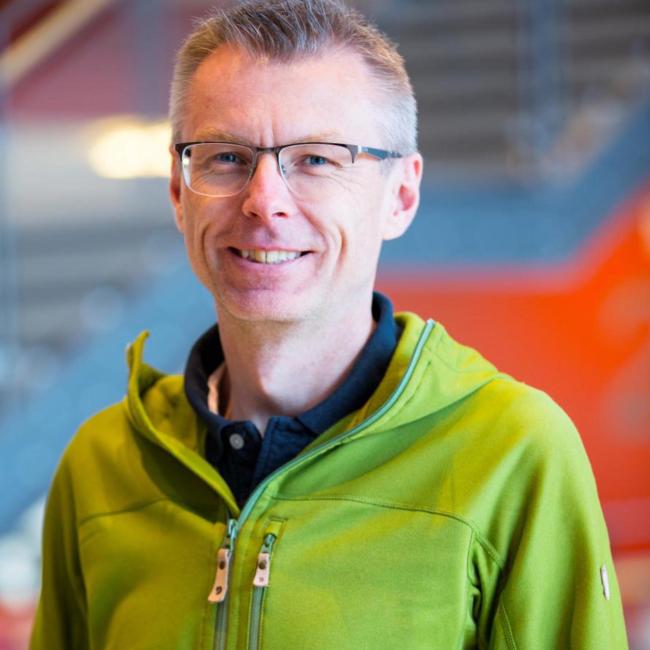
Amin Hajizadeh is an Associate Professor at Aalborg University (AAU), affiliated with the Esbjerg Energy Section in the Faculty of Engineering and Science . His research focuses on renewable energy systems, DC microgrids, offshore renewable energy integration, and AI-driven energy solutions. He holds a PhD in Electrical Power Engineering (2010). Research Highlights: Developing control strategies for modular multiport DC-DC converters and offshore wind-hydrogen systems Advancing energy management in net-zero buildings and smart city frameworks Pioneering work in AI-based wake steering for wind farm optimization Projects & Awards: Lead investigator in BlueBARGE (€5M EU project on renewable bunkering for anchored ships) Recipient of the 2024 Best Paper Award for work on neural network-based wake steering Key Contributions: Published 140+ papers in journals like IEEE Transactions and Renewable Energy Supervised 6 PhD students and contributed to 19 funded research projects Active in editorial roles (e.g., IET Renewable Power Generation)
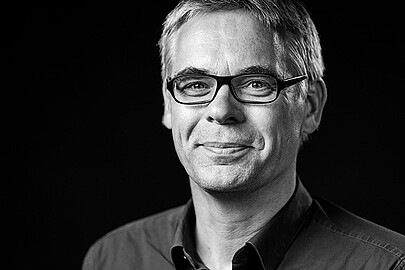
Kirsten Engelund Thomsen is an Emeritus Associate Professor and Head of the Research Group at the Department of the Built Environment, Aalborg University. She specializes in energy-efficient construction, climate-adapted buildings, and low-energy technologies. Her work focuses on integrating renewable energy systems at the district level and optimizing building energy performance. She has led projects such as the IEA EBC Annex 83 on Positive Energy Districts and contributed to the Concerted Action EPBD V initiative. Her research addresses challenges in historic building retrofitting, energy conservation, and sustainable urban development. Thomsen has been recognized with the Best Paper Award at the 2021 Cold Climate HVAC and Energy Conference. She is actively involved in research networks like CAV EPBD and serves on boards such as Concito, promoting energy policy and sustainability. Her research outputs include over 200 publications, with recent work emphasizing district-level strategies for energy efficiency and renewables. She has collaborated internationally on projects like the Nordic-Baltic NZEB initiative and the European Commission’s nearly zero-energy building standards.
Dr. Amit Kaushik is an Assistant Professor at Northumbria University's Architecture and Built Environment Department. He holds a PhD in Sustainable Construction Design and Management from the University of Wolverhampton (2019), an MSc in Construction Economics and Management, and a Bachelor of Architecture (Hons). His academic journey includes professional architectural practice in India and teaching roles in the UK since 2013. He leads courses in Architecture, BIM, Sustainable Design, and supervises dissertations and PhD candidates. Education: PhD, Sustainable Construction Design and Management (University of Wolverhampton, 2015–2019) MSc, Construction Economics and Management Bachelor of Architecture (Hons) Research focuses on: Indoor Environmental Quality (IEQ) impacts on occupants BIM and AI-driven construction innovation Off-site construction and lean principles Thermal comfort and sustainability His articles emphasize trends in: Climate change mitigation in construction AI applications for defect prediction and waste reduction Thermal/air quality-productivity linkages Awards include a special mention for outstanding design thesis. He has secured research funding as principal investigator/participant and reviewed for journals like Building and Environment and Architecture Engineering and Design Management . Advising includes completed PhD supervision and active grant-seeking roles. He collaborates internationally, including a visiting scholar role at UC Berkeley, and contributes to UN SDGs related to sustainable cities and climate action.
Ömer Ündül is an Associate Professor in the Department of Geological Engineering at Istanbul Technical University's Faculty of Mines. His expertise spans Engineering Geology, Applied Geology, and Rock Mechanics. He has held roles such as Vice President of the Department, Erasmus Coordinator, and has conducted postdoctoral research at ETH Zurich. His research focuses on rock mechanics, weathering effects, and geotechnical engineering applications. He has received the 2017 Kemal Erguvanlı Engineering Geology Award and the 2016 Best Article Award. Key projects include studies on CO2 storage potential, soil-nailed walls, and historical building stone conservation. His work bridges geological material analysis with engineering applications, contributing to sustainable infrastructure solutions. Education: PhD in Geological Engineering, Istanbul University (2001–2007) Master’s in Geological Engineering, Istanbul University (1998–2001) Bachelor’s in Geological Engineering, Istanbul University (1994–1998) Research Interests: Weathering effects on rocks, rock mechanics, engineering geological evaluations, CO2 storage potential, and historical stone conservation. His work addresses challenges in tunnel stability, quarry site analysis, and geomechanical material characterization. Recent Projects: Reclamation of Risky Diamond-shaped Rock Block (2023–2023) Effects of Weathering on Quartzites (2022–2023) Carbon Dioxide Storage Potential of Orhaneli Ophiolite (2022) Awards: Kemal Erguvanlı Engineering Geology Award (2017) Best Article Award (2016) Grants and Advising: Extensive grant-funded research on geological engineering challenges and student supervision in related fields. Collaborations include international institutions like ETH Zurich and the Turkish National Rock Mechanics Association.
Theodorian Borca-Tasciuc is a Professor and Associate Head of Graduate Studies in the Department of Mechanical, Aerospace and Nuclear Engineering at Rensselaer Polytechnic Institute. He directs the Nanoscale Thermophysics and Energy Conversion Laboratory (NanoTEC) , focusing on thermal conductivity, thermoelectric materials, and energy-efficient systems. PhD in Mechanical Engineering from UCLA (2000) Academic career since 2001 Research interests span thermal engineering, nanoscale thermophysics, and energy conversion for electronics and buildings. His work includes thermal metrology, thermoelectric enhancement, and sustainable building systems. Publications highlight trends in nanoscale thermal transport, energy-efficient building envelopes, and thermoelectric materials (e.g., Bi2Te3, graphene composites). Awards: NSF CAREER award (2004) Professional roles include Associate Editor for the Journal of Nanomaterials , ASME K8 committee member, and symposium organizer for ASME/MRS.
Prof. Azra Korjenic is a University Professor at TU Wien's E207-03 Research Area for Ecological Construction Technologies. Her work focuses on sustainable building practices, green infrastructure, and ecological materials. Current research includes facade greening systems, thermal insulation properties of natural materials, and urban climate mitigation strategies. She leads over 10 active projects including 'Urban Straw' (fire-resistant straw insulation) and 'Green Residential & Nursing Homes'. Recent publications (2023) address topics like stabilized earth bricks with agricultural waste reinforcement, viability of indoor moss walls, and financing green school infrastructure in Austria. Her work bridges engineering, environmental science, and urban planning to advance resource-efficient construction methods. No scientific awards explicitly listed in provided texts. Research focuses heavily on applied sustainability with particular expertise in moisture regulation, hygrothermal performance, and building physics. Active in cross-disciplinary collaborations through networks like natuREbuilt, targeting regenerative and resilient building components.
Magnus Johansson is an Associate Professor in Risk- & Environmental Studies at Karlstad University, where he leads research and teaching in disaster risk reduction, climate adaptation, and lessons learning from past events. He is affiliated with the Centre for Societal Risk Research (CSR) and the national research school at the Swedish Centre for Natural hazards and Disaster Science (CNDS). His work emphasizes multi-disciplinary approaches, stakeholder collaboration, and integrating local perspectives into risk management frameworks. Dr. Johansson previously served as an analyst and project leader at the Swedish Civil Contingencies Agency (MSB), where he co-developed the Swedish Natural Hazards Information System (ndb.msb.se) with the European Joint Research Centre. His research focuses on capturing data from extreme weather events and evaluating the effectiveness of preventive measures in Sweden and Scandinavia. He teaches master-level courses in societal risk management and contributes to the IntECR educational model, which combines academic training with practical social learning and stakeholder engagement. His publications explore topics like flood vulnerability, landslide management, and the societal impacts of climate change. Key contributions include analyzing disaster resilience in Lake Vänern/Göta älv River systems and investigating barriers to knowledge sharing in disaster contexts. Johansson’s work bridges academic research with policy applications, aiming to enhance community preparedness and adaptive capacity.
Dr. David Belton is a Senior Lecturer in the School of Earth and Planetary Sciences at Curtin University, within the Faculty of Science and Engineering. He also holds a portfolio role in the Office of the Provost. His expertise lies in laser scanning (both terrestrial and mobile) and photogrammetry, with a focus on automated processing, feature extraction, and applications in mining, heritage conservation, and structural monitoring. Dr. Belton holds a BCSc, BSc (First Class Honours), and a PhD from Curtin University. His teaching responsibilities include coordinating and lecturing in Cartographical Statistics and Integrated Surveying, alongside previous roles in Mine Surveying and Mine Survey Project courses. He actively supervises PhD, MPhil, and Honours students, fostering research excellence in spatial sciences. His research emphasizes practical applications of geospatial technologies, including underwater photogrammetry, pipeline monitoring, and coral reef analysis. Key areas include robust statistical methods for point cloud processing, sensor calibration, and open-source device development for marine surveys. His work bridges theoretical advancements with real-world challenges in environmental monitoring, infrastructure assessment, and cultural heritage preservation. Publications span high-impact journals like Corall Reefs , ISPRS Journal of Photogrammetry , and IEEE Transactions , reflecting contributions to geomatics, remote sensing, and computer vision. His research often addresses interdisciplinary challenges, such as UAV-based ecological monitoring and automated 3D model reconstruction from laser scanning data. Dr. Belton collaborates widely, contributing to projects like the Sydney-Kormoran wreck analysis and heritage documentation of Pilbara rock art. His work underscores innovative solutions for spatial data challenges across environmental, engineering, and archaeological domains.
Prof. Dr. Martin Prominski is a W3 Professor of Urban Landscape Development at Leibniz University Hannover, leading the Department of Designing Urban Landscapes within the Institute for Open Space Development. He has served as Dean and Vice Dean of the Faculty of Architecture and Landscape, demonstrating significant academic leadership. His research focuses on climate-resilient urban design, biodiversity enhancement, and the Anthropocene's impact on landscape architecture. Prominski actively participates in transdisciplinary projects like the Urban Climate Future Lab (UCFL) and the Good Coast Lower Saxony initiative, emphasizing sustainability and ecological integration. Education highlights include a Dipl.-Ing. from TU Berlin (1996), a Master in Landscape Architecture from Harvard University (1998), and a doctoral degree from TU Berlin (2003). His academic career includes roles as Junior Professor (2003–2008) and Head of Student Advisory Services. Prominski is a key figure in professional organizations such as the German Academy for Urban and Regional Planning (DASL) and the Board of the International Building Exhibition (IBA) Parkstad. Research interests span design research methodologies, locality patterns in urban water systems, and adaptive infrastructure. Notable projects include Sino-German collaborations on urbanization and the EU-funded LANDLABS initiative. He lectures globally, addressing topics like climate adaptation and the role of design in sustainability. His work bridges theory and practice through studios like Studio Urban Landscapes, emphasizing transdisciplinary approaches to urban challenges. Prominski's contributions include over 50 publications and editorial roles in journals like JoLA and Urban Challenge, solidifying his influence in landscape architecture discourse.
Gabriele Bertagnoli is an Associate Professor in the Department of Structural, Building and Geotechnical Engineering (DISEG) at Politecnico di Torino, Italy. His research and teaching focus on civil and structural engineering, particularly in bridge design, composite and concrete structures, finite element analysis, and structural health monitoring. His research interests include: Structural Engineering Bridge and Composite Structures Finite Element and Nonlinear Analysis Structural Health Monitoring (SHM) Optimization of Reinforced and Prestressed Concrete Seismic Retrofitting and Safety Assessment Bertagnoli's recent publications reveal a strong trend in developing and applying advanced computational models for the safety assessment of existing bridges and buildings, especially under damage and seismic loading. His work integrates innovative sensor technologies for SHM, genetic algorithms for structural optimization, and nonlinear finite element simulations to evaluate structural performance and reliability. His scientific awards include: Best Ph.D. Thesis of 2006 in the field of concrete structures – fib (Fédération Internationale du béton) CTE Congress 2018 Memorial Award – CTE (Italy, 2020) He is actively involved in research supervision and grant leadership: Supervises PhD students: Mario Ferrara and Sofia Villar Principal Investigator on multiple national and international projects (e.g., PRIN, PNRR, DECORI, Ri-REVERSE) Leads commercial and applied research contracts in structural consultancy and monitoring His laboratory and research group are engaged in developing intelligent monitoring systems for urban infrastructure (e.g., INSIST, Smart Concrete) and innovative retrofitting solutions using steel exoskeletons, composite connections, and sensor-embedded materials.
Vincenzo Sergio Vespo is a Researcher at the Department of Structural, Geotechnical and Building Engineering (DISEG) and serves as an External Lecturer and Teaching Assistant at the Department of Environment, Land and Infrastructure Engineering (DIATI), both at the Polytechnic University of Turin. His work bridges research and education in geotechnical and environmental engineering, with a strong focus on sustainable infrastructure and climate action. His research interests include: CO2 storage and geological sequestration Coupled thermo-hydro-chemo-mechanical processes Geoenvironmental and geotechnical engineering Numerical modeling of porous media Unsaturated soil mechanics Waste disposal and barrier systems His recent publications highlight a strong trend in modeling and experimental analysis of caprock behavior for CO2 storage, hydraulic performance of cement-bentonite mixtures, and evapotranspiration cover systems. These works reflect interdisciplinary efforts in civil, environmental, and computational engineering aimed at addressing climate change and sustainable land use. Scientific contributions include: Development of numerical models for capillary pressure estimation in caprocks Physical modeling of drying effects on engineered barriers FEM simulation of atmosphere-soil interactions Investigation of chemo-hydro-mechanical degradation in caprocks Vespo actively contributes to teaching as a course collaborator in both bachelor's and master's programs, particularly in geotechnics and experimental civil engineering. He has not been awarded any explicit scientific prizes, nor are any grants or advising roles mentioned in the available text. His research aligns with UN Sustainable Development Goals 13 (Climate Action) and 15 (Life on Land), and he operates within the ERC PE8_3 sector (Civil Engineering, Geotechnics).
Orazio Baglieri is a Full Professor at the Department of Environment, Land and Infrastructure Engineering (DIATI) at the Polytechnic University of Turin, where he has been serving since 2020, after previously holding the position of Associate Professor. He is an active member of the SISCON Interdepartmental Center for Safety of Infrastructures and Constructions and has held leadership roles including Coordinator of the Civil Engineering College (2018–2024) and President of the Italian Society of Road Infrastructures (SIIV) (2023–2024). He also serves as Chair of Task Force 4.5 of the PIARC National Technical Committee on decarbonization in road construction and maintenance. His research interests span high-performance and sustainable pavement materials, with a focus on bituminous binders, rheological characterization, recycled materials (including plastics and reclaimed asphalt), and the application of BIM (InfraBIM) for infrastructure maintenance. He has led numerous research and consulting projects funded by commercial contracts and public institutions, often as Scientific Director. The recent publications highlight a strong trend toward sustainable and resilient pavement technologies, particularly in the use of recycled materials, rejuvenation techniques, and advanced rheological testing methods. His work bridges laboratory characterization with real-world infrastructure performance, supporting innovation in eco-efficient road construction. Scientific Awards: Le Strade SIIV 2006 Award (2006) Orazio Baglieri has supervised PhD students, including Joseph Nicolas La Macchia, whose research focuses on asphalt mixtures with recycled plastics and high RAP content. He has been involved in editorial roles, serving on the advisory board of Materials and Structures and as Guest Editor for Materials . He has also contributed to international conferences as a program committee member and has held visiting positions at Purdue University and the University of Wisconsin. He is actively engaged in professional societies including RILEM, SIIV, and ANPAR, and contributes to national and international research networks focused on sustainable infrastructure and material innovation.
Edoardo Patti is an Associate Professor in the Department of Control and Computer Engineering (DAUIN) at Politecnico di Torino, Italy. He is actively involved in research and teaching, focusing on artificial intelligence, machine learning, IoT, smart grids, energy communities, co-simulation, and digital twin technologies. He is a member of the EDA (Electronic Design Automation) research group and the Interdepartmental Center IAM@PoliTo for Integrated Additive Manufacturing. His research interests span Artificial Intelligence, Machine Learning, Internet of Things, Smart Grids, Energy Communities, Co-simulation, Distributed Software Infrastructure, Digital Twin, Physics-Informed Neural Networks, and Reinforcement Learning . His work is closely aligned with Sustainable Development Goals such as Affordable and Clean Energy (Goal 7), Sustainable Cities (Goal 11), and Climate Action (Goal 13). The latest publications reveal a strong trend in AI-driven modeling for energy systems, including digital twins for wave energy converters, urban electric mobility simulation, real-time battery health estimation, and co-simulation platforms for integrated energy systems. His work combines machine learning with physical models and large-scale distributed systems to address sustainability challenges. He supervises several PhD students, including Maria Adelaide Loffa, Matia Torlini, Rafael Natalio Fontana Crespo, Pietro Rando Mazzarino, Claudia De Vizia, and Marco Massano. He has led numerous research projects funded by EU (H2020), PNRR, regional initiatives, and corporate contracts, particularly in additive manufacturing, smart grids, and IoT platforms. He is involved in multiple research groups and centers: EDA - Electronic Design Automation (DAUIN) Interdepartmental Center IAM@PoliTo - Integrated Additive Manufacturing
Mandalaki Maria serves as an Associate Professor in the School of Architecture at the Technical University of Crete (TUC), holding a permanent position within the Teaching and Research Staff. Her office is located in Building K4 (Ground Floor), Room K4 120/Ι.10 at the TUC campus, with contact email mmandalaki@tuc.gr and phone number 282100 6169. Her research centers on Building Energy Efficiency and Solar Shading Systems, with specialized focus on Photovoltaic Integration, Daylighting optimization, Thermal Comfort management, and Sustainable Energy Planning for Mediterranean contexts. She investigates how shading devices can simultaneously control solar radiation and generate renewable energy, particularly emphasizing residential applications where visual comfort must balance energy production. Analysis of her publication trends reveals a dominant research trajectory from 2012-2020 where 60% of output concentrated on dual-function shading systems in 2020. Her work consistently addresses Mediterranean-specific challenges, demonstrating progression from foundational design principles (2020) to multi-criteria optimization (2016) and regional implementation frameworks (2014), always targeting the thermal-daylight-energy triad. Scientific Awards No scientific awards were documented in the provided information. Advising and Grants No explicit references to student supervision, grant funding, or research projects appear in the source materials. Her current focus appears centered on publication-driven research within architectural energy systems. Labs and Teams She is formally associated with the ARMIX research group in the School of Architecture, which likely focuses on architectural energy integration based on contextual analysis of her publications and institutional structure.
Michele Trancossi is a Senior Lecturer in the ACES school at Sheffield Hallam University, United Kingdom, where he has been employed since November 2015. He holds a PhD in Industrial Engineering from the Università degli Studi di Modena e Reggio Emilia, Italy, awarded in 2009. He also serves as a Visiting Scientist at the Department of Electromechanical Engineering, Universidade da Beira Interior, Portugal, since 2019. PhD in Industrial Engineering, Università degli Studi di Modena e Reggio Emilia (2006–2009) His research focuses on thermodynamics, fluid dynamics, aerospace propulsion, and energy efficiency, with a particular emphasis on the Constructal Law, Bejan number, Coanda effect, and plasma actuators. He investigates applications in sustainable building design, UAVs, airships, and thermal management systems. His work integrates theoretical modeling with experimental validation, especially in heat transfer and fluid flow optimization. The recent publications of Michele Trancossi demonstrate a strong trend in applying second-law thermodynamics and exergy analysis to diverse engineering challenges, ranging from aerodynamics and propulsion to sustainable architecture and indoor climate control. His work frequently explores innovative configurations such as stair-shaped plasma actuators, container house energy systems, and high-altitude airships, often integrating renewable energy sources and Industry 4.0 principles. Member, American Physical Society (2020–present) Member, American Society of Mechanical Engineers – Heat Transfer Division (2009–present) Associate, Society of Automotive Engineers International – Aerospace and Automotive (2008–present) Member, ASTM International (2020–present) Michele Trancossi has led and contributed to numerous research projects on energy-efficient vehicle design, thermodynamic optimization, and advanced propulsion systems. His collaborations span institutions in Portugal, Italy, and the UK, involving interdisciplinary teams focused on aerospace, mechanical, and energy engineering. While specific grant details are not listed, his extensive publication output in high-impact journals and conferences indicates sustained research activity and funding support. He supervises research in thermal systems, fluid dynamics, and sustainable technologies, though no named students are listed in the provided data. He is actively involved in research teams working on the ACHEON propulsion system, Coanda effect applications, and energy self-sufficient vehicles. His work often involves computational fluid dynamics (CFD), experimental testing, and thermodynamic modeling in collaboration with international researchers such as J. Pascoa, G. Cannistraro, and A. Dumas.