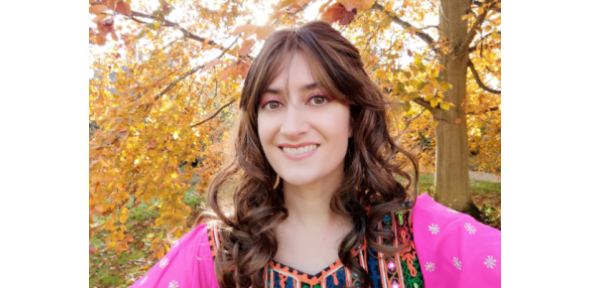
Dr Rebecca Mitchell is an Affiliated Lecturer in the French Section of the Faculty of Modern and Medieval Languages and Linguistics at the University of Cambridge, based at the Raised Faculty Building on Sidgwick Avenue. Her academic journey includes undergraduate studies in Modern and Medieval Languages at Cambridge, an MA in Translation and Interpreting from the University of Kent, and a PhD from Cambridge focused on syntactic variation in Gabonese French. Her educational background comprises: PhD in Linguistics (University of Cambridge) MA in Translation and Interpreting (University of Kent) Undergraduate degree in Modern and Medieval Languages (University of Cambridge) Dr Mitchell's research centers on the sociolinguistics of sub-Saharan Africa, examining language attitudes, endangerment, policy, planning, and healthcare communication. She also investigates traditional belief systems through Sub-Saharan African anthropology, emphasizing the intersection of language, culture, and power structures in Central and West African contexts. Her work consistently addresses decolonization themes and linguistic justice. Analysis of her publications reveals a dual trajectory: recent works (2023-2025) prioritize public engagement through initiatives like National Linguistics Day and educational advocacy, while earlier research (2004-2019) establishes foundational contributions to African linguistics, particularly Gabonese French syntax, language policy, and endangerment in Central Africa. No scientific awards are documented in the provided materials. She has supervised undergraduate courses since 2012 including Fr1 (Introduction to French Literature, Linguistics, Film and Thought), Fr2 (Structures and Varieties of French), Li14 (History of the French Language), and Li12 (History of Ideas about Language). Dr Mitchell currently cannot accept new doctoral students but maintains active engagement through curriculum development and public lectures. Her public engagement initiatives, notably National Linguistics Day launched in 2024, constitute a significant platform for promoting linguistic science through school talks, Civil Service workshops, and national events like the Language Show, positioning her as a key bridge between academic linguistics and public understanding.