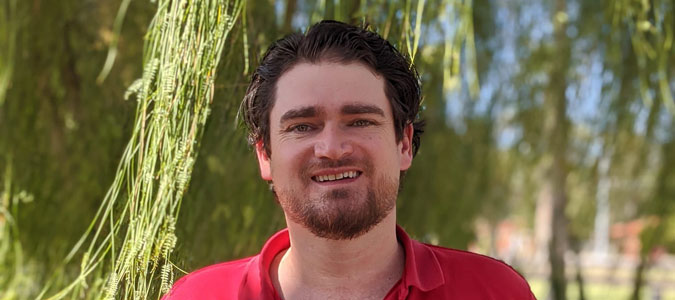
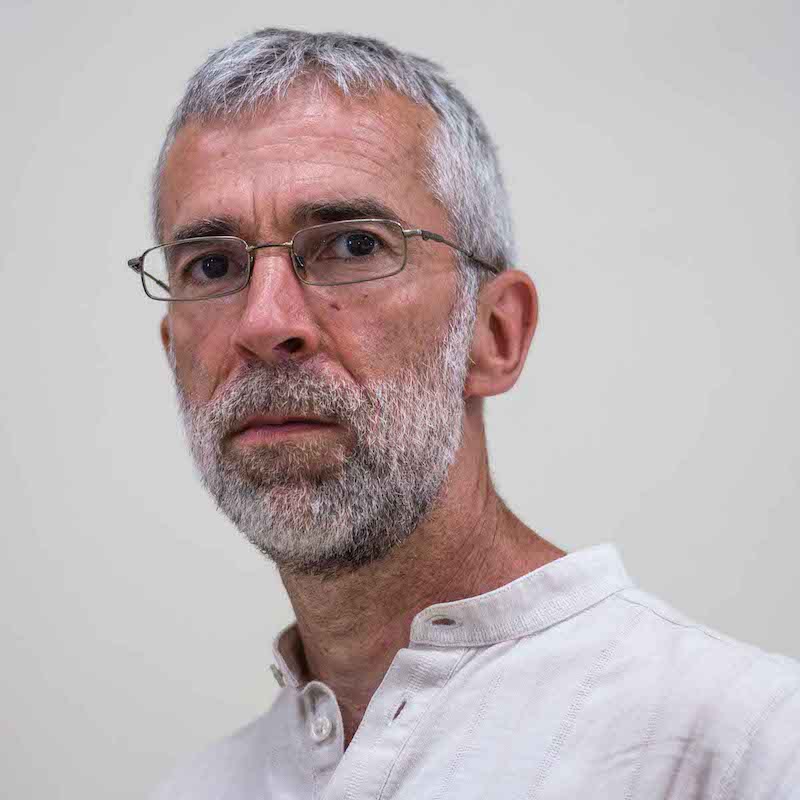
Furkan Alaca is an Assistant Professor at Queen's University's School of Computing, part of the Faculty of Arts and Science. His research focuses on user authentication systems, addressing security and usability challenges. He holds a Ph.D. (2018) in Computer Science from Carleton University, an M.A.Sc. (2012) in Electrical and Computer Engineering, and a B.Eng. (2010) in Communications Engineering, all from Carleton University. His academic career includes teaching roles at Queen's University and the University of Toronto Mississauga, where he taught courses such as Cryptography, Cybersecurity, and Discrete Mathematics. He is affiliated with Queen's Security Research Group and Computer Security Research Lab. Research interests include computer and internet security, usable security, authentication mechanisms, and systems security. He has contributed to advancements in web authentication frameworks, malware analysis, and privacy-preserving technologies. His work spans conferences like IEEE and ACM, with notable publications in cybersecurity, machine learning, and network efficiency. Current teaching includes CISC 447 (Introduction to Cybersecurity) and CISC 468 (Cryptography). He has advised on courses ranging from undergraduate programming to graduate-level security topics.
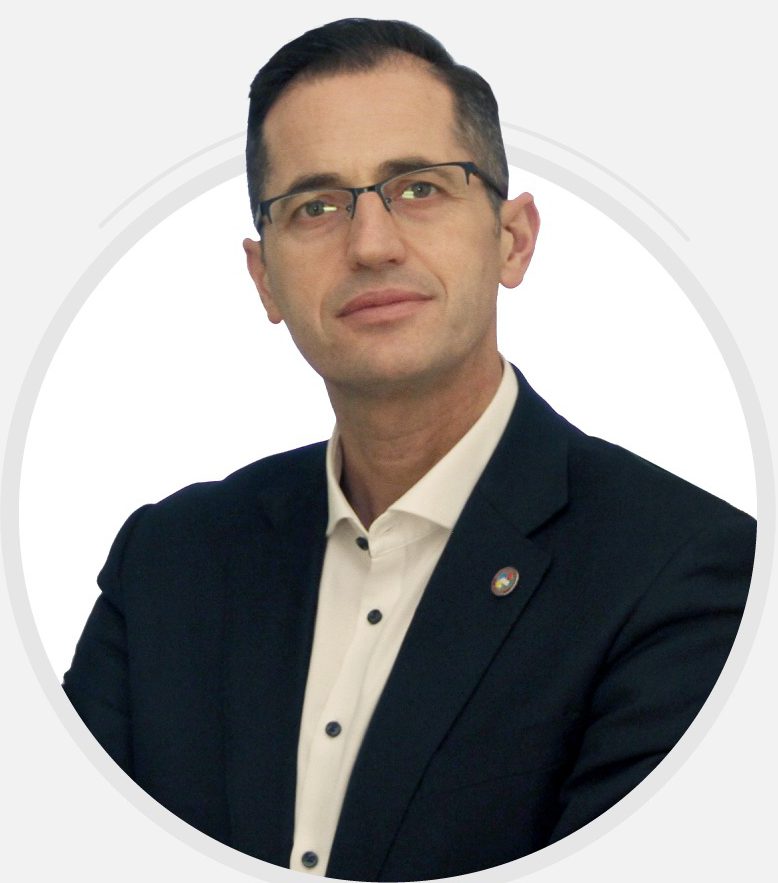
Ki-Woong Park is a tenure-track full Professor in the Department of Computer and Information Security at Sejong University. He leads the System Security and Computer Engineering Research (SysCore) Lab, which focuses on system security research with numerous ongoing projects funded by major Korean research institutions including IITP, NRF, and KRIT. Sejong University, Department of Computer and Information Security System Security and Computer Engineering Research (SysCore) Lab Leader Member of IEEE, IEEE Computer Society, and ACM Education: Ph.D. in Electrical Engineering & Computer Science, KAIST (Advisor: Prof. Kyu-Ho Park) M.S. in Electrical Engineering & Computer Science, KAIST (Advisor: Prof. Kyu-Ho Park) B.S. in Computer Science, Yonsei University (Summa Cum Laude) Exchange Student at University of California, Los Angeles (UCLA) Professor Park's research focuses on designing, building, and analyzing secure systems, particularly for cloud computing, networked systems, and embedded systems. His work often involves reevaluating existing security mechanisms and actual system implementations with subsequent evaluation in real computing environments. He has made significant contributions to areas including cloud security, IoT security, ransomware detection, moving target defense, and metaverse security. His research approach emphasizes both theoretical foundations and practical implementation, with numerous publications in top-tier security and systems venues. His recent publications (2023-2024) demonstrate a strong focus on emerging security challenges in modern computing environments, particularly in metaverse platforms, UAV systems, and edge computing. These works span both theoretical security frameworks and practical implementations, with an emphasis on visualization techniques, hardware-based security mechanisms, and AI-enhanced security analysis. His research shows a clear progression from traditional cloud and network security toward next-generation security challenges in immersive virtual environments and cyber-physical systems. Scientific Awards: Microsoft Research Fellowship (2009-2010) Best Poster Gold Award at WISA 2020 Best Paper Award at MobiSec'18 Professor Park actively mentors numerous graduate and undergraduate students through the SysCore Lab, with current members including Ph.D. students, MS students, and undergraduate researchers. His research is supported by multiple significant grants, including the NRF Outstanding Researcher-Mid-career Researcher project, IITP Information Security Core Source Technology Development, and Defense Technology Advancement Research Institute projects. These grants total tens of billions of Korean won and address critical national security challenges in cyber defense, cloud security, and metaverse technologies. The SysCore Lab, under Professor Park's leadership, maintains a strong industry and government collaboration network, with part-time researchers from organizations including Hyundai Duty Free, Astron Security, Korea University, and various military cyber commands. This unique structure enables the lab to address both theoretical security challenges and practical implementation issues in real-world systems.
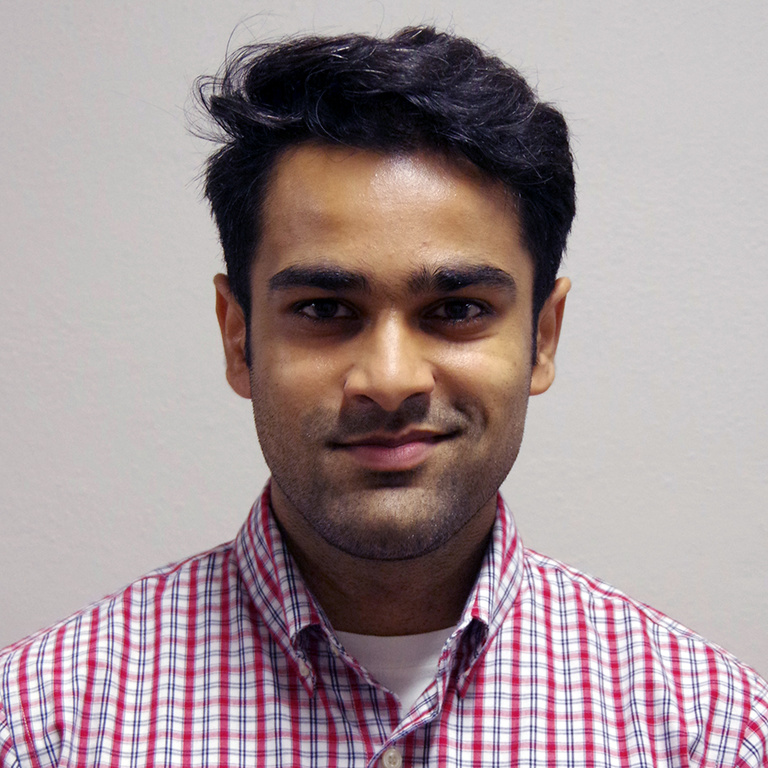
Christian Rossow is Faculty at CISPA – Helmholtz Center for Information Security in Dortmund, Germany, where he leads the System Security research group. He holds dual academic appointments as a professor in the Computer Science department at Saarland University and as an honorary professor at TU Dortmund University. His research spans systems, software, and network security, with a focus on cyber attacks, defenses, and privacy. Research Interests: His primary research areas include software and system security (e.g., exploitation techniques, compiler-assisted defenses, AI-assisted (in)security), network security (e.g., DDoS mitigation, attack attribution, traffic analysis), and cybercrime (e.g., malware analysis, data-driven studies). He emphasizes foundational research with practical applications. Publication Trends: His recent work (2023–2025) shows a strong focus on microarchitectural attacks (e.g., cache side-channels, prefetcher analysis), browser and web security (e.g., sandbox escapes, CSS fingerprinting), network protocol vulnerabilities (e.g., TCP spoofing, infinite loops), and applied cryptography (e.g., ISA extensions for key management). His research consistently targets top-tier venues like IEEE S&P, USENIX Security, ACM CCS, and NDSS. Distinguished Paper Award at IEEE EuroS&P 2021 Best Student Paper Award at MIT Spam Conference 2010 Advising and Grants: He actively supervises PhD students and postdoctoral researchers, with alumni placed in industry (NVIDIA, Crowdstrike, Continental) and academia. His research is supported by major grants including EU H2020 SISSDEN, BMBF-funded BOB, DFG-funded anonymous communication, and RAMSES. He regularly serves in leadership roles in the community, including PC Chair for RAID 2022/2023 and USENIX WOOT 2018, and Track Chair for ACM CCS 2026. Labs and Teams: He leads the System Security research group at CISPA, a world-leading institution for security and privacy. The group comprises talented full-time researchers and focuses on cutting-edge research with strong individual supervision and worldwide collaborations.
Prof. Dr. Martin Johns serves as Chair of Application Security at the Institute for Application Security within the Carl Friedrich Gauss Faculty at Technical University Braunschweig. He joined TU Braunschweig after working as Research Expert at SAP Security Research, where he shaped security strategy and led software security teams. Prior to SAP, he worked as software engineer in Germany at companies like TC Trustcenter and Infoseek Germany. Academic qualifications include a PhD in Computer Science (University of Passau, 2009) and a Diploma in Computer Science (University of Hamburg, 2003). His research focuses on web security and software security , particularly secure programming , vulnerability detection , and attack mitigation strategies. Recent publications cover topics like GDPR compliance frameworks , WebAssembly security , federated learning privacy , and server-side request forgery (SSRF) defenses. His work appears in top conferences including IEEE S&P, CCS, WWW, and ACM CODASPY.
Prof. Dr. Christian Rossow is a faculty member at CISPA – Helmholtz Center for Information Security in Dortmund, Germany. He also serves as a professor at Saarland University and an honorary professor at TU Dortmund. His research focuses on network security , system/software security , and cyber attacks and countermeasures . His recent publications include work on CSS exploitation for browser fingerprinting, Spectre mitigations on ARM, DDoS attack analysis, and hardware-assisted security extensions. Christian Rossow regularly serves as a PC member and track chair for top cybersecurity conferences like ACM CCS and USENIX Security . He advises multiple PhD students and leads a research group exploring foundational and practical security solutions.
Xiaowen Zhang is a Professor of Computer Science at the College of Staten Island (CSI), City University of New York (CUNY), and a Doctoral Faculty Member at the CUNY Graduate Center. His academic work bridges theoretical and applied research in cybersecurity, information systems, and network technologies. Dr. Zhang holds a Ph.D. in Computer Science from the CUNY Graduate Center (2007) and a Ph.D. in Electrical Engineering from Northern Jiaotong University (1999), along with an M.A. from CUNY Queens College, an M.S. from Northern Jiaotong University, and a B.S. from Shanxi University. His research focuses on Cryptography, Information Security, Cybersecurity, Secure Biometrics, RFID Security & Privacy, Information Retrieval, and Wireless Sensor Networks . He explores both foundational cryptographic methods—such as secret sharing schemes and hash functions—and their practical implementations in secure systems, including RFID authentication protocols and data visualization platforms for sensor networks. The analysis of his recent publications reveals a consistent focus on security mechanisms in distributed and wireless environments . His work frequently combines cryptographic theory with system-level implementations, particularly in RFID and sensor networks. There is a strong trend toward privacy-preserving protocols, efficient data retrieval, and secure information sharing , often leveraging mathematical structures like Latin squares and Bloom filters. Dr. Zhang has been actively involved in mentoring students, as evidenced by numerous co-authored publications with graduate and undergraduate researchers. His contributions span journals such as Security and Communication Networks , Journal of Applied Security Research , and International Journal of Security and Networks , as well as major conferences including IEEE LISAT, ACM CODASPY, and IEEE Sarnoff Symposium.
Yinzhi Cao is an Associate Professor at the Johns Hopkins University Department of Computer Science . He serves as Technical Director of the Johns Hopkins Information Security Institute and is affiliated with the Data Science and Artificial Intelligence Institute and the Institute for Assured Autonomy . Cao joined JHU in 2018 from Lehigh University, where he was an Assistant Professor. Doctor of Philosophy (PhD) in Computer Science, Northwestern University (2014) Bachelor of Engineering (BE) in Electronic Engineering, Tsinghua University (2008) Research Interests focus on security and privacy of web, mobile, and machine learning systems . Key projects include Vulnerability Analysis of Web Applications and Security, Privacy, and Fairness Analysis of ML Systems . His work addresses prototype pollution in JavaScript, node.js vulnerabilities, browser fingerprinting, federated learning privacy, and automated exploit generation. Scientific Recognition includes the NSF CAREER Award (2021) DARPA Young Faculty Award (2022) & Director's Fellowship (2024) Amazon Research Awards (2022, 2017) IEEE Security & Privacy Test of Time Award (2025) Distinguished Paper Awards at IEEE S&P 2025, CCS 2023, USENIX Security 2022 Advising & Grants highlight mentorship of 20+ PhD and Master’s students across institutions. Major grants include $1.2M collaborative CICI TCR grant (2024-2026) with Dr. John Aucott $750K DARPA YFA grant (2022-2025) $500K NSF SaTC grant (2022-2025) NSF EAGER grant (2016-2017) Labs & Teams : Affiliated with Johns Hopkins Information Security Institute , Data Science AI Institute , and Institute for Assured Autonomy . Collaborates with institutions like Columbia, UC Santa Barbara, and SRI International. His group investigates real-world vulnerabilities in over 2,500 websites and NPM packages, uncovering 80+ zero-day issues.
Adam Doupé is an Associate Professor at Arizona State University's School of Computing and Augmented Intelligence (SCAI) and Director of the Center for Cybersecurity and Trusted Foundations (CTF). He holds a Ph.D. and M.S. in Computer Science from the University of California, Santa Barbara. His research focuses on cybersecurity, vulnerability analysis, web security, and hacking competitions. Notable awards include the NSF CAREER Award (2017), Best Teacher Award, and Outstanding Assistant Professor Award from ASU's Fulton Schools of Engineering. Education: Ph.D. and M.S. in Computer Science, UC Santa Barbara (2014, 2009). Research emphasizes automated vulnerability analysis, binary analysis, and cybersecurity education. Key contributions include frameworks like SCAMNet and SENSAI for fraud detection, and tools like Fuzz to the Future for uncovering future vulnerabilities. Recent articles highlight advancements in phishing ecosystem analysis, browser fingerprinting mitigation, and compiler-aware decompilation. Awards reflect his impact in both teaching and research. Advising and grants support his work in secure systems and ethical hacking. He co-leads the SEFCOM lab with Drs. Ahn, Shoshitaishvili, Wang, and Bao, and hosts CTF Radiooo for cybersecurity discussions.
Güneş Acar is a tenured Assistant Professor in the Digital Security group at Radboud University's Faculty of Science. He is also affiliated with iHub, Radboud's interdisciplinary research hub on digitalization and society. His research focuses on security and privacy threats from websites, mobile apps, and IoT devices, with special emphasis on online tracking mechanisms, anonymous communication networks like Tor, and deceptive design patterns. Dr. Acar completed his PhD at KU Leuven under the supervision of Claudia Diaz and Bart Preneel. Prior to joining Radboud University, he was a Postdoctoral Research Fellow at KU Leuven's COSIC group and a Postdoctoral Research Associate at Princeton University's Center for Information Technology Policy. His research spans web security, privacy, online tracking, IoT security, Tor network analysis, and dark patterns. He investigates how websites, mobile apps, and IoT devices compromise user privacy through various tracking mechanisms and deceptive interface designs. His work combines large-scale measurements with user studies to understand both technical vulnerabilities and their real-world impact on users. Dr. Acar's publications reveal an evolving research trajectory from foundational web tracking mechanisms to increasingly sophisticated privacy threats. His work has expanded from browser fingerprinting to IoT privacy, children's online safety, and manipulative design patterns in subscription interfaces. A consistent theme across his research is the examination of how third-party trackers operate and circumvent privacy protections. 2022 CNIL-Inria Award for Privacy Protection (for Leaky Forms paper) Top Reviewer Award, Privacy Enhancing Technologies Symposium (2022) Future of Privacy Forum's Annual Privacy Papers for Policymakers Award (2020) Runner-up for multiple Caspar Bowden Awards for Outstanding Research in Privacy Enhancing Technologies Dutch Research Council (NWO) Vidi Grant (2025-2030) for "A Web Security and Privacy Observatory" Dr. Acar actively supervises PhD students including Zahra Moti, Tim Vlummens, and Luqman Zagi, with Asuman Senol recently completing her PhD in 2024. He has secured significant research funding including the NWO Vidi Grant and a project grant from armasuisse for the Mobile Web Inspector project. His research has influenced policy discussions with organizations including the OECD, US Federal Trade Commission, and European consumer protection authorities. As part of the Digital Security group at Radboud University, Dr. Acar contributes to a vibrant research ecosystem focused on practical security and privacy solutions. His work bridges technical security research with human-centered perspectives, often collaborating across disciplines to address complex privacy challenges in real-world contexts.
Jedidiah Crandall is an Associate Professor at Arizona State University's School of Computing and Augmented Intelligence, with an affiliation to the Biodesign Center for Biocomputing, Security and Society. His research focuses on Internet censorship, network security, and privacy-preserving technologies. Crandall collaborates with journalists and activists to expose surveillance mechanisms, particularly in politically sensitive regions like Russia and China. His work includes analyzing VPN vulnerabilities , decentralized censorship systems , and cross-border data flows . He teaches advanced courses in computer network security and advises graduate students on thesis/dissertation research. Research trends in his publications emphasize measuring state-level information control , attack vectors in modern networks , and secure communication technologies . Notable work includes TSPU: Russia's censorship infrastructure and Hidden Links: Analyzing Secret Families of VPN Apps . Crandall's teaching spans courses like Advanced Computer Network Security and Applied Cryptography , reflecting his commitment to preparing the next generation of security professionals. His Censored Planet project tracks global Internet censorship patterns through large-scale measurements.
Prof. Blerim Rexha is a full professor at the University of Prishtina's Faculty of Electrical and Computer Engineering, Kosovo. With a Ph.D. in Computer Engineering from Vienna University of Technology (2004), he has led research in cybersecurity, blockchain, machine learning, and electronic voting systems. His teaching portfolio includes data, computer, and internet security courses. Education : Ph.D. in Computer Engineering (Vienna), Electrical Engineer MSc (Prishtina), specialized certifications in software engineering, biometrics, and .NET programming. His research spans cybersecurity (DDoS mitigation, face authentication attacks), blockchain applications (electronic voting bridges, transaction privacy), and machine learning integration (boosted trees for intrusion detection, LSTM for vulnerability scanning). He has contributed to cloud security through novel encryption methods and AI-driven attack detection. Recent publications focus on energy efficiency in cloud vs on-premises systems, XGBoost/CatBoost/LightGBM comparisons for network security, and blockchain bridges for e-voting. His work has addressed privacy preservation in video data, SMS encryption, and eID card pseudo-profiles. Awards include the 2024 Marin Barleti Prize for academic contributions and Best Paper Awards in election security (2015) and Kosovo website vulnerabilities (2013). Honors : Marin Barleti Prize (2024) Cyber Security Ambassador (2018) ICT Academician of the Year (2016) Best Paper Awards (2015, 2013) As academic advisor to the KosovaCyberTeam , he mentors students like Korab Keqekolla and Abian Morina. His leadership extends to Kosovo's Cyber Security State Training Center curriculum development and jury roles in Albanian ICT Awards .
Umar Iqbal is an Assistant Professor in the Department of Computer Science and Engineering at Washington University in St. Louis , where he investigates transparency and control mechanisms in computing systems to enhance user privacy and security. His work intersects computer security, privacy, and technology policy with a focus on web tracking, IoT, and agentic systems. Research Themes : Web security, emerging technology privacy, regulatory compliance under CCPA/GDPR, and tracking mitigation Scientific Awards : Best paper award at ACM Internet Measurement Conference (IMC), 2023 Caspar Bowden Award for Outstanding Research in PET Runner-Up, 2024 Best applied research paper (3rd) at CSAW NYU Tandon, 2020 Collaborations : Regularly works with researchers like Franziska Roesner, Tadayoshi Kohno, and Zubair Shafiq His publication portfolio spans 2016-2025 with impactful work on browser fingerprinting (IEEE Oakland 2021), ad blocking (IEEE Oakland 2020), and LLM platform security (AIES 2024). Current research includes privacy implications of AI systems and regulatory auditing frameworks.
Eric Wustrow is an Associate Professor in the Department of Electrical, Computer, and Energy Engineering (ECEE) at the University of Colorado Boulder. His research focuses on computer security, network security, anticensorship, and protocol security. He has advised multiple PhD students including Abdulrahman Alaraj, Jackson Sippe, and Gaukas Wang. Research Interests: Network security and protocol analysis Anticensorship techniques and measurement Internet measurement and infrastructure analysis Cryptography and secure system design Notable Contributions: Developed ZMap, a fast internet-wide scanning tool Pioneered anticensorship research through projects like Telex and TapDance Conducted impactful studies on TLS vulnerabilities and cryptographic key management Awards: Best Paper at USENIX Security 2012 IRTF Applied Networking Research Prize (2024) Third Prize in 2021 Internet Defense Prize Labs/Teams: Active contributor to Refraction Networking projects and cybersecurity tool development initiatives.
Anja Feldmann is Director at the Max Planck Institute for Informatics in Saarbrücken and Professor of Internet Network Architectures at Technische Universität Berlin (since 2006). Previously she held a full professorship at Technische Universität München (2002–2006) and conducted research at AT&T Labs Research , Saarland University , and Carnegie Mellon University , where she earned her Ph.D. in 1995. Education Ph.D. in Computer Science, Carnegie Mellon University, 1995 M.Sc. in Computer Science, Carnegie Mellon University, 1991 Diplom in Computer Science, Universität Paderborn, 1990 Research Interests Anja Feldmann’s research centers on measurement-driven understanding of the Internet. She tackles challenges such as software-defined networking , cloud-network interactions , performance debugging , and traffic characterization . A growing focus is the privacy and security of networked systems, evidenced by recent studies on online tracking, DNS security, and disinformation ecosystems. Her group designs scalable measurement platforms that combine passive and active monitoring , programmable data planes , and machine-learning analytics to dissect phenomena ranging from terabit-scale traffic to covert tracking on illegal streaming sites. Recent Publication Themes The 2021-2025 publications reveal a methodological evolution toward large-scale, longitudinal measurement . Topics include: Impact of global events (COVID-19, CrowdStrike outage) on Internet traffic Cross-country tracking ecosystems and privacy leaks DNS root and routing plane stability and security ML-driven real-time monitoring at terabit speeds Disinformation campaigns on encrypted messaging platforms Scientific Awards Gottfried Wilhelm Leibniz Prize (2011) – Germany’s highest research honor Berliner Wissenschaftspreis (2011) Elected Member of the German National Academy of Sciences Leopoldina (2009) Advising & Grants While individual student names are not listed, Prof. Feldmann leads a vibrant team at MPI-INF’s Internet Architecture department. She has supervised numerous doctoral candidates and post-doctoral researchers whose work is reflected in the co-authored papers. Funding sources include the German Research Foundation (DFG) via the Leibniz Prize and EU Horizon projects, although explicit grant numbers are not provided in the source material. Labs & Teams She heads the Internet Architecture department at MPI-INF, located at the Saarland Informatics Campus . The department operates state-of-the-art measurement infrastructure—including programmable switches, honeynets, and global vantage points—to support empirical network science.
National Institute of Science and Technology (INSA)France
Vincent Roca is a permanent researcher at Inria , a French national research institute for digital science and technology. Since 2019, he leads the Privatics research team focusing on privacy, previously part of the Planete team (2000-2012) for Internet protocols and applications. His work spans Privacy in smartphones, IoT, and web browsers Design of the ROBERT and CLEA protocols for the French TousAntiCovid app Standardization in IETF working groups, notably on FEC and network coding Co-author of Inria's cybersecurity white book (2019) Instructor of the popular Privacy in the digital world MOOC (14,006 participants) Research Interests include privacy risks in digital technologies, robust content distribution via FLUTE/ALC transport protocols and LDPC-Staircase FEC codes, and network coding for scalable services. His articles focus on privacy in LoRaWAN, contact tracing protocols, GDPR compliance, and FEC optimization. Scientific Awards include the Third Applied Research Price from FIEEC (2014) Knight Medal of the French Order of Merit (2020) Students supervised include PhD candidates in privacy-preserving IoT, secure authentication, and alumni like Samuel Pelissier (LoRaWAN privacy) and Michael Toth (GDPR compliance). Software Contributions include openfec.org (AL-FEC codes) and FLUTE/ALC implementations .