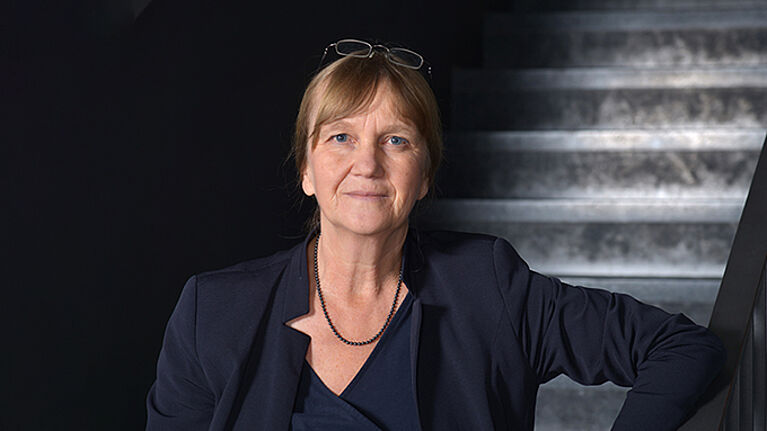
Szabó Mariann is a Senior Lecturer at the Department of Environmental Economics and Sustainability, Faculty of Economic and Social Sciences, Budapest University of Technology and Economics. Her research focuses on sustainable urban and rural development, circular economy, regional planning, and resilient regions. She has contributed extensively to studies on prosumption, brownfield redevelopment, and social innovation. Education: Regional Economics, Regional Economic Development, Regional and Urban Marketing Her research highlights the integration of sustainable consumption practices into urban planning, emphasizing circular economy models and interregional learning. She has explored the socio-economic impacts of brownfield renewal and cultural heritage valorization for regional growth. Scientific Awards: New National Excellence Program (NEP) Doctoral Research Scholarship (2017-2018) Szabó has authored numerous peer-reviewed publications (2018-2024) on sustainable development, local loyalty, and urban-rural dynamics. She collaborates with researchers like Ferenc Miszlivetz and participates in EU-funded projects such as Interreg CENTRAL EUROPE NiCE.
Professor Ilke Marschall is a distinguished academic serving as Professor of Landscape Planning at Erfurt University of Applied Sciences since March 2009. She holds multiple leadership positions including Vice Dean for Studies and Teaching, Member of the Faculty Council, and Head of both the Bachelor's and Master's degree programs in Landscape Architecture since 2016. Her institutional affiliations extend beyond the university to include her role as Spokesperson for the nationwide working group on landscape planning of the Federal Association for Professional Nature Conservation (BBN) since 2006, Member of the Academy for Spatial Development in the Leibniz Association (ARL) since November 2009, and participation in various advisory boards related to nature conservation in Thuringia. Professor Marschall's research focuses on historical and current cultural landscape research, methods and instruments of landscape planning, and landscape planning in Europe. Her work particularly emphasizes the documentation of cultural landscapes through initiatives like the Thuringia Cultural Landscape Portal (http://www.kulturlandschaft.fh-erfurt.de), which serves as a digital cultural landscape atlas of Thuringia. She has led significant projects including the GreenNet INTERREG project (2011-2014) on promoting ecological networks in the European Green Belt across six EU countries, the 'Landscape planning in process and dialogue' initiative (2016-2018), and the Climate Gala project (2018-2019). Her publication record shows consistent scholarly output with approximately 2-3 publications annually, with recent works (2019-2020) focusing on garden soils as cultural heritage, cultural landscape databases through volunteer participation, and the integration of cultural landscape concepts into regional planning. Her 15 most recent publications demonstrate expertise spanning cultural landscape preservation, European landscape policy implementation, renewable energy landscape integration, and historical landscape documentation. Professor Marschall has supervised multiple PhD students to completion, with Jessica Machalett's research on Monastery Landscapes in Thuringia currently ongoing. Her supervision portfolio includes interdisciplinary work with universities in Bonn, Dresden, and Kassel, reflecting her collaborative approach to academic mentorship. She has served as co-supervisor for doctoral candidates researching topics including cultural landscape conservation in China, monastery landscapes in Thuringia, and citizen participation in landscape element documentation. Her teaching responsibilities are extensive, covering courses across the Bachelor of Landscape Architecture, Master of Landscape Architecture, and Master's degree in Renewable Energy Management programs. As Vice Dean for Studies and Teaching, she plays a significant role in shaping academic programs while maintaining her research profile. Her practical experience, gained through self-employment within the Office for Cultural Landscape Research and Landscape Development (KuLaBü) since 2005, ensures her teaching remains grounded in real-world landscape planning challenges.
Attila Tóth is an accomplished Associate Professor and Head of the Institute of Landscape Architecture at the Slovak University of Agriculture in Nitra's Faculty of Horticulture and Landscape Engineering. With extensive international experience including research positions at BOKU University in Vienna and RWTH Aachen University, he has established himself as a leading expert in green infrastructure planning, design and implementation across multiple European contexts. His educational background includes advanced studies at TU Wien (Spatial Planning and Landscape Architecture), BOKU University (Landscape Planning), and Slovak University of Agriculture in Nitra (Garden and Landscape Architecture). This strong foundation has enabled his research expertise in cultural, historical and sacred landscapes, urban agriculture, nature-based solutions, and ecosystem services, with fieldwork conducted across Austria, Germany, New Zealand, Slovakia, and Spain. Tóth's research portfolio demonstrates consistent focus on practical application, with particular attention to green infrastructure as a cross-scale strategy bridging planning and design. His work examines how landscape architecture can address contemporary challenges including climate adaptation, urban resilience, and sustainable development through research by design approaches. Recent publications reveal growing emphasis on participatory planning processes, forgotten urban spaces, water-sensitive design, and peri-urban landscape transformation. As a recognized scholar with 188 publications and nearly 100,000 reads on ResearchGate, Tóth has received prestigious awards including the Action Austria-Slovakia Postdoc Scholarship and Green Talents Research Stay. His professional influence extends through leadership roles as ECLAS Contact Person for SUA Nitra, Chair and Board Member of LE:NOTRE Institute, and IFLA Europe Vice President for Education. His academic work integrates teaching with practical implementation through projects like the Living Laboratory of Green Innovations in Landscape Architecture, demonstrating commitment to translating research into tangible landscape solutions. Tóth maintains active collaboration with international institutions while focusing on regional Slovak contexts, particularly addressing challenges in Nitra and surrounding areas through accessibility studies, housing estate green spaces, and rural village transformations.
Monika Konrad serves as an Extraordinary Professor at the Faculty of Architecture, Brno University of Technology since November 2023, while concurrently holding the position of Deputy Director at Warsaw's Municipal Office of Architecture and Spatial Planning since 2018, where she leads the Warsaw Strategic Masterplan as chief designer. Her academic foundation includes degrees from: Poznań University of Technology (Faculty of Architecture) Erasmus University Rotterdam Lund University Her research integrates practical urban strategy with academic rigor, focusing on citywide-scale projects across Europe, Asia, and Africa. With professional experience at OMA and Claus en Kaan Architecten plus consultancy at Strelka KB, she specializes in creating implementable urban standards and transformative spatial solutions for complex metropolitan contexts. As guarantor of the Joint Masters in Integrative Urban Studies (INUS), she coordinates this trilateral program between Brno University of Technology, European Humanities University, and University of Wrocław, enabling students to develop urban interventions across Brno, Vilnius, and Wrocław. Her teaching portfolio for 2025/2026 includes: Reconversion of Brownfields (RIO-KE) Studio – Free Assignment (AT4-AE)
Mario Morrica is a Professor at the Department of Pure and Applied Sciences (DiSPeA) at the University of Urbino Carlo Bo. He currently teaches Urban and Land Planning in the Geology and Land-Use Planning degree course for the 2023/2024 and 2024/2025 academic years. Previously, he served as adjunct professor at Politecnico di Milano from 2018 to 2020, teaching Urban Planning and Building Distribution Characteristics and Typology. Since 2022, he has also been an adjunct professor at LUMSA Palermo campus for Human Geography and Geography Teaching Laboratory. Mario Morrica's research focuses on urban planning , urban design , and strategic-participatory territorial design in internal areas and complex urban systems. His work explores the intersections of physical and digital ecosystems, socio-spatial transitions, and territorial regeneration. He has contributed significantly to understanding how cultural heritage, landscape architecture, and sustainable development can be integrated into contemporary urban planning practices. His scholarly output demonstrates a consistent trajectory examining territorial fragility, urban transitions, and the integration of digital technologies. Recent publications analyze physical-digital ecosystems through gamification, urban transition culture in Italian cities, experiential tourism in Central Apennine landscapes, unstable landscapes in internal areas, and regeneration strategies for fragile territories. Mario Morrica holds a PhD in Architecture and Urban Planning from the University of Chieti-Pescara 'Gabriele D'Annunzio'. His research portfolio includes significant national and international projects such as Solutions' Heritage (2022-2023), Innovazione Territorio (2021-2023), Urban Hub - Creative Innovative Industries in Piacenza (2015-2018), Strategies for Adriatic geo-city regeneration (2016), PRIN Re-Cycle Italy (2013-2016), and Landscape and Territory Project for large infrastructure planning (2009-2010).
Marco Adelfio is an Associate Professor in Applied Urbanism at Chalmers University of Technology, specifically within the Department of Urban Design and Planning under the School of Architecture and Civil Engineering. His academic work focuses on the intersection of urban planning, social sustainability, and participatory processes in diverse urban contexts. Dr. Adelfio's research centers on multi-stakeholder processes and knowledge co-production that contribute to socially sustainable development across urban, suburban and rural areas. He has developed expertise in collaborative pedagogy within urban design and community architecture, participatory GIS methodologies, and examining how humans and non-humans mediate the local translation of circulating knowledge. His work often addresses the practical implementation of compact city models while considering social equity dimensions and context-specific adaptations of planning ideals. Analysis of his recent publications reveals consistent engagement with digital tools for participatory planning, compact city development, and sustainable urban transformation. His research demonstrates a strong interdisciplinary approach, connecting urban planning with environmental considerations, social inclusion, and technological innovation. Key thematic areas include stakeholder engagement in brownfield redevelopment, the integration of cultural values in digital planning tools, and examining the social dimensions of mobility transitions including connected and autonomous vehicles. Dr. Adelfio leads and participates in multiple research projects funded primarily by Formas, Sweden's research council for sustainable development. His collaborative work extends across disciplines and institutions, particularly with the University of Gothenburg and other Swedish universities. His projects often involve multi-stakeholder approaches to address complex urban challenges through co-creation frameworks.
Daniel Campo serves as Associate Professor, Chair of the Department of Graduate Built Environment Studies, and Director of the Graduate Program in City and Regional Planning at Morgan State University's School of Architecture and Planning in Baltimore, Maryland. His leadership extends to the Joint MIT-MSU City Planning Initiative and waterfront studies collaboration with the Maryland Port Administration. Postdoctoral Fellow, Institute for Urban Research, University of Pennsylvania Ph.D., University of Pennsylvania, City and Regional Planning M.U.P., Hunter College of the City University of New York B.A., State University of New York at Binghamton Dr. Campo's research focuses on postindustrial urbanism, examining how communities transform neglected industrial landscapes through DIY interventions and cultural preservation. His work bridges urban planning, historic preservation, public space studies, and cultural landscape theory, with particular emphasis on Rust Belt cities, waterfront redevelopment, and the intersection of art with urban planning. His ethnographic approach reveals how grassroots movements reshape urban environments in economic decline. His publications demonstrate consistent focus on postindustrial urban transformation, particularly how communities reclaim and reinterpret industrial heritage sites. The research trajectory shows evolution from Brooklyn waterfront studies to broader Rust Belt investigations, increasingly emphasizing community-led preservation tactics and the role of cultural memory in urban regeneration. National Endowment for the Humanities Research Fellowship (2010-11) Morgan State University Outstanding Researcher Award (2015) University Appreciation Award – Research As Principal Investigator for multiple Maryland Port Administration projects including the Masonville Cove Design study and Climate Change Mapping Project, Dr. Campo leads significant waterfront research initiatives. His Smart Family Foundation grants supported groundbreaking work on postindustrial DIY preservation and Rust Belt icon recovery. He actively mentors students through professional projects and thesis guidance while collaborating with organizations like AIA Baltimore and the North Brooklyn Parks Alliance. Dr. Campo directs the MIT-MSU Planning Collaborative and leads Morgan's waterfront studies team working with the University of Maryland Center for Environmental Studies, focusing on South Baltimore's working waterfront. His Chance Ecologies Public Art Project investigations demonstrate interdisciplinary integration of creative practice with academic research.
April Milburn-Knizner serves as Associate Director of Bar Studies and Assistant Professor of Law at Duquesne University's Thomas R. Kline School of Law. Her dual role encompasses designing bar preparation curricula and teaching core legal education courses. Her research focuses on legal education methodologies and environmental law systems , particularly examining Pennsylvania bar examination frameworks, climate change policy intersections, and regulatory compliance mechanisms. As faculty advisor for both the Environmental Law Society and Joule Energy & Environmental Law Journal, she actively bridges academic theory with environmental advocacy. Her scholarly output demonstrates consistent specialization in contaminated site regulation and legal pedagogy, with publications concentrated in environmental law supplements and practitioner-focused handbooks. The work shows increasing emphasis on practical implementation challenges within regulatory frameworks. Professional Recognition: Pennsylvania Super Lawyers-Rising Stars Milburn-Knizner provides character and fitness counseling for bar candidates while co-coordinating the summer BEST program. Her institutional service extends to Duquesne's Sustainability Committee, where she contributes legal expertise to campus environmental initiatives. Through the Joule journal mentorship, she cultivates student scholarship in energy law and climate resilience.
John Klemanski is a Professor in the Department of Political Science at Oakland University, where he has served continuously since 1985. He has held significant leadership roles including Department Chair (2004-2007), Acting Chair (1998-1999), and MPA Director/Graduate Adviser (1988-1996, 2003-2004). His expertise spans state and local government, urban politics, campaign finance, election administration, and nonprofit management, with over 30 publications including six books. Recognized with multiple teaching and research awards, he actively contributes to academic discourse and public policy evaluation. His educational foundation includes: Ph.D. in Political Science from Wayne State University (1985) M.P.A. in Public Administration from Wayne State University (1974) B.A. in Political Science from the University of Michigan (1973) Professor Klemanski's research examines urban governance dynamics, campaign finance systems, and election administration with a strong Michigan focus. His work analyzes brownfield redevelopment patterns, judicial election trends, and comparative urban regimes across U.S. and U.K. contexts. He investigates how campaign contributions influence legislative elections and how land use policies shape urban development, emphasizing practical governance implications for policymakers and practitioners. His publication trajectory reveals evolving scholarly priorities: early work concentrated on campaign finance and legislative elections, while recent scholarship emphasizes judicial elections, election administration, and land use challenges. This progression demonstrates consistent engagement with Michigan's political landscape while addressing broader themes in political science and public administration, particularly regarding institutional responsiveness to urban development pressures. His accolades include: Leverhulme Fellowship from Cranfield University (England) Multiple Department of Political Science Merit Awards for Research and Teaching Two Oakland University Faculty Recognition Awards (2000, 2004) As an educator, Klemanski teaches across American politics, public administration, and state/local government curricula. He has directed the MPA program, advised the OU Democrats student organization, and served on numerous university committees including the Academic Conduct and Assessment Committees. His external evaluation work for school districts, nonprofits, and courts demonstrates applied expertise in program assessment and policy implementation. He is affiliated with Oakland University's Public Affairs Research Laboratory (PARL) and maintains active membership in the American Society for Public Administration and American Evaluation Association, contributing to professional discourse through manuscript reviews and conference participation.