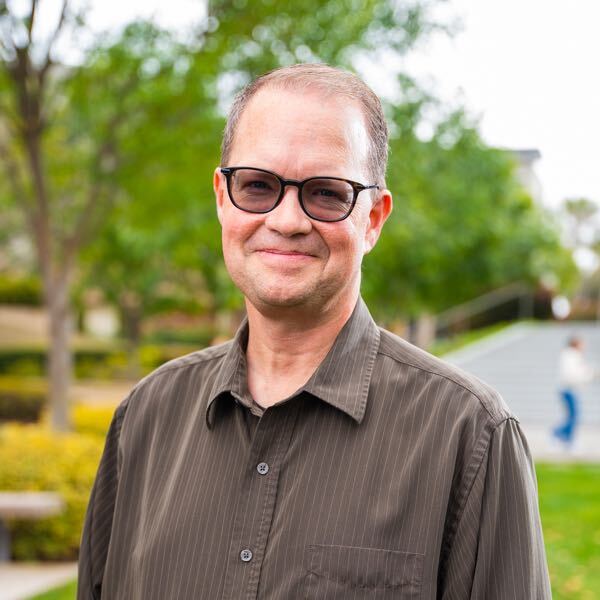
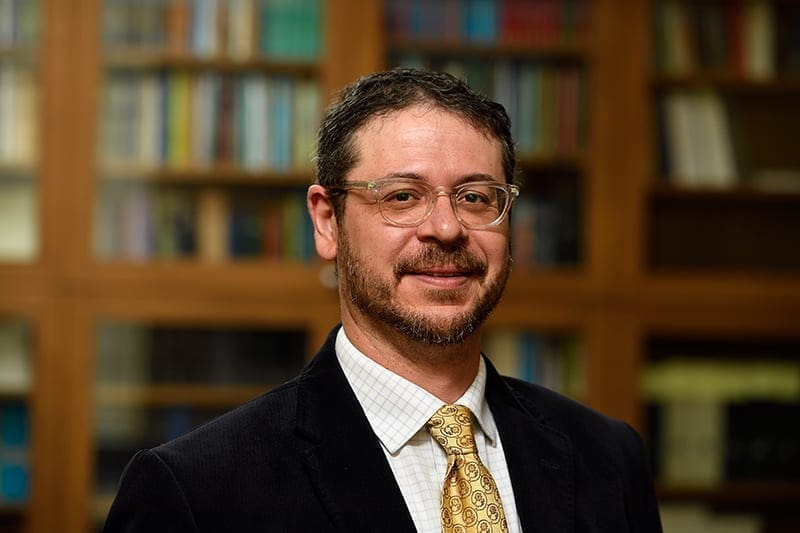
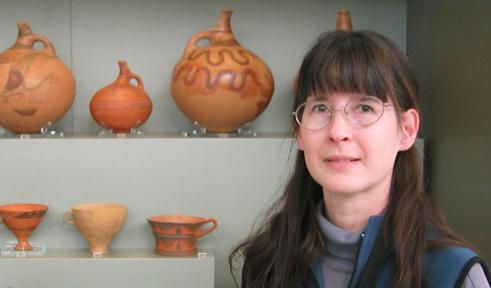
Lothar von Falkenhausen is a Professor of Art History & Archaeology at the University of California, Los Angeles, where he has taught since 1993. Educated at Bonn University, Peking University, Kyoto University, and Harvard University (PhD in Anthropology, 1988), his research focuses on the archaeology of the Chinese Bronze Age, addressing interdisciplinary and historical issues through material culture. Education: Ph.D. in Anthropology, Harvard University (1988) Bonn University, Peking University, Kyoto University His research spans topics such as ancient Chinese ritual systems, regional cultural variations, trans-Asiatic contacts, and methodological innovations in East Asian archaeology. Recent publications analyze cross-cultural art historical practices and cosmological frameworks in early imperial China. Key publications include interdisciplinary studies on salt production, bronze mirrors, and chime-bells, emphasizing material culture's role in understanding sociopolitical structures. His edited works (e.g., World Antiquarianism , Birth of an Empire ) reflect collaborations across global institutions. Scientific Awards & Honors: Society for American Archaeology Book Award (2006) Full Member, German Archaeological Institute Honorary Research Fellow, Shaanxi Archaeological Academy Honorary Professor, Zhejiang University Fellow, American Academy of Arts and Sciences Fellow, American Philosophical Society Corresponding Member, Académie des Inscriptions et Belles-Lettres Active in academic governance, he served on the Scientific Council of the French School of Far Eastern Studies and President Obama’s Cultural Property Advisory Committee. As Associate Director of UCLA’s Cotsen Institute (2004-2014), he advanced international fieldwork projects like the Yangguanzhai Archaeological Field School.
Prof. Jan Paul Crielaard is Full Professor of Mediterranean Pre- and Protohistorical Archaeology at the Faculty of Humanities, Vrije Universiteit Amsterdam. His research focuses on the Greek world during the Bronze Age/Iron Age transition, Mediterranean interconnectivity, and identity formation in the Archaic period. He holds editorial roles at Brill’s History and Archaeology of Classical Antiquity series, advises the ARCHON research school and NWO’s Social Sciences and Humanities domain, and organizes academic workshops like 'How to Become a PhD'. Teaching specialties include Aegean archaeology (3000–300 BC), Mediterranean prehistory, and methodologies of archaeological fieldwork. Research interests bridge archaeology with literary evidence, early Greek cult practices, and Homeric archaeology. Recent work explores Greek colonization in Italy, cultural hybridity, and inscription-based religious landscape studies. Publications (48 total) address topics like Bronze Age social networks, Euboian sanctuaries, and material culture indicators of migration. Editorial activities include peer review for Brill and conference organization. Supervised 6 PhD students, focusing on Mediterranean connectivity and protohistoric archaeology. Labs/teams include collaborations within the ARCHON research network and international field projects examining Mediterranean cultural interactions. Current interests emphasize interdisciplinary approaches to ancient identity formation and Bronze Age-Iron Age socio-political transitions.
Evangeline Markou is a Visiting Professor at the School of Humanities, Social and Education Sciences, European University Cyprus (since 2022), and Adjunct Professor there. She is also a Senior Researcher at the National Hellenic Research Foundation (since 2009), focusing on numismatics and ancient history. Her work emphasizes Cypriot coinage and monetary policies from antiquity. Education: PhD, Sorbonne University (2006): Problèmes monétaires chypriotes à l’époque classique MA, Sorbonne University (2000): Les problèmes de l’histoire de Chypre Bachelor, Aristotle University of Thessaloniki (1997): History and Archaeology Research Interests: Numismatics, ancient economic systems, Cypriot kingdoms, archaeological methods (e.g., pXRF analysis of coins), and the intersection between coinage and political history. She explores how monetary practices reflect power dynamics and regional connectivity in antiquity. Publications: Over 10 major works analyzing Cypriot coinage, including compositional studies of silver and gold coins, and the role of numismatics in reconstructing historical narratives. Her book L’or des rois de Chypre (2011) earned multiple awards. Awards: 65th Eric P. Newman Visiting Scholar (2019) Prize ALLIER de HAUTEROCHE 2013 (Académie des Inscriptions) Prize Delepierre 2012 (Association des Études Grecques) Projects: Principal Investigator of the SilCoinCy project (2014-2015) on Cypriot silver coinage. Active in interdisciplinary initiatives like ANAVATHMIS (digital historical applications) and CyCoMed (Cypriot Mediterranean connectivity). Researcher on EU-funded projects involving underwater archaeology and VR applications. Labs/Teams: Collaborates with institutions like the Numismatic Museum of Athens, Fitzwilliam Museum (Cambridge), and the Bank of Cyprus Cultural Foundation. Leads numismatic documentation and analysis in multidisciplinary teams.
Kenneth Way is a Professor of Old Testament and Semitics at the Talbot School of Theology , Biola University. His work bridges Biblical scholarship with archaeology and Semitic linguistics. University: Biola University School: Talbot School of Theology Department: Old Testament and Semitics Academic Rank: Professor Research Interests: Way specializes in Exodus, Judges, Ruth, Israelite religion/archaeology, Northwest Semitic inscriptions, and fauna of the ancient Near East. His scholarship integrates literary analysis with archaeological insights. Publication Trends: Recent works focus on lexical semantics, literary structures in Judges, and animal symbolism in the Hebrew Bible. His contributions appear in journals like Journal of Biblical Literature and Levant . Academic Affiliations: Member of the Society of Biblical Literature, American Schools of Oriental Research, Institute for Biblical Research, and Evangelical Theological Society.
Theodore Burgh is Associate Professor specializing in Near Eastern archaeology and ancient musicology. His fieldwork includes directing excavations at Jordan's Tel Jalul Project and Sicilian sites, analyzing material cultures of ancient Israel/Palestine. Research reconstructs Syro-Palestinian music traditions through artifact analysis while examining intersections of archaeology, biblical studies, and critical race theory. Publications include studies of Iron Age musical instruments and Canaanite religious iconography.
Jacob Lauinger is a Professor of Assyriology at Johns Hopkins University's Department of Near Eastern Studies, part of the Krieger School of Arts & Sciences. He serves as Director of Graduate Studies and has held previous academic positions including Gaylord and Dorothy Donnelley Research Fellow at University of Cambridge (2009-2010) and Assistant Professor at Roanoke College (2007-2009). He holds a B.A. in Classical Art & Archaeology from Princeton University (1998), and M.A. and Ph.D. in Assyriology from the University of Chicago (2001, 2006). His research focuses on Akkadian cuneiform texts from the second millennium B.C., particularly 'peripheral' texts outside Mesopotamia. He leads archaeological projects with Koç University’s Tell Atchana (Alalah) Excavations and the University of Toronto’s Tayinat Archaeological Project. Key publications include Following the Man of Yamhad (2015), The Labors of Idrimi (2024), and The Amarna Letters (2025). His work combines textual analysis with material evidence, such as his philological commentary on the Idrimi statue inscription and his annotated editions on the Amarna Letters via ORACC platform. Research interests emphasize Bronze Age legal texts, territorial governance, and the intersection of material culture with textual evidence. He contributes to archaeological projects at Alalakh and Tayinat, focusing on migration patterns, resource taxation, and imperial-local dynamics in the Levant.
David Hernandez is the Eli J. and Helen Shaheen Associate Professor of Classics at the University of Notre Dame, affiliated with the Department of Anthropology. He holds a PhD in Classical Archaeology from the University of Cincinnati and a B.A. in Physics from UC Berkeley. His research focuses on ancient urbanism in Greece, Albania, and Italy, particularly Roman imperialism and Hellenistic architecture. He directs the Roman Forum Excavations Project at Butrint, a UNESCO site in Albania, and co-directs projects at Rome's Mausoleum of Hadrian and Tivoli's Hadrian's Villa. Education: Ph.D. and M.A. in Classical Archaeology (University of Cincinnati, 2010 and 2004), B.A. in Physics (UC Berkeley, 1996). Research Interests: Archaeology of ancient urbanism, Roman colonization, imperial cult, Latin epigraphy, and excavation methodologies. His fieldwork includes projects at Butrint’s necropolis, Amantia, and Mursi. He has received grants from the Loeb Foundation, ACLS, Packard Humanities Institute, and Notre Dame’s Institute for Scholarship in the Liberal Arts. Publications include Butrint 7: Beyond Butrint (2020) and numerous articles on Roman urbanism, archaeobotany, and Epirus history. He teaches courses on Roman archaeology, Pompeii, and the archaeology of early Rome. Awards: Loeb Classical Library Fellowships, ACLS Fellowship, and keynotes at major archaeological conferences. His work bridges archaeology with environmental studies, examining how urban centers adapted to ecological challenges across antiquity.
Ruth Palmer is an Associate Professor in the Department of Classics and Religious Studies at Ohio University’s College of Arts and Sciences, where she has been a faculty member since 1995. Her academic work bridges archaeology, linguistics, and ancient economic history, with a focus on the Aegean Bronze Age. Her research centers on Greek, Roman, and Egyptian archaeology, particularly the economic structures of the Mycenaean and Minoan worlds. Key interests include Linear B and other Aegean scripts, food studies in antiquity, viticulture, animal husbandry, and palace-based redistribution systems. She has taught a wide range of courses such as Greek Archaeology, Roman Archaeology, Egyptian Archaeology, and thematic classes like Food, Drink, and Identity in the Ancient World. The 15 most recent publications reflect a consistent focus on textual and archaeological analysis of agricultural and economic systems in the Late Bronze Age Aegean. Her work often integrates Linear B tablet evidence with material culture to reconstruct subsistence, trade, and resource management. Themes include wine production, grain cultivation, animal use, and gender roles, demonstrating interdisciplinary depth across history, archaeology, and philology. Her scholarly contributions include significant encyclopedia entries on 'Redistribution,' 'Agriculture, Greek,' and 'Animal Husbandry,' as well as a monograph titled Wine in the Mycenaean Palace Economy . She has published in major international series such as Aegaeum and Pasiphae, contributing to foundational debates in Mycenaean studies. Ruth Palmer has not been mentioned as advising graduate students or receiving specific research grants in the provided text. There is no indication of lab leadership or team-based research initiatives. However, her sustained publication record in high-impact venues underscores her role as a respected contributor to Aegean archaeology and philology.
Lukas Bohnenkämper is a Research Associate at the Egyptian Museum and Assistant in the Department of Egyptology at the University of Bonn. He holds an MA and has been actively involved in teaching and research since 2012, with prior affiliations at the University of Basel, where he served as Assistant and Research Assistant. His work is centered on ancient Egyptian social systems, interregional contacts, and the historiography of Egyptology and Sudan archaeology, particularly from postcolonial and decolonial perspectives. His research interests include migration in the Middle Kingdom, priestly genealogies during the Kushite and Saite periods, and the colonial dynamics of American Egyptology in Sudan. He has taught courses on Abydos, the Middle Kingdom, and classical Egyptian texts, and has delivered lectures at institutions such as the Reiss-Engelhorn-Museen and the University of Freiburg. The trends in his publications reflect a strong interdisciplinary focus, combining archaeology, epigraphy, and critical theory. His recent works analyze migration economies, colonial narratives in archaeology, and the transmission of religious titles, demonstrating a commitment to both empirical scholarship and methodological reflection. Startstipendium des Doktoratsprogramms der Basler Altertumswissenschaften (2015) Lukas Bohnenkämper has advised no formal students listed in the sources. He has not received external grants mentioned in the text but has been supported by stipends. He is affiliated with the Verband der Ägyptologie e.V. and the Verein zur Förderung des Ägyptischen Museums der Universität Bonn e.V. His academic work contributes to ongoing efforts to decolonize the field of Egyptology and promote inclusive scholarship.
Dr. James M. Burgin is a researcher at the University of Würzburg, where he serves as Head of the DFG Emmy Noether Junior Research Group 'The Hittite Annals: Origins, Purpose, and Afterlife' since 2021. He is affiliated with the Chair of Ancient Near Eastern Studies within the Institute of Classical Studies in the Faculty of Philosophy. Previously, he worked as a Research Assistant (leader) from 2017-2021 on the philological processing and analysis of the Hittite palace administration corpus. Born on October 9, 1984, Burgin earned his BA in South Asian Language and Civilization with a focus on Sanskrit from the University of Chicago (2002-2006), followed by an MA in Ancient Near Eastern Studies with a focus on Hittite studies (2008-2010). He completed his doctorate at the University of Chicago in 2016 with a dissertation titled 'Aspects of Religious Administration in the Hittite Late New Kingdom.' Burgin's research spans multiple dimensions of Hittite and Ancient Near Eastern studies, with particular expertise in Hittitology, the history of the Hittites, economic and administrative history, and Hieroglyphic Luwian. His work demonstrates a sophisticated understanding of the interplay between linguistic, historical, and archaeological evidence. He has made significant contributions to understanding Hittite festival texts, economic administration, textile production, and linguistic phenomena such as the 'Initial-A-Final' in Hieroglyphic Luwian. His research often bridges disciplines, connecting linguistic analysis with historical context and material culture. His recent publications reveal a trajectory of increasingly sophisticated analysis of Hittite textual corpora, with a growing emphasis on interdisciplinary approaches that incorporate linguistic, historical, and archaeological perspectives. Burgin's work on the Hittite palace-temple administrative corpus has challenged conventional understandings of royal administration, while his linguistic studies have illuminated previously obscure aspects of Anatolian languages. Röntgen Prize of the University of Würzburg (2022) Burgin has been involved in significant research projects including the Corpus of Hittite Festival Rituals (2016-17) and the DFG-funded project on the Hittite palace administration corpus (2017-21). As leader of his Emmy Noether Research Group, he directs a major investigation into the Hittite Annals, examining their origins, purpose, and historical legacy. His work has been supported by prestigious funding mechanisms including the DFG Emmy Noether Program, which targets exceptional early-career researchers. As head of his research group, Burgin leads a team investigating the complex textual tradition of the Hittite Annals, which document the military campaigns and political activities of Hittite kings. His research environment combines philological expertise with interdisciplinary approaches to understanding Bronze Age Anatolian civilization.
Maddalena Luisa Zunino is a Researcher at the University of Udine 's Department of Humanities and Cultural Heritage . She teaches Greek History for degree courses in Literature and Cultural Heritage Conservation, and participates in academic governance as a member of the Teaching Commission and DIUM Board. Her research interests include Ancient Greek Law Orality-Literacy Studies Political and Religious Systems Epigraphic Analysis Her recent publications focus on judicial conventions between Greek poleis, volcanic activity in the Aeolian Islands, and the interplay of oracular decrees with political decisions. She employs interdisciplinary methods combining philology, archaeology, and legal studies. Key sub-fields across her work span: Greek diplomatic protocols Volcanic settlement challenges Pan-Hellenic judicial norms Fragmentary text reconstruction Solonic legal reforms Oracular arbitration mechanisms
Artemis Karnava serves as Assistant Professor of Prehistoric Archaeology at the University of Crete's Department of History and Archaeology. She directs the university excavation at Sklavokambos, Malevizi, Crete, a mid-2nd millennium BC settlement site. Her academic journey includes a doctorate from the Free University of Brussels on Cretan hieroglyphic writing, with additional education from the University of Sheffield and Aristotle University of Thessaloniki. Her research focuses on the archaeology and epigraphy of the eastern Mediterranean from the 3rd to 1st millennium BC, with particular expertise in Aegean writing systems, Minoan and Mycenaean civilizations, and Cypriot syllabic inscriptions. Karnava's scholarly work demonstrates how administrative practices, written texts, and iconography intersected in early Aegean societies. Her publication trends reveal consistent contributions to understanding Bronze Age Aegean writing systems, with recent work focusing on Cypriot inscriptions, Minoan archives, and Mycenaean administrative practices. She has co-edited significant volumes including the Inscriptiones Graecae XV 1 on Cypriot syllabic inscriptions and proceedings of international Mycenaean studies colloquia. Scientific associate of the National Research Foundation (2007-2008) Scientific associate of the Berlin-Brandenburg Academy of Sciences (2016-2018) Co-editor of Inscriptiones Graecae XV 1 on Cypriot syllabic inscriptions Author of monograph 'Seals, sealings and seal impressions from Akrotiri in Thera' Karnava has directed archaeological excavations at Sklavokambos since 2023 and has participated in numerous research projects examining Aegean Bronze Age sites. Her interdisciplinary approach combines archaeological fieldwork with epigraphic analysis to illuminate ancient administrative practices and cultural connections across the Mediterranean.
Makbule Ekici Bulut is an Assistant Professor in the Department of Archaeology at Gaziantep University's Faculty of Arts and Sciences, specializing in Classical Archaeology and Numismatics with regional focus on Southeast Anatolia. Her fieldwork integrates excavation, surface survey, and ethnoarchaeological methods to reconstruct ancient economies and settlement systems from the Neolithic to Late Antiquity. Education: Doctorate in Classical Archaeology, Selçuk University, Faculty of Letters (2005-2013) Master's in Classical Archaeology (with thesis), Selçuk University, Institute of Social Sciences (2001-2004) Licence in Classical Archaeology, Selçuk University, Faculty of Letters (1997-2001) Research Focus: Her work centers on Greek and Roman period material culture, numismatics, and ancient Mediterranean economies. She pioneers studies on olive oil and wine production in antiquity through interdisciplinary analysis of archaeological landscapes, particularly in the Sacır Suyu Valley. Her methodology combines excavation data with ethnoarchaeological observations to model rural economies and settlement hierarchies in Southeast Anatolia. Publication Trends: Recent works (2016-2024) demonstrate consistent focus on Yenice Höyük excavations and Oğuzeli district surveys, revealing evolving expertise from Classical numismatics to broader studies of water management systems (e.g., 2024 Aleppo Channel research) and regional economic networks. Her publications increasingly integrate Black Sea coast archaeology with Anatolian inland studies. Scientific Recognition: No formal awards or fellowships are documented in available records. Academic Leadership: Supervised 13 Master's theses covering diverse topics from ancient jewelry to burial practices, while leading 6 major projects including the Gaziantep Archaeological Surface Survey Laboratory and Giresun Island underwater surveys. Her grant work emphasizes rescue archaeology for dam projects and regional cultural heritage documentation. Collaborative Networks: Directs the Gaziantep Archaeological Surface Survey Laboratory and partners with international institutions like the University of Chicago on excavations. Coordinates closely with Turkey's Ministry of Culture and Tourism for archaeological field operations across Southeast Anatolia.
Professor Diana Spencer is a distinguished academic at the University of Birmingham, serving as Professor of Classics in the Department of Classics, Ancient History and Archaeology within the College of Arts and Law. She has held the significant leadership position of Dean of Liberal Arts and Natural Sciences since 2014 (with a brief return to the role in 2019 after a sabbatical). Her academic career spans over two decades at the University of Birmingham, following doctoral studies at Cambridge where she focused on Q. Curtius Rufus. Professor Spencer's educational background reflects a deep engagement with classical studies and interdisciplinary approaches: PGCert in Learning and Teaching in Higher Education, University of Birmingham (2003) PhD in Classics, University of Cambridge (1997) MA in Late Antique and early Byzantine Studies, University of London (1992) BA (Hons) in Modern English and Classical Civilization, Trinity College Dublin (1991) Her research interests coalesce around questions of Roman identity, cultural politics, and the relationship between people and place in antiquity. Professor Spencer investigates how identity and cultural politics are manifest through narratives emphasizing space, territory, cultivation of place, and ethos. She is particularly fascinated by authors and texts engaged in interrogation of what 'self,' 'nature,' and 'wild' mean in the Roman context. Her work spans multiple interconnected strands including Varro studies, literary Roman landscapes, language and identities, and her current project 'Out of Place' which examines the significance of places in relation to the bodies that defined, occupied, and dwelt in them. Professor Spencer's recent publications reveal a consistent focus on Roman cultural identity, with particular emphasis on Varro's linguistic and cultural contributions, the representation of Rome and its landscapes in literature, and the interplay between environment and identity formation. Her work bridges traditional classical scholarship with innovative approaches from ecolinguistics, cognitive linguistics, and social geography, demonstrating the continued relevance of ancient texts to contemporary questions about place, identity, and environmental experience. Among her notable professional contributions: Author of the monograph 'Language and Authority in de Lingua Latina: Varro's Guide to Being Roman' (2019) BBC's 'In Our Time' expert speaker on Alexander the Great British School at Rome Ambassador (2016-2019) Journal editorial board member for American Journal of Philology, Classical Association Journals Board, and Intertexts External examiner for PhDs at multiple prestigious institutions including University of London, University of Reading, Bristol University, University of Nottingham, and University of Cape Town Professor Spencer has supervised numerous doctoral students, often in collaborative arrangements, with research topics spanning Roman urbanism, literary representations of Rome, autocracy in Julio-Claudian literature, and ancient ecological experience. Her current project 'Out of Place' continues to develop through interdisciplinary approaches, uniting ecolinguistics, neuroscience, social geography, discourse analysis, and literary criticism to explore embodied experience across different eras. As Dean of Liberal Arts and Natural Sciences, she plays a key role in shaping innovative interdisciplinary education at the University of Birmingham while maintaining active research engagement despite her administrative responsibilities. Her research network extends across multiple institutions through the Midlands4Cities AHRC Doctoral Training Programme, connecting her work with colleagues at the Universities of Nottingham, Warwick, and other partner organizations, demonstrating her commitment to fostering collaborative academic communities.
Gian Pietro Basello is an Associate Professor of Assyriology (L-OR/03) at the University of Naples 'L'Orientale' since December 2020, affiliated with the Department of Asia, Africa and Mediterranean. His academic career includes previous positions as a fixed-term researcher (2017-2020) and multiple contract teaching positions at the University of Bologna. Basello holds a Laurea in Storia Orientale from the University of Bologna (1993-2000) and a PhD in Ancient Near East Studies from the University of Naples 'L'Orientale' (2001-2005). He has received national qualifications (Abilitazione Nazionale) for both Associate Professor (2014-2020, 2018-2024) and Full Professor (2023-2034) positions in sector 10/N1 (Cultures of the Ancient Near East, Middle East and Africa). His research focuses on Elamite language, culture, and history, with particular emphasis on Achaemenid studies, ancient Western Asia, and cuneiform documentation. Basello has conducted extensive work on Elamite calendars, royal inscriptions, administrative texts, and the relationship between Elamite and Persian cultures during the Achaemenid period. His methodological approach combines philological analysis with archaeological evidence to reconstruct ancient Near Eastern societies. His recent publications demonstrate a strong focus on Elamite language documentation, Achaemenid administration, and material culture studies. The research trends show increasing attention to digital approaches in epigraphy, comparative analysis of administrative systems across ancient Near Eastern cultures, and interdisciplinary studies combining linguistic, archaeological, and historical perspectives. His work spans from the Bronze Age Elamite civilization through the Achaemenid period, with particular attention to cultural continuity and transformation. National qualification for Associate Professor position (sector 10/N1), 2014-2020 National qualification for Associate Professor position (sector 10/N1), 2018-2024 National qualification for Full Professor position (sector 10/N1), 2023-2034 Basello has supervised numerous master's and doctoral theses at universities including Naples 'L'Orientale,' Bologna, Tehran, and Sydney, primarily in philological and archaeological fields related to Elam and Achaemenid Iran. He serves as a peer reviewer for prestigious journals including Journal of Near Eastern Studies, Journal of the Economic and Social History of the Orient, and Iranica Antiqua. His research is supported through significant projects including the DARIOSH project on Achaemenid royal inscriptions and the PRIN 2020 project on Iranian and non-Iranian language contacts. As supervisor, he oversees the MSCA-IF project 'Villages to Empire: 4000 Years of Death and Society in Elam.' Basello is an active member of the DARIOSH project (Digital Achaemenid Royal Inscription Open Schema Hypertext) as an Elamite and Babylonian specialist, collaborating with institutions including ISMEO, the Louvre, the National Museum of Iran, and the Parsa-Pasargadae Research Foundation. He also participates in the Italian Ethnolinguistic Mission in Tajikistan and serves on the doctoral committee for the 'Asia, Africa and Mediterranean' program at the University of Naples 'L'Orientale'.