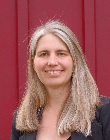
Joan Judge is a Professor of History at York University in Toronto, Canada, specializing in cultural history of modern China with focuses on knowledge cultures, print culture, and women’s history. She holds a PhD from Columbia University and additional degrees from the University of Alberta and the Institut d’Études Politiques de Paris. Education: PhD, Columbia University MA, Columbia University MA, Institut d’Études Politiques de Paris BA, University of Alberta Research Interests: Judge’s work examines print culture in comparative perspective, Chinese women’s history, and reading practices in modern China. Her scholarship bridges transnational and local contexts, exploring how media like periodicals shaped gender roles and political discourse during transformative periods such as the late Qing dynasty and the early 20th century. Awards: 2021 Guggenheim Fellow Member of the Royal Society of Canada Grants & Leadership: Her current SSHRC-funded project, The Politics of Common Reading , analyzes vernacular knowledge in China from 1894–1954. She serves on the advisory boards of the British Inter-university China Centre and Journal of the History of Ideas in East Asia , and chairs roles in professional associations like the Canadian Association for the Study of Book Culture. Labs/Teams: Collaborates with global networks through her editorial work on collections such as Women and the Periodical Press in China’s Global Twentieth Century and Beyond Exemplar Tales .
David Armitage is the Lloyd C. Blankfein Professor of History at Harvard University, where he serves as Chair of the Committee on Degrees in Social Studies and teaches intellectual history and international history. He also holds affiliations with the Harvard Department of Government, Harvard Law School, and is an Honorary Professor at the University of Sydney and Queen's University Belfast. Previously, he chaired Harvard's Department of History (2012-14, 2015-16) and taught at Columbia University for eleven years before joining Harvard in 2004. Armitage was born in Britain and educated at the University of Cambridge and Princeton University. His academic journey includes: Undergraduate studies at University of Cambridge PhD at Princeton University Teaching position at Columbia University (1993-2004) Professorship at Harvard University (2004-present) Honorary positions at University of Sydney, Queen's University Belfast, and St Catharine's College, Cambridge Professor Armitage specializes in intellectual history, international history, and global history, with particular expertise in the history of political thought, empires, and international law. His scholarly approach emphasizes the longue durée perspective, seeking to understand historical phenomena across extended time periods rather than narrow chronological frames. He has been a leading voice in advocating for historians to engage with "big history" that spans centuries, arguing that contemporary challenges like climate change and economic inequality require historical understanding that transcends the short-term thinking prevalent in modern politics and policy. His extensive publication record demonstrates consistent engagement with foundational texts and concepts in political theory, declarations of independence, civil wars, and oceanic history. Armitage's work shows a clear trajectory toward increasingly global and interdisciplinary approaches, connecting intellectual history with legal, political, and environmental frameworks. His scholarship bridges early modern and contemporary history, examining how historical concepts continue to shape modern international relations and political thought. Armitage's significant contributions to historical scholarship have been recognized with prestigious awards: Caird Medal from the National Maritime Museum (2006) for "conspicuously important work ... of a nature that involves communicating with the public" Walter Channing Cabot Fellow from Harvard (2008) for "achievements and scholarly eminence in the fields of literature, history or art" LittD from Cambridge University (2015), the university's highest degree, for "distinction by some original contribution to the advancement of science or of learning" As an advisor and mentor, Armitage has guided numerous graduate students through doctoral programs at Harvard and previously at Columbia. His scholarly leadership extends to co-editing two major book series with Cambridge University Press ( Ideas in Context and Cambridge Oceanic Histories ), serving on the Steering Committee of the Center for Early Modern Political Thought at the Folger Shakespeare Library, and contributing to various academic organizations. His work has attracted significant research funding supporting his global historical investigations. Professor Armitage is deeply involved in collaborative scholarly initiatives, particularly through his work with the Harvard Academy for International and Area Studies, where he serves as a Senior Scholar. His research often involves interdisciplinary teams examining oceanic histories, international law, and global political thought. He has been instrumental in developing the "Cambridge Oceanic Histories" series, which brings together scholars from multiple disciplines to explore the historical significance of oceans as connective spaces rather than barriers.
Seth Koven is the G.E. Lessing Distinguished Professor of History and Poetics at Rutgers University since 2017. He holds a Ph.D. in History from Harvard University and has been affiliated with Rutgers since 2006. His research spans gender, social, economic, and cultural history of Europe (1750–present), with a focus on modern Britain, its empire, women's history, and the history of sexuality. His work explores intersections of ethics, altruism, and social welfare, exemplified in Slumming: Social and Sexual Politics in Victorian London (2004, 2006) and The Match Girl and the Heiress (2014, 2016), which won the Stansky Prize and NAVSA Best Book awards. His current projects, including Conscience Wars , examine the history of humanitarianism, anti-humanitarianism, and conscientious objection in the British Empire. Recent publications analyze race, religion, and vaccination resistance in Natal, conscience and Christianity in 19th-century India, and passive resistance movements across the British Empire. He co-directed the Mellon-funded "Ethical Subjects" research project (2015-17) and directs the Rutgers British Studies Center, supporting interdisciplinary scholarship and graduate initiatives. Scientific Awards : Guggenheim Fellowship (2021), Stansky Prize (2015), Sonya Rudikoff Prize (2004), Veritas Award (2004). Supervision : Supervises Ph.D. students (18th–20th centuries) and collaborates with scholars like Judith Surkis and Thomas Laqueur. Grants : Multiple NEH Fellowships, Spencer Fellow, Whiting Fellow, and Mellon Foundation funding.
Professor Sujit Sivasundaram is a leading scholar in world history at the University of Cambridge, with affiliations as a Fellow of Gonville and Caius College and director of the Centre of South Asian Studies. His academic journey includes a Research Fellowship at Gonville and Caius College (2001), a Lectureship in South Asian History at the London School of Economics, and his current role as Professor of World History since 2019. Research Interests : Imperial history, history of science, environmental history, cultural history, history of race, and Indian/Pacific Ocean history with a focus on marginalized regions and material culture. Professional Leadership : President of The Pacific Circle , co-editorial roles in Cambridge Oceanic Histories and World Environmental History series, and EDI work at the Faculty of History (2024). Scientific Awards : British Academy Prize for Global Cultural Understanding (2021) Bentley Book Prize for World History (2021) Philip Leverhulme Prize for History (2012) Fellow of the British Academy (elected 2023) Publications emphasize oceanic histories, environmental fragments, and critical re-examinations of Euro-Atlantic historiography. His recent work explores materialist approaches to world history using objects like fossilized ferns and sea cucumbers to challenge universalist narratives.
Tim Harper is a Professor of the History of Southeast Asia at the University of Cambridge, serving as Head of the School of the Humanities and Social Sciences. He is a Fellow of Magdalene College and Director of the Centre for History and Economics. His research focuses on Southeast Asian colonial and postcolonial history, with a particular emphasis on anti-imperial movements, nationalism, and the British Empire's decline. He has authored seminal works such as Underground Asia: Global Revolutionaries and the Assault on Empire (2020) and co-authored Forgotten Armies (2004) and Forgotten Wars (2007) with Christopher Bayly. His articles explore themes like colonial resistance, diaspora networks, and the socio-political dynamics of decolonization in Southeast Asia. Harper's scholarship challenges traditional narratives of empire, highlighting grassroots movements and transnational networks. His work bridges academic rigor with accessible storytelling, as seen in Underground Asia , which reinterprets 20th-century imperialism through the lens of radical underground networks. His research also examines education, state governance, and environmental politics in colonial contexts. He actively contributes to interdisciplinary initiatives at the Centre for History and Economics, fostering collaboration between historians and economists.
Michael W. Scott is a Professor of Anthropology at the London School of Economics and Political Science (LSE). His primary research focuses on Oceania, particularly Melanesia, with a theoretical emphasis on anthropological ontology, cosmology, and wonder studies. He has conducted extensive fieldwork in the Solomon Islands since 1992, focusing on the Arosi people and their poly-ontological cosmology. His work explores human-nonhuman relations, indigenous Christianities, and the interplay between Euro-American and Melanesian ontological frameworks. Education: PhD from the University of Chicago, influenced by mentors like Marshall Sahlins and Marilyn Strathern. He co-organizes the Melanesia Research Seminar at the British Museum. His major publication, The Severed Snake , examines Arosi matrilineages and place-making. Current projects include a comparative study of wonder as an ontological instrument and analysis of relationalist assumptions in ontology debates. Key interests include poly-ontology, ontological transformation, and the re-enchantment of modernity. His research challenges monolithic views of Melanesian sociality, proposing instead a nuanced engagement with diverse cosmological frameworks. Though no formal grants or labs are explicitly listed, his work intersects with LSE's broader anthropological research initiatives.
Leila M. Harris is a Professor at the University of British Columbia (UBC), holding dual appointments in the Institute for Resources, Environment and Sustainability (IRES) and the Institute for Gender, Race, Sexuality and Social Justice (GRSJ). She co-directs UBC’s Program on Water Governance and is affiliated with the Department of Geography and the Peter Wall Institute for Advanced Studies. Her work focuses on environmental governance, water equity, and social justice, particularly in marginalized communities across Africa, South Asia, and Turkey. Harris’s research examines the intersection of environmental issues with inequality, gender, and ethnicity. Key projects include analyzing non-material dimensions of water insecurity (emotions, trust, belonging), water governance shifts in South Africa, Brazil, and Canada, and the socio-political impacts of emerging water testing technologies. She has led international research networks like the SSHRC-funded WaTERS program and contributed to policy briefs on water governance in Ghana, South Africa, and British Columbia. Her scholarship bridges feminist political ecology, critical development studies, and postcolonial theory. Recent work explores participatory methods, water justice in Indigenous contexts, and the human right to water. Harris has advised on water policy reforms in Canada and globally, emphasizing equity and marginalized community voices. Education: PhD (Geography), University of British Columbia (2002) Lab/Teams: Program on Water Governance, EDGES Collaborative
Nicola Martin is a Lecturer in History at the University of the Highlands and Islands (UHI), affiliated with the Centre for History. She holds a PhD in History from the University of Stirling (2019), funded by the AHRC, and previously completed a BA(Hons) and MSc in Scottish History at the University of Strathclyde. Her research specializes in transatlantic military history, focusing on 18th-century British imperialism, Jacobitism, and the role of British army officers in shaping imperial policies. She joined UHI as a teaching assistant in 2018 and became a lecturer in 2019, with prior teaching experience at the University of Stirling and the University of Dundee/Open University. Her current monograph project examines the cultural and strategic frameworks guiding British army officers during the 1745-1775 period, emphasizing the Jacobite Rising’s impact on North American imperialism. She also investigates Scottish army officers’ parliamentary roles post-1707 and has contributed biographies to the History of Parliament. Recent research includes studies on the 16th/17th Earls of Sutherland during Jacobite risings and the militarization of Highland communities. Nicola’s work has been published in journals like Atlantic Studies and The Scottish Historical Review , with a focus on themes such as imperial subjecthood, loyalty inwar-torn regions, and transatlantic military strategies. She has received grants for her doctoral research and maintains an active public engagement profile, including media contributions on historical sites like Fort George.
Malcolm H. Murfett is a Visiting Professor in the Department of War Studies at King's College London, specializing in naval history, Cold War studies, and British foreign policy. He holds a doctorate from New College, Oxford (1980), and is a Fellow of the Royal Historical Society since 1990. His career spans over four decades with affiliations at institutions including the National University of Singapore, York University, and the Australian Defence Force Academy (ADFA). He has authored or edited over a dozen books on naval warfare, decolonization, and Anglo-American relations. Research focuses include Cold War Southeast Asia, British naval strategy in the 20th century, and the intersection of political leadership with military policy. Notable works include European Navies and the Conduct of War (2018), Cold War Southeast Asia (2012), and Political Leadership in an Era of Decolonisation (2024). He serves as associate editor of the Oxford Dictionary of National Biography and series editor for Cold War in Asia . Teaching spans undergraduate to honours levels, covering topics like 20th-century European history, Cold War dynamics, and naval history. He has won multiple teaching excellence awards at the National University of Singapore. Public engagement includes media consulting for networks like The History Channel, TV/radio scriptwriting, and crisis management training for multinational corporations. Key awards include the Royal Historical Society Fellowship. Ongoing projects involve analyzing decolonization's global impact and British political leadership's evolution through the 20th century. He has organized public lecture series on military history topics and remains active in media-historical collaborations.
Professor Robert S.G. Fletcher holds dual roles as Professor of History and Kinder Professor of British History at the University of Missouri , and serves as an Honorary Professorial Fellow in the Department of History at the University of Warwick (2015-2020). His academic career spans institutions including the University of Exeter, Nuffield College (Oxford), and Princeton University. Specializing in British imperial history , global history , and nomadic societies , his research examines the intersections of empire-building, desert administration, and maritime frontiers. Recent work (2024-2025) extends to interdisciplinary collaborations with museums like the Royal Museums Greenwich , focusing on colonial expeditions, locust control campaigns, and maritime cultural heritage. His scholarship appears in leading journals including Past and Present , The English Historical Review , and Journal of Historical Geography . Publications include the award-winning monographs British Imperialism and 'The Tribal Question' (OUP, 2015) and The Ghost of Namamugi (AUP, 2019). As Principal Investigator, he led the AHRC-funded Inlands: Empires, Contested Interiors (2024) and Science in Culture projects on desert locust campaigns. Major Awards Arts and Humanities Research Council (AHRC) Leadership Fellowship (2015-2018) AHRC Science in Culture award (2018) Key Collaborations Co-edited Connected Empires, Connected Worlds with Benjamin Mountford and Simon Potter (Routledge, 2022) Contributed to The Oxford Handbook of the Ends of Empire (2018)
Lisa Lowe is the Samuel Knight Professor of American Studies at Yale University, with affiliate appointments in the Programs in Ethnicity, Race, and Migration and Women's, Gender, and Sexuality Studies. She has previously taught at the University of California, San Diego, and Tufts University, establishing a distinguished interdisciplinary career in American Studies, Comparative Literature, and critical race theory. Education: Stanford University – European Intellectual History University of California, Santa Cruz – French Literature and Critical Theory Lowe's research focuses on the intersections of colonialism, race, immigration, and globalization. Her work critically examines how liberal modernity is built upon racial capitalism, settler colonialism, and transnational displacement. She is a leading voice in transnational feminism and Asian American studies, analyzing how immigrant subjects are constructed as 'perpetual foreigners' within national cultures. Her scholarship bridges literary analysis, historical critique, and political theory to interrogate the legacies of empire. Her recent publications show a sustained engagement with the entanglements of liberalism, empire, and intimacy across continents. Themes include racial capitalism, the transpacific, feminist resistance, and the cultural politics of globalization. Her work consistently challenges disciplinary boundaries and calls for a rethinking of American Studies through a global and decolonial lens. Scientific Awards and Honors: Guggenheim Fellow American Council of Learned Societies Fellow Rockefeller Foundation Fellow Mellon Foundation Fellow UC Humanities Research Institute Fellow University of California President's Faculty Research Fellow (2011–12) Visiting Fellow, School of Advanced Study, University of London F. Ross Johnson-Connaught Distinguished Visitor, Munk School of Global Affairs, University of Toronto (2012) Carl Bode - Norman Holmes Pearson Award (2018) Richard A. Yarborough Prize (2018) Finalist, John Hope Franklin Award (2016) Nicolás Guillén Outstanding Book Award (2018) 1997 Book Award in Cultural Studies, Association for Asian American Studies Lowe has been a mentor to numerous scholars, particularly from underrepresented backgrounds, recognized by the Richard A. Yarborough Prize. She has received multiple grants and fellowships supporting her research, including from the Mellon, Rockefeller, and Guggenheim Foundations. She co-convened the Mellon Sawyer Seminar 'Comparative Global Humanities' at Tufts and has been an Affiliate Scholar at the Boston Psychoanalytic Society and Institute (2022–2023). She has also served as a visiting fellow and speaker at numerous international institutions, indicating sustained collaborative and advisory engagement. Lowe co-edits the influential book series Perverse Modernities with Jack Halberstam at Duke University Press, shaping contemporary critical theory. She has also co-edited special issues and volumes that have advanced the field of Asian American Studies. Her scholarly network includes leading institutions across the U.S. and globally, and she continues to be a central figure in interdisciplinary humanities.
Professor Siobhan Lambert-Hurley is Professor of Global History and Director of Research and Innovation at the University of Sheffield's School of History, Philosophy and Digital Humanities, where she has served since 2015 after previously holding positions at Loughborough University. Her leadership includes roles as Departmental Director of Research and active participation in university-wide committees focused on research impact and sustainability. Her academic foundation comprises a BA in Asian Studies from the University of British Columbia and a PhD in History from the School of Oriental and African Studies, University of London, complemented by visiting faculty positions at UBC in 2013-14 and 2017. Lambert-Hurley's research centers on women, gender, and Islam in modern South Asia, examining diverse themes including socio-religious reform, princely states, travel culture, food history, and autobiographical writing. Her interdisciplinary approach bridges literary analysis with historical methodology, revealing how marginalized voices navigate cultural and political landscapes across centuries. This work consistently emphasizes the intersection of personal narrative with broader societal transformations. Analysis of her publications shows an evolving trajectory from early studies of Muslim women's reform movements to contemporary investigations of culinary heritage and global challenges. Her scholarship demonstrates increasing engagement with applied research addressing UN Sustainable Development Goals, particularly through projects on female literacy and food sustainability in South Asia. Her scientific recognition includes: Leverhulme Major Research Fellowship (2024-2027) for 'A Bountiful Spread: Eating and Etiquette in Muslim South Asia' Leverhulme Research Fellowship (2013-2014) for 'The Self Unveiled: Autobiographical Writings by Muslim Women in South Asia' As a dedicated mentor, she supervises PhD students like Maxmillian Drephal and guides postdoctoral fellows including Dr. Mobeen Hussain (Wellcome Trust), Dr. Neha Vermani (Newton Fellowship), and Dr. Radha Kapuria (Leverhulme ECR). Her research is substantially funded through competitive grants from Leverhulme Trust, AHRC, British Academy, and Global Challenges Research Fund, supporting projects such as 'Veiled Voyagers' and 'Forgotten Food' that combine historical scholarship with real-world impact. She leads the White Rose South Asia Network and contributes to the Migration Research Group, Institute for Global Sustainable Development, and Centre for Contemporary and Modern History. Her public engagement initiatives—including the 'Accessing Muslim Lives' digital archive, heritage food festivals in Delhi/Bhopal, and collaborations with NGOs like Mahashakti Seva Kendra—demonstrate her commitment to translating academic research into community benefit through educational programs and cultural productions.
Dr Jung Woo Lee is a Senior Lecturer in Sport and Leisure Policy at Moray House School of Education and Sport, University of Edinburgh. He serves as Deputy Director of Research, Engagement and Impact at Moray House (2025–present), Research Director of the Scottish Centre for Olympic Research and Education (SCORE), and Guest Module Leader at the German Sport University Cologne’s MA Olympic Studies Programme. His roles include editorial board memberships for journals like International Journal of Sport Communication and Palgrave’s Sport in Asia series. Lee’s research focuses on sport diplomacy, mega-events, nationalism, media, and cultural studies, with particular attention to Korean Peninsula dynamics and East Asian geopolitics. His research interests span sport mega-events’ socio-political impacts, Olympic diplomacy, intercultural connections via sport (e.g., Gaelic games in East Asia), and sport nationalism. He leads projects funded by the British Academy, University of Edinburgh, and Korean/Taiwanese governments. Lee is affiliated with Edinburgh Critical Studies in Sport (ECSS) and actively engages in international conferences, addressing topics like North Korean women’s football, Sino-US-Qatari dynamics in the 2027 FIBA World Cup, and post-colonial sport cultures in Taiwan/South Korea. Lee has received prestigious fellowships from the Academy of Korean Studies (2022) and Taiwan’s Ministry of Foreign Affairs (2018). His work bridges academia and policy, emphasizing sport’s role in diplomacy, identity formation, and global cultural politics.
Dr Simon Layton is a Lecturer in Early Global History at Queen Mary University of London’s School of History. He holds a doctorate from the University of Cambridge (supervised by C.A. Bayly) and has taught at institutions including Lingnan University (Hong Kong) and the University of Otago (New Zealand). His research focuses on the intersection of indigenous maritime sovereignty and European imperial expansion in the Indian Ocean and Pacific worlds. Current projects include a monograph on British naval imperialism and research into early modern seaweed cultivation networks. Affiliations: Queen Mary University of London (current), University of Cambridge (former lecturer), Lingnan University (former teaching role) Teaching: Leads undergraduate modules on global history and piracy, contributes to postgraduate oceanic history programs Key Research Themes: Imperial/environmental history, oceanic turn methodologies, maritime frontiers, indigenous knowledge systems His forthcoming book with Cambridge University Press examines resistance to British imperial naval expansion in littoral regions. Recent research explores seaweed cultivation’s role in global trade and political systems. Supervision includes PhD topics on imperial tea trade and maritime frontiers in Australian history. Professional service includes examining PhD theses at King’s College London and the University of Cambridge. Office hours currently on sabbatical during Semester B 2024-2025.
Alicia M Turner is an Associate Professor in the Department of Humanities at York University's Faculty of Liberal Arts & Professional Studies. She holds a PhD from the University of Chicago Divinity School, alongside an MA in History of Religions and a BA in Religion and Women’s Studies. Her research focuses on the intersections of religion, colonialism, secularism, and nationalism in Southeast Asia, particularly in Myanmar/Burma. She examines Buddhist institutions and identities over the past 150 years, with emphasis on colonial-era transformations and contemporary religious dynamics. Her major work includes the book Saving Buddhism: The Impermanence of Religion in Colonial Burma , which analyzes Buddhist lay associations and the fluidity of religious concepts. Current projects include a collaborative biography of U Dhammaloka, a 19th-century Irish-born Buddhist monk who resisted British colonialism, and studies on Buddhist secularism and religious tolerance in Myanmar. Turner's professional leadership roles include serving as Editor of The Journal of Burma Studies (2007-2017), and active participation in academic organizations such as the Association of Asian Studies. She contributes to initiatives like the Inya Institute, focusing on Myanmar research and heritage. Her scholarship bridges historical analysis with contemporary issues, emphasizing how colonial frameworks shaped modern religious identities. Key themes include the role of Buddhism in nationalist movements, the impact of colonial secularism, and transnational religious networks.






.jpg)