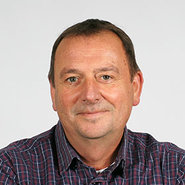
Dr. Thore Wilder is a veterinarian and researcher at the Institute of Animal Breeding and Animal Husbandry, University of Kiel, Germany. He specializes in animal behavior and husbandry systems, with a focus on integrating informatics into livestock management practices. His research interests include: Behavioral Informatics in Livestock Husbandry Animal Welfare Monitoring Data-Driven Farming Systems Veterinary Epidemiology Dr. Wilder contributes to interdisciplinary projects and software development in animal breeding, including tools like AniFair for analyzing livestock data.
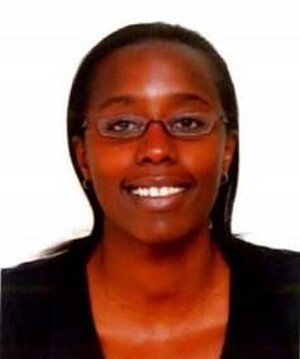
Dr. agr. Gesche Kern is a part-time lecturer at the Institute for Animal Breeding and Husbandry, University of Kiel. She belongs to the 'Behavioral Informatics in Livestock Husbandry' research team alongside Prof. Dr. Imke Traulsen and others. Her academic title 'Dr. agr.' indicates a doctoral degree in Agricultural Sciences. Her research integrates informatics with livestock management, focusing on: Development of behavioral analysis tools like AniFair software Livestock welfare assessment methodologies Data-driven animal husbandry practices Precision livestock farming technologies She contributes to the AniFair software suite, including documentation and installation frameworks for animal behavior research tools. No awards, advised students, or publications are listed in available materials.
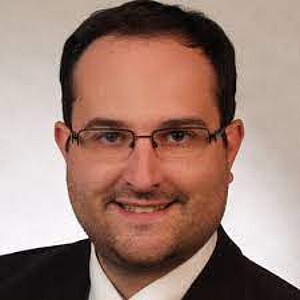
Tabea Lorenz is a Part-Time Lecturer at the Institute for Animal Breeding and Husbandry at the University of Kiel. She is associated with the Behavioral Informatics in Livestock Husbandry team, focusing on research at the intersection of animal behavior, agricultural technology, and livestock management. Her work contributes to advancing sustainable practices in animal breeding through data-driven approaches. For contact, Tabea Lorenz can be reached via email at tlorenz@tierzucht.uni-kiel.de . Additional details about her research and publications may be available through the Institute’s resources, though no specific articles or student advisement records are mentioned in the provided text.
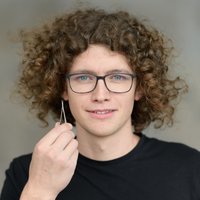
Jens Matthiesen is a researcher at the Institute of Animal Breeding and Husbandry within the College of Agricultural Sciences at the Christian Albrecht University of Kiel . He works at the Karkendamm Experimental Farm , focusing on livestock husbandry and animal breeding. His research contributes to the university's initiatives in bioeconomy and marine aquaculture. Email: jmatthiesen@tierzucht.uni-kiel.de
Iris Petrikat is a researcher at the Institute of Animal Breeding and Husbandry, Christian Albrecht University of Kiel, specializing in Behavioral Informatics in Livestock Husbandry. Her work focuses on integrating informatics tools to analyze and improve livestock management practices. Affiliation: Institute of Animal Breeding and Husbandry, University of Kiel Contact: ipetrikat@tierzucht.uni-kiel.de Her research interests include the application of behavioral informatics to enhance animal welfare and optimize agricultural systems. She contributes to the development of tools like AniFair, which supports fair animal husbandry practices through data-driven solutions. No specific awards or student advisory relationships are documented in the provided text.
Edgar Schallenberger is a Professor at the Institute of Animal Breeding and Husbandry, Kiel University, Germany, with office location Hermann-Rodewald-Str. 6, Room 215, Kiel. His research focuses on sustainable livestock management systems and genetic optimization in agricultural contexts. His work integrates computational approaches in animal husbandry, notably through development of the AniFair software suite (including Sheep MIS and Epi Viewer tools) for breeding management and epidemiological analysis. He contributes to the university's Milk Competence Center initiatives addressing dairy production efficiency. Contact details: Email eschallenberger@tierzucht.uni-kiel.de , Phone +49 431 880-2584. Current institutional activities include ongoing projects at Karkendamm experimental farm and collaboration with German Society for Breeding Science (DGFZ).
Prof. Dr. Georg Thaller leads the Animal Breeding and Pet Genetics Working Group at the Institute of Animal Breeding and Pet Genetics, University of Kiel. His research focuses on animal breeding, livestock husbandry, and pet genetics, with involvement in interdisciplinary networks like FoCus (Food Chain Plus) and the German Society for Breeding Science (DGFZ). He contributes to software development projects such as Sheep MIS, Epi Viewer, and AiniFair for agricultural data management.
Michelle Lawing is an Associate Professor in the Ecology and Conservation Biology department at Texas A&M University, where she has been employed since 2014. She initially served as an Assistant Professor in Ecosystem Science and Management from 2014 to 2020 before being promoted to Associate Professor in her current department. Her academic journey began with a PhD in Ecology, Evolution, and Behavior; Geological Sciences from Indiana University Bloomington. Dr. Lawing's research spans multiple disciplines within ecology and evolutionary biology, with particular emphasis on conservation biology, biogeography, and paleontology. Her work integrates historical ecological patterns with contemporary conservation challenges, examining how species and ecosystems respond to environmental changes over time. She has made significant contributions to understanding the impacts of climate change on biodiversity, evolutionary adaptations in reptiles and mammals, and the application of ecometric models for conservation planning. Her publication record demonstrates consistent productivity across multiple high-impact journals including Nature Communications, Science, Proceedings of the National Academy of Sciences, and various ecology and herpetology journals. Her recent work shows a strong trend toward interdisciplinary research that bridges paleontology with conservation biology, examining both historical patterns and contemporary applications for species preservation. She frequently collaborates with researchers across institutions, demonstrating engagement with the broader scientific community. Dr. Lawing has contributed to important initiatives in science education, particularly through biological field stations, and has served as a peer reviewer for journals including Biological Invasions and Communications Biology. Her research program integrates field studies, morphometric analyses, and computational modeling to address fundamental questions in evolutionary ecology and conservation science.
Prof. Dr. Heiko Scholz is a Professor at the Department of Agriculture, Ecotrophology, and Landscape Development at Hochschule Anhalt, specializing in livestock production and economics. He holds a doctorate in agricultural sciences from Martin-Luther-Universität Halle-Wittenberg. His research focuses on animal nutrition, dairy cow metabolism, and sustainable livestock farming systems. He advises degree programs in Agriculture (B.Sc.), Agricultural Management (B.Eng.), and Agriculture (M.Sc.). Education: Agricultural Engineering diploma, Technical College in Haldensleben (Agrarian Informatics), 5-year agricultural studies at Hochschule Anhalt, and a PhD in animal breeding and husbandry. Research: Investigates plant alkaloid effects on livestock, vitamin metabolism in dairy systems, and sustainable protein sources. Organizes workshops on plant-based feed and livestock management trends. Professional Role: Teaches and conducts research in livestock production economics since 2008. Active in workshops addressing future dairy production challenges and animal welfare. Labs/Teams: Leads projects on tierernährung (animal nutrition) and collaborates with institutions like the Saxony-Anhalt State Livestock Production Institute.
Chul Lee is a Research Fellow at Rockefeller University (Laboratory of Neurogenetics of Language, Supervisor: Dr. Erich D. Jarvis). He holds a Ph.D. in Interdisciplinary Bioinformatics from Seoul National University (2022), an M.Sc. in the same field from Seoul National University (2015), and a B.Sc. in Bioscience and Biotechnology from Hankuk University of Foreign Studies (2011). Ph.D. - Interdisciplinary Program in Bioinformatics, Seoul National University (2022) M.Sc. - Interdisciplinary Program in Bioinformatics, Seoul National University (2015) B.Sc. - Bioscience and Biotechnology, Hankuk University of Foreign Studies (2011) Lee's research focuses on comparative genomics , integrative multi-omics , and genome editing to unravel molecular mechanisms behind human-specific traits, brain evolution, vocal learning, and zoonotic pathogen transmission. His work spans viral infectivitiy (SARS-CoV-2, HIV), mental disorders , and evolutionary adaptation . His 15 most recent publications (2018-2025) cover themes in vertebrate genome evolution (Vertebrate Genomes Project), pathogen-host interactions , and computational tools for genome assembly (e.g., Galaxy platform). Notable topics include convergent evolution in vocal learners , viral transmission mechanisms , and genomic adaptations in transitional species (mudskippers, coelacanth). Lee collaborates with leading institutions on integrative data browsers for multi-omics datasets and contributes to functional validation of genetic signatures using genome-editing techniques. His work bridges evolutionary biology , neurogenetics , and computational biomedicine .
Dr. Juliet Kariuki is a researcher at the University of Hohenheim, specializing in the social dimensions of livestock management in sub-Saharan Africa with a focus on gender and equity. She is affiliated with the Department of Social and Institutional Change in Agricultural Development and has been involved in significant research projects including the Program of Accompanying Research for Agricultural Innovation (PARI) and Payments for Ecosystem Services, Gender and Governance. Dr. Kariuki has an impressive educational background: Ph.D. in Agricultural Sciences Master of Arts degree in Environment, Culture, and Society Bachelor of Arts degree in Sociology Her research focuses on understanding the social dimensions of livestock management in sub-Saharan Africa, with particular attention to gender and equity considerations. She has conducted extensive work on gendered dimensions in livestock breeding, marketing, risk management, and natural resource management. Dr. Kariuki employs both qualitative and quantitative research methods to examine intra- and interhousehold dynamics between men and women in livestock-dependent households across Africa. Dr. Kariuki's publication record demonstrates a consistent focus on gender equity in agricultural systems, with recent work expanding to examine digital tools for livestock management, pandemic responses in food systems, and sustainable transitions in African agriculture. Her research spans multiple countries including Kenya, Zambia, and Burkina Faso, reflecting a commitment to comparative analysis across diverse African contexts. Dr. Kariuki has received recognition through: DAAD scholarship during her doctoral studies Research Fellowship position at the International Livestock Research Institute (ILRI) Throughout her career, Dr. Kariuki has been actively involved in research projects funded by significant initiatives like the German government's One World, No Hunger Initiative. Her work on the PARI project (2014-2022) focused on sustainable agricultural growth and food security in Africa and India. She has collaborated extensively with Professor Regina Birner and other international researchers, demonstrating strong partnership-building capabilities across institutions and countries. Dr. Kariuki has contributed to multiple research teams examining agricultural innovation systems, with particular emphasis on how gender dynamics influence technology adoption, policy implementation, and sustainable development outcomes. Her work often bridges academic research with practical applications for development practitioners and policymakers.
Prof. Dr. Antonio Krüger is the CEO of the German Research Center for Artificial Intelligence (DFKI) and Director of the Ubiquitous Media Technology Lab (UMTL) at the Saarland Informatics Campus in Saarbrücken, Germany. He is a leading researcher in human-computer interaction, virtual and augmented reality, multimodal interfaces, and intelligent systems. His research interests span a broad range of topics including virtual reality (VR), augmented reality (AR), gesture interaction, haptic feedback, EEG and eye tracking, gamification, cognitive load estimation, brain-computer interfaces, and smart environments. His work emphasizes user-centered design, perceptual illusions, and real-world applications in domains such as automotive, healthcare, and education. His recent publications (2023–2024) demonstrate a strong focus on advancing VR interaction through techniques like hand redirection, synthetic gesture generation for vehicles, implicit intent recognition using multimodal sensing, and personalized object referencing. These works reflect trends toward seamless, natural, and adaptive interfaces that leverage AI, perception, and real-time feedback. Prof. Krüger supervises a large team of researchers and students, including Mansi Sharma, Amr Gomaa, André Zenner, and Martin Feick, indicating active mentorship and collaborative research leadership. His lab, UMTL, develops innovative technologies in immersive environments, wearable systems, and intelligent user assistance, contributing to both academic knowledge and practical applications.
Patrick Thorwarth is a Professor and Academic Director at the State Plant Breeding Institute of the University of Hohenheim, focusing on applied plant breeding and genetic research. His work integrates machine learning, multi-omics analysis, and traditional methods like GWAS and genomic selection to develop sustainable agricultural solutions for wheat, maize, and triticale. He leads projects on genetic resistance, nutrient efficiency, and climate adaptation. Education: PhD in Crop Biodiversity and Breeding Informatics (University of Hohenheim) Teaching: Leads courses in Plant Genetic Resources, Quantitative Genetics, and Breeding Methodology His research spans Phenomic Prediction , Genotype-Environment Interactions , and Optimization of Field Trials , with a strong emphasis on digitalization and open-source platforms. Recent projects include bwHemp2.0 for industrial hemp breeding and SENSOJA for sensor-based soybean selection. He secures third-party funding from agencies like BMEL and DFG. Key publications analyze NIRS data preprocessing for phenomic prediction, feature engineering in durum wheat trials, and genetic diversity in staple crops. His work demonstrates how digital tools can bridge the gap between theoretical research and practical agricultural challenges.
Sven Behrens is a scientific staff member at the Karkendamm Experimental Farm within the College of Animal Breeding and Husbandry . His work focuses on behavioral informatics in livestock management , integrating data-driven approaches with traditional animal breeding practices. His research interests include: Behavioral analysis of livestock Genetic optimization in animal husbandry Technology applications for animal welfare He is affiliated with key initiatives such as the Milk Competence Center and contributes to the AniFair software suite for agricultural data analysis. Contact details: Phone: +49 4192-5954 Fax: +49 4192-85770
Dr. Dominic Wanke is a researcher specializing in Lepidoptera, particularly the Geometridae family, with a focus on taxonomy, systematics, and biogeography. He is affiliated with the University of Hohenheim and the State Museum of Natural History Stuttgart, where he works on insect conservation and digital taxonomy. Wanke holds a PhD in Biological Sciences (2020–2023) and a Master's in Biology (2016–2019) from the University of Hohenheim, and has been a freelance researcher at the museum since 2018. University of Hohenheim State Museum of Natural History Stuttgart His research spans insect morphology, DNA barcoding, and innovative specimen documentation, as demonstrated in his 2019 development of the Fixator method for arthropod photography in liquid. Wanke has published extensively on Iranian and African Lepidoptera, contributing to the taxonomic clarity of genera like Triphosa and Nychiodes . His recent work (2025) explores how large language models handle insect-related data, highlighting biases in AI representation of biodiversity. Wanke's publications, including 15 recent articles, reflect his expertise in Geometridae and Sesiidae moths, with a strong emphasis on integrative taxonomy combining molecular and morphological data. His projects often address conservation challenges, biogeographic patterns, and the reassignment of species to new genera, such as the 2023 reclassification of the African moth "Nychiodes" tyttha into Aphilopota . Award for best conference poster, 4th Humboldt Reloaded Student Annual Meeting (2015) He has presented at major conferences, including the XXII European Congress of Lepidopterology (2022) and the 10th Forum Herbulot (2018), and is a member of the Entomological Society Stuttgart, Societas Europaea Lepidopterologica, and the German Arachnological Society. Wanke's email: dominic.wanke@smns-bw.de .