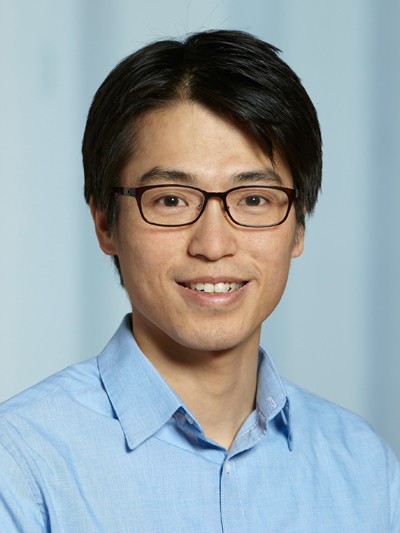
Dr. Wen-hao Zhang is an Assistant Professor at the Lyda Hill Department of Bioinformatics and a member of the O'Donnell Brain Institute at UT Southwestern Medical Center since 2021. He directs the Computational Neuroscience Lab (CNL), focusing on bridging neural circuits and cognition via normative theories and biologically plausible models. Education : PhD in Theoretical Neuroscience (2016, Institute of Neuroscience, Chinese Academy of Sciences), BE in Biomedical Engineering (2009, Shanghai Jiao Tong University). Career : Postdoctoral roles at Carnegie Mellon University, University of Pittsburgh, and University of Chicago. Research Interests : The lab investigates neural information processing using techniques like nonlinear dynamics, Bayesian inference, and Lie group theory. Their work spans Causal inference and decision-making in neural circuits Grid cell mechanisms and spatial navigation Brain-inspired machine learning algorithms Collaborations : Partnerships with experimental neuroscientists such as Todd Roberts (UTSW) and theorists like Tai Sing Lee (CMU) ensure theoretical models align with empirical data. The lab has published in top venues like ICLR and NeurIPS, focusing on multisensory integration and neural coding. Lab Members : Current PhD students include Eryn Sale, Zimei Chen, Yi Ren, and Armand Rathgeb. Former visiting students like Xinruo Yang (University of Pittsburgh) and Xiangyu Ma (HKUST) have contributed to interdisciplinary projects.
Nancy A. Lynch is the NEC Professor of Software Science and Engineering and Professor of Electrical Engineering and Computer Science at the Massachusetts Institute of Technology, where she heads the Theory of Distributed Systems (TDS) group within CSAIL. Research Interests Distributed computing algorithms and lower bounds Real-time and fault-tolerant systems Formal modelling and verification Wireless network algorithms Biological distributed algorithms Neural computation and spiking networks Across her work, Lynch blends rigorous theoretical analysis with practical relevance, tackling problems ranging from consensus and leader election in unreliable networks to modelling decision-making circuits in the brain. Publications & Trends Since 2020 she has published extensively on distributed algorithms , swarm robotics , neuromorphic architectures , and biologically-inspired computation . Notable recent directions include hierarchical concept learning in spiking neural networks, nanobot locomotion modelling for cancer detection, and superconducting nanowire platforms for energy-efficient neural hardware. Scientific Awards & Honors Best Paper Award, OPODIS 2018 Best Paper Award, IEEE NCA 2014 Highlight Paper, Neuromorphic Computing and Engineering 2022 Teaching & Advising Lynch teaches core graduate and undergraduate subjects at MIT including 6.042J Mathematics for Computer Science , 6.852J/18.437 Distributed Algorithms , and 6.885/6.006 Algorithms . She has supervised dozens of PhD students and post-docs whose names are listed on her Past Students page. Laboratory & Teams She leads the Theory of Distributed Systems (TDS) Group , a vibrant research team within MIT CSAIL . TDS is part of the larger Theory of Computation group and hosts weekly seminars, reading groups, and collaborative projects with partners across MIT and worldwide.
Professor Herbert Ho Ching Iu is a distinguished academic at The University of Western Australia, serving in the School of Engineering within the Department of Electrical, Electronic and Computer Engineering. With an impressive research portfolio of over 500 publications and an h-index of 61, Prof. Iu has established himself as a leading authority in power electronics and nonlinear systems research. Prof. Iu received his BEng(Hons) in Electrical and Electronic Engineering from The University of Hong Kong in 1997, followed by a PhD in Electronic and Information Engineering from The Hong Kong Polytechnic University in 2000. After a brief research fellowship at HKPU, he joined The University of Western Australia in 2002 as a Lecturer and has since risen to the rank of full Professor. His primary research focuses on power electronics , renewable energy systems , nonlinear dynamics and chaos , current sensing techniques , and memristive systems . Prof. Iu's work uniquely bridges theoretical exploration with practical implementations, particularly in energy conversion, secure communications, and neuromorphic computing. His research has significant implications for DC microgrids, advanced encryption techniques, and next-generation computing paradigms. Analysis of Prof. Iu's recent publications reveals a strong interdisciplinary trajectory combining memristive systems with chaotic dynamics for applications in image encryption and secure communications . There's a notable emphasis on machine learning techniques applied to power electronics and energy systems , particularly for DC microgrids and battery management. His work demonstrates consistent progression from fundamental research in nonlinear systems to practical engineering solutions with real-world impact. Prof. Iu's significant contributions have been recognized with several prestigious awards: Vice-Chancellor's Award for HDR Supervision (2024) School of Engineering Award for Research Mentorship (2023) Vice Chancellor's Award in Research Mentorship (2023) With 18 supervised research students and leadership on 16 research grants, Prof. Iu has built a robust research program at the forefront of power systems innovation. His grant portfolio includes major projects like 'Mine Electrification' and 'Microgrid Battery Deployment' through the CRC for Future Battery Industry, as well as collaborations with Western Power on 'Project Symphony.' These initiatives demonstrate his ability to secure substantial funding and translate theoretical concepts into practical engineering solutions for industry. Prof. Iu leads a dynamic research team that specializes in hardware implementation of advanced theoretical concepts, particularly in memristive systems and chaotic circuits. The laboratory maintains strong industry connections, especially with energy and mining sectors, ensuring research has tangible real-world applications. Current work emphasizes DC microgrid technologies, advanced battery systems for electrified transportation, and novel applications of chaotic systems in security contexts, positioning the team at the cutting edge of power electronics research.
Aftab Ahmad is a Professor in the Department of Computer Science at the City University of New York (CUNY), specializing in cybersecurity and machine learning applications. He holds a Doctor of Science from George Washington University. His research focuses on developing machine learning algorithms for cyber threat intelligence (CTI) and public health prediction, along with designing secure generative deep learning models resistant to reverse-engineering. Key research areas include: Cybersecurity frameworks and privacy-preserving architectures Generative adversarial networks (GANs) with embedded security features Biomedical signal analysis and human body channel modeling Secure wireless protocols for critical infrastructure His publication trends emphasize: Privacy metrics and data protection mechanisms Smart grid and IoT security Neuroscience-inspired machine learning models Wireless network vulnerability assessments No scientific awards or grants were explicitly mentioned in the provided texts. He teaches advanced courses in computer security and network forensics at undergraduate and graduate levels. No advising relationships or lab affiliations were detailed in the available information.
Mahsa Salehi is a Senior Lecturer in the Department of Data Science & AI at Monash University’s Faculty of Information Technology. She holds a PhD in Computer Science from the University of Melbourne and previously served as a postdoctoral researcher at IBM Research Australia. Her research focuses on data mining, machine learning, and time series analysis, with applications in healthcare, cybersecurity, and smart grids. Education: PhD in Computer Science, University of Melbourne (2016) MSc in Software Engineering, Amirkabir University of Technology (2009) BSc in Information Technology & Computer Engineering, Amirkabir University of Technology (2008/2006) Her key research interests include multi-dimensional time series analysis, anomaly detection, brain-inspired machine learning, and non-stationary data learning. She has led or contributed to over 40 research outputs, including high-impact papers on anomaly detection frameworks (e.g., CARLA) and EEG representation learning (EEG2Rep). Her work bridges theoretical advancements with practical applications, such as detecting urinary anomalies in seniors and securing smart grid systems against cyberattacks. Dr. Salehi has secured significant grants, including AU$246K from ARENA (2019–2021) and AU$30K from Emotiv Research (2022–2024). She is an Associate Editor of the ACM Transactions on Knowledge Discovery from Data and has been recognized with awards like the ICDM 2022 Best Paper Runner-Up and IBM’s Manager’s Choice Award (2016). Grants & Projects: Privacy-Preserving Machine Learning (CSIRO Next Gen, 2023–2027) AI for Clean Energy & Sustainability (Monash, 2023–2027) Deep Learning for Brain EEG Analysis (PhD Top-Up, 2022–2025) Her contributions extend to editorial and patent activities, including roles at IBM Research and collaborative projects with industry partners like Emotiv.
Hai (Helen) Li is a Professor and Clare Boothe Luce Associate Chair at Duke University's Electrical and Computer Engineering department. She was a TUM-IAS Hans Fischer Fellow (2017) hosted by Prof. Ulf Schlichtmann in the Neuromorphic Computing focus group. Education: B.S./M.S. from Tsinghua University, Ph.D. from Purdue University Positions: Qualcomm, Intel, Seagate, Polytechnic Institute of New York University, University of Pittsburgh Her research spans neuromorphic computing systems , machine learning acceleration , emerging memory technologies , and low-power circuits . Publications demonstrate expertise in ReRAM/memristor-based accelerators, sparse neural networks, and processing-in-memory architectures. Key contributions include cross-layer optimization frameworks and robust neuromorphic designs. Her awards include: 9 Best Paper Awards (ASPDAC, ICMLA, ISVLSI, etc.) NSF Career Award DARPA Young Faculty Award IEEE Fellow (2019) ACM Distinguished Member (2017) IEEE TCSDM Outstanding Leadership Award (2021)
Stefano Nichele is a Professor at the Department of Computer Science and Communication, Østfold University College, Norway. He holds additional roles as Professor II at OsloMet and has served in leading academic positions since 2014. His research focuses on Artificial Life (ALife), Neuro-Inspired AI, and Machine Learning, with a particular emphasis on cellular automata, reservoir computing, and neuro-inspired substrates. Nichele co-directs the Østfold AI (ØAI) hub and is an active member of IEEE, ELLIS, and the Norwegian AI Research Consortium (NORA). He earned his PhD in Computer Science from NTNU (2015) and completed his MSc at the University of Insubria, Italy. His work bridges computational systems and biological substrates, exploring criticality in neural networks and quantum-evolutionary algorithm interactions. He has received prestigious awards, including the Young Research Talent grant (2019) and the Distinguished Early-Career Investigator award (2024). Nichele’s research spans theoretical and applied domains, with over 50 publications on cellular automata dynamics, neuro-inspired robotics, and AI ethics. His recent projects include studying in vitro neural networks for computational capacity assessment and developing frameworks for body-brain co-evolution in soft robotics. Education: PhD in Computer Science, NTNU (2015) MSc in Computer Science, University of Insubria (2009) Awards: Young Research Talent grant (2019) Distinguished Early-Career Investigator (2024) Grants & Roles: Co-director of the Østfold AI hub Board member of NORA (Norwegian AI Research Consortium) Labs & Collaborations: Focus on neuro-inspired AI systems and unconventional computing Partnerships with institutions like Simula Metropolitan and the International Society for Artificial Life (ISAL)
Auke Jan Ijspeert is a full professor at the École Polytechnique Fédérale de Lausanne (EPFL), where he serves as head of the Biorobotics Laboratory (BioRob). He holds a primary affiliation with the Institute of Bioengineering and a secondary affiliation with the Institute of Mechanical Engineering. His academic leadership and research excellence have established him as a leading figure in bio-inspired robotics and computational neuroscience. B.Sc./M.Sc. in Physics, École Polytechnique Fédérale de Lausanne (EPFL), 1995 Ph.D. in Artificial Intelligence, University of Edinburgh, 1999 Postdoctoral research at IDSIA/EPFL and University of Southern California (USC) SNF Assistant Professor at EPFL, 2002 Promoted to Associate Professor, October 2009 Promoted to Full Professor, April 2016 His research lies at the intersection of robotics, computational neuroscience, nonlinear dynamical systems, and applied machine learning. He investigates animal locomotion and movement control using numerical simulations and robotic platforms, aiming to understand biological principles and apply them to novel robot designs and controllers. His work has led to groundbreaking robots like the salamander-inspired Pleurobot and amphibious robotic systems. He also explores applications in assistive technologies such as exoskeletons and smart furniture for people with limited mobility. The recent publications reflect a strong trend in bio-inspired robotics, neuromechanical modeling, and the use of robots to understand biological locomotion. Key themes include spinal cord modeling for gait control, amphibious and aquatic locomotion, central pattern generators, and the evolutionary transition from swimming to walking. His work integrates neuroscience, biomechanics, and robotics to create physical models that serve both engineering and scientific discovery purposes. Scientific Awards and Honors: IEEE Fellow (2020) Best Paper Prize, CLAWAR 2019 Best Conference Paper Award, SAB 2018 Best Paper Award, IEEE RO-MAN 2014 Best Paper Award, IEEE Humanoids 2007 Overall Best Paper Award, IEEE ICRA 2002 Young Professorship Award, Swiss National Science Foundation Marie Curie Scholarship, European Commission Auke Ijspeert has been actively involved in academic service, serving as an associate editor for IEEE Transactions on Robotics (2009–2013) and Soft Robotics (2018–2021), and as an associate editor for IEEE Transactions on Medical Robotics and Bionics and the International Journal of Humanoid Robotics. He has secured major funding from the Swiss National Science Foundation, Human Frontier Science Program, European Commission (FP7, H2020), Human Brain Project, and other international agencies. He has organized seven major international conferences and served on over 50 program committees. His laboratory, BioRob, is a hub for interdisciplinary research, training students and researchers in biorobotics, and fostering collaboration across neuroscience, robotics, and biomechanics.
Prof. Taekwang Jang is an Associate Professor at the Department of Information Technology and Electrical Engineering, ETH Zürich. He leads the Energy Efficient Circuits and IoT Systems Group, focusing on analog and mixed-signal circuits for energy-constrained applications such as wireless sensor nodes and biomedical electronics. His research includes sensor interfaces, energy harvesters, power converters, and communication systems. He holds 15 patents and has authored over 80 peer-reviewed publications. Key awards include the 2024 IEEE Solid-State Circuits Society New Frontier Award and the SNSF Starting Grant. Educations: B.S. and M.S. in Electrical Engineering, KAIST (2006, 2008) Ph.D. in Electrical Engineering, University of Michigan (2017) Affiliations: Chair of IEEE Solid-State Circuits Society, Switzerland Chapter Associate Editor for Journal of Solid-State Circuits (JSSC) Research Interests: His work spans energy-efficient integrated circuits, biomedical interfaces, and IoT systems. Notable contributions include low-power keyword spotting ICs, ultra-low-noise amplifiers, and neural stimulation systems. He emphasizes practical applications in healthcare and wearable devices. Awards: 2024 IEEE Solid-State Circuits Society Distinguished Lecturer 2022 IEEE ISSCC Jan Van Vessem Award 2009 IEEE CAS Guillemin-Cauer Best Paper Award Advising & Grants: Supervises a team of researchers and has secured grants including the SNSF Starting Grant. His lab collaborates with institutions like the Competence Center for Rehabilitation Engineering and Science. Labs & Teams: Leads the Energy-Efficient Circuits and Intelligent Systems group at ETH Zurich, focusing on interdisciplinary projects at the intersection of circuits, systems, and biomedical engineering.
Quanxi Jia is a SUNY Distinguished Professor, Empire Innovation Professor, and National Grid Professor of Materials Research at the University at Buffalo. He holds appointments in the Department of Materials Design and Innovation within the School of Engineering and Applied Sciences and serves as Scientific Director of the New York State Center of Excellence in Materials Informatics (CMI). Education: PhD in Electrical and Computer Engineering, University at Buffalo, 1991 MS in Electronic Engineering, Jiaotong University, Xian, China, 1985 BS in Electronic Engineering, Jiaotong University, Xian, China, 1982 Research Focus: Jia's work centers on advanced electronic and energy materials, particularly epitaxial thin films and heterostructures. His research investigates processing-structure-property relationships, monolithic integration of functional materials, and superconductors for quantum/energy applications. Key methodologies include pulsed laser deposition and polymer-assisted techniques, with emphasis on oxide heterostructures , memristive devices , and multiferroic systems for next-generation electronics. Publication Trends: Recent publications (2023-2025) reveal dominant focus on neuromorphic computing via resistive switching devices (58% of sampled works), superconducting thin films for quantum applications (20%), and strain-engineered oxide heterostructures (22%). His group pioneers HfO 2 -based artificial neurons, NbN superconducting films on CMOS platforms, and multiferroic membranes, demonstrating strong industry-academia translation potential. Scientific Recognition: Fellow of Los Alamos National Laboratory Fellow of Materials Research Society (MRS) Fellow of American Physical Society (APS) Fellow of American Ceramic Society (ACerS) Fellow of AAAS Fellow of IEEE Fellow of National Academy of Inventors (NAI) Leadership & Infrastructure: As CMI Scientific Director, Jia oversees New York's flagship materials informatics initiative integrating AI with experimental materials science. His prior directorship of DOE's Center for Integrated Nanotechnologies (Los Alamos/Sandia) established expertise in national lab collaboration. The group maintains 50+ U.S. patents and 500+ publications, with current work targeting quantum device integration and sustainable neuromorphic hardware. Research Ecosystem: The CMI hub connects Jia's team with industry partners (including National Grid) and national labs, facilitating rapid prototyping of energy materials. Current thrusts include machine learning-guided ferroelectric design, CMOS-compatible superconductors, and recyclable perovskite sensors, positioning the group at the semiconductor-energy nexus.
Imre Blank serves as a Lecturer in the Department of Chemistry and Chemical Engineering at École Polytechnique Fédérale de Lausanne (EPFL), affiliated with the School of Basic Sciences. His research focuses on food chemistry and flavor science, particularly investigating taste-active compounds, aroma perception mechanisms, and sensory evaluation of food products. His recent work explores umami taste perception through EEG-based brain rhythm analysis Computational modeling of taste peptides Multi-omics characterization of odorants in plant-based and traditional foods Mechanistic studies of saltiness enhancement by volatiles His publications emphasize analytical chemistry techniques like LC–MS and GC-IMS for flavor profiling. Current research trends examine the molecular dynamics of odorant release, biosensor development for taste detection, and sustainable flavor production inspired by natural processes. He also investigates the impact of processing conditions on coffee aroma formation and bitterness reduction.
Paul R. Adams is a Professor in the Department of Neurobiology and Behavior at Stony Brook University's Renaissance School of Medicine. He joined Stony Brook in 1981 as an Associate Professor and was promoted to Professor in 1984, following prior faculty service at the University of Texas (1977-1981). His educational background includes a B.A. in Physiology and Pharmacology from Cambridge University (1968) and a Ph.D. in Pharmacology from London University (1974). Professor Adams' research centers on computational neuroscience , investigating how synaptic modifications underlying learning are compromised by crosstalk between densely packed synapses. His pioneering Synaptic Darwinism theory proposes evolutionary mechanisms for cortical learning, including "Hebbian proofreading" where layer 6 neurons detect and correct learning errors. He further explores how inter-brain communication networks overcome individual learning failures through information sharing. His publication trajectory reveals consistent focus on mathematical modeling of neural plasticity, evolving from foundational Synaptic Darwinism concepts (1997-2002) to recent work on crosstalk minimization (2013-2014). Key themes include Hebbian learning constraints, cortical circuitry reinterpretation, and theoretical solutions to neural network limitations. Notable honors include the MacArthur Foundation Prize (1986), election as Fellow of the Royal Society (1991), and Howard Hughes Medical Institute Investigatorship (1987-1995). Professor Adams leads theoretical neuroscience research through the Kalypso Mind/Brain Center, collaborating with Research Assistant Professor Kingsley Cox. His HHMI-funded work has influenced understanding of cortical function relevant to autism, schizophrenia, and epilepsy. He serves on editorial boards including Frontiers in Neural Circuits . The Synaptic Darwinism project maintains active investigation into cerebral cortex principles, exploring implications for both neurological disorders and fundamental questions about consciousness.
Dr. He Xu is a Visiting Professor in the Department of Engineering Science at the University of Oxford, with a focus on Biomaterials , Tissue Engineering , and Biomechanics . She previously worked at Shanghai Normal University, rising from lecturer (2014) to associate professor (2018) and full professor (2024). Education: BEng in Materials Science and Engineering (China University of Geosciences), DPhil in Biomedical Engineering (Shanghai Jiao Tong University, 2014) Her research explores: Biomaterials : Smart hydrogels, piezoelectric systems, and nanogenerators for therapeutic applications. Tissue Engineering : Innovations in intervertebral disc and tendon regeneration. Drug Delivery : Targeted activation, nitric oxide therapy, and bioelectronic systems. Her publications span 2021–2025 , combining Biomaterials , Nanotechnology , and Medical Imaging to address challenges in Diabetes , Cancer , and Cardiovascular Disease . Key collaborations include the 3DMed Interreg 2 Seas Consortium and work on rapid Covid-19 testing .
Hongyu An is an Assistant Professor in the Department of Electrical and Computer Engineering at Michigan Technological University. He holds affiliations with the Computer Science and Biomedical Engineering departments. Dr. An leads the BrainX Lab (Neuromorphic Robotics Lab and Neuromorphic Brain-Machine Interface Lab) and collaborates with the Institute of Computing and Cybersystems (ICC). He earned his PhD, MS, and BS in Electrical Engineering from Virginia Tech, Missouri University of Science and Technology, and Shenyang University of Technology respectively. Research Interests: Dr. An focuses on neuromorphic computing and its applications in AI hardware , robotics , and medical devices . His work spans memristor-based circuits , spiking neural networks , and energy-efficient AI systems . Key projects include associative learning in neuromorphic robots , neural prosthetics for memory restoration , and power-efficient adaptive deep brain stimulation systems . Publications & Research: With over 15 significant publications since 2016, Dr. An's work demonstrates expertise in 3D neuromorphic IC design , memristor reliability , and self-learning robotic systems . His research has appeared in journals like IEEE Transactions on Computing Aided Design and Frontiers in Computational Neuroscience. Awards & Funding: Bill and LaRue Blackwell Dissertation Award NSF CRII and ERI Awards USAF VFRP Fellowship Best Paper Nomination (2017 ISQED) Students & Collaborations: Dr. An mentors PhD students Tianze Liu and Md Abu Bakr Siddique, undergraduate Lucas Haddad, and volunteers like Vinay Kumar Pillalamarri. His team collaborates with Dr. Yan Zhang on neuromorphic brain-machine interfaces . The lab operates advanced infrastructure including LabLynx wireless neural recording systems and Intel Loihi-2 neuromorphic servers .
Dr. Andrew Lin is a Senior Lecturer and School Director of One University at the University of Sheffield's School of Biosciences. He holds a PhD from the University of Cambridge and a BA in Biology from Harvard University. His career includes roles as a Lecturer (2019-2022), Vice-Chancellor’s Fellow (2015-2019), and Postdoctoral Fellow at the University of Oxford (2009-2015). Research focuses on how the brain encodes sensory information for memory formation, using Drosophila's olfactory system as a model. Key areas include sparse coding in Kenyon cells, synaptic inhibition/excitation balance, and neural circuit dysfunction links to epilepsy. Teaching includes modules like BMS11004 Introduction to Neuroscience and BMS248 Neural Circuits, Behaviour and Memory. He has secured grants from the European Research Council, BBSRC, and Wellcome Trust. Professional memberships include the FENS-Kavli Network and BBSRC Pool of Experts. Lab research employs techniques like in vivo two-photon imaging, electrophysiology, and genetic manipulation. PhD opportunities are available in neural circuitry and sensory processing.