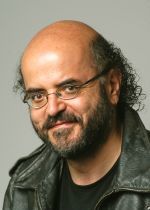
Christos Papadimitriou is the Donovan Family Professor of Computer Science and Provost's Senior Faculty Teaching Scholar at Columbia University. He previously held the C. Lester Hogan Professorship at UC Berkeley (1996–2017) and taught at Harvard, MIT, Stanford, UC San Diego, and the National Technical University of Athens. His research bridges theory and practice, focusing on algorithms, complexity, computational biology, AI/ML, game theory, and neuroscience. He pioneered algorithmic game theory and explores brain-mind interfaces using neuronal assembly models. Education: BS in EE (Athens Polytechnic, 1972), PhD in EECS (Princeton, 1976) Awards: IEEE John von Neumann Medal (2016), Gödel Prize (2012), National Academy of Sciences/Engineering membership, 9 honorary doctorates Books: Elements of the Theory of Computation , Computational Complexity , Algorithms , and novels like Logicomix His work applies computational lenses to biology, economics, and language, emphasizing formal models for emergent cognition. Recent research includes neuronal assembly-based computation, fairness in ML, and game-theoretic dynamics.
Jascha Achterberg serves as a Career Development Research Fellow at the University of Oxford, holding dual affiliations with the Department of Physiology, Anatomy and Genetics (DPAG) and St John's College. He actively contributes to the Costa Group research collective, focusing on the critical intersection of neuroscience and artificial intelligence to decode the principles of intelligence. Academic Background: PhD in Cognitive Neuroscience from the University of Cambridge (MRC Cognition and Brain Sciences Unit), supervised by John Duncan and Matthew Botvinick with collaborative projects at Google DeepMind and Intel. Research Vision: Dr. Achterberg pioneers investigations into how the brain's system-level architecture enables flexible cognition, with particular emphasis on specialized submodules, circuit patterns, and communication topologies. His work bridges biological intelligence and artificial systems through brain-inspired computing, targeting scalable distributed architectures that replicate cognitive flexibility. This transdisciplinary approach integrates computational neuroscience, AI engineering, and cognitive theory to establish general principles applicable to both neuroscientific modeling and next-generation computing systems. Publication Trajectory: Recent publications (2023-2025) demonstrate a cohesive research program advancing brain-inspired AI through three converging fronts: (1) modeling neural dynamics for complex problem-solving (frontal lobe networks), (2) developing heterogeneous expert architectures that mimic biological processing pathways, and (3) establishing spatially embedded neural networks that reconcile structural and functional neuroscience data. These works consistently reveal how biological constraints can drive efficiency in artificial systems, particularly in domain-general cognition and scalable learning. Research Collective: As a core member of the Costa Group at Oxford, Achterberg operates within a dynamic ecosystem focused on systems neuroscience and computational modeling of brain function, leveraging institutional resources from DPAG and cross-sector collaborations with industry partners like Intel and Google DeepMind.
Andrew Nere serves as Assistant Professor of Computer Science in the Math & Computer Science Department at Western Colorado University, teaching courses including Introduction to Web Design, Computer Science I, and Software Entrepreneurship since joining the faculty in Fall 2022. His industry background includes co-founding Thalchemy (2013), a startup specializing in embedded machine learning for wearable and environmental sensor applications, alongside prior internships at IBM and Qualcomm. His educational credentials feature: PhD in Electrical Engineering from University of Wisconsin-Madison (2013) MS in Electrical Engineering from University of Wisconsin-Madison (2010) B.S. in Computer Engineering from St. Cloud State University (2007) Nere's research centers on hardware-software co-design for efficient AI deployment, with dual focus on neuromorphic computing architectures and practical embedded systems implementation. He bridges theoretical neuroscience with engineering solutions, particularly for resource-constrained environments like fitness trackers and environmental sensors where computational efficiency is paramount. His work emphasizes translating academic research into real-world applications rather than pure theoretical exploration. Analysis of his 2010-2013 publications reveals consistent innovation in brain-inspired computing hardware, with recurring themes of GPU-accelerated neural simulations, specialized cache architectures for AI workloads, and energy-efficient neuromorphic designs. The research demonstrates strong interdisciplinary collaboration across computer architecture, neuroscience, and machine learning communities, frequently targeting hardware acceleration for cognitive computing tasks. Scientific recognition includes: Best Paper Nomination at IEEE International Symposium on Workload Characterization (2012) Best Paper in Track at International Parallel and Distributed Processing Symposium (2011) Nere brings substantial industry experience to academia, having served as university collaborator on the DARPA/IBM SyNAPSE project modeling brain functionality in computing systems. His startup Thalchemy exemplifies his commitment to applied research translation, while his current Software Entrepreneurship course provides students with practical business development frameworks for technology ventures. He actively leverages Gunnison Valley's natural environment for both recreation and potential research applications, noting particular interest in environmental sensing opportunities afforded by the region's wilderness proximity and diverse ecosystems.
Habib Hamam is a Professor in the Department of Electrical Engineering at the University of Moncton's Faculty of Engineering. His research spans optics, biomedical engineering, wireless communication, and AI applications. Specializations: Diffractive elements, optical interconnections, biomedical engineering, hybrid fiber/wireless systems, and AI-driven optimization. Contact: Email habib.hamam@umoncton.ca | Phone (506) 858-4762 Recent publications highlight his focus on AI integration across healthcare, energy systems, and education, combined with blockchain for security and transparent data management. Key subdomains include medical imaging, renewable energy optimization, and IoT scalability. Notable research trends involve deep learning for diagnostics (e.g., brain tumors, diabetic retinopathy), blockchain applications in smart grids and fisheries, and quantum-inspired algorithms for energy forecasting.
Mahesh Suryawanshi is a Senior Lecturer and ARC DECRA Fellow at the School of Photovoltaic and Renewable Energy Engineering (SPREE), UNSW Sydney. He holds a Ph.D. in Physics (Materials Science) from Shivaji University, India (2015), and completed postdoctoral work at Chonnam National University, South Korea (2015-2019) under the Brain Korea (BK)-21 Fellowship. Research Interests: Development of earth-abundant nanocrystals/quantum dots for solar energy conversion, surface ligand engineering, solution-processed thin films for photovoltaics and water splitting, and electrocatalytic systems for hydrogen production. His work emphasizes scalable synthesis methods and in-situ operando characterization. Grants & Awards: ARC DECRA Fellowship (2021-2024), Early Career Researcher Award (European Commission, 2019-2021), and multiple accolades including the Key Scientific Article Award (REGI, Canada) and Best Presentation Award at AFORE 2018. Scientific Awards: ARC DECRA Fellowship Early Career Researcher Award Best Presentation Award (AFORE 2018) Key Scientific Article Award (REGI) Supervision: Mentors HDR students including Xinyao Guo and Yiming Xia. Established the Multifunctional NanoMaterials and Devices subgroup at SPREE, fostering international collaborations. Labs & Teams: Affiliated with SPREE at UNSW, previously worked with Prof. Jin Hyeok Kim at Chonnam National University and Prof. Xiaojing Hao/Martin Green at UNSW. Focuses on scalable nanocrystal synthesis and device integration.
Evren Dağlarlı is an Associate Professor in the Department of Computer Engineering at the Faculty of Computer and Informatics, Istanbul Technical University. He holds a Ph.D. in Control and Automation Engineering from ITU and has extensive experience in robotics, artificial intelligence, and intelligent systems. He is actively involved in research projects and has published in top-tier IEEE conferences and journals. Ph.D., Control and Automation Engineering, Istanbul Technical University (2008–2019) M.Sc., Mechatronics Engineering (Intelligent Systems and Robotics), Istanbul Technical University (2005–2007) B.Sc., Electrical Education, Marmara University (2000–2004) B.Sc., Electrical-Electronics Engineering, Ege University (2021–2023) His research focuses on robotics, artificial intelligence, human-robot interaction, cognitive neuroscience, and machine learning . He develops brain-inspired cognitive architectures and applies them to humanoid robots and autonomous systems. His work integrates deep learning, personality modeling, and explainable AI to enhance intelligent behavior in machines. Recent publications highlight a strong trend in generative AI, personality-integrated language models, UAV design, and computational cognitive modeling . His work bridges neuroscience and AI, aiming to create more adaptive, self-aware, and explainable robotic systems. He frequently collaborates with E. Aribas on topics ranging from UAVs to AI-driven personality modeling. Yenilikçilik Ödülü (Innovation Award), Istanbul Technical University, 2024 He has supervised students and co-authored multiple papers with advisees. He has participated in national and international research projects, including the Gökbörü Alemdar Savaşan İHA Projesi (2024–2025). His technical expertise includes ROS, embedded systems, real-time operating systems, and AI frameworks. He is a member of IEEE, ACM, and ASME and actively contributes to the advancement of intelligent systems through research, development, and academic mentorship.
Dr James Bennett is an Assistant Professor in Computer Science & AI (Informatics) at the School of Engineering and Informatics, University of Sussex, where he has been a faculty member since 2023. Prior to this, he held postdoctoral research positions at the University of Sheffield (2022–2023), University of Sussex (2017–2022), and the University of Oxford (2014–2017). His academic background spans physics, neuroscience, and AI, reflecting his interdisciplinary research approach. MPhys in Physics, University of Warwick (2004–2008) MSc in Neuroscience, University of Oxford (2008–2009) DPhil in Neuroscience, University of Oxford (2009–2014) His research lies at the intersection of biological and artificial neural systems, focusing on how insect brains—especially the Drosophila mushroom body—implement learning algorithms akin to those in machine learning. He models reinforcement learning mechanisms in biological circuits and applies neural principles to improve artificial intelligence. His work is highly relevant to sustainable development, particularly biodiversity and life on land. The recent publications show a consistent focus on modeling neural learning in insect brains, particularly reinforcement and reward prediction errors, pattern formation, and plasticity. These studies bridge computational neuroscience and AI, using biologically plausible models to inform machine learning. Dr Bennett teaches advanced courses in machine learning and neural networks at both undergraduate and postgraduate levels, contributing to the education of future AI and computer science specialists. He has been active in collaborative research, with co-authors including Thomas Nowotny, Andrew Philippides, and Wyeth Bair. While no formal awards are listed, his work has been cited over 100 times and disseminated through major preprint and open-access platforms. Dr Bennett supervises no listed students yet, but his research group likely involves collaborative projects within the informatics and neuroscience communities. His ORCID is 0000-0002-9474-426.
John-Thones Amenyo is an Assistant Professor in the Department of Mathematics & Computer Science at York College, City University of New York (CUNY), where he has served full-time since September 2008. He also held adjunct positions at the same institution from 2000 to 2008. He holds a PhD in Electrical Engineering from Columbia University and a BS in Electrical Engineering & Computer Science from MIT. PhD, Electrical Engineering, Columbia University MPhil, Electrical Engineering, Columbia University MS, Electrical Engineering & Computer Science, Columbia University BS, Electrical Engineering & Computer Science, MIT His research focuses on parallel and distributed computing, cellular automata, cognitive robotics, UAV drone systems for public health (especially malaria vector control), neuro-architectures, and educational technologies using Computer Algebra Systems. He has pioneered projects like MedizDroids and KOM for mosquito control and developed models such as CR/SARAMA for conscious robotics. His work bridges computer science, engineering, public health, and education. The most recent publications highlight trends in digital twins for enterprise automation, UAV-based landscape engineering, and serious games for STEM education. His articles span topics from neuronal CDMA to end-user parallel programming, reflecting a deep integration of biological inspiration with computational systems. York College - CUNY, Bridging the Gap Seminar (2015) CETL Title III STEP Grant (2007–2008) NSF Graduate Research Assistantship at Columbia (1986–1991) MIT UROP Awards (1977–1979, 1978) Bell Labs LUPT Grant (1981–1982) Dr. Amenyo has mentored numerous undergraduate researchers through programs like LSAMP and the York College Summer Research Program, guiding projects in biosensors, AI for healthcare, and drone technologies. He has secured grants from PSC-CUNY and NSF I-Corps, and has contributed to curriculum development, including modernizing CS/ISM programs and coordinating Math 119 on Computer Algebra Systems. He actively serves on college committees, advises student clubs like the Video Game Development Association, and organizes grant workshops. He leads research in intelligent systems for public health, including the MedizDroids project for mosquito control and innovations in wildfire prevention. His lab supports student-driven projects in robotics, IoT, and health informatics, fostering innovation in both academic and societal contexts.
Kerry Hourigan is a Professor in the Department of Mechanical and Aerospace Engineering within the Faculty of Engineering at Monash University. He serves as Director of the Laboratory for Biomedical Engineering (LBE) and Co-Director of the Fluids Laboratory for Aeronautical and Industrial Research (FLAIR), highlighting his leadership in interdisciplinary fluid dynamics research. PhD in Astrophysics, Monash University (1981) BSc in Applied Mathematics and Physics, Monash University (1975) His research centers on fluid dynamics, particularly bluff body flows, flow-induced vibrations, and bio-inspired fluid systems. He combines experimental and computational approaches to study vortex dynamics, fluid-structure interactions, and novel engineering applications in biomedical and aeronautical contexts. His work spans fundamental fluid mechanics to applied engineering solutions. The recent articles highlight a strong trend in using data-driven and machine learning techniques to model and control complex fluid-induced vibrations, especially around bluff and elliptical bodies. His work integrates computational fluid dynamics with physical experiments, often targeting applications in energy harvesting and biomedical devices. The research consistently appears in top-tier journals such as Journal of Fluid Mechanics and Physics of Fluids , reflecting sustained scholarly impact. His primary scientific recognition is as a Fellow of Engineers Australia, awarded in 1996, acknowledging his contributions to engineering science and practice. Lead investigator on multiple ARC and NHMRC-funded projects, including studies on wake transitions, bioreactors for stem cell culture, and intracellular delivery systems. Actively supervises PhD students and collaborates internationally with institutions in France (CNRS), Denmark (Technical University), and the USA (Caltech). He leads the Laboratory for Biomedical Engineering (LBE) and co-directs the Fluids Laboratory for Aeronautical and Industrial Research (FLAIR), both fostering collaborative, cross-disciplinary research in fluid mechanics and biomedical applications.
Professor Jordi Sort is a leading academic at the Universitat Autònoma de Barcelona (UAB), Department of Physics, and an ICREA researcher. His primary roles include leading the Group of Smart Nanoengineered Materials, Nanomechanics, and Nanomagnetism (Gnm³), focusing on functional materials for advanced technological applications. He holds an ERC Advanced Grant (2022) for the REMINDS project and recently secured an ERC Proof of Concept Grant (2025) for SECURE-FLEXIMAG, which develops data security devices using magnetic materials. His research spans magneto-ionics, neuromorphic computing, and energy-efficient materials, leveraging interdisciplinary approaches. Education: PhD in Materials Science from UAB (2002, Extraordinary Award), postdoctoral training at SPINTEC (Grenoble), Argonne National Laboratory (USA), and Los Alamos National Laboratory. His academic journey includes long-term collaborations at high-magnetic-field facilities in Grenoble and beyond. Research interests include voltage-driven magnetism control, magnetic data security, biodegradable alloys for biomedical applications, and machine learning in material science. Notable achievements include over 380 publications (h-index 57), 7 patents, and coordination of the BeMAGIC network with 24 European partners. Awards include the FEMS Prize (2015), Duran Farell Award (2020), and ERC grants. SECURE-FLEXIMAG aims to revolutionize hardware security using flexible magneto-ionic devices, addressing energy efficiency and scalability challenges. His articles highlight breakthroughs in magneto-ionics, neuromorphic systems, lunar material analysis, and biodegradable metallic alloys. Grants & Awards: ERC Advanced Grant (2022), ERC Consolidator Grant (2014), FEMS Prize, 20+ patents. Labs/Teams: Gnm³ lab at UAB, collaborations with global institutions like Argonne and Los Alamos.
Rafael Borrajo is an Associate Professor at Oslo Metropolitan University's Faculty of Technology, Art and Design, Department of Mechanical, Electrical and Chemical Engineering. He teaches Materials Technology and Hydraulics and Machine Systems . Education : BSc in Industrial Engineering (University of Malaga, Spain, 2008), MSc (University of California, Irvine, 2012), and PhD (UC Irvine, 2014) in Material Science and Space Propulsion under Prof. Gamero-Castaño. Research Focus : Materials innovation/characterization using ion/nanoparticle beams, super-hard materials, steel optimization, and spacecraft propulsion. Expertise : SEM, TEM, FIB, EBSD, XRD, EDS, AFM. Collaborations : European Space Agency (ESA), Luleå Technical University, KTH Stockholm, Yale University. His research spans materials physics , nanostructuring , and space propulsion , with recent work in electrospinning for construction materials . He has contributed to understanding sputtering mechanisms and microstructure evolution in hard materials. Current affiliations: Member of research groups ADEPT (ADvanced hEalth intelligence and brain-insPired Technologies) and Mechanics, Mechatronics and Material Technology . Projects include Brain activation during gait and balance .
Dietrich Klakow is a prominent researcher at Saarland University in Saarbrücken, Germany, with an extensive publication record spanning from 1997 to 2025. His work primarily focuses on natural language processing, speech recognition, and machine learning with significant contributions to multilingual models and African language processing. His research interests span a wide range of topics within computational linguistics and artificial intelligence. Klakow has made substantial contributions to Natural Language Processing , particularly in multilingual contexts and low-resource languages. His work on African language technologies has been particularly impactful, developing resources and models for languages that are often neglected in mainstream NLP research. He has also conducted significant research in speech recognition , transformer models , and computational linguistics , with a focus on practical applications and theoretical foundations. Klakow's recent publications demonstrate a strong focus on large language models, their capabilities, limitations, and applications across diverse linguistic contexts. His work spans both theoretical investigations of model architectures and practical applications addressing real-world challenges in language technology. His collaborative work spans numerous international partnerships, particularly with researchers working on African language technologies and multilingual NLP systems.
Yiyang Li is an Assistant Professor in the Department of Materials Science and Engineering at the University of Michigan, College of Engineering, specializing in electrochemical materials for energy storage and brain-inspired computing systems. Education: BS in Electrical and Computer Engineering from Olin College of Engineering (2011) PhD in Materials Science and Engineering from Stanford University (2016) His research centers on leveraging high-density point defects (>10 22 cm -3 ) in ionic materials for dynamic electrochemical doping. The first thrust examines individual Li-ion battery particles to uncover fundamental electrochemical properties, while the second develops analogue non-volatile memory elements for neuromorphic computing—potentially reducing machine learning energy consumption by two orders of magnitude through parallelized matrix operations. His work demonstrates significant trends in utilizing lithium, proton, and oxygen ions within host materials to enable high-density energy and information storage via redox processes. Awards: Truman Fellow at Sandia National Labs (2017-2020) Dr. Li actively recruits graduate students and postdocs for his newly formed research group starting September 2020, with current teaching responsibilities including MSE550: Fundamentals of Materials Science and Engineering. Prospective students must apply through UM departments before contacting him. The Li Group (http://ligroup.engin.umich.edu) operates from 2118 H.H. Dow and focuses on electrochemical redox systems for next-generation energy and computing applications.
Volker Dürr is a Professor of Biological Cybernetics at Bielefeld University , Faculty of Biology, and a member of the Center for Cognitive Interaction Technology (CITEC) . His work focuses on sensory control of locomotion , active tactile sensing in insects , and biomimetic modeling of movement systems. Education : Habilitation in Zoology (University of Cologne, 2008; Bielefeld, 2005), PhD in Biology (Bielefeld, 1998), Diploma in Biology (Tübingen, 1994) Academic Career : Professor at Bielefeld (2009-present), Junior Research Group Leader (University of Cologne, 2007-2009), Research Assistant (Bielefeld, 1998-2006) His research investigates how insects use antennal mechanosensory systems and proprioception to control locomotion in complex environments. Key themes include goal-directed movements , sensorimotor integration , and biomimetic robotics . Publications emphasize tactile sensing (15/23 articles), neural control of movement (9/23), biomechanical modeling (7/23), and cross-species locomotion analysis (4/23). Recent work explores virtual reality paradigms for locomotion studies and spiking neural networks for proprioceptive modeling.
Leslie Valiant serves as the T. Jefferson Coolidge Professor of Computer Science and Applied Mathematics at Harvard University's School of Engineering and Applied Sciences, where he has been faculty since 1982. Previously, he held positions at Carnegie Mellon University, Leeds University, and the University of Edinburgh. His academic journey began with education at King's College Cambridge, Imperial College London, and Warwick University, where he earned his PhD in computer science in 1974. Valiant's research spans theoretical computer science with primary focus areas including computational complexity theory, machine learning foundations, parallel computation systems, computational neuroscience, and evolutionary computation. His work bridges artificial and natural computational phenomena, addressing fundamental limitations in both engineered systems and biological processes. Key contributions include the development of the PAC (Probably Approximately Correct) learning model, holographic algorithms, robust logics for reconciling reasoning and learning, and theoretical frameworks for understanding cortical computation and evolvability. His publication record demonstrates sustained impact across decades, with recent work focusing on cortical computation primitives, multi-core algorithm design, and evolutionary dynamics with drifting targets. These publications reveal a consistent trajectory toward understanding computational principles in both artificial systems and biological cognition. Nevanlinna Prize (1986) Knuth Award (1997) EATCS Award (2008) A.M. Turing Award (2010) Fellow of the Royal Society Member of the National Academy of Sciences Valiant's research program integrates theoretical rigor with profound questions about natural computation, maintaining active engagement with both computer systems design and fundamental neuroscience questions. His work continues to influence multiple disciplines through formal frameworks that address computational limitations in learning, evolution, and neural processing.