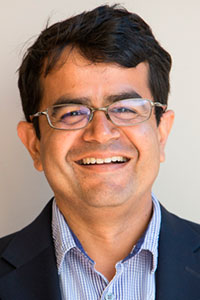
Samir Mitragotri is the Hiller Professor of Bioengineering and Hansjörg Wyss Professor of Biologically Inspired Engineering at Harvard University's School of Engineering and Applied Sciences (SEAS). He serves as a Core Faculty Member of the Wyss Institute for Biologically Inspired Engineering and Director of Undergraduate Studies in Bioengineering. His research focuses on drug delivery systems, biomaterials, and biomedical engineering, with applications in cancer therapy, immunotherapy, and regenerative medicine. Key research areas include developing innovative technologies such as cellular backpacks for immunotherapy, ionic liquids for enhanced drug delivery, and nanotechnology-based therapies. His lab has advanced clinical translation of therapies for diabetes, cardiovascular diseases, and infections, with several technologies progressing to human clinical trials. Notable achievements include election to the American Academy of Arts & Sciences (2025) and pioneering work on biomimetic drug delivery systems. His lab integrates engineering principles with biological insights to address barriers in drug delivery, such as improving tumor penetration and enhancing immune responses. Current projects span cell therapy engineering, immunomodulatory materials, and smart drug delivery systems using machine learning. Collaborations bridge academia and industry to accelerate clinical impact.
Stanislav M. Mintchev serves as Professor of Mathematics within the Department of Mathematics at The Cooper Union for the Advancement of Science and Art's Albert Nerken School of Engineering. With active teaching responsibilities for Fall 2024 including Linear Algebra and Calculus I, he maintains a prominent research profile in applied mathematics with specific focus on dynamical systems theory and its applications to biological and physical systems. Dr. Mintchev earned his Doctor of Philosophy degree in Mathematics with specialization in dynamical systems from New York University's Courant Institute. Prior to his graduate training, he completed bachelor of science degrees with honors in both Physics and Mathematics at The George Washington University in Washington, DC. His academic journey reflects a strong foundation in both theoretical and applied mathematical sciences. Mintchev's research program centers on the study of organization phenomena in spatially extended dynamical systems, with particular emphasis on traveling wave solutions that constitute perfectly transmitted signals across media. His work bridges rigorous analytical techniques from geometry, analysis, and probability theory with computational simulations, focusing on oscillation models from mathematical biology. He has developed significant expertise in pulse-coupled phase oscillator networks derived from mathematical neuroscience, examining existence and stability properties of traveling wave solutions. Additionally, he applies dynamical systems concepts to statistical data mining, pattern recognition, and machine learning, demonstrating the interdisciplinary reach of his mathematical approaches. Analysis of his publication record reveals a consistent research trajectory focused on neural oscillator networks and traveling wave phenomena. His recent work (2022-2024) shows increasing application to biological neural systems, particularly examining resilience mechanisms in neuronal networks and V1-inspired visual cortex models. Throughout his career, Mintchev has maintained a strong connection between theoretical mathematical frameworks and their practical applications in neuroscience, with publications spanning prestigious journals including Chaos, Nonlinearity, and the Journal of Mathematical Neuroscience. As an educator, Dr. Mintchev has taught a comprehensive range of mathematics courses including Introduction to Linear Algebra, Differential Equations, Probability, and all three introductory Calculus courses. He also offers independent study courses in point-set and algebraic topology, and assists with Cooper Union's Putnam Examination preparation. His teaching philosophy emphasizes connecting abstract mathematical concepts with their concrete applications in science and engineering, reflecting his own research approach. Future course offerings will include Numerical Methods, Boundary Value Problems, and Dynamical Systems, expanding opportunities for students to engage with advanced mathematical topics. Dr. Mintchev maintains active research collaborations with mathematicians including Bastien Fernandez, Bernard Ambrosio, and others in the dynamical systems community. His professional affiliations include the Society for Industrial and Applied Mathematics, American Mathematical Society, and Mathematical Association of America, demonstrating his engagement with the broader mathematical community. Though no formal laboratory is mentioned, his work involves computational modeling and theoretical analysis of dynamical systems, likely conducted through computational resources at The Cooper Union.
Mark Daley is a full Professor in the Department of Computer Science at Western University, with cross-appointments in Biology, Epidemiology & Biostatistics, Electrical & Computer Engineering, Applied Mathematics, and Statistics & Actuarial Science. He holds affiliations with the Rotman Institute of Philosophy, Western Institute for Neuroscience, and Vector Institute for Artificial Intelligence. As Vice-President, Research at CIFAR, he leads strategic research initiatives and advises on national research priorities. His research bridges theoretical computer science, artificial intelligence, and neuroscience, focusing on computational methods for understanding natural and machine intelligence. Research Interests: His work emphasizes biomarker discovery for critical illnesses (e.g., sepsis, traumatic injury), AI-driven diagnostics, and modeling complex biological systems using connectome-based approaches. He explores interdisciplinary applications of machine learning in healthcare, neuroscience, and pandemic response. Notable projects include developing metabolomic and proteomic signatures for disease diagnosis and predicting clinical outcomes. Key Projects: Directs the Computational Convergence Lab, advancing AI and computational tools for biomedical research. Leads the COMPASS-COVID-19-ICU study and contributes to global efforts analyzing SARS-CoV-2 variants and long-COVID biomarkers. Has pioneered computational frameworks integrating connectome data into reservoir computing architectures. Administrative Roles: Previously served as Associate Vice-President (Research) at Western University and chaired Compute Ontario. Current roles include strategic leadership in national research infrastructure and digital governance. His work emphasizes ethical AI implementation and data privacy in healthcare tech.
Peter Dayan serves as Managing Director and Professor in the Department of Computational Neuroscience at the Max Planck Institute for Biological Cybernetics in Tübingen, Germany, where he leads research initiatives at the intersection of neuroscience and artificial intelligence. His position encompasses strategic oversight of the department's scientific direction and operational management. Dr. Dayan's research program fundamentally explores computational principles of brain function, with concentrated expertise in reinforcement learning algorithms, decision-making processes, and neural network modeling. His work bridges theoretical machine learning frameworks with biological plausibility, particularly investigating how Bayesian inference and predictive coding operate in neural systems. This cross-disciplinary approach has established foundational contributions to understanding learning mechanisms in both biological and artificial agents. As head of the Department of Computational Neuroscience, he directs a research ecosystem focused on decoding neural computation through mathematical modeling, simulation, and experimental collaboration. The department maintains strong ties with Tübingen's neuroscience community and international AI research networks, fostering innovation in neuro-inspired computing architectures and cognitive modeling frameworks.
Dr. Chenchen Liu is an Assistant Professor in the Department of Computer Science and Electrical Engineering at the University of Maryland, Baltimore County (UMBC). She leads the Computing Compass Laboratory and focuses on high-performance computing for machine learning, brain-inspired computing with hardware-software co-design, and novel non-volatile memory technologies. Education: Ph.D., Electrical and Computer Engineering, University of Pittsburgh, 2017 M.S., Electrical and Computer Engineering, Peking University, 2013 Research Interests: Her work emphasizes optimizing neural networks for efficiency, enhancing AI security against adversarial attacks, and advancing neuromorphic systems using memristor and ReRAM technologies. Recent publications address multi-tenant DNN inference, edge computing frameworks, and latency-aware GPU optimization. Her articles highlight innovations in neuromorphic hardware, federated learning, and defense against adversarial attacks. Ongoing efforts include designing robust AI systems for autonomous driving and edge environments.
Tony Geng is an Assistant Professor at the University of Rochester, jointly appointed in the Departments of Electrical and Computer Engineering and Computer Science. He directs the IntelliArch Lab and holds secondary affiliations with the Goergen Institute for Data Science. His research spans computer architecture, generative AI, graph intelligence, and high-performance computing, focusing on sustainable and efficient artificial general intelligence. His work integrates hardware-software co-design for accelerating machine learning workloads, with applications in scientific discovery, fintech, and social media. Recent projects explore dynamical systems for graph learning and diffusion models for scientific simulations. Notable recognitions include multiple DOE and NSF research awards, the Excellence in Graduate Teaching Award, and substantial GPU allocations from NERSC for generative AI research. He actively mentors PhD students and postdocs in sustainable AI development.
Ruimin Chen is an Assistant Professor in the Department of Mechanical Engineering at the University of Connecticut (UConn), joining in August 2022. She holds a Ph.D. in Industrial Engineering from The Pennsylvania State University (2021), dual M.S. degrees in Industrial Engineering and Operations Research from the same institution (2018), and a B.S. in Industrial Engineering from Southeast University, China (2016). Her research focuses on data analytics, statistical learning, system identification, and uncertainty quantification, with applications in advanced manufacturing systems, privacy/security, and human-machine teaming. Key areas include quality monitoring in smart manufacturing, additive manufacturing process optimization, and interpretable AI for safety compliance. Her recent work explores federated hyperdimensional computing for distributed quality monitoring, cognitive data fusion in hybrid manufacturing, and brain-inspired computing for melt pool characterization. She also investigates educational strategies integrating Six Sigma principles with hands-on engineering practice. Notable contributions include methodologies for heterogeneous quality characterization in additive manufacturing, causal inference frameworks using Bayesian networks, and ontology-driven process analytics. She emphasizes translational research bridging theoretical computer science with industrial applications.
Farhad Imani is an Assistant Professor at the University of Connecticut's Department of Mechanical Engineering, part of the School of Engineering. He leads the Intelligent Systems and Control Laboratory (ISCL), focusing on AI-driven advancements in manufacturing systems, robotics, and quality control. His work integrates machine learning, federated learning, and hyperdimensional computing to address challenges in additive manufacturing, privacy preservation, and smart manufacturing processes. Education: He holds a Dual-title Ph.D. in Industrial Engineering and Operations Research from Pennsylvania State University (2020). His research is supported by grants from NSF and CCAT, and he has authored over 50 peer-reviewed articles in top journals and conferences. Research Interests: Core areas include data analytics, machine learning applications in manufacturing, federated learning, privacy-preserving techniques, robotics, and anomaly detection. His lab develops tools for intelligent process monitoring, defect localization, and cooperative robotic systems in advanced manufacturing. Awards: Recipient of the NSF Graduate Research Fellowship Honorable Mention (2024), CCAT Faculty Fellow (2024), and multiple fellowships from Penn State. He serves as an Associate Editor for ASME's Journal of Autonomous Vehicles and Systems (JAVS). Students & Collaborations: Advises PhD and Master's students (e.g., Zhiling Chen, Danny Hoang) and collaborates with institutions like NIST, UC Irvine, and CCAT. His lab actively participates in STEM outreach programs and industry partnerships. Labs/Teams: ISCL focuses on cognitive computing, digital twins, and edge-based learning systems. Recent projects include the Robotics Dataset ScanBot and privacy-preserving frameworks for manufacturing data.
Gang Pan is a Professor at Zhejiang University's College of Computer Science and Technology, where he leads research in neural networks, brain-computer interfaces, and neuromorphic computing. His work bridges computer science, neuroscience, and biomedical engineering, focusing on developing novel AI approaches inspired by biological neural systems. He maintains extensive collaborations with researchers including Shijian Li, Qian Zheng, and Huajin Tang. Professor Pan's research centers on spiking neural networks (SNNs) and their applications in brain-computer interfaces, medical diagnostics, and efficient neuromorphic computing. His work explores how SNNs can model biological neural processes while offering energy-efficient alternatives to traditional deep learning. Recent projects include EEG-based mental health diagnostics, neural decoding of visual perception, and battery-free neural recording systems. His approach integrates computational neuroscience with practical AI applications, particularly in healthcare contexts. Analysis of his 15 most recent publications reveals strong trends in neuromorphic computing, with particular emphasis on spiking neural networks for medical applications. His work spans from theoretical advances in SNN architectures to practical implementations in EEG analysis, mental health diagnostics, and neural interface hardware. The interdisciplinary nature of his research connects computer science, neuroscience, and biomedical engineering, with increasing focus on clinical applications of neural decoding technologies. Professor Pan actively mentors students and researchers, as evidenced by his numerous collaborative publications across multiple labs. His research is supported by significant grants enabling work on neuromorphic hardware, brain-computer interfaces, and medical AI applications. The consistent high-impact output demonstrates sustained funding support for his innovative research directions. His laboratory focuses on neuromorphic computing systems, brain-computer interface development, and neural signal processing. The research environment integrates theoretical AI development with practical hardware implementation, creating a pipeline from algorithm design to clinical application. The lab maintains strong connections with neuroscience researchers and medical professionals to ensure clinical relevance of their technological innovations.
Konstantinos Michmizos is an Associate Professor in the Department of Computer Science at Rutgers University, with affiliations to the Rutgers Center for Cognitive Science, Brain Health Institute, and Center for Computational Biomedicine Imaging and Informatics. His research focuses on neuromorphic computing, neuro-AI integration, and brain-inspired robotics, emphasizing systems that interact with brain activity across neural and behavioral scales. He leads the Michmizos Lab and ComBra Lab, pioneering projects like robotic nurses powered by neuromorphic chips and astrocyte-driven computational models. Key research interests include neuromorphic hardware-software co-design, spiking neural networks, and applications in neurorehabilitation. Notable achievements include securing grants from NIH, Intel, and VCRI, along with awards for best papers on Neuro-AI and computational astrocyence. His work bridges artificial intelligence with biological systems, aiming to translate neural mechanisms into advanced robotic and biomedical technologies. Michmizos teaches graduate courses like Brain-Inspired Computing and has advised students such as Ioannis Polykretis. His research spans neuromorphic SLAM systems, EEG decoding frameworks, and biohybrid robotic systems, with recent breakthroughs in calcium wave modeling for astrocyte-neuron interactions. Collaborations emphasize multi-scale computational biology and clinical applications in neurology.
Michael Schmuker is Professor of Neural Computation at the University of Hertfordshire, leading research at the intersection of neuroscience-inspired computing and chemical informatics. He develops neuromorphic algorithms for low-power, low-latency chemical sensing systems and applies machine learning to decode olfactory perception. Key research areas: Neuromorphic olfaction for robotic navigation Machine learning for odor prediction Electronic nose technology development Computational modeling of olfactory receptors Schmuker participates in major neuroscience initiatives including the Human Brain Project and NeuroNex consortium, with publications in Science Advances and Nature Machine Intelligence.
Levin Kuhlmann is an Associate Professor at Monash University's Department of Data Science & AI, affiliated with the Victorian Heart Institute. He holds a PhD in Cognitive and Neural Systems from Boston University. His research focuses on applying machine learning and computational neuroscience to digital health, neural engineering, and neuroimaging, with a strong emphasis on epilepsy and anesthesia modeling. Key research interests include data science, signal processing, and control theory applied to clinical challenges like seizure prediction and brain-state analysis. He leads projects such as the CSIRO Next Generation AI system for NDIS coaching and Neurodesk, a collaborative neuroimaging tool. His work aligns with UN Sustainable Development Goals related to health and innovation. Education: PhD in Cognitive and Neural Systems, Boston University. Awards: Includes the Australian Post-Graduate Award (2001), Best Paper Honorable Mention (ACM 2021), and Boston University Doctoral Fellowship (2001–2006). Projects: Over 8 active projects, including AI-augmented healthcare systems, high-performance brain imaging, and epilepsy monitoring with wearable devices. Dr. Kuhlmann has published extensively on seizure prediction, neural dynamics, and reproducible neuroimaging. His research has been featured in media such as The Wire and ZDNet, highlighting breakthroughs in epilepsy diagnosis and AI applications.
Anders Malthe-Sørenssen is a Professor at the University of Oslo’s Center for Computing in Science Education within the Faculty of Mathematics and Natural Sciences. His research integrates artificial intelligence (AI) with neuroscience to develop advanced machine learning techniques and study brain-inspired AI systems. He also focuses on computational methods in materials science, particularly in frictional dynamics and nanoscale processes, alongside computational education research to enhance science teaching. Malthe-Sørenssen teaches courses including Fys1120 (Electromagnetics), HON1000 (Interdisciplinary Honors), and Fys4460 (Disordered Systems and Percolation), emphasizing active learning and technology integration. His past industrial experience includes tech startups and large-scale industry-funded projects, leading to patented technologies. His research interests span computational physics, machine learning, neuroscience, and education innovation. Notable projects include studies on neural circuitry, AI robustness, and material fracture mechanics. He has received awards such as the HMK Gold Medal (1999), Nansen Prize (2001), and multiple teaching excellence prizes (2011–2015). Malthe-Sørenssen leads initiatives like the CO2Basalt project for carbon storage and contributes to international collaborations. His work bridges AI, materials science, and education, fostering interdisciplinary innovation.
Niels Taatgen is a Professor of Cognitive Modeling at the University of Groningen , affiliated with the Faculty of Science and Engineering and the Bernoulli Institute . His research focuses on human multitasking , cognitive architectures , mental fatigue , and skill acquisition . He has received significant recognition, including the Teacher of the Year award at the University of Groningen in 2016 and an ERC grant in 2011 for multitasking research. His recent publications span neuroscience , artificial intelligence , and educational technology , with a focus on visuo-motor learning , language modeling , and adaptive working memory . His work often integrates fMRI , cognitive modeling , and spiking neural networks to explain human behavior and improve AI systems. Scientific Awards: Teacher of the Year, University of Groningen (2016) His research group explores multitasking strategies , attentional control , and brain-inspired computing , with applications in medical education , human-computer interaction , and cognitive training .
Patricia A. Vargas is an Associate Professor/Reader in Computer Science and Robotics at the School of Mathematical & Computer Sciences, Heriot-Watt University, UK. She is the Founder Director of the Robotics Laboratory and Director of Ethics. Her research focuses on interdisciplinary robotics, including Evolutionary Robotics, Swarm Robotics, Biologically-Inspired Algorithms, Computational Neuroscience, and Neurorobotics. She holds IEEE Senior Member and Fellow of the Higher Education Academy titles. Education: PhD in Robotics, postdoc at the Centre for Computational Neuroscience and Robotics (University of Sussex, UK). She has contributed to over 66 research outputs since 2009, with recent work emphasizing neurorobotics, SLAM systems, and precision robotics. Her research aligns with UN Sustainable Development Goals, particularly in healthcare and industrial innovation. Research interests span from bio-inspired algorithms to human-robot interaction, with notable contributions in Parkinson’s disease modeling and swarm robotics. She co-founded the Edinburgh Centre for Robotics and is an executive member of the IEEE Ro-Man Standing Steering Committee. Awards include the 2017 Spirit of Heriot-Watt Award (Outward Looking). Her work bridges robotics with neuroscience, aiming to advance assistive technologies and ethical robotic systems.