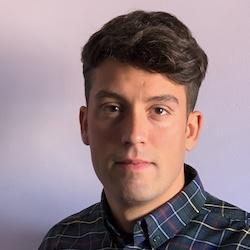
Dr. Bradley Peterson is a Professor of Psychiatry & the Behavioral Sciences and Pediatrics at the Keck School of Medicine, University of Southern California, and serves as the Division Chief of Psychiatry & the Behavioral Sciences at Children’s Hospital Los Angeles (CHLA). He joined USC and CHLA in 2014 after prior roles at Columbia University and Yale University. Education: MD from University of Wisconsin Medical School (1987), Residency at Massachusetts General Hospital, Fellowships at Yale and Columbia Research Focus: Dr. Peterson specializes in neuroimaging technologies to study psychiatric disorders and therapeutic mechanisms across the lifespan. His work spans conditions like Autism, Depression, Bipolar Disorder, ADHD, Tourette syndrome, and environmental toxin impacts on brain development. Publications: Recent studies examine prenatal environmental exposures, maternal nutrition, and brain connectivity in psychiatric disorders. He employs multimodal MRI and SPECT to map developmental trajectories. Scientific Awards: Dean’s Teaching Award (USC, 2017) Blanche Ittleson Award (APA, 2012) John J. Weber Prize (Columbia, 2007) Outstanding Mentor (AACAP, 2014 & 2006) Grants & Collaborations: His research involves collaborations with institutions like CHLA and CTSI, focusing on precision medicine and developmental brain disorders. Labs: Leads the Institute for the Developing Mind at CHLA, integrating neuroimaging with behavioral science to study early brain development.
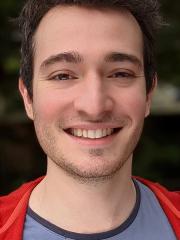
Stephen R. Latham, JD, PhD, is Director of Yale's Interdisciplinary Center for Bioethics and Senior Research Scientist at Yale University's Institution for Social and Policy Studies. He holds courtesy appointments in Religious Studies, Environmental Studies, History of Science and Medicine, and is a Senior Lecturer at Yale Law School, School of the Environment, and Program in Ethics, Politics & Economics. As Director of the Center, he oversees a broad bioethics program that includes biomedical ethics, environmental ethics, animal ethics, and ethics of new technologies. His educational background includes a Ph.D. in Jurisprudence and Social Policy from UC Berkeley (1996), a J.D. from Harvard Law School (1985), and an A.B. in Social Studies from Harvard College (1982). Latham has taught numerous courses at Yale including Bioethics and Law, International and Comparative Bioethics, and Philosophical Environmental Ethics. Latham's research spans multiple domains of bioethics with particular emphasis on the legal regulation of novel medical technologies, human and animal research, philosophical argumentation in bioethics, and environmental ethics. His work frequently intersects law, medicine, and ethics, examining topics from brain resuscitation research to pandemic resource allocation. He has published over 150 articles in prestigious journals including Nature , JAMA , New England Journal of Medicine , and numerous bioethics publications. His recent publications reveal a strong focus on contemporary bioethical challenges including pandemic ethics, AI applications in research ethics, postmortem research, resource allocation during crises, and reproductive ethics. These works demonstrate his ability to bridge theoretical bioethics with practical healthcare challenges, often combining legal analysis with ethical reasoning. Fellow of the Hastings Center (2021) Presidential Citation Award, American Society for Bioethics and Humanities (2022, 2021, 2011) Distinguished Service Award, American Society for Bioethics and Humanities (2010) Healthcare Compliance Certification Board award (2005) Commencement Hooding Professor by Quinnipiac Law Students (2003) Latham has advised numerous graduate students and served on multiple university committees including as Chair of Yale's Human Subjects Committee (social/behavioral IRB) and Co-Chair of the Embryonic Stem Cell Research Oversight Committee. He has secured significant research funding from NIH, AHRQ, and other agencies for projects ranging from acute kidney injury care to brain cell atlas development. His work with the Center includes hosting a renowned summer bioethics program that attracts students from around the world and organizing lecture series that bring prominent bioethicists to Yale. The Yale Interdisciplinary Center for Bioethics, which Latham directs, maintains a research alliance with the Hastings Center and serves as a hub for bioethics scholarship across Yale's campus. The Center's work encompasses health policy, environmental ethics, animal ethics, and the ethical implications of emerging technologies, reflecting Latham's broad scholarly interests and institutional vision.
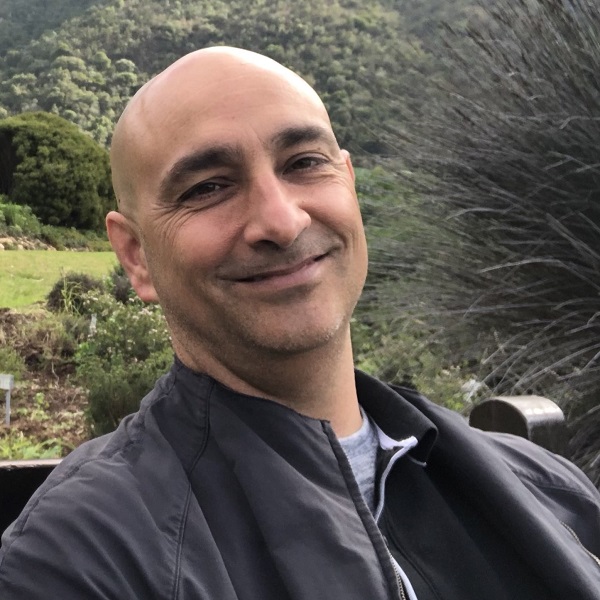
Jason Steffener is an Associate Professor at the University of Ottawa’s Faculty of Health Sciences. His research focuses on neuroplastic changes in aging brains, cognitive reserve mechanisms, and neuroimaging techniques. He holds a PhD in Biomedical Engineering from NJIT and has held academic positions at Columbia University Medical Center, Concordia University, and now Ottawa. His work integrates neuroimaging (fMRI, structural MRI), statistical modeling, and computational approaches to study brain adaptability. Education: BS (1997), MS (2002), PhD (2005) in Biomedical Engineering from NJIT Postdoctoral training (2006–2009): Columbia University under Dr. Yaakov Stern Research emphasizes how education, physical activity, and lifetime exposures influence brain resilience against aging and disease. Key methodologies include moderated-mediation analysis, neurovascular coupling studies, and high-performance computing. He develops open-source tools for neuroimaging data standardization (e.g., NIDM framework). Recent work investigates semantic memory networks in aging, trigeminal sensory processing, and olfactory training effects on brain structure. His grants likely support interdisciplinary projects combining clinical neuroscience with big data analysis. Labs/Teams: Likely leads neuroimaging research groups focused on aging and cognitive reserve at University of Ottawa. Collaborates internationally on projects like the SABE Study and Canadian Longitudinal Study on Aging.
Prof. Dr. med. Andreas K. Engel serves as Director of the Institute of Neurophysiology and Pathophysiology at the Center for Experimental Medicine, University Medical Center Hamburg-Eppendorf (UKE). His research focuses on neural oscillations, brain dynamics, and neurophysiological mechanisms in health and disease, particularly employing EEG, MEG, and brain stimulation techniques like tACS to study cognitive processes, motor control, and multisensory integration. Current affiliation: Institute of Neurophysiology and Pathophysiology, UKE Academic rank: Professor Email: ak.engel@uke.de Key research areas include: Neural oscillations and synchronization Neurodegenerative disease mechanisms (Parkinson's) Brain-computer interface development Neural coupling during social interactions Cortical network dynamics Neuromodulation techniques Recent publications demonstrate expertise in analyzing multisensory integration, phase-amplitude coupling, and applying stimulation methods to modulate cortical activity patterns. His work bridges computational neuroscience with clinical applications in movement disorders and cognitive impairments.
Dr. Stamos Katsigiannis is an Associate Professor in the Department of Computer Science at Durham University. His research focuses on bioinformatics, health informatics, affective computing, and GPU computing. He holds a BSc, MSc, and PhD in Computer Science from the University of Athens and the Athens University of Economics and Business. Before Durham, he was a Postdoctoral Research Fellow and Lecturer at the University of the West of Scotland (2016–2020). His work spans biometric identification via EEG signals, medical image analysis, and deep learning applications in healthcare. Education: BSc (Hons.) in Informatics and Telecommunications from National and Kapodistrian University of Athens MSc in Computer Science from Athens University of Economics and Business PhD in Computer Science from National and Kapodistrian University of Athens Research interests include bioinformatics (e.g., microarray analysis), health informatics (e.g., ECG-based emotion modeling), and GPU computing for real-time applications. He has pioneered studies on EEG-based biometrics and affect recognition in human-horse interaction. Recent articles explore chest X-ray classification using deep learning , AI-generated content detection , and trajectory prediction with graph networks . His research emphasizes interdisciplinary applications of machine learning in healthcare and education. He advises six postgraduate students and collaborates on UK parliamentary AI governance reports. Notable contributions include the BED EEG dataset and the DREAMER emotion recognition database.
Dr. Stamos Katsigiannis is an Associate Professor in the Department of Computer Science at Durham University. His research focuses on bioinformatics, health informatics, affective computing, machine learning, and GPU computing applications. He holds a PhD in Computer Science from the National and Kapodistrian University of Athens (Greece), with prior roles including Postdoctoral Research Fellow and Lecturer at the University of the West of Scotland (2016-2020). Education: BSc (Hons) Informatics and Telecommunications, National and Kapodistrian University of Athens (Greece) MSc Computer Science, Athens University of Economics and Business (Greece) PhD Computer Science, National and Kapodistrian University of Athens (Greece) Research Interests: Bioinformatics, health informatics, affective computing (e.g., emotion recognition using EEG/ECG signals), machine learning applications in medical imaging and video quality, GPU-accelerated algorithms for biomedical data analysis, and biometric identification systems. His work bridges computational methods with healthcare, education technologies, and human-computer interaction. Advising & Students: Supervising postgraduate students in AI-driven healthcare, computer vision, and affective computing. Recent collaborations include projects on AI-generated content detection (De-Factify 4.0), chest X-ray image analysis (CLN network), and trajectory prediction using graph neural networks. Labs/Teams: Active in Durham's AI research groups, contributing to interdisciplinary projects in medical imaging, cybersecurity, and educational technology. Collaborates internationally in EU-funded initiatives and UK parliamentary AI governance consultations (AGENCY project).
Senem Velipasalar is a Professor in the Department of Electrical Engineering and Computer Science (EECS) at Syracuse University, affiliated with the Smart Vision Systems Laboratory and the Aging Studies Institute. She holds a Ph.D. and M.A. from Princeton University, an M.S. from Brown University, and a B.S. from Bogazici University. Her research focuses on machine learning, computer vision, and wireless smart camera systems, with applications in human activity classification, driver behavior analysis, and defense against adversarial attacks. Her honors include the NSF CAREER Award (2011), 2021 IEEE Technological Innovation Award, and multiple doctoral prizes for her advisees. She leads grants totaling over $4M, including ARPA-E projects on occupancy detection and DOE-funded research on aerial energy modeling. Research interests span embedded vision, distributed multi-camera tracking, and energy-efficient algorithms. Her lab develops technologies like wearable camera-based fall detection and autonomous UAV navigation. Notable publications include works on adversarial attacks, fNIRS brain activity analysis, and thermal pedestrian detection.
Dr. Nikola Simidjievski is a Research Fellow at the University of Cambridge's Department of Computer Science and Technology. His research focuses on machine learning applications in natural sciences, including oncology, neuroscience, and biomedical informatics. He specializes in multimodal data integration, dynamic systems modeling, and explainable AI techniques. Simidjievski contributes to interdisciplinary projects such as AI-driven space research and Earth observation systems (e.g., AIAtlas). His work emphasizes computational methods for small-sample biomedical data and interpretable neural networks. Education background not explicitly stated, but his research spans computational biology, aerospace telemetry analysis (e.g., Mars Express spacecraft), and environmental modeling. He collaborates on projects like GalaxAI for spacecraft data analysis and PATHS for medical imaging. Key tools developed include Healnet for biomedical data fusion and RO-FIGS for tabular ensemble methods. No scientific awards listed. Advising no listed students, but contributes to academic initiatives like the Human Brain Project's neuroscience training programs. Engages in open-source projects (e.g., AITLAS toolbox for Earth observation). Current research trends include tabular data augmentation methods (TabEBM, TabMDA) and efficient transformer-based models for medical imaging (PATHS).
Lorraine K. Tyler is Professor of Cognitive Neuroscience at the University of Cambridge, where she heads the Centre for Speech, Language and the Brain. She holds affiliations as a Professorial Fellow at Clare College Cambridge and has received multiple ERC Advanced Investigator Grants. Her interdisciplinary research combines neuroimaging (fMRI, MEG), neuropsychological, and behavioral methods to investigate how the human brain supports language, perception, and meaning. Her primary research focuses on the organization of neural circuits for language comprehension, perceptual decision-making, and cognitive changes in aging. Professor Tyler leads the Cam-CAN project, a large-scale initiative on healthy aging that has generated datasets used by researchers across five continents. Professor Tyler serves as Editor-in-Chief of Language, Cognition and Neuroscience and has held leadership positions including President of the Society for the Neurobiology of Language. Her work has been funded by EPSRC, BBSRC, MRC, Leverhulme Trust, and ERC. Fellow of the British Academy Fellow of Academia Europaea Fellow of the Association for Psychological Science Bartlett Prize, Experimental Psychology Society She directs the Centre for Speech, Language and the Brain, coordinating interdisciplinary teams investigating brain-language relationships across the lifespan.
Dr. Borja Blanco is a Research Associate at the Department of Psychology, University of Cambridge, specializing in developmental neuroscience and infant cognition. His research employs advanced neuroimaging techniques like high-density diffuse optical tomography and fNIRS to investigate functional brain development during early childhood. Research interests focus on: Neuroplasticity and bilingualism effects in infant brains Sleep-state modulation of neural connectivity Cross-cultural studies of cognitive development Clinical applications for ASD/ADHD early detection Wearable neurotechnology for infant monitoring Dr. Blanco's work has pioneered methods for cot-side neuroimaging and home-based assessment of infant brain function. His publications demonstrate consistent focus on functional connectivity patterns, bilingual exposure effects, and clinical applications of optical neuroimaging techniques.
Professor Zhiyong Wang is a faculty member at the School of Computer Science, University of Sydney, serving as Deputy Director of Sydney Informatics Hub and Director of the Multimedia Computing Laboratory. His research focuses on multimedia computing, including information retrieval, computer vision, AI, and applications in agriculture, healthcare, and environmental monitoring. He holds a B.Eng., M.Eng. from South China University of Technology, and a Ph.D. from The Hong Kong Polytechnic University. His work bridges theoretical advancements and real-world applications, with over 200 peer-reviewed publications. He is a member of IEEE and former President of Australia Pattern Recognition Society (APRS). Research Interests: Enabling computers to understand and create multimedia content, with emphasis on human-centric computing, remote sensing, and interdisciplinary applications. Notable areas include action recognition, medical image analysis, and environmental monitoring. Current Roles: Leads the Multimedia Computing Lab, collaborates with Sydney Institute of Agriculture and Brain and Mind Centre. Teaches COMP5216 (Mobile Computing), COMP5405 (Digital Media Computing), and COMP5425 (Multimedia Retrieval). Students: Supervises 9 Ph.D. students focusing on topics like precision agriculture, biomedical engineering, and AI-driven video analytics. Key projects include soil moisture forecasting, biomechanical risk analysis for knee osteoarthritis, and explainable machine learning.
Dr. Josh Arnold is a Senior Lecturer at the School of Electrical Engineering and Computer Science, University of Queensland, and a Research Officer in the Scott Lab at the Queensland Brain Institute. His research bridges computational neuroscience and robotics, focusing on neural computation, temporal learning, and brain-wide activity modeling in zebrafish. Bachelor (Honours) of Engineering, University of Queensland Doctor of Philosophy in Artificial Intelligence, University of Queensland Josh specializes in computational neuroscience, particularly the role of conduction delays in neural learning rules. His work spans spiking neural networks, auditory processing in zebrafish, and social behavior modeling in robots. Recent studies examine sedation effects on brain activity and neurodevelopmental disorder phenotyping in zebrafish mutants. His publications highlight applications in temporal learning, robotics, and neuroimaging. Josh is available for supervision and contributes to projects involving zebrafish models, neural plasticity, and collaborative interdisciplinary research in the Scott Lab.
Dr. Peter Torre III is Professor of Audiology at San Diego State University and Director of the Recreational Noise Exposure and Hearing Lab. His research examines auditory function in HIV-affected populations and noise-induced hearing loss in young adults. Research focuses on: HIV-related auditory and cognitive impairments Neurodevelopmental effects of perinatal HIV exposure Recreational noise exposure risks Auditory-gut-brain axis interactions Dr. Torre's work utilizes neuroimaging, psychoacoustic testing, and longitudinal cohort studies to investigate central auditory processing disorders, white matter changes in HIV-positive children, and diagnostic tools for HIV-associated neurocognitive disorders.
Dr. Shinichi Nakajima is a Senior Research Lead at the Technical University of Berlin, affiliated with the BIFOLD (Berlin Institute for the Foundations of Learning and Data) and the AIP – RIKEN Center of Advanced Intelligence Project . He leads the research group “Probabilistic Modeling and Inference” at BIFOLD. His academic journey includes a Master’s in Physics from Kobe University (1995) and a PhD in Computer Science from Tokyo Institute of Technology (2006). Prior to academia, he worked at Nikon Corporation (1995–2014) on statistical analysis, image processing, and machine learning. His research focuses on Bayesian inference , generative modeling , explainable AI , and quantum computing , with applications in computer vision, natural language processing, and scientific computing. Notable projects include developing NeuLat (a neural sampling toolbox for lattice field theories) and advancing techniques for symbolic XAI to enhance AI transparency. Dr. Nakajima has published extensively on topics such as diffusion models, federated learning, and physics-informed neural networks. His work bridges theoretical foundations (e.g., Bayesian learning) with practical applications in quantum computing and biomedical imaging. He actively contributes to open-source tools and collaborates with industry and academic institutions globally. Key technical achievements include improving sampling efficiency in quantum eigensolvers, enhancing brain source reconstruction via 3D neural networks, and developing anomaly detection systems using self-supervised autoencoders. His research emphasizes computational efficiency and robustness against adversarial attacks, leveraging Langevin dynamics and gradient-based optimization methods.
Dr. Shuki Cohen is an Associate Professor at John Jay College of Criminal Justice, CUNY. He holds a PhD in Clinical Psychology from New York University, a postdoctoral fellowship at Yale Medical School, and advanced degrees from institutions in Israel, including the Weizmann Institute of Science. His research focuses on psychological processes underlying ideological extremism, violence, and prejudice, with a particular emphasis on linguistic analysis of narratives and cognitive rigidity. Dr. Cohen has clinical training at NYU’s Psychodynamic Outpatient Clinic, the Albert Ellis Institute, and hospitals like Bellevue. His work bridges neuroscience, psychoanalysis, and social psychology to address complex societal conflicts. Education: PhD in Clinical Psychology, New York University Postdoctoral Fellowship, Yale Medical School, Department of Psychiatry MSc in Brain Sciences, Weizmann Institute of Science, Israel BSc in Biochemistry (Cum Laude), Ben Gurion University, Israel Research Interests: Dr. Cohen explores how unconscious processes influence ideological extremism, violence, and prejudice. His methodologies include psycholinguistic analysis of terrorist propaganda, statistical algorithms for detecting interaction patterns in psychoanalytic dialogues, and developing scales to measure cognitive rigidity and fanaticism. His work often intersects with geopolitical conflicts, such as the Israeli-Palestinian context, and examines trauma’s impact on mental flexibility and healing. Recent Work Trends: His articles span terrorism analysis, cognitive processes in radicalization, and linguistic markers of aggression. Notable projects include decoding Al-Qaeda’s propaganda and analyzing suicide bomber farewell letters. He also investigates implicit dehumanization in military narratives and develops tools for assessing sexual coercion. Labs/Teams: Collaborations include work with the late Enrico Jones on psychoanalytic archives and interdisciplinary projects at Yale and NYU.