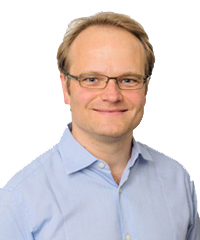
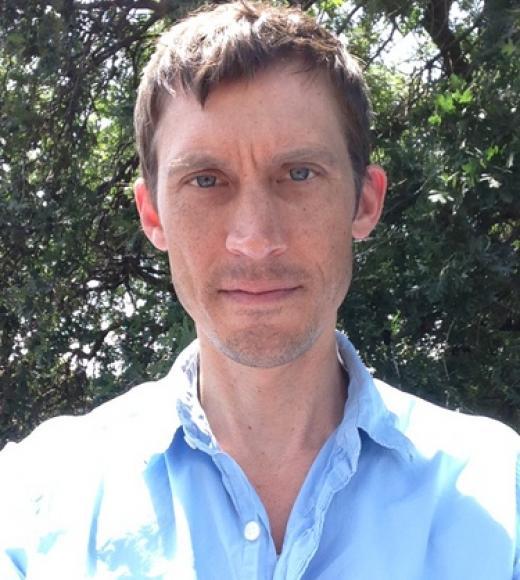
Mark Steedman is Professor of Cognitive Science at the University of Edinburgh's School of Informatics, with adjunct appointment at University of Pennsylvania. His research spans computational linguistics, AI, and cognitive science, focusing on Combinatory Categorial Grammar (CCG) and its applications. His research examines: Combinatory Categorial Grammar parsing and semantics Language model capabilities and limitations Cross-linguistic semantic inference Brain modeling of language processing Recent publications analyze hallucination sources in large language models, cross-linguistic entailment graphs, and brain-computer parallels in structure-building. He develops computational models integrating symbolic and distributional approaches to semantics. Honors include ACL Lifetime Achievement Award (2018) and George E. Davis Medal (2001). He serves on editorial boards of major linguistics journals and has authored influential books including 'The Syntactic Process' and 'Taking Scope'.
Risto Miikkulainen is a Professor of Computer Science and Neuroscience at the University of Texas at Austin and VP of AI Research at Cognizant AI Lab. He directs the UTCS Neural Networks Research Group and is currently on leave from UT, working on Evolutionary Computation and Deep Learning at Sentient Technologies, Inc. Education: Ph.D. in Computer Science, UCLA, 1990 M.S. in Applied Mathematics, Helsinki University of Technology (now Aalto University), 1986 Risto Miikkulainen's research focuses on biologically-inspired computation such as neural networks and evolutionary computation. His work spans three main areas: (1) Neuroevolution, evolving complex deep learning architectures and recurrent neural networks for sequential decision tasks in robotics, games, and artificial life; (2) Cognitive Science, developing models of natural language processing, memory, and learning that shed light on disorders such as schizophrenia and aphasia; and (3) Computational Neuroscience, studying the development, structure, and function of the visual cortex, episodic memory, and language processing. His research combines theoretical understanding of biological information processing with practical applications for developing intelligent artificial systems. His recent publications (2025) show a strong focus on evolutionary approaches to AI development, particularly in neural architecture search, loss function optimization, and explainable AI. Many papers explore the intersection of evolutionary computation with deep learning, creating more efficient and transparent AI systems. His work spans theoretical foundations and practical applications in areas ranging from environmental control systems to cognitive modeling. Scientific Awards: College of Fellows, International Neural Network Society, 2024 Best Pathway to Impact Award, NeurIPS Climate Change workshop, 2024 AAAI Fellow, 2023 IEEE CIS Evolutionary Computation Pioneer Award, 2020 Gabor Award, International Neural Network Society, 2017 Outstanding Paper of the Decade Award, International Society for Artificial Life, 2017 IEEE Fellow, 2016 Multiple Best Paper Awards at GECCO, CIG, and CEC conferences Deployed Application Award, AAAI/IAAI-2013, AAAI/IAAI-2018 Miikkulainen has extensive experience mentoring students through undergraduate research courses like CS378 Computational Intelligence in Game Design I and II, where students develop independent research projects on the OpenNERO research platform. He has received multiple awards for deployed applications, demonstrating the practical impact of his research. His work has led to the development of the NERO game platform, which serves as both an educational tool and research platform for AI. He directs the UTCS Neural Networks Research Group, which focuses on neuroevolution, cognitive science models, and computational neuroscience. The group has developed the NERO (Neuro-Evolving Robotic Operatives) platform, a machine learning game that allows users to train intelligent agents through evolutionary computation. The group's work spans theoretical research and practical applications in AI, with connections to both academic and industry partners.
Dr. Elisa Donati is a researcher and independent group leader at the Institute of Neuroinformatics , affiliated with both the University of Zurich and the Swiss Federal Institute of Technology Zurich . Her work bridges neuromorphic engineering, biomedical signal processing, and wearable healthcare technologies, with a focus on creating brain-inspired systems for neuroprosthetics and rehabilitation. Affiliation: Institute of Neuroinformatics, University of Zurich & ETH Zurich Email: elisa@ini.uzh.ch Elisa’s research emphasizes developing neuromorphic signal processing strategies for wearable and embedded systems, enabling real-time closed-loop interactions with the nervous system. She specializes in translating neuroscience insights into energy-efficient technologies for digital health applications, including neuroprosthetics and personalized biomedical devices using neuromorphic hardware. Her recent publications (2024–2025) highlight advancements in gesture recognition via EMG and event-based systems, neuromorphic heart rate monitoring , and spiking neural network architectures . These works span biomedical signal processing, low-power computing, and adaptive algorithms, reflecting her commitment to robust, real-time, and brain-inspired solutions for healthcare. Elisa’s contributions to neuromorphic computing are evident in her exploration of heterogeneous population encoding , event-driven processing , and ultra-low-power microcontrollers . Her projects often integrate wearable systems with neuroscience, aiming to improve prosthetic control and rehabilitation technologies .
Adam Khalifa is an Assistant Professor in the Department of Electrical & Computer Engineering at the University of Florida. His research focuses on low-power analog/RF/Mixed-mode ASIC design, miniaturization of biomedical devices, wireless powering solutions, and neural stimulation/recording techniques in animal models. He holds a PhD from Johns Hopkins University and degrees from The Hong Kong University of Science and Technology. His work emphasizes implant packaging, electrode microfabrication, and coil design for medical applications. Key research areas include developing energy-efficient wireless systems for implanted devices, such as magnetoelectric antennas and galvanic body-coupled powering. He has pioneered advancements in miniaturized implantable devices, including the 'Microbead' stimulator. His NIH T32 Fellowship (2019) and Ferdinand H. Fellowship (2018) reflect his impactful contributions. Publications highlight innovations in wireless power transfer, metamaterials for biomedical implants, and injectable microdevice fabrication. His work spans from circuit-level modeling to in vivo validation, emphasizing both technical and biological integration challenges. Collaborative efforts address challenges like implant migration tracking via MRI and energy harvesting for battery-free systems.
Professor Anil Seth is a leading cognitive and computational neuroscientist at the University of Sussex, where he holds a professorship in the School of Engineering and Informatics. He is Director of the Sussex Centre for Consciousness Science and Co-Director of the CIFAR Program on Brain, Mind, and Consciousness and the Leverhulme Doctoral Scholarship Programme. His research bridges neuroscience, psychology, philosophy, and AI to investigate the biological basis of consciousness and selfhood. His research interests include: Predictive processing approaches to perception Virtual and augmented reality in self-experience studies Mathematical modeling of perception and emergence Machine learning applications in subjective perception modeling Interoception and selfhood Neural mechanisms of conscious experience The recent publications reflect a strong focus on consciousness, neural dynamics, predictive models, and interdisciplinary approaches. Trends include the use of computational modeling, neurophenomenology, causal analysis, and the ethical implications of emerging neurotechnologies. His work increasingly integrates large language models and data-driven methods for analyzing subjective experience. His scientific awards include: Segerfalk Award Perspectives Award Highly Cited Researcher (Web of Science, 2019–2022) Royal Society Michael Faraday Prize (2023) Seth has secured substantial research funding from the European Research Council (ERC), EPSRC, Wellcome Trust, CIFAR, and the Sackler Foundation. He has supervised numerous research projects and doctoral students through interdisciplinary programs. He leads the Dreamachine project and has been an Engagement Fellow with the Wellcome Trust. He serves on editorial boards including Philosophical Transactions of the Royal Society B and is Editor-in-Chief of Neuroscience of Consciousness . He leads a multidisciplinary research group at the Sackler Centre, bringing together psychologists, mathematicians, neuroscientists, computer scientists, and philosophers. His team conducts innovative research using virtual reality, neuroimaging, and computational modeling to explore the nature of consciousness and self.
Harish Ravichandar is an Assistant Professor at the School of Interactive Computing , Georgia Institute of Technology, and a core faculty member of the Institute for Robotics and Intelligent Machines (IRIM) . He leads the Structured Techniques for Algorithmic Robotics (STAR) Lab , focusing on structured computational frameworks and learning algorithms with inductive biases to enhance robot efficiency, reliability, and self-sufficiency in human-robot collaboration and complex applications like dexterous manipulation and multi-agent coordination. His research bridges robot learning , human-robot interaction , and multi-agent systems , emphasizing stable, frugal, and safe skill acquisition from human demonstrations. Key themes include intention inference , trajectory optimization , and heterogeneous team coordination , often leveraging Koopman operators , hypernetworks , and graph-based methods . Scientific recognition includes the NSF CAREER Award , IEEE MRS Best Paper Award , and Georgia Tech’s College of Computing Outstanding Post-Doctoral Research Award . His work also received the ASME DSCC Best Student Paper Award and P&W Institute Graduate Fellowship . Harish’s educational background includes a Ph.D. in Electrical and Computer Engineering from the University of Connecticut (2018) , an M.S. from the University of Florida (2014) , and a B.E. in Instrumentation and Control Engineering from Anna University (2012) . He previously held postdoctoral and research scientist roles at Georgia Tech before his current position.
Dr. Hayriye Cagnan is a Senior Lecturer (equivalent to Associate Professor) at Imperial College London and Associate Unit Member at the MRC Brain Network Dynamics Unit. She holds a PhD in Neuroscience from the University of Amsterdam and Philips Research Laboratories (2010), an MSc in Engineering and Physical Science in Medicine from Imperial College London, and a BS in Electrical and Electronics Engineering from Cornell University as a Fulbright Scholar. Her research develops theory-driven strategies for selective modulation of brain rhythms using: Theoretical disease models and stimulation paradigms Dynamic neuromodulation approaches Wearable devices for remote therapy optimization Advanced signal processing techniques Her recent publications (2015-2025) demonstrate consistent focus on tremor pathophysiology, neural oscillations in Parkinson's disease, and advanced brain stimulation technologies. Research employs computational modeling, EEG, magnetoencephalography, and both invasive/non-invasive stimulation techniques. Awards & Fellowships: Fulbright Scholarship (2000-2004) British Chevening Scholarship (2004) MRC Skills Development Fellowship (2015) MRC Career Development Award (2018) Dr. Cagnan leads an independent research group originally established at the MRC Brain Network Dynamics Unit in 2018, maintaining close collaborations with clinical neuroscientists and engineers to translate basic research into therapeutic applications.
Ugur Cetintemel is the Khosrowshahi University Professor of Computer Science at Brown University, where he has been since completing his PhD at the University of Maryland in 2001. His research focuses on data management systems, database systems, distributed systems, and stream processing, with recent work integrating AI techniques into database systems. He teaches courses such as Database Management Systems and Data Science fundamentals. Notable contributions include the Aurora and Borealis stream processing engines, S-Store for transaction processing, and DBPal for natural language interfaces. His work emphasizes scalable, efficient systems for large-scale data challenges. Education: PhD in Computer Science, University of Maryland, 2001 MS in Computer Science, Bilkent University, 1996 BS in Computer Science, Bilkent University, 1994 Research Interests: Data management, stream processing, distributed systems, predictive analytics, and AI integration with databases. Key projects include optimizing database systems for modern hardware, developing real-time stream processing frameworks, and exploring interactive data exploration techniques. Grants & Advising: Extensive contributions to grants and collaborations, though specific grant details are not listed. Supervises graduate students in areas like database systems and machine learning integration. Part of the Brown Data Management Group. Labs/Teams: Leads research within the Brown Data Management Group, focusing on advancing database systems for big data and real-time analytics.
Professor Stephen Cave is the Academic Director of the Leverhulme Centre for the Future of Intelligence (CFI) and Co-Director of the Institute for Technology and Humanity at the University of Cambridge. With a PhD in Philosophy from Cambridge, he previously served as a policy advisor and diplomat in the British Foreign Office for nearly a decade before returning to academia. Education: PhD in Philosophy, University of Cambridge Current Roles: Academic Director (CFI), Co-Director (Institute for Technology and Humanity) Media Engagement: Regular contributor to Financial Times , Guardian , New York Times , and media appearances on BBC and NPR His research bridges philosophy and ethics of technology , with two primary strands: (1) the ethics of AI and robotics , focusing on responsible AI development and societal impact through works like AI Narratives and Feminist AI ; and (2) the ethics of life-extension and immortality , explored in Immortality and Should You Choose to Live Forever? . Recent publications analyze algorithmic fairness, gender representation in AI narratives, and digital death. The articles listed reflect his engagement with responsible AI frameworks , cultural portrayals of AI , and existential implications of life extension . His work often synthesizes historical, ethical, and cultural perspectives to address contemporary challenges in AI governance and mortality philosophy.
Gaetano Valenza is an Associate Professor of Bioengineering at the University of Pisa, Italy, where he leads the Neuro-Cardiovascular Intelligence Lab at the Enrico Piaggio Research Centre. He holds affiliations with the Neuroscience Statistics Research Laboratory at MIT and has served as a Research Fellow at Harvard Medical School and Massachusetts General Hospital. His academic work spans bioengineering, computational physiology, and affective computing. His research focuses on statistical and nonlinear biomedical signal and image processing , cardiovascular and neural modeling , and physiologically interpretable artificial intelligence . He develops wearable systems for physiological monitoring, with applications in autonomic nervous system assessment, brain-heart interactions, and mental health. His work has led to novel metrics such as the Sympathetic and Parasympathetic activity indices derived from ECG. The 15 most recent publications reflect a consistent trend in brain-heart interplay , complexity analysis of physiological signals , explainable AI in healthcare , and virtual reality applications in mental health . His work integrates advanced signal processing, nonlinear dynamics, and machine learning to decode emotional and cognitive states from physiological data. Dr. Valenza is a Senior Member of IEEE and serves on several technical committees. He is an active editorial leader, currently serving as Associate Editor for IEEE-EMBC , Plos One , Complexity , and Scientific Reports , and has guest-edited special issues in Philosophical Transactions of the Royal Society A and IEEE Journal of Biomedical and Health Informatics . He has led or participated in numerous international research projects, including FP7 and H2020 initiatives such as NEVERMIND and EXPERIENCE. He teaches courses in Biostatistics, Probability & Biostatistics, and Advanced Image Processing at the University of Pisa. As lab head and project coordinator, he leads a multidisciplinary team working on neuro-cardiovascular intelligence, wearable systems, and AI-driven mental health interventions.
Maarten de Rijke is a Professor at the University of Amsterdam and affiliated with the Innovation Center for Artificial Intelligence (ICAI) . He is a leading expert in Information Retrieval , Recommender Systems , and Machine Learning , with over 500 publications and 10,000 citations. His work spans theoretical and applied domains, including conversational recommender systems , domain generalization , and neural ranking models . Research Pillars: Information retrieval, e-commerce search, learning to rank, and empathetic AI systems Awards: Best Paper (2x), Best Student Paper Community Roles: Organized workshops (MANILA25, SIGIR editions) His recent publications focus on robust recommendation systems , cross-domain contract extraction , and brain signal integration for query refinement. He leads the AIRLab (Amsterdam) and collaborates with institutions like Shandong University and the University of Chinese Academy of Sciences. Scientific Contributions : Over 500 publications in ACM Transactions, SIGIR proceedings, and journals Developed novel frameworks for learning-to-rank and user satisfaction modeling Pioneered research on conversational AI and adversarial attacks in retrieval He actively engages in community service, including organizing conferences and advocating for epilepsy research through initiatives like Emma’s collection box (over €24,448 raised). His work bridges theoretical rigor with real-world impact in search and recommendation technologies.
Maciej A Mazurowski is an Associate Professor at Duke University School of Medicine, with dual appointments in the Department of Biostatistics & Bioinformatics and Radiology. He is also affiliated with the Department of Electrical and Computer Engineering and is a member of the Duke Cancer Institute. His research focuses on applying machine learning to medical imaging for improved diagnosis and treatment. Ph.D. in Computer Science from the University of Louisville (2008) Dr. Mazurowski's research emphasizes medical imaging , machine learning , and computer vision applications in radiology. His work includes automated segmentation , domain adaptation , prognostic modeling , and foundation models for MRI/CT analysis. His recent publications highlight trends in universal segmentation models (SegmentAnyBone, SegmentAnyMuscle), foundation models for MRI (MRI-CORE), and AI-driven diagnostic tools for breast cancer, glioblastoma, and thyroid nodules. Key challenges addressed include domain generalization , image harmonization , and ethical considerations in clinical AI. Incubation Award for innovative research commercialization Dr. Mazurowski has secured significant research funding from agencies including the National Institutes of Health , National Institute of Biomedical Imaging and Bioengineering , and American Roentgen Ray Society . His work spans CT segmentation , MRI analysis , and AI-based quality assessment across multiple imaging modalities.
Hakwan Lau is a tenured Professor of Psychology at the University of California, Los Angeles (UCLA), where he is also a member of the Brain Research Institute. Additionally, he serves as Co-Director of the IBS Center for Neuroscience Imaging Research in South Korea, leading the Systems and Intervention Neuroscience (SIN) group. His work spans consciousness, metacognition, and perceptual reality monitoring, employing advanced neuroimaging and computational techniques. Education: Born and raised in Hong Kong, Hakwan Lau pursued graduate studies in England. He was previously an Associate Professor at Columbia University in New York before moving to UCLA, where he is now tenured. From 2017-2020, he was primarily based at the University of Hong Kong. Research Interests: Lau's lab investigates why we have subjective experiences , focusing on visual awareness, spatial attention, and metacognition. They use fMRI, decoded neurofeedback (DecNef), psychophysics, and computational modeling to explore how conscious perception arises and its clinical applications, such as treating phobias and PTSD. Research Trends: His recent work emphasizes decoded neurofeedback interventions for clinical conditions like phobias and PTSD, metacognitive mechanisms underlying confidence judgments, and neural correlates of subjective experience . The research bridges theoretical neuroscience with practical therapeutic applications, often using innovative techniques like closed-loop fMRI. Scientific Awards: While specific awards are not listed in the provided text, Lau has mentored 15 former trainees who are now independent PIs , reflecting his significant impact on the field. Advising and Grants: Lau actively advises numerous PhD students and postdocs across UCLA, the University of Hong Kong, and collaborative institutions. His lab supports projects ranging from AI-driven fMRI analysis to clinical neurofeedback trials . Labs and Teams: Lau leads the Metacognition and Consciousness Lab at UCLA, now relocated to the RIKEN Center for Brain Science near Tokyo. His team includes researchers from diverse backgrounds, focusing on interdisciplinary approaches to consciousness and metacognition.
Ralf Haefner is an Assistant Professor in the Departments of Brain & Cognitive Sciences and Physics & Astronomy at the University of Rochester, holding this joint appointment since 2014. His interdisciplinary research bridges neuroscience and physics to investigate computational principles of perception and decision-making. Education and professional background: PhD, Oxford University, 1999 Visiting Research Fellow, Department of Neurobiology, Harvard Medical School Swartz Fellow, Sloan-Swartz Center for Theoretical Neurobiology, Brandeis University Haefner's research program centers on computational neuroscience , with primary focus on how the brain forms perceptual beliefs and uses them for decisions through Bayesian modeling . He employs machine learning tools to construct mathematical models explaining neural responses and behavior, particularly in the visual domain. His work addresses neural representation of uncertainty, causal inference mechanisms, and probabilistic computation in cortical circuits. Analysis of recent publications (2023-2025) reveals three dominant trends: (1) causal inference frameworks applied to motion perception and segmentation, (2) Bayesian modeling of perceptual biases and confidence computations, and (3) integration of generative and discriminative neural computations. His work extends beyond traditional neuroscience into scientific methodology through 'Generative Adversarial Collaborations' for improving research discourse. Honors and Awards: Swartz Fellowship, Sloan-Swartz Center for Theoretical Neurobiology NSF CAREER Award (2022) for 'Approximate inference at the intersection of neuroscience and machine learning' Haefner secured significant research funding through his NSF CAREER award, which supports foundational work on probabilistic inference at the neuroscience-ML interface. While specific students aren't listed, his active publication record and lab infrastructure suggest ongoing mentorship of graduate students and postdocs. His research has clinical relevance as shown by studies on perceptual abnormalities in autism spectrum disorder, indicating translational potential for understanding neurological conditions.
Lee Miller is a Professor in the Department of Neurobiology, Physiology, and Behavior at the University of California, Davis, College of Biological Sciences. His research integrates neural engineering, physiology, and computational methods to develop communication restoration technologies and investigate sensory processing mechanisms. His primary research interests include neural engineering for speech neuroprosthetics, electrophysiological analysis of speech production, auditory neuroscience, and geometric approaches to neuromuscular signal decoding. He employs surface electromyography (EMG), electroencephalography (EEG), and computational modeling to study brain-machine interfaces for speech restoration and multisensory integration. Recent publications reveal a dominant focus on EMG-based speech neuroprostheses, with geometric and topological analysis of neuromuscular signals emerging as a key methodology. His lab has pioneered non-invasive approaches to speech articulation decoding, created standardized EMG databases, and investigated neural mechanisms of attention in speech-in-noise processing. This work bridges engineering innovation with fundamental neuroscience to address communication disorders. Professor Miller leads the Miller Lab at UC Davis, which specializes in neural engineering for communication restoration. The lab develops real-time speech synthesis systems from neural signals and investigates the physiological basis of speech production and perception using multimodal recording techniques.