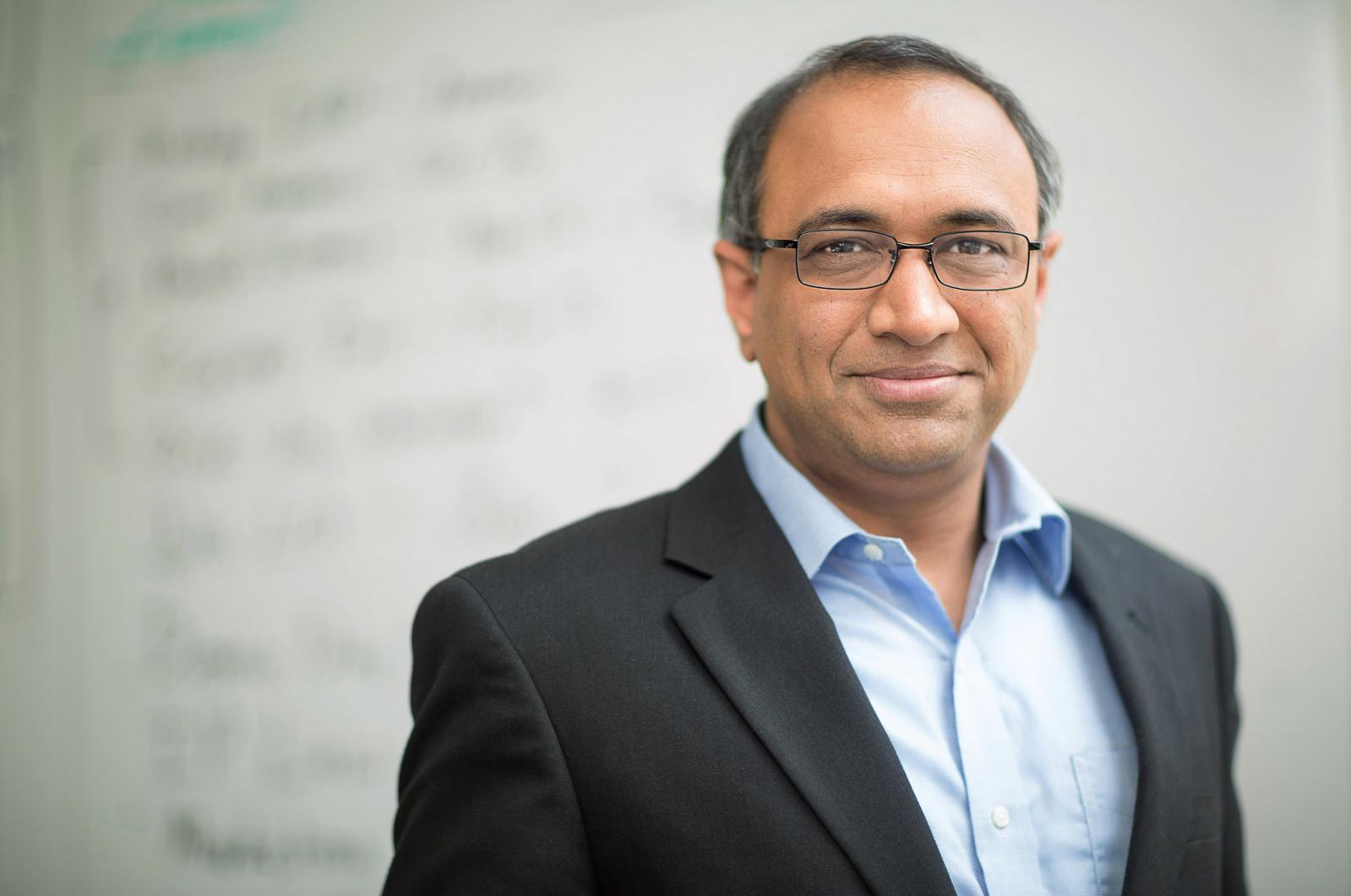
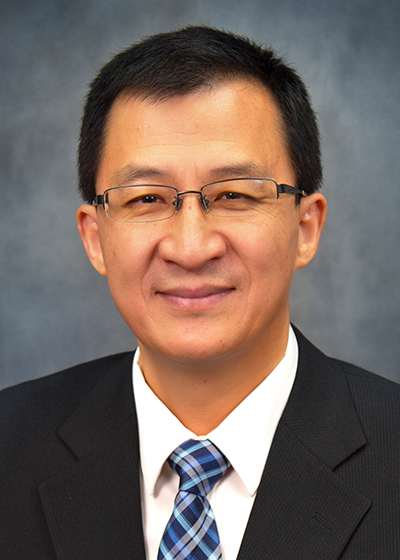
Michael Apuzzo is an Adjunct Professor of Neurological Surgery at Weill Cornell Medical College since 2016, with a career spanning over four decades in neurosurgery and radiosurgical innovation. He holds an M.D. from Boston University School of Medicine (1965) and a B.A. from Yale University (1961) . His research focuses broadly on stereotactic radiosurgery , brain tumors , epilepsy , neurosurgical history , and emerging technologies in neurosurgery . His work bridges clinical practice with futuristic concepts in nanoneurosurgery , robotic prosthetics , and molecular neurosurgery . Publications reveal trends in radiosurgical treatment optimization , neuroimaging advancements , and historical evolution of neurosurgical tools . He has contributed extensively to debates on surgical ethics, medical modernity, and global neurosurgical accessibility.
Jing-Rebecca Li is a Professor and Research Scientist at ENSTA Paris, affiliated with the Applied Mathematics Unit (UMA) and INRIA Saclay as part of the IDEFIX research team. Her work bridges advanced mathematical techniques with medical imaging applications, particularly in diffusion MRI. She maintains a dual affiliation between ENSTA Paris, a leading engineering school in France, and INRIA, the French national research institute for digital science and technology. HDR (Habilitation à Diriger des Recherches) in Mathematics, Université Paris-Sud, 2013 Ph.D. in Mathematics, Massachusetts Institute of Technology, 2000 B.Sc. in Mathematics, University of Michigan, 1995 Dr. Li's research focuses on developing sophisticated numerical methods to solve partial differential equations with applications in diffusion magnetic resonance imaging. Her work spans brain and cardiac imaging, numerical linear algebra, machine learning algorithms for inverse problems in PDEs, and natural language processing tools. She has pioneered approaches to simulate diffusion MRI signals in complex biological tissues, enabling more accurate interpretation of imaging data for neuroscience and cardiology applications. Her research has significant implications for understanding brain microstructure and cardiac tissue organization through non-invasive imaging techniques. Her recent publications demonstrate a clear trend toward increasingly sophisticated modeling of biological tissues, with growing emphasis on cardiac applications alongside her foundational work in brain imaging. She has developed robust computational frameworks that incorporate permeable interfaces, geometrical deformations, and realistic neuronal geometries to better simulate diffusion MRI signals. Her work increasingly integrates machine learning with traditional numerical methods, creating hybrid approaches that leverage the strengths of both paradigms for microstructure estimation. Householder Prize for the best dissertation in Numerical Algebra (2002) Dr. Li has supervised numerous doctoral students across multiple institutions, with a focus on computational methods for diffusion MRI. Her current research is supported by significant grants including the Engineering for Health (E4H) interdisciplinary center project investigating biomarkers for Multiple Sclerosis through diffusion MRI (2023-2025). Previously, she led the ANR-funded SIMUDMRI project (2010-2014) and participated in the US-French Collaboration project on Computational Imaging of the Aging Cerebral Microvasculature (2013-2016). Her work demonstrates strong interdisciplinary collaboration between mathematics, computer science, and medical imaging communities. As leader of the IDEFIX research team at INRIA Saclay, Dr. Li directs a group focused on inversion methods for differential equations applied to imaging and physics problems. Her team has developed the SpinDoctor software package, a widely used MATLAB toolbox for diffusion MRI simulation that has become a standard tool in the field. The team maintains strong collaborations with Neurospin (CEA) and international research groups working on advancing diffusion MRI methodology and applications.
Dr. Maurice Rekrut is an Associated Member at the German Research Center for Artificial Intelligence (DFKI) in Saarbrücken, Germany, and part of the Ubiquitous Media Technology Lab (UMTL) at Saarland University. Based at the Saarland Informatics Campus, he conducts cutting-edge research at the intersection of neural engineering and interactive systems, with a focus on translating EEG-based discoveries into practical human-machine interfaces across diverse domains including autonomous vehicles and medical technology. His research centers on Human-Computer Interaction, Brain-Computer Interfaces, Neural Engineering, and Applied Machine Learning, with specialized expertise in silent speech recognition, intent detection, and adaptive interface design. He pioneers techniques for electrode reduction in EEG systems, transfer learning from overt to silent speech, and multimodal integration of physiological signals to overcome current BCI limitations. His work bridges theoretical neuroscience with real-world applications in neurosurgery, virtual reality, and public transport accessibility, emphasizing user-centered design to enhance system robustness and usability. Analysis of his 15 most recent publications (2020-2024) reveals a strategic shift toward deployable BCI solutions, characterized by three key trends: optimization of silent speech recognition through gamified training and transfer learning, hardware constraint reduction via electrode minimization, and multimodal data fusion (EEG/eye-tracking) for context-aware interaction. This trajectory demonstrates increasing focus on practical implementation challenges across autonomous driving, surgical robotics, and VR environments, moving beyond proof-of-concept toward clinically and industrially viable systems. Dr. Rekrut has mentored 14 graduate students through thesis supervision, guiding research on silent speech BCIs, EEG-based intent recognition, and VR neurofeedback applications. His advisees have produced significant work including automated BCI training frameworks, electrode reduction methodologies, and surgical microscope control systems. While specific grant details aren't provided, his research is institutionally supported by DFKI and Saarland University, with notable contributions to the Mobia project for inclusive public transport and collaborations on autonomous systems development. As a core member of the Ubiquitous Media Technology Lab within DFKI's Cognitive Assistants department, he collaborates in a multidisciplinary team exploring human factors in interactive systems. The lab's research ecosystem spans virtual reality illusions, haptic feedback systems, and sports technology, with recent achievements including IEEE VR best paper awards and novel toolkits for psychophysical experimentation. Current initiatives focus on perceptual detection thresholds for VR hand redirection and GPU-accelerated reinforcement learning frameworks.
Luca Mesin serves as an Associate Professor in the Department of Electronics and Telecommunications (DET) at Polytechnic University of Turin, where he is also a member of the Interdepartmental Center PolitoBIOMed Lab - Biomedical Engineering Lab. His academic appointment falls under the scientific disciplinary sector IBIO-01/A - Bioengineering within Area 0009 - Industrial and Information Engineering. Mesin's research spans multiple domains of biomedical engineering with particular expertise in biomedical signal processing. His primary research interests include brain-computer interfaces, electroencephalography (EEG), electrocardiography (ECG), magnetic resonance imaging (MRI), neuroscience applications, surface electromyography (EMG), and ultrasound imaging. His work focuses on developing innovative signal processing methods for medical diagnostics and human-machine interaction systems, with specific applications in neurological disorders, cardiovascular monitoring, and non-invasive patient assessment. His recent publications demonstrate a strong trend toward integrating machine learning with biomedical signal processing, particularly in EEG analysis for brain-computer interfaces and mental stress assessment. The research shows increasing emphasis on practical clinical applications, security aspects of neural interfaces, and development of non-invasive monitoring techniques for patient volume status and cardiovascular parameters. Best paper award of the 4th IET International Conference on Advances in Medical, Signal and Information Processing (MEDSIP 2008) SIAMOC Best Methodology Paper Award 2007 Featured article of Communications in Theoretical Physics for 2013 'Highlight Paper of the Year' by Computers in Biology and Medicine (2013) High score abstract at EuroEcho 2019 Mesin actively supervises multiple PhD students working on cutting-edge biomedical engineering projects including brain-to-brain communication, venous pulsatility analysis, and smart wearable technologies for stress monitoring. He leads significant research projects including PELVITRACK (2025-2029), funded by the European Innovation Council, and MACIVB (2020-2021), focusing on non-invasive vascular imaging techniques. His research has resulted in multiple patents related to biomedical devices and signal processing algorithms. As a key member of the Mathematical Biology and Physiology research group within DET, Mesin contributes to advancing the field through his leadership in the PolitoBIOMed Lab and through his editorial roles with journals including BIOENGINEERING, JOURNAL OF CLINICAL MEDICINE, and FRONTIERS IN PHYSIOLOGY.
Remigiusz Rak is a Professor at the Institute of the Theory of Electrical Engineering, Measurement and Information Systems within the Faculty of Electrical Engineering at Warsaw University of Technology. His research focuses on biomedical signal processing, brain-computer interfaces (BCIs), and emotion recognition systems. Specializes in EEG, ECoG, and EOG signal analysis Develops machine learning algorithms for physiological monitoring Works on real-time systems for fatigue detection and seizure prediction Research Trends : Recent publications demonstrate expertise in applying convolutional neural networks to BCI systems, developing novel methods for artifact removal in EEG signals, and creating multimodal emotion recognition frameworks combining eye-tracking and physiological data. With over 100 publications and 5 achievements documented, Professor Rak contributes to both academic research and educational innovation, including the SPRINT online learning model implementation at his university.
Alexandra Golby, MD is a Professor of Neurosurgery and Radiology at Harvard Medical School, and Haley Distinguished Chair in the Neurosciences at Brigham and Women's Hospital. She directs the Golby Lab, a surgical brain mapping laboratory focused on advanced imaging technologies for neurosurgical applications. Her clinical expertise centers on brain tumor and epilepsy surgery, with a focus on lesions near critical brain structures. Dr. Golby holds multiple leadership roles including Director of Image-guided Neurosurgery and Co-Director of AMIGO at Brigham and Women's Hospital. Her research integrates disciplines such as computer science, applied mathematics, and biomedical engineering to improve surgical planning and intraoperative decision-making. Notable innovations include technologies for real-time tumor resection monitoring and low-cost neuronavigation systems (e.g., NousNav) for low-resource settings. Dr. Golby completed her BA at Yale University and MD at Stanford University School of Medicine, followed by neurosurgery residency at Brigham and Women's Hospital. Dr. Golby's translational work emphasizes global health equity, including Fulbright-supported initiatives to develop locally adapted medical technologies in Rwanda and Morocco. Her research spans image-guided neurosurgery, brain-computer interface applications, and neuro-oncology advancements.
Dr. Jie Gu is an Associate Professor in the Department of Electrical and Computer Engineering at Northwestern University’s McCormick School of Engineering. His research focuses on energy-efficient computing architectures, machine learning accelerators, and AI-driven biomedical devices. Key areas include neuromorphic computing, edge computing systems, and hardware-software co-design for real-time applications. Education : Ph.D. Electrical and Computer Engineering (University of Minnesota), M.S. (Texas A&M University), B.S. (Tsinghua University) Labs : VLSI Research Lab His work emphasizes mixed-signal computing, with innovations in neural interface systems and physics-informed AI accelerators. Recent projects include headset-integrated brain-computer interfaces and scalable robotic control systems.
Dr. Oiwi Parker Jones is a Hugh Price Fellow in Computer Science at Jesus College, University of Oxford, and Principal Investigator leading the Parker Jones Neural Processing Lab (PNPL) at the Oxford Robotics Institute. Their research focuses on neural speech prosthetics, combining machine learning with neuroscience to develop technologies for speech restoration. They hold an honorary fellowship in the Nuffield Department of Clinical Neurosciences and teach in Engineering Science, Computer Science, and Neuroscience, including roles as a stipendiary lecturer in neuroscience and medical teaching at St Peter’s and Oriel Colleges. Jones’ work spans robotics, neural decoding, and endangered language preservation, with a particular emphasis on Hawaiian linguistics. Their lab develops large-scale machine learning methods for neural data analysis and collaborates on interdisciplinary projects involving clinical neuroimaging and AI ethics. Jones is also engaged in cultural preservation efforts through computational linguistics and has published widely on language contact, phonology, and indigenous protocols in technology. Education: Doctoral research in NLP and machine learning at Oxford Neuroscience training at UCL and Oxford Research Interests: Neural prosthetics, speech decoding, small-data machine learning, robotics, and endangered language preservation. Current projects include non-invasive brain-to-text systems, clinical fMRI applications, and computational tools for Hawaiian linguistic analysis. Teaching Contributions: Undergraduate lectures on generative deep learning and robotics, postgraduate supervision in DPhil projects across Engineering, Computer Science, and Neuroscience. Known for interdisciplinary teaching methods integrating neuroscience and AI. Awards & Recognition: No explicit awards listed, but recognized for innovative interdisciplinary research and leadership in neural engineering. Labs & Teams: Leads PNPL, collaborates with Oxford Robotics Institute and Applied Artificial Intelligence Lab. Active in global networks for clinical neuroimaging and indigenous AI ethics.
Sanjay Sarma is the Fred Fort Flowers (1941) and Daniel Fort Flowers (1941) Professor of Mechanical Engineering at MIT, currently on leave. He previously served as President, CEO and Dean of the Asia School of Business and as VP for Open Learning at MIT. Sarma co-founded the Auto-ID Center at MIT and developed key technologies behind the EPC suite of RFID standards used worldwide. He was also founder and CTO of OATSystems, acquired by Checkpoint Systems in 2008. Bachelor's Degree, Indian Institute of Technology (1989) Master of Engineering, Carnegie Mellon University (1992) Ph.D., University of California at Berkeley (1995) Professor Sarma's research spans multiple interdisciplinary fields with a focus on RFID, sensors, and Internet of Things technologies. His work in automotive and autonomous systems explores innovative applications of sensing technology. In augmented reality and brain-computer interfaces, he investigates novel human-machine interaction paradigms. His research in digital learning examines how technology can transform educational experiences at scale, with particular interest in university design and operations. Analysis of Professor Sarma's recent publications reveals a strong focus on integrating physical and digital systems. His work demonstrates increasing convergence between RFID technology, energy harvesting, and machine learning applications. Key themes include self-powered sensor networks, augmented reality interfaces for IoT devices, and security frameworks for connected systems. The research shows progression from foundational RFID work toward more complex integrated systems that combine sensing, computation, and communication. Scientific Awards NSF Career Initiation Grant (1997) Cecil and Ida Green Career Development Chair (1999) Den Hartog Teaching Excellence Award (2001) Joseph H. Keenan Award for Innovation in Undergraduate Education (2002) MacVicar Fellowship (2008) Industry Recognition Information Week's Innovators and Influencers (2003) Business Week's e.biz 25 Innovators (2003) New England Business and Technology Award (2005) MIT Global Indus Award (2005) Fast Company Magazine's "Fast 50" (2005) Boston Magazine's 40 under 40 (2006) RFID Journal Special Achievement Award (2010) Professor Sarma has advised numerous doctoral and master's students, though specific names are not listed in the available information. His grant portfolio includes significant funding from the National Science Foundation and industry partnerships. He serves on the boards of GS1US and Hochschild Mining, and advises several startup companies including Top Flight Technologies. His research has been supported by both government agencies and industry collaborators interested in RFID, IoT, and digital learning applications. Sarma leads research in the Auto-ID Labs, which he co-founded, focusing on RFID and sensor technologies. He has also been involved with the Office of Digital Learning at MIT and edX. His work extends to developing world applications through projects focused on low-cost sensing solutions. The research environment he has cultivated brings together electrical engineers, computer scientists, and mechanical engineers to tackle interdisciplinary challenges in sensing and connectivity.
Chaomin Luo is an Associate Professor in the Department of Electrical & Computer Engineering at Mississippi State University (MSU), part of the Bagley College of Engineering. His research focuses on Robotics, Autonomous Systems, Computational Intelligence, Machine Learning, Control Systems, and Embedded Systems. He holds a Ph.D. from the University of Waterloo, Canada (Electrical and Computer Engineering), an M.Sc. from the University of Guelph (Engineering Systems and Computing), and a B.S. from Southeast University, China (Electrical Engineering). His work emphasizes bio-inspired algorithms for robot navigation, graph-based path planning, and human-autonomy teaming. Notable contributions include models for integrated robotic systems, underwater vehicle navigation, and safety-aware crowd-avoidance systems. He also develops pedagogical methods to enhance student learning in robotics and computer engineering topics like MIPS instruction set design and datapath optimization. Research highlights include: Autonomous systems integration with cognitive mapping and digital twin technology Multi-agent navigation algorithms using RRT*-smart and simulated annealing approaches Process monitoring via low-rank projections and fractal analysis Brain-computer interfaces for unmanned vehicle control His teaching responsibilities include courses related to embedded systems (VLSI/FPGA design) and robotics. His research has been published in over 50 peer-reviewed articles since 2018, with a focus on sustainable manufacturing systems, bio-inspired intelligence applications, and mechatronic systems optimization.
Dr. Max Pandit is a Senior Lecturer in Computer Game Design at Teesside University's Department of Computing & Games. He holds a PhD in applied artificial intelligence for biomedical signal processing from Northumbria University (2017). His expertise spans machine learning, AI in games, evolutionary optimization, and biomedical applications. He specializes in integrating Unreal Engine and visual scripting for game development. Research Interests include Machine Learning , AI-driven Game Development , Biomedical Signal Processing , and Deep Learning . His work explores applications such as brain-computer interfaces and ensemble models for medical signal analysis. Recent projects include: Visual Machine Learning Plugin for Unreal Engine 4 (2024, ongoing) Play2Secure: AI-enabled cybersecurity awareness game (2019) HackEscape : Cybersecurity awareness using serious games (2021) Collaborations focus on virtual training environments, digital twins, and procurement optimization in industry. He has led or co-led 5 funded research projects totaling over £1.5M in external funding.
Victoria Chester is Full Professor and Co-Director of the Andrew and Marjorie McCain Human Performance Laboratory at the University of New Brunswick's Faculty of Kinesiology. She holds a Ph.D. in Mechanical Engineering from UNB with specialization in biomechanics. Research programs focus on clinical biomechanics across the lifespan, particularly: Multisegment foot and upper extremity mechanics Machine learning applications for gait classification Wearable sensor development for mobility assessment Rehabilitative strategies for neuropathic conditions Diabetes-related mobility impairments Laboratory resources include 12-camera Vicon motion capture, force plates, EMG systems, and pressure mapping technology supporting gait analysis and movement studies.
George Vincent Kondraske is a Research Professor in Electrical Engineering and Bioengineering at the University of Texas at Arlington (UTA), where he has served since 1982. He is also the founding director of UTA’s Human Performance Institute and holds adjunct roles at multiple institutions. His expertise spans human performance measurement, biomedical instrumentation, and systems engineering. Education: PhD (1982), MS (1980), and BS (1978) in Biomedical/Electrical Engineering from UTA/UT Southwestern and University of Rochester. Affiliations: Texas Center for Performing Arts Medicine, Human Performance Measurement, Inc., and multiple medical centers. Research focuses on General Systems Performance Theory (GSPT), predictive analytics, and web-based tools like RC21X for cognitive/neuromotor assessment. His work is supported by NIH, NASA, and industry grants totaling over $2M. He has authored 250+ publications and holds several patents. Key contributions include the Elemental Resource Model (ERM) for human performance and Nonlinear Causal Resource Analysis (NCRA). Awards include the IEEE Early Career Award and Becton-Dickinson Career Achievement Award. Grants span robotics, laparoscopic surgery, and athlete performance. He advises on human-system integration and has pioneered wearable sensors for medical applications. Labs/teams include the Human Performance Institute and collaborations with UNT School of Music and Presbyterian Hospital labs.
Dr. Usman Adeel is an Associate Professor in Computer Science at Teesside University, specializing in Distributed Sensing Systems, IoT, and Smart Cities. He holds a PhD in Computing from Imperial College London (thesis: "Socio-economic aware data forwarding in mobile sensing networks and systems"). Previously, he worked as a Research Scientist at Intel Labs Europe (ICRI for Sustainable Connected Cities) and as a Research Associate at Imperial College London. His research focuses on Mobile Sensing, Low Power Networks, and Cyber-physical Systems. Recent work includes energy-efficient routing protocols for wireless sensor networks and intrusion detection systems for SDN-based VANETs. He leads the DUR007 project on Sustainable Drainage Systems innovation, emphasizing system innovation and water management. Key contributions span cybersecurity (e.g., IP camera vulnerability analysis) and biomedical applications (EEG-based brain-computer interfaces). No scientific awards are explicitly mentioned. He has supervised 2 academic works and collaborates widely in IoT, smart cities, and network security domains.
Oana Mitruț is an Associate Professor at the Polytechnic University of Bucharest, affiliated with the Department of Computer Science in the Faculty of Automatic Control and Computers. Her research focuses on virtual reality therapy, machine learning applications in healthcare, and accessibility technologies for visually impaired individuals. She has collaborated extensively on projects such as the 'Sound of Vision' initiative, exploring audio-haptic interfaces for navigation and sensory substitution. Her work integrates computational methods with clinical applications, including emotion recognition systems using biophysical signals and adaptive exposure therapy for phobias like acrophobia. She has published widely in journals like Sensors and Symmetry , as well as conferences such as EDULEARN and CHI. Her contributions address challenges in human-centered design for medical VR systems and gamification approaches to improve accessibility. Key areas of investigation include: Machine learning models for fear level detection Audio-based navigation systems for visually impaired users Therapeutic game design for mental health interventions Integration of multimodal feedback in assistive technologies Her research bridges computer science, neuroscience, and clinical practice, emphasizing real-world applications in healthcare and accessibility.