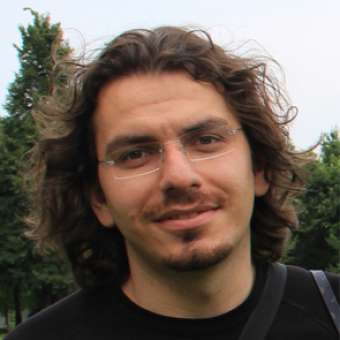
Neslihan Serap Şengör is a Professor at the Department of Electronics and Communication Engineering, Istanbul Technical University . Her work bridges Artificial Intelligence , Neuroscience , and Circuits and Systems Theory . Research areas include: Neuromorphic computing with Intel Loihi Basal ganglia and motor control modeling Spiking neural networks for hardware Cognitive process simulation Projects focus on: Hardware implementation of motor learning Computational models for Parkinson's disease Cortex structure simulation on neuromorphic chips Contact: sengorn@itu.edu.tr
Assoc. Prof. Berna KİRAZ holds a position at the Faculty of Engineering, Department of Artificial Intelligence and Data Engineering at Fatih Sultan Mehmet Vakıf University. She earned her BA in Mathematics from Ege University (2004), MA in Computer Engineering from Marmara University (2008), and PhD in Computer Engineering from Istanbul Technical University (2014), followed by postdoctoral research at Michigan State University (2014-2015). Her research focuses on meta-heuristics, optimization problems, and deep learning applications in medical imaging. Key academic roles include: Research Assistant at Marmara University (2007-2017) Assistant Professor at FSMVU (2017-2024) Elevated to Associate Professor in 2024 via university board decision Research interests span: Single/multi-objective optimization Deep learning in medical image segmentation Neural architecture search Meta-heuristic algorithm development Notable awards include the ISDA 2010 Best Paper Award and TÜBİTAK scholarships. She leads the ODESA-LAB, focusing on optimization and deep learning, and has advised multiple master's and doctoral students. Current projects involve low-cost microscopy systems and photonics filter design.
Yuksel Cakir is an Associate Professor in the Department of Electronics and Communication Engineering at Istanbul Technical University. His research integrates electrical engineering principles with neuroscience and biomedical applications, focusing on computational modeling of brain dynamics in neurodegenerative diseases such as Parkinson’s and Alzheimer’s. Position: Associate Professor Institution: Istanbul Technical University Department: Electronics and Communication Engineering Location: ITU Ayazaga Campus, Istanbul, Turkey Email: cakiryu@itu.edu.tr ORCID: https://orcid.org/0000-0002-4238-8504 His primary research interests include computational neuroscience, neural synchronization, basal ganglia dynamics, alpha rhythm abnormalities, and the application of optimization methods in both biomedical and materials engineering. He employs hybrid computational models to study low-frequency fluctuations in Alzheimer’s and synchronization in Parkinson’s disease. Additionally, he applies genetic algorithms to parameter estimation in thermoplastic and epoxy resin modeling, demonstrating interdisciplinary expertise. The most recent articles highlight a strong trend in integrating neuroscience with engineering: computational modeling of neural activity in Parkinson’s and Alzheimer’s diseases, analysis of thalamocortical rhythms, and optimization techniques in materials science. His work bridges neural electrophysiology with machine learning-inspired optimization, showing a dual focus on biomedical and mechanical applications. He received a publication incentive award from Istanbul Technical University on June 1, 2018, recognizing his scholarly output. This award was shared across academic networks and cited in peer review platforms, indicating institutional and academic visibility. There is no public information regarding student mentorship, grant funding, or leadership in specific research labs or teams. However, his consistent publication record and interdisciplinary approach suggest active research engagement. He has no listed former affiliations or part-time status, indicating a full-time, current faculty role.
Prof. Dr. Bilge Yıldız is a Professor of Nuclear Energy and Materials Sciences at MIT, holding the Breene M. Kerr (1951) Chair. Her research focuses on next-generation electrochemical devices for energy conversion and information processing, including solid oxide fuel cells, electrolytic water splitting, and ionic computer systems. She leads the Electrochemical Interfaces Laboratory at MIT. Education: Bachelor's in Nuclear Energy Engineering, Hacettepe University Master's in Nuclear Science and Engineering, MIT PhD in Electrochemical Engineering for Nuclear Energy Systems, MIT Research Interests: Molecular mechanisms of oxygen reduction, ion diffusion in mixed ionic-electronic oxides, and the impact of surface chemistry, strain, and electric fields on material performance. Combines computational modeling with in situ spectroscopy for material design. Awards & Recognition: Recipient of prestigious awards such as the Koç Medal of Science (2022), Tobias Young Investigator Award, and multiple international collaboration awards Member of the Royal Society of Chemistry and American Physical Society Leadership & Service: Vice President/President of International Society for Solid-State Ionics Editorial board member of Physical Review Materials , Journal of Physics: Energy , and Energy & Environmental Science Labs & Teams: Director of MIT's Electrochemical Interfaces Laboratory, contributing to the MIT Future Energy Systems Center and Quest for Intelligence initiatives.
Evren Dağlarlı is an Associate Professor in the Department of Computer Engineering at the Faculty of Computer and Informatics, Istanbul Technical University. He holds a Ph.D. in Control and Automation Engineering from ITU and has extensive experience in robotics, artificial intelligence, and intelligent systems. He is actively involved in research projects and has published in top-tier IEEE conferences and journals. Ph.D., Control and Automation Engineering, Istanbul Technical University (2008–2019) M.Sc., Mechatronics Engineering (Intelligent Systems and Robotics), Istanbul Technical University (2005–2007) B.Sc., Electrical Education, Marmara University (2000–2004) B.Sc., Electrical-Electronics Engineering, Ege University (2021–2023) His research focuses on robotics, artificial intelligence, human-robot interaction, cognitive neuroscience, and machine learning . He develops brain-inspired cognitive architectures and applies them to humanoid robots and autonomous systems. His work integrates deep learning, personality modeling, and explainable AI to enhance intelligent behavior in machines. Recent publications highlight a strong trend in generative AI, personality-integrated language models, UAV design, and computational cognitive modeling . His work bridges neuroscience and AI, aiming to create more adaptive, self-aware, and explainable robotic systems. He frequently collaborates with E. Aribas on topics ranging from UAVs to AI-driven personality modeling. Yenilikçilik Ödülü (Innovation Award), Istanbul Technical University, 2024 He has supervised students and co-authored multiple papers with advisees. He has participated in national and international research projects, including the Gökbörü Alemdar Savaşan İHA Projesi (2024–2025). His technical expertise includes ROS, embedded systems, real-time operating systems, and AI frameworks. He is a member of IEEE, ACM, and ASME and actively contributes to the advancement of intelligent systems through research, development, and academic mentorship.
Dr. İsmail AKTÜRK serves as an Assistant Professor in the Computer Science Department within Ozyegin University's Faculty of Engineering. Previously, he held an Assistant Professor position at the University of Missouri - Columbia's Department of Electrical Engineering and Computer Science for four years. His academic foundation includes a Ph.D. in Electrical and Computer Engineering from the University of Minnesota, Twin Cities. Education: Ph.D. in Electrical and Computer Engineering, University of Minnesota, Twin Cities, 2017 M.S. in Computer Engineering, Bilkent University, 2013 M.S. in Electrical Engineering, Louisiana State University, 2009 B.S. in Computer Engineering, Doğuş University, 2007 Dr. AKTÜRK's research centers on Computer Architecture with specialized expertise in brain-inspired computing and neuromorphic systems . He pioneers unconventional computing paradigms that integrate memory and processing units to eliminate energy-intensive data transfers inherent in traditional von Neumann architectures. His work employs hardware/software co-design methodologies to enhance energy efficiency for data-intensive applications like deep learning through spatial and temporal approximations. He directs the Computer Architecture and System Technologies Lab, where his research group develops application-specific systems exploiting novel devices and algorithmic advancements. Dr. AKTÜRK actively mentors graduate students in creating energy-efficient computing solutions for emerging computational challenges.