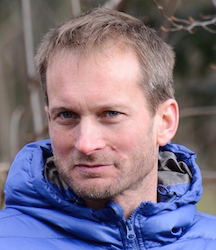
Pascal Frossard is a Full Professor at the Department of Electrical Engineering in the School of Engineering (STI) at EPFL, with a courtesy appointment in the School of Computer and Communication Sciences. He founded and directs the LTS4 laboratory since 2003, co-leads the EPFL AI Center and Swiss Data Science Center, and serves as Associate Dean for Research at STI. Research Focus: Machine Learning, Graph Signal Processing, AI Applications in Healthcare, Computer Vision Academic Leadership: IEEE Fellow, ELLIS Fellow, Conference Chair roles Key Projects: Digital Pathology for Oncology, Cardiac Digital Twins, Robust Machine Learning Research Interests: His work bridges signal processing, machine learning, and applied mathematics, emphasizing biomedical applications. Recent research includes adversarial robustness in classifiers, network representation learning, and 360-degree video analysis. Scientific Awards: IEEE Fellow ELLIS Fellow Leadership in IEEE technical committees Advising & Grants: Supervised 20+ PhD students and postdocs. Secured major grants from PHRT, Hasler Foundation, FNS-Sinergia, Armasuisse, Google, and Cisco.
Ole Winther is Professor in High dimensional biological data analysis/Machine learning at the Department of Biology, University of Copenhagen and Professor in Data science and complexity at DTU Compute, Technical University of Denmark. He serves as CRO and co-founder of raffle.ai, CTO and co-founder of FindZebra, Head of ELLIS Unit Copenhagen, and co-PI of the Machine Learning for Life Science Center. His research spans Bioinformatics , Machine Learning , and AI for Science , focusing on applying deep learning to biological sequence analysis, latent variable models, and medical NLP. Winther's work develops predictive and generative models for bioinformatics, with significant contributions to protein localization tools (SignalP, DeepLoc, DeepTMHMM), single-cell genomics, and novel deep learning architectures like variational autoencoders and diffusion models. Analysis of Winther's recent publications (2023-2025) reveals a strong trend toward integrating protein language models with traditional bioinformatics approaches and applying diffusion models to scientific problems. His work bridges theoretical machine learning advancements with practical applications in biology and medicine, particularly in protein sequence analysis, medical search engines, and scientific simulation acceleration. Winther currently supervises a diverse research group including Panagiotis Antoniadis, Rachael M. DeVries, Jun Wang, Beatrix M. G. Nielsen, Felix G. Teufel, Irene R. Rodriguez, Anders Christensen, and Christopher Heje Grønbech. His former students have established successful careers at institutions including Google, Apple, and various startups, with notable alumni like Casper Sønderby (Google Brain) and Søren Sønderby (Apple). He leads significant research initiatives including the ELLIS Unit Copenhagen and the Machine Learning for Life Science Center, while maintaining active industry partnerships through his co-founded companies raffle.ai (enterprise search using NLP) and FindZebra (search engine for rare diseases). His teaching includes Deep Learning courses at both DTU (02456) and University of Copenhagen (NDAK24002U).
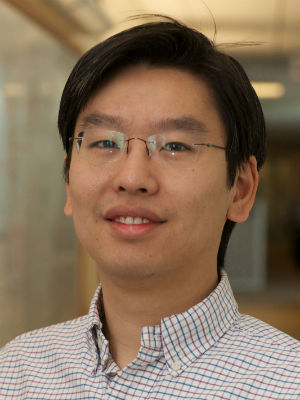
Harris H. Wang is an Associate Professor in the Department of Systems Biology and Department of Pathology and Cell Biology at Columbia University's Vagelos College of Physicians and Surgeons, where he also serves as Interim Chair of Systems Biology. He is affiliated with the Center for Computational Biology and Bioinformatics (C2B2) and the Integrated Program in Cellular, Molecular and Biomedical Studies (CMBS). B.S., Physics and Mathematics, MIT Ph.D., Biophysics, Harvard University Dr. Wang's research lies at the intersection of systems and synthetic biology, focusing on developing foundational technologies for genome engineering, microbiome manipulation, and synthetic genomics. His lab pioneers methods such as MAGE, MAGIC, CAST, and CAMII to enable high-throughput genetic manipulation, in situ microbiome engineering, and AI-driven microbial culturomics. Key research themes include understanding microbial community dynamics, engineering cellular memory systems, designing biocontained genetic circuits, and applying synthetic biology to human health challenges in personalized medicine and infectious disease. His recent publications reveal a strong trend in spatial and functional metagenomics, CRISPR-based microbiome editing, and synthetic biology tools for data storage and genetic stability. The articles span high-impact journals like Nature , Science , and Nature Biotechnology , reflecting his leadership in developing scalable, programmable biological systems. Scientific Awards: NIH Director’s Early Independence Award Forbes 30 Under 30 in Science Sloan Research Fellowship NSF CAREER Award ONR Young Investigator Award Burroughs Wellcome Fund PATH Award Schaefer Scholar Blavatnik National Award Vilcek Prize PECASE Dr. Wang has advised numerous PhD and postdoctoral researchers, many of whom have gone on to independent scientific careers. His lab is supported by major grants from NIH, NSF, DARPA, DOE, and foundations including the Bill & Melinda Gates Foundation and CZ Biohub NY. He is actively involved in educational initiatives, including organizing Columbia’s iGEM team and the Cold Spring Harbor Laboratory Synthetic Biology course. The Wang Lab is based at the Columbia University Irving Medical Center and is part of national consortia such as the Engineering Biology Research Consortium (EBRC) and the Genome Project-Write (GP-Write) initiative. The lab develops and applies cutting-edge technologies in automation, machine learning, and synthetic biology to engineer microbiomes for applications in medicine, global health, and climate change.
Hauke Smidt is a Personal Professor at Wageningen University & Research, affiliated with the Molecular Ecology group within the Faculty of Veterinary Medicine and Animal Sciences. His research focuses on microbial ecology, particularly gut microbiota dynamics, antibiotic resistance, environmental microbiology, and the One Health framework. Smidt has supervised over 50 PhD students and contributed to 519 publications, including studies on microbiome resilience, fermented food impacts, and bioremediation strategies. Education and affiliations include leadership roles in projects addressing antimicrobial resistance, pig health, and drinking water microbiology. His work spans collaborations across Europe and Asia, with notable contributions to understanding microbial community responses to environmental stressors and dietary interventions. Smidt is actively involved in public outreach, as seen in media contributions discussing microbiome research and health benefits. Key projects include aquifer treatment for drinking water, microbiome simulation models, and combating plant pathogens. His awards and recognition are not explicitly listed, but his extensive publication record and project leadership highlight significant academic impact.
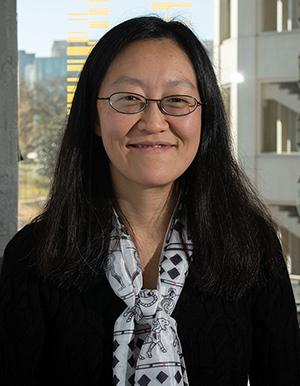
Hang Lu is a Professor and holds the Cecil J. "Pete" Silas Chair of Chemical & Biomolecular Engineering at the Georgia Institute of Technology. Dr. Lu also holds a Love Family Professorship and leads the Lµ Fluidics Group, which focuses on engineering microfluidic systems and machine learning tools to address complex questions in neuroscience, developmental biology, and cell biology that are difficult to address with conventional techniques. Dr. Lu's research lies at the intersection of engineering and biology, with primary interests including: Microfluidic systems for high-throughput screens and image-based genetics and genomics Systems biology: large-scale experimentation and data mining Microtechnologies for optical stimulation and optical recording Big data, machine vision, and automation Developmental neurobiology, behavioral neurobiology, and systems neuroscience Cancer biology, immunology, embryonic development, and stem cells Her laboratory engineers microfluidic devices and BioMEMS to study neuroscience, genetics, cancer biology, and biotechnology. These miniaturized Lab-on-a-chip tools operate at scales comparable to biological systems, leveraging unique micro and nano-scale phenomena to gather large-scale quantitative data about complex biological systems. Current projects include Microfluidics for Life Sciences, Optical Neuron Recordings and Manipulations, Machine Learning Tools for Neuroscience, Measuring and Modeling Behavior, and High-throughput, High-content Cell-based Assays. Analysis of Dr. Lu's recent publications (2024-2025) reveals a strong trend toward integrating microfluidics with advanced computational methods: Development of deep learning frameworks for biological image analysis Advanced neuron tracking and functional imaging techniques Non-invasive characterization of 3D organoid cultures Sophisticated neuromechanical modeling of locomotion Microfluidic temperature control systems for in vivo studies Label-free imaging pipelines for neural development Dr. Lu's significant professional honors include: Cecil J. "Pete" Silas Chair of Chemical & Biomolecular Engineering Love Family Professorship The Lµ Fluidics Group actively mentors students and postdocs, currently accepting new postdoctoral researchers. The lab receives substantial funding for interdisciplinary projects at the engineering-biology interface, with research implications spanning fundamental biological understanding to therapeutic development. The group operates within Georgia Tech's School of Chemical & Biomolecular Engineering, with specialized facilities for microfluidic device fabrication, biological experimentation, and advanced imaging, maintaining strong collaborative ties across engineering, neuroscience, and biological disciplines.
Syed Hani Hassan Abidi is an Associate Professor at the Department of Biomedical Sciences , School of Medicine , Nazarbayev University , Kazakhstan. His research integrates virology , immunology , viral oncology , and bioinformatics , with a focus on HIV molecular epidemiology , viral evolution , and drug resistance . He has led international projects across Pakistan, Kenya, Afghanistan, and Kazakhstan, and is recognized for innovative teaching and MOOC development. Education: PhD in Virology and Immunology Research Interests: His laboratory employs bioinformatics (machine learning, AI), genomics , and proteomics to study HIV phylodynamics , viral co-infections , and oncogenic viruses like EBV in prostate cancer. He also explores microbiome-immunity interactions and designs antiviral drugs/vaccines . Recent Research Trends: His 2025 publications emphasize COVID-19 immunopathology , HIV/syphilis epidemiology in Pakistan , and particle physics contributions via ATLAS , showcasing interdisciplinary impact. Awards & Recognition: Outstanding Teachers Award (2019, Aga Khan University) Fellowship of Higher Education (UK, 2022) Teaching & Grants: He pioneered Pakistan’s first MOOC on Computer-Based Drug Discovery (2014) and received a 2022 SoTL grant for MOOC-based molecular biology education. His teaching integrates animations , films , and flipped classrooms . Collaborations & Labs: Leads projects on HIV drug resistance , HCV genomics in Kazakhstan , and AI-driven dementia diagnostics (Kazakh Brain Atlas). His lab collaborates with global institutions to advance viral disease surveillance and therapeutic innovation .
Pierre Vandergheynst is a Full Professor at the Swiss Federal Institute of Technology Lausanne (EPFL) in the Department of Electrical Engineering, with a courtesy appointment in Computer and Communication Sciences. He serves as EPFL’s Vice-Provost for Education since 2015 and leads the Signal Processing Laboratory 2 (LTS2). His research spans harmonic analysis, sparse approximations, mathematical data processing, and applications in signal/image processing, computer vision, machine learning, and graph-based data analysis. PhD in Mathematical Physics (1998), Université catholique de Louvain Postdoctoral Researcher at EPFL (1998-2001) Assistant Professor at EPFL (2002-2007) His research explores geometry/symmetry in high-dimensional data, redundant dictionaries for dimensionality reduction, and computational harmonic analysis on manifolds. Recent work focuses on protein structure modeling, geometric deep learning, and graph-based signal processing. Key article trends include graph neural networks for protein analysis, geometric deep learning in neuroscience, and structured knowledge priors in neural models. His 2023-2025 publications emphasize interpretable AI, long-range dependencies in graphs, and molecular representation learning. Scientific Awards: IEEE Signal Processing Magazine Best Paper Award (2023) Signal Processing Society Best Paper Award (2022) Apple ARTS Award (2007) De Boelpaepe Prize, Royal Academy of Sciences of Belgium (2009-2010) He has supervised over 30 PhD theses and contributed to foundational work in graph signal processing, compressive sensing, and geometric deep learning. His lab develops tools for data science on non-Euclidean structures, with applications in medicine, astronomy, and wireless systems.
Alexis Battle is an Associate Professor at Johns Hopkins University with appointments in Biomedical Engineering , Computer Science , and Genetic Medicine (secondary). She directs the Malone Center for Engineering in Healthcare and serves as Deputy Director of the Data Science and AI Institute . Educated at Stanford University (PhD in Computer Science, 2013), Battle transitioned to academia after leadership roles at Google. Research Focus: Battle’s work bridges genomics and machine learning , emphasizing the impact of genetic variation on human health. Her lab develops tools like Watershed to predict functional effects of rare variants, aiming to enhance rare disease diagnosis. Key themes include non-coding DNA analysis , personalized genomics , and systems biology , with applications in cardiovascular disease and neurodegenerative disorders . Publications & Awards: Over 60 peer-reviewed articles in journals like Nature , Science , and Genome Biology , with recent emphasis on single-cell transcriptomics , multiomics integration , and telomere biology . Recipient of the President’s Frontier Award (2022), Microsoft Investigator Fellowship (2019), and Searle Scholar (2016). Scientific Awards: 2022 President’s Frontier Award 2019 Microsoft Investigator Fellowship 2019 Johns Hopkins Discovery Award 2017 Johns Hopkins Catalyst Award 2016 Searle Scholar Advising & Funding: Mentors 11 PhD students, 3 undergraduates, and postdoctoral fellows. Her research is funded by NIH, Searle Scholars, and institutional grants. The Battle Lab collaborates on projects like the GTEx Consortium , focusing on gene regulation and clinical genomics .
Christopher Kanan is a tenured Associate Professor of Computer Science at the University of Rochester, leading the AI Initiative within the Hajim School of Engineering & Applied Sciences. He holds secondary appointments in Brain and Cognitive Sciences, the Goergen Institute for Data Science and AI (GIDS-AI), and the Center for Visual Science. His research focuses on deep learning systems for artificial general intelligence (AGI), including continual learning, medical computer vision, and visual question answering. Previously, he was an Associate Professor at RIT’s Carlson Center for Imaging Science and a leader at Paige.AI, contributing to the FDA-cleared Paige Prostate system. Kanan earned his PhD from UC San Diego, completed postdoctoral work at Caltech, and worked at NASA JPL. Education: PhD in Computer Science, UC San Diego MS in Computer Science, University of Southern California Bachelor’s in Philosophy and Computer Science, Oklahoma State University Research Interests: Kanan’s work spans foundational AI capabilities like continual learning, medical imaging (pathology and radiology), multi-modal reasoning, and cognitive science-inspired models. His lab develops bias-robust AI systems and applies deep learning to healthcare and fusion research. Articles Trends: His recent work emphasizes out-of-distribution generalization, foundation models in pathology, and stability in continual learning. Key themes include AI applications in healthcare, model robustness, and neuroscience-inspired algorithms. Awards: NSF CAREER Award Senior Member, AAAI and IEEE DoE and NSF grants totaling $5M+ DARPA/ARL awards Advising & Grants: Mentored over 10 PhD students, including Robik Shrestha and Usman Mahmood. Secured grants for AI in nuclear fusion and medical imaging. Led RIT’s Center for Human-aware AI (CHAI) as Associate Director. Labs & Teams: Heads the University of Rochester AI Initiative, collaborates with Paige.AI, and leads teams advancing AI in pathology and robotics. His lab’s KLab (klab.cis.rit.edu) focuses on vision and learning systems.
Andre Levchenko is the John C. Malone Professor of Biomedical Engineering at Yale University, with secondary appointments in the Department of Neurosurgery and affiliations with the Cancer Signaling Networks, Immunology, and the Yale Program in Neurodevelopment and Regeneration. His research focuses on systems biology, signal transduction, and cell-cell communication, utilizing microfluidics and computational modeling to study cancer progression, stem cell behavior, and neurological disorders. PhD, Columbia University MEng, Moscow Institute of Physics and Technology Levchenko's work explores how cells process dynamic signals to make critical decisions, particularly in glioblastoma migration, organoid development, and cardiovascular tissue engineering. His lab develops innovative microfluidic platforms and mathematical models to dissect multicellular communication and signaling networks. Recent publications highlight his contributions to understanding YAP-driven cancer invasion , NOTCH signaling in angiogenesis , and metabolic regulation of hypoxia responses . He has pioneered methods for organoid modeling and single-cell analysis , advancing precision in biological signaling studies. Scientific Awards : Computational Molecular Biology Post-Doctoral Fellowship (Burroughs Wellcome Fund) National Academies Keck Futures Conference Invitee Distinguished Guest Lecturer, University of Virginia American Asthma Foundation Early Excellence Award Fellow, American Institute for Medical and Biological Engineering Levchenko leads the Levchenko Lab at the Yale Systems Biology Institute, collaborating with institutions like Mayo Clinic and Yale Cancer Center. His research has received recognition in Faculty of 1000 and multiple journal highlights.
Thibault Mayor is a Professor in the Department of Biochemistry and Molecular Biology and the Michael Smith Laboratories at the University of British Columbia (Vancouver). His research focuses on understanding how cells manage misfolded proteins, with implications for neurodegenerative diseases like Parkinson's and Alzheimer's. He holds academic affiliations with the Centre for High-Throughput Biology (CHiBi) and has been recognized with awards including the UBC Killam Teaching Award (2020). Education: BSc, University of Geneva, Switzerland (1997) PhD, University of Geneva & Max Planck Institute of Biochemistry, Germany (2001) Postdoctoral Fellow, California Institute of Technology (2002) Research Interests: Mayor's lab investigates protein homeostasis, ubiquitin-proteasome system dynamics, and the molecular mechanisms underlying protein aggregation in aging and disease. Projects include proteomic approaches to identify aggregation-prone proteins and develop microbial cell factories for protein production. Grants & Awards: CIHR Project Grant ($730K, 2018) Michael Smith Foundation Career Award (2012) UBC Killam Teaching Award (2020) Labs & Collaborations: The Mayor Lab is part of the Michael Smith Laboratories and collaborates with computational biologists like Jörg Gsponer. They maintain active partnerships in proteomics and systems biology, contributing to initiatives like the BC Proteomics Network.
Hyunghoon Cho is an Assistant Professor at Yale School of Medicine in the Department of Biomedical Informatics & Data Science, with a secondary appointment in the Department of Computer Science. He received his PhD in Electrical Engineering and Computer Science from MIT (2019) and MS/BS in Computer Science from Stanford University (2013). His research focuses on computational challenges in biomedical data privacy, single-cell genomics, and network biology. Assistant Professor (Primary): Biomedical Informatics & Data Science Assistant Professor (Secondary): Computer Science Appointments: Yale School of Medicine | Broad Institute (Schmidt Fellow) Research Themes: Privacy-Enhancing Technologies for genomic and health data Scalable AI/ML tools for omics data analysis Structured biological modeling for system-level discovery His work includes secure GWAS, transcriptomic privacy assessment, and sfkit - a federated genomic analysis toolkit. He received the NIH Director's Early Independence Award and leads NSF-funded projects on confidential genome analytics. Awards: NIH Director's Early Independence Award Lab Members: Haris Smajlović (Postdoc), Vincent Angelo (CBB MS), Denis Loginov (Senior Software Engineer), Lucy Zheng (CBB PhD)
Jenny Ouyang is an Associate Professor in the Department of Biology at the University of Nevada, Reno , where she also serves as Director of the Ecology, Evolution and Conservation Biology graduate program. She earned her B.S. and B.A. from the University of California, Irvine (2007), followed by M.A. and Ph.D. in Ecology and Evolutionary Biology from Princeton University (2009, 2012). Her research focuses on the ecology and evolution of physiological systems , particularly how hormonally regulated traits enable organismal adaptation to environmental changes like urbanization , light pollution , and endocrine stress responses . Education: Ph.D., Ecology and Evolutionary Biology, Princeton University (2012) M.A., Ecology and Evolutionary Biology, Princeton University (2009) B.S., Biology, University of California, Irvine (2007) B.A., French, University of California, Irvine (2007) Her work integrates neuroendocrine mechanisms with ecological contexts to understand phenotypic flexibility and epigenetic adaptation in birds. Recent projects examine how artificial light at night disrupts circadian rhythms, hormonal profiles, and parental behaviors across urban-rural gradients. She has secured major grants including the NSF CAREER award (2022) for studying urbanization and NIH COBRE funding (2017) as part of a neuroscience team. Key collaborations include Dr. Maria Echeverry at Universidad Pontificia Javeriana in Colombia through her 2023 Fulbright award . The Ouyang Lab combines natural and laboratory experiments to investigate stress physiology, with recent papers analyzing glucocorticoid responses to urbanization, gene expression patterns under light pollution, and epigenetic reorganization in response to environmental stressors. Her publications span top journals like Proceedings of the Royal Society B , Biology Letters , and Ecology Applications , where her 2022 paper on lead pollution and reproduction was highlighted by ESA and Swedish Radio. Scientific Awards & Recognition: US Fulbright Scholars Award (2023) NSF CAREER grant (2022) NIH COBRE grant (2017) as team member Advising students like Valentina Alaasam (NSF GRFP awardee) and Ivan Celso Carvalho Provinciato (Dean's Merit Fellowship)
Anirban Paul is an Associate Professor in the Department of Neuroscience and Experimental Therapeutics at Pennsylvania State University, affiliated with the Penn State Neuroscience Institute. His research focuses on cellular and molecular mechanisms of GABAergic inhibitory circuits, with particular emphasis on interneuron biology and its implications in neurological disorders. Dr. Paul's research spans multiple neuroscience domains, with primary focus on GABAergic inhibitory circuits and interneuron biology. His work investigates how specific neuron subtypes, particularly Chandelier cells and cortical interneurons, contribute to brain function and dysfunction. He has made significant contributions to understanding the role of these cells in schizophrenia, Alzheimer's disease, and other neurological conditions. His research integrates molecular, cellular, and systems-level approaches to uncover fundamental mechanisms of neural circuit assembly, plasticity, and function. Key areas include RNA regulation in neuronal development, transcriptomic subtypes of inhibitory neurons, and cell-type specific vulnerabilities in neurodegenerative diseases. His research portfolio demonstrates consistent productivity with publications spanning from 2003 to 2025, showing an evolving focus from basic molecular neuroscience to translational research in neurological disorders. Recent work emphasizes single-cell analysis techniques and the role of specific interneuron populations in disease mechanisms, particularly in schizophrenia and Alzheimer's disease. His publications appear in high-impact neuroscience journals including Neuron, BMC Biology, and Frontiers in Cellular Neuroscience. Dr. Paul has received the NARSAD Young Investigator Award (2018), recognizing his promising research in neuroscience. His scientific contributions have been supported by multiple competitive grants from prestigious organizations including the National Institute on Aging (NIA) and the Brain and Behavior Research Foundation. He serves as Principal Investigator on multiple active research projects, including two major grants from the National Institute on Aging focused on cell-type specific risk and resilience in Alzheimer's disease and aging (2021-2024 and 2024-2026), as well as previous projects from the Brain and Behavior Research Foundation investigating Chandelier cells in schizophrenia. His research program demonstrates sustained funding and scientific leadership in the field of interneuron biology and its clinical implications.
Paul O'Toole is a Professor of Microbial Genomics and Principal Investigator at the APC Microbiome Ireland, University College Cork. His research focuses on the gut microbiome's role in health, aging, and disease, particularly in the context of diet and probiotics. He leads projects like the ELDERMET study on elderly nutrition and the NU-AGE project exploring Mediterranean diets' anti-aging effects. He holds a BA (Mod.) from Trinity College Dublin and a PhD from Lund University, with postdoctoral training in Canada and New Zealand. Key grants include studies on dairy-derived microbiota, probiotic strain improvement, and microbiome analysis in aging populations. He has published extensively on Lactobacillus genomics, gut-brain interactions, and microbiome-driven health outcomes. His work bridges fundamental microbiology with clinical applications, emphasizing translational research. Scientific highlights include discovering microbiome links to cognitive decline, demonstrating dietary modulation of gut microbes to combat obesity, and identifying keystone species in healthy aging. He advocates for sustainability in conservation and food systems, reflecting his interdisciplinary approach to global health challenges.