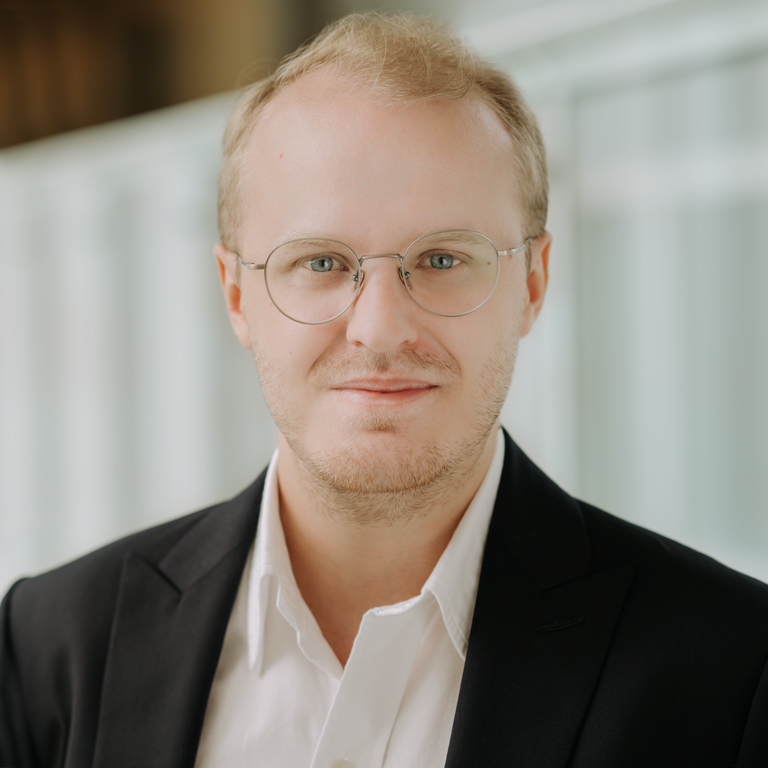
Dimitrios Makrakis is an Associate Professor at the School of Computer Science and Electrical Engineering, University of Ottawa, serving as Co-op Coordinator for the Engineering program. His research focuses on wireless and optical networks, network security, ubiquitous computing, and bio-inspired communication systems. He holds positions in both the School of Computer Science and the School of Information Technology and Engineering (SITE), contributing to interdisciplinary engineering education and innovation. Research interests include advanced networking protocols, security mechanisms for wireless systems, and biomedical applications of nanotechnology. Recent work explores blockchain-based authentication, federated learning frameworks, and neuronal communication systems. Courses taught include Computer Communications, Network Design, and Wireless Mobile Networks. Publications span cutting-edge topics such as bio-optical transceivers, quantum-resistant blockchain strategies, and molecular communication systems. His work bridges theoretical computer science with practical applications in healthcare, energy, and telecommunications. Dr. Makrakis collaborates on projects addressing challenges in smart grids, vehicular networks, and optogenetic technologies. His research emphasizes secure, efficient, and adaptive communication solutions for modern and emerging technologies.
Dr. Miguel Vargas Martin is a Professor of Computer Science at Ontario Tech University's Faculty of Business and Information Technology. He holds a PhD from Carleton University, a Master's from CINVESTAV del IPN, and a Bachelor's from Universidad Autónoma de Aguascalientes. His research focuses on cybersecurity, authentication systems, machine learning, and human factors in security. Dr. Martin teaches graduate courses such as Cryptography and Secure Communications, and undergraduate courses including Machine Learning and Cryptography, Malware, and Network Security. Education: PhD in Computer Science, Carleton University (2003) Master of Applied Science in Electrical Engineering, CINVESTAV del IPN (1998) Bachelor of Science in Computer Science, Universidad Autónoma de Aguascalientes (1996) Research Interests: Dr. Martin's work addresses cutting-edge topics in computer security and artificial intelligence. His recent studies include improving password security through honeyword generation using machine learning, developing differential privacy visualizations for public understanding, and creating emotion recognition models for companion robots. His cybersecurity frameworks target edge computing and IoT environments, emphasizing practical defenses against modern threats. Key Contributions: Over 25 peer-reviewed articles since 2012 span topics from brain-computer interfaces for password memorability analysis to fusion-based optimization algorithms. His work bridges theoretical advancements with real-world applications in healthcare, transportation systems, and industrial IoT security.
Irina Rish is a Full Professor at the University of Montreal's Department of Computer Science and Operations Research and a core member of Mila – Quebec AI Institute. She holds the Canada Excellence Research Chair in Autonomous Artificial Intelligence and a CIFAR AI Chair. Her research focuses on machine learning, neural data analysis, and neuroscience-inspired AI. She leads the Autonomous AI Lab and has contributed to projects like the Covi contact-tracing app during the pandemic. Education: MSc and PhD in AI from University of California, Irvine; MSc in Applied Mathematics from Moscow Gubkin Institute. Awards include multiple IBM accolades and prestigious editorial roles (e.g., IEEE TPAMI Associate Editor). Research Interests: Continual Learning, Deep Learning, Sparse Modeling, Reinforcement Learning, Neuroimaging Analysis Affiliations: MILA, CIRCA (Brain and Learning Research Center), Canada Excellence Research Chair Publications span over 120 papers, 64 patents, and books on sparse modeling. Collaborates with industry leaders like IBM, Microsoft, and Samsung. Grants: Leads U.S. Department of Energy’s INCITE project on scalable foundation models. Advises over 30 students in AI and neuroscience-related fields. Labs/Teams: Directs the Autonomous AI Lab at Mila, co-founded Nolano.ai as CSO.
Huapeng Wu is a Professor at the University of Windsor specializing in robotics, nuclear engineering, and control systems. His research focuses on advanced robotics for fusion reactor maintenance, remote handling systems, and intelligent control algorithms. He has secured significant funding, including a $383k grant for cybersecurity in autonomous vehicles (2020). Key projects include development of the CFETR remote handling system, deformation modeling of fusion manipulators, and EEG-based human-machine interfaces. Research interests span parallel mechanisms, cognitive load monitoring, and bionic robotics. Notable contributions include: Design of vacuum vessel assembly robots with anti-vibration features Development of neural network-based fault prediction frameworks Integration of digital twin technology for fusion maintenance systems His work combines mechanical engineering principles with AI-driven solutions for complex industrial challenges. Current efforts emphasize improving safety and precision in nuclear fusion environments through innovative robotic systems and predictive modeling.
Dr. Loretta Norton is an Assistant Professor at King's University College, University of Western Ontario. Her research focuses on cognitive neuroscience, particularly using functional neuroimaging and electrophysiological methods to study consciousness and cognition in patients with acute brain injuries. She integrates clinical and experimental approaches to improve prognostication and understanding of neural mechanisms in critically ill patients. Education: PhD in Neuroscience (Western University, 2017), MSc in Neuroscience (Western University, 2010), HBSc in Neuroscience (Brock University, 2008). Research interests include disorders of consciousness, traumatic brain injury, neuroimaging techniques (fMRI/EEG/fNIRS), and ethical implications of neuroimaging in critical care. Her work emphasizes translational research to bridge clinical needs and scientific discovery, such as developing imaging protocols for assessing cognition in intubated patients. Recent studies explore prognostication after severe brain injury using resting-state networks, cognitive recovery post-cardiac arrest, and cerebral activity during withdrawal of life-sustaining measures. Her contributions highlight neuroimaging's role in refining diagnosis and prognosis in critical care settings. Collaborates with multidisciplinary teams on projects like the NeuPaRT study, investigating neurophysiological changes post-withdrawal of therapy. Her work addresses ethical challenges in conducting research with imminently dying patients and advancing neurotechnology for communication in locked-in states.
Dr. Ali Bashashati is an Associate Professor at the University of British Columbia (UBC), affiliated with the School of Biomedical Engineering and the Department of Pathology and Laboratory Medicine. He leads the Artificial Intelligence in Medicine (AIM) Lab, focusing on advancing healthcare through AI-driven solutions in computational pathology and omics data integration. His research combines machine learning, signal processing, and software engineering to address challenges in cancer diagnosis and treatment, particularly in breast, ovarian, and lymphoid cancers. Dr. Bashashati’s work emphasizes multi-modal data analysis, including histopathology imaging and genomics, to improve cancer subtyping and treatment stratification. He has pioneered frameworks like VOLTA for context-aware cell representation learning, enhancing AI models’ performance in histopathology analysis. His contributions to cancer genomics include studies on clonal evolution, tumor heterogeneity, and genomic instability mechanisms. He is the principal investigator of the NSERC CREATE MUSIC training program, a $1.65M initiative fostering next-generation biomedical engineers skilled in AI, biotechnology, and disease biology. This program integrates courses on medical imaging data analysis, applied machine learning, and multi-scale computing for healthcare innovation. Awarded the NSERC CREATE Grant, Dr. Bashashati’s lab collaborates with industry and academia to translate AI innovations into clinical practice, with over 200 peer-reviewed publications in top-tier journals like Nature and Nature Genetics. His team’s work spans from fundamental research to applied tools for precision oncology.
Boyu Wang is an Assistant Professor in the Department of Computer Science at Western University, with adjunct roles in the Department of Statistical and Actuarial Sciences, School of Biomedical Engineering, and Brain and Mind Institute. He is an affiliated faculty member at the Vector Institute. His research focuses on trustworthy machine learning, algorithm development, and applications in computer vision, NLP, biomedical engineering, and neuroscience. Education: Ph.D. in Computer Science from McGill University (2019), M.Sc. from University of Macau, B.Eng. from Tianjin University. Postdoctoral fellowships at University of Pennsylvania and Princeton University under Eric Eaton and Kenneth Norman. Research interests include domain adaptation, federated learning, bias mitigation, and neural mechanisms of perception. He has contributed to over 30 publications in top venues like NeurIPS, ICML, ICLR, and IEEE TPAMI. Currently serves as Area Chair for NeurIPS 2025, ICML 2025, ICLR 2025, and AISTATS 2025. Associate Editor for Neural Networks . Labs/Teams: Leads research groups focused on developing robust ML systems with interdisciplinary applications in healthcare and neuroscience. Collaborates with institutions across academia and industry.
Tristan Glatard is an Associate Professor in the Department of Computer Science and Software Engineering at Concordia University . He holds a Canada Research Chair (Tier II) on Big Data Infrastructures for Neuroinformatics . His work focuses on reproducible research methodologies, neuroimaging analysis pipelines, and open science frameworks. Key contributions include developing tools like NeuroCI for continuous integration of neuroimaging results and VIP (Virtual Imaging Platform) for collaborative research. Research interests span neuroinformatics , reproducibility in computational science , big data architectures , and machine learning applications in healthcare . His projects address challenges in analytical flexibility, software dependency management, and numerical stability in neuroimaging workflows. He actively promotes open data sharing through initiatives like the Neuroimaging Data Model (NIDM) and Brain Imaging Data Structure (BIDS). Recent work emphasizes cross-platform reproducibility, leveraging containerization (Docker/Guix) and cloud-based solutions. He collaborates with international teams to validate neuroimaging pipelines and benchmark computational tools for large-scale biomedical data analysis. Notably absent from the profile are explicit mentions of academic awards or named graduate students, though his work has significant impact on research methodologies. He is deeply involved in open science advocacy through platforms like Brainhack and the Montreal Neuroinformatics Ecosystem.
Camila de Souza is an Associate Professor in the Department of Statistical and Actuarial Sciences within the Faculty of Science at Western University. She serves as Vice-director of Western Data Science Solutions (WDSS) and interim director of the Master of Data Analytics professional program, bridging advanced statistical methodology with real-world applications across healthcare, environmental science, and engineering domains. Her educational foundation includes a PhD in Statistics from the University of British Columbia, complemented by Master's and Bachelor's degrees in Statistics from Brazil's University of Campinas. This international training informs her interdisciplinary approach to complex data challenges. De Souza's research program develops cutting-edge statistical methods for analyzing large-scale complex data structures, with particular expertise in Bayesian variational inference, clustering algorithms, hierarchical mixture models, and survival analysis. Her work on hidden Markov models and nonparametric regression enables breakthroughs in fields ranging from ICU patient monitoring to astronomical data interpretation, consistently addressing methodological gaps in handling high-dimensional and heterogeneous datasets. Recent publications reveal a pronounced trend toward healthcare analytics applications, particularly in intensive care settings where her survival analysis models predict mechanical ventilation duration and patient flow optimization. Simultaneously, she extends statistical frameworks for environmental risk assessment (tornado-flood hazards) and energy systems through functional data analysis, demonstrating remarkable methodological versatility across disciplines. Her scientific recognition includes: 2014 Journal of Nonparametric Statistics Best Student Paper Award De Souza actively mentors doctoral candidates Ana Carolin Da Cruz and Chengqian Xian alongside MSc student Renan S. Barbosa, while securing research funding from natural sciences and health councils. Her supervisory approach emphasizes methodological rigor coupled with domain-specific application, preparing students for careers at the statistics-data science interface. Through WDSS, she leads a team providing statistical consulting services across Western University's research ecosystem, while shaping the Master of Data Analytics curriculum to meet industry demands for advanced modeling capabilities in an era of exponential data growth.
Faranak Farzan serves as an Associate Professor and Graduate Student Supervisor in the School of Mechatronic Systems Engineering at Simon Fraser University's Faculty of Applied Sciences, where her research bridges engineering and mental healthcare through neuromodulation technologies. Her academic foundation includes: Postdoctoral Fellowship in Cognitive Neurology from Harvard Medical School Ph.D. in Biomedical Engineering and Medical Science from the University of Toronto B.Eng. in Electrical and Biomedical Engineering from McMaster University Dr. Farzan pioneers the integration of brain stimulation technologies with AI-driven analytics to address youth mental health challenges. Her work spans electrophysiology signal processing, precision medicine frameworks, and immersive VR/AR therapeutic applications, targeting depression and addiction through neuromodulation breakthroughs. This interdisciplinary approach merges engineering rigor with clinical psychiatry to develop next-generation mental healthcare solutions. Her publication record reveals a cohesive research trajectory focused on TMS-EEG integration for mapping therapeutic brain circuitry. Key contributions include standardizing EEG methodologies for multi-site depression studies, developing computational tools for electrophysiological analysis, and identifying biomarkers for treatment-resistant depression and suicidal ideation remission. As a Graduate Student Supervisor, she mentors emerging researchers through the eBrain Lab (ebrainlab.ca), fostering innovation at the engineering-mental health interface while teaching advanced courses in neuromodulation and signal processing systems.
Joel Zylberberg is an Associate Professor in the Department of Biology at York University, holding a Canada Research Chair (Tier 2). His research focuses on understanding how the brain encodes sensory information, particularly in the visual cortex and retina, and translating this knowledge into advancements in machine learning and prosthetics. His work integrates computational neuroscience, theoretical physics, and artificial intelligence to develop technologies like camera-to-brain translators and next-generation retinal prosthetics. Education details are not explicitly listed, but his research spans interdisciplinary areas including Biophysical neural adaptation mechanisms Machine learning algorithm optimization Synaptic plasticity dynamics Visual information processing His recent articles emphasize bridging neuroscience and AI, exploring topics like neural network pruning, retinal computation models, and sleep-stage classification for medical applications. While no specific grants or awards are listed, his Canada Research Chair position highlights his recognized expertise.
Esteban J. Pino is an Associate Professor at Universidad de Concepcion, Chile, actively engaged in research at the intersection of biomedical engineering and healthcare technology. His work focuses on developing innovative medical devices and signal processing techniques for clinical applications. His research interests span biomedical signal processing , unobtrusive sensing , and medical device development , with particular emphasis on respiratory monitoring, cardiac diagnostics, and pediatric health interventions. Utilizing advanced computational models and machine learning, his work bridges engineering solutions with real-world medical challenges. The recent publications highlight a strong trend in portable diagnostic systems , neural signal interpretation , and digital health frameworks for chronic disease management and early childhood development. These contributions reflect a multidisciplinary approach combining engineering, neuroscience, and clinical medicine. Dr. Pino serves as an Associate Editor for Connected Health in Frontiers in Digital Health , contributing to the peer-review and editorial process in his domain. He collaborates extensively across international research networks, as evidenced by co-authorship with researchers from diverse institutions. Though no formal advisees are listed, his editorial role and publication record suggest active mentorship and leadership in the academic community. His work is centered on practical, deployable healthcare technologies, particularly in low-resource or home-based settings, aiming to improve diagnostic accessibility and patient outcomes.
Dr. Jeremy Ng serves as an Assistant Professor (Part-Time) in the Department of Health Research Methods, Evidence, and Impact at McMaster University's Faculty of Health Sciences. He also holds positions as a Scientist at the Institute of General Practice and Interprofessional Care, University Hospital Tübingen & Robert Bosch Center for Integrative Medicine and Health in Stuttgart, Germany, and as an Associate Professor (Adjunct) at the School of Public Health, Faculty of Health, University of Technology Sydney in Australia. Dr. Ng's educational background includes a Ph.D. from McMaster University (2018-2021), an M.Sc. from the University of Toronto (2013-2015), and an H.B.Sc. from McMaster University (2009-2013). He completed postdoctoral training at the Ottawa Hospital Research Institute (2021-2025). Dr. Ng is an experienced health research methodologist with over 100 peer-reviewed publications focusing on evaluating and improving research practices across medicine. His research interests span open science, meta-research, publication science, research ethics and integrity, bibliometrics, artificial intelligence, and traditional, complementary, and integrative medicine. His work aims to assess, evaluate, and improve the quality of evidence in health research while enhancing the integrity and impact of published studies. Dr. Ng serves as Editor-in-Chief of the Journal of Complementary and Integrative Medicine and sits on the editorial boards of over 10 peer-reviewed journals. His recent scholarly output shows a clear trend toward examining research practices in traditional, complementary, and integrative medicine through meta-research approaches. His publications increasingly focus on open science practices, AI applications in scholarly communication, bibliometric analysis of alternative medicine literature, and cross-disciplinary survey research examining perceptions of complementary medicine across medical specialties. Invited expert at WHO technical meeting on traditional medicine and artificial intelligence Current member of WHO Topic Group on Traditional Medicine under Global Initiative on Artificial Intelligence for Health Dr. Ng's research has been widely recognized, featured in prominent media outlets including Nature, Scientific American, Discover Magazine, Psychology Today, and PsychCentral. He has led numerous international cross-sectional surveys examining perceptions of complementary and integrative medicine across various medical specialties, including surgery, cardiology, pediatrics, neurology, and oncology. His current work focuses on developing tools for journal transparency and assessing AI chatbot policies in academic publishing. Dr. Ng is actively involved in advancing research education through initiatives like the URNCST Journal Artificial Intelligence-Assisted Encyclopedia Entry Initiative and the URNCST Journal Research Methods Primer, demonstrating his commitment to training the next generation of researchers in methodological rigor and innovation.
Théophile Demazure is an Assistant Professor at HEC Montréal and IVADO Professor, specializing in the intersection of Information Systems and Neuroscience . His research investigates cognitive/behavioral effects of digital technology, AI's impact on human collaboration, and neuroadaptive interface development. Member, Research Group in Information Systems (GReSI) Member, Tech3Lab Co-directed ERPsim Lab $2 million grant Education: Ph.D. in Information Technologies (2018-2023), HEC Montréal M.Sc. in Information Technologies (2017-2018), HEC Montréal BBA in Administration (2013-2016), HEC Montréal Research focuses on Human-AI collaboration , Brain-Computer Interfaces , and Cognitive Engineering through projects involving: Neuroadaptive enterprise systems AI decision visualization Haptic feedback in simulation EEG/fNIRS signal processing Data storytelling education Green IS behaviors Recent publications show trends in Generative AI , Cognitive Load Analysis , and Neuroergonomics , with methodological innovations in remote EEG data collection and distance NeuroIS learning. Awards: 2021 SIGHCI Best Paper Award 2023 Teaching Excellence Award 2023 Best Doctoral Thesis, HEC Montréal 2021 GReSI Excellence Award 2018 Best Master’s Thesis, HEC Montréal Supervision experience includes co-directing 3 MSc theses (2024-2025) with Pierre-Majorique Léger and Denis Larocque on topics ranging from haptic feedback in industrial training to recommendation systems for neurodivergent children . Active in ERPsim Lab and Tech3Lab research groups, with NSERC-funded projects on cognitive script analysis in data visualization and AI applications in enterprise systems.
Dr. Ian Charest is an Associate Professor in the Department of Psychology at Université de Montréal, affiliated with the Faculty of Arts and Sciences. His research focuses on understanding how the human brain processes visual information through neuroimaging techniques like fMRI and MEG, combined with machine learning and psychophysical experiments. His work emphasizes individual representational idiosyncrasies and computational modeling of cognition. He leads the Charest Lab, which explores visual perception, consciousness, memory, and decision-making using advanced neuroimaging and computational tools. Key projects include analyzing natural scene semantics through machine learning (funded by NSERC), developing infrastructure for computational neuroscience (FCI grant), and investigating face recognition variability (SPIIE grant). Dr. Charest has supervised numerous graduate and undergraduate students, contributing to open-source tools like pyRSA, pyGLMdenoise, and pyslicetime. His research has been supported by prestigious agencies including the Fonds de recherche du Québec and the Canadian Institutes of Health Research.